
Dissociation Symptoms: Why You Zone Out (2026 Guide)
Dissociation symptoms explained: why you zone out, lose time, or feel detached, plus grounding steps that work in 2026 and when to see a clinician.

Key Takeaways
- A quiet-ish space, even a bathroom stall or parked car works
- A cold object or textured surface (ice cube, phone case, keys) for sensory grounding
- A notes app or notebook to log triggers after the fact
- 5 to 10 minutes of uninterrupted time once the acute moment passes
- Someone to talk to the same day, whether that's a friend, a therapist, or a voice conversation with an AI tool like
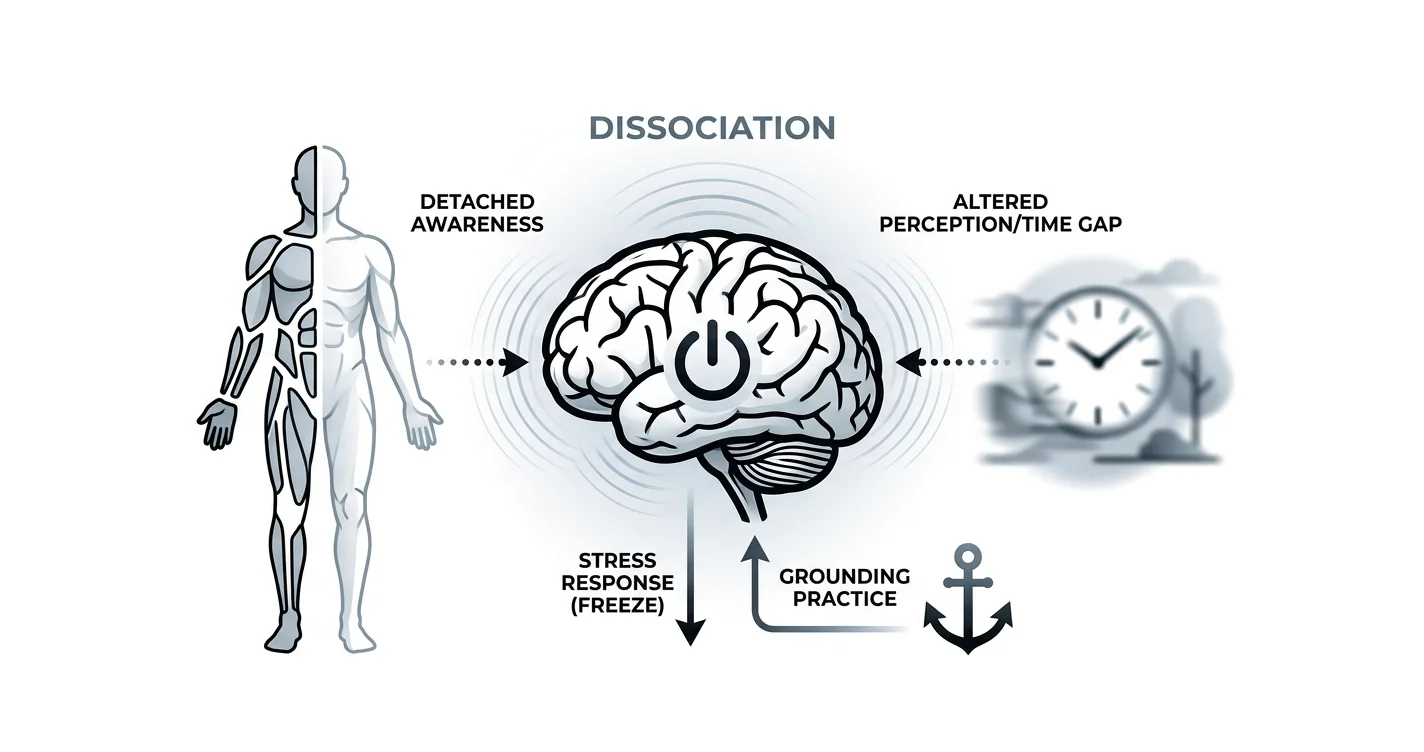
Zoning out mid-sentence, losing chunks of time, or feeling like you're watching yourself from three feet outside your own body — that's dissociation, and it's a nervous system response, not a personality flaw. This guide breaks down what triggers it, what to do the moment it happens, and when it's a sign to get more support than a self-help article can give.
TL;DR
Dissociation symptoms include zoning out, memory gaps, feeling unreal or detached from your body, and watching yourself "from outside." It's most often a stress response tied to overwhelm, trauma history, or chronic anxiety, and it responds well to grounding, naming the state out loud, and slowing your breathing. Verdict: manageable with consistent grounding practice for mild-to-moderate episodes; frequent or long dissociative episodes need a licensed clinician, not just self-help. An AI voice support app like Lovon can help you talk through an episode the same day it happens, which matters because most people wait weeks to process what happened.
Why this matters
Dissociation isn't rare and it isn't dramatic movie-plot stuff. It's your brain's freeze response kicking in when fight or flight isn't an option — a protective shutdown that made sense during an overwhelming moment and now shows up at inconvenient times, like during a work meeting or an argument with a partner.
The confusing part is that dissociation symptoms don't always look like what you'd expect. Some people describe it as a fog. Others describe watching their own hands type an email like they belong to someone else. A few lose 10 or 20 minutes and can't account for what happened in between. All of these fall under the same umbrella, and all of them are treatable once you know what's driving them.
Left unaddressed, dissociation tends to get more frequent, not less — the brain learns the shutdown is a reliable exit from discomfort. That's why the goal isn't to white-knuckle through it but to interrupt the pattern early, in 2026 and beyond, before it becomes the default response to any stress.
What you'll need
- A quiet-ish space, even a bathroom stall or parked car works
- A cold object or textured surface (ice cube, phone case, keys) for sensory grounding
- A notes app or notebook to log triggers after the fact
- 5 to 10 minutes of uninterrupted time once the acute moment passes
- Someone to talk to the same day, whether that's a friend, a therapist, or a voice conversation with an AI tool like Lovon
The steps
1. Name it the moment you notice it
Saying "I'm dissociating right now" — even silently — does something measurable: it shifts activity from the shutdown response toward conscious awareness. Labeling an emotional or physiological state is one of the most consistently cited techniques in stress research because it re-engages the part of your brain that got sidelined.
Common mistake: trying to force yourself to "snap out of it" through willpower alone. That usually deepens the freeze because it adds pressure on top of an already overwhelmed system.
2. Ground through your senses, not your thoughts
The classic version is 5-4-3-2-1: name 5 things you see, 4 you can touch, 3 you hear, 2 you smell, 1 you taste. It works because dissociation pulls you out of your body, and sensory input is the fastest route back in. Full walkthroughs of this and related methods are covered in grounding techniques for anxiety and panic.
Expected outcome: most people notice a shift within 60 to 90 seconds of active sensory grounding, not instant relief, but a measurable pull back toward the present.
Common mistake: trying to think your way out ("why am I like this") instead of engaging your senses. Thinking more is often what triggered the dissociation in the first place.
3. Slow your breath on purpose
A 4-7-8 pattern — inhale 4 seconds, hold 7, exhale 8 — signals safety to your nervous system faster than almost anything else you can do voluntarily. Do 4 full rounds. This isn't about fixing the dissociation instantly; it's about lowering the physiological volume so grounding actually lands.
Common mistake: taking one deep breath and stopping. One breath rarely changes a state that took your body seconds to build; four rounds gives the vagus nerve enough signal to respond.
4. Change your physical position
Stand up if you were sitting, or press your feet flat on the floor and push down. Movement interrupts the freeze pattern because dissociation often correlates with physical stillness. Even a 30-second walk to another room counts.
Expected outcome: a shift in body awareness, not necessarily full clarity — that comes with the steps after.
5. Log the trigger within the hour
Write down what happened right before the episode: what you were doing, who you were with, what was said. Patterns emerge fast — most people find their dissociation clusters around 2 or 3 recurring triggers within a few weeks of tracking, whether that's conflict, sensory overload, or a specific memory being touched.
Common mistake: skipping this step because you feel fine again. The value is in the pattern, not the single incident.
6. Talk it through the same day
Processing an episode within 24 hours, rather than weeks later in a scheduled appointment, tends to keep the memory from calcifying into avoidance. This is where an AI voice conversation on Lovon fills a real gap — you can talk through what happened at 11pm on a Tuesday instead of waiting for a Thursday session slot.
Common mistake: bottling the episode up because it felt embarrassing. Dissociation is a stress response, not a character flaw, and naming it out loud to another person (or an AI voice session) reduces the shame that keeps it hidden.
7. Build a short personal plan
Write three lines: your top trigger, your go-to grounding move, and one person or tool you'll reach out to. Keep it somewhere you'll actually see it — phone notes, not a drawer. A plan you can execute in under 10 seconds beats a perfect plan you forget exists.
8. Track frequency, not just intensity
If episodes are dropping from several times a week to once every couple weeks, the plan is working. If frequency holds steady or climbs for more than a month despite consistent grounding work, that's the signal to bring in a licensed clinician rather than continuing to self-manage.
Troubleshooting
- Grounding isn't working in the moment. Switch senses — if visual grounding fails, go to touch (cold water on your wrists) or smell (a strong scent like coffee grounds or peppermint oil).
- You dissociate so fast you can't catch the early signs. Track what happens in the 5 minutes before the episode for two weeks; early warning signs (jaw clenching, tunnel vision, sudden quiet) usually exist even when they're subtle.
- You lose real time, not just attention. Losing 10+ minutes with no memory, especially if it happens weekly or more, warrants an evaluation from a licensed clinician — this crosses from a stress response into something that needs a proper diagnosis.
- Episodes spike around a specific relationship or memory. That pattern often points to unresolved trauma rather than everyday stress; a guide like cptsd from childhood: symptoms and healing steps can help you understand whether that's the root.
- You feel embarrassed talking about it with people close to you. Start with a lower-stakes outlet — journaling or a private voice conversation — before bringing it into a relationship conversation.
- Nothing helps and it's affecting work or relationships. Self-management has a ceiling. If grounding, breathing, and journaling aren't reducing frequency after 4 to 6 weeks of consistent practice, it's time for professional evaluation, not a new grounding technique.
Tools and resources
- 5-4-3-2-1 sensory grounding (no equipment needed)
- 4-7-8 breathing pattern (works anywhere, no app required)
- A trigger log in your phone's notes app
- Same-day voice processing through an AI voice support tool such as Lovon, useful between or instead of scheduled sessions
- A licensed clinician for recurring or severe episodes — self-guided tools support this work, they don't replace diagnosis
What to do next
If dissociation traces back to childhood stress or a long stretch of chronic overwhelm, the pattern usually has deeper roots than a single trigger. The guide on cptsd from childhood: symptoms and healing steps walks through how early stress shapes adult dissociation and what a longer healing path looks like.
FAQ
What are the most common dissociation symptoms? Zoning out during conversations, losing track of time, feeling detached from your body, and a sense of unreality about your surroundings are the most reported symptoms. Milder forms are common under stress; frequent or prolonged episodes warrant a clinical evaluation.
Is dissociation the same as depersonalization? Depersonalization is one type of dissociation — specifically feeling detached from your own body or thoughts. Dissociation is the broader category, which also includes derealization (the world feeling unreal) and dissociative amnesia (losing chunks of time).
Can anxiety cause dissociation? Yes, chronic or acute anxiety is one of the most common triggers, especially when the stress response tips into freeze rather than fight or flight. Managing baseline anxiety through breathing work and consistent sleep tends to reduce dissociation frequency.
How long does a dissociative episode usually last? Most stress-related episodes last a few minutes to under an hour, though duration varies by trigger and how quickly grounding is applied. Episodes lasting hours or recurring daily are a signal to involve a licensed clinician.
Should I see a therapist for dissociation symptoms? If episodes happen more than once a week, involve memory loss, or interfere with work or relationships, yes — a licensed clinician can rule out or diagnose conditions like dissociative disorders or PTSD that self-guided tools aren't built to treat.
Can an AI app help with dissociation? An AI voice therapy app can help you process a trigger the same day and practice grounding language in real time, which is useful support between clinical visits. It is not a substitute for diagnosis or treatment of a dissociative disorder.
What's the difference between dissociation and just being distracted? Distraction is a shift in attention you can pull back from easily; dissociation involves a felt sense of detachment from your body, environment, or memory that doesn't resolve just by refocusing. If snapping your fingers or a loud noise doesn't bring you back within a few seconds, it's likely dissociation.
Does dissociation mean I have a trauma disorder? Not necessarily — occasional dissociation under acute stress is common and doesn't automatically indicate PTSD or a dissociative disorder. Frequency, duration, and memory loss are the factors a clinician uses to distinguish a stress response from a diagnosable condition.
One last thing
The detail most people miss: dissociation often peaks not during the stressful event itself, but in the 10 to 15 minutes right after, once the immediate threat has passed and your body has room to process it. That's the window worth watching closely in 2026 — it's usually when grounding work does the most good, not during the trigger itself.
Related guides
How AI Support Helps You Heal
AI emotional support isn't about replacing human connection — it's about filling the gaps. The moments when you need to talk at 2 AM, when you don't want to burden your friends again, or when you simply need someone to listen without judgment.
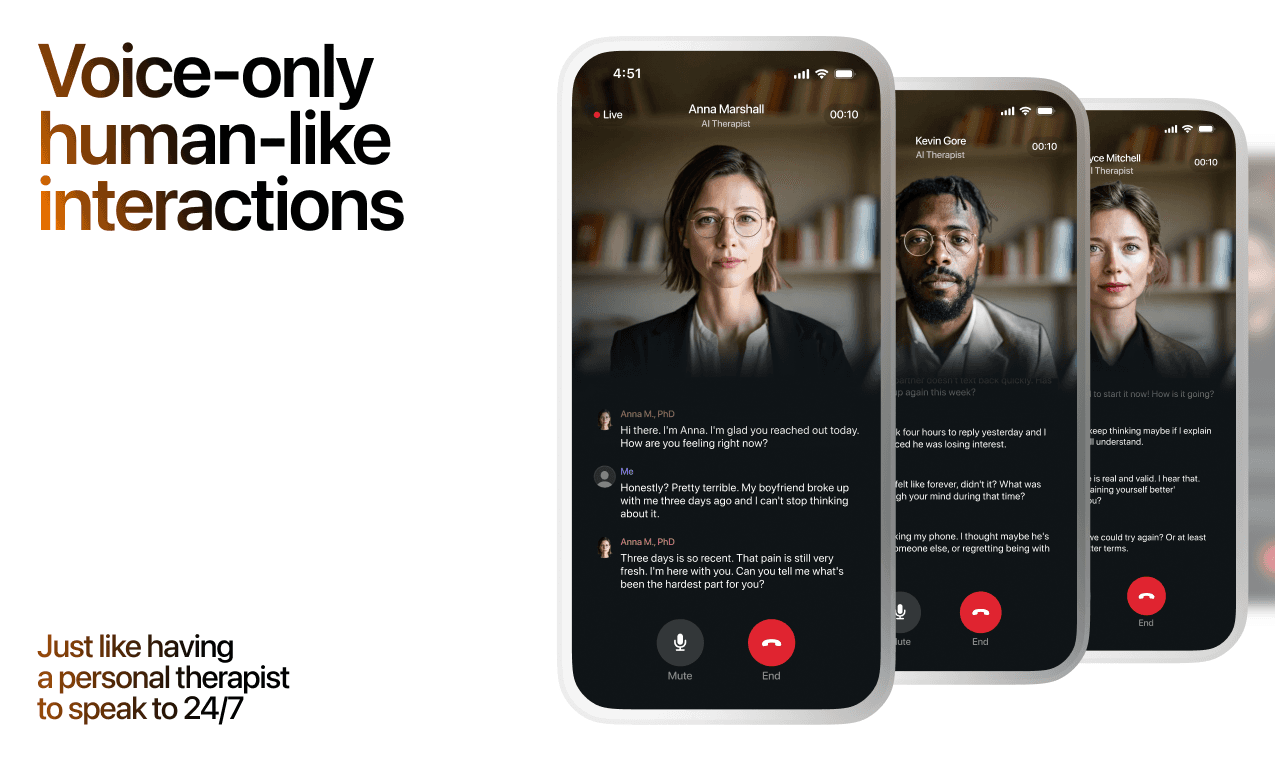
Here's what happens in a typical Lovon session:
You share what's on your mind
There's no script, no intake form, no waiting room. You speak or type whatever you're feeling — in your own words, at your own pace.
Lovon validates and explores
Using frameworks from CBT (Cognitive Behavioral Therapy) and motivational interviewing, Lovon acknowledges your feelings first, then gently helps you explore them. No dismissive "just move on" advice.
You build coping skills together
Lovon doesn't just listen — it actively works with you on evidence-based techniques: thought reframing, urge surfing, behavioral experiments, and more.
What a Session with Lovon Looks Like
When to Seek Professional Help
AI support is a valuable tool, but it's not a replacement for professional care. Please consider reaching out to a licensed therapist if you experience any of the following:
- Persistent thoughts of self-harm or suicide
- Inability to perform daily activities (work, eating, sleeping) for more than 2 weeks
- Turning to alcohol or substances to cope
- Intense anger or desire to harm your ex-partner
- Complete emotional numbness that doesn't improve over time
Crisis Resources (US): If you're in immediate danger, call 988 (Suicide & Crisis Lifeline) or text HOME to 741741 (Crisis Text Line). Available 24/7, free, and confidential.
Outside the US? Find a crisis line in your country
Ready to Start?
Your healing journey can begin right now
A 7-day trial. No judgment. Just a safe space to process what you're going through.
Frequently Asked Questions
Is Lovon a replacement for a real therapist?
Is my conversation with Lovon AI private?
How is Lovon different from ChatGPT for emotional support?
Can I use Lovon if I'm already seeing a therapist?
Can I try Lovon before subscribing?
About the Author

The Lovon Editorial Team
Mental Health & Wellness Content Team
The Lovon Editorial Team develops mental health and wellness content designed to make psychological concepts accessible and actionable. Our goal is to bridge the gap between clinical research and everyday life - helping you understand why your mind works the way it does and what you can do about it....
Related articles
- How to Stop Anxiety Spirals: 7 Steps for 2026
How to stop anxiety spirals with 7 grounded steps for 2026: paced breathing, grounding, and catching the thought before…
- PTSD Triggers 2026: How to Identify and Manage Them Daily
PTSD triggers explained: spot patterns in 14 days, use a 90-second grounding response, and build a daily routine that…
- Emotional Flashbacks: What They Are & How to Manage in 2026
Emotional flashbacks flood you with old feelings without warning. Learn the 2026 grounding steps that shorten them fast…
- AI therapy for flight attendants: complete 2026 guide
AI therapy for flight attendants explained: how voice-based support fits irregular schedules, jet lag, and layovers in…
See also
Quizzes
- Guilt Test: Is Your Guilt Doing Its Job?
See whether your guilt repairs or just hurts.
- Alexithymia Test: Can You Name What You Feel?
See where your feelings lose their names, in 3 minutes.
Free tools
- Vent to an AI
Need to vent and there is nobody to call, or nobody you want to tell? Type it here. You are talking to an AI listener…
- Am I Overreacting, or Is This a Big Deal?
A chat for the small thing you cannot stop turning over. Say what happened and what you have already told yourself about…
From the wiki
- How to stop maladaptive daydreaming?
Maladaptive daydreaming is immersive waking fantasy that eats hours, usually with music and pacing attached. You rarely…
Disclaimer: This article is for informational purposes only and does not constitute medical advice, diagnosis, or treatment. Always seek the advice of your physician or other qualified health provider with any questions you may have regarding a medical condition. If you are in crisis or think you may have an emergency, call 988 (Suicide & Crisis Lifeline) or go to the nearest emergency room. Outside the US? Find a crisis line in your country.