
How to Stop Dreaming About Someone You Love (2026)
Still dreaming about someone you have feelings for? These 7 steps reduce dream frequency by targeting the emotional activation driving your brain's nightly replay in 2026.

Key Takeaways
- A consistent sleep schedule (same bedtime and wake time, 7 days a week)
- A physical journal or notes app
- 10–15 minutes of pre-sleep wind-down time
- Willingness to feel the feelings during the day so they don't pile up at night
- Optional: a guided reflection tool or voice-based support app like Lovon for processing the emotional layer
Dreaming about someone you still have feelings for is one of the most disorienting parts of trying to move on — you spend your waking hours working on it, then your sleeping brain undoes the progress. This guide walks you through exactly why it happens and what you can do, step by step, to quiet those dreams in 2026.
TL;DR: Dreams about someone you still love are driven by unresolved emotional activation, not telepathy or fate. In 2026, the most effective approach combines daytime emotional processing, pre-sleep wind-down rituals, and gradual reduction of mental "triggers" for that person. You cannot force your brain to stop dreaming about someone overnight, but you can consistently shorten the runway that sends your mind there. The steps below work — if you do them consistently.
Why this matters
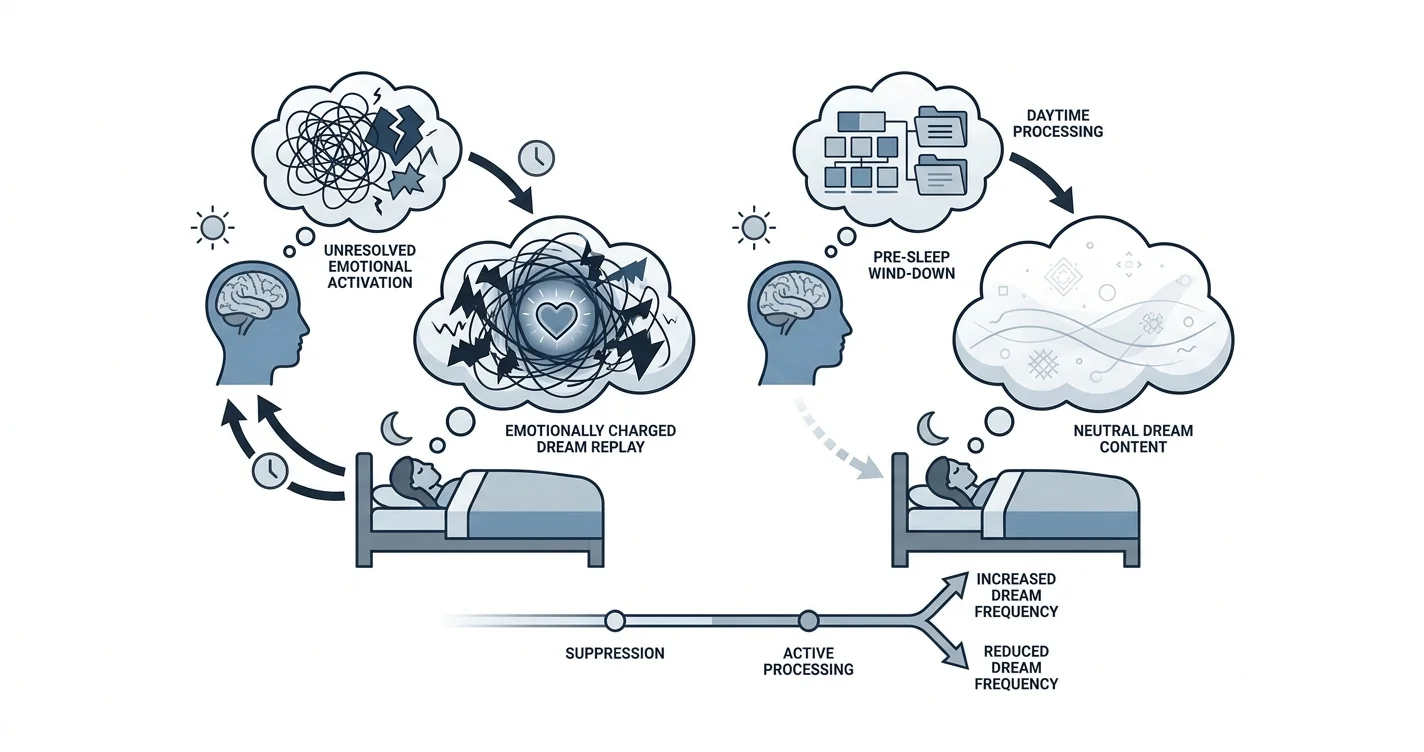
Dreams are not random noise. During REM sleep, the brain replays emotionally significant events to process and consolidate them. Someone you have unresolved feelings for sits at the top of your brain's "unfinished business" queue. The more emotional charge attached to that person — longing, grief, confusion, anger — the more often your sleeping brain will return to them. Research on sleep and emotional memory consistently shows that high-arousal emotional experiences get privileged replay during REM cycles. You are not weak for having these dreams. Your brain is doing its job. The goal is to reduce the emotional charge so the brain eventually files that person away rather than replaying them every night.
What you'll need
- A consistent sleep schedule (same bedtime and wake time, 7 days a week)
- A physical journal or notes app
- 10–15 minutes of pre-sleep wind-down time
- Willingness to feel the feelings during the day so they don't pile up at night
- Optional: a guided reflection tool or voice-based support app like Lovon for processing the emotional layer
The steps
Step 1: Name what is actually unresolved
Before you can lower the emotional temperature, you need to know what is running hot. Sit down — ideally in the morning when you are not exhausted — and write out exactly what feels unfinished about this person. Not what you miss about them. What is unresolved: an apology that never came, a conversation you rehearse in your head, a version of the future you had planned together.
This step matters because the brain keeps rehearsing what it has not processed. Naming the unresolved thing externalizes it — it moves from background mental loop to a concrete object you can look at. Most people skip this step because it is uncomfortable. Do not skip it.
Common mistake: Writing a list of what you loved about the person instead of what is unresolved. Nostalgia lists increase emotional activation; resolution lists decrease it.
Expected outcome: After 2–3 sessions of honest writing, you will notice the mental "pull" toward the person becomes more specific and less diffuse. That specificity is progress.
Step 2: Process the feelings during daylight hours
If you suppress emotions about this person all day, your brain will schedule the processing session for 2 a.m. — while you are asleep and defenseless. The fix is counterintuitive: deliberately give the feelings time during the day.
Set a 10-minute window — same time each day — where you allow yourself to feel what you feel about this person. Acknowledge it, name it ("I feel grief," "I feel angry that they moved on," "I miss how safe I felt"), and then close the window. When thoughts about the person surface outside that window, gently remind yourself: "I've scheduled time for this."
This is a well-established cognitive technique sometimes called "worry time" or "scheduled emotional processing." It reduces intrusive thoughts by giving the brain a legitimate slot rather than a suppression signal.
Common mistake: Running the 10-minute window right before bed. That timing increases dream activation. Keep it at least 3 hours before sleep.
Expected outcome: Within 1–2 weeks, intrusive daytime thoughts about the person typically decrease in frequency by a noticeable margin because the brain learns the feelings have a time and place.
Step 3: Audit and reduce environmental triggers
Every time you encounter a trigger — a song, a photo, a neighborhood, a smell — your brain fires the emotional memory associated with that person and refreshes it. A refreshed emotional memory is more likely to appear in dreams that night.
Do a one-time audit: social media follows, playlist tracks, saved photos, their contact in your phone. You do not have to delete everything. But you do need to know what is refreshing the memory and decide intentionally whether you want that happening.
In 2026, one of the most common and overlooked triggers is social media algorithmic content — the platform keeps surfacing related posts based on your past engagement with that person. Muting, restricting, or soft-blocking specific accounts stops the algorithm from recycling the trigger loop.
Common mistake: Keeping one "just in case" account follow or not archiving photos "because it would feel dramatic." The brain does not distinguish between a dramatic gesture and a quiet one. The trigger is the trigger.
Expected outcome: Fewer same-day emotional spikes means fewer emotionally charged entries into sleep.
Step 4: Build a pre-sleep wind-down that crowds out the intrusive thoughts
The 30–60 minutes before sleep are when the brain begins consolidating the emotional content of the day. If the last thing you do is lie in the dark replaying memories of this person, you are essentially cueing REM to replay them.
Build a pre-sleep sequence that occupies the narrative-processing part of your brain with neutral or positive content:
- Light reading (fiction works well — it loads a different narrative)
- A body-scan or breathing exercise for 5–7 minutes
- Writing 3 specific things from the day that were separate from this person
- If thoughts of the person arise, write them in a "parking lot" journal entry: "I'll think about this tomorrow at my scheduled time."
Avoid scrolling social media in the final 30 minutes — it is both a trigger risk and a known disruptor of sleep architecture.
Common mistake: Listening to a playlist associated with that person as "background music" while falling asleep. Music tied to emotional memories is a direct on-ramp for dream content.
Expected outcome: Most people report a noticeable reduction in dream frequency within 2–3 weeks of consistent pre-sleep routine changes.
Step 5: Work through the attachment, not just the symptoms
Dreams are a symptom. The underlying driver is attachment — specifically, an emotional bond that has not been formally closed by your nervous system. The brain treats an unresolved attachment figure the same way it treats an open loop: it returns to it until there is resolution.
This is where the real work lives. If the relationship ended and you never fully grieved it, the grief is still running. If you still hold hope that things could change, that hope is an open loop. If there was pain you never named — manipulation, dismissal, cruelty — that injury needs acknowledgment before the nervous system can release the thread.
You do not need a licensed clinician to start this work. Journaling, voice reflection, and structured self-guided exercises move the needle. If you want a starting framework, the guide on how to get over someone you love walks through the evidence-based steps in detail. If the relationship involved a pattern of one of you pursuing while the other withdrew, the pursuer-withdrawer pattern breakdown explains the dynamic and how attachment loops form.
Common mistake: Assuming that time alone will close the loop. Time reduces intensity, but it does not create closure. Closure requires active processing.
Expected outcome: As the emotional charge of the attachment decreases, dream frequency and vividness follow. This typically takes weeks to months depending on the depth of the relationship and how much active processing you put in.
Step 6: Use the dreams as data, not distress
Once you have the steps above running, shift your relationship to the dreams themselves. When you wake from a dream about this person, instead of groaning and trying to shake it off, spend 2 minutes writing what happened in the dream and what emotion it carried. Not the story — the emotion.
Are you dreaming about abandonment? Longing? Being ignored? Being wronged? The emotional content of the dream is telling you which thread is still unresolved. Feed that information back into Step 1 and Step 5. The dream becomes a diagnostic rather than just a disturbance.
Common mistake: Over-interpreting dream content as literal or prophetic. The brain recombines emotional memories in strange ways during REM. The emotion matters; the specific scenario usually does not.
Expected outcome: You will begin to notice themes repeating, then shifting, then becoming less charged. That evolution is the sign that processing is working.
Step 7: If the dreams intensify, check your waking avoidance
Dream frequency often spikes when someone is more actively avoiding processing during the day. If you hit a week where the dreams get worse despite following the steps, do an honest audit of your daytime behavior: Are you filling every spare moment so you never have to sit with the feeling? Are you skipping the scheduled emotional processing window? Have you started numbing with more screen time, alcohol, or busyness?
Avoidance and dream intensity are inversely correlated — more avoidance, more vivid dreams. Your sleeping brain is not punishing you. It is filling the gap your waking brain left open.
If you have tried the steps consistently for 4+ weeks and the dreams remain frequent and distressing, that is a signal worth discussing with a professional. Lovon's AI voice sessions are available anytime for a first conversation — not a replacement for clinical care, but a low-barrier way to start processing out loud when 3 a.m. hits and you have no one to talk to. You can also read more about how to stop obsessing over someone if the waking intrusive thoughts feel as heavy as the dreams.
Troubleshooting
The dreams keep happening even when I feel "over it" during the day. Feeling fine during the day and dreaming at night are not contradictory. Daytime coping can mask unprocessed emotion that surfaces in REM. Return to Step 1 and look for what you have rationalized but not actually felt.
I wake up at 3 a.m. and can't stop thinking about them. This is partly a sleep architecture issue — the brain is in lighter sleep in the second half of the night and emotional memory is more accessible. Keep a pen and notepad on the nightstand. Write "I'll process this tomorrow at [time]" and do one slow breathing cycle. The written commitment signals to the brain that the loop is acknowledged.
The dreams feel so real that I spend the next day grieving all over again. That emotional hangover is the REM processing doing its work — it just hasn't finished yet. Do not fight the emotion the next morning; give it 10 minutes, name it, then move into your day. Suppressing the post-dream emotion extends the cycle.
Every time I think I'm making progress, something reminds me of them and it resets. You have not regressed — the emotional memory got refreshed by a trigger. Return to Step 3 and identify what triggered it. One external trigger can re-activate a memory loop that takes 2–3 days to quiet back down. That is normal. The trend line matters, not individual days.
My sleep quality is getting worse, not better. If sleep architecture is genuinely disrupted — not just emotionally difficult dreams but poor sleep overall — rule out other contributors: caffeine timing, screen light exposure, inconsistent sleep schedule. The ADHD sleep problems article explains why the brain fights bedtime, and many of those mechanisms apply to emotional disruption too, not just ADHD.
I want to dream about them — I just want the painful ones to stop. This is honest, and it is common. You can't selectively filter dream content with any precision. What you can do is reduce the emotional charge of the painful threads specifically (grief, anger, unresolved hurt) while the positive memories naturally soften over time. The neutral-to-positive dreams tend to persist longer than the distressing ones as processing progresses.
Tools and resources
- Journal or notes app — the single most effective tool in this process. Physical pen and paper has a slight edge for emotional processing because it slows down the thinking.
- Breathing apps — any app with a 4-7-8 or box breathing guide works for pre-sleep wind-down.
- Lovon — AI voice sessions for emotional processing when you need to talk it through rather than write it out. Available at lovon.app, no appointment needed, built with input from PhD psychologists.
- How to get over someone you love — evidence-based steps — the companion guide for the daytime emotional work that reduces dream frequency at the source.
FAQ
Why do I keep dreaming about someone even when I try not to think about them? The brain's dream content is driven by emotional activation, not conscious thought. Trying not to think about someone is a form of suppression that increases the emotional charge — which makes dreams more likely, not less. Active processing during the day is more effective than avoidance.
How long does it take to stop dreaming about someone you have feelings for? There is no fixed timeline. For relationships with moderate emotional attachment and active daily processing, most people notice a reduction in dream frequency within 3–6 weeks in 2026. For deeper or more complicated attachments — long relationships, trauma, unresolved conflict — it can take several months.
Does dreaming about someone mean you still have feelings for them? Not necessarily in the romantic sense. Dreams replay emotionally significant experiences. You can dream about someone because of unresolved grief, unresolved anger, or unresolved ambiguity — not only because of love. The emotion in the dream matters more than the story.
Is it normal to dream about an ex every night? Frequent dreaming about an ex is common in the months following a breakup, especially one that ended without clear closure. Nightly dreams for more than 4–6 weeks that leave you distressed the next day are worth actively addressing with the steps above rather than waiting out.
Can you control your dreams to stop dreaming about someone? Direct dream control is not reliably achievable for most people. Lucid dreaming techniques exist but require significant practice and do not work for everyone. Indirect control — reducing emotional activation during the day, changing pre-sleep routines, processing the attachment — is far more consistent and practical.
What does it mean when you dream about someone you like but can't be with? The brain is processing grief and longing simultaneously. The dream is not a sign you should pursue the relationship. It is a sign the emotional weight of the situation is significant enough to warrant dedicated processing time during waking hours.
Do dreams about someone go away on their own? Sometimes, yes — if the emotional charge naturally dissipates over time without active intervention. But passive waiting is slower and less reliable than active processing. The steps in this guide compress the timeline.
Can talking about my feelings help reduce the dreams? Yes. Verbalizing emotions — in therapy, in journaling, or in a voice-based reflection session — accelerates the processing that your sleeping brain is trying to do on its own. Speaking out loud about what is unresolved gives the emotional memory a structured resolution pathway.
One last thing
In 2026, sleep researchers at multiple institutions have confirmed what therapists have observed for decades: the most distressing recurring dreams are almost always tied to an unprocessed emotional injury, not to the person themselves. The person in your dream is a stand-in for a feeling your brain hasn't filed yet — usually a version of "I was not ready for this to end" or "this hurt me and I never said so." When you address the feeling directly, the stand-in stops showing up. Start with Step 1 tonight.
Related guides
How AI Support Helps You Heal
AI emotional support isn't about replacing human connection — it's about filling the gaps. The moments when you need to talk at 2 AM, when you don't want to burden your friends again, or when you simply need someone to listen without judgment.
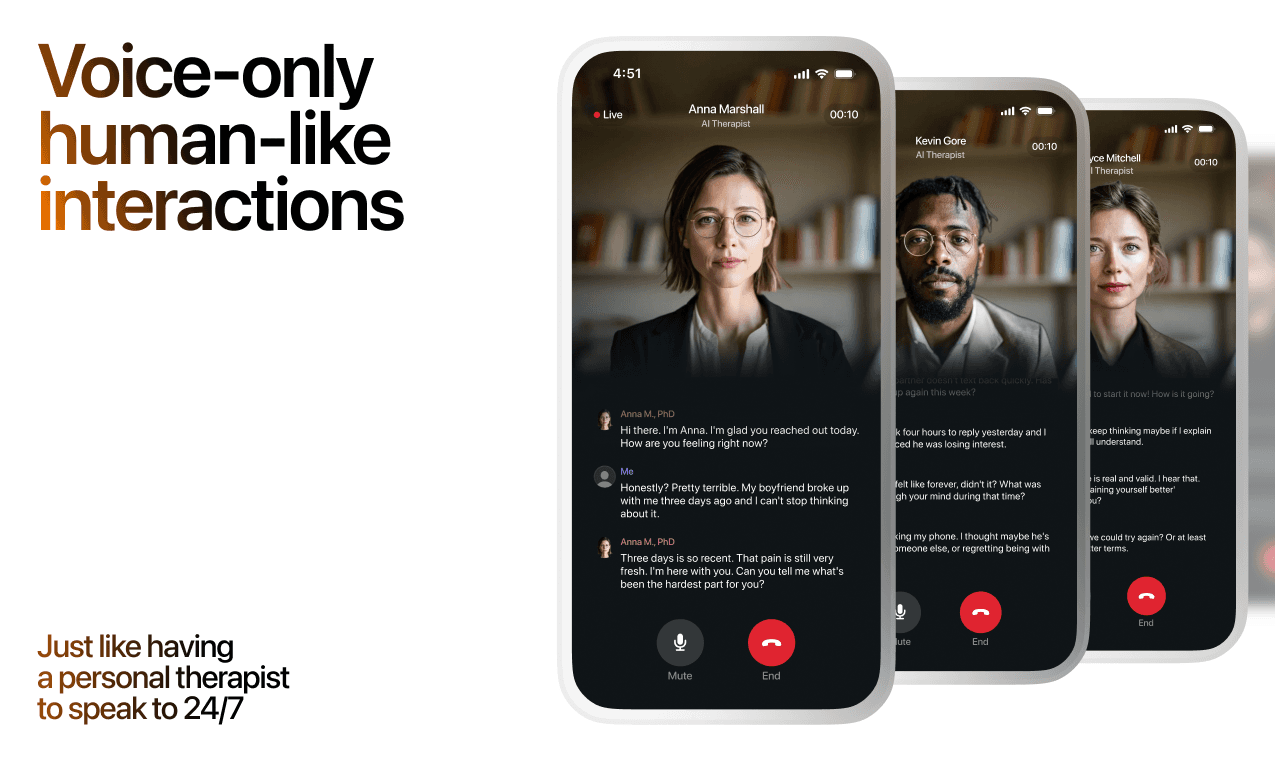
Here's what happens in a typical Lovon session:
You share what's on your mind
There's no script, no intake form, no waiting room. You speak or type whatever you're feeling — in your own words, at your own pace.
Lovon validates and explores
Using frameworks from CBT (Cognitive Behavioral Therapy) and motivational interviewing, Lovon acknowledges your feelings first, then gently helps you explore them. No dismissive "just move on" advice.
You build coping skills together
Lovon doesn't just listen — it actively works with you on evidence-based techniques: thought reframing, urge surfing, behavioral experiments, and more.
What a Session with Lovon Looks Like
When to Seek Professional Help
AI support is a valuable tool, but it's not a replacement for professional care. Please consider reaching out to a licensed therapist if you experience any of the following:
- Persistent thoughts of self-harm or suicide
- Inability to perform daily activities (work, eating, sleeping) for more than 2 weeks
- Turning to alcohol or substances to cope
- Intense anger or desire to harm your ex-partner
- Complete emotional numbness that doesn't improve over time
Crisis Resources (US): If you're in immediate danger, call 988 (Suicide & Crisis Lifeline) or text HOME to 741741 (Crisis Text Line). Available 24/7, free, and confidential.
Outside the US? Find a crisis line in your country
Ready to Start?
Your healing journey can begin right now
A 7-day trial. No judgment. Just a safe space to process what you're going through.
Frequently Asked Questions
Is Lovon a replacement for a real therapist?
Is my conversation with Lovon AI private?
How is Lovon different from ChatGPT for emotional support?
Can I use Lovon if I'm already seeing a therapist?
Can I try Lovon before subscribing?
About the Author

The Lovon Editorial Team
Mental Health & Wellness Content Team
The Lovon Editorial Team develops mental health and wellness content designed to make psychological concepts accessible and actionable. Our goal is to bridge the gap between clinical research and everyday life - helping you understand why your mind works the way it does and what you can do about it....
Related articles
- AI Mental Health App for Shift Workers (2026 Guide)
The best AI mental health app for shift workers in 2026 needs 24/7 voice access, not banker's hours. See what to look…
- Emotional Eating and Stress: 2026 Fix That Works
Emotional eating and stress feed each other through cortisol spikes. Get the 2026 step-by-step to spot triggers and stop…
- Limerence vs Love in 2026: How to Tell the Difference
Limerence vs love explained: 6 steps to spot obsessive infatuation vs real love in 2026, plus fixes for the anxious…
- How to Get Out of a Depressive Episode (2026 Guide)
Learn how to get out of a depressive episode on your own with 7 evidence-based steps — from nervous system regulation to…
See also
Quizzes
- Am I Over My Ex? 12-Question Gut Check
Post-breakup check-in in 2 minutes.
- Do I Miss My Ex or Am I Just Lonely? 12-Question Quiz
Find out what the missing is actually about.
Free tools
- How to Respond to a Breakup Text
A chat for the minutes after a breakup text arrives and you have no idea how to respond. Paste what they sent and say…
- How to Respond to 'I Miss You', Even From an Ex
A chat for when you do not know how to respond to 'I miss you'. Say who sent it and what you feel when you read it, and…
From the wiki
- How to leave a toxic relationship?
Leaving a toxic relationship is rarely a decision problem — you usually know. What stops you is that the pull toward…
Disclaimer: This article is for informational purposes only and does not constitute medical advice, diagnosis, or treatment. Always seek the advice of your physician or other qualified health provider with any questions you may have regarding a medical condition. If you are in crisis or think you may have an emergency, call 988 (Suicide & Crisis Lifeline) or go to the nearest emergency room. Outside the US? Find a crisis line in your country.