
Should I Break Up With My Boyfriend Quiz: 2026 Verdict
Should I break up with my boyfriend quiz, ranked: red flag checklist, attachment style read, and AI coach chat compared with clear 2026 verdicts.
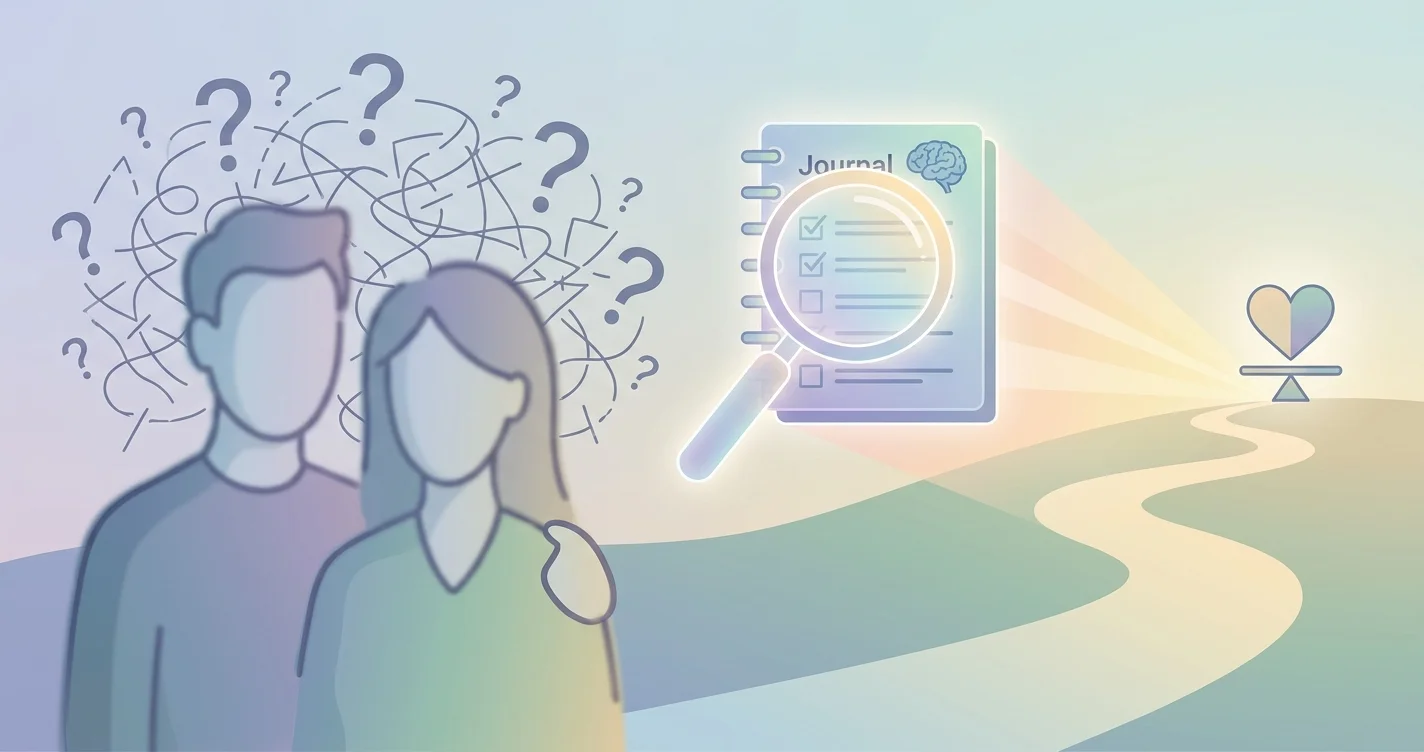

Key Takeaways
- Viral "quiz" sites that only give you a percentage. A score with no explanation of which specific answers drove it
- Asking five friends and averaging their opinions. Friends know one version of the story — yours — and will usually
- Quizzes that never mention attachment style or conflict patterns. If the questions are all about surface
You're lying awake replaying the last fight, googling this question at 1am, and no article can decide your relationship for you — but a good self-check can help you see the pattern you're too close to notice.
TL;DR: A "should I break up with my boyfriend quiz" works best as a structured way to surface patterns — not a verdict machine. The strongest self-checks combine a red flag inventory, an attachment style read, and a real conversation (with a coach, therapist, or AI relationship coach) rather than a single yes/no score. Verdict: use a quiz to organize your thinking, then talk it through before you act on it. This kind of uncertainty is common — you're not overreacting by needing help naming it.
Why this matters
A breakup decision made on a gut feeling at midnight looks different from one made after you've actually named what's wrong. Most people asking this question aren't confused about whether they're unhappy — they're confused about whether the unhappiness is fixable. That's a different question, and it needs a different tool than a 12-question buzzfeed quiz with a cute graphic at the end.
The useful version of this exercise checks for 10 signs a relationship has turned toxic, not just whether you argue about dishes. If three or more of those signs are present and have lasted more than a few months, that's data, not a mood.
Who this is for
This is for the person who's asked "is it me or is it the relationship" more than once in the last month, who feels a knot in their stomach before their boyfriend gets home, or who keeps a running mental list of things that don't add up. It's also for people who already know the answer but need the exercise to say it out loud to themselves first. It is not for someone in immediate danger — if there's violence or threats involved, that's a safety issue to act on now, not a quiz question.
What to look for in a breakup self-check
Does it separate facts from feelings
A quiz that only asks "how do you feel today" will give you a different answer depending on whether you slept well. The better version asks for specific incidents — canceled plans, broken promises, how conflict actually gets resolved — because facts don't swing with your mood in 2026 the way feelings do.
Does it check for red flags, not just compatibility gaps
Wanting different vacation styles is a compatibility gap. Controlling who you see, monitoring your phone, or escalating small disagreements into silent treatment for days is a red flag. A quiz that treats both the same way isn't measuring the right thing.
Does it account for attachment style
Someone with an anxious attachment style can misread normal distance as abandonment, while someone avoidant can misread normal closeness as suffocation. A self-check that ignores this will tell an anxiously attached person to leave every relationship that has any friction at all, which isn't accurate.
Does it give you a next step, not just a score
A number out of 100 is useless if it doesn't tell you what to do with it. The stronger tools point you toward a conversation — with him, with a therapist, or with a coach — rather than ending at "73% toxic, congrats."
Does it protect your privacy
Anything asking you to detail abuse, cheating suspicions, or mental health history should not be something you're typing into a random web form that sells data. Check who's behind the tool before you pour out the details of your relationship into it.
Top picks for figuring this out
If you want the direct version first, Lovon's should I break up quiz asks twelve questions about how the doubt actually behaves — how long it has lasted, what the fights look like, whether you still picture a future — and ends on one of five written results rather than a percentage. The options below are worth reading either way.
1. The red flag inventory — the fastest gut-check. This walks through specific behaviors (control, contempt, escalating conflict) rather than vague vibes, and takes about 5 minutes. If you check off more than half the list and the pattern is recent, that's a real signal. Try the red flag quiz before anything else — Buy.
2. The attachment style read — the root-cause finder. Roughly 40-50% of adults carry an insecure attachment style according to attachment research cited across relationship psychology literature, and it shapes how you interpret everything your boyfriend does. Take the attachment style quiz — it takes about 2 minutes and reframes half the fights you've been having. Buy.
3. A live conversation with an AI relationship coach — the wildcard. Instead of a static score, this lets you talk through the actual situation out loud, at 2am if that's when the spiral hits, and get pushed on specifics instead of comforted with vagueness. The AI relationship coach for breakup recovery is built for exactly this moment of indecision. Consider — useful for talking it through, not a substitute for licensed care if things are heavier than day-to-day friction.
4. A one-week journaling log — the slow burn. Instead of one snapshot, this tracks how you feel after every interaction with him for 7 straight days. It's less satisfying than an instant score, but it removes the noise of a single bad night skewing your read. Consider — worth it if your feelings swing wildly day to day.
5. A session with a licensed therapist — the gold standard, and the slowest. No quiz replaces a trained professional who can ask follow-up questions you haven't thought to ask yourself, especially if there's a history of abuse, addiction, or infidelity involved. It costs more and takes longer to schedule than any app. Buy if the situation involves real harm; Skip as a first step if you're just testing the water.
What to avoid
- Viral "quiz" sites that only give you a percentage. A score with no explanation of which specific answers drove it isn't diagnostic — it's entertainment dressed as advice.
- Asking five friends and averaging their opinions. Friends know one version of the story — yours — and will usually validate whatever you already lean toward.
- Quizzes that never mention attachment style or conflict patterns. If the questions are all about surface compatibility (movies, food, hobbies) and never touch how you fight or repair, it's measuring the wrong thing entirely.
Verdict comparison
| Tool | Time needed | Best for | Verdict |
|---|---|---|---|
| Red flag inventory | ~5 minutes | Fast gut-check on specific behaviors | Buy |
| Attachment style quiz | ~2 minutes | Understanding why conflict feels the way it does | Buy |
| AI relationship coach conversation | 10-20 minutes | Talking through the specific situation in real time | Consider |
| 7-day journaling log | 1 week | Separating a bad week from a bad relationship | Consider |
| Licensed therapist session | 45-60 minutes, scheduled | Situations involving abuse, addiction, or infidelity | Buy if serious, Skip if early-stage doubt |
FAQ
Is a "should I break up with my boyfriend" quiz actually accurate? A quiz is only as accurate as its questions — one built around specific behaviors (control, contempt, broken trust) is far more reliable than one built around vague mood questions. Treat any single score as a starting point for a conversation, not a final verdict.
How many red flags mean I should actually leave? There's no universal magic number, but relationship researchers generally treat repeated, escalating patterns — not isolated incidents — as the more reliable signal. Three or more consistent red flags over several months is a stronger signal than one bad week.
Can an AI relationship coach tell me whether to break up? No tool, human or AI, can hand you a verdict — what it can do is help you organize the specifics of your situation so your own answer gets clearer. An AI relationship coach works best as a sounding board between real conversations, not as the decision-maker itself.
What's the difference between normal relationship problems and a reason to leave? Normal problems are things both people can name and work on together — different love languages, mismatched schedules, communication style gaps. Reasons to leave usually involve a pattern that repeats despite you raising it, especially anything involving control, contempt, or dishonesty.
Should I take the quiz alone or with my boyfriend? Take it alone first — the point is to hear your own honest read without managing his reaction to your answers. If the results point to something specific, that's when it becomes a conversation worth having together.
Is it normal to still love someone you're questioning breaking up with? Yes — love and "this isn't working" aren't mutually exclusive, which is exactly why the decision feels so hard. Plenty of relationships end with real love still present but real incompatibility that isn't going away.
How much does it cost to talk to someone about this instead of just taking a quiz? Costs vary widely by provider and location, and therapy without insurance can run considerably higher per session than app-based support — check current options before assuming a price. Some AI-based coaching and journaling tools are free or low-cost ways to think it through before booking anything.
What if the quiz says I should stay but I still feel like leaving? Trust the feeling over the score — a quiz measures patterns you can name, but you're the only one with access to everything you haven't put into words yet. If your gut and the quiz disagree, that gap itself is worth talking through with a therapist or coach.
One last thing
The detail most people skip: the quiz result almost never surprises the person taking it. By the time you're searching "should I break up with my boyfriend quiz", some part of you already has a working theory — the exercise is usually confirmation, not discovery. Notice which answer felt like relief and which felt like disappointment. That reaction tells you more than the score does.
Related guides
How AI Support Helps You Heal
AI emotional support isn't about replacing human connection — it's about filling the gaps. The moments when you need to talk at 2 AM, when you don't want to burden your friends again, or when you simply need someone to listen without judgment.
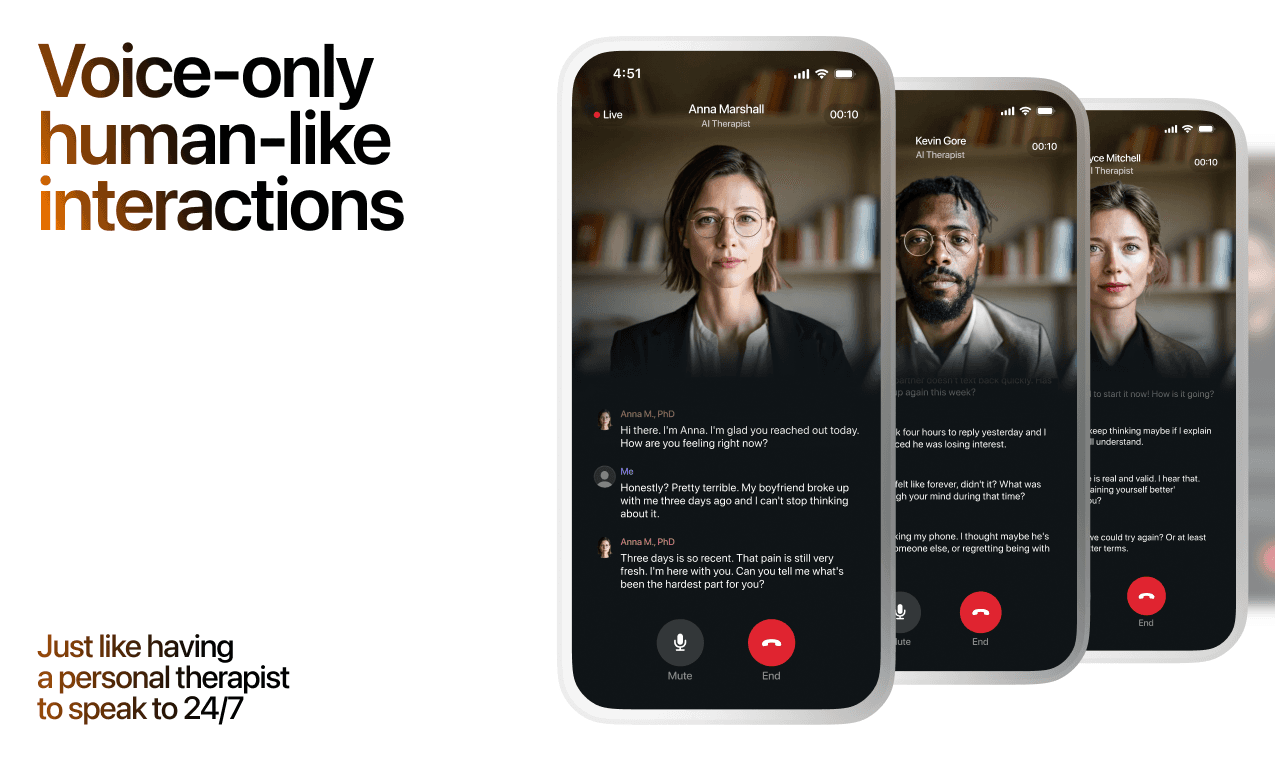
Here's what happens in a typical Lovon session:
You share what's on your mind
There's no script, no intake form, no waiting room. You speak or type whatever you're feeling — in your own words, at your own pace.
Lovon validates and explores
Using frameworks from CBT (Cognitive Behavioral Therapy) and motivational interviewing, Lovon acknowledges your feelings first, then gently helps you explore them. No dismissive "just move on" advice.
You build coping skills together
Lovon doesn't just listen — it actively works with you on evidence-based techniques: thought reframing, urge surfing, behavioral experiments, and more.
What a Session with Lovon Looks Like
When to Seek Professional Help
AI support is a valuable tool, but it's not a replacement for professional care. Please consider reaching out to a licensed therapist if you experience any of the following:
- Persistent thoughts of self-harm or suicide
- Inability to perform daily activities (work, eating, sleeping) for more than 2 weeks
- Turning to alcohol or substances to cope
- Intense anger or desire to harm your ex-partner
- Complete emotional numbness that doesn't improve over time
Crisis Resources (US): If you're in immediate danger, call 988 (Suicide & Crisis Lifeline) or text HOME to 741741 (Crisis Text Line). Available 24/7, free, and confidential.
Outside the US? Find a crisis line in your country
Ready to Start?
Your healing journey can begin right now
A 7-day trial. No judgment. Just a safe space to process what you're going through.
Frequently Asked Questions
Is Lovon a replacement for a real therapist?
Is my conversation with Lovon AI private?
How is Lovon different from ChatGPT for emotional support?
Can I use Lovon if I'm already seeing a therapist?
Can I try Lovon before subscribing?
About the Author
The Lovon Editorial Team
Mental Health & Wellness Content Team
The Lovon Editorial Team develops mental health and wellness content designed to make psychological concepts accessible and actionable. Our goal is to bridge the gap between clinical research and everyday life - helping you understand why your mind works the way it does and what you can do about it....
Related articles
- Retroactive Jealousy: Why It Happens, How to Stop It (2026)
Retroactive jealousy explained: causes, triggers, and 8 steps to break the loop in 2026. Practical, evidence-based…
- Should I Break Up With My Girlfriend? Signs It's Time To Break Up
Many of us believe a relationship will last forever. But at some point, you might start asking yourself a difficult…
- Dismissive Avoidant Attachment: Signs & Fixes (2026)
Dismissive avoidant attachment explained: what drives the withdrawal, how to respond, and when it actually shifts…
- Attachment Style Test for Adults: 2026 Verdict
Which attachment style test for adults actually holds up in 2026? Compare ECR-R, RQ, and Lovon's quiz with clear…
See also
Quizzes
- Should I Give Him Another Chance? 12-Question Quiz
Twelve questions on whether anything has really changed.
- Am I Over My Ex? 12-Question Gut Check
Post-breakup check-in in 2 minutes.
Free tools
- Breakup Message Writer
A chat for saying it once. Tell it how long it has been and why now, and get a message you could actually send, plus the…
- How to Respond to 'I Miss You', Even From an Ex
A chat for when you do not know how to respond to 'I miss you'. Say who sent it and what you feel when you read it, and…
From the wiki
- What is a break in a relationship?
A break is a temporary, agreed pause in a relationship where both people expect to come back. In practice it usually…
Disclaimer: This article is for informational purposes only and does not constitute medical advice, diagnosis, or treatment. Always seek the advice of your physician or other qualified health provider with any questions you may have regarding a medical condition. If you are in crisis or think you may have an emergency, call 988 (Suicide & Crisis Lifeline) or go to the nearest emergency room. Outside the US? Find a crisis line in your country.