
Stonewalling in Relationships: Why It Happens (2026)
Stonewalling in relationships explained: why partners shut down mid-conflict, how to interrupt it, and when to get outside support in 2026.

Key Takeaways
- A name for it. You can't interrupt a pattern you haven't identified. Say "stonewalling," not "you're ignoring me."
- A pre-agreed pause signal. A word or hand gesture both partners accept in advance, used the moment flooding starts.
- 20-30 minutes of separation time. Physiological flooding takes at least 20 minutes to settle — Gottman's lab clocked
- A return-time commitment. "I need 30 minutes" without a return time reads as abandonment, not regulation.
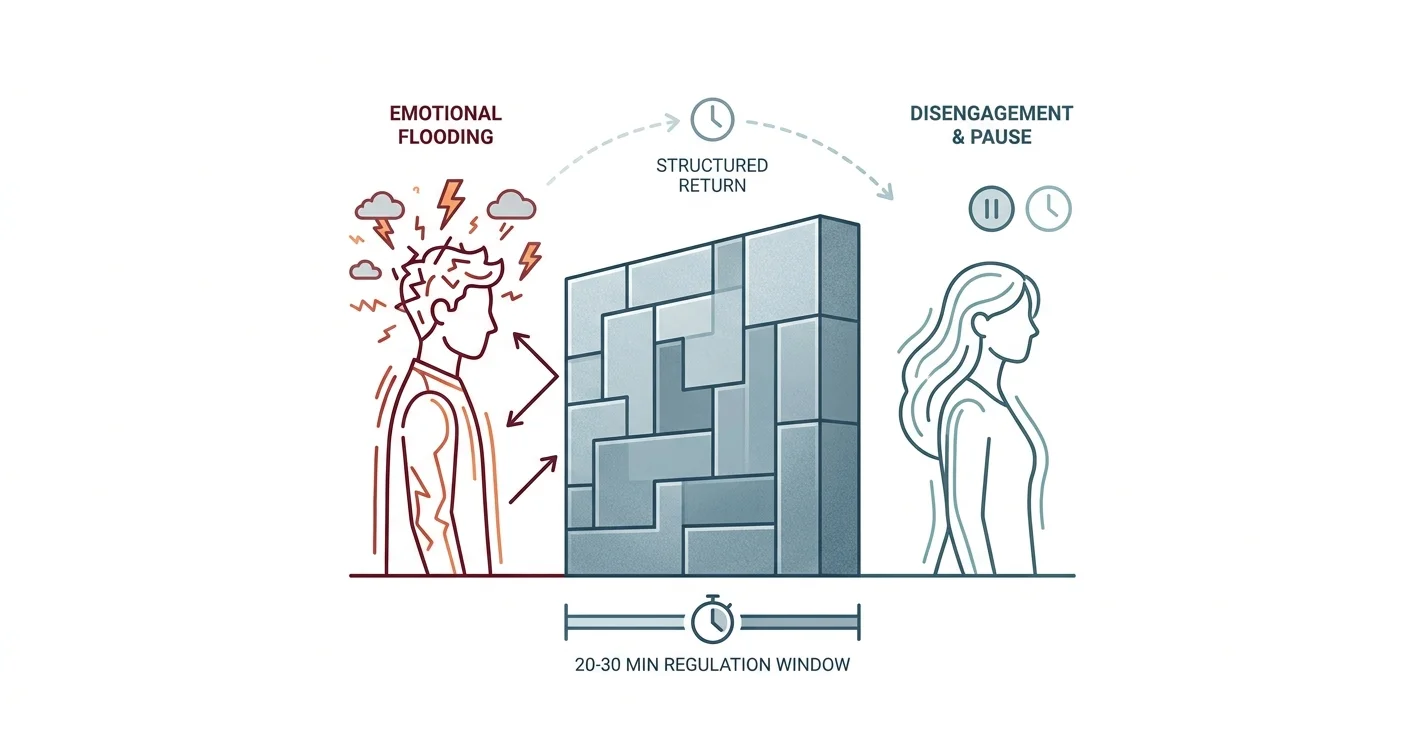
Stonewalling is when one partner shuts down mid-conflict — going silent, turning away, or physically leaving the room instead of engaging. It's a stress response, not a character flaw, and learning to spot it (and interrupt it) changes how couples fight and repair.
TL;DR: Stonewalling in relationships happens when a partner's nervous system floods during conflict and shutting down feels safer than talking. Dr. John Gottman's research names it one of the "Four Horsemen" predicting relationship breakdown, and it's rarely about not caring — it's about not being able to process in real time. The fix isn't forcing conversation through the wall; it's a structured pause, a return time, and (for repeat patterns) outside support like an AI relationship coach or a licensed therapist. Verdict: treatable, not terminal, if both partners name it early.
Why this matters
Stonewalling doesn't look like a fight. It looks like the fight stopping — one person goes quiet, crosses their arms, checks their phone, or walks out, and the other is left talking to a wall. That silence gets read as contempt, and it usually isn't. In 2026, relationship researchers still point back to Gottman's decades of couples-lab data showing stonewalling as one of four communication patterns most linked to breakups and divorce.
The pattern often pairs with a pursuer-withdrawer dynamic, where one partner chases connection and the other retreats further the harder they're chased. If that cycle sounds familiar, the pursuer-withdrawer pattern breakdown covers how it forms and how to break it before it calcifies into a habit both partners can't stop repeating.
What you'll need
- A name for it. You can't interrupt a pattern you haven't identified. Say "stonewalling," not "you're ignoring me."
- A pre-agreed pause signal. A word or hand gesture both partners accept in advance, used the moment flooding starts.
- 20-30 minutes of separation time. Physiological flooding takes at least 20 minutes to settle — Gottman's lab clocked heart rates staying elevated well past that window during stonewalling episodes.
- A return-time commitment. "I need 30 minutes" without a return time reads as abandonment, not regulation.
- Clear boundaries around the topic. Review healthy relationship boundaries before the conversation, not during it — boundaries set mid-conflict sound like ultimatums.
- A private space to process, if you're the one shutting down. Journaling or talking it through out loud with a neutral tool works better than stewing silently.
The steps
1. Recognize the physical signs before words stop. Stonewalling usually starts in the body before it shows in behavior — jaw tightening, breath getting shallow, a flat or blank facial expression. Catching it here means you can name it before the wall goes up. Missing this stage is the single biggest reason couples end up mid-shutdown with no off-ramp.
2. Call it by name, without blame. Say "I think I'm starting to stonewall" or "I notice you're shutting down" instead of "you always do this." Naming the pattern out loud, calmly, de-escalates faster than any argument about who's right. The common mistake here is waiting until the silence has already lasted ten minutes — by then, the labeling itself can feel like an accusation.
3. Use the pause signal and actually leave the room. Staying in the same space "to keep talking it out" defeats the point — proximity keeps the nervous system activated. Physically separate for the agreed 20-30 minutes. This step accomplishes what raw willpower can't: it lets cortisol and heart rate come back down before either person tries to reason.
4. Regulate on purpose during the break, don't just distract. Scrolling a phone for 25 minutes doesn't lower arousal — it just delays the conversation. Slow breathing, a short walk, or talking out the moment with a private, judgment-free listener does more. An AI relationship coach built for exactly this kind of in-the-moment processing can help someone put words to what triggered the shutdown before they're expected to say it out loud to a partner.
5. Return at the agreed time, even if you're not fully ready. Showing up signals the relationship over the discomfort. If you genuinely need more time, say so with a new specific time — "I need another 15 minutes" — rather than going silent again. Skipping the return is the step most likely to turn a repair attempt into a second rupture.
6. Reopen with one sentence, not a recap of the whole argument. Start with something like "I'm back, and I want to understand what you needed from me." Re-litigating everything that was said before the pause reignites the flooding that just settled.
7. Debrief the pattern later, when neither of you is activated. After the immediate issue is resolved, talk about the stonewalling itself — what triggered it, what the pause signal felt like, what would help next time. This is the step most couples skip entirely, and it's the one that actually changes the pattern long-term instead of just surviving one fight.
Troubleshooting
- "They won't agree to a pause signal." Introduce it outside of conflict, during a calm moment, framed as a tool for both of you — not a rule aimed at one person.
- "The shutdown happens even when I try to stay calm." The trigger may be tied to an older stress response. The amygdala hijack explainer covers why the brain overrides rational thought during perceived threat, and how to recognize it happening in real time.
- "My partner returns from the break angrier, not calmer." The break length may be wrong for them — some people need closer to 45 minutes, not 20. Adjust and retest.
- "We keep having the same fight after every pause." The pause manages the moment but doesn't fix the underlying issue — that needs a separate, calmer conversation, ideally with structure or outside support.
- "One of us stonewalls constantly, even over small things." That frequency suggests a deeper avoidance pattern worth naming with a therapist rather than managing fight by fight.
- "I feel like the wall is aimed at punishing me." Sometimes it is contempt, not flooding — the difference matters, and a licensed therapist can help sort out which pattern you're actually dealing with.
Tools and resources
- A shared pause word or signal, agreed on outside of conflict
- A timer for the 20-30 minute regulation window
- Journaling or voice notes to process triggers privately
- An AI voice support app like Lovon for on-demand talking-through when a partner isn't available or the moment needs a neutral outlet
- A licensed couples therapist for patterns that repeat weekly or monthly despite self-management
Lovon is built for exactly this kind of in-between support — not a replacement for a licensed clinician, but somewhere to process what triggered the shutdown, at 11pm on a Tuesday, before the next attempt at the conversation.
What to do next
If stonewalling shows up alongside constant tension over the same three topics, the pattern underneath may be less about communication style and more about attachment. Understanding what drives the shutdown response in the first place is worth a longer look before you assume more pause signals will fix it.
FAQ
What is stonewalling in relationships? Stonewalling is when a partner withdraws from a conversation — going silent, turning away, or leaving — instead of engaging, usually as a response to feeling emotionally overwhelmed. Gottman's research classifies it as one of the "Four Horsemen" patterns linked to relationship breakdown.
Is stonewalling the same as the silent treatment? Not always. The silent treatment is often intentional and used to punish; stonewalling is frequently an involuntary stress response to feeling flooded. The distinction matters for how you respond to it.
Why do partners stonewall instead of just talking? Because their nervous system has moved into a fight-flight-freeze state where rational conversation isn't physically accessible in that moment — talking feels impossible, not just unwanted.
How long does a stonewalling episode usually last? Physiological flooding takes at least 20 minutes to settle in most people, though some need 30-45 minutes before they can re-engage calmly.
Can stonewalling be fixed without therapy? Yes, for occasional episodes — a pause signal, agreed return time, and calm debrief handle most cases. Frequent or extreme stonewalling benefits from a licensed couples therapist.
Is stonewalling a sign the relationship is ending? Not on its own. Gottman's data shows it's a predictor when combined with the other three horsemen (criticism, contempt, defensiveness) and left unaddressed — a single pattern caught early is manageable.
What should I do if I'm the one who stonewalls? Name it out loud ("I need a break, I'll be back in 20 minutes") instead of going silent without explanation, and use the break to actually regulate rather than distract.
Does an AI relationship coach help with stonewalling? It can help process what triggered the shutdown between conversations with a partner, offering a private space to think out loud — it works alongside human support, not instead of a licensed therapist for ongoing patterns.
One last thing
The detail most couples miss: stonewalling almost never starts with the person who goes silent — it starts with the escalation right before it. Gottman's lab data shows the shutdown is usually a response to criticism or contempt landing seconds earlier. Track what happens in the 60 seconds before the wall goes up, and you'll usually find the actual trigger, not just the symptom.
Related guides
How AI Support Helps You Heal
AI emotional support isn't about replacing human connection — it's about filling the gaps. The moments when you need to talk at 2 AM, when you don't want to burden your friends again, or when you simply need someone to listen without judgment.
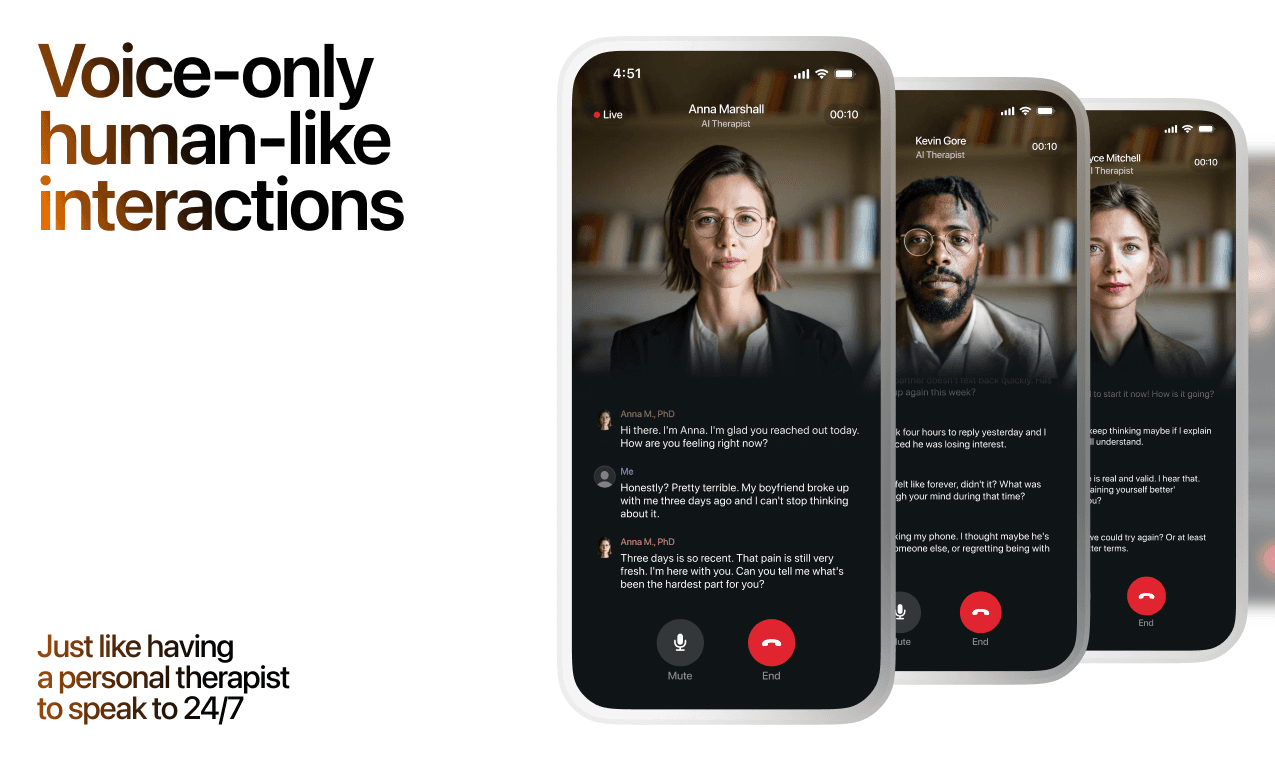
Here's what happens in a typical Lovon session:
You share what's on your mind
There's no script, no intake form, no waiting room. You speak or type whatever you're feeling — in your own words, at your own pace.
Lovon validates and explores
Using frameworks from CBT (Cognitive Behavioral Therapy) and motivational interviewing, Lovon acknowledges your feelings first, then gently helps you explore them. No dismissive "just move on" advice.
You build coping skills together
Lovon doesn't just listen — it actively works with you on evidence-based techniques: thought reframing, urge surfing, behavioral experiments, and more.
What a Session with Lovon Looks Like
When to Seek Professional Help
AI support is a valuable tool, but it's not a replacement for professional care. Please consider reaching out to a licensed therapist if you experience any of the following:
- Persistent thoughts of self-harm or suicide
- Inability to perform daily activities (work, eating, sleeping) for more than 2 weeks
- Turning to alcohol or substances to cope
- Intense anger or desire to harm your ex-partner
- Complete emotional numbness that doesn't improve over time
Crisis Resources (US): If you're in immediate danger, call 988 (Suicide & Crisis Lifeline) or text HOME to 741741 (Crisis Text Line). Available 24/7, free, and confidential.
Outside the US? Find a crisis line in your country
Ready to Start?
Your healing journey can begin right now
A 7-day trial. No judgment. Just a safe space to process what you're going through.
Frequently Asked Questions
Is Lovon a replacement for a real therapist?
Is my conversation with Lovon AI private?
How is Lovon different from ChatGPT for emotional support?
Can I use Lovon if I'm already seeing a therapist?
Can I try Lovon before subscribing?
About the Author

The Lovon Editorial Team
Mental Health & Wellness Content Team
The Lovon Editorial Team develops mental health and wellness content designed to make psychological concepts accessible and actionable. Our goal is to bridge the gap between clinical research and everyday life - helping you understand why your mind works the way it does and what you can do about it....
Related articles
- How to Stop Yelling at Your Partner (2026 Guide)
Learn how to stop yelling at your partner with a step-by-step 2026 method: spot the trigger, call a pause, reset your…
- One Chases, One Retreats: End the Pursuer-Withdrawer Loop
Why one partner keeps pressing while the other goes quiet, and the exact words each side can use to interrupt the cycle…
- Set Boundaries With In-Laws Without Conflict (2026 Guide)
Learn how to set boundaries with in-laws without conflict in 2026 using specific scripts, timing rules, and consequences…
- AI Relationship Advice for Long-Distance Couples 2026
The best AI relationship advice for long-distance couples in 2026. Lovon's voice-based AI coach gives on-demand support…
See also
Quizzes
- Am I Sabotaging My Relationship? 12-Question Quiz
Find the move you reach for, in 2 minutes.
- Relationship Quality Test: How Good Is Your Relationship?
Score connection, repair and teamwork in 3 minutes.
Free tools
- How to Communicate Better in a Relationship
Skip the tips. Give it the one sentence you keep trying to say that turns into a fight, in the words you actually used…
- Why Do We Keep Having the Same Fight?
A chat for the argument that keeps coming back. Walk through the last three times it ran, endings included, and get the…
From the wiki
- What is a break in a relationship?
A break is a temporary, agreed pause in a relationship where both people expect to come back. In practice it usually…
Disclaimer: This article is for informational purposes only and does not constitute medical advice, diagnosis, or treatment. Always seek the advice of your physician or other qualified health provider with any questions you may have regarding a medical condition. If you are in crisis or think you may have an emergency, call 988 (Suicide & Crisis Lifeline) or go to the nearest emergency room. Outside the US? Find a crisis line in your country.