
How to Cope With Loneliness: Steps That Work in 2026
How to cope with loneliness in 2026: 7 concrete steps, troubleshooting fixes, and tools for the moments between human contact. Verdict and FAQ inside.

Key Takeaways
- 10 to 15 minutes a day, ideally the same time each day
- A notes app, voice memo app, or physical journal
- One person you can text or call without much friction (a sibling, old coworker, neighbor)
- A recurring low-effort activity to attach to (walk, gym class, coffee shop, online group)
- Optional: a voice-based support tool for the moments between human contact — this is where an app like Lovon fits,
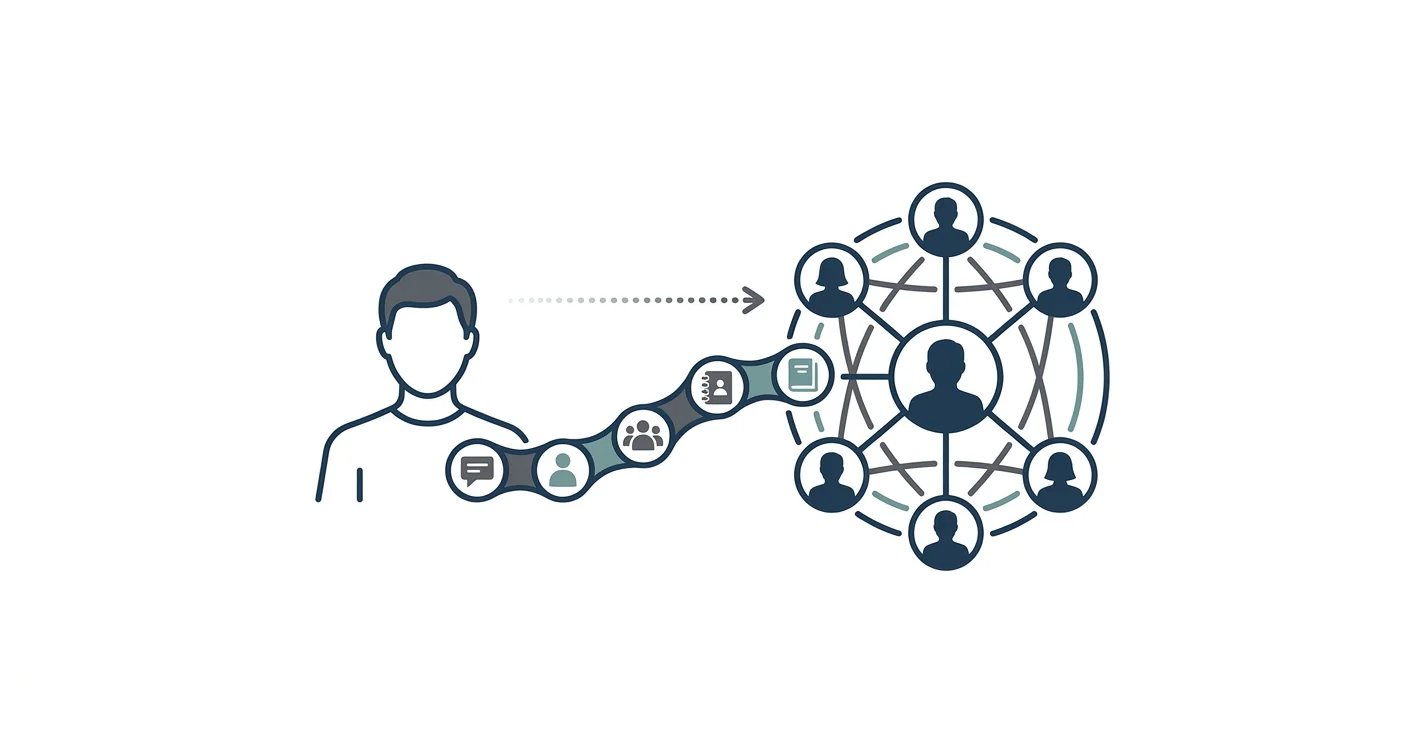
Loneliness isn't about how many people surround you — it's the gap between the connection you have and the connection you need, and closing that gap takes specific, repeatable steps rather than vague advice to "put yourself out there."
TL;DR
Coping with loneliness in 2026 means treating it as a signal to act on, not a mood to wait out: build one small daily connection ritual, name the feeling instead of numbing it, and get support between moments of contact. Verdict: daily micro-connection plus structured reflection works better than waiting for a big social breakthrough. Tools like journaling prompts, grounding practice, and an AI voice companion such as Lovon can fill the gaps between human contact, though they don't replace real relationships or licensed care. If loneliness has lasted more than two weeks and is affecting sleep, appetite, or work, that's the point to loop in a professional.
Why this matters
Loneliness isn't just an emotional discomfort — it changes how you think. Prolonged loneliness narrows attention toward threat and rejection, which makes new social contact feel riskier than it is, which then reduces contact further. That loop is the actual problem, not a lack of willpower.
The good news: the loop responds to small, structured interruptions. You don't need a packed calendar in 2026 to stop feeling lonely — you need 2 or 3 reliable touchpoints a week and a way to process the feeling when no one's around. That's what the steps below build.
What you'll need
- 10 to 15 minutes a day, ideally the same time each day
- A notes app, voice memo app, or physical journal
- One person you can text or call without much friction (a sibling, old coworker, neighbor)
- A recurring low-effort activity to attach to (walk, gym class, coffee shop, online group)
- Optional: a voice-based support tool for the moments between human contact — this is where an app like Lovon fits, since it's built for on-demand emotional check-ins rather than scheduled sessions
The steps
1. Name the type of loneliness you're dealing with
Loneliness isn't one thing. Emotional loneliness (missing a close confidant) needs a different fix than social loneliness (missing a group or community). Confusing the two wastes weeks — someone craving one deep friendship won't fix it by joining five group chats.
Spend 5 minutes writing down: who do I miss talking to, and what did those conversations give me? The answer usually points to depth versus breadth. Common mistake: assuming more social contact automatically fixes loneliness when the real gap is depth, not volume.
2. Build one recurring contact point, not a social life overhaul
Pick a single person and set a recurring, low-stakes touchpoint: a Sunday text, a Wednesday call, a standing coffee every other week. Recurrence matters more than intensity — one 15-minute call every week for 8 weeks does more for loneliness scores than one 3-hour hangout that never repeats.
Send the first message today, even if it's just "thinking of you, how's your week going." What it accomplishes: it converts a vague intention ("I should reconnect with people") into a scheduled behavior your brain can rely on. Common mistake: waiting to feel motivated before reaching out — the message comes before the motivation, not after.
3. Attach yourself to a recurring activity with strangers
A gym class, a running club, a Sunday market, a recurring volunteer shift — anything with the same faces on a schedule. Familiarity builds before friendship does; you don't need to make a friend on day one, you need to become a recognizable face by week 4.
Go twice before judging whether it's working. Why it matters: repeated low-pressure exposure to the same people is how casual acquaintance turns into actual connection, and it removes the pressure of a single high-stakes social event.
4. Externalize the feeling instead of sitting with it silently
When loneliness spikes — usually evenings, weekends, or right after scrolling social media — write or say out loud what you're actually feeling and what triggered it. Two or three sentences is enough: "I feel disconnected right now because I saw a group photo and I wasn't in it."
This is where journaling prompts for anxiety and overthinking can give you a starting structure if a blank page feels harder than the feeling itself. Expected outcome: naming the trigger within 60 seconds of the spike reduces its intensity noticeably, because you've moved from raw emotion to language, which activates a different part of processing.
5. Use on-demand support for the in-between moments
Human contact can't be available at 11pm on a Tuesday, and that's exactly when loneliness often hits hardest. Having a place to talk through the moment — even briefly — keeps a lonely evening from spiraling into a lonely week.
This is the specific gap on-demand emotional support is built for: it's available at 2am, it doesn't require scheduling, and it gives you somewhere to talk through the moment rather than sitting with it alone. Common mistake: treating an AI conversation as a replacement for the human contact you're building in steps 2 and 3, rather than a bridge between them.
6. Audit your social media consumption pattern
Passive scrolling — watching other people's highlight reels without interacting — correlates with higher loneliness than active use like commenting, messaging, or posting. Track your scrolling for 3 days and note how you feel 10 minutes after each session.
If passive scrolling consistently leaves you flatter or more isolated, cut it and replace that slot with one of the actions above. Why it matters: the platforms are built for passive consumption, and passive consumption is the exact behavior that deepens the loneliness loop from "Why this matters" above.
7. Set a 2-week check-in with yourself
Mark your calendar 14 days out. On that date, ask: has the frequency of contact gone up, has the intensity of lonely evenings gone down, am I still avoiding the recurring activity from step 3? Adjust based on the honest answer, not the hopeful one.
Expected outcome: most people see a measurable shift in mood and contact frequency by week 2 if steps 2 through 6 were followed consistently — if nothing has moved, that's the signal to bring in outside support rather than repeat the same routine for another month.
Troubleshooting
- "I reached out and they didn't respond." Wait 3 to 4 days, then try once more with a specific plan ("coffee Thursday at 10?") instead of an open-ended "we should catch up." Specific plans get answered more often than vague ones.
- "I went to the group activity and felt more alone, not less." That's normal for the first 1 to 2 visits. Give it 3 sessions minimum before deciding it's not for you — familiarity takes repeated exposure.
- "I don't have anyone to make a recurring contact point with." Start with a lower-bar option: an old coworker, a distant cousin, or a moderated online community tied to a specific interest, not general social media.
- "Journaling feels forced and I stop after two days." Switch to voice instead of text — saying the sentence out loud into a voice memo or an app like Lovon often feels less like homework than writing it down.
- "The loneliness is constant, not just evening spikes." That pattern, especially past the 2-week mark with changes in sleep or appetite, is worth naming to a licensed therapist rather than managing solo — persistent, all-day loneliness can overlap with depression.
- "I feel lonely even when I'm around people." That's usually an emotional-loneliness pattern (step 1) — the fix is deepening one relationship, not adding more surface-level contact.
Tools and resources
- A recurring calendar reminder for your weekly contact point (step 2)
- Journaling prompts for anxiety and overthinking for the days a blank page feels harder than the feeling itself
- A voice-based support option like Lovon for late-night or between-session moments when no one else is reachable
- A local class, club, or volunteer shift with a fixed weekly schedule
- A licensed therapist or counselor if loneliness persists past 2 weeks alongside sleep, appetite, or motivation changes
What to do next
If loneliness is showing up alongside a wider pattern of feeling emotionally flat, overwhelmed, or shut down, it's worth understanding the nervous-system side of it. The window of tolerance explains why some days you can handle social contact fine and other days even a text feels like too much — and what actually widens that capacity over time.
FAQ
What is the fastest way to cope with loneliness? Send one specific message to one person today, with a concrete plan attached ("coffee Thursday?"), rather than a vague check-in. Specific plans get responses faster and convert the feeling into action within minutes, not weeks.
Is loneliness a mental health problem? Loneliness itself is a normal emotional signal, not a diagnosis, but chronic loneliness lasting more than 2 weeks with changes in sleep, appetite, or motivation overlaps significantly with depression and anxiety and is worth discussing with a professional.
How long does it take to stop feeling lonely? Most people notice a shift in mood and contact frequency within 2 weeks of consistent daily action (steps 2 through 6 above); full social routines usually take 6 to 8 weeks to feel stable.
Can AI therapy help with loneliness? An AI voice tool like Lovon can help by giving you somewhere to talk through a lonely moment when no one else is available, especially late at night, but it works best as a bridge to human contact, not a substitute for it.
What's the difference between being alone and being lonely? Being alone is a physical state; loneliness is the gap between the connection you have and the connection you want, which is why some people feel lonely in a crowd and fine on a solo hike.
Does loneliness affect physical health? Prolonged loneliness is associated with disrupted sleep and elevated stress response, which is why addressing it early — rather than waiting for it to pass — matters for more than just mood.
How do I make friends as an adult in 2026? Attach yourself to a recurring activity with a fixed schedule (class, club, volunteer shift) and show up at least 3 times before judging the fit — recurring exposure builds familiarity faster than one-off events.
Is texting an AI companion the same as talking to a therapist? No — Lovon and similar apps are built for on-demand emotional support and coping tools, not a replacement for licensed clinical care, and that distinction matters most when loneliness is severe or long-lasting.
One last thing
The single most overlooked fix for loneliness isn't adding more people — it's upgrading the depth of the contact you already have. One 15-minute phone call with a real back-and-forth conversation does more for a lonely evening than three hours in a room full of people you never actually talk to. Pick the one relationship worth deepening before adding new ones.
Related guides
How AI Support Helps You Heal
AI emotional support isn't about replacing human connection — it's about filling the gaps. The moments when you need to talk at 2 AM, when you don't want to burden your friends again, or when you simply need someone to listen without judgment.
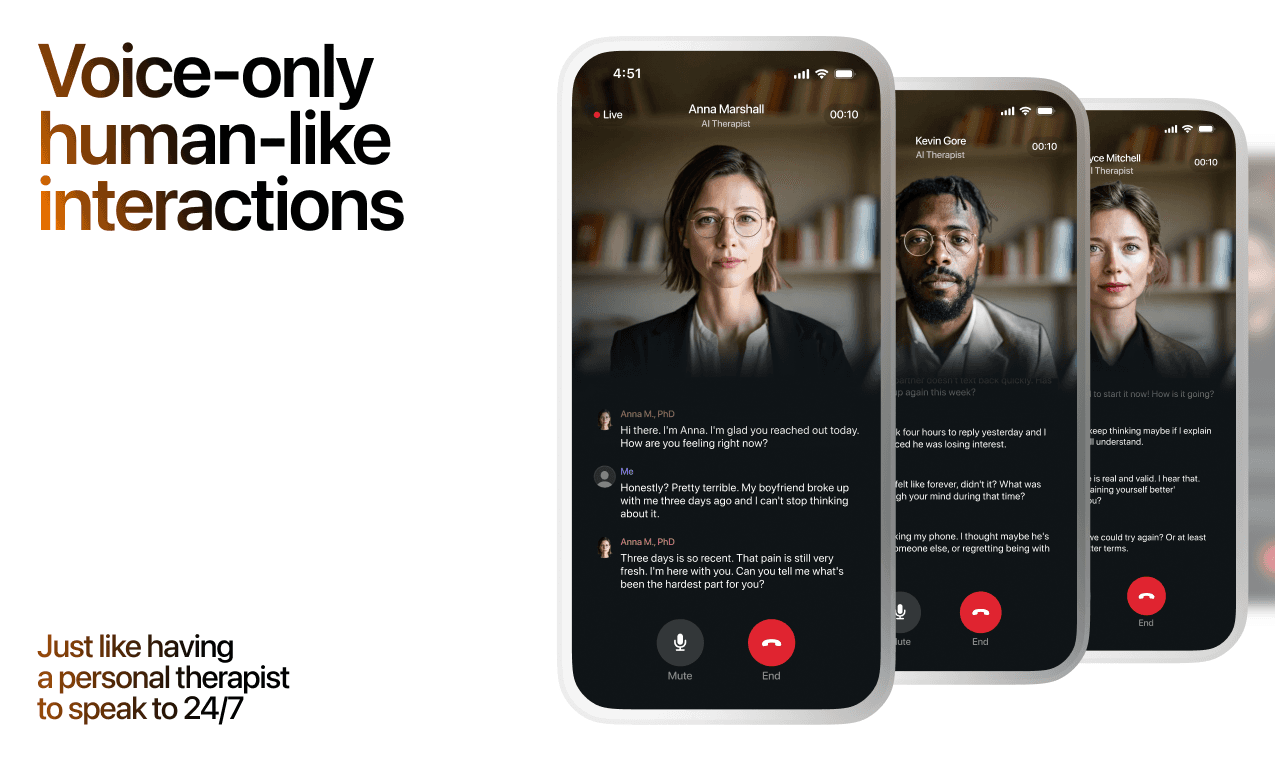
Here's what happens in a typical Lovon session:
You share what's on your mind
There's no script, no intake form, no waiting room. You speak or type whatever you're feeling — in your own words, at your own pace.
Lovon validates and explores
Using frameworks from CBT (Cognitive Behavioral Therapy) and motivational interviewing, Lovon acknowledges your feelings first, then gently helps you explore them. No dismissive "just move on" advice.
You build coping skills together
Lovon doesn't just listen — it actively works with you on evidence-based techniques: thought reframing, urge surfing, behavioral experiments, and more.
What a Session with Lovon Looks Like
When to Seek Professional Help
AI support is a valuable tool, but it's not a replacement for professional care. Please consider reaching out to a licensed therapist if you experience any of the following:
- Persistent thoughts of self-harm or suicide
- Inability to perform daily activities (work, eating, sleeping) for more than 2 weeks
- Turning to alcohol or substances to cope
- Intense anger or desire to harm your ex-partner
- Complete emotional numbness that doesn't improve over time
Crisis Resources (US): If you're in immediate danger, call 988 (Suicide & Crisis Lifeline) or text HOME to 741741 (Crisis Text Line). Available 24/7, free, and confidential.
Outside the US? Find a crisis line in your country
Ready to Start?
Your healing journey can begin right now
A 7-day trial. No judgment. Just a safe space to process what you're going through.
Frequently Asked Questions
Is Lovon a replacement for a real therapist?
Is my conversation with Lovon AI private?
How is Lovon different from ChatGPT for emotional support?
Can I use Lovon if I'm already seeing a therapist?
Can I try Lovon before subscribing?
About the Author

The Lovon Editorial Team
Mental Health & Wellness Content Team
The Lovon Editorial Team develops mental health and wellness content designed to make psychological concepts accessible and actionable. Our goal is to bridge the gap between clinical research and everyday life - helping you understand why your mind works the way it does and what you can do about it....
Related articles
- AI Coping Tools for Anxiety 2026: What Actually Works
AI coping tools for anxiety compared for 2026: box breathing, grounding, and PMR ranked with clear verdicts on what to…
- How to Break a Trauma Response Cycle (2026 Guide)
Learn how to break a trauma response cycle with 7 concrete steps, troubleshooting fixes, and where AI voice therapy fits…
- Emotional Sobriety: What It Is & How to Build It (2026)
Emotional sobriety explained: a 7-step method to feel hard emotions without reacting, plus tools and troubleshooting to…
- Emotional Support App for Loneliness: What Wins in 2026
Compares emotional support apps for loneliness in 2026 — what to look for, top picks, and verdicts. Lovon rated the top…
See also
Quizzes
- Distress Tolerance Test: How Long Can You Sit With It?
See which kind of discomfort makes you need out first.
- Defense Mechanisms Test: Which Ones Do You Use Most?
See what your defenses do with hard feelings, in 3 minutes.
Free tools
- Write a Letter to Someone You Lost
Tell it who they were to you and what you never got to say, and it writes the letter back in your words. No account, no…
- What to Say When a Pet Dies
Get a message you can actually send to someone whose dog or cat just died: one that uses the animal's name, treats the…
From the wiki
- Why do I feel lonely all of a sudden?
Sudden loneliness usually traces back to something that quietly ended in the last few months: a routine, a shared class…
Disclaimer: This article is for informational purposes only and does not constitute medical advice, diagnosis, or treatment. Always seek the advice of your physician or other qualified health provider with any questions you may have regarding a medical condition. If you are in crisis or think you may have an emergency, call 988 (Suicide & Crisis Lifeline) or go to the nearest emergency room. Outside the US? Find a crisis line in your country.