
Window of Tolerance: What It Is & How to Widen It (2026)
Window of tolerance explained: what pushes you out of it and 6 steps to widen it in 2026. Verdict, troubleshooting, and tools included.

Key Takeaways
- 10-15 minutes a day, ideally at the same time (morning or before bed works best)
- A quiet space where you won't be interrupted
- A way to track your body's signals — a notes app, a journal, or a voice log
- One breathing technique you can do anywhere (box breathing is the easiest starting point)
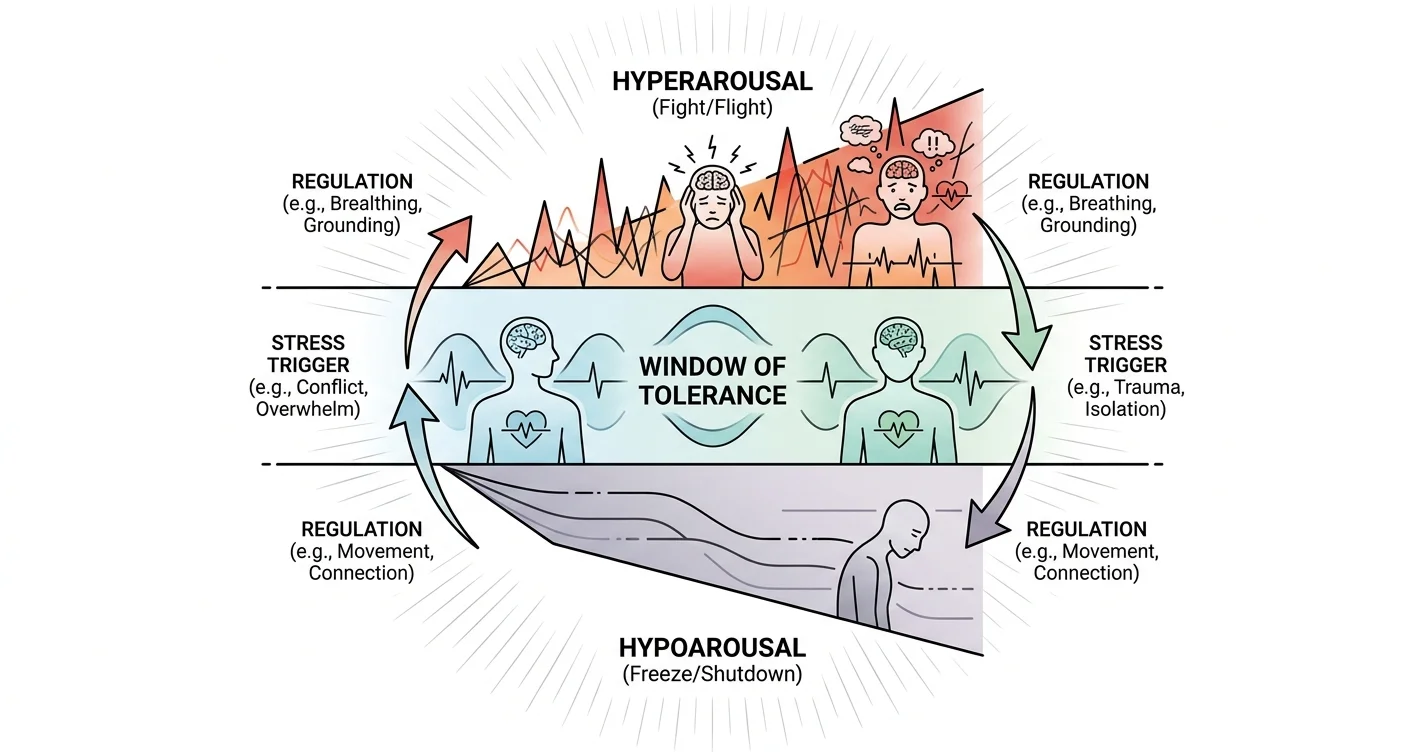
Your window of tolerance is the zone where you can feel stress, think clearly, and respond instead of react — and in 2026, most people are operating with a narrower window than they realize.
When you're inside it, a hard email or a snappy comment from your partner registers as annoying, not catastrophic. When you're outside it, the same trigger sends you into hyperarousal (panic, racing thoughts, snapping at people) or hypoarousal (shutting down, going numb, zoning out). This guide covers what the window of tolerance actually is, what pushes you out of it, and the specific steps that widen it over time.
TL;DR
The window of tolerance is the nervous system range where you can handle stress without flipping into fight-or-flight or shutting down completely — a concept developed by psychiatrist Dr. Dan Siegel. Verdict: widening your window is a skill, not a personality trait, and it responds to daily practice within 4 to 8 weeks for most people. The fastest levers in 2026 are body-based: paced breathing, grounding, and consistent sleep, paired with catching the early signs of dysregulation before you're fully outside your window. If you want structured daily practice with someone to talk through triggers, an AI voice session on Lovon can walk you through the same regulation tools covered here.
Why this matters
A narrow window of tolerance shows up as things that don't sound clinical: you cry at minor criticism, you go blank in meetings, you can't fall asleep because your body won't downshift. None of that means something is wrong with you. It means your nervous system's stress threshold has gotten smaller, usually from chronic stress, unresolved trauma, or just not sleeping enough for months at a time.
Widening the window matters because it's the difference between a hard day and a hard week. People with a wider window recover from a stressful moment in minutes. People with a narrow one carry it for days, and that spillover affects relationships, work, and sleep. The 2026 data on burnout and chronic stress makes the same point over and over: regulation is trainable, and it's cheaper and faster than most people assume.
What you'll need
- 10-15 minutes a day, ideally at the same time (morning or before bed works best)
- A quiet space where you won't be interrupted
- A way to track your body's signals — a notes app, a journal, or a voice log
- One breathing technique you can do anywhere (box breathing is the easiest starting point)
- Optional: a polyvagal theory explainer if you want the science behind why this works, or a voice-based tool like Lovon if you want a guided check-in rather than doing it solo
The steps
1. Map your current window
Before you widen anything, find your edges. For one week, note three things each day: what triggered stress, what your body did (racing heart, tight jaw, going quiet), and how long it took to settle.
This matters because most people can't widen a window they haven't measured. By day 7 in 2026 tracking studies on self-monitoring, patterns usually emerge — a specific time of day, a specific person, a specific type of demand.
Common mistake: tracking only the big blowups and skipping the small dips into hyperarousal or numbness, which are actually more useful data.
2. Learn to spot the early exit signs
Your body signals before you're fully outside your window — shallow breathing, jaw clenching, a stomach drop, or your mind going quiet mid-conversation. Catching these in the first 10-15 seconds is far easier than pulling yourself back after 10 minutes of full dysregulation.
Practice naming the sensation out loud or in your head: "jaw tight, chest high." This single habit, done consistently for 2-3 weeks, is one of the fastest ways to shrink your reaction time.
Common mistake: waiting until you're already yelling or already numb to intervene — by then you're deep outside the window and it takes longer to come back.
3. Use a body-based reset, not a thought-based one
When you're outside your window, talking yourself down rarely works because the thinking part of your brain is partially offline. Physical resets work faster: box breathing (4 seconds in, 4 hold, 4 out, 4 hold, repeated for 2 minutes), cold water on your wrists, or pressing your feet into the floor and naming five things you see.
Do this the moment you notice an early exit sign, not after you've been dysregulated for 20 minutes. A box breathing technique practiced daily, even when calm, makes it far more reliable under real stress.
Common mistake: trying a brand-new technique for the first time during an actual crisis instead of practicing it when calm.
4. Understand which state you default to
Some people default to hyperarousal (anxiety, anger, racing thoughts). Others default to hypoarousal, closer to a freeze response — shutting down, going flat, dissociating mid-conversation. Knowing your default matters because the fix is different: hyperarousal needs calming techniques, hypoarousal needs activating ones (movement, cold exposure, standing up and walking).
Spend a week just labeling which direction you tend to go under stress. Don't try to fix it yet — just notice.
Common mistake: applying a calming technique (like slow breathing) when you're actually shut down and numb, which can make hypoarousal worse instead of better.
5. Build a consistent nervous system baseline
Your window of tolerance shrinks when your baseline stress is already elevated — poor sleep, skipped meals, constant caffeine, no downtime. Widening the window isn't only about the acute moment; it's about lowering your resting stress level so you start each day with more room before you hit the edge.
Prioritize one lever at a time: consistent sleep and wake times for 2026's first quarter, then add regular meals, then reduce stimulants after 2pm. Small, boring, and it works.
Common mistake: trying to overhaul sleep, diet, and exercise simultaneously and abandoning all three within a week.
6. Practice re-entry, not just avoidance
A wider window doesn't mean you never leave it — it means you get back in faster. After a stressful moment, deliberately practice the return: three slow breaths, naming the current time and place, and asking yourself one grounding question ("what do I need in the next 10 minutes?").
Doing this consistently after both small and large stressors, even when you don't feel like it, is what actually trains the window to widen over months, not the avoidance of stress itself.
Common mistake: treating avoidance of triggers as the goal instead of practicing faster recovery.
Troubleshooting
- I know the technique but freeze completely instead of using it. This is common with a hypoarousal default — start with movement (stand, stretch, walk to another room) before attempting any calming technique.
- Breathing exercises make my anxiety worse. Some people get more anxious focusing on breath. Try grounding through the senses instead — naming five things you can see, four you can touch.
- I regulate fine alone but lose it instantly around certain people. That's a relational trigger, not a general regulation problem — the fix is identifying the specific pattern, which often overlaps with attachment style work rather than solo grounding.
- My window seems to be shrinking over time, not widening. Chronic, unaddressed stress or unresolved trauma can narrow the window faster than daily practice widens it — this is worth raising with a licensed clinician if it persists past 6-8 weeks.
- I can't tell if I'm inside or outside my window in the moment. Start with the body-scan habit from step 2; awareness always comes before control.
- Nothing seems to move the needle after a month. Reassess your baseline stressors (step 5) — a technique can't outperform chronic sleep deprivation or an ongoing high-stress environment.
Tools and resources
- Daily voice check-ins with an AI companion, like sessions through Lovon, for talking through triggers as they come up rather than waiting for a weekly appointment
- A grounding or breathing reference you can pull up mid-stress, such as a box breathing walkthrough
- Background reading on the nervous system science so the "why" behind the technique sticks
- A simple tracking method — notes app, voice memo, or paper journal — for the mapping step
- A licensed therapist for anyone whose window has narrowed sharply after a major life event; regulation tools help daily, but they don't replace clinical care for trauma
What to do next
Once you've mapped your triggers and practiced a body-based reset for two weeks, the next layer is understanding the specific state your body drops into under stress. Read the amygdala hijack guide next — it explains what's happening in your brain during the moment you exit your window, which makes the whole process feel less random and more mechanical.
FAQ
What is the window of tolerance in simple terms? It's the zone where you can feel stress, sadness, or frustration without your nervous system tipping into panic or shutdown. Psychiatrist Dr. Dan Siegel introduced the term to describe the range where a person can think clearly while still feeling emotion.
How long does it take to widen your window of tolerance? Most people notice a difference within 4 to 8 weeks of consistent daily practice — body-based grounding, sleep consistency, and early-sign detection. Trauma-related narrowing can take longer and often benefits from working with a licensed clinician.
Is the window of tolerance the same as emotional regulation? They're related but not identical — the window is the range you can operate in, while emotional regulation is the set of skills you use to stay inside it or return to it faster. Widening the window is really the long-term result of consistent regulation practice.
What does being outside your window of tolerance feel like? It shows up as either hyperarousal (racing heart, panic, snapping at people) or hypoarousal (numbness, shutting down, going blank). Both are signs your nervous system has moved past its stress threshold, not a character flaw.
Can an app actually help widen your window of tolerance? A voice-based tool can help you practice grounding and talk through triggers in the moment, which reinforces the daily habit that widens the window over weeks. Apps are a support layer, not a replacement for licensed therapy when trauma is involved.
Does poor sleep shrink your window of tolerance? Yes — elevated baseline stress from poor sleep, skipped meals, or chronic overwork narrows the window before any single trigger even happens. Fixing sleep consistency is often the highest-leverage single change in 2026 self-regulation research.
What's the difference between freeze response and a narrow window of tolerance? Freeze response is one specific exit state (hypoarousal), while a narrow window of tolerance is the broader pattern of exiting easily in either direction. Someone can have a narrow window and default to freeze, or default to panic — the underlying window size is the same concept either way.
Do I need therapy if my window of tolerance feels very narrow? Daily practice helps most people, but a sharply narrowed window, especially after trauma or a major life event, is worth discussing with a licensed clinician. Self-guided tools support the process; they don't replace clinical trauma work.
One last thing
The part most people skip is step 6 — practicing the return, not just avoiding the trigger. A window of tolerance doesn't widen because you stop encountering stress; it widens because you get faster at coming back from it, and that only happens with repeated, deliberate practice after both small and large stress moments, all through 2026 and beyond.
Related guides
How AI Support Helps You Heal
AI emotional support isn't about replacing human connection — it's about filling the gaps. The moments when you need to talk at 2 AM, when you don't want to burden your friends again, or when you simply need someone to listen without judgment.
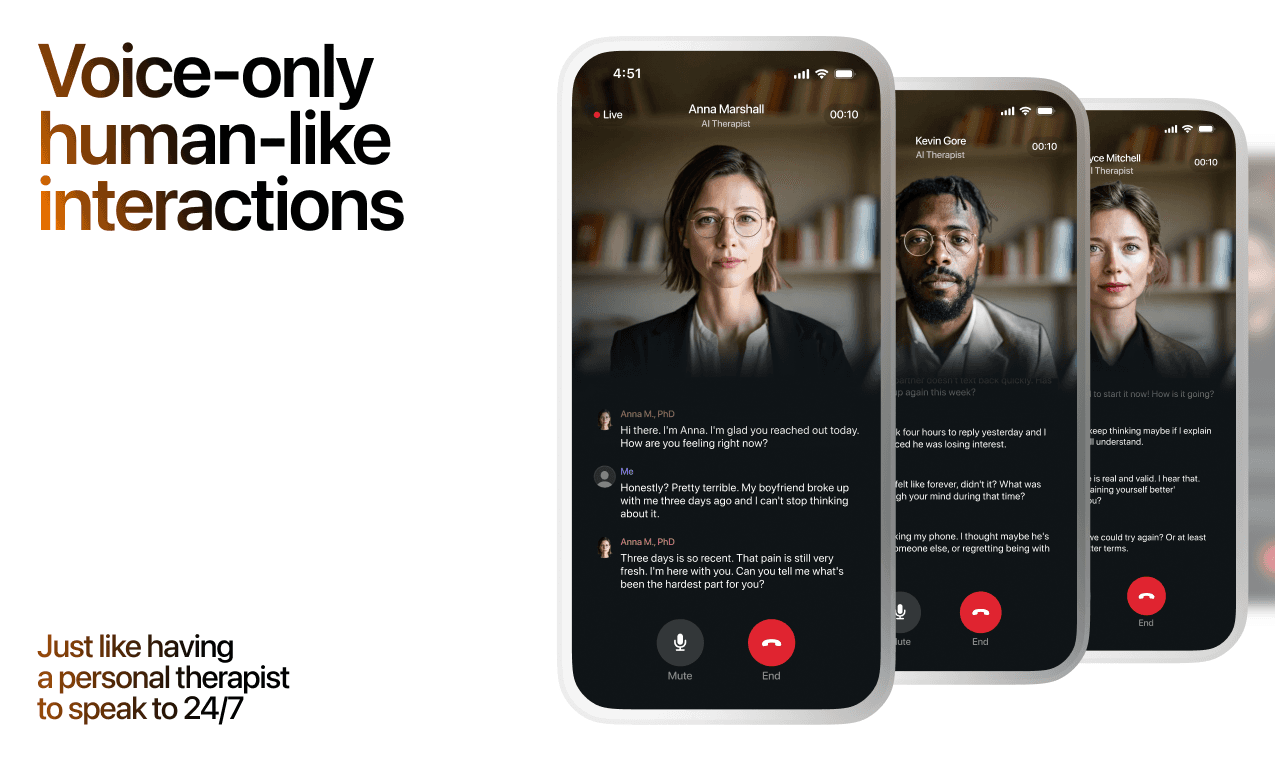
Here's what happens in a typical Lovon session:
You share what's on your mind
There's no script, no intake form, no waiting room. You speak or type whatever you're feeling — in your own words, at your own pace.
Lovon validates and explores
Using frameworks from CBT (Cognitive Behavioral Therapy) and motivational interviewing, Lovon acknowledges your feelings first, then gently helps you explore them. No dismissive "just move on" advice.
You build coping skills together
Lovon doesn't just listen — it actively works with you on evidence-based techniques: thought reframing, urge surfing, behavioral experiments, and more.
What a Session with Lovon Looks Like
When to Seek Professional Help
AI support is a valuable tool, but it's not a replacement for professional care. Please consider reaching out to a licensed therapist if you experience any of the following:
- Persistent thoughts of self-harm or suicide
- Inability to perform daily activities (work, eating, sleeping) for more than 2 weeks
- Turning to alcohol or substances to cope
- Intense anger or desire to harm your ex-partner
- Complete emotional numbness that doesn't improve over time
Crisis Resources (US): If you're in immediate danger, call 988 (Suicide & Crisis Lifeline) or text HOME to 741741 (Crisis Text Line). Available 24/7, free, and confidential.
Outside the US? Find a crisis line in your country
Ready to Start?
Your healing journey can begin right now
A 7-day trial. No judgment. Just a safe space to process what you're going through.
Frequently Asked Questions
Is Lovon a replacement for a real therapist?
Is my conversation with Lovon AI private?
How is Lovon different from ChatGPT for emotional support?
Can I use Lovon if I'm already seeing a therapist?
Can I try Lovon before subscribing?
About the Author
The Lovon Editorial Team
Mental Health & Wellness Content Team
The Lovon Editorial Team develops mental health and wellness content designed to make psychological concepts accessible and actionable. Our goal is to bridge the gap between clinical research and everyday life - helping you understand why your mind works the way it does and what you can do about it....
Related articles
- Can an AI voice app actually calm you down?
Yes, AI voice apps calm acute anxiety spikes fast through paced voice conversation. See how it works, its limits, and…
- Dissociation Symptoms: Why You Zone Out (2026 Guide)
Dissociation symptoms explained: why you zone out, lose time, or feel detached, plus grounding steps that work in 2026…
- Nervous System Reset: Daily Practices That Work (2026)
A nervous system reset in 90 seconds: box breathing, cold exposure, and orientation cues that calm fight-or-flight…
- Why Do I Zone Out So Much? Reasons and How to Fix Your Brain Function
Imagine you are talking with a friend and suddenly stop because you lose the context and forget what you were saying.
See also
Quizzes
- Distress Tolerance Test: How Long Can You Sit With It?
See which kind of discomfort makes you need out first.
- Digital Stress Test: Texting, Likes and Read Receipts
See which part of being online wears on you, in 3 minutes.
Free tools
- Write a Condolence Message for This Person
Get one condolence message written for your situation instead of a list of a hundred to choose from. Tell it who died…
- What to Say When a Pet Dies
Get a message you can actually send to someone whose dog or cat just died: one that uses the animal's name, treats the…
From the wiki
- How to stop maladaptive daydreaming?
Maladaptive daydreaming is immersive waking fantasy that eats hours, usually with music and pacing attached. You rarely…
Disclaimer: This article is for informational purposes only and does not constitute medical advice, diagnosis, or treatment. Always seek the advice of your physician or other qualified health provider with any questions you may have regarding a medical condition. If you are in crisis or think you may have an emergency, call 988 (Suicide & Crisis Lifeline) or go to the nearest emergency room. Outside the US? Find a crisis line in your country.