
What Is a Break in a Relationship? Rules & Red Flags 2026
A relationship break is a structured pause — not a slow breakup. Learn the rules, red flags, and exact steps to make it work in 2026.

Key Takeaways
- A shared definition. Both people must agree on what "break" means — this is not a given. Spell it out in a
- A fixed end date. Without one, a break defaults to a breakup. Most therapists recommend 2–4 weeks as a workable
- Clear ground rules on contact. Decide whether you will speak, how often, and for what reasons (logistics only,
- Agreement on exclusivity. This is the question most couples avoid and then fight about later. Are you seeing other
- A reason you can both name. "I just need space" is not enough. What specific issue are you hoping the break
A relationship break is one of the most misunderstood moves a couple can make — and how you set it up in 2026 determines whether it saves your relationship or quietly ends it.
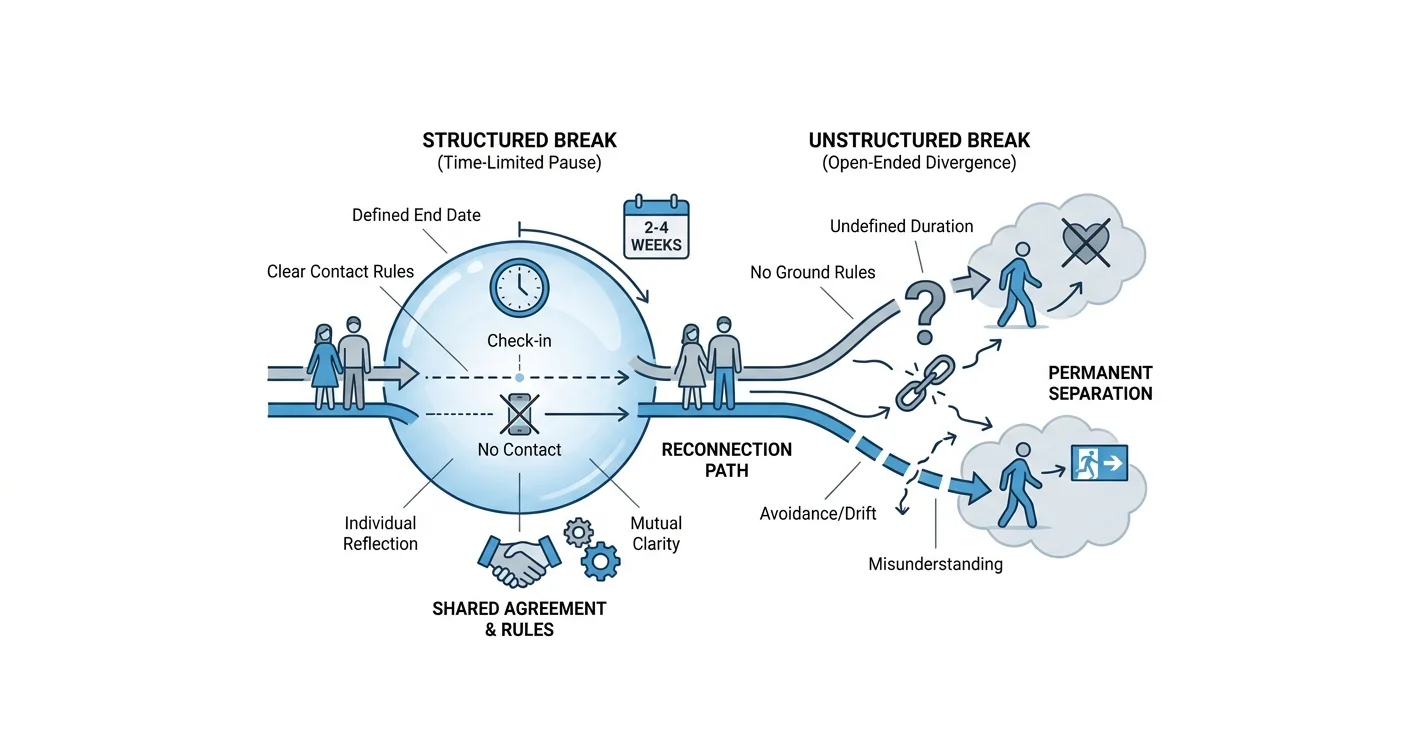
TL;DR: A break in a relationship is a structured, time-limited pause where both partners step back from the day-to-day dynamic to gain clarity — without formally ending the relationship. It is not a breakup, but it is not a vacation from commitment either. Done with clear rules, a defined end date, and honest intent, a break can reset communication patterns and prevent a permanent split. Done carelessly, it becomes slow-motion avoidance. This guide covers what a break actually is, the rules that make it work, and the red flags that mean you are already heading somewhere else.
Why This Matters
About 50% of couples who separate temporarily do reconcile, but the outcome depends heavily on how the break was structured — not just the feelings involved. A break with no rules tends to mirror a breakup with extra steps: unspoken assumptions, unilateral behavior, and mounting resentment. The couples who use breaks productively treat them as a defined process, not an open-ended escape.
If you are at the point where a break feels necessary, something real is happening in the relationship. That something deserves a clear-eyed look, not just time.
What You Will Need Before the Break Starts
- A shared definition. Both people must agree on what "break" means — this is not a given. Spell it out in a conversation, not a text.
- A fixed end date. Without one, a break defaults to a breakup. Most therapists recommend 2–4 weeks as a workable window; anything beyond 8 weeks rarely resolves in reunion.
- Clear ground rules on contact. Decide whether you will speak, how often, and for what reasons (logistics only, check-ins, or full silence).
- Agreement on exclusivity. This is the question most couples avoid and then fight about later. Are you seeing other people? State it plainly before the break starts.
- A reason you can both name. "I just need space" is not enough. What specific issue are you hoping the break addresses? Name it.
- Individual support lined up. A break is not the time to lean on mutual friends who will relay messages. Therapy, journaling, or a tool like Lovon for on-demand reflection can help you process without triangulating.
The Steps: How to Do a Relationship Break Without Wrecking It
Step 1 — Have the defining conversation in person
Bringing up a break over text or during a fight produces the worst outcomes. Both people need to be calm and in the same space. The goal of this conversation is not to resolve every issue — it is to agree on the structure of the break itself. Keep it under 90 minutes. If it escalates, reschedule it.
Common mistake: One partner uses this conversation to relitigate every grievance. That derails the structure and turns the break into a breakup conversation instead.
Step 2 — Set the end date and write it down
A break without an end date is just ambiguity with a softer name. Pick a specific date — not "a few weeks" — and agree that you will reconvene on that day regardless of how things feel in the middle. Writing it down (even a shared note) removes the temptation to unilaterally extend or cancel without notice.
Expected outcome: Both people leave the conversation knowing exactly when the pause ends and what the re-entry conversation will look like.
Step 3 — Define contact rules before day one
The three most common models couples use in 2026:
- Full silence — no contact except genuine emergencies (shared lease, shared pet, shared child). Hardest emotionally, clearest structurally.
- Minimal logistics only — texts about practical matters, no emotional updates, no "I miss you" messages.
- Scheduled check-ins — one call or message per week at a set time. Requires more self-regulation but keeps both people in the loop without constant entanglement.
Choose one. Do not drift between them based on mood.
Step 4 — Address the exclusivity question directly
This is the step most couples skip, and it produces the most damage. If one person assumes monogamy continues and the other assumes freedom, the break destroys trust even if it was otherwise well-intentioned. The conversation is uncomfortable for about 10 minutes. The fallout from not having it can last years.
Common mistake: Assuming shared values means a shared answer. They do not. Ask the question out loud.
Step 5 — Use the break for actual reflection, not distraction
A break works when both people use the time to understand their own role in the relationship's friction — not just to recover from the other person. Questions worth sitting with:
- What pattern keeps repeating, and what am I contributing to it?
- What do I actually want from this relationship, separate from fear of loss?
- What would need to change for me to feel genuinely good being back together?
If you find yourself unable to sit with these questions, that is useful information too. Lovon's AI voice sessions are designed for exactly this kind of guided self-reflection — available any time, without scheduling ahead.
Step 6 — Reconvene on the agreed date with specific observations
The re-entry conversation is not "so, how do you feel?" It is a structured exchange of what each person learned and what they want next. Come with at least 2–3 concrete observations, not just emotional summaries. "I realized I shut down whenever you raise your voice, and I want to work on that" is more useful than "I just needed to miss you."
Expected outcome: A clear decision — resume the relationship with named changes, extend the break with a revised end date (once only), or end it.
Step 7 — Decide, then commit to the decision
The break ends with a choice. Half-resuming — getting back together without addressing anything — is the most common way breaks produce a second, permanent split within 6 months. If you are resuming, name the specific changes both people are committing to. If you are ending it, end it cleanly rather than drifting back into ambiguity.
Red Flags: When a "Break" Is Actually Something Else
Not every break request is a genuine attempt at clarity. These patterns signal a different dynamic:
- One person already has someone else in mind. A break requested within days of a new connection forming is almost always an exit strategy, not a reset.
- No interest in defining rules. If your partner refuses to set an end date or answer the exclusivity question, they are keeping options open — and closing yours.
- The break is used as punishment. Threatening a break during arguments to produce compliance is emotional manipulation, not conflict resolution. See pursuer-withdrawer pattern for how this dynamic usually plays out.
- You have had this break before. A second or third "break" with the same relationship issues intact is a sign the underlying problem is not being addressed. More time apart will not fix what honest communication has not.
- One person is not actually on board. A break agreed to under pressure — where one person feels they had no real choice — is not a joint decision. It is compliance, and it breeds resentment.
- Contact rules change within the first week. If the person who wanted the break is texting daily by day 3, they either did not want a break or are anxious about what the distance revealed.
Troubleshooting: What to Do When It Gets Hard
You are panicking mid-break. Sit with it for 24 hours before breaking contact. Panic is not the same as emergency. Journal what is underneath the urge to reach out — is it genuine love, fear of loss, or just discomfort with uncertainty?
Your partner breaks the rules they set. Bring it up at the re-entry conversation, not in the middle of the break. Reacting in real time escalates rather than resolves.
You want to end the break early. Talk to someone neutral — a therapist, or Lovon — before you act. Early returns driven by anxiety rather than genuine readiness tend to reset the clock on unresolved issues without actually resolving them.
The end date arrives and you still have no clarity. One extension is reasonable; treat it as a sign of ongoing avoidance if it becomes two. Set a harder deadline: a decision by a specific date, or the relationship ends by default.
You realize during the break that you want out. Do not let the break expire and then drift back together out of inertia. Tell your partner before the agreed date so they are not blindsided at re-entry.
Attachment anxiety makes no-contact unbearable. Anxious attachment styles often experience a no-contact break as abandonment, not reflection. Knowing this about yourself — and working with it actively — matters more than white-knuckling the rules. Resources on anxious attachment style signs and coping strategies can help frame what you are experiencing.
Tools and Resources
- Journaling prompts for self-reflection — the five questions in Step 5 above are a starting point; add "What am I afraid to admit?" and "What would I tell a close friend in my situation?"
- Structured conversation guides — Gottman Institute's free resources cover re-entry conversations with specificity.
- Lovon — AI voice sessions for working through relationship anxiety, attachment patterns, and the kind of 2 a.m. spiraling that a break tends to produce. Not a replacement for a licensed therapist, but available when you need to process something right now.
- Free AI therapist for relationship problems — covers how AI-supported support works for ongoing relationship distress.
- A licensed couples therapist — if the issues driving the break involve repeated conflict cycles, infidelity, or mental health factors, professional support before re-entry is worth the investment.
What to Do Next
If the break resolves and you are resuming the relationship, the real work starts at re-entry. The patterns that created the need for a break do not disappear because you both missed each other. Reading about disorganized attachment style causes and recovery can help if either of you identified hot-and-cold patterns during the break itself.
FAQ
What is a break in a relationship? A break is a structured, time-limited pause where both partners step back from the relationship to gain individual clarity — without formally ending it. It requires agreed rules on contact, exclusivity, and a defined end date to function as intended.
Is a relationship break the same as a breakup? No. A breakup ends the relationship with no expectation of return. A break is a defined pause with an agreed re-entry conversation. The difference is structure and shared intent — without both, a break functionally becomes a slow breakup.
How long should a relationship break last? Most therapists suggest 2–4 weeks. Enough time for genuine reflection; short enough that both people stay emotionally connected to the relationship rather than detaching entirely. Beyond 8 weeks, reunion rates drop significantly.
Can you date other people during a relationship break? Only if both partners explicitly agree to it before the break begins. Assuming the other person shares your answer is the most common source of post-break betrayal. Have the conversation out loud, even if it is uncomfortable.
What are the rules for a relationship break? The core rules are: a fixed end date, a contact agreement (silence, logistics only, or scheduled check-ins), a clear answer on exclusivity, and a named reason for the break. Without these four, the break is structurally unsound.
How do you know if a break is actually a breakup in disguise? Watch for refusal to set rules, one partner already having a new interest, repeated breaks with the same issues, or one person being coerced into agreeing. These patterns indicate exit behavior, not genuine pause.
What should you do during a relationship break? Focus on your own reflection — what you contribute to the relationship's friction, what you actually want, and what would need to change. Avoid constant contact, avoid dating out of avoidance, and use the time to get clear rather than to cope with the discomfort by staying busy.
What happens if one person wants to get back together and the other does not at re-entry? One person wanting to resume and the other not is a definitive outcome — the relationship ends. The re-entry conversation needs to produce a decision, not more ambiguity. Drifting back together when one person is not genuinely ready creates a third, more painful split later.
One Last Thing
Research on relationship dissolution consistently finds that the couples most likely to reconcile after a break are not the ones who missed each other most — they are the ones who used the time to identify and name a specific change they were willing to make. Longing is not a plan. Clarity is.
Related Guides
How AI Support Helps You Heal
AI emotional support isn't about replacing human connection — it's about filling the gaps. The moments when you need to talk at 2 AM, when you don't want to burden your friends again, or when you simply need someone to listen without judgment.
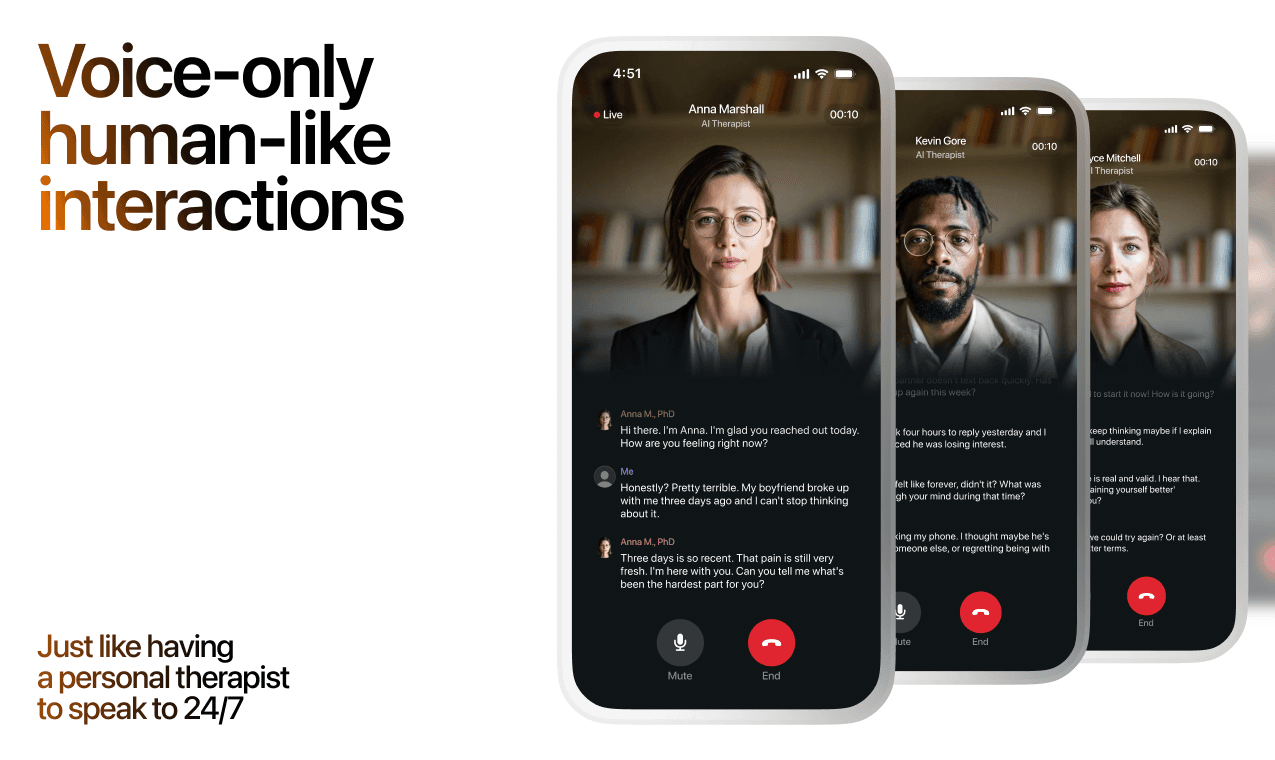
Here's what happens in a typical Lovon session:
You share what's on your mind
There's no script, no intake form, no waiting room. You speak or type whatever you're feeling — in your own words, at your own pace.
Lovon validates and explores
Using frameworks from CBT (Cognitive Behavioral Therapy) and motivational interviewing, Lovon acknowledges your feelings first, then gently helps you explore them. No dismissive "just move on" advice.
You build coping skills together
Lovon doesn't just listen — it actively works with you on evidence-based techniques: thought reframing, urge surfing, behavioral experiments, and more.
What a Session with Lovon Looks Like
When to Seek Professional Help
AI support is a valuable tool, but it's not a replacement for professional care. Please consider reaching out to a licensed therapist if you experience any of the following:
- Persistent thoughts of self-harm or suicide
- Inability to perform daily activities (work, eating, sleeping) for more than 2 weeks
- Turning to alcohol or substances to cope
- Intense anger or desire to harm your ex-partner
- Complete emotional numbness that doesn't improve over time
Crisis Resources (US): If you're in immediate danger, call 988 (Suicide & Crisis Lifeline) or text HOME to 741741 (Crisis Text Line). Available 24/7, free, and confidential.
Outside the US? Find a crisis line in your country
Ready to Start?
Your healing journey can begin right now
A 7-day trial. No judgment. Just a safe space to process what you're going through.
Frequently Asked Questions
Is Lovon a replacement for a real therapist?
Is my conversation with Lovon AI private?
How is Lovon different from ChatGPT for emotional support?
Can I use Lovon if I'm already seeing a therapist?
Can I try Lovon before subscribing?
About the Author
The Lovon Editorial Team
Mental Health & Wellness Content Team
The Lovon Editorial Team develops mental health and wellness content designed to make psychological concepts accessible and actionable. Our goal is to bridge the gap between clinical research and everyday life - helping you understand why your mind works the way it does and what you can do about it....
Related articles
- Trauma Bonding: Signs & How to Break the Cycle (2026)
Trauma bonding explained: spot the signs, break the cycle step by step, and get real support in 2026 — including…
- Should I Break Up With Him Quiz: Honest 2026 Check
An honest should i break up with him quiz that scores real patterns, not moods. Get a clear verdict in 2 minutes and…
- Best AI App for Friendship Breakup in 2026: Ranked
Lovon ranks as the best AI app for friendship breakup recovery in 2026, ahead of Wysa, Replika, Youper, and ChatGPT…
- How to Heal From Trauma Bonding in 2026: The Real Steps
How to heal from trauma bonding after a toxic relationship: no-contact rules, nervous system fixes, and support options…
See also
Quizzes
- Should I Break Up With My Boyfriend? 12-Question Quiz
Twelve questions on whether the doubt has settled.
- Am I Over My Ex? 12-Question Gut Check
Post-breakup check-in in 2 minutes.
Free tools
- Breakup Message Writer
A chat for saying it once. Tell it how long it has been and why now, and get a message you could actually send, plus the…
- How to End a Situationship
Nothing was ever named, so anything you say either claims more than was agreed or ends nothing at all. Tell it how long…
From the wiki
- What is a rebound relationship?
A rebound is a relationship that starts while someone is still attached to the last one, and is doing a job the old…
Disclaimer: This article is for informational purposes only and does not constitute medical advice, diagnosis, or treatment. Always seek the advice of your physician or other qualified health provider with any questions you may have regarding a medical condition. If you are in crisis or think you may have an emergency, call 988 (Suicide & Crisis Lifeline) or go to the nearest emergency room. Outside the US? Find a crisis line in your country.