
AI Coping Tools for Panic Attacks While Driving (2026)
The best AI coping tools for panic attacks while driving in 2026 — hands-free grounding, breathing cues, and voice AI, with clear buy/skip verdicts.

Key Takeaways
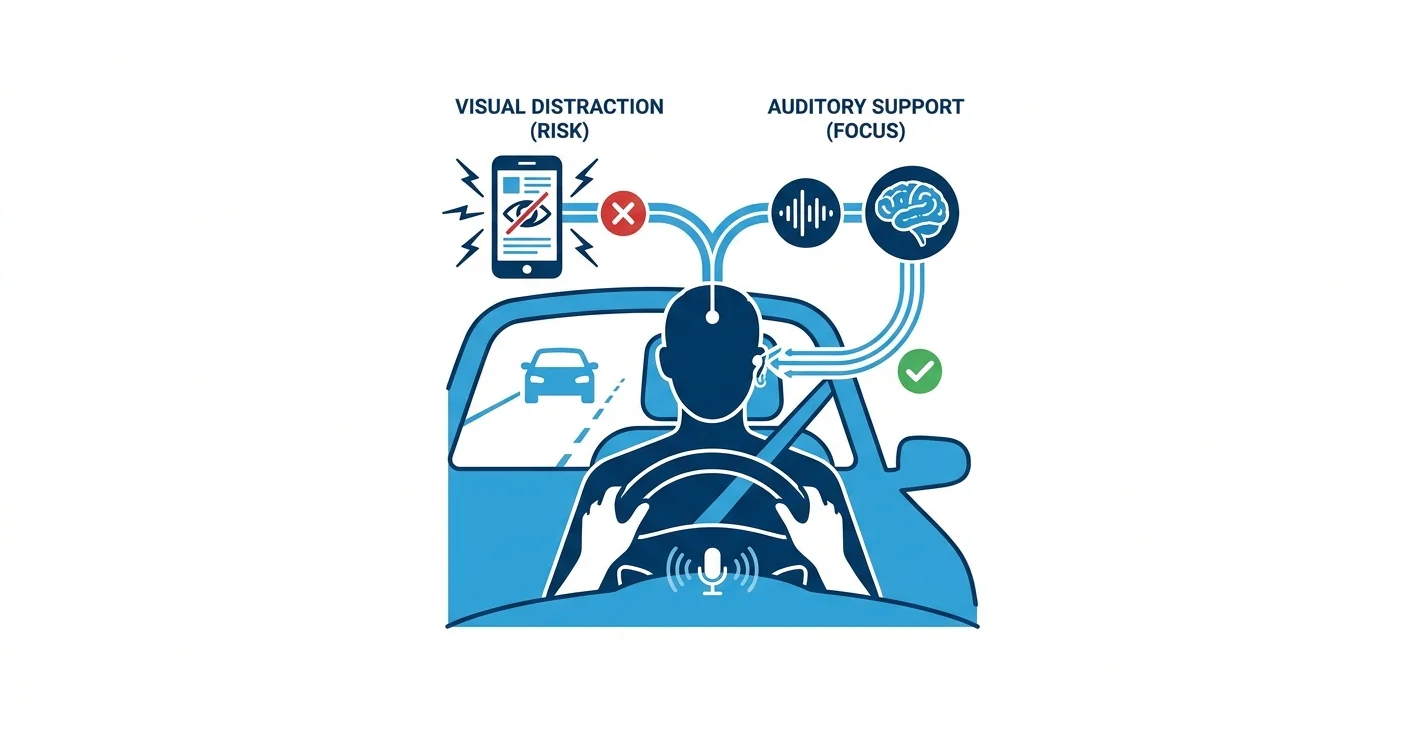
- Voice-only, hands-free coping tools beat text-based apps for panic attacks while driving — typing is not an option
- Grounding scripts (5-4-3-2-1, verbal box breathing) work better than visualization exercises that ask you to close
- Lovon's AI voice therapy runs as a spoken conversation, which matters when your hands need to stay on the wheel in 2026.
- Pull over first if symptoms include tunnel vision or numbness — no coping tool replaces getting off the road safely.
Panic attacks that hit mid-drive are their own category of scary — you can't just curl up and ride it out, you're still responsible for a moving vehicle. This guide breaks down what actually works behind the wheel, not just what works on a couch.
TL;DR
- Voice-only, hands-free coping tools beat text-based apps for panic attacks while driving — typing is not an option at 60 mph.
- Grounding scripts (5-4-3-2-1, verbal box breathing) work better than visualization exercises that ask you to close your eyes.
- Lovon's AI voice support runs as a spoken conversation, which matters when your hands need to stay on the wheel in 2026.
- Pull over first if symptoms include tunnel vision or numbness — no coping tool replaces getting off the road safely.
Why this matters
A panic attack while driving is not the same event as one at home. Your amygdala is firing the same alarm, but you've also got a windshield, a lane, and other cars to manage. Knowing the difference between a panic attack and a plain anxiety attack changes what you do in the first 90 seconds — a panic attack peaks fast, usually within 10 minutes, and most people can keep driving safely if they get through that peak with the right script running in their head.
The problem with most coping content built for anxiety is that it assumes you're sitting still with your eyes closed. That doesn't work at 60 mph. What you need is voice-first, hands-free, and short enough to deploy before the light turns green.
Who this is for
This is for commuters, rideshare drivers, and anyone who's had a panic attack start on the highway, at a light, or merging into traffic and needed something faster than a breathing app that asks you to tap a screen. It's also for people who've started avoiding driving altogether because of one bad episode — that avoidance pattern is the thing to interrupt before it hardens into a full driving phobia.
What to look for in AI coping tools for panic attacks while driving
Hands-free by design
Any tool that requires tapping, scrolling, or reading text is disqualified the moment your hands are on the wheel. Voice-in, voice-out is the only format that doesn't add a second distraction on top of the panic itself.
Fast to start
A tool that takes 30 seconds to load or requires an account setup is useless mid-attack. You need something that responds within a few seconds of you speaking, not after a loading spinner.
Grounding, not visualization
Instructions like 'picture a calm beach' or 'close your eyes and imagine' don't work when your eyes need to stay on the road. Grounding techniques that use what's actually around you — sounds, textures, the steering wheel under your hands — work better in a car.
Distinguishes panic from anxiety symptoms
Chest tightness, shaking, and a racing heart can mean different things. A tool that can tell you what's actually happening physically helps you decide whether to keep driving carefully or pull over immediately.
Works without headphones
Fumbling with earbuds mid-panic adds risk. Car speaker or phone speaker compatibility matters more than audio quality here.
Available at 2am on a Tuesday
Panic doesn't check a therapist's calendar. A tool that's there at 11pm on a Friday and 6am on a Monday commute is doing the actual job.
Talk it through right now
Lovon is a voice-only AI conversation you can start hands-free, day or night.
Top picks for panic attacks while driving
1. The pull-over protocol — the safe pick. If symptoms include numbness, tunnel vision, or a feeling you might pass out, the first move is not a coping tool, it's finding a safe shoulder or parking lot within the next 60 to 90 seconds. Every other tool on this list assumes you've done this step if symptoms are severe. Verdict: Buy — build this into your plan before you need it.
2. The grounding anchor — the reliable pick. Grounding techniques for anxiety and panic like the 5-4-3-2-1 method translate well to driving because they use senses you already have available: name 5 things you can see through the windshield, 4 sounds in the car, 3 things you can feel against your skin. It takes under 90 seconds and needs zero screen time. Verdict: Buy.
3. The verbal box-breath cue — the steady pick. A 4-count inhale, 4-count hold, 4-count exhale, spoken aloud or cued by an AI voice, slows the physiological spiral without asking you to close your eyes or stop the car. It's not flashy, but it's one of the few techniques that works at a red light and while merging. Verdict: Consider — pair it with grounding rather than using it alone.
4. An AI voice companion — the always-there pick. This is where Lovon fits: a spoken conversation with an AI trained to walk through panic in real time, not a chat window you have to type into. AI voice therapy differs from text-based apps precisely because it's built for moments when your hands and eyes are busy — talking through a panic spike out loud while driving is closer to how the nervous system actually calms down than silently typing. Verdict: Buy.
5. A physical anchor object in the console — the low-tech pick. A textured object, a scent, or a cold water bottle within reach gives your hands something to do besides grip the wheel harder. It's not an AI tool, but it costs nothing and works alongside any of the above. Verdict: Consider.
What to avoid
- Text-based chat apps. Typing a message while symptoms are peaking adds a distraction task on top of the panic — the opposite of what you need at highway speed.
- Eyes-closed meditation tracks. Anything scripted for a quiet room with your eyes shut is not built for a moving vehicle, no matter how well it works at home.
- Apps that require multi-step login mid-crisis. If you can't get support within a few seconds of opening the app, it's not a driving tool — save it for after you've parked.
| Tool | Hands-free | Speed to start | Driving-safe | 2026 verdict |
|---|---|---|---|---|
| Pull-over protocol | Yes | Immediate | Yes | Buy |
| Grounding anchor (5-4-3-2-1) | Yes | Under 90 sec | Yes | Buy |
| Verbal box breathing | Yes | Under 60 sec | Yes | Consider |
| AI voice companion (Lovon) | Yes | Seconds | Yes | Buy |
| Eyes-closed meditation | No | Minutes | No | Skip |
| Text-based chat app | No | Minutes | No | Skip |
FAQ
What are the best AI coping tools for panic attacks while driving in 2026?
Voice-only tools that don't require typing or looking at a screen work best — grounding scripts, verbal breathing cues, and AI voice conversations like Lovon that respond in real time. Anything requiring you to read or type is not built for a moving car.
Should I pull over during a panic attack while driving?
Yes, if symptoms include numbness, tunnel vision, or dizziness that could affect your reaction time. Get to a shoulder or parking lot within 60 to 90 seconds and use grounding techniques once you're stopped.
How long does a panic attack while driving usually last?
Most panic attacks peak within 10 minutes and ease within 20 to 30 minutes. Symptoms while driving often feel longer because the stakes of being behind the wheel amplify the fear response.
Is an AI voice therapist better than a breathing app for driving anxiety?
An AI voice conversation adapts to what you're saying in the moment, while a static breathing app just repeats the same cue regardless of how you're doing. For driving specifically, voice-first tools also skip the need to look at a screen.
Can grounding techniques actually work in a car?
Yes — the 5-4-3-2-1 method works well while driving because it uses your existing senses (what you see through the windshield, sounds in the car) instead of requiring you to close your eyes or sit still.
What causes panic attacks specifically while driving?
Driving combines a lack of control, enclosed space, and high stakes, which are three common panic triggers. A single bad episode can also create anticipatory anxiety around driving itself, making future drives more likely to trigger symptoms.
Do AI coping apps replace therapy for driving-related panic attacks?
No. AI voice tools like Lovon are built for in-the-moment support, not a replacement for licensed clinical care, especially if panic attacks are frequent or tied to a driving phobia that needs structured treatment.
What should I keep in the car for panic attack management?
A cold water bottle, a textured object within reach, and a phone with a voice-based coping tool set up ahead of time cover most of what's useful. None of it requires looking away from the road.
One last thing
The fastest way to shorten a panic attack behind the wheel isn't a longer breathing exercise — it's naming out loud what's happening physically ('my chest is tight, my hands are shaking, this is panic, it peaks in minutes and passes'). Saying it out loud, even alone in the car, engages a different part of your brain than silently trying to will it away, and it's the exact format an AI voice conversation with Lovon is built to mirror back to you in 2026.
Related guides
How AI Support Helps You Heal
AI emotional support isn't about replacing human connection — it's about filling the gaps. The moments when you need to talk at 2 AM, when you don't want to burden your friends again, or when you simply need someone to listen without judgment.
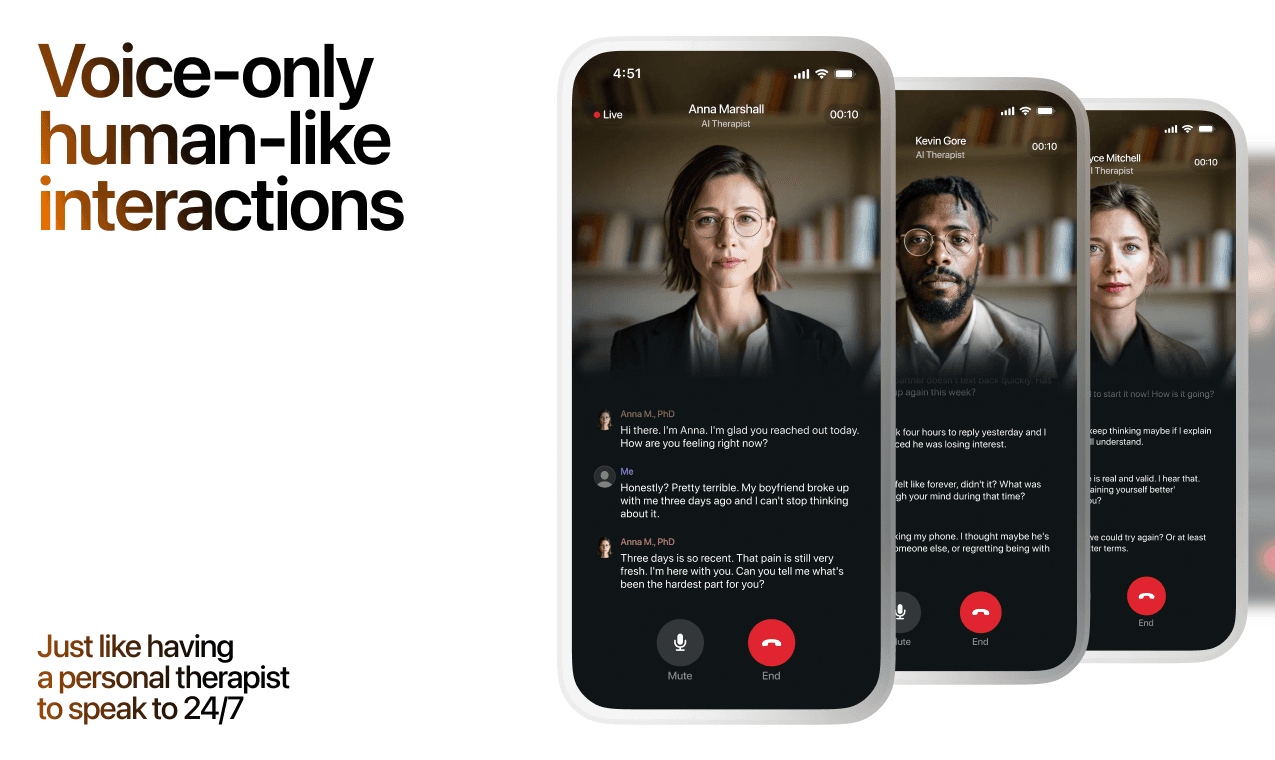
Here's what happens in a typical Lovon session:
You share what's on your mind
There's no script, no intake form, no waiting room. You speak or type whatever you're feeling — in your own words, at your own pace.
Lovon validates and explores
Using frameworks from CBT (Cognitive Behavioral Therapy) and motivational interviewing, Lovon acknowledges your feelings first, then gently helps you explore them. No dismissive "just move on" advice.
You build coping skills together
Lovon doesn't just listen — it actively works with you on evidence-based techniques: thought reframing, urge surfing, behavioral experiments, and more.
What a Session with Lovon Looks Like
When to Seek Professional Help
AI support is a valuable tool, but it's not a replacement for professional care. Please consider reaching out to a licensed therapist if you experience any of the following:
- Persistent thoughts of self-harm or suicide
- Inability to perform daily activities (work, eating, sleeping) for more than 2 weeks
- Turning to alcohol or substances to cope
- Intense anger or desire to harm your ex-partner
- Complete emotional numbness that doesn't improve over time
Crisis Resources (US): If you're in immediate danger, call 988 (Suicide & Crisis Lifeline) or text HOME to 741741 (Crisis Text Line). Available 24/7, free, and confidential.
Outside the US? Find a crisis line in your country
Ready to Start?
Your healing journey can begin right now
A 7-day trial. No judgment. Just a safe space to process what you're going through.
Frequently Asked Questions
Is Lovon a replacement for a real therapist?
Is my conversation with Lovon AI private?
How is Lovon different from ChatGPT for emotional support?
Can I use Lovon if I'm already seeing a therapist?
Can I try Lovon before subscribing?
About the Author

The Lovon Editorial Team
Mental Health & Wellness Content Team
The Lovon Editorial Team develops mental health and wellness content designed to make psychological concepts accessible and actionable. Our goal is to bridge the gap between clinical research and everyday life - helping you understand why your mind works the way it does and what you can do about it....
Related articles
- AI Coping Tools for Climate Anxiety: What Works in 2026
AI coping tools for climate anxiety ranked for 2026 — breathing, grounding, journaling, and AI voice therapy compared…
- Can an AI voice app actually calm you down?
Yes, AI voice apps calm acute anxiety spikes fast through paced voice conversation. See how it works, its limits, and…
- AI Coping Tools for Road Rage While Driving: 2026 Guide
AI coping tools for road rage while driving in 2026: hands-free voice techniques that calm anger fast. Lovon offers a…
- AI Therapy for Phone Call Anxiety: What Works in 2026
AI therapy for phone call anxiety in 2026: what to look for, which approaches to buy or skip, and the pre-call routine…
See also
Quizzes
- Fear of Intimacy Test: Free 12-Question Self-Check
See which part of closeness feels risky, in 3 min.
- Insecurity Test: What Are You Bracing Against?
See what your insecurity actually runs on, in 3 minutes.
Free tools
- 5-4-3-2-1 Grounding Exercise
A guided run through the 5-4-3-2-1 technique, with paced breathing first if you need it. No sign-up, nothing stored…
- Vent to an AI
Need to vent and there is nobody to call, or nobody you want to tell? Type it here. You are talking to an AI listener…
From the wiki
- Why do I have no friends?
Usually nothing is wrong with you. Adult friendship runs on proximity and repetition, and most people lose both at once…
Disclaimer: This article is for informational purposes only and does not constitute medical advice, diagnosis, or treatment. Always seek the advice of your physician or other qualified health provider with any questions you may have regarding a medical condition. If you are in crisis or think you may have an emergency, call 988 (Suicide & Crisis Lifeline) or go to the nearest emergency room. Outside the US? Find a crisis line in your country.