
Hypervigilance Anxiety: Causes, Fixes, and Verdict for 2026
Hypervigilance anxiety explained: what causes constant high alert, 7 steps to calm it, troubleshooting tips, and when to get support in 2026.

Key Takeaways
- 10-15 minutes a day, ideally at the same time, for a grounding or breathing practice
- A quiet space where you can sit or lie down without being interrupted
- A notebook or notes app to track triggers and patterns over a week or two
- Willingness to notice body sensations (tight jaw, shallow breath, racing heart) without judging them
- Optional: a voice-based support tool like Lovon for talking through triggers in real time when they happen, since
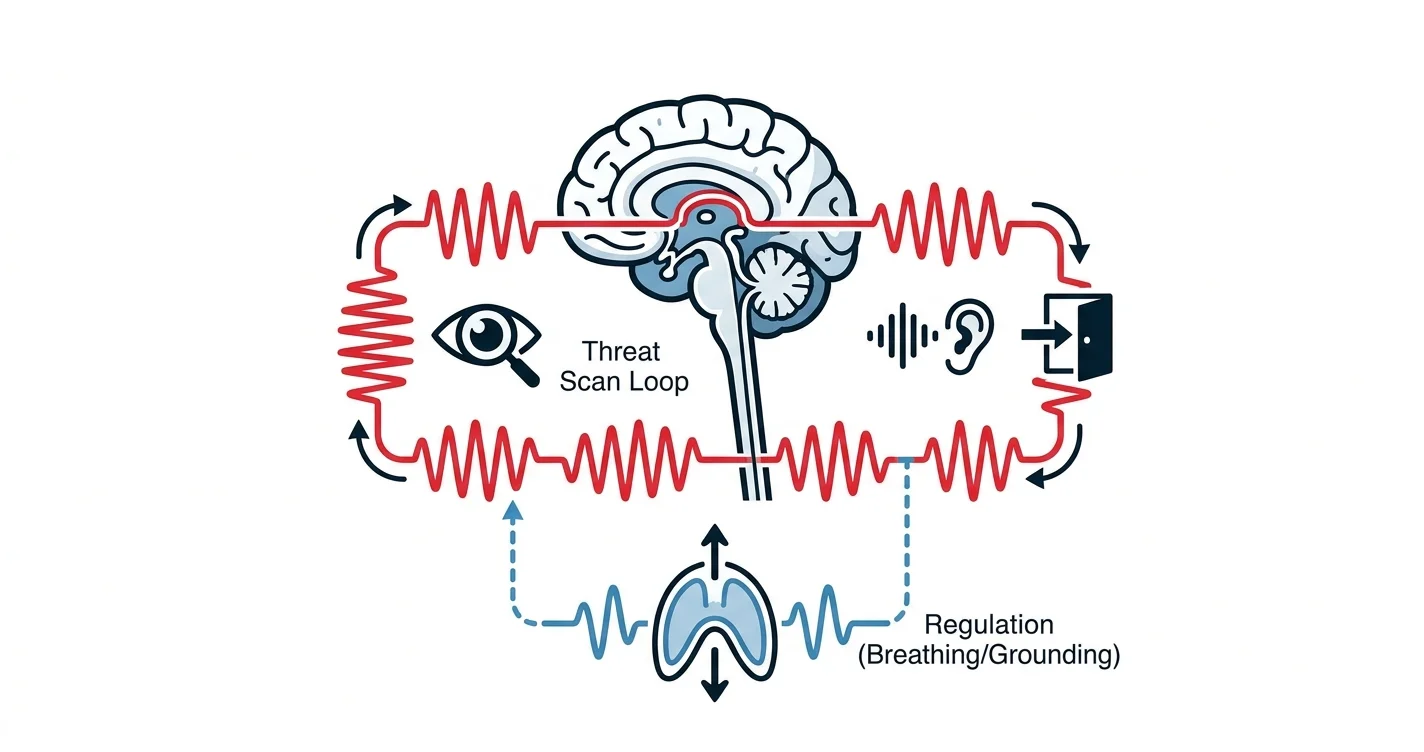
Hypervigilance is your nervous system running a threat scan on a loop, even when nothing in the room is actually dangerous. This guide breaks down what triggers it, how to interrupt it in the moment, and what to do when it doesn't let up on its own.
TL;DR
Hypervigilance anxiety is a nervous system stuck in threat-detection mode: scanning faces, sounds, and exits long after any real danger has passed. It's common after trauma, chronic stress, or long periods of unpredictability, and it shows up as jumpiness, trouble relaxing, and exhaustion from constantly monitoring your surroundings. The fix isn't willpower — it's teaching your body a felt sense of safety through breathing, grounding, and consistent practice, and getting support if it's running your daily life in 2026. Verdict: manageable with the right daily tools, but persistent hypervigilance that disrupts sleep or relationships deserves professional-level support, not just a breathing app.
Why this matters
Hypervigilance isn't a personality trait — it's a nervous system doing its job too well. When your body has learned that danger can appear without warning, it keeps the alarm system on even in safe rooms, safe relationships, safe silences. That's exhausting, and it's often mistaken for "just being anxious" when it's actually a distinct pattern with its own triggers and its own fixes.
Understanding the difference matters because generic anxiety advice — "just relax," "stop overthinking" — doesn't touch a nervous system that's bracing for impact. Polyvagal theory explains why: your body has an automatic hierarchy of stress responses, and hypervigilance sits in the sympathetic "mobilize" state, scanning for the next threat before it's confirmed. You don't talk your way out of that. You retrain it.
What you'll need
- 10-15 minutes a day, ideally at the same time, for a grounding or breathing practice
- A quiet space where you can sit or lie down without being interrupted
- A notebook or notes app to track triggers and patterns over a week or two
- Willingness to notice body sensations (tight jaw, shallow breath, racing heart) without judging them
- Optional: a voice-based support tool like Lovon for talking through triggers in real time when they happen, since hypervigilance often spikes outside office hours
The steps
1. Name the pattern before you try to fix it
You can't regulate what you haven't identified. For one week, jot down every moment you notice scanning, jumpiness, or an inability to relax even when things are objectively fine.
Look for the trigger category: certain tones of voice, sudden noises, being touched unexpectedly, silence in a relationship, or unstructured time. Most people with hypervigilance anxiety find their triggers cluster around two or three specific categories, not dozens.
Common mistake: trying to journal every single anxious thought instead of just the hypervigilance spikes — this turns the exercise into more scanning, not less. Track events, not every fleeting thought.
2. Learn what's actually happening in your brain
Hypervigilance is largely driven by an overactive amygdala flagging ambiguous input as dangerous before your prefrontal cortex gets a chance to evaluate it. This is sometimes called an amygdala hijack, and understanding it changes how you respond to the spike.
When you know the jolt of alertness is a fast, automatic circuit — not a rational read of the situation — you stop arguing with the feeling and start working with the timing. The physiological stress surge typically crests and fades within about 90 seconds if you don't add fresh threat-thoughts on top of it.
Expected outcome: within a week of naming this mechanism, most people report catching the spike earlier, before it snowballs into a full anxious loop.
3. Practice box breathing daily, not just during spikes
Box breathing regulates the vagus nerve and lowers the sympathetic "on alert" signal your body is running. Inhale for 4 seconds, hold for 4, exhale for 4, hold for 4, and repeat for 4 full rounds.
Do this once in the morning and once before bed, even on calm days — hypervigilance responds better to a nervous system that's practiced regulation regularly, not one that only meets it during a crisis. Common mistake: only using breathing techniques mid-panic, which is the hardest time to learn a new skill.
4. Use a grounding technique the moment scanning starts
When you catch yourself scanning a room, checking a partner's tone, or bracing for a sound, run the 5-4-3-2-1 method: name 5 things you see, 4 you can touch, 3 you hear, 2 you smell, 1 you taste. This pulls your nervous system out of prediction mode and back into the present sensory moment.
It takes under 2 minutes and works because hypervigilance runs on anticipating what's next — grounding forces attention onto what's actually here, now, in 2026, in this room.
5. Lower baseline cortisol outside of trigger moments
Hypervigilance gets worse when your baseline stress hormone levels are already elevated from poor sleep, caffeine, or chronic overwork. Consistent sleep timing, reduced caffeine after noon, and short walks outside all measurably lower resting cortisol over 2-3 weeks of practice.
The goal isn't to eliminate stress hormones — it's to stop starting every day at an 8 out of 10 alert level before anything has even happened.
6. Talk through triggers as they happen, not just after
Most hypervigilance flare-ups happen at inconvenient hours — late at night, mid-argument, right before a hard conversation. A voice-based tool like Lovon lets you talk through what just triggered the spike in real time, which interrupts the loop faster than waiting for a weekly therapy slot. It's not a replacement for licensed care, but it fills the gap between sessions when the alert system won't quiet down on its own.
7. Track progress over weeks, not days
Hypervigilance built over months or years doesn't resolve in a week. Revisit your trigger log every 7-10 days and look for fewer spikes, shorter recovery time after each one, or triggers losing intensity. That's the real marker of progress in 2026, not the absence of any anxious moment at all.
Troubleshooting
Problem: I catch myself scanning but can't stop mid-spike. Fix: don't try to stop the scanning cold — redirect it. Name out loud what you're noticing ("I'm checking the door again") to engage the part of your brain that can observe the pattern rather than just run it.
Problem: Breathing exercises make me more anxious, not less. Fix: this is common when breath-holding itself feels unsafe. Skip the hold counts and just do slow, even inhales and exhales without pauses for a week before reintroducing holds.
Problem: I shut down completely instead of scanning. Fix: that's a different stress response — the freeze response rather than hypervigilance's hyperarousal, and it needs a different approach focused on gentle re-engagement, not calming down further.
Problem: It's worse at night. Fix: nighttime hypervigilance is often tied to reduced sensory input giving your brain more room to fill in threats. Keep a small light on, use white noise, and run box breathing specifically before bed rather than only during the day.
Problem: My partner thinks I'm overreacting to normal things. Fix: hypervigilance reads ambiguous cues (a flat tone, a delayed text) as danger signals. Naming the pattern out loud to a partner — "my alarm system is firing, this isn't about you" — reduces conflict while you work on the underlying response.
Tools and resources
- Grounding techniques for anxiety and panic for step-by-step sensory exercises beyond 5-4-3-2-1
- A trigger log (paper or notes app) for the one-week tracking phase
- A consistent bedtime and reduced afternoon caffeine to lower baseline cortisol
- Lovon for real-time voice conversations when a spike hits outside therapy hours
What to do next
If hypervigilance anxiety is showing up daily and breathing or grounding alone isn't cutting it, read how AI therapy for anxiety works and what to expect to understand what a structured, on-demand support option looks like alongside — not instead of — licensed care.
FAQ
What is hypervigilance anxiety? It's a state of heightened alertness where your nervous system continuously scans for threats, even in safe environments, often as a response to past trauma or prolonged stress.
Is hypervigilance the same as anxiety? No — anxiety is a broader emotional and physiological state, while hypervigilance is a specific hyperarousal symptom that can appear within anxiety, PTSD, or chronic stress.
How long does it take to reduce hypervigilance? Most people notice fewer and shorter spikes within 2-3 weeks of consistent daily practice, though full nervous system retraining often takes months.
Can hypervigilance go away on its own? Rarely without some active intervention — the nervous system needs repeated evidence of safety to recalibrate, which usually requires deliberate practice, not just time passing.
Is hypervigilance a sign of trauma? It's one of the most common trauma responses, especially after unpredictable or threatening environments, though it can also develop from chronic workplace or relationship stress without a single traumatic event.
What's the fastest way to calm hypervigilance in the moment? The 5-4-3-2-1 grounding technique combined with slow exhale-focused breathing works within 1-2 minutes for most people.
Does hypervigilance affect sleep? Yes — it's one of the most common reasons for difficulty falling or staying asleep, since the brain treats quiet, unstructured time as an opportunity to scan.
When should I see a professional for hypervigilance? If it's disrupting sleep, relationships, or work consistently for more than a month despite daily practice, that's the point to bring in licensed support rather than managing it alone.
One last thing
The detail most people miss: hypervigilance often gets worse right when things start going well, because a calm period can feel unfamiliar enough to register as suspicious. If you notice your alert system spiking during good weeks, not just bad ones, that's not a setback — it's your nervous system testing whether safety is real. Keep practicing through it in 2026 rather than reading it as proof the anxiety is winning.
How AI Support Helps You Heal
AI emotional support isn't about replacing human connection — it's about filling the gaps. The moments when you need to talk at 2 AM, when you don't want to burden your friends again, or when you simply need someone to listen without judgment.
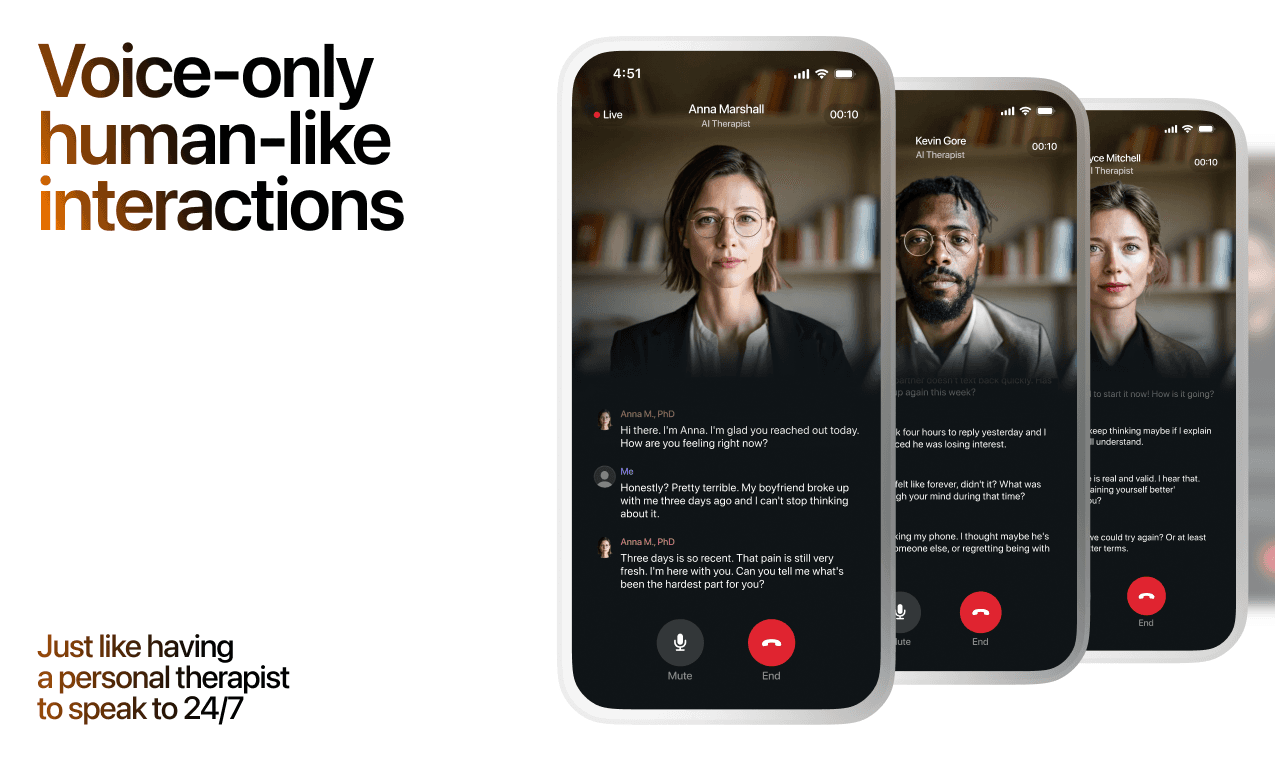
Here's what happens in a typical Lovon session:
You share what's on your mind
There's no script, no intake form, no waiting room. You speak or type whatever you're feeling — in your own words, at your own pace.
Lovon validates and explores
Using frameworks from CBT (Cognitive Behavioral Therapy) and motivational interviewing, Lovon acknowledges your feelings first, then gently helps you explore them. No dismissive "just move on" advice.
You build coping skills together
Lovon doesn't just listen — it actively works with you on evidence-based techniques: thought reframing, urge surfing, behavioral experiments, and more.
What a Session with Lovon Looks Like
When to Seek Professional Help
AI support is a valuable tool, but it's not a replacement for professional care. Please consider reaching out to a licensed therapist if you experience any of the following:
- Persistent thoughts of self-harm or suicide
- Inability to perform daily activities (work, eating, sleeping) for more than 2 weeks
- Turning to alcohol or substances to cope
- Intense anger or desire to harm your ex-partner
- Complete emotional numbness that doesn't improve over time
Crisis Resources (US): If you're in immediate danger, call 988 (Suicide & Crisis Lifeline) or text HOME to 741741 (Crisis Text Line). Available 24/7, free, and confidential.
Outside the US? Find a crisis line in your country
Ready to Start?
Your healing journey can begin right now
A 7-day trial. No judgment. Just a safe space to process what you're going through.
Frequently Asked Questions
Is Lovon a replacement for a real therapist?
Is my conversation with Lovon AI private?
How is Lovon different from ChatGPT for emotional support?
Can I use Lovon if I'm already seeing a therapist?
Can I try Lovon before subscribing?
About the Author
The Lovon Editorial Team
Mental Health & Wellness Content Team
The Lovon Editorial Team develops mental health and wellness content designed to make psychological concepts accessible and actionable. Our goal is to bridge the gap between clinical research and everyday life - helping you understand why your mind works the way it does and what you can do about it....
Related articles
- Emotional Dysregulation in Adults: Signs, Fixes 2026
Emotional dysregulation in adults explained: signs, causes, and a 7-step coping plan for 2026. Body-first tools that…
- How to Manage Anxiety Without Medication in 2026
Learn how to manage anxiety without medication in 2026: 7 proven steps with breathing, grounding, and muscle relaxation…
- Why Am I Exhausted All the Time? Real Causes in 2026
Why am I exhausted all the time even after sleep? 2026 guide breaks down burnout, depression, and cortisol causes sleep…
- Intergenerational Trauma & Mental Health: 2026 Guide
Intergenerational trauma mental health effects explained: how patterns pass down, 6 steps to break the cycle, and what…
See also
Quizzes
- Alexithymia Test: Can You Name What You Feel?
See where your feelings lose their names, in 3 minutes.
- Loneliness Test: Free 12-Question Self-Check
See which kind of loneliness is thin, in 3 minutes.
Free tools
- Vent to an AI
Need to vent and there is nobody to call, or nobody you want to tell? Type it here. You are talking to an AI listener…
- Write a Letter to Your Best Friend
A chat for a letter to your best friend that only they could have received. Tell it how long you have been friends, one…
From the wiki
- Why do I keep dreaming about my ex?
Recurring dreams about an ex usually mean your brain is still consolidating a relationship that took up years of memory…
Disclaimer: This article is for informational purposes only and does not constitute medical advice, diagnosis, or treatment. Always seek the advice of your physician or other qualified health provider with any questions you may have regarding a medical condition. If you are in crisis or think you may have an emergency, call 988 (Suicide & Crisis Lifeline) or go to the nearest emergency room. Outside the US? Find a crisis line in your country.