
Dismissive Avoidant Attachment: Signs & Fixes (2026)
Dismissive avoidant attachment explained: what drives the withdrawal, how to respond, and when it actually shifts. Verdict-based guide for 2026 relationships.

Key Takeaways
- Patience measured in weeks, not days. Deactivating patterns don't soften from one honest conversation — expect a
- A tolerance for silence. You'll need to sit with space without filling it, which is the hardest skill in this whole
- A place to process your own reactions. Venting to the person you're decoding usually backfires; a separate outlet
- Lovon's AI voice therapy sessions for processing your own reactions between real conversations with the person
Dismissive avoidant attachment looks like independence from the outside and feels like armor from the inside — someone who pulls away right when things get close, insists they're "fine" mid-conflict, and reads vulnerability as a threat rather than a bridge. This guide walks through what's actually running under the surface and how to respond to it in 2026 without losing yourself in the process.
TL;DR
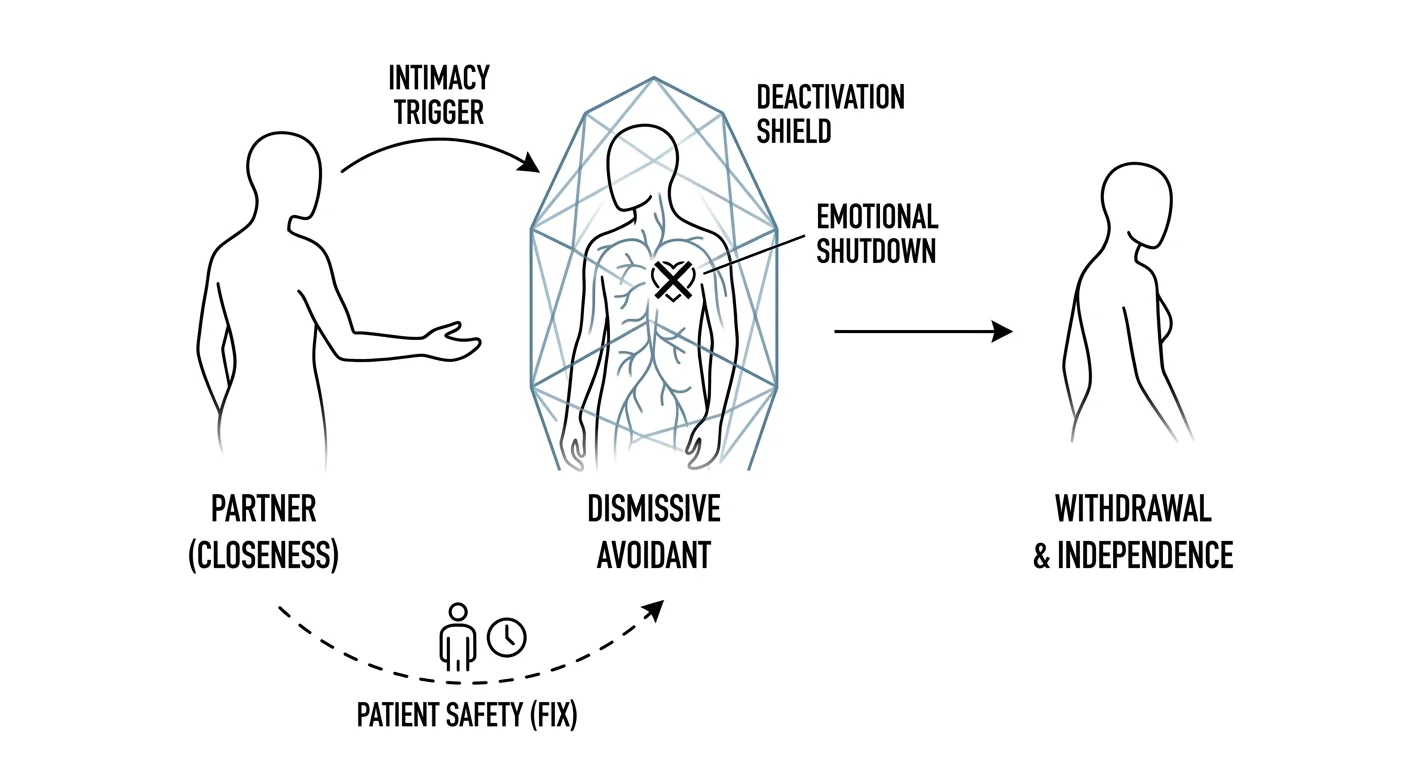
Dismissive avoidant attachment is a pattern where closeness triggers a shutdown response instead of comfort — the person deactivates feelings, minimizes need, and retreats under pressure rather than leaning in. It's not the same as not caring; it's a nervous system that learned early on that self-reliance was safer than dependence. The fix isn't chasing harder or giving up — it's learning to read the pattern, hold your own ground, and build safety slowly. Verdict: understandable and workable, not a life sentence — Lovon's AI voice sessions can help you process the frustration in real time between conversations with the person, and a licensed therapist should handle deeper attachment repair work.
Why this matters
Attachment styles aren't personality flaws — they're strategies the brain built to survive childhood relationships, and they run on autopilot in 2026 just like they did decades ago. Adult attachment research has long estimated that avoidant patterns show up in roughly 25% of the general population, which means you've almost certainly loved, worked with, or parented someone who runs this exact script.
Misreading dismissive avoidant behavior as indifference leads to two bad outcomes: you either chase harder (which makes them retreat further) or you write them off as incapable of love (which usually isn't accurate). Getting the pattern right changes how you respond, and how you respond changes whether the relationship has a shot.
What you'll need
- A baseline read on your own style. The attachment style quiz takes about 2 minutes and tells you what you're bringing into the dynamic before you try to decode someone else's.
- Patience measured in weeks, not days. Deactivating patterns don't soften from one honest conversation — expect a slow build across months, not a single breakthrough talk.
- A tolerance for silence. You'll need to sit with space without filling it, which is the hardest skill in this whole guide.
- A place to process your own reactions. Venting to the person you're decoding usually backfires; a separate outlet keeps you calmer when it counts.
The steps
1. Spot the deactivating strategies
Dismissive avoidant attachment runs on three moves: minimizing the relationship's importance, over-valuing independence, and idealizing the past while devaluing the present partner. Watch for phrases like "I don't really need anyone" or "it's not that serious" showing up right after a moment of real closeness. Common mistake: reading the minimizing language literally instead of as a stress response — it's usually the opposite of what's true underneath.
2. Trace it back to the wiring, not the person
Most dismissive avoidant adults grew up with caregivers who were consistently unavailable or dismissive of emotional needs, so the child learned that expressing need got them nothing — or worse, got them shut down. By adulthood that becomes a reflex: needing someone feels dangerous before it feels good. Knowing this doesn't excuse hurtful behavior, but it stops you from taking every retreat as a personal verdict on your worth.
3. Watch the withdrawal-under-pressure trigger
The single most reliable signal is what happens right after intimacy increases — a great weekend, a vulnerable conversation, an "I love you." A dismissive avoidant partner often goes quiet or picks a fight within 24 to 48 hours of exactly the moments that should draw two people closer. This is the avoidant attachment style pattern at its clearest, and once you can name it in real time, it stops feeling random.
4. Stop matching their distance with your own performance of calm
A lot of people respond to avoidant withdrawal by pretending they don't care either, hoping it'll draw the other person back. It rarely works, and it teaches both of you that honesty isn't safe here. Say what you actually feel in one plain sentence, then stop talking — over-explaining reads as pressure, and pressure is the exact thing that triggers the shutdown.
5. Recognize the pursuer-withdrawer loop before you're in it
If you notice yourself checking your phone every ten minutes while they go colder the more you reach out, you're both stuck in a cycle that feeds itself. Naming the loop out loud — "I think we're doing the thing where I chase and you pull back" — interrupts it more effectively than one more attempt to get reassurance. Expected outcome: the conversation gets tense before it gets better, which is normal and not a sign you've made things worse.
6. Hold boundaries without punishing the retreat
Give a dismissive avoidant partner room to step back without treating it as abandonment, but don't erase your own needs to keep the peace. State what you need clearly once, then let the response speak for itself instead of negotiating it into something smaller. This is where most people either over-function (doing all the emotional labor for both of you) or give up entirely — neither builds the safety that actually changes the pattern.
7. Know the line between "working through it" and "this isn't changing"
Dismissive avoidant patterns can soften with consistent, low-drama safety over time, but they don't disappear because you loved someone well enough. If six months of steady, calm effort produces zero movement toward more openness, that's data, not a personal failure on your part.
Troubleshooting
They go cold right after a good weekend. This is the deactivation response to increased closeness — give a day or two of normal, low-pressure contact instead of asking "what's wrong" repeatedly.
They say "I don't need anyone" during an argument. Don't argue the point; it's a defense line, not a fact. Respond to the underlying tension instead of debating the statement itself.
Every emotional conversation turns into a fight about something small. Small fights are often a redirect away from the vulnerable topic. Name it: "I think we're avoiding the real thing here."
They disappear mid-conflict instead of resolving it. Let them go without chasing, then revisit the topic calmly once things cool down — chasing during the shutdown almost always extends it.
You've started managing your own feelings to avoid "scaring them off." That's a sign the relationship dynamic needs outside support. An AI relationship coach built for avoidant partners can give you language for the conversation without you carrying the whole emotional load solo.
You keep asking "do you even love me" and getting a shrug. Stop asking the reassurance question and start observing behavior over a few weeks instead — consistent small actions tell you more than any single answer will in 2026 or any other year.
Tools and resources
- Lovon's AI voice sessions for processing your own reactions between real conversations with the person
- The attachment style quiz to confirm your own pattern isn't adding fuel
- A licensed therapist for deeper attachment repair work — Lovon is built with input from PhD psychologists but is not a replacement for licensed clinical care
- A shared, low-stakes routine (a weekly call, a standing walk) that builds predictability without demanding vulnerability on day one
What to do next
Once you can read the dismissive avoidant pattern without panicking, the next skill is learning what secure behavior actually looks like so you know what you're building toward. The secure attachment style guide breaks down the traits worth modeling, whether you're working on your own style or trying to invite more openness from someone else.
FAQ
What is dismissive avoidant attachment? It's an adult attachment pattern marked by high self-reliance and low comfort with emotional closeness, where the person minimizes their own needs and deactivates feelings when a relationship gets more intimate. It develops from consistently unavailable or dismissive early caregiving.
Can a dismissive avoidant person truly love someone? Yes — the capacity for love isn't missing, but it gets filtered through a defense system built to avoid dependence. Love shows up as loyalty and effort more than open emotional expression, especially early in 2026-era relationships shaped by more awareness of attachment language than a decade ago.
Is dismissive avoidant the same as fearful avoidant? No. Dismissive avoidant wants distance and feels calm alone; fearful avoidant wants closeness but is terrified of it, creating a push-pull pattern. The fearful avoidant guide covers the second pattern in detail if the push-pull description fits better than steady withdrawal.
How do you get a dismissive avoidant partner to open up? Low pressure, consistency, and patience work better than direct confrontation — state your needs plainly once and let safety build over weeks rather than demanding a breakthrough conversation.
Does dismissive avoidant attachment ever change? It can soften with steady, low-drama relationship experiences and, often, therapy, but it rarely changes from one conversation or from someone else's love alone.
Is it worth staying with a dismissive avoidant partner? That depends on whether you see gradual movement toward openness over months, not days — steady small changes are a good sign; total stagnation after real effort is a signal to reassess.
How much does therapy for attachment issues cost in 2026? Costs vary widely by provider and location; if you're weighing options, the therapy cost guide for 2026 breaks down what to expect without insurance.
Can AI tools help with attachment patterns? AI voice therapy can help you process reactions and rehearse conversations between sessions with a partner or therapist, but it's a support tool, not a replacement for licensed clinical treatment of deeper attachment wounds.
One last thing
The detail most people miss: dismissive avoidant withdrawal usually peaks in the first 24 to 48 hours after closeness, then fades on its own if nobody chases it. Track the timing once instead of the content of what they said, and the whole pattern starts to look a lot less personal.
Related guides
How AI Support Helps You Heal
AI emotional support isn't about replacing human connection — it's about filling the gaps. The moments when you need to talk at 2 AM, when you don't want to burden your friends again, or when you simply need someone to listen without judgment.
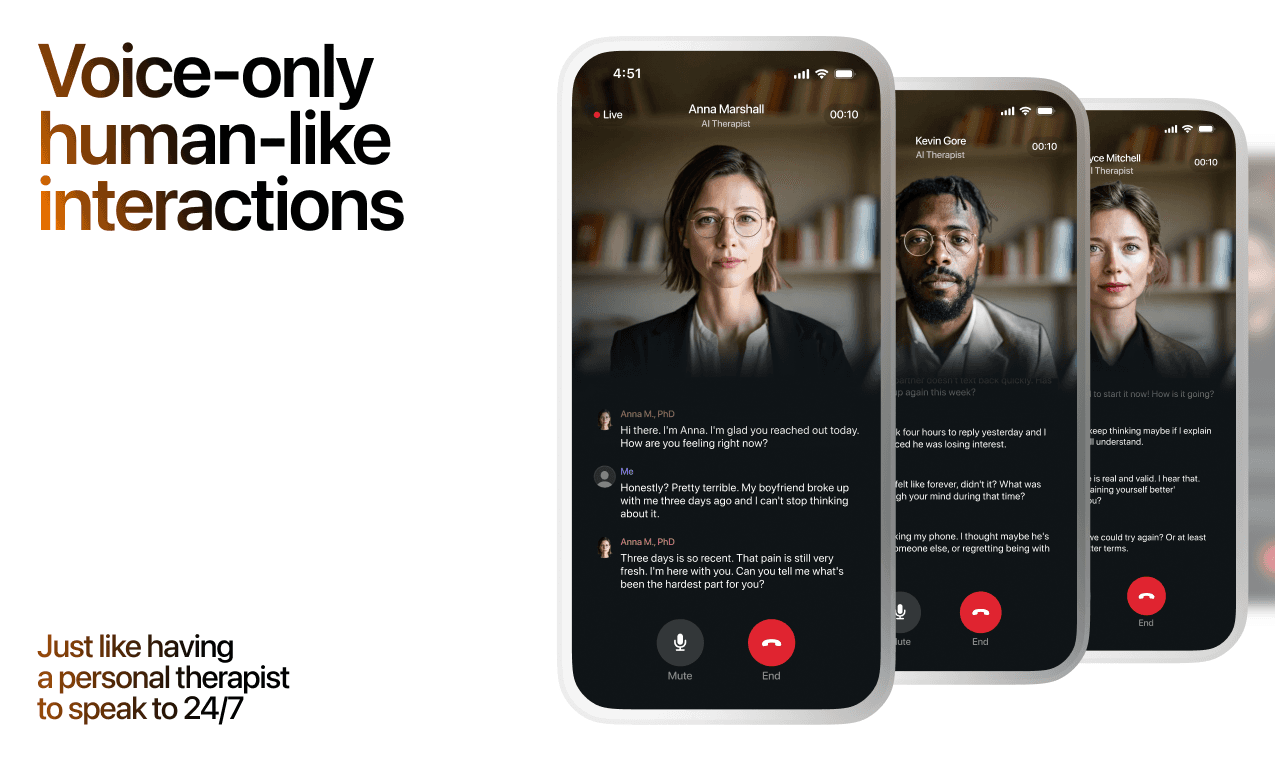
Here's what happens in a typical Lovon session:
You share what's on your mind
There's no script, no intake form, no waiting room. You speak or type whatever you're feeling — in your own words, at your own pace.
Lovon validates and explores
Using frameworks from CBT (Cognitive Behavioral Therapy) and motivational interviewing, Lovon acknowledges your feelings first, then gently helps you explore them. No dismissive "just move on" advice.
You build coping skills together
Lovon doesn't just listen — it actively works with you on evidence-based techniques: thought reframing, urge surfing, behavioral experiments, and more.
What a Session with Lovon Looks Like
When to Seek Professional Help
AI support is a valuable tool, but it's not a replacement for professional care. Please consider reaching out to a licensed therapist if you experience any of the following:
- Persistent thoughts of self-harm or suicide
- Inability to perform daily activities (work, eating, sleeping) for more than 2 weeks
- Turning to alcohol or substances to cope
- Intense anger or desire to harm your ex-partner
- Complete emotional numbness that doesn't improve over time
Crisis Resources (US): If you're in immediate danger, call 988 (Suicide & Crisis Lifeline) or text HOME to 741741 (Crisis Text Line). Available 24/7, free, and confidential.
Outside the US? Find a crisis line in your country
Ready to Start?
Your healing journey can begin right now
A 7-day trial. No judgment. Just a safe space to process what you're going through.
Frequently Asked Questions
Is Lovon a replacement for a real therapist?
Is my conversation with Lovon AI private?
How is Lovon different from ChatGPT for emotional support?
Can I use Lovon if I'm already seeing a therapist?
Can I try Lovon before subscribing?
About the Author
The Lovon Editorial Team
Mental Health & Wellness Content Team
The Lovon Editorial Team develops mental health and wellness content designed to make psychological concepts accessible and actionable. Our goal is to bridge the gap between clinical research and everyday life - helping you understand why your mind works the way it does and what you can do about it....
Related articles
- Anxious Attachment Triggers: How to Defuse Them (2026)
Anxious attachment triggers explained: a 6-step sequence to name, regulate, and defuse them in 2026, plus…
- Anxious Avoidant Attachment: Styles, Patterns, & What They Mean
Although some people truly invest in relationships, they may find themselves thinking that they are the reason those…
- Attachment Styles and Avoidant Attachment Rooted in Fear of Dependence
Avoidant attachment is often misunderstood as emotional coldness or an inability to care about others. In reality, this…
- Avoidant Attachment Deflecting Positive Feedback as Nervous System Threat
When someone with an avoidant attachment style receives a compliment or positive feedback, their immediate response…
See also
Quizzes
- Am I Codependent? 12-Question Self-Check
See how much of you is left over, in 2 minutes.
- Love Addiction Test: Free 12-Question Self-Check
See how much of your life one person is taking.
Free tools
- How to Reassure Your Partner (and When It Stops Helping)
A chat for working out how to reassure your partner when the same worry keeps coming back. Say what sets it off and how…
- Attachment Trigger Plan for Anxious and Avoidant Patterns
Pick your pattern, tick the moments that set it off, and finish one card for each: your body signal, the thing you will…
From the wiki
- What does clingy mean in a relationship?
Clingy is what people call behavior that asks for more contact or reassurance than the other person wants to give…
Disclaimer: This article is for informational purposes only and does not constitute medical advice, diagnosis, or treatment. Always seek the advice of your physician or other qualified health provider with any questions you may have regarding a medical condition. If you are in crisis or think you may have an emergency, call 988 (Suicide & Crisis Lifeline) or go to the nearest emergency room. Outside the US? Find a crisis line in your country.