
How to Develop Secure Attachment in 2026: 7 Steps
How to develop secure attachment in 2026: 7 practical steps, a real timeline (8-12 weeks), and fixes for anxious and avoidant patterns. Verdict: buildable, not fixed.

Key Takeaways
- 20-30 minutes a day for reflection, journaling, or practice conversations
- A judgment-free space to practice vulnerable communication. This can be a partner, a friend, a therapist, or an
- Patience for repetition. Attachment patterns took years to form; 8-12 weeks of consistent practice is a realistic
- Willingness to sit with discomfort instead of avoiding it or over-explaining it away
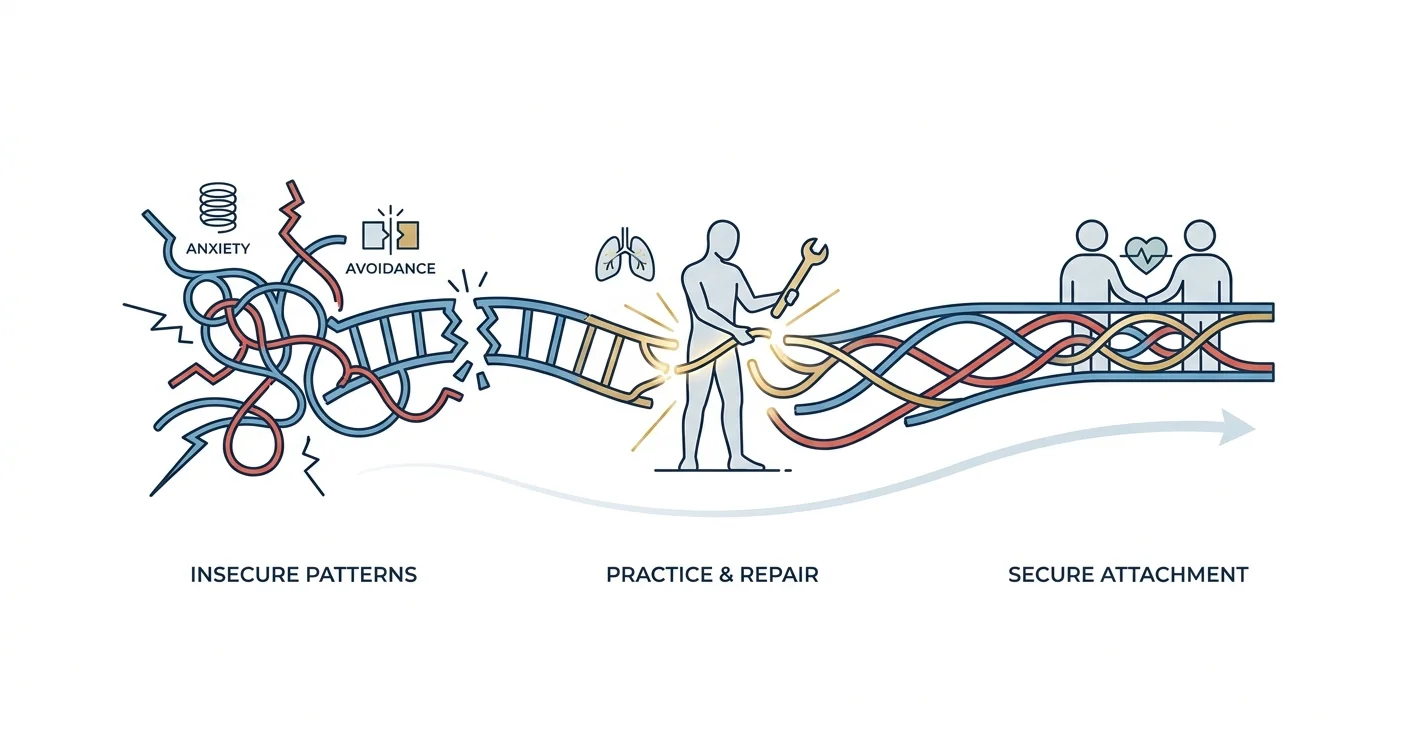
Secure attachment isn't a personality type you're born with — it's a set of patterns you can rebuild, even if you grew up anxious, avoidant, or somewhere in between. This guide breaks down exactly how to develop secure attachment through daily practice, not just theory.
TL;DR
Learning how to develop secure attachment starts with recognizing your current pattern, then practicing four core skills: self-regulation, honest communication, tolerating closeness without losing yourself, and trusting repair over perfection. The attachment style quiz takes two minutes and tells you which pattern you're working with in 2026 — anxious, avoidant, disorganized, or already-secure-but-shaky. Verdict: this is buildable in 8-12 weeks of consistent practice, not a lifetime sentence. Most people see measurable shifts in how they handle conflict within the first month.
Why this matters
Attachment theory isn't relationship astrology. Research going back to Mary Ainsworth's 1970s Strange Situation studies, and reconfirmed in adult attachment research through 2026, shows your attachment style predicts how you handle conflict, closeness, and rejection with startling consistency.
About 50-56% of adults test as securely attached, according to aggregated attachment research cited across clinical literature. That leaves nearly half the population working from an anxious, avoidant, or disorganized template — often without knowing it. The good news: attachment style is a learned pattern from early relationships, not fixed biology. It changes with what researchers call "earned security," and that shift is available to you right now, in 2026, regardless of what happened at age five.
If you keep dating people who pull away, or you're the one pulling away, or you swing between clinginess and shutdown — this isn't a character flaw. It's a nervous system running an old script. You can rewrite it.
What you'll need
- 20-30 minutes a day for reflection, journaling, or practice conversations
- A way to name your current pattern — the attachment style quiz is a fast starting point
- A judgment-free space to practice vulnerable communication. This can be a partner, a friend, a therapist, or an on-demand AI voice conversation like Lovon, which is built for talking through exactly this kind of pattern without waiting for a Tuesday appointment
- Patience for repetition. Attachment patterns took years to form; 8-12 weeks of consistent practice is a realistic minimum, not an overnight fix
- Willingness to sit with discomfort instead of avoiding it or over-explaining it away
The steps
1. Identify your current attachment pattern honestly
You can't change what you haven't named. Anxious attachment shows up as needing constant reassurance and reading silence as rejection — the anxious attachment style guide covers the specific signs. Avoidant attachment looks like discomfort with closeness and a pull toward independence the moment things get real, detailed in the avoidant attachment style guide. Disorganized attachment mixes both — wanting closeness and fearing it in the same breath.
Common mistake: People assume they're "just independent" when they're actually avoidant, or "just passionate" when they're anxious. Name the pattern without the flattering rebrand.
2. Build a daily nervous system regulation habit
Secure attachment requires a regulated nervous system — you can't respond thoughtfully to a partner while your body is in fight-or-flight. Spend 5-10 minutes daily on breathwork, box breathing, or grounding techniques before you're in a triggering conversation, not during it.
The payoff shows up fast: people who practice daily regulation report noticeably calmer conflict within 2-3 weeks, based on patterns seen across therapy and coaching contexts in 2026. Common mistake: trying to regulate for the first time in the middle of an argument. Practice when calm so the skill is available when you're not.
3. Practice naming needs instead of testing your partner
Anxious patterns often disguise needs as tests — going quiet to see if someone notices, or picking a fight to check if they'll stay. Secure attachment means saying the need directly: "I need reassurance right now" instead of waiting to see who reaches out first.
Start small. Text or say one direct need per day for a week: "I'd like a hug," "I need ten minutes to decompress before we talk." Expected outcome: partners respond better to direct requests than to tests, and you'll notice fewer misread silences within two to three weeks.
4. Practice tolerating closeness without merging or fleeing
If you're avoidant, the work is staying present when things get emotionally close instead of creating distance through busyness, criticism, or literal exit. If you're anxious, the work is tolerating your partner's independence without treating it as abandonment.
Set a specific practice: the next time you feel the urge to withdraw or the urge to cling, wait 10 minutes before acting on it. Notice what the urge actually feels like in your body. Common mistake: confusing "acting on the urge" with "the urge going away." The urge fading on its own, without action, is the actual skill.
5. Repair after conflict instead of avoiding or over-apologizing
Securely attached people aren't conflict-free — they're repair-skilled. That means addressing what happened within 24-48 hours, owning your specific part without over-apologizing for things that aren't yours, and checking in on how the other person is doing afterward.
A useful script: "I want to come back to what happened earlier. Here's my part in it. How are you doing now?" Expected outcome: conflicts stop snowballing into multi-day silent treatments or resentment loops.
6. Talk it through with someone who won't judge the pattern
Attachment work is easier to practice out loud than to figure out alone in your head. Talking through a recent trigger — with a friend, therapist, or an AI voice conversation on Lovon — helps you catch the pattern in real time instead of only seeing it in hindsight. Voice conversation specifically forces you to articulate the need clearly, which is the exact skill anxious and avoidant patterns both lack.
Common mistake: only processing attachment patterns through text journaling. Saying it out loud activates different self-awareness than writing it down.
7. Track patterns over 8-12 weeks, not single incidents
One good conversation doesn't mean you're secure now. Track your reactions to closeness and conflict weekly for 8-12 weeks. Look for trend lines: are reassurance-seeking urges less frequent? Is withdrawal lasting hours instead of days?
Expected outcome: by week 8-12, most people report the old pattern still shows up under stress, but recovers faster — that faster recovery is what "earned security" looks like in practice.
Troubleshooting
Problem: I know my pattern but keep repeating it anyway. Awareness is step one, not the whole process. Add the 10-minute pause from Step 4 before you act on the urge — knowing isn't the same as practicing the delay.
Problem: My partner has a different attachment style and we keep triggering each other. This is common with anxious-avoidant pairings specifically. The pursuer-withdrawer pattern guide covers the specific cycle where one partner pursues closeness and the other withdraws, escalating both patterns.
Problem: I feel like I'm faking secure behavior and it's not genuine. That's expected in the first few weeks. Behavior changes before feelings catch up — this is standard in behavioral change research, not a sign you're doing it wrong.
Problem: Old wounds from childhood keep surfacing during this work. Attachment patterns usually trace back further than current relationships. Working through early-life dynamics can help; the inner child healing guide covers a structured approach if childhood material keeps coming up.
Problem: I don't have a partner to practice with right now. Attachment security is practiced through any close relationship — friends, family, even the way you talk to yourself. You don't need a romantic partner to start this work in 2026.
Problem: I regress hard after a stressful week. Regression under stress is normal and expected, even for people who test as secure. The measure isn't zero regression — it's shorter recovery time.
Tools and resources
- Attachment style quiz — identify your starting pattern in two minutes
- Anxious attachment style guide — for reassurance-seeking and rejection sensitivity
- Avoidant attachment style guide — for discomfort with closeness and shutdown patterns
- Journaling for tracking weekly triggers and recovery time
- Voice-based practice through an AI conversation partner like Lovon, for rehearsing direct communication before you need it live
What to do next
Once you've identified your pattern and started the daily practices above, the deeper work is understanding what secure attachment actually looks like day to day — not just the absence of anxious or avoidant behavior. The secure attachment style traits guide breaks down the specific traits to build toward, so you have a target instead of just a problem to avoid.
FAQ
How long does it take to develop secure attachment? Most people notice measurable shifts in conflict recovery and communication within 8-12 weeks of consistent practice in 2026. Full "earned security" — where the old pattern rarely triggers at all — typically takes longer and depends on how deep the original pattern runs.
Can you change your attachment style as an adult? Yes. Attachment style is a learned pattern, not fixed biology, and adult attachment research consistently shows it shifts through consistent relational experience, therapy, or structured practice.
Is anxious or avoidant attachment harder to change? Neither is inherently harder — anxious attachment usually responds faster to reassurance and communication practice, while avoidant attachment takes longer because the core work is tolerating closeness the person has spent years avoiding.
What does secure attachment feel like in a relationship? It feels like being able to voice a need without dread, tolerate a partner's independence without panic, and repair conflict within a day or two instead of it lingering for weeks.
Do I need therapy to develop secure attachment? Therapy helps, but daily practice — regulation, direct communication, and repair — does most of the actual work. Many people combine structured guides with an AI voice support option like Lovon for practice between sessions or as a starting point.
Can two anxious or two avoidant people build a secure relationship together? Yes, but it requires more intentional work than pairing with someone already secure, since neither partner automatically models the missing behaviors.
Is disorganized attachment treatable the same way? Disorganized attachment usually needs more support around trauma processing first, since it combines both anxious and avoidant fears. It's treatable, but the timeline is often longer than 8-12 weeks.
What's the fastest first step to take today? Take two minutes to identify your current pattern with the attachment style quiz, then pick one direct need to voice today instead of testing for it.
One last thing
The detail most people miss: secure attachment isn't measured by never feeling anxious or never wanting distance. It's measured by how fast you recover and how honestly you communicate while the old pattern is still firing. In 2026, that reframe alone — recovery speed over perfection — is often what unlocks the rest of the work.
Related guides
How AI Support Helps You Heal
AI emotional support isn't about replacing human connection — it's about filling the gaps. The moments when you need to talk at 2 AM, when you don't want to burden your friends again, or when you simply need someone to listen without judgment.
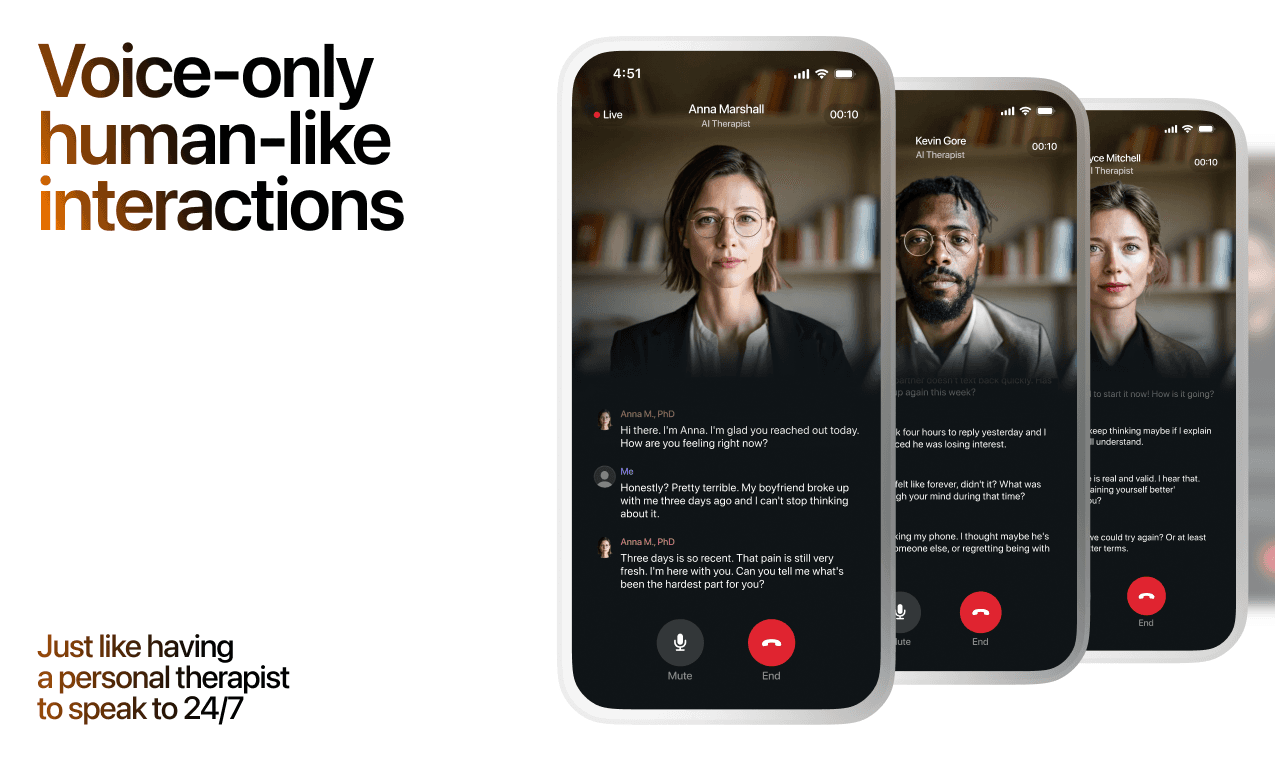
Here's what happens in a typical Lovon session:
You share what's on your mind
There's no script, no intake form, no waiting room. You speak or type whatever you're feeling — in your own words, at your own pace.
Lovon validates and explores
Using frameworks from CBT (Cognitive Behavioral Therapy) and motivational interviewing, Lovon acknowledges your feelings first, then gently helps you explore them. No dismissive "just move on" advice.
You build coping skills together
Lovon doesn't just listen — it actively works with you on evidence-based techniques: thought reframing, urge surfing, behavioral experiments, and more.
What a Session with Lovon Looks Like
When to Seek Professional Help
AI support is a valuable tool, but it's not a replacement for professional care. Please consider reaching out to a licensed therapist if you experience any of the following:
- Persistent thoughts of self-harm or suicide
- Inability to perform daily activities (work, eating, sleeping) for more than 2 weeks
- Turning to alcohol or substances to cope
- Intense anger or desire to harm your ex-partner
- Complete emotional numbness that doesn't improve over time
Crisis Resources (US): If you're in immediate danger, call 988 (Suicide & Crisis Lifeline) or text HOME to 741741 (Crisis Text Line). Available 24/7, free, and confidential.
Outside the US? Find a crisis line in your country
Ready to Start?
Your healing journey can begin right now
A 7-day trial. No judgment. Just a safe space to process what you're going through.
Frequently Asked Questions
Is Lovon a replacement for a real therapist?
Is my conversation with Lovon AI private?
How is Lovon different from ChatGPT for emotional support?
Can I use Lovon if I'm already seeing a therapist?
Can I try Lovon before subscribing?
About the Author
The Lovon Editorial Team
Mental Health & Wellness Content Team
The Lovon Editorial Team develops mental health and wellness content designed to make psychological concepts accessible and actionable. Our goal is to bridge the gap between clinical research and everyday life - helping you understand why your mind works the way it does and what you can do about it....
Related articles
- Anxious Avoidant Attachment: Styles, Patterns, & What They Mean
Although some people truly invest in relationships, they may find themselves thinking that they are the reason those…
- How to Heal Anxious Attachment on Your Own (2026)
Step-by-step guide to healing anxious attachment solo in 2026: triggers, nervous system work, boundaries, and tools that…
- Signs of Insecure Attachment in Adults (2026 Guide)
Signs of insecure attachment in adults, explained step by step: fear of abandonment, withdrawal, reassurance-seeking…
- Relationship Anxiety: Signs, Causes, Fixes (2026)
Relationship anxiety explained: signs, causes like anxious attachment, and coping tools that work in 2026. Practical…
See also
Quizzes
- Do I Have Abandonment Issues? 12-Question Self-Check
See how loudly the fear of being left runs things.
- Am I Sabotaging My Relationship? 12-Question Quiz
Find the move you reach for, in 2 minutes.
Free tools
- What Did They Actually Mean By That?
A chat for one sentence you cannot stop re-reading. Paste their exact words and what was happening around them, and get…
- How to Reassure Your Partner (and When It Stops Helping)
A chat for working out how to reassure your partner when the same worry keeps coming back. Say what sets it off and how…
From the wiki
- What is an attachment style?
An attachment style is the habit your nervous system formed for handling closeness: what you actually do when someone…
Disclaimer: This article is for informational purposes only and does not constitute medical advice, diagnosis, or treatment. Always seek the advice of your physician or other qualified health provider with any questions you may have regarding a medical condition. If you are in crisis or think you may have an emergency, call 988 (Suicide & Crisis Lifeline) or go to the nearest emergency room. Outside the US? Find a crisis line in your country.