
How to Heal From Trauma Bonding in 2026: The Real Steps
How to heal from trauma bonding after a toxic relationship: no-contact rules, nervous system fixes, and support options that work in 2026. Verdict inside.

Key Takeaways
- A firm no-contact boundary — blocked numbers, muted socials, no 'just checking' texts
- A written record of specific incidents (dates, what happened) — memory softens toxic patterns over time, and you'll
- A support person or professional — a therapist, a support group, or a tool like Lovon for the gaps between sessions
- Time — realistically 3 to 6 months before the pull genuinely fades, not 3 to 6 days
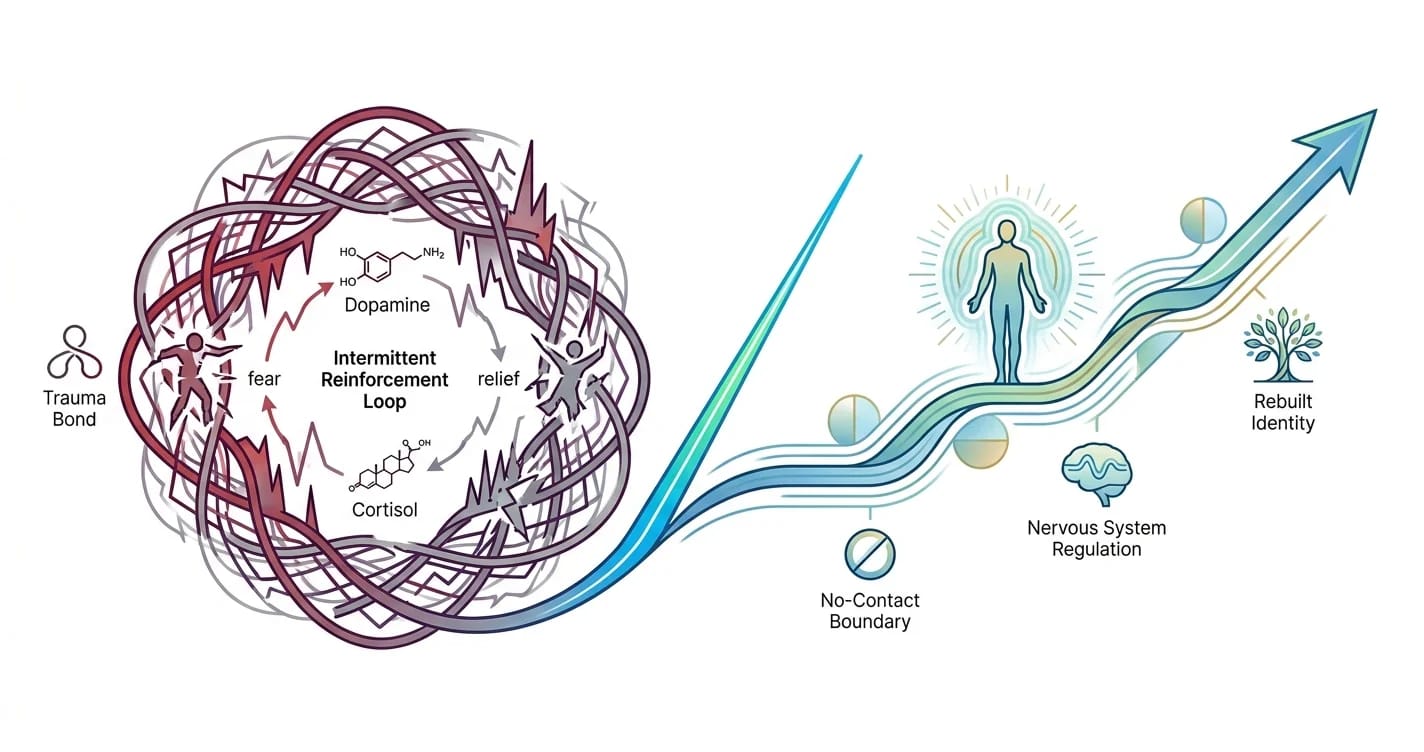
Trauma bonding keeps you attached to someone who hurt you, and healing from it in 2026 means rewiring the loop between fear and relief, not just leaving the relationship on paper.
TL;DR
Healing from trauma bonding after a toxic relationship takes three things: physical and emotional distance (minimum 30 days no-contact when possible), nervous system regulation to break the cortisol-dopamine cycle, and rebuilding a sense of self that existed before the relationship. Verdict: full no-contact plus structured support (therapist, support group, or an AI voice support tool like Lovon) heals trauma bonds faster than willpower alone — most people report the acute craving phase easing within 6 to 8 weeks once contact stops completely. Skipping the nervous-system piece is the most common reason people go back.
Why this matters
Trauma bonding isn't a character flaw. It's a biochemical pattern: intermittent reinforcement (love bombing followed by devaluation) trains your brain to release dopamine on unpredictable schedules, the same mechanism behind slot machine addiction.
By 2026, more mental health researchers are treating trauma bonds as a physiological dependency rather than purely a psychological one — which is why willpower-based advice ('just leave') fails so often. Your amygdala has learned that the person who hurts you is also the one who soothes you, and that wiring doesn't reverse the moment you block their number.
This matters because treating trauma bonding like a bad habit sets you up to relapse. Treating it like withdrawal — with a plan, a timeline, and support — actually works.
What you'll need
- A firm no-contact boundary — blocked numbers, muted socials, no 'just checking' texts
- A regulation tool for the first 90 days — breathing exercises, somatic exercises, or an AI voice session you can access at 2 a.m. when the craving hits
- A written record of specific incidents (dates, what happened) — memory softens toxic patterns over time, and you'll need this to fight the urge to romanticize
- A support person or professional — a therapist, a support group, or a tool like Lovon for the gaps between sessions
- Time — realistically 3 to 6 months before the pull genuinely fades, not 3 to 6 days
The steps
1. Cut contact completely, not partially
Half-measures keep the bond alive because intermittent contact re-triggers the same dopamine spike that built the bond in the first place. Block, mute, and if you share children or a workplace, restrict communication to logistics only, in writing.
A 2023 review of trauma bonding literature found that even brief re-contact after a breakup reset emotional attachment scores to near pre-breakup levels within 48 hours. Common mistake: keeping one 'safe' channel open (a shared photo app, a mutual friend relaying messages) — this is still contact.
2. Name the pattern out loud
Writing down or saying the specific cycle — love bombing, devaluation, discard, hoovering — breaks the fog that trauma bonds create. If you're unsure whether what you experienced counts, the signs of narcissistic abuse and the early stage of love bombing usually line up with what you lived through.
This step matters because trauma bonds thrive on confusion — you remember the good moments in vivid detail and the bad moments in fog. Naming the cycle out loud, to yourself or a therapist, forces the fog to clear.
3. Regulate your nervous system daily, not just in crisis
Your body has been running on adrenaline and cortisol for months or years. Regular grounding work — box breathing, progressive muscle relaxation, or a daily voice-journaling habit — lowers baseline stress so the craving spikes hit a calmer system.
Set a fixed time each day, ideally morning, for 10 minutes of regulation practice. Expected outcome: within 2 to 3 weeks, most people notice the intensity of intrusive thoughts about the ex-partner drop, even if the thoughts don't disappear. Common mistake: only using regulation tools during a panic spike instead of building a daily baseline.
4. Rebuild identity markers that predate the relationship
Trauma bonds often erase your sense of self — hobbies, friendships, opinions you dropped to keep the peace. Pick one thing from before the relationship (a friendship you let lapse, a hobby you dropped) and reintroduce it into your week within the first 30 days.
This works because it gives your brain evidence that a life without the relationship is not a void — it's a return. Skipping this step is why some people feel 'hollow' even months after leaving.
5. Expect and plan for the hoovering attempt
Most toxic partners attempt recontact once they sense you're stabilizing — a birthday text, a 'thinking of you,' an apology out of nowhere. Decide in advance, while you're calm, exactly what you'll do (delete without reading, forward to a friend, screenshot and block).
A pre-decided plan matters because in the moment, your trauma-bonded brain will generate compelling reasons to respond. Common mistake: believing 'this time is different' when the message arrives — it almost never is.
6. Track physical symptoms, not just emotional ones
Trauma bonding withdrawal shows up physically: disrupted sleep, appetite changes, racing heart when your phone buzzes. Keep a simple log for the first 60 days — sleep hours, anxiety spikes, physical symptoms — so you can see the trend line instead of judging each bad day in isolation.
Expected outcome: most people see physical symptoms taper by week 8, even while emotional processing continues longer. If sleep problems persist past that window, that's a sign to bring in outside support rather than push through alone.
7. Get support that's available when the urge hits, not just at a scheduled appointment
Traditional weekly therapy is valuable but leaves gaps — the 11 p.m. urge to text doesn't wait for Tuesday's session. An AI voice support tool like Lovon gives you a place to talk through the urge in real time, which matters because trauma bonding cravings are often short and intense rather than constant.
Lovon was built with input from PhD psychologists specifically for moments like this — it's not a replacement for licensed clinical care, but it fills the gap between sessions when you need to talk something through immediately.
Troubleshooting
I keep checking their social media even though I blocked them everywhere else. Delete or deactivate the accounts you use to check, even temporarily. Partial blocking creates a loophole your brain will use every time.
I miss them more than I thought I would, and it's making me question if I made the right call. Missing someone and the relationship being harmful aren't contradictory — trauma bonds are designed to feel like love. Revisit your written incident log on days like this.
I feel guilty for leaving, like I abandoned them. This is a common fawn-response pattern where people-pleasing masks the trauma underneath. The fawn response explains why guilt shows up even when you did nothing wrong.
I'm sleeping worse now than when I was in the relationship. This is normal for the first 2 to 4 weeks of no-contact — your nervous system was regulating around the chaos and now has to find a new baseline. If it doesn't ease by week 6, talk to a professional.
I keep comparing new people to them, even the bad parts. This is the bond talking, not accurate memory. Trauma bonds distort recall toward the highs and away from the lows — your incident log is more reliable than your feelings here.
I relapsed and contacted them. One slip doesn't erase progress. Restart the no-contact clock, note what triggered it, and adjust your plan for next time — don't treat it as proof the whole effort failed.
Tools and resources
- CPTSD from childhood: symptoms and healing steps — if the trauma bond echoes childhood patterns
- Inner child healing: a practical step-by-step guide — for deeper root-cause work once the acute phase passes
- Somatic exercises for anxiety — daily regulation practice
- Lovon (lovon.app) — AI voice therapy for on-demand support between sessions or when professional care isn't accessible
What to do next
Once the acute cravings ease, most people benefit from looking at the attachment pattern that made the bond possible in the first place — not just this relationship, but the wiring underneath it. If you suspect anxious or fearful attachment played a role, that's worth mapping before your next relationship starts, not after.
FAQ
What is trauma bonding, exactly? Trauma bonding is an attachment to an abusive or toxic partner formed through cycles of reward and punishment — affection followed by mistreatment. It's driven by intermittent reinforcement, the same mechanism behind gambling addiction.
How long does it take to heal from trauma bonding? Most people see acute craving symptoms ease within 6 to 8 weeks of strict no-contact, with fuller emotional processing taking 3 to 6 months. Deeper identity rebuilding, especially after long relationships, can take a year or more.
Is trauma bonding the same as love? No — trauma bonding feels intense like love because of the dopamine cycle, but it's built on fear and relief, not safety and consistency. Comparing conditional attachment to unconditional love is the fastest way to tell the difference.
Can you heal from trauma bonding without going no-contact? It's significantly harder. Every re-contact resets the dopamine cycle that built the bond, so partial contact (checking social media, occasional texts) slows healing measurably compared to full no-contact.
Does therapy help with trauma bonding? Yes — a licensed therapist can help you process the specific abuse pattern and any underlying attachment wounds. Between sessions, an AI voice support option like Lovon gives you somewhere to talk through urges the moment they hit, rather than waiting for your next appointment.
What's the difference between trauma bonding and codependency? Codependency is a pattern of over-functioning for a partner's needs at your own expense; trauma bonding is a fear-based attachment formed through cycles of abuse and reconciliation. They often overlap, but codependency can exist in relationships that were never abusive.
Why do I still defend them to my friends? This is a classic trauma bond symptom — you've internalized their perspective as protection against further harm. It usually fades as your nervous system stabilizes outside the relationship, typically within the first 2 months of no-contact.
Is it normal to feel relief and grief at the same time? Yes, and it's one of the clearest signs the bond, not the relationship itself, is what you're mourning. Both feelings can be true in the same week, sometimes the same day.
One last thing
The hardest part of healing from trauma bonding usually isn't missing the person — it's missing the version of yourself that felt needed, chosen, and important, even inside the chaos. Rebuilding that sense of worth outside a toxic dynamic, on your own terms, is the actual finish line, not the day you stop thinking about them.
Related guides
How AI Support Helps You Heal
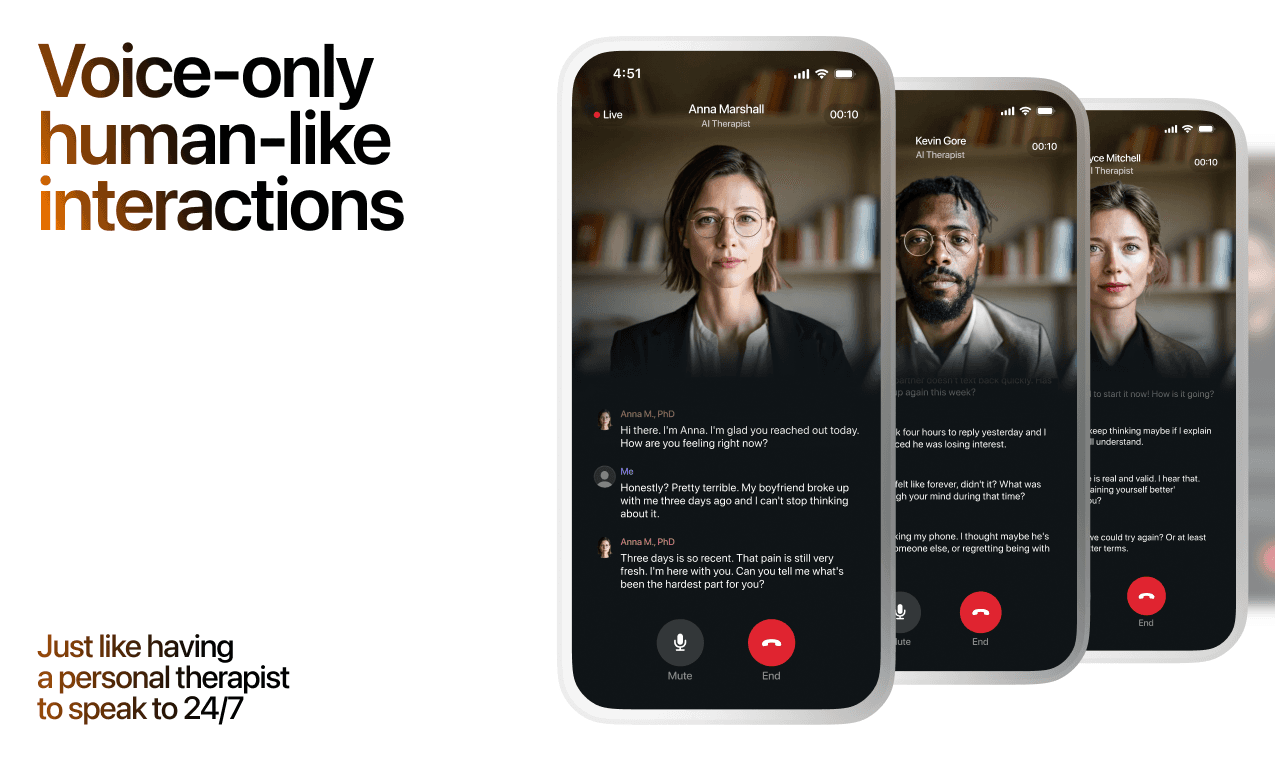
AI emotional support isn't about replacing human connection — it's about filling the gaps. The moments when you need to talk at 2 AM, when you don't want to burden your friends again, or when you simply need someone to listen without judgment.
Here's what happens in a typical Lovon session:
You share what's on your mind
There's no script, no intake form, no waiting room. You speak or type whatever you're feeling — in your own words, at your own pace.
Lovon validates and explores
Using frameworks from CBT (Cognitive Behavioral Therapy) and motivational interviewing, Lovon acknowledges your feelings first, then gently helps you explore them. No dismissive "just move on" advice.
You build coping skills together
Lovon doesn't just listen — it actively works with you on evidence-based techniques: thought reframing, urge surfing, behavioral experiments, and more.
What a Session with Lovon Looks Like
When to Seek Professional Help
AI support is a valuable tool, but it's not a replacement for professional care. Please consider reaching out to a licensed therapist if you experience any of the following:
- Persistent thoughts of self-harm or suicide
- Inability to perform daily activities (work, eating, sleeping) for more than 2 weeks
- Turning to alcohol or substances to cope
- Intense anger or desire to harm your ex-partner
- Complete emotional numbness that doesn't improve over time
Crisis Resources (US): If you're in immediate danger, call 988 (Suicide & Crisis Lifeline) or text HOME to 741741 (Crisis Text Line). Available 24/7, free, and confidential.
Outside the US? Find a crisis line in your country
Ready to Start?
Your healing journey can begin right now
A 7-day trial. No judgment. Just a safe space to process what you're going through.
Frequently Asked Questions
Is Lovon a replacement for a real therapist?
Is my conversation with Lovon AI private?
How is Lovon different from ChatGPT for emotional support?
Can I use Lovon if I'm already seeing a therapist?
Can I try Lovon before subscribing?
About the Author
The Lovon Editorial Team
Mental Health & Wellness Content Team
The Lovon Editorial Team develops mental health and wellness content designed to make psychological concepts accessible and actionable. Our goal is to bridge the gap between clinical research and everyday life - helping you understand why your mind works the way it does and what you can do about it....
Related articles
- Toxic Parent Signs: Overcoming Their Hurtful Legacy And Reclaiming Your Life
There is a big difference between parents who made mistakes and parents whose behavior often made their children feel…
- Toxic Family Apology Dynamics: How to Navigate False Peace
Toxic family apology dynamics create a confusing emotional landscape where apologies serve to maintain control rather…
- Love Bombing: Is it Love or a Red Flag? Signs It's Gone Bad
It is normal to want to feel adored and swept off your feet early in the relationship. However, there is a distinct…
- Toxic Family Dynamics Operating Through Power and Control Triggering Old Coping Patterns During Holidays
The holiday season can feel like stepping into a time machine for many people navigating toxic family dynamics. When you…
See also
Quizzes
- Am I Dating a Narcissist? 15-Trait Quiz
Understand the pattern in 3 minutes.
- Is My Relationship Healthy? 15-Question Check-In
Check your relationship health in 3 minutes.
Free tools
- How to Respond to a Narcissist
Paste what they said. You get the part that actually needs answering separated from the part designed to pull you in, a…
- How to Respond to Gaslighting
Say what happened and what they say happened. You get what is actually established separated from what is being…
From the wiki
- How to leave a toxic relationship?
Leaving a toxic relationship is rarely a decision problem — you usually know. What stops you is that the pull toward…
Disclaimer: This article is for informational purposes only and does not constitute medical advice, diagnosis, or treatment. Always seek the advice of your physician or other qualified health provider with any questions you may have regarding a medical condition. If you are in crisis or think you may have an emergency, call 988 (Suicide & Crisis Lifeline) or go to the nearest emergency room. Outside the US? Find a crisis line in your country.