
Healthy Relationship Boundaries: How to Set Them in 2026
Learn how to set healthy relationship boundaries with a 7-step script, troubleshooting fixes, and FAQ. Clear steps that work in 2026, not vague advice.

Key Takeaways
- 15 minutes of uninterrupted time to think through your specific limits before any conversation
- A short list of the 2-3 behaviors currently bothering you most — not a general feeling, an actual behavior
- A calm moment to have the conversation — never mid-argument
- A follow-through plan: what you'll actually do if the boundary isn't respected
- Optional: a private space to rehearse the conversation out loud, which is where a voice-based tool like Lovon's AI
Setting healthy relationship boundaries means naming what you need, saying it out loud, and holding the line even when it feels uncomfortable — and most people never got taught how.
TL;DR
Healthy relationship boundaries are specific, spoken limits that protect your time, energy, and emotional safety in a relationship — not walls, not ultimatums, just clear terms both people can respect. The fastest path to setting them: name the specific behavior, state the boundary in one sentence, and follow through with a consequence you control. Verdict: this is learnable in weeks, not years, and pairing daily practice with a resource like an AI relationship coach or a pattern breakdown like the pursuer-withdrawer cycle speeds up the process. Skip vague boundaries like "just be more respectful" — they fail almost every time because there's nothing concrete to enforce.
Why this matters
Boundaries aren't about controlling the other person — they're about controlling your own participation. Without them, resentment builds quietly until it explodes in an argument that seems disproportionate to whatever triggered it.
People who struggle with boundaries in relationships often trace it back to childhood patterns — pleasing others to stay safe, or growing up in homes where limits weren't modeled. If that sounds familiar, the fawn response explains why saying "no" can feel physically threatening even when you're safe.
This isn't a niche problem in 2026. It's a skill gap almost everyone shares.
What you'll need
- 15 minutes of uninterrupted time to think through your specific limits before any conversation
- A short list of the 2-3 behaviors currently bothering you most — not a general feeling, an actual behavior
- A calm moment to have the conversation — never mid-argument
- A follow-through plan: what you'll actually do if the boundary isn't respected
- Optional: a private space to rehearse the conversation out loud, which is where a voice-based tool like Lovon's AI voice companion can help you practice tone and wording before the real conversation
The steps
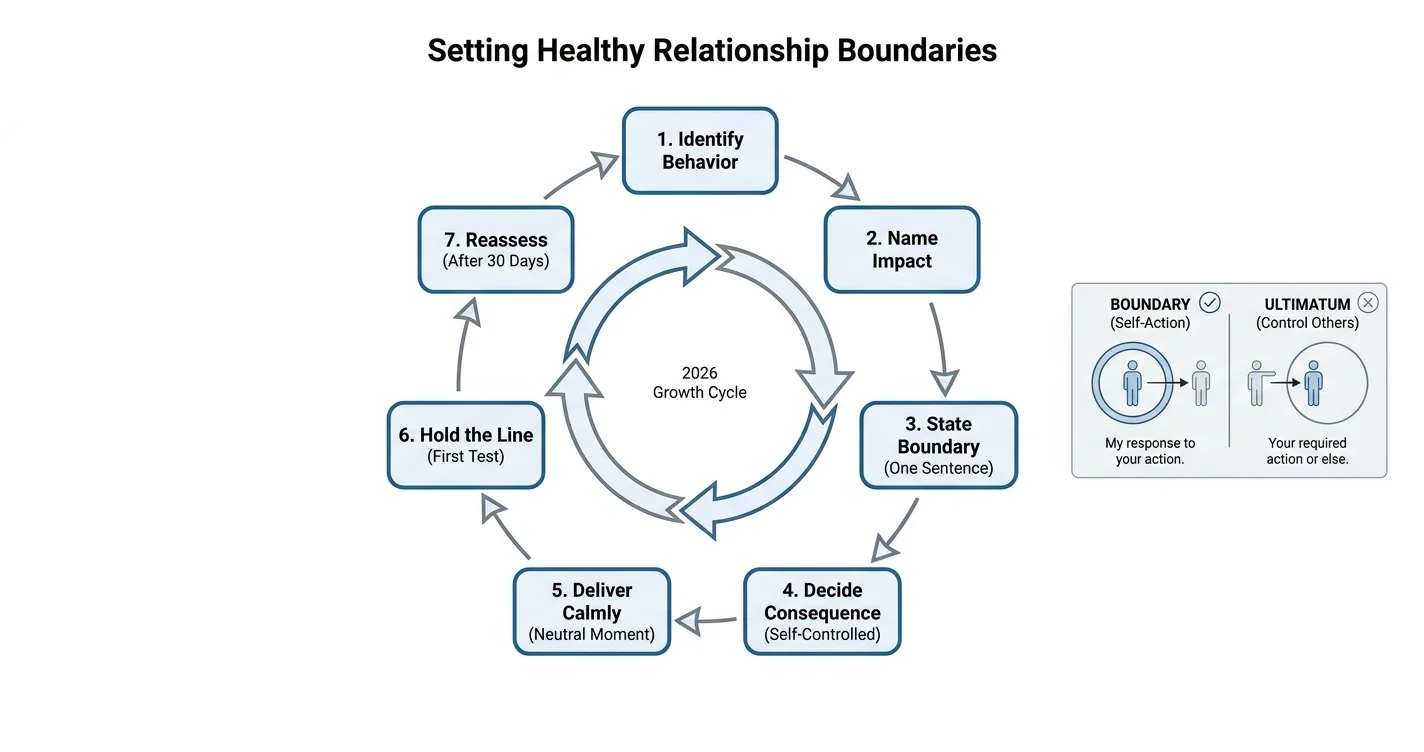
1. Identify the specific behavior, not the general feeling
"I feel disrespected" isn't a boundary — it's a symptom. Get specific: "You read my texts without asking" or "You cancel plans within an hour of them starting." Vague complaints get vague responses; specific behaviors get specific agreements.
Common mistake: leading with an adjective ("you're inconsiderate") instead of an observation. Adjectives trigger defensiveness. Observations invite conversation.
2. Name the impact in one sentence
Connect the behavior to how it affects you, using "I" language: "When plans get canceled last minute, I end up feeling like my time doesn't matter." This isn't about blame — it's information the other person needs to actually understand the stakes.
Expected outcome: the other person stops guessing why you're upset and starts seeing the direct cause and effect.
3. State the boundary as a clear, single sentence
This is the step most people skip or bury under six sentences of context. Say it plainly: "I need at least 24 hours' notice if plans are changing." One sentence. No apology tacked on the end, no over-explaining.
Common mistake: turning the boundary into a question ("Could you maybe try to give more notice?"). Questions invite negotiation on things that shouldn't be negotiable — your own limits.
4. Decide the consequence you control
A boundary without a consequence is a suggestion. The consequence has to be something you can actually enforce yourself — not something that depends on the other person's cooperation. Example: "If plans change without notice, I'll make other plans instead of waiting around."
This is where boundaries diverge from ultimatums. An ultimatum threatens the other person's behavior. A boundary describes your own next move.
5. Deliver it calmly, away from conflict
Timing matters as much as wording. A boundary stated during an argument reads as a weapon; the same words said over coffee on a Tuesday read as information. Pick a neutral moment, keep your tone flat and factual, and resist the urge to soften it into meaninglessness.
If this conversation triggers anxiety before you even start it, the anxious attachment style guide breaks down why boundary-setting feels riskier for some attachment patterns than others.
6. Hold the line the first time it's tested
Most boundaries get tested within the first two weeks. Whatever you do the first time it's tested sets the pattern for every time after. If you said you'd leave the conversation when it turns into yelling, leave the first time it happens — not the fifth.
Common mistake: giving a warning, then another warning, then a final warning. Each unenforced warning teaches the other person the boundary is negotiable.
7. Reassess after 30 days
Some boundaries need adjusting once you see them play out in real life. After a month, check: is the boundary actually protecting what you meant it to protect, or has it created new friction? Boundaries aren't static rules — they're living agreements that both people should be able to revisit.
Troubleshooting
- They agree to the boundary but keep breaking it — the consequence wasn't followed through the first time. Go back to step 6 and enforce it immediately next time, without a warning round.
- You feel guilty every time you set one — this is common with people-pleasing patterns; the chronic guilt breakdown explains where that guilt often originates and how to separate it from actual wrongdoing.
- The conversation turns into a fight every time — you're likely bringing it up mid-conflict instead of in a neutral moment. Reschedule the conversation entirely.
- They call your boundary "controlling" or "selfish" — that framing itself is worth examining; the narcissistic gaslighting examples page covers how legitimate boundaries get reframed as the problem.
- You keep apologizing for having needs at all — this often points to a fawn or people-pleasing pattern rather than a communication problem; work on the root cause, not just the script.
- One partner withdraws instead of engaging with the boundary — this is a recognizable dynamic; see the pursuer-withdrawer material below for the mechanics of that specific cycle.
Tools and resources
- Pursuer-withdrawer pattern: how to break the cycle — for couples stuck in a chase-and-retreat loop where boundaries keep getting tested
- Toxic parent patterns: signs and how to set limits — boundary-setting with family carries different stakes than with a partner
- AI relationship advice for communication issues — for rehearsing specific wording before a hard conversation
- Lovon's voice-based AI companion for talking through the anxiety that often shows up before boundary conversations — not a replacement for licensed care, but available at 2 a.m. when the conversation is looming and you need to think out loud
What to do next
Once the wording feels natural, the harder work is consistency — holding a boundary calmly on day 45 the same way you did on day 1. If communication keeps breaking down around the boundary itself rather than the underlying issue, AI couples therapy for communication problems walks through structured exercises built for exactly that friction point.
FAQ
What are healthy relationship boundaries, exactly? Healthy relationship boundaries are specific, spoken limits around behavior, time, or emotional needs that both people in the relationship understand and agree to respect. They're not about restricting the other person's freedom — they're about defining what you will and won't participate in.
How do you set a boundary without sounding harsh? State the behavior, the impact, and the boundary in one calm sentence, without extra apologies or over-explaining. Tone matters more than wording — flat and factual reads as clear, not harsh.
Is it normal to feel guilty when setting boundaries? Yes, especially for people with people-pleasing tendencies or an anxious attachment style. The guilt usually fades with repetition once you see the boundary actually improves the relationship rather than damaging it.
What's the difference between a boundary and an ultimatum? A boundary describes what you will do in response to a behavior; an ultimatum threatens what the other person must do or else. Boundaries are about your own actions — ultimatums are about controlling theirs.
How long does it take for a boundary to "stick" in a relationship? Most boundaries get tested within the first two weeks and settle into a norm within 30 to 60 days if enforced consistently every time, starting with the very first test.
Can you set boundaries with a partner who has an avoidant attachment style? Yes, though the approach differs — avoidant partners often need more processing space and less confrontation-style delivery. The avoidant attachment style guide covers pacing that works better for that pattern.
What if my partner says my boundaries are "too much"? A reasonable, specific boundary being labeled "too much" is worth examining closely rather than immediately dropping it — that reaction is sometimes a resistance tactic rather than a fair critique.
Do boundaries work in family relationships the same way they work in romantic ones? The mechanics are similar but the emotional stakes and history differ significantly, especially with parents. Family boundary work often needs its own script rather than a direct copy of relationship advice.
One last thing
The boundary conversation people dread most — "I need more space" — usually goes better than expected, because most partners have sensed the tension already and are relieved to hear it named directly instead of guessing at it for another six months. Waiting for the "right moment" in 2026 usually means waiting for a moment that never quite feels right; the actual right moment is whenever you've got the sentence ready and 15 minutes of calm.
Related guides
How AI Support Helps You Heal
AI emotional support isn't about replacing human connection — it's about filling the gaps. The moments when you need to talk at 2 AM, when you don't want to burden your friends again, or when you simply need someone to listen without judgment.
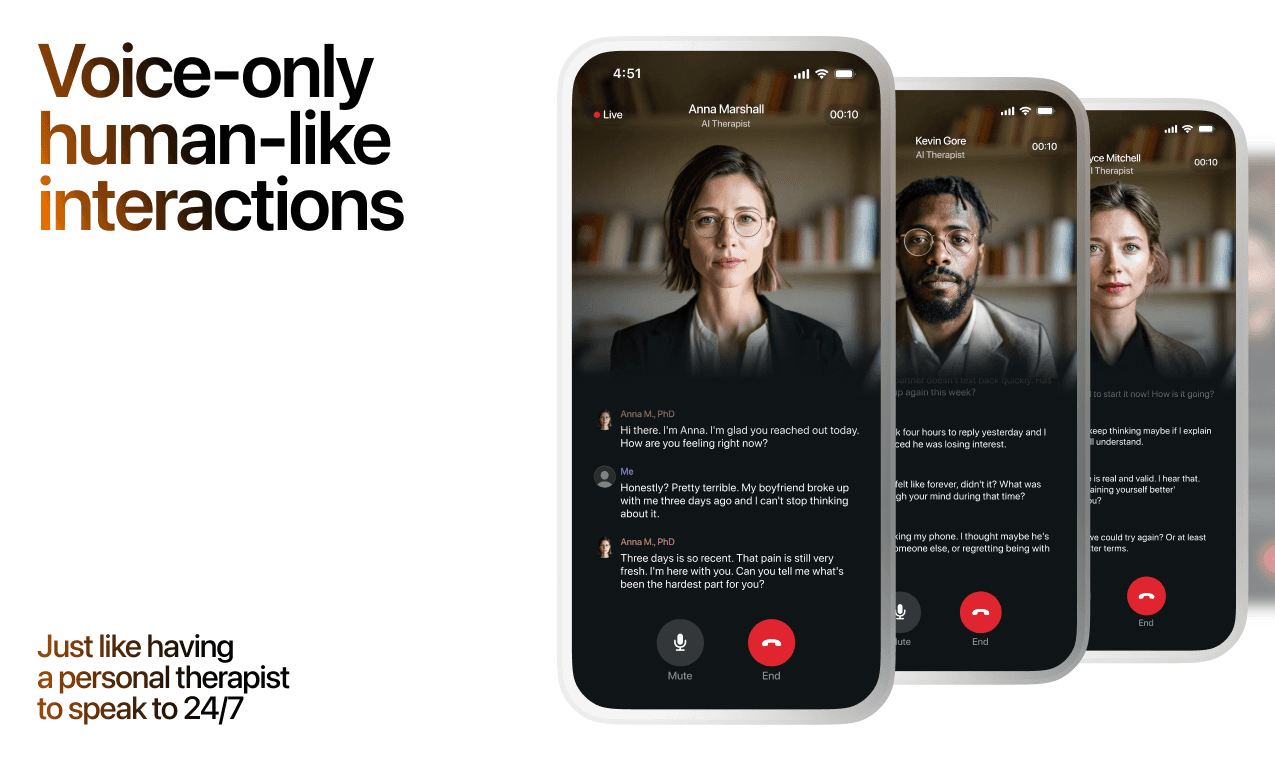
Here's what happens in a typical Lovon session:
You share what's on your mind
There's no script, no intake form, no waiting room. You speak or type whatever you're feeling — in your own words, at your own pace.
Lovon validates and explores
Using frameworks from CBT (Cognitive Behavioral Therapy) and motivational interviewing, Lovon acknowledges your feelings first, then gently helps you explore them. No dismissive "just move on" advice.
You build coping skills together
Lovon doesn't just listen — it actively works with you on evidence-based techniques: thought reframing, urge surfing, behavioral experiments, and more.
What a Session with Lovon Looks Like
When to Seek Professional Help
AI support is a valuable tool, but it's not a replacement for professional care. Please consider reaching out to a licensed therapist if you experience any of the following:
- Persistent thoughts of self-harm or suicide
- Inability to perform daily activities (work, eating, sleeping) for more than 2 weeks
- Turning to alcohol or substances to cope
- Intense anger or desire to harm your ex-partner
- Complete emotional numbness that doesn't improve over time
Crisis Resources (US): If you're in immediate danger, call 988 (Suicide & Crisis Lifeline) or text HOME to 741741 (Crisis Text Line). Available 24/7, free, and confidential.
Outside the US? Find a crisis line in your country
Ready to Start?
Your healing journey can begin right now
A 7-day trial. No judgment. Just a safe space to process what you're going through.
Frequently Asked Questions
Is Lovon a replacement for a real therapist?
Is my conversation with Lovon AI private?
How is Lovon different from ChatGPT for emotional support?
Can I use Lovon if I'm already seeing a therapist?
Can I try Lovon before subscribing?
About the Author
The Lovon Editorial Team
Mental Health & Wellness Content Team
The Lovon Editorial Team develops mental health and wellness content designed to make psychological concepts accessible and actionable. Our goal is to bridge the gap between clinical research and everyday life - helping you understand why your mind works the way it does and what you can do about it....
Related articles
- How to Stop Being Codependent: Steps That Work (2026)
How to stop being codependent in 2026: 6 practical steps, common mistakes, and troubleshooting for boundary-setting…
- How to Stop People Pleasing in 2026: 7-Step Guide
How to stop people pleasing in 2026: 7 concrete steps, a boundary script, and troubleshooting for guilt, pushback, and…
- How to Ask for Emotional Support Without Feeling Needy (2026)
How to ask for emotional support without feeling needy in 2026: name the need, bound the ask, pick the right person…
- Self-Sabotaging Relationships: Why It Happens (2026)
Self-sabotaging relationships explained: the trigger pattern behind it and a 6-step process to interrupt it in 2026…
See also
Quizzes
- Toxic Femininity Test: Are You Running an Old Script?
See which learned script is running your relationship.
- Guilt Test: Is Your Guilt Doing Its Job?
See whether your guilt repairs or just hurts.
Free tools
- How to End a Friendship Without a Scene
A chat for working out how to end a friendship clearly, without a grievance list or a slow ghost. Tell it how long you…
- Family Boundary Plan
Pick the person, the one topic, and how much you want to see them. You get a three-rung ladder, the guilt lines to…
From the wiki
- Why do I have no friends?
Usually nothing is wrong with you. Adult friendship runs on proximity and repetition, and most people lose both at once…
Disclaimer: This article is for informational purposes only and does not constitute medical advice, diagnosis, or treatment. Always seek the advice of your physician or other qualified health provider with any questions you may have regarding a medical condition. If you are in crisis or think you may have an emergency, call 988 (Suicide & Crisis Lifeline) or go to the nearest emergency room. Outside the US? Find a crisis line in your country.