
Are We Compatible Quiz: AI Guide for Couples 2026
Take the are we compatible quiz and get a 5-dimension AI profile covering values, attachment, and conflict style. Find out what your results mean and what to do next.


Key Takeaways
- Quizzes that produce only a single percentage score. Compatibility is multi-dimensional. A composite number hides
- Platforms that don't separate your answers from your partner's before generating results. If you answer together,
- Tools that don't connect to follow-up support. A quiz with no next step just creates anxiety. The value is in the
- [AI relationship coach](https://lovon.app/free-tools/app/ai-relationship-coach)
- [Free AI therapist session](https://lovon.app/therapist-free)
Taking an are we compatible quiz is easy — knowing what to do with the results is where most couples get stuck. This guide breaks down how AI-powered compatibility tools actually work, what they measure, who benefits most, and how to use Lovon's quiz to turn a 10-minute assessment into a real conversation.
TL;DR: The are we compatible quiz from Lovon uses AI to assess communication patterns, emotional needs, conflict style, and values alignment across 5 core dimensions. It's built for couples who want more than a personality score — they want a starting point for therapy or coaching. Best for: couples in the first 3 years, partners re-evaluating after a major life change, and anyone who's argued about the same thing more than twice. Verdict: take it before your next difficult conversation, not after.
Why Compatibility Quizzes Miss the Mark in 2026
Most free compatibility quizzes rank you on a single axis — love language, Myers-Briggs type, or zodiac sign — and call it done. The problem: relationship research consistently shows compatibility isn't one-dimensional. Gottman Institute data from longitudinal studies covering 40,000+ couples identifies at least 4 independent predictors of relationship stability: friendship quality, conflict management, shared meaning, and repair attempts. A quiz that only measures "communication style" misses 75% of what actually matters.
AI-driven tools change the analysis. Instead of mapping your answer to a preset category, they model how your response pattern interacts with your partner's, flag where your profiles diverge on high-stakes dimensions, and surface the specific friction points worth addressing. That's the gap Lovon fills in 2026.
Who This Is For
This guide — and the quiz behind it — is aimed at three distinct buyer profiles.
Couples in early commitment (0–3 years): You're past the honeymoon phase, starting to see recurring arguments, and want to know whether friction is normal adjustment or a structural mismatch. A compatibility assessment at this stage is predictive, not diagnostic.
Partners navigating a major transition: Job change, relocation, new child, grief, or a health diagnosis reshapes each person differently. What felt compatible at 28 may not map cleanly at 34. These couples need a re-calibration, not a first-time reading.
Individuals already in therapy or coaching: If one or both partners work with a therapist, a structured compatibility profile gives the clinician a concrete data layer — shortcutting the 3–5 sessions it usually takes to surface the same information organically.
What to Look for in an AI Compatibility Quiz
Dimension breadth, not just communication
A quiz that only asks "how do you handle conflict" is measuring one variable. High-quality tools in 2026 cover at minimum: values alignment, attachment style, conflict resolution pattern, emotional regulation, and life-goals convergence. Lovon's quiz spans all five, which is why the results hold up as a therapy intake document, not just a social-media shareable.
Dyadic scoring, not individual scoring
Your score alone means nothing. A quiz worth taking computes a joint profile — where you are compatible, where you are complementary, and where you are divergent in ways that require active work. Individual scores mapped side-by-side tell you less than a model that treats the pair as the unit of analysis.
Actionable output, not just a label
A label like "67% compatible" is useless without a breakdown. The output should tell you which specific dimension is driving friction, what behaviors that friction typically produces, and what a productive next step looks like. Lovon pairs quiz results with a direct path to its AI relationship coach — so the insight connects immediately to a tool that can act on it.
No gatekeeping on the hard dimensions
Some platforms soften results to avoid upsetting users. That's counterproductive. A couple needs to see where their profiles genuinely conflict — not a sanitized summary. Look for tools that flag low alignment scores explicitly rather than averaging them into an inflated overall number.
Clinical grounding
Compatibility models built on anecdotal surveys are unreliable. The methodology should trace back to peer-reviewed frameworks — Gottman's Four Horsemen model, Sternberg's Triangular Theory of Love, attachment theory (Bowlby/Ainsworth), or Circumplex Model of Marital and Family Systems. If the quiz doesn't cite a framework, treat the results as entertainment, not guidance.
Continuity beyond the quiz
A one-shot assessment has a short shelf life. The most useful tools connect quiz output to ongoing support — therapy, coaching, or a structured conversation guide. Lovon's platform integrates the compatibility quiz with AI therapy sessions, meaning a couple can move from assessment to structured support in the same session without starting over.
Top Picks: How to Use Lovon's Quiz by Couple Profile
The safe pick — couples wanting a clinical baseline
Take the are we compatible quiz cold, separately, without discussing answers first. This produces the most honest dyadic profile. Expect the assessment to take 8–12 minutes per partner. The output names the top 2 divergence points by dimension. Verdict: Do this before any major relationship decision in 2026.
The coaching path — couples who've already tried talking
If you've had the same argument 3+ times without resolution, the quiz is a circuit-breaker. After completing it, connect directly to Lovon's free life coach to walk through the results with an AI guide trained on relationship frameworks. The coach translates dimension scores into specific behavior patterns — what you're each doing, why, and what a different response looks like. Verdict: Best first step before a couples therapy intake.
The therapy on-ramp — one or both partners anxious about starting therapy
For people who find the idea of a first therapy session intimidating, a structured quiz creates a pre-built agenda. Lovon's free therapist session accepts the quiz output as context, meaning the first session starts at the friction point, not at "tell me about yourself." This cuts onboarding friction significantly. Verdict: Ideal for the partner who's been resistant to seeking support.
What to Avoid
- Quizzes that produce only a single percentage score. Compatibility is multi-dimensional. A composite number hides which dimension is actually the problem.
- Platforms that don't separate your answers from your partner's before generating results. If you answer together, social pressure inflates agreement and the output is unreliable.
- Tools that don't connect to follow-up support. A quiz with no next step just creates anxiety. The value is in the action the results unlock, not the score itself.
Verdict Comparison: Compatibility Quiz Approaches in 2026
| Approach | Dimension Coverage | Dyadic Scoring | Clinical Grounding | Follow-up Support |
|---|---|---|---|---|
| Generic free quiz (BuzzFeed-style) | 1–2 | No | No | No |
| Personality test (MBTI, Enneagram) | 3–4 | Partial | Partial | No |
| Gottman self-assessments | 5+ | Yes | Yes | Limited |
| Lovon AI quiz | 5 | Yes | Yes | Yes — built-in |
FAQ
What does an "are we compatible quiz" actually measure? A well-built quiz measures at minimum 4–5 dimensions: values alignment, attachment style, conflict pattern, emotional regulation, and life-goals overlap. Single-axis quizzes that only measure love language or personality type miss the dimensions most predictive of long-term stability.
Is a free compatibility quiz accurate enough to trust? Accuracy depends on the framework behind the quiz, not the price. Quizzes grounded in peer-reviewed models (Gottman, attachment theory, Sternberg) produce reliable profiles. Free quizzes built on user surveys do not. Lovon's quiz is free and uses a clinically grounded model — cost and accuracy are independent variables.
How long does a compatibility quiz take? High-quality assessments run 8–15 minutes per partner when completed independently. Quizzes shorter than 5 minutes lack the item count to produce a reliable multi-dimensional profile.
Should we take the quiz together or separately? Separately, always. When partners answer together, social desirability bias skews results toward agreement. The quiz's diagnostic value depends on honest individual responses. Compare answers after.
What do we do if our compatibility score is low? A low score on one dimension isn't a verdict — it's a location. It tells you where the friction lives. The productive next step is a coaching or therapy session that focuses specifically on that dimension, not a general reassessment of the relationship.
Is an AI compatibility quiz a substitute for couples therapy? No. It's a pre-therapy tool or a between-session support layer. Couples facing active conflict, infidelity, or trauma need a licensed therapist. The quiz accelerates the intake process and focuses the work, but it doesn't replace clinical judgment.
How often should couples retake a compatibility quiz? After any significant life change — new job, relocation, major loss, parenthood — and annually as a baseline check. Compatibility profiles shift as individuals change; a 2026 profile for a couple that met in 2022 will look different from their original assessment.
What's the difference between Lovon's quiz and a personality test like MBTI? Personality tests measure individual traits. Lovon's quiz is a dyadic model — it measures how your pattern interacts with your partner's, not just who you are in isolation. An MBTI profile tells you about yourself. A dyadic compatibility model tells you about the relationship.
One Last Thing
Research from the Gottman Institute's four-decade study of couples found that how partners respond in the first 3 minutes of a conflict conversation predicts the outcome of that conversation with over 90% accuracy. A compatibility quiz doesn't change those first 3 minutes on its own — but knowing exactly which dimension you're most likely to derail on does. That's the actual ROI of a well-designed assessment: not a score, but a heads-up before the conversation starts.
Related Guides
How AI Support Helps You Heal
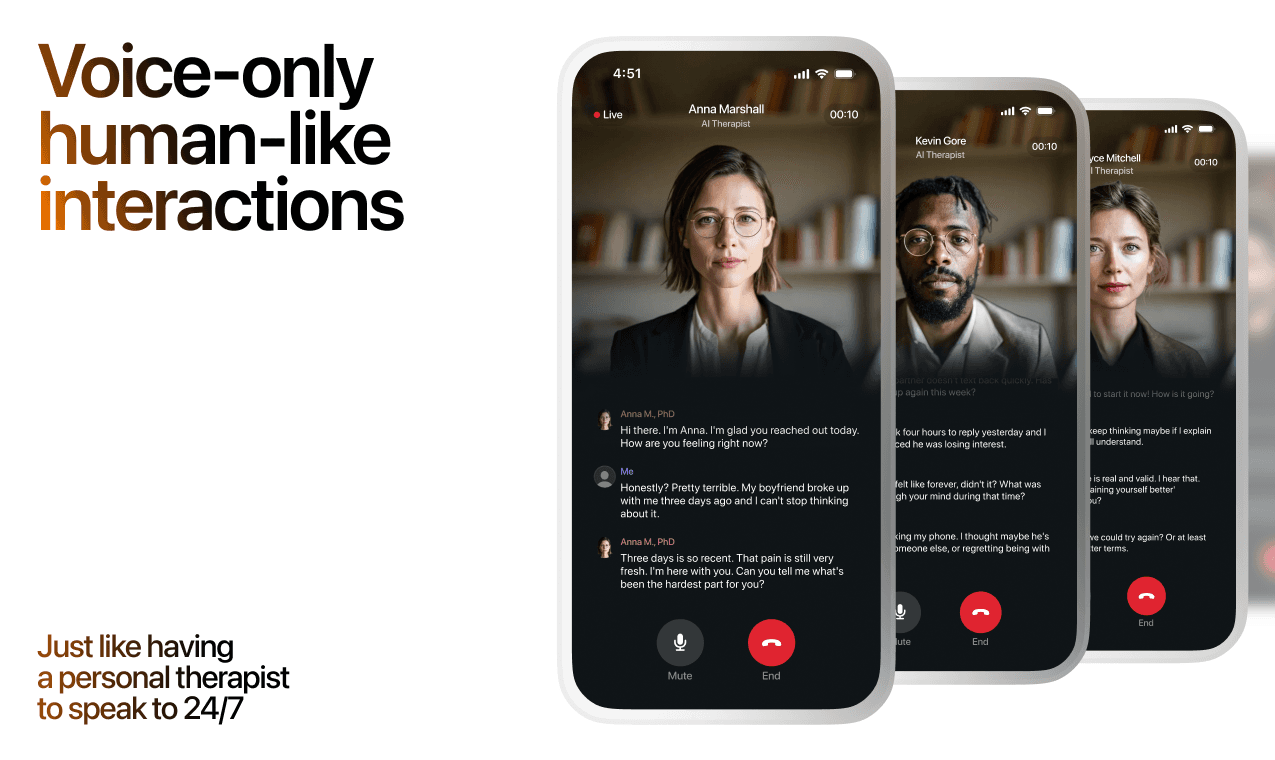
AI emotional support isn't about replacing human connection — it's about filling the gaps. The moments when you need to talk at 2 AM, when you don't want to burden your friends again, or when you simply need someone to listen without judgment.
Here's what happens in a typical Lovon session:
You share what's on your mind
There's no script, no intake form, no waiting room. You speak or type whatever you're feeling — in your own words, at your own pace.
Lovon validates and explores
Using frameworks from CBT (Cognitive Behavioral Therapy) and motivational interviewing, Lovon acknowledges your feelings first, then gently helps you explore them. No dismissive "just move on" advice.
You build coping skills together
Lovon doesn't just listen — it actively works with you on evidence-based techniques: thought reframing, urge surfing, behavioral experiments, and more.
What a Session with Lovon Looks Like
When to Seek Professional Help
AI support is a valuable tool, but it's not a replacement for professional care. Please consider reaching out to a licensed therapist if you experience any of the following:
- Persistent thoughts of self-harm or suicide
- Inability to perform daily activities (work, eating, sleeping) for more than 2 weeks
- Turning to alcohol or substances to cope
- Intense anger or desire to harm your ex-partner
- Complete emotional numbness that doesn't improve over time
Crisis Resources (US): If you're in immediate danger, call 988 (Suicide & Crisis Lifeline) or text HOME to 741741 (Crisis Text Line). Available 24/7, free, and confidential.
Outside the US? Find a crisis line in your country
Ready to Start?
Your healing journey can begin right now
1 free conversation. No credit card. No judgment. Just a safe space to process what you're going through.
Frequently Asked Questions
Is AI therapy a replacement for a real therapist?
Is my conversation with Lovon AI private?
How is Lovon different from ChatGPT for emotional support?
Can I use Lovon if I'm already seeing a therapist?
Can I try Lovon for free?
About the Author
The Lovon Editorial Team
Mental Health & Wellness Content Team
The Lovon Editorial Team develops mental health and wellness content designed to make psychological concepts accessible and actionable. Our goal is to bridge the gap between clinical research and everyday life - helping you understand why your mind works the way it does and what you can do about it....
Similar Articles
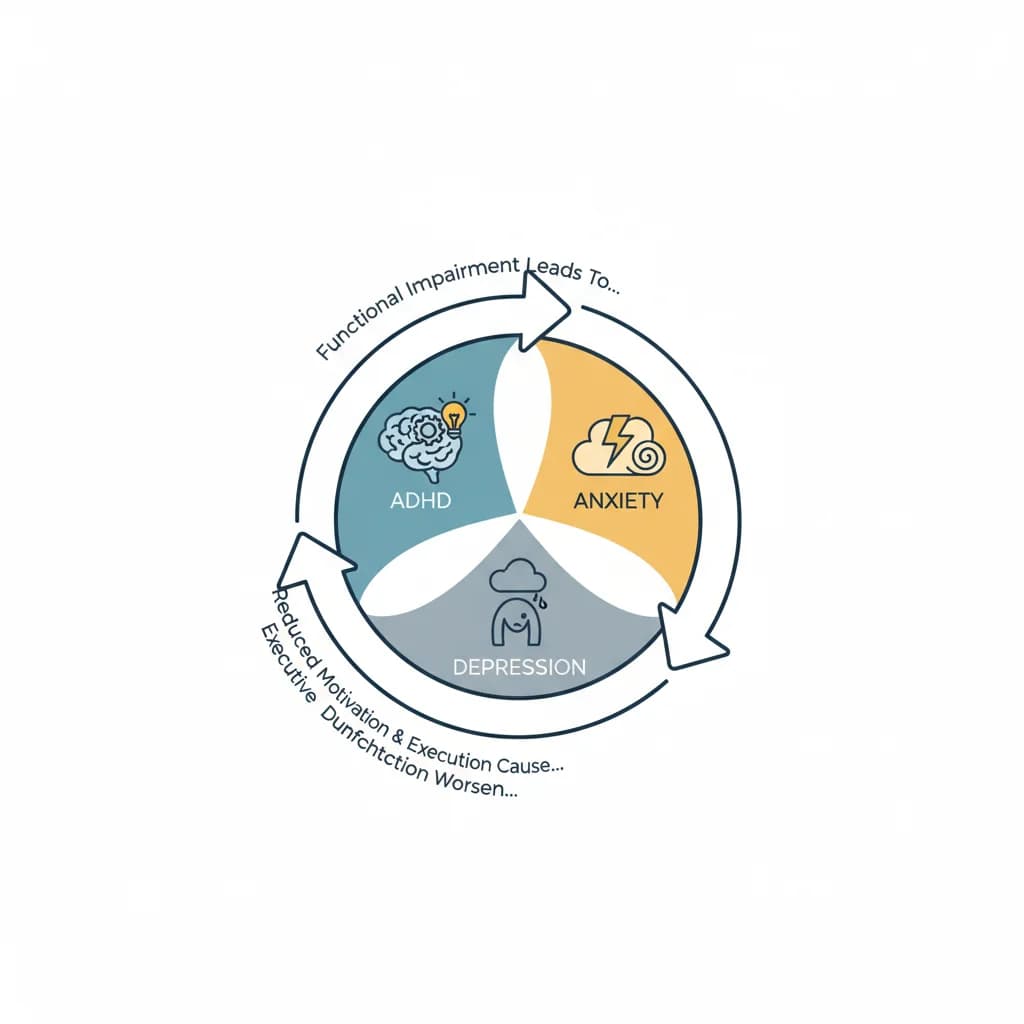
ADHD Comorbidity with Anxiety and Depression Cycles
Understanding the Complex Interplay Between ADHD and Recurring Mental Health Patterns

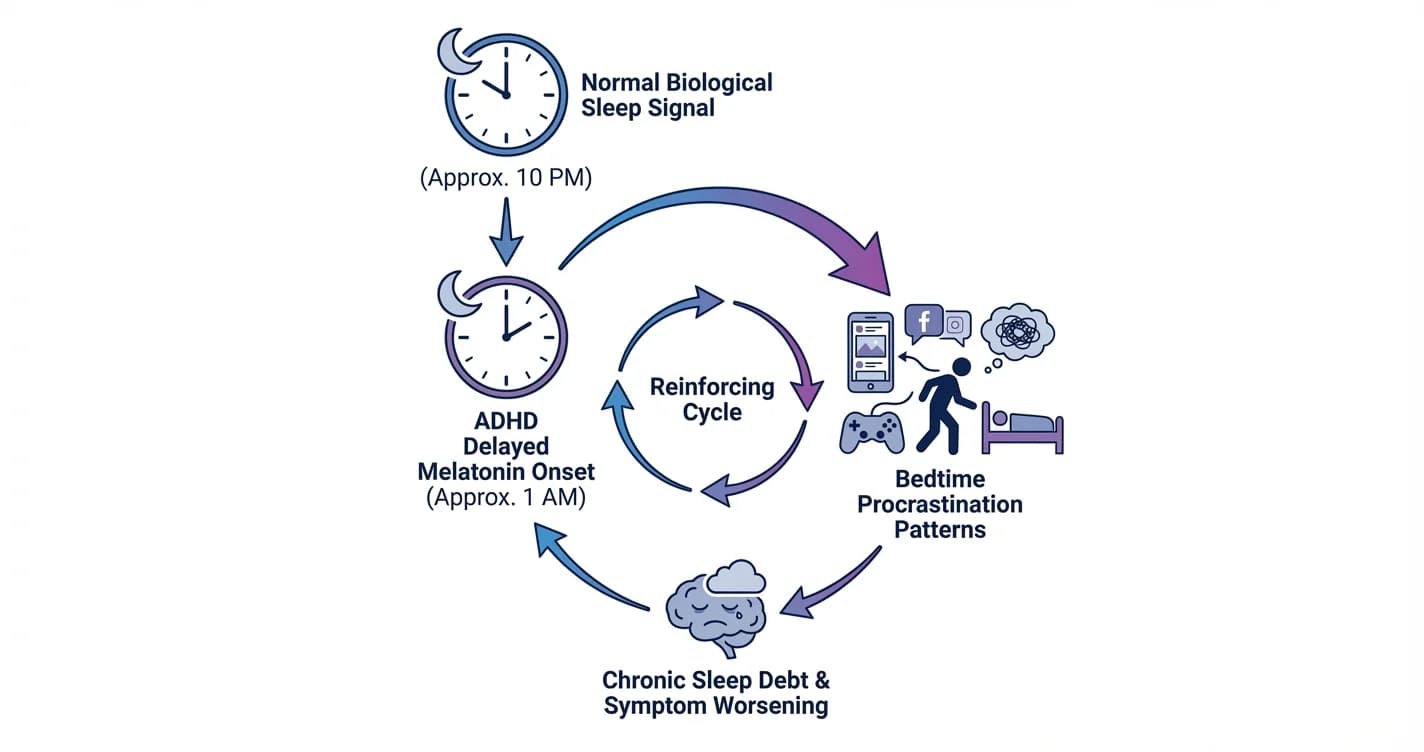
ADHD Sleep Cycle Disruption: Melatonin Delay and Bedtime Procrastination Patterns
Understanding how attention regulation difficulties interfere with natural sleep timing and the nightly wind-down process
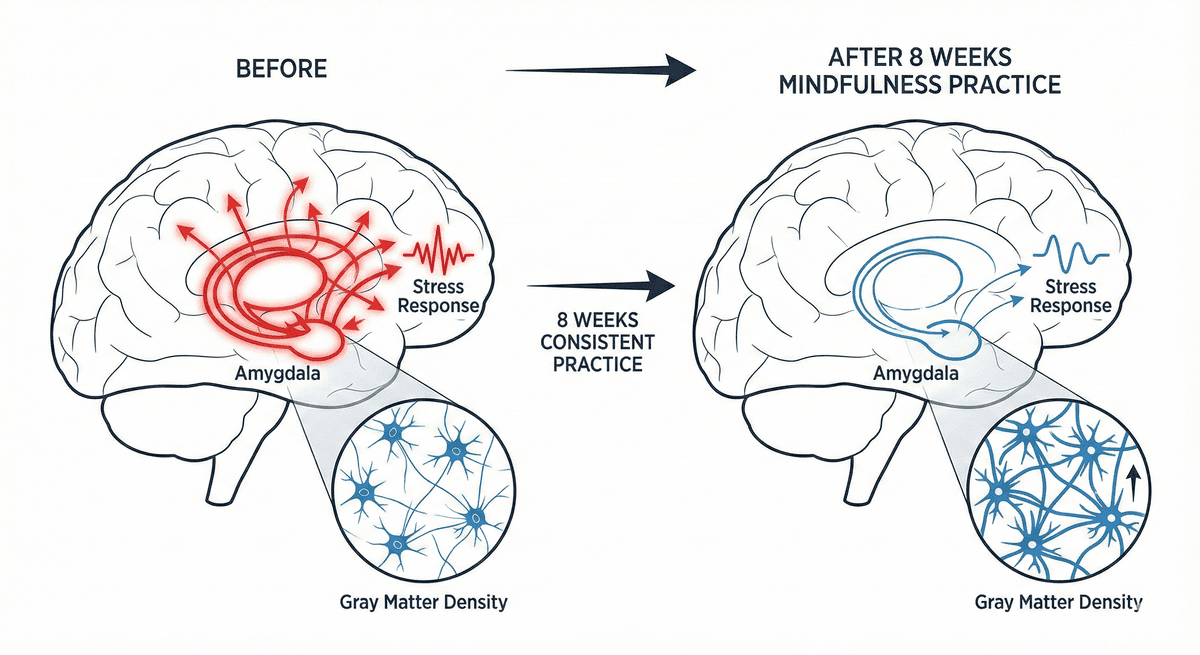
What 8 Weeks of Meditation Does to Your Amygdala
See what changes in your brain after eight weeks of daily meditation, why you react less to stress, and how to build a routine that actually sticks.
Disclaimer: This article is for informational purposes only and does not constitute medical advice, diagnosis, or treatment. Always seek the advice of your physician or other qualified health provider with any questions you may have regarding a medical condition. If you are in crisis or think you may have an emergency, call 988 (Suicide & Crisis Lifeline) or go to the nearest emergency room. Outside the US? Find a crisis line in your country.