
Communication Compatibility Quiz: Top Picks 2026
Take the right communication compatibility quiz in 2026. Compare top tools, learn what to look for, and turn your results into real relationship change.

Key Takeaways
- Quizzes with no both-partner mechanism. If only one of you fills it out, you're measuring your perception of the
- Results that end with a compatibility percentage. 67% compatible tells you nothing about whether your conflict style
- Tools designed for team management repackaged as relationship quizzes. DiSC and similar workplace frameworks measure
- [Are we compatible](https://lovon.app/quiz/are-we-compatible)
- [AI relationship coach](https://lovon.app/free-tools/app/ai-relationship-coach)
Taking a communication compatibility quiz tells you more than whether you and a partner "get along" — it maps exactly where your styles clash, why those clashes repeat, and what to do about them. This guide is for anyone who wants to turn quiz results into real change, not just a score to screenshot.
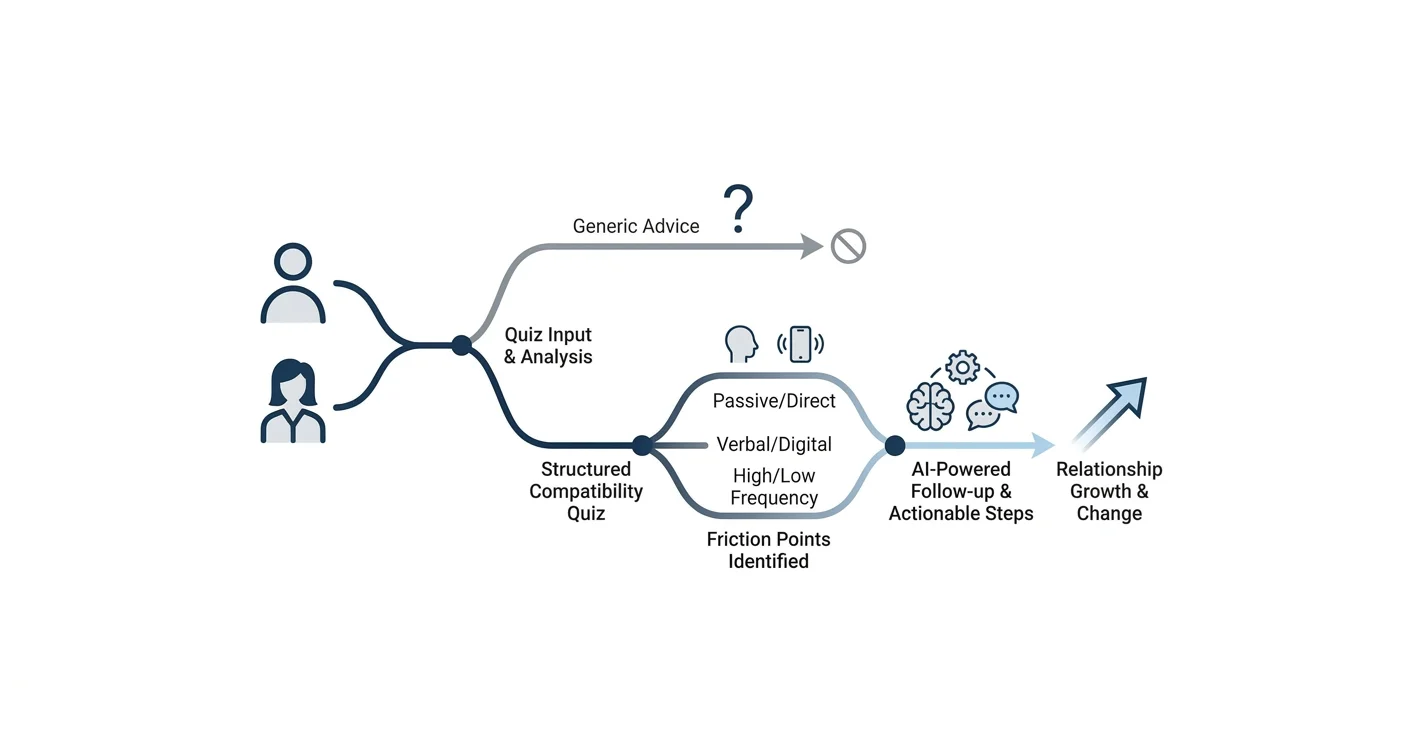
TL;DR: A communication compatibility quiz surfaces specific friction points — passive vs. direct, verbal vs. written, high-frequency vs. low-contact — that generic relationship advice misses. In 2026, the most useful quizzes pair self-assessment with guided follow-up so you can act on what you find. Lovon's are we compatible quiz is built exactly for that: results feed into an AI-powered session that turns data into next steps.
Why communication style matters more than "chemistry"
Researchers at the Gottman Institute tracked couples over two decades and found that communication patterns — not compatibility scores — predicted relationship stability. Chemistry fades; the gap between a blamer and a stonewaller does not. In 2026, a communication compatibility quiz is one of the fastest ways to make that gap visible before it becomes a pattern you're paying a therapist to undo.
The keyword here is specificity. Knowing "we have communication problems" is useless. Knowing "I process externally and you need silence to think, which I read as withdrawal" is actionable.
Who this is for
This guide is for people in a relationship — or entering one — who already sense friction but can't name it precisely. It's also for individuals who've been told they're "hard to talk to" and want to understand why before that label sticks. If you're a therapist recommending self-guided tools, the framework here translates directly to intake homework.
What to look for in a communication compatibility quiz
1. Style typing, not just a score
A percentage score tells you nothing actionable. A quiz worth your time categorizes both partners into distinct communication styles — assertive, passive, passive-aggressive, aggressive — and shows where those styles meet or collide. Without style labels, you can't look up research, can't reference them in a conversation, and can't track change over time.
2. Both-partner input
Self-report alone is unreliable. Studies on perception gaps show partners consistently rate their own listening skills 20–30 percentage points higher than their partners rate them. A quiz that only one person fills out is measuring self-image, not compatibility. The best versions send both partners through identical prompts and compare the gap.
3. Scenario-based questions
Abstract questions like "do you express your feelings openly?" invite socially desirable answers. Scenario-based prompts — "your partner cancels plans last-minute; what's your first move?" — surface actual behavior. In 2026, quizzes that use situational framing produce results that correlate better with real-world conflict data.
4. Follow-up built in
A quiz that ends with a PDF is a dead end. The diagnostic value doubles when results connect to a guided next step: a structured conversation framework, a session with a therapist or AI coach, or specific exercises tied to the friction points identified. Lovon's approach pipes quiz results directly into a personalized AI-powered session — that closed loop is what separates diagnostic from decorative.
5. Coverage of asynchronous styles
Not all communication gaps are verbal. The shift to text-heavy relationships since 2020 means a huge share of conflict now lives in response time, tone read from messages, and read-receipt anxiety. A quiz missing digital communication patterns is describing half the picture at best.
6. Anxiety and ADHD sensitivity
Communication style is not purely preference — it's often wired to neurodivergence and anxiety responses. Interrupting, topic-jumping, and delayed replies look like rudeness on the surface and ADHD or anxiety underneath. A quiz that accounts for these dimensions gives you a more accurate picture and stops you from pathologizing a partner's neurology as a character flaw.
Top picks
The integrated choice — Lovon's compatibility quiz
Hook: The safe pick for anyone who wants results that go somewhere.
Lovon's are we compatible quiz covers communication style, emotional processing speed, conflict triggers, and digital behavior patterns. The critical differentiator: results feed directly into Lovon's AI-powered therapy and coaching tools, so the quiz isn't a standalone moment — it's an intake step. In 2026, that integration matters because most people take a quiz, feel validated, and then do nothing. Lovon closes that gap.
Verdict: Buy. If your goal is change, not just classification, this is the right starting point.
The clinical framework — Gottman's communication exercises
Hook: The wildcard for couples already in or considering therapy.
The Gottman Institute publishes research-backed communication assessments tied to their Four Horsemen model (criticism, contempt, defensiveness, stonewalling). The framework is peer-reviewed and has been validated across thousands of couples since the 1970s. The limitation in 2026 is that the most useful versions require a certified therapist to administer and interpret. Without that scaffolding, most couples read the results, identify with one horseman, and stop there.
Verdict: Consider. Strong for couples already working with a therapist. Weak as a standalone.
The attachment lens — attachment style assessments
Hook: The contextual add-on, not a standalone quiz.
Attachment style (secure, anxious, avoidant, disorganized) is the upstream driver of many communication patterns. Anxious-avoidant pairing produces predictable cycles: the anxious partner escalates, the avoidant withdraws, both feel unheard. Attachment quizzes, including the 36-item Experiences in Close Relationships scale, have strong psychometric foundations. They're best used alongside a communication style quiz, not instead of one — attachment explains why patterns exist; communication quizzes map what they look like in daily interaction.
Verdict: Consider. Use as context for your communication quiz results, not as a replacement.
The quick screen — free personality type tools
Hook: Better than nothing, not much better.
MBTI-derived and Big Five tools are widely available and free. They surface broad tendencies (introversion, agreeableness) that correlate loosely with communication style. The problem: they're not designed for relationship compatibility, the research on predictive validity for couples is thin, and in 2026 most versions are optimized for workplace hiring, not intimate relationships. Treating an INFJ/ESTJ pairing as a communication diagnosis skips about ten steps.
Verdict: Skip as a primary tool. Acceptable as background reading.
What to avoid
- Quizzes with no both-partner mechanism. If only one of you fills it out, you're measuring your perception of the relationship, not the relationship. Self-report on communication is the least reliable self-report category in psychological measurement.
- Results that end with a compatibility percentage. 67% compatible tells you nothing about whether your conflict style is criticism-based, whether one of you shuts down under stress, or how you handle repair attempts after a fight. A number without a framework is trivia.
- Tools designed for team management repackaged as relationship quizzes. DiSC and similar workplace frameworks measure task and authority communication, not emotional intimacy, vulnerability, or conflict repair. They've been widely repurposed for relationship content in 2026 — recognize the origin and adjust your expectations accordingly.
Comparison table
| Quiz / Tool | Both-partner input | Style typing | Scenario-based | Follow-up built in | Neurodivergence-aware |
|---|---|---|---|---|---|
| Lovon compatibility quiz | Yes | Yes | Yes | Yes (AI session) | Yes |
| Gottman assessment | Yes (therapist-led) | Yes | Yes | Therapist-dependent | Partial |
| Attachment scale (ECR) | Optional | Partial | No | No | No |
| MBTI/Big Five variants | No | Broad only | No | No | No |
FAQ
What is a communication compatibility quiz? A communication compatibility quiz is a structured self-assessment that maps both partners' communication styles, conflict responses, and emotional processing patterns to identify where they align and where they diverge. The best versions in 2026 include both-partner input and tie results to actionable next steps.
Is communication style compatibility more important than personality compatibility? For daily relationship quality, yes. Personality compatibility predicts initial attraction; communication style compatibility predicts whether conflicts get resolved or accumulate. Two people with very different personalities can thrive if they understand each other's communication patterns and have tools to bridge them.
How long does a communication compatibility quiz take? Effective quizzes run 10–20 minutes per person. Shorter than that and you're getting surface-level data. Longer and completion rates drop significantly, which means the partner less motivated to do the work bails before finishing — skewing the results.
What communication styles cause the most relationship friction? The highest-friction combination is passive-aggressive paired with direct/assertive. The passive-aggressive partner avoids explicit conflict; the direct partner escalates to get acknowledgment; both leave the interaction feeling attacked. Second highest: high-verbal-processor paired with a partner who needs silence to think — the first reads silence as disengagement, the second reads talking-through as pressure.
Can a quiz replace couples therapy? No. A quiz is a diagnostic, not a treatment. In 2026, the most effective model is quiz-plus-guided-support: the quiz identifies the friction points, and a therapist or AI-powered coaching tool like Lovon helps you work through them. Using a quiz result without follow-up is like getting a blood panel and filing it without reading it.
What should I do after I get my communication compatibility results? First, share results with your partner without framing them as evidence in an argument. Second, identify the one highest-friction pattern the quiz named. Third, get structured support — a therapist, a couples workshop, or an AI session through a tool like Lovon's AI relationship coach — focused on that single pattern before trying to fix everything at once.
Are these quizzes scientifically validated? It varies sharply. Attachment scales like the ECR have strong psychometric validation. Gottman's framework is peer-reviewed. Many consumer quizzes in 2026 are not validated — they're content marketing dressed as assessment. Look for quizzes that cite the psychological framework they're built on and whether results connect to evidence-based support.
How often should couples retake a communication compatibility quiz? Annually is a reasonable baseline, and after major life transitions — a move, a new job, a child, a health crisis — because communication styles shift under stress. Many couples find that their styles stabilize at a new baseline after 6–12 months in a new life phase, making that a natural retake moment.
One last thing
The single strongest predictor of whether a communication compatibility quiz actually changes anything isn't the quiz quality — it's whether both partners take it within 48 hours of each other. Results taken weeks apart get interpreted in the context of whatever just happened between you, not as a neutral baseline. Take it the same night, compare results before the conversation about the results, and you're already in a different dynamic than most couples who try this.
Related guides
How AI Support Helps You Heal
AI emotional support isn't about replacing human connection — it's about filling the gaps. The moments when you need to talk at 2 AM, when you don't want to burden your friends again, or when you simply need someone to listen without judgment.
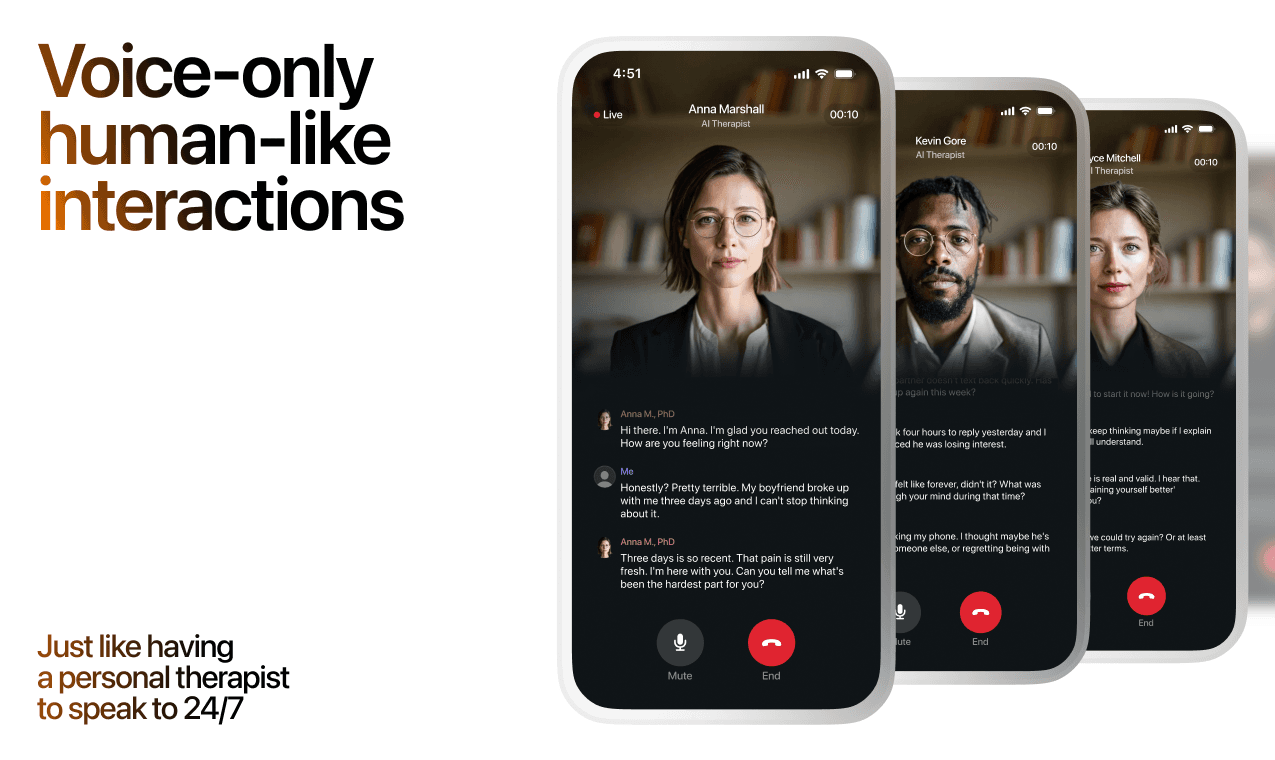
Here's what happens in a typical Lovon session:
You share what's on your mind
There's no script, no intake form, no waiting room. You speak or type whatever you're feeling — in your own words, at your own pace.
Lovon validates and explores
Using frameworks from CBT (Cognitive Behavioral Therapy) and motivational interviewing, Lovon acknowledges your feelings first, then gently helps you explore them. No dismissive "just move on" advice.
You build coping skills together
Lovon doesn't just listen — it actively works with you on evidence-based techniques: thought reframing, urge surfing, behavioral experiments, and more.
What a Session with Lovon Looks Like
When to Seek Professional Help
AI support is a valuable tool, but it's not a replacement for professional care. Please consider reaching out to a licensed therapist if you experience any of the following:
- Persistent thoughts of self-harm or suicide
- Inability to perform daily activities (work, eating, sleeping) for more than 2 weeks
- Turning to alcohol or substances to cope
- Intense anger or desire to harm your ex-partner
- Complete emotional numbness that doesn't improve over time
Crisis Resources (US): If you're in immediate danger, call 988 (Suicide & Crisis Lifeline) or text HOME to 741741 (Crisis Text Line). Available 24/7, free, and confidential.
Outside the US? Find a crisis line in your country
Ready to Start?
Your healing journey can begin right now
1 free conversation. No credit card. No judgment. Just a safe space to process what you're going through.
Frequently Asked Questions
Is AI therapy a replacement for a real therapist?
Is my conversation with Lovon AI private?
How is Lovon different from ChatGPT for emotional support?
Can I use Lovon if I'm already seeing a therapist?
Can I try Lovon for free?
About the Author
The Lovon Editorial Team
Mental Health & Wellness Content Team
The Lovon Editorial Team develops mental health and wellness content designed to make psychological concepts accessible and actionable. Our goal is to bridge the gap between clinical research and everyday life - helping you understand why your mind works the way it does and what you can do about it....
Similar Articles
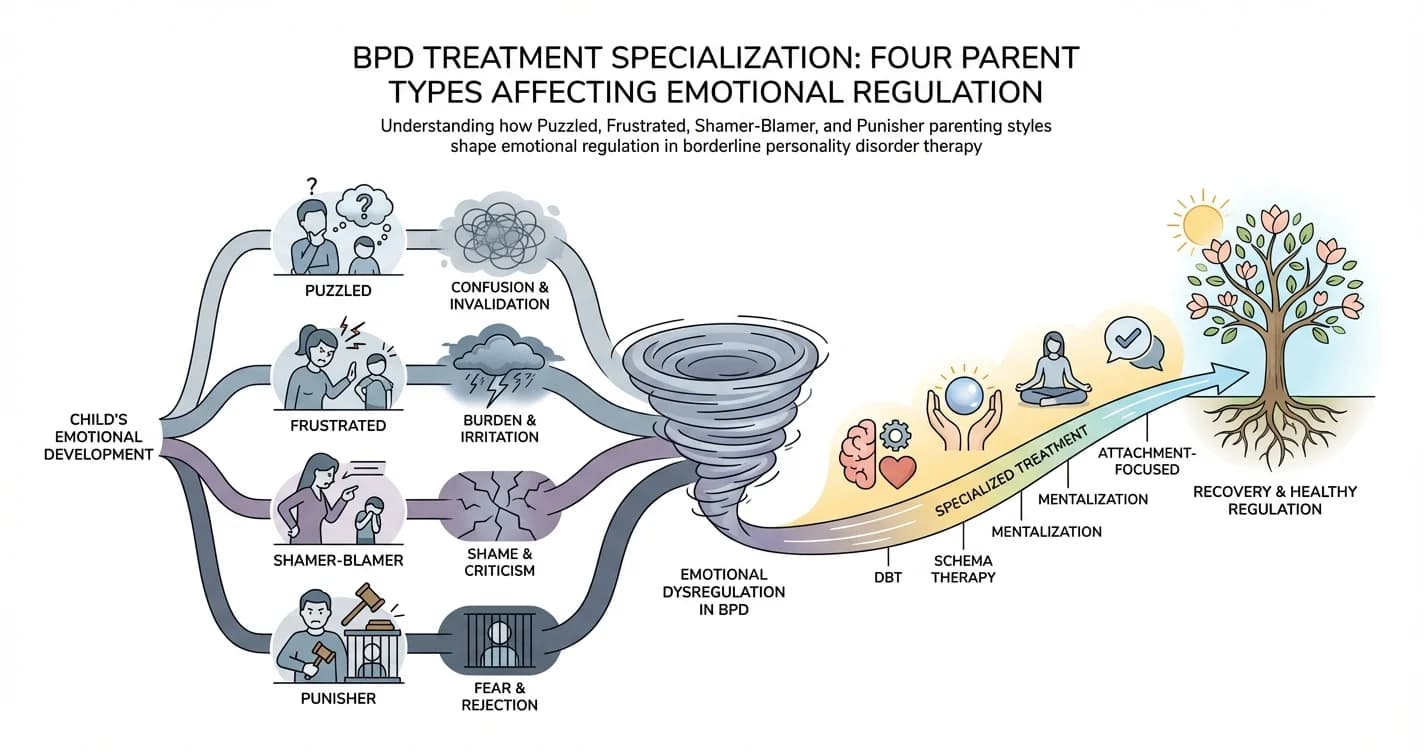
BPD Treatment Specialization: Four Parent Types Affecting Emotional Regulation
For individuals with borderline personality disorder (BPD), emotional regulation difficulties rarely emerge in isolation. Research increasingly suggests that

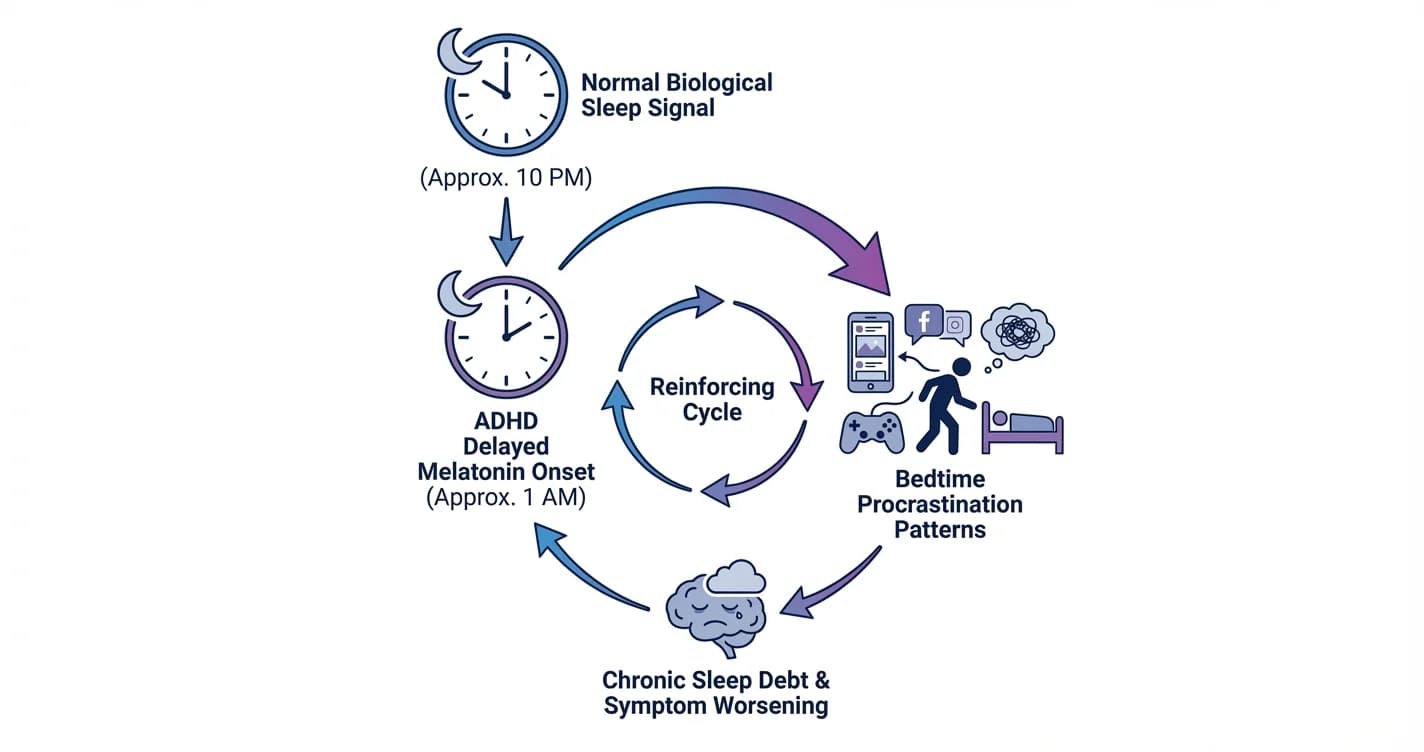
ADHD Sleep Cycle Disruption: Melatonin Delay and Bedtime Procrastination Patterns
Understanding how attention regulation difficulties interfere with natural sleep timing and the nightly wind-down process
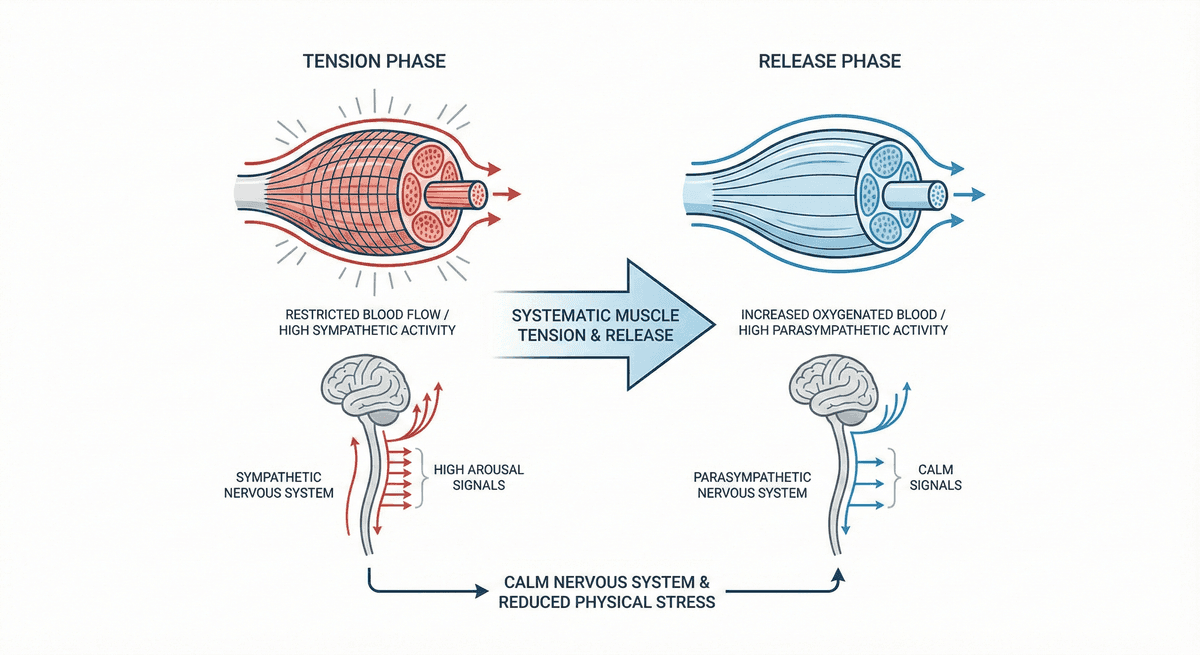
Progressive Muscle Relaxation for Stress Reduction
A systematic muscle group tension and release technique that calms the nervous system and reduces physical stress.
Disclaimer: This article is for informational purposes only and does not constitute medical advice, diagnosis, or treatment. Always seek the advice of your physician or other qualified health provider with any questions you may have regarding a medical condition. If you are in crisis or think you may have an emergency, call 988 (Suicide & Crisis Lifeline) or go to the nearest emergency room. Outside the US? Find a crisis line in your country.