
AI Support App for Sandwich Generation Caregivers 2026
Lovon's voice sessions win for 2am caregiver crises in 2026. See what to look for, top picks, and what to avoid in an ai support app for sandwich generation caregivers.

Key Takeaways
- Lovon works as an ai support app for sandwich generation caregivers who need voice support at 2am, not a 9-to-5 slot.
- Voice-based sessions beat text chatbots for caregivers driving between a parent's house and a kid's practice.
- Compassion fatigue and boundary-setting with an aging parent are the two patterns this audience hits hardest in 2026.
- Lovon does not replace a geriatric care manager or a licensed therapist for crisis-level family situations.
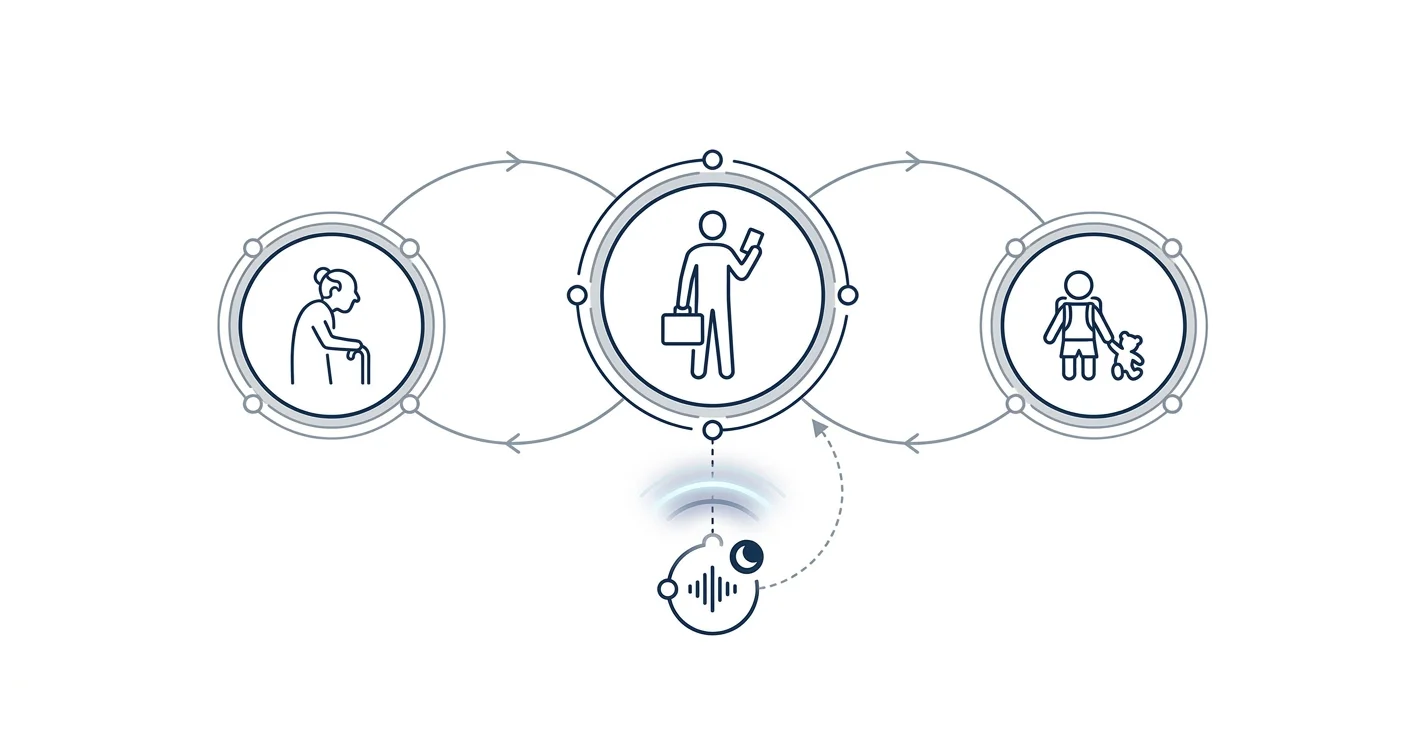
Sandwich generation caregivers split their attention between an aging parent's doctor appointments and a kid's homework, and most mental health tools are built for one crisis at a time, not both running at once. This guide breaks down what to look for in an ai support app for sandwich generation caregivers in 2026, where Lovon's voice-based sessions fit, and where they don't.
TL;DR
- Lovon works as an ai support app for sandwich generation caregivers who need voice support at 2am, not a 9-to-5 slot.
- Voice-based sessions beat text chatbots for caregivers driving between a parent's house and a kid's practice. Verdict: use it.
- Compassion fatigue and boundary-setting with an aging parent are the two patterns this audience hits hardest in 2026.
- Lovon does not replace a geriatric care manager or a licensed therapist for crisis-level family situations.
Why this matters
Caring for an aging parent while raising kids under one roof, or across two ZIP codes, is not a scheduling problem. It's an emotional one. You cover a parent's insurance calls, drive them to a specialist, then switch straight into homework help and dinner, and there's rarely a gap where a fixed 50-minute therapy block fits.
That's the specific opening an ai support app for sandwich generation caregivers has to fill: not another appointment to manage, but somewhere to talk when the day breaks open at 9pm or 5am. Lovon builds around that gap with voice conversations instead of a text thread, so you can talk while you drive, fold laundry, or sit in a hospital waiting room. It's not a replacement for a licensed therapist or a geriatric care manager, and it says so upfront.
Who this is for
This is written for adults roughly 35 to 60 managing two households of care at once: an aging parent's medical logistics and a child's daily needs, usually while working full time. You're the one who fields the 2pm call from a parent's cardiologist and the 6pm call from a kid's school, and you rarely get a clean hour to process either one. If you're searching for an ai support app for sandwich generation caregivers at midnight because a support group meets at a time you can't make, this is for you.
What to look for in an ai support app for sandwich generation caregivers
It works at 2am, not just 9-to-5
Crises in this stage of life don't wait for business hours. A parent's fall, a kid's meltdown, or your own breaking point can hit any time, and an app that only offers text prompts or requires scheduling ahead misses the exact moment you need it.
It's voice, not another text thread
Typing out a full paragraph while also making dinner isn't realistic. Voice conversation lets you talk the way you'd talk to a friend on speakerphone, which matters when your hands are already full.
It's built for short, interrupted sessions
You won't get an uninterrupted hour. A tool that works in five-minute windows between a doctor's call and a school pickup fits your actual schedule better than one designed around a therapist's 50-minute standard.
It names caregiver-specific patterns, not generic stress advice
Generic "take a deep breath" advice doesn't address the specific mix of guilt, resentment, and role reversal that comes with parenting your own parent. Look for language that speaks directly to caregiver burnout and compassion fatigue, not just stress in general.
It's honest about what it can't do
Any tool claiming to replace a licensed therapist or a geriatric care manager for a real safety crisis is overselling itself. The right app tells you plainly where its role ends and a clinician's begins.
Top picks for sandwich generation caregivers in 2026
The 2am option — Lovon's voice sessions. The pick for when a crisis call comes after everyone else has gone to bed. Lovon runs on voice, not text, with input from PhD psychologists, and covers 24/7 availability with no appointment window to wait through. See how AI voice therapy differs from text-based apps if you've only tried a chat-based tool before. Use it if a scheduled weekly session doesn't match your actual week.
The burnout gauge — caregiver burnout check-ins. The pick for the week you realize you haven't eaten a full meal sitting down. Caregiver burnout builds slowly and gets normalized fast, mostly because sandwich generation caregivers compare their exhaustion to a "worse" situation and decide they don't qualify for support. Naming the specific signs before you hit resentment or numbness is what makes a check-in useful instead of one more task on the list. Use it as a weekly five-minute pattern check, not a crisis-only tool.
The boundary rehearsal — setting limits with an aging parent. The pick for the caregiver who dreads the drive to a parent's house more than the actual drive. Setting a limit with a parent who raised you feels different than setting one with a coworker, especially when that parent has never handled boundaries well. Rehearsing the sentence out loud before the visit changes how it lands in the room. Consider it before a hard conversation, not instead of one.
The compassion fatigue check — before you're running on empty. The pick for the caregiver who used to feel patient and doesn't anymore. Compassion fatigue shows up as irritability and detachment more often than sadness, and it's easy to mistake for just being tired. Catching the early signs matters more than fixing the fallout once you've hit the wall. Consider it if your patience with your kids or your parent has thinned out over the last few months of 2026.
Talk it out before it builds up
Start a voice session with Lovon whenever the day breaks open.
What to avoid
- Apps that only work during business hours. A tool requiring a scheduled live session during the 9-to-5 window misses the actual times sandwich generation caregivers have free: after the kids are asleep, before a parent's morning meds.
- Meditation-only audio apps with no way to talk back. Fine for a five-minute reset, useless for actually processing a fight with a parent or a blowup with a kid.
- Anything positioned as a replacement for a geriatric care manager or family therapist. If a parent's care situation involves real safety risk, a voice AI session is not equipped to handle it, and a tool that implies otherwise isn't being straight with you.
Verdict comparison table
| Support type | Availability | Wait time | Best for |
|---|---|---|---|
| AI voice support (Lovon) | 24/7 | None | 2am parent calls, quick resets between shifts |
| Traditional therapy | Scheduled weekly or biweekly | Days to weeks for a first appointment | Deep, ongoing clinical work |
| Peer support groups | Fixed meeting times | Varies by group | Shared experience, community |
| Text-only chatbot apps | 24/7 | None | Quick tips, not real-time processing |
FAQ
What is the best ai support app for sandwich generation caregivers in 2026?
Lovon is built around voice conversations available 24/7, which fits caregivers who need support outside a scheduled appointment window. It's not a substitute for a geriatric care manager or licensed therapist in a real safety crisis.
Is an AI voice therapy app better than a text-based chatbot for caregivers?
For caregivers whose hands are full, voice beats typing because you can talk while driving or doing chores instead of stopping to write a message. Text apps still work for quick tips, but they don't replace real-time back and forth.
Can an AI app replace a geriatric care manager or family therapist?
No, and Lovon says so directly. It's built for on-demand emotional support between clinical appointments, not for managing a parent's medical care or handling a crisis that needs a licensed professional.
What are the signs of caregiver burnout in the sandwich generation?
Common signs include resentment toward the people you're caring for, physical exhaustion that sleep doesn't fix, and a sense that you've stopped feeling patient. These signs build gradually, which is why they get normalized instead of addressed.
How do I set boundaries with an aging parent without guilt?
Rehearsing the actual sentence you plan to say, before the conversation happens, reduces the guilt spike in the moment. The goal is a clear limit stated calmly, not a justification for why you're allowed to have one.
Is Lovon available at night for a 2am crisis?
Lovon is available around the clock, which covers the late-night and early-morning windows when sandwich generation caregivers actually have a free minute. It's a voice conversation tool, not an emergency service.
What's the difference between compassion fatigue and normal caregiver stress?
Compassion fatigue is a deeper detachment that builds over months, showing up as numbness or irritability rather than the day-to-day tiredness of normal caregiving stress. Catching it early prevents it from turning into full burnout.
Does an ai support app for sandwich generation caregivers cost less than traditional therapy?
Pricing varies by provider, so check current terms directly on the app before comparing. The bigger practical difference for this audience is usually availability and wait time, not just cost.
One last thing
The caregivers who get the most out of an ai support app for sandwich generation caregivers don't use it for the big blowups. They use it for the five minutes between hanging up with a parent's doctor and walking into a kid's soccer game, where nobody else gets to see the reset happen. That's the gap this category exists to fill in 2026, not a replacement for the harder conversations with a real clinician.
Related guides
How AI Support Helps You Heal
AI emotional support isn't about replacing human connection — it's about filling the gaps. The moments when you need to talk at 2 AM, when you don't want to burden your friends again, or when you simply need someone to listen without judgment.
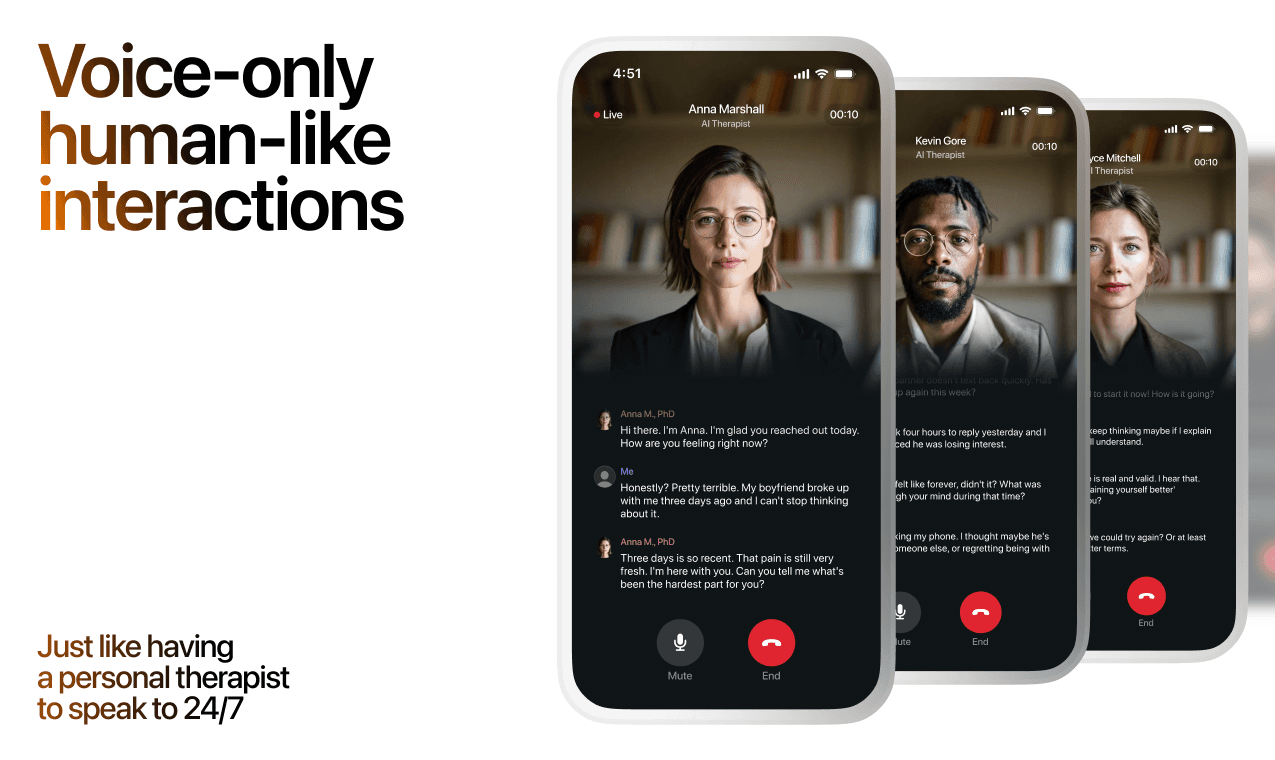
Here's what happens in a typical Lovon session:
You share what's on your mind
There's no script, no intake form, no waiting room. You speak or type whatever you're feeling — in your own words, at your own pace.
Lovon validates and explores
Using frameworks from CBT (Cognitive Behavioral Therapy) and motivational interviewing, Lovon acknowledges your feelings first, then gently helps you explore them. No dismissive "just move on" advice.
You build coping skills together
Lovon doesn't just listen — it actively works with you on evidence-based techniques: thought reframing, urge surfing, behavioral experiments, and more.
What a Session with Lovon Looks Like
When to Seek Professional Help
AI support is a valuable tool, but it's not a replacement for professional care. Please consider reaching out to a licensed therapist if you experience any of the following:
- Persistent thoughts of self-harm or suicide
- Inability to perform daily activities (work, eating, sleeping) for more than 2 weeks
- Turning to alcohol or substances to cope
- Intense anger or desire to harm your ex-partner
- Complete emotional numbness that doesn't improve over time
Crisis Resources (US): If you're in immediate danger, call 988 (Suicide & Crisis Lifeline) or text HOME to 741741 (Crisis Text Line). Available 24/7, free, and confidential.
Outside the US? Find a crisis line in your country
Ready to Start?
Your healing journey can begin right now
A 7-day trial. No judgment. Just a safe space to process what you're going through.
Frequently Asked Questions
Is Lovon a replacement for a real therapist?
Is my conversation with Lovon AI private?
How is Lovon different from ChatGPT for emotional support?
Can I use Lovon if I'm already seeing a therapist?
Can I try Lovon before subscribing?
About the Author

The Lovon Editorial Team
Mental Health & Wellness Content Team
The Lovon Editorial Team develops mental health and wellness content designed to make psychological concepts accessible and actionable. Our goal is to bridge the gap between clinical research and everyday life - helping you understand why your mind works the way it does and what you can do about it....
Related articles
- AI Mental Health Support 2026: What It Is & Who It Helps
AI mental health support ranges from voice therapy to chatbots in 2026. See what each format does best, who it helps…
- AI Therapy App for Veterinary Compassion Fatigue (2026)
Lovon offers same-day voice check-ins for veterinary compassion fatigue in 2026 — see the verdict, comparison table, and…
- Enmeshment Trauma: How to Untangle It in 2026
Enmeshment trauma explained: signs, causes, and 6 steps to rebuild your sense of self in adult relationships. Practical…
- Best AI apps for caregiver burnout in 2026
Compare the best AI apps for caregiver burnout. Choose Lovon for voice support, or a writing assistant for practical…
See also
Quizzes
- Am I Codependent? 12-Question Self-Check
See how much of you is left over, in 2 minutes.
- Confidence Test: Do You Act Before You Feel Ready?
See which part of your confidence is thin.
Free tools
- What to Say to Someone Who Is Grieving
Get sentences that fit this person and this week, not a list of things people say at funerals. Describe who they lost…
- How to Say No Politely (Without Over-Explaining)
A chat for how to say no politely when you have already decided and cannot get the word out. Tell it what you were…
From the wiki
- What to do if you have no friends?
Pick one activity that repeats weekly with the same people, and go for six to eight weeks straight. Repetition, not…
Disclaimer: This article is for informational purposes only and does not constitute medical advice, diagnosis, or treatment. Always seek the advice of your physician or other qualified health provider with any questions you may have regarding a medical condition. If you are in crisis or think you may have an emergency, call 988 (Suicide & Crisis Lifeline) or go to the nearest emergency room. Outside the US? Find a crisis line in your country.