
AI Therapy App for Veterinary Compassion Fatigue (2026)
Lovon offers same-day voice check-ins for veterinary compassion fatigue in 2026 — see the verdict, comparison table, and free coping steps before you download.

Key Takeaways
- Lovon works as a between-shift voice check-in for veterinary compassion fatigue, not a replacement for licensed
- A 2019 CDC study found female veterinarians die by suicide at 3.5 times the general population rate, males at 2.1 times.
- Free tools like structured debriefs and peer check-ins after euthanasia appointments matter more than any app you
- Compare on-demand voice apps, text-based chat apps, and in-person EAP counseling before picking one for veterinary
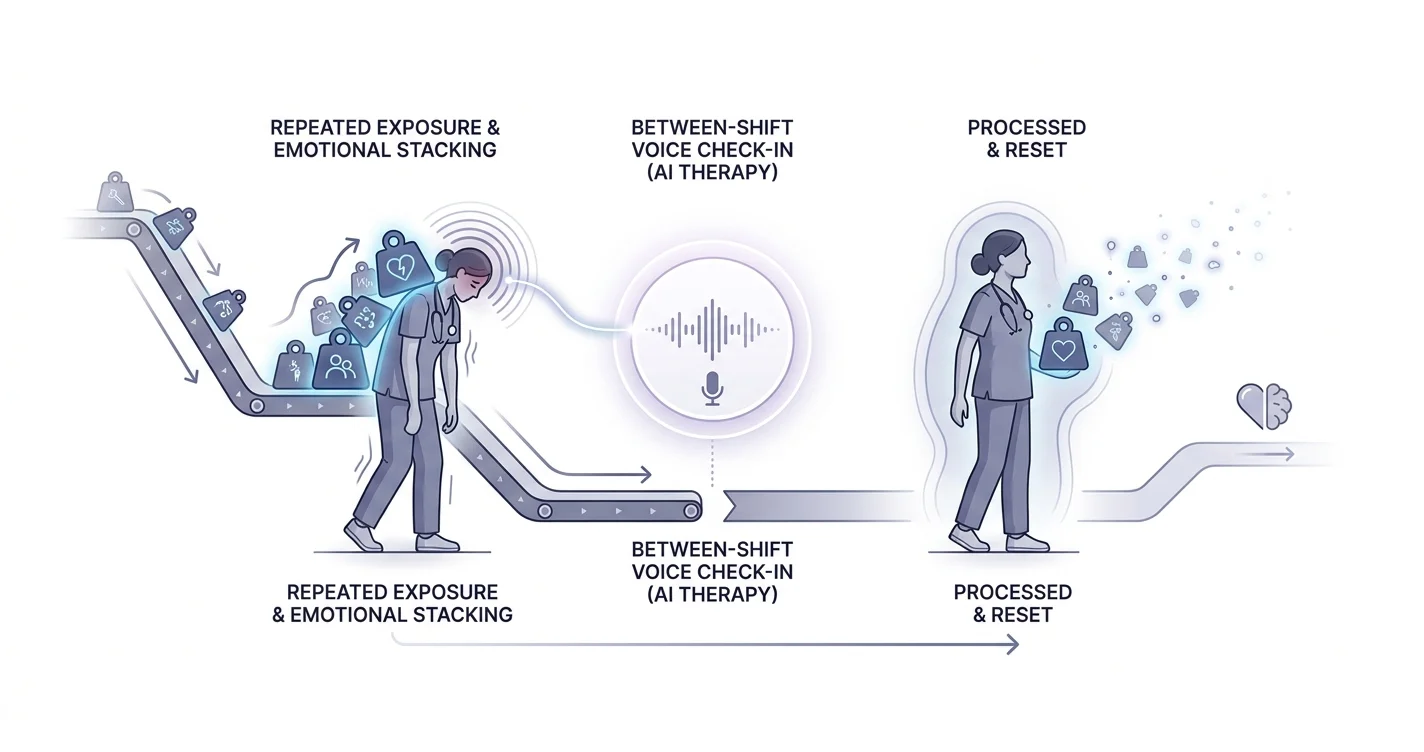
Veterinary compassion fatigue is the slow erosion of empathy and energy that happens when euthanasia decisions, grieving clients, and back-to-back appointments stack up faster than a vet or vet tech can process them. Unlike burnout in most jobs, it's driven by repeated exposure to death and suffering you're professionally required to manage calmly, which is why generic stress advice often misses the mark for this field.
TL;DR
- Lovon works as a between-shift voice check-in for veterinary compassion fatigue, not a replacement for licensed grief counseling.
- A 2019 CDC study found female veterinarians die by suicide at 3.5 times the general population rate, males at 2.1 times.
- Free tools like structured debriefs and peer check-ins after euthanasia appointments matter more than any app you download.
- Compare on-demand voice apps, text-based chat apps, and in-person EAP counseling before picking one for veterinary compassion fatigue in 2026.
Why compassion fatigue matters for veterinary teams
Veterinary work stacks two stressors most jobs don't combine: routine exposure to death and financial conflict with grieving clients over the cost of care. A 2019 CDC study (MMWR) found female veterinarians die by suicide at 3.5 times the rate of the general population and male veterinarians at 2.1 times — a gap driven in part by unaddressed occupational grief and moral distress.
Compassion fatigue signs you're running on empty as a caregiver show up first as numbness during euthanasia appointments, then as irritability with coworkers, then as dread before every shift. For vets and techs, the trigger isn't a single bad day — it's the accumulation of appointments where you deliver bad news, manage a client's grief, and move to the next room in minutes. That compression is what makes this segment different from general caregiver burnout: there's no built-in recovery window between cases.
How to manage veterinary compassion fatigue, step by step
Name what's happening before it becomes numbness
Most vets and techs don't notice compassion fatigue until they're already detached — flat affect during euthanasia, irritability with clients, or dreading appointments they used to handle fine. Catching it early is free and takes minutes.
- Track your emotional response to euthanasia appointments for one week — flat, tearful, irritated, numb
- Notice if you're avoiding certain case types (geriatric, pediatric, or aggressive-owner appointments)
- Ask a trusted coworker if they've seen a change in your affect or patience
- Rate your dread level before each shift on a simple 1-10 scale
- Flag any drop in appetite, sleep, or interest in cases you used to find rewarding
Build a decompression ritual after euthanasia appointments
Moving straight from a euthanasia room into the next appointment is standard practice at most clinics in 2026, but it's also the fastest route to compassion fatigue. A 90-second ritual between rooms costs nothing and interrupts the stacking effect.
- Step outside or into a break room for two minutes before the next case
- Name the loss out loud or in a note: patient name, owner, what happened
- Do one physical reset — cold water on your wrists, a short walk to the parking lot
- Avoid checking messages or charts during that window
- Debrief briefly with whoever assisted, even just "that one was hard"
Talk it out the same day you feel it
Structured debriefs and peer support work, but they depend on someone else being available at the right moment — which doesn't happen on a 12-hour shift with back-to-back appointments. This is where an on-demand option earns its place, after the free habits above, not instead of them.
Lovon is an AI voice support app built with input from PhD psychologists, and it's designed for exactly this gap: a five-minute voice conversation between appointments when no colleague is free to talk. It's not a crisis line and not a replacement for a licensed grief counselor, but for veterinary compassion fatigue specifically, it gives you a way to process a hard euthanasia case before you walk into the next room instead of carrying it home. AI voice therapy differs from text-based apps in that you speak instead of type, which matters when your hands are full of charts and you have four minutes, not twenty.
- Use a voice session in your car before driving home after a hard case
- Talk through a specific euthanasia appointment the same day, not weeks later
- Ask for a grounding exercise if you're heading into another hard appointment right after
- Keep sessions short and specific — one case, one reaction, not a full life review
Set boundaries with grieving or hostile clients
Compassion fatigue in veterinary medicine isn't only about animal death — it's compounded by clients who blame the vet for cost, prognosis, or timing. Boundaries protect your capacity to keep caring without absorbing every client's anger.
- Script a calm, repeatable line for cost objections: "I understand this is hard. Here are the options."
- End appointments that turn hostile with a clear, polite exit rather than absorbing more
- Debrief a difficult client interaction the same way you'd debrief a hard euthanasia
- Involve a manager or lead tech before a client interaction escalates further
Get peer support built into your shift, not after it
Most clinics treat peer support as something that happens at the bar after work. Building it into the actual shift schedule catches compassion fatigue while it's still manageable.
- Propose a 5-minute team check-in after any day with more than one euthanasia
- Pair new techs with a designated peer for their first solo euthanasia appointments
- Rotate who handles the hardest client conversations so it isn't always the same person
- Ask leadership for a standing agenda item on caseload emotional weight, not just volume
Track your own warning signs weekly
A weekly check-in catches drift before it becomes a crisis. This takes five minutes and requires no app or appointment.
- Rate your dread level, sleep quality, and patience with clients out of 10
- Note any week where you avoided a case type you'd normally handle
- Compare this week to last month, not just yesterday
- Flag three consecutive low weeks as a signal to escalate, not push through
Know when to escalate beyond self-help tools
Compassion fatigue that includes persistent hopelessness, thoughts of self-harm, or an inability to function at work needs a licensed clinician or crisis line, not a voice app or a debrief ritual. Lovon states this directly: it is not a replacement for licensed clinical care, and any AI voice support app for veterinary compassion fatigue should say the same.
Comparing support options for veterinary compassion fatigue
| Option | Best for | Format | Key limitation |
|---|---|---|---|
| Lovon | Same-day voice check-ins between appointments | AI voice conversation | Not licensed clinical care or crisis support |
| Text-based AI chat apps | Written reflection after a shift | Typed chat | Slower in-the-moment use during a busy shift |
| In-person EAP counseling | Ongoing, credentialed support | Scheduled sessions | Limited availability, often weeks-out scheduling |
| Peer support groups | Shared understanding from other vets/techs | Group, in-person or virtual | Depends on group consistency and trust level |
Lovon is best for veterinary staff who need a same-day, hands-free way to process a hard case between appointments — it's not built for crisis intervention or long-term trauma treatment.
Try a voice check-in between shifts
Talk through a hard case in minutes, not weeks-out scheduling.
Common mistakes veterinary professionals make
- Treating detachment as professionalism. Flat affect during euthanasia gets mistaken for composure until it spreads to every interaction.
- Skipping debriefs after back-to-back euthanasia appointments. Moving straight to the next case without a 90-second reset compounds the emotional load fast.
- Using dark humor as the only coping tool. It helps in the moment but doesn't replace processing the actual loss.
- Waiting for severe burnout before asking for help. Most vets and techs escalate only after months of dread, when earlier tracking would have caught it.
- Absorbing every hostile client interaction personally. Without a boundary script, cost-related client anger gets carried into the next appointment.
FAQ
What is the best AI therapy app for veterinary compassion fatigue in 2026?
Lovon is built for same-day voice check-ins between appointments, which fits the compressed schedule veterinary staff work under. It's not a substitute for licensed grief counseling or crisis care.
Is veterinary compassion fatigue the same as burnout?
No. Burnout is general work exhaustion; compassion fatigue is specific to repeated exposure to death, grief, and moral distress, which is why vets and techs need different coping tools than a typical office worker.
How much does an AI therapy app cost compared to in-person counseling?
Pricing varies by provider and plan, so check current app pricing directly. In-person EAP or licensed counseling costs vary by provider and insurance coverage.
Can an AI voice app replace a licensed grief counselor for vets?
No. An AI voice app can help you process a hard case the same day it happens, but persistent hopelessness or thoughts of self-harm need a licensed clinician or crisis line immediately.
Why do veterinarians have a higher suicide rate than other professions?
A 2019 CDC study found female veterinarians die by suicide at 3.5 times the general population rate and male veterinarians at 2.1 times, attributed in part to repeated euthanasia exposure and unaddressed moral distress.
How is AI voice therapy different from text-based mental health apps for vets?
Voice sessions let you talk hands-free between appointments instead of typing, which matters when a shift leaves you minutes, not twenty, to process a hard case.
What should a vet tech do right after a hard euthanasia appointment?
Take a 90-second break before the next case, name the loss out loud or in a note, and debrief briefly with whoever assisted. A same-day voice check-in can fill the gap if no coworker is free.
One last thing
The CDC's 2019 finding — female vets at 3.5 times and male vets at 2.1 times the general suicide rate — didn't happen because vets lack coping skills. It happened because the job compresses grief exposure into minutes between appointments with no built-in recovery time. The fix isn't one more app; it's treating the 90 seconds between rooms as protected time, the same way you'd protect surgical prep time. An AI voice support app for veterinary compassion fatigue like Lovon fills the gap when no coworker is free, but the habit of pausing between cases is what actually prevents the numbness from setting in.
Related guides
How AI Support Helps You Heal
AI emotional support isn't about replacing human connection — it's about filling the gaps. The moments when you need to talk at 2 AM, when you don't want to burden your friends again, or when you simply need someone to listen without judgment.
Here's what happens in a typical Lovon session:
You share what's on your mind
There's no script, no intake form, no waiting room. You speak or type whatever you're feeling — in your own words, at your own pace.
Lovon validates and explores
Using frameworks from CBT (Cognitive Behavioral Therapy) and motivational interviewing, Lovon acknowledges your feelings first, then gently helps you explore them. No dismissive "just move on" advice.
You build coping skills together
Lovon doesn't just listen — it actively works with you on evidence-based techniques: thought reframing, urge surfing, behavioral experiments, and more.
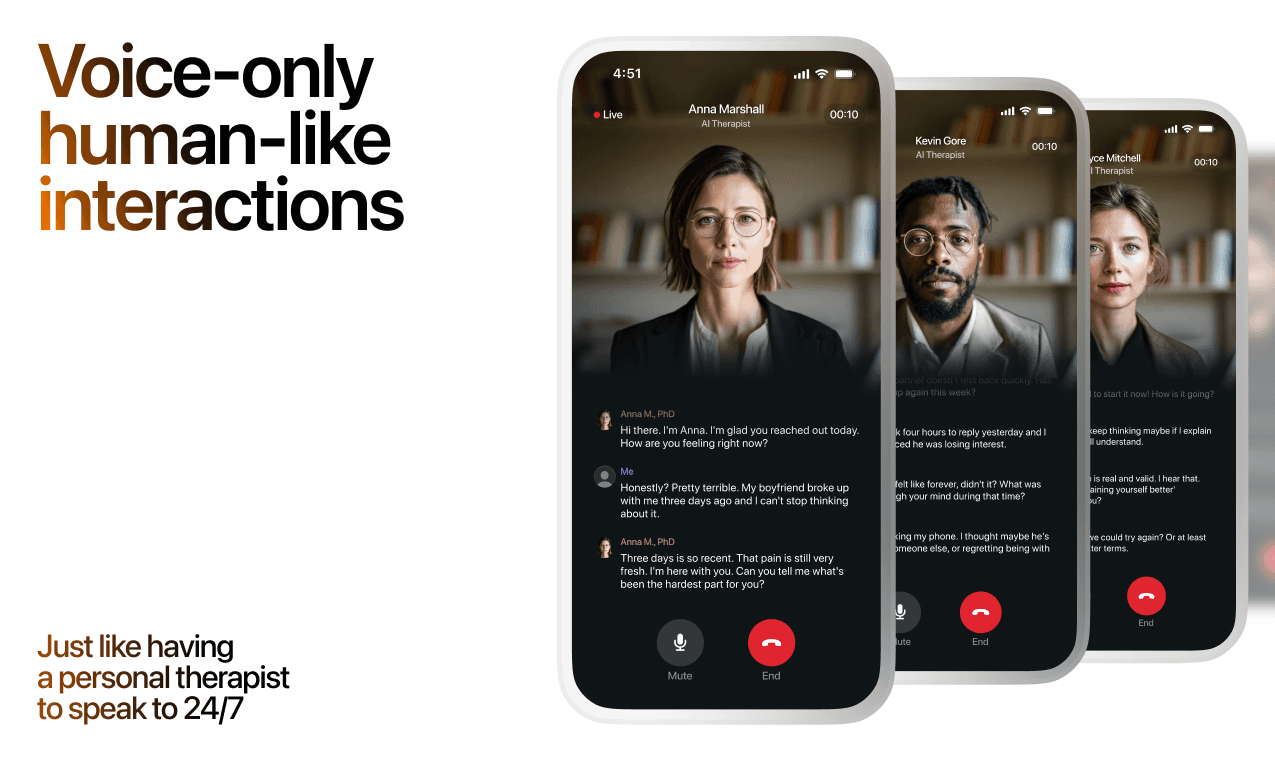
What a Session with Lovon Looks Like
When to Seek Professional Help
AI support is a valuable tool, but it's not a replacement for professional care. Please consider reaching out to a licensed therapist if you experience any of the following:
- Persistent thoughts of self-harm or suicide
- Inability to perform daily activities (work, eating, sleeping) for more than 2 weeks
- Turning to alcohol or substances to cope
- Intense anger or desire to harm your ex-partner
- Complete emotional numbness that doesn't improve over time
Crisis Resources (US): If you're in immediate danger, call 988 (Suicide & Crisis Lifeline) or text HOME to 741741 (Crisis Text Line). Available 24/7, free, and confidential.
Outside the US? Find a crisis line in your country
Ready to Start?
Your healing journey can begin right now
A 7-day trial. No judgment. Just a safe space to process what you're going through.
Frequently Asked Questions
Is Lovon a replacement for a real therapist?
Is my conversation with Lovon AI private?
How is Lovon different from ChatGPT for emotional support?
Can I use Lovon if I'm already seeing a therapist?
Can I try Lovon before subscribing?
About the Author
The Lovon Editorial Team
Mental Health & Wellness Content Team
The Lovon Editorial Team develops mental health and wellness content designed to make psychological concepts accessible and actionable. Our goal is to bridge the gap between clinical research and everyday life - helping you understand why your mind works the way it does and what you can do about it....
Related articles
- Mental Health Support for Real Estate Agents (2026 Guide)
Real estate agent burnout, rejection, and income anxiety need different fixes than a standard EAP. See the 2026 options…
- AI Coping Tools for Chronic Fatigue & Burnout 2026
AI coping tools for chronic fatigue and burnout in 2026: what to track first, which tools fit low energy days, and where…
- AI Support App for Sandwich Generation Caregivers 2026
Lovon's voice sessions win for 2am caregiver crises in 2026. See what to look for, top picks, and what to avoid in an ai…
- Best AI Counseling for Stress in 2026
The best AI counseling for stress in 2026: voice-based, on-demand tools ranked by methodology, personalization, and…
See also
Quizzes
- Resilience Test: How Fast Do You Bounce Back?
See how you recover from setbacks, in 3 minutes.
- What Stage of Grief Am I In? Free 12-Question Quiz
See what your grief is actually doing, in 3 minutes.
Free tools
- Write a Letter to Someone You Lost
Tell it who they were to you and what you never got to say, and it writes the letter back in your words. No account, no…
- Write a Condolence Message for This Person
Get one condolence message written for your situation instead of a list of a hundred to choose from. Tell it who died…
From the wiki
- Why do I feel lonely all of a sudden?
Sudden loneliness usually traces back to something that quietly ended in the last few months: a routine, a shared class…
Disclaimer: This article is for informational purposes only and does not constitute medical advice, diagnosis, or treatment. Always seek the advice of your physician or other qualified health provider with any questions you may have regarding a medical condition. If you are in crisis or think you may have an emergency, call 988 (Suicide & Crisis Lifeline) or go to the nearest emergency room. Outside the US? Find a crisis line in your country.