
Compassion Fatigue Signs in 2026: Are You Running on Empty
Compassion fatigue signs in 2026: numbness, dread, irritability, and withdrawal. Learn what to watch for and what to do before it turns into burnout.

Key Takeaways
- Compassion fatigue signs include emotional numbness, irritability, and dread before caregiving tasks — not just
- Unlike normal exhaustion, compassion fatigue builds from repeated exposure to someone else's pain over weeks or months.
- Lovon's AI voice therapy gives caregivers a place to process the day when no one else is available at 11pm.
- Ignoring the signs for months often tips into full burnout or depression — catch it early instead.
Running on empty as a caregiver doesn't always look like burnout. Sometimes it looks like numbness, irritability, or a strange flatness where compassion used to be — and by 2026, that pattern has a name: compassion fatigue.
TL;DR
- Compassion fatigue signs include emotional numbness, irritability, and dread before caregiving tasks — not just tiredness.
- Unlike normal exhaustion, compassion fatigue builds from repeated exposure to someone else's pain over weeks or months.
- Lovon's AI voice support gives caregivers a place to process the day when no one else is available at 11pm.
- Ignoring the signs for months often tips into full burnout or depression — catch it early instead.
Why this matters
Caregivers rarely get permission to say they're depleted. Parents caring for a sick child, adults managing an aging parent's decline, nurses, and partners of someone with chronic illness all absorb pain that isn't theirs to carry alone, and by the time exhaustion turns into resentment, most people assume they're just tired.
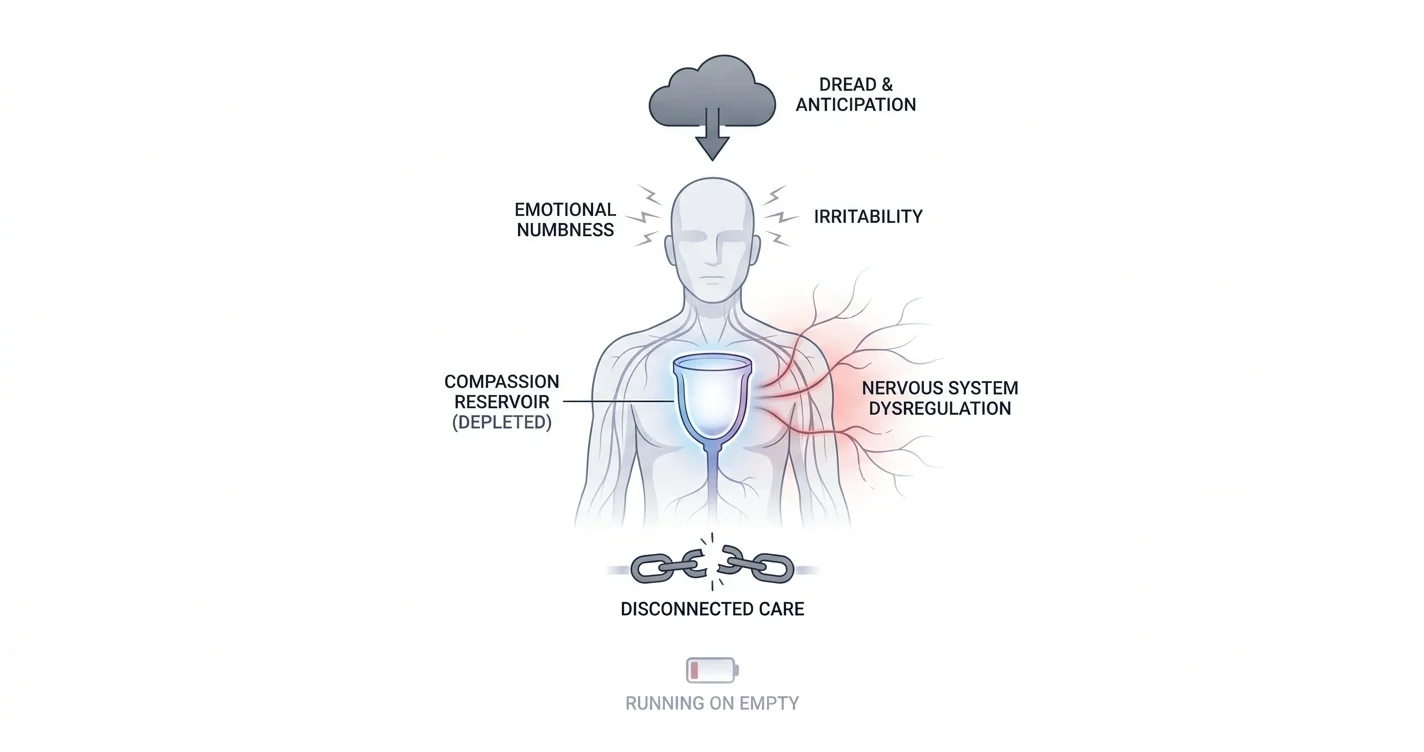
They're not. Compassion fatigue is a specific response to prolonged exposure to someone else's suffering, and it behaves differently from ordinary tiredness — it shows up in the nervous system dysregulation patterns of a body that's been in low-grade alert mode for too long. A weekend off fixes fatigue. It doesn't fix compassion fatigue.
Catching the signs early in 2026 matters because compassion fatigue left unchecked doesn't plateau — it compounds into chronic irritability, detachment from the person you're caring for, and eventually a mental health crisis of your own.
What you'll need
- Fifteen minutes alone, without your phone buzzing with caregiving requests
- A basic tracking method — notes app, journal, or voice memo
- Honesty about the last two to four weeks, not just today
- A way to talk it through out loud when it gets heavy, whether that's a friend, a therapist, or an AI voice conversation with Lovon between sessions
The signs, step by step
1. Check for emotional numbness toward the person you care for
Compassion fatigue often starts with a loss of feeling, not an excess of it. You go through the motions — meds, meals, appointments — but the warmth that used to accompany those tasks has gone quiet.
This matters because numbness is a protective shutdown, not apathy. The brain limits emotional exposure after too much repeated distress, which is why caregivers often describe feeling like they're "watching themselves" do the caregiving rather than being present in it.
Common mistake: assuming numbness means you've stopped caring, then feeling guilty instead of addressing the underlying depletion.
2. Track irritability that feels out of proportion
Snapping at small things — a spilled cup, a repeated question, a slow morning — is one of the most reliable compassion fatigue signs. Write down every irritation spike for one week and note what preceded it.
If the irritability clusters around caregiving tasks specifically rather than life in general, that's a strong signal you're depleted, not just having a rough patch. This is different from burnout vs depression, where low mood tends to be constant rather than task-triggered.
Common mistake: blaming the irritability on the care recipient's behavior instead of your own depletion.
3. Notice dread before caregiving tasks
A felt sense of dread before a shift, a visit, or a phone call from a parent's care facility is a specific marker. It's different from being tired — dread is anticipatory, and it shows up hours before the task even starts.
Rate the dread on a 1-10 scale for a week. A consistent 6 or higher before routine, non-crisis tasks tells you the fatigue has moved from physical to emotional territory.
Common mistake: pushing through the dread silently because caregiving "shouldn't" feel this way, which only deepens the shame loop.
4. Watch for physical symptoms with no clear cause
Headaches, stomach issues, disrupted sleep, and a racing heart with no medical explanation are common somatic signs of compassion fatigue. The body keeps score even when the mind minimizes what's happening.
If you've had two or more unexplained physical symptoms in the past month alongside caregiving stress, that's data, not coincidence.
Common mistake: treating each symptom in isolation (more coffee for the headache, melatonin for the sleep) instead of connecting them to the caregiving load.
5. Look for role reversal and parentified guilt
If you were the one who took care of others as a child — a sick parent, younger siblings — compassion fatigue can hit faster and feel more shameful in adulthood, because the pattern of caretaking-as-identity started early. That dynamic has a name: parentification, and it changes how compassion fatigue shows up.
Ask yourself: did you learn early that your needs came second? If yes, your fatigue signals may show up as guilt for resting rather than as visible exhaustion.
Common mistake: interpreting the guilt as evidence you're not doing enough, rather than as a learned pattern worth examining.
6. Measure withdrawal from your own life outside caregiving
Skipped calls with friends, canceled plans, hobbies untouched for months — withdrawal from everything that isn't caregiving is one of the clearest late-stage signs. Count how many non-caregiving activities you've done in the past two weeks. Zero or one is a red flag.
Common mistake: telling yourself there's no time, when the real issue is that fatigue has narrowed your capacity to engage with anything outside the caregiving role.
Talk it through tonight
Have a voice conversation with Lovon when caregiving stress hits and no one else is awake.
Troubleshooting
"I feel guilty even reading this list." Guilt is common among caregivers who equate rest with abandonment. Naming the guilt out loud, even to yourself, reduces its grip faster than pushing past it silently.
"I don't have time for therapy appointments." Compassion fatigue rarely waits for a scheduled hour. On-demand voice support fills the gap between appointments or replaces the search for one when your schedule won't allow it.
"My family thinks I'm exaggerating." Track the specific signs above for two weeks with dates. Concrete patterns are harder to dismiss than a general complaint of "I'm tired."
"I think it's turned into something bigger." If numbness, dread, and withdrawal have lasted more than a month and started affecting sleep, appetite, or hope for the future, that's beyond compassion fatigue and worth a licensed clinician's evaluation.
"I snap at the person I'm caring for and then feel awful." This cycle is exhausting on its own. Naming the trigger in the moment — even silently — interrupts the automatic reaction before it repeats.
Tools and resources
- A daily two-line log: one line for a physical symptom, one for an emotional one
- A weekly check-in with someone outside the caregiving situation
- AI mental health support for the moments between appointments, at 2am, or when nothing else is open
- A written list of three tasks you could hand off, even if you haven't asked yet
What to do next
Once you've confirmed the signs, the next question is whether this has already tipped into burnout. That distinction changes what kind of support actually helps, so read through the comparison before assuming a weekend off will fix it.
FAQ
What are the earliest compassion fatigue signs?
The earliest compassion fatigue signs are usually emotional numbness and dread before caregiving tasks, not physical exhaustion. These show up before sleep or appetite changes and are easy to dismiss as a bad week.
Is compassion fatigue the same as burnout?
No. Compassion fatigue is specific to repeated exposure to someone else's suffering, while burnout is a broader depletion from sustained workload or stress. They overlap and often occur together, but the triggers differ.
How long does compassion fatigue last if untreated?
Compassion fatigue can persist for months and deepen into depression or chronic detachment if the caregiving load doesn't change. Early intervention in the first few weeks shortens recovery significantly.
Can family caregivers get compassion fatigue without a clinical job?
Yes. Family caregivers experience compassion fatigue at rates comparable to professional caregivers because the emotional exposure is just as intense, often with fewer breaks and less support.
What's the difference between compassion fatigue and normal tiredness?
Normal tiredness resolves with rest; compassion fatigue persists even after a full night's sleep or a day off because the depletion is emotional, not just physical.
Does talking to an AI voice therapist actually help with compassion fatigue?
An AI voice companion like Lovon gives caregivers a place to process the day's stress on demand, which helps between or in place of scheduled sessions, though it is not a substitute for licensed clinical care.
When should a caregiver seek a licensed clinician instead of self-managing?
Seek a licensed clinician when compassion fatigue signs last beyond a month, include hopelessness, or start affecting basic functioning like sleep, work, or appetite.
What's one immediate step for someone showing compassion fatigue signs today?
Name the specific sign out loud — numbness, dread, or irritability — to one person or an AI conversation today. Naming it reduces the shame that keeps caregivers from asking for help.
One last thing
The caregivers who catch compassion fatigue earliest aren't the ones with the lightest load — they're the ones who stopped treating dread and numbness as normal parts of the job. That single shift, noticing the signs instead of pushing through them, is usually the whole intervention needed before things escalate in 2026.
Related guides
How AI Support Helps You Heal
AI emotional support isn't about replacing human connection — it's about filling the gaps. The moments when you need to talk at 2 AM, when you don't want to burden your friends again, or when you simply need someone to listen without judgment.
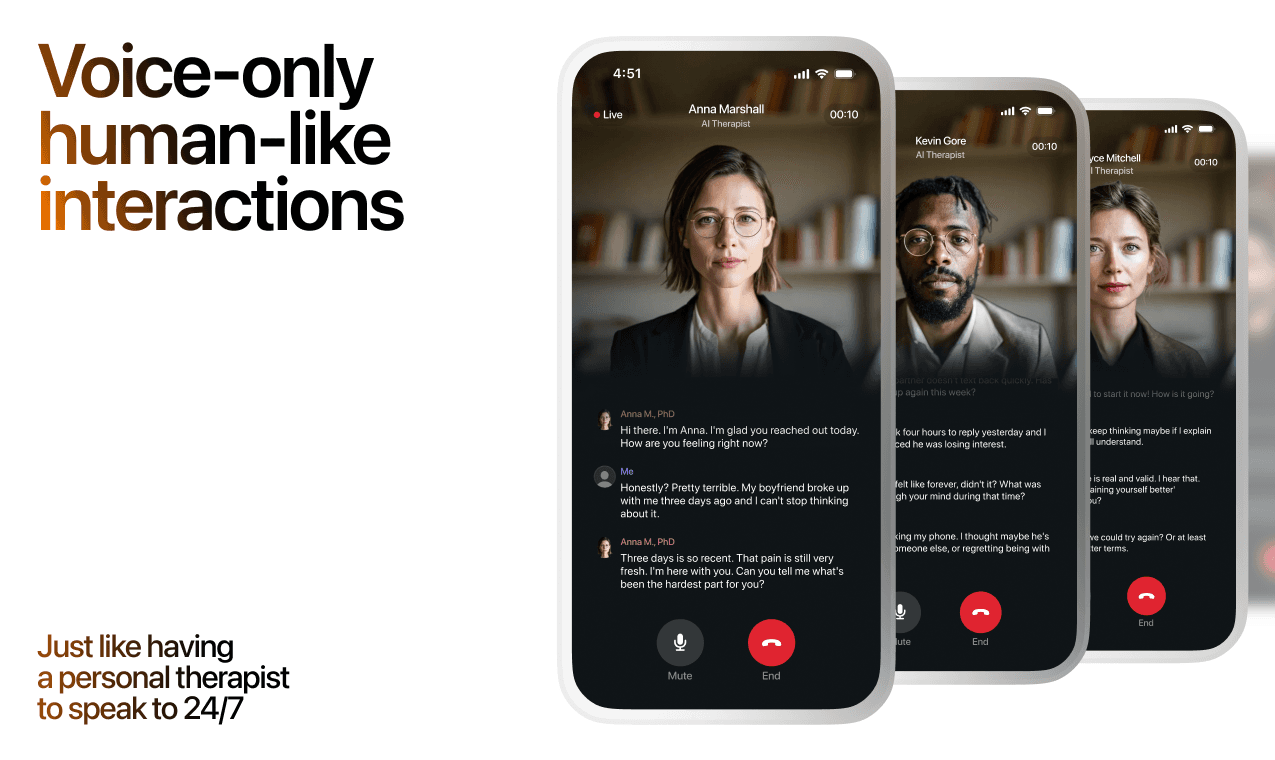
Here's what happens in a typical Lovon session:
You share what's on your mind
There's no script, no intake form, no waiting room. You speak or type whatever you're feeling — in your own words, at your own pace.
Lovon validates and explores
Using frameworks from CBT (Cognitive Behavioral Therapy) and motivational interviewing, Lovon acknowledges your feelings first, then gently helps you explore them. No dismissive "just move on" advice.
You build coping skills together
Lovon doesn't just listen — it actively works with you on evidence-based techniques: thought reframing, urge surfing, behavioral experiments, and more.
What a Session with Lovon Looks Like
When to Seek Professional Help
AI support is a valuable tool, but it's not a replacement for professional care. Please consider reaching out to a licensed therapist if you experience any of the following:
- Persistent thoughts of self-harm or suicide
- Inability to perform daily activities (work, eating, sleeping) for more than 2 weeks
- Turning to alcohol or substances to cope
- Intense anger or desire to harm your ex-partner
- Complete emotional numbness that doesn't improve over time
Crisis Resources (US): If you're in immediate danger, call 988 (Suicide & Crisis Lifeline) or text HOME to 741741 (Crisis Text Line). Available 24/7, free, and confidential.
Outside the US? Find a crisis line in your country
Ready to Start?
Your healing journey can begin right now
A 7-day trial. No judgment. Just a safe space to process what you're going through.
Frequently Asked Questions
Is Lovon a replacement for a real therapist?
Is my conversation with Lovon AI private?
How is Lovon different from ChatGPT for emotional support?
Can I use Lovon if I'm already seeing a therapist?
Can I try Lovon before subscribing?
About the Author

The Lovon Editorial Team
Mental Health & Wellness Content Team
The Lovon Editorial Team develops mental health and wellness content designed to make psychological concepts accessible and actionable. Our goal is to bridge the gap between clinical research and everyday life - helping you understand why your mind works the way it does and what you can do about it....
Related articles
- How to Overcome Decision Fatigue (2026 Guide)
How to overcome decision fatigue in 2026: cut options, batch small choices, and talk hard decisions out loud before they…
- AI Support App for Sandwich Generation Caregivers 2026
Lovon's voice sessions win for 2am caregiver crises in 2026. See what to look for, top picks, and what to avoid in an ai…
- AI Therapy App for Content Creator Burnout Guide 2026
Content creator burnout isn't office burnout. This guide covers what an ai therapy app for content creator burnout…
- AI Therapy App for Veterinary Compassion Fatigue (2026)
Lovon offers same-day voice check-ins for veterinary compassion fatigue in 2026 — see the verdict, comparison table, and…
See also
Quizzes
- Love Addiction Test: Free 12-Question Self-Check
See how much of your life one person is taking.
- Am I Codependent? 12-Question Self-Check
See how much of you is left over, in 2 minutes.
Free tools
- Am I Overreacting, or Is This a Big Deal?
A chat for the small thing you cannot stop turning over. Say what happened and what you have already told yourself about…
- Vent to Someone
Say the whole thing. It does not have to be fair or organized, you will not have to manage how it lands, and no advice…
From the wiki
- How to stop maladaptive daydreaming?
Maladaptive daydreaming is immersive waking fantasy that eats hours, usually with music and pacing attached. You rarely…
Disclaimer: This article is for informational purposes only and does not constitute medical advice, diagnosis, or treatment. Always seek the advice of your physician or other qualified health provider with any questions you may have regarding a medical condition. If you are in crisis or think you may have an emergency, call 988 (Suicide & Crisis Lifeline) or go to the nearest emergency room. Outside the US? Find a crisis line in your country.