
AI Therapy App for Miscarriage and Pregnancy Loss 2026
AI therapy app for miscarriage and pregnancy loss: what to look for, when it helps, and where a licensed therapist is the right call in 2026.
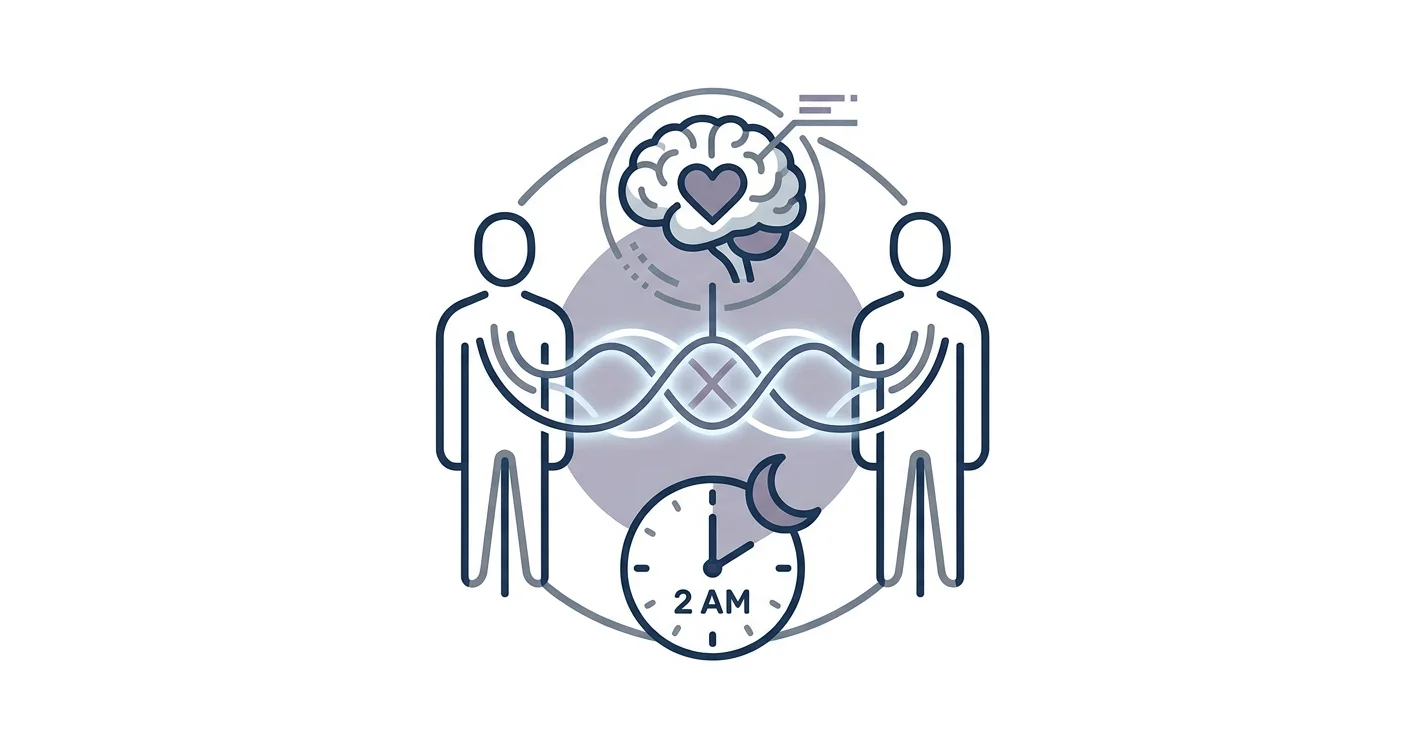

Key Takeaways
- Lovon works as an AI therapy app for miscarriage and pregnancy loss when you need to talk at 2am, not by appointment.
- Skip any app promising to replace a licensed grief counselor after loss with complications or suicidal thoughts.
- Voice-based coping tools handle raw, unfiltered grief better than text-only chatbots after a miscarriage.
- Privacy matters: pick an app that doesn't require explaining your loss in a waiting room or a family group chat.
Pregnancy loss grief doesn't wait for office hours. This guide walks through what actually matters when you're looking for an AI therapy app for miscarriage and pregnancy loss, which features hold up at 2am, and where an app hits its limit.
TL;DR
- Lovon works as an AI voice support app for miscarriage and pregnancy loss when you need to talk at 2am, not by appointment.
- Skip any app promising to replace a licensed grief counselor after loss with complications or suicidal thoughts.
- Voice-based coping tools handle raw, unfiltered grief better than text-only chatbots after a miscarriage.
- Privacy matters: pick an app that doesn't require explaining your loss in a waiting room or a family group chat.
Why this matters
Somewhere between 10% and 20% of known pregnancies end in miscarriage, according to figures cited by the American College of Obstetricians and Gynecologists. That means the grief is common. It is also often invisible, because the pregnancy itself may never have been announced, and the loss rarely comes with a support network built in.
Therapy waitlists in 2026 still run weeks long in most cities. Grief after pregnancy loss doesn't run on that schedule — it shows up at 2am, at a baby shower you can't skip, on the due date that never arrives. An AI voice support app fills a real gap here: it's available the moment the wave hits, not three weeks from now.
Lovon is not a replacement for an OB, a grief counselor, or a psychiatrist. It's built with input from PhD psychologists to give you somewhere to put the feeling right now, and to help you recognize when you need more than an app can give. That distinction matters more here than in almost any other use case.
Who this is for
This is for anyone processing an early miscarriage, a stillbirth, a chemical pregnancy, or a string of recurrent losses, and for partners who are grieving alongside them without their own outlet. It's also relevant if the loss sits inside a longer struggle with infertility grief — the two often overlap, and the emotional load compounds. If you're currently in crisis or having thoughts of self-harm, this is not the right tool; call a crisis line or go to an emergency room instead.
What to look for in an AI therapy app for miscarriage and pregnancy loss
Language that doesn't flinch
An app built for general wellness will default to soft, vague phrasing — "tough time," "life's challenges." You need something that can say the word miscarriage, stillbirth, or loss without dancing around it. Vague language reads as avoidance when you're the one grieving.
No waitlist between the moment and the support
The hardest moments after pregnancy loss rarely land during business hours. A tool that requires booking a slot for next Tuesday doesn't help you at midnight. Look for on-demand access, not a calendar.
Voice, not just a text box
Typing out grief takes energy you may not have. Voice conversation lets you talk the way you'd talk to a person — interrupted, messy, half-finished sentences included. That's a meaningfully different experience than typing into a chat window.
Honesty about its own limits
Any app worth using after a loss this significant should tell you plainly what it can't do. It should flag when a conversation suggests you need a licensed clinician, a psychiatrist, or emergency care, instead of pretending it can handle everything.
Built with clinical grounding
Grief support that comes from actual psychological training behaves differently than generic AI wellness scripts. Ask whether the app states, anywhere, that clinicians were involved in building it.
Room for anniversaries and due dates
Grief after pregnancy loss doesn't end when the acute period passes. Due dates, would-be birthdays, and diagnosis anniversaries can reopen it months or years later. A useful app doesn't assume grief has a fixed end date.
Where this kind of support actually helps
The 2am wave. This is the moment grief hits hardest and support is thinnest — no friend awake, no therapist on call. Voice check-ins that don't require scheduling are built exactly for this gap. Buy.
The comment that wasn't helpful. "At least it was early" or "you can try again" lands wrong more often than it lands right, and processing that reaction alone at 11pm is common. Talking it through out loud, even to an AI, can defuse the spike before it turns into a spiral. Buy.
Deciding whether to try again. This decision carries fear, hope, and grief at the same time, and it's rarely something you can think through cleanly in your head. If the fear is tangled up with infertility grief from prior attempts, a structured voice conversation can help separate the emotional noise from the actual decision. Consider — useful for processing, not for medical guidance.
The partner who grieves differently. One person wants to talk constantly, the other goes quiet, and both reactions get misread as not caring. An app can give each partner a private outlet so the mismatch doesn't turn into a fight. Consider.
Signs you need more than an app. Persistent hopelessness, thoughts of self-harm, or an inability to function for weeks are signs that call for a licensed clinician or a psychiatrist, not a self-guided tool. An honest app will say this directly instead of trying to keep you inside it. Skip the AI-only route here — call a professional.
What to avoid
- Generic wellness apps with no grief-specific content. A meditation timer and a breathing exercise don't address the specific texture of pregnancy loss grief — they're built for stress, not bereavement.
- Apps that push toxic positivity. "Everything happens for a reason" framing shuts down real grief instead of holding space for it. If the tone feels like a motivational poster, it's the wrong fit.
- Long intake surveys before you can talk. If you're in the middle of a wave of grief, a 20-question onboarding flow before you reach support defeats the purpose of on-demand access.
Talk it out tonight, not next week
Lovon is available for voice conversations anytime, without booking a slot.
Verdict comparison table
| Criterion | AI voice therapy app | Generic meditation app | Text-only chatbot |
|---|---|---|---|
| Grief-specific language | Yes | Rarely | Sometimes |
| Available at 2am | Yes | Yes | Yes |
| Voice-based conversation | Yes | No | No |
| States its own limits | Should — check before you pick | Rarely addressed | Rarely addressed |
| Built with clinical input | Check for PhD/clinician involvement | Rarely disclosed | Rarely disclosed |
Use this table as a checklist while comparing anything you're considering in 2026 — not every app that markets itself as "AI therapy" will clear all five rows.
FAQ
Is an AI therapy app for miscarriage and pregnancy loss safe to use?
It's safe as a supplement for everyday processing between real support, not as a replacement for a licensed therapist or doctor. If you're in crisis or having thoughts of self-harm, contact a crisis line or emergency services instead.
Can an AI app actually help with grief after a miscarriage?
It can give you a place to talk through the feeling in the moment it happens, which is often when no one else is available. It won't diagnose complications or replace medical follow-up care.
Is Lovon better than a text-based grief chatbot?
Voice conversation lets you talk the way you naturally would when grieving — unstructured, interrupted, out loud — which text-only tools can't replicate. Both can be useful; they solve slightly different problems.
How much does an AI therapy app cost compared to in-person grief counseling?
In-person therapy without insurance commonly runs well over $100 per session in 2026, while an app-based option is typically a flat subscription. Cost shouldn't be the only factor — check what each option actually covers.
Should partners use the app together or separately?
Separately, in most cases, since partners often process pregnancy loss at different speeds and in different ways. A private outlet for each person tends to reduce friction rather than create it.
When should I stop using an app and see a licensed therapist?
If grief includes persistent hopelessness, inability to function for weeks, or thoughts of self-harm, that's the point to bring in a licensed clinician or psychiatrist. An honest app will tell you this directly instead of trying to keep the conversation inside it.
Does an AI app work for recurrent pregnancy loss, not just a single miscarriage?
Yes, recurrent loss carries its own compounded grief and fear, and voice-based processing can help between medical appointments. It won't address the medical workup itself, which needs a physician.
Is it normal for miscarriage grief to resurface months later?
Yes, due dates, diagnosis anniversaries, and would-be birthdays commonly reopen grief long after the loss itself. Support that assumes a fixed end date to grief usually misses this pattern.
One last thing
The due date that never arrives is often harder than the day of the loss itself, because by then most of the people around you have moved on and stopped checking in. If you know that date is coming, put a reminder in your phone now and plan something for that day — a voice conversation, a walk, a call to someone who remembers — instead of letting it arrive unannounced.
Related guides
How AI Support Helps You Heal
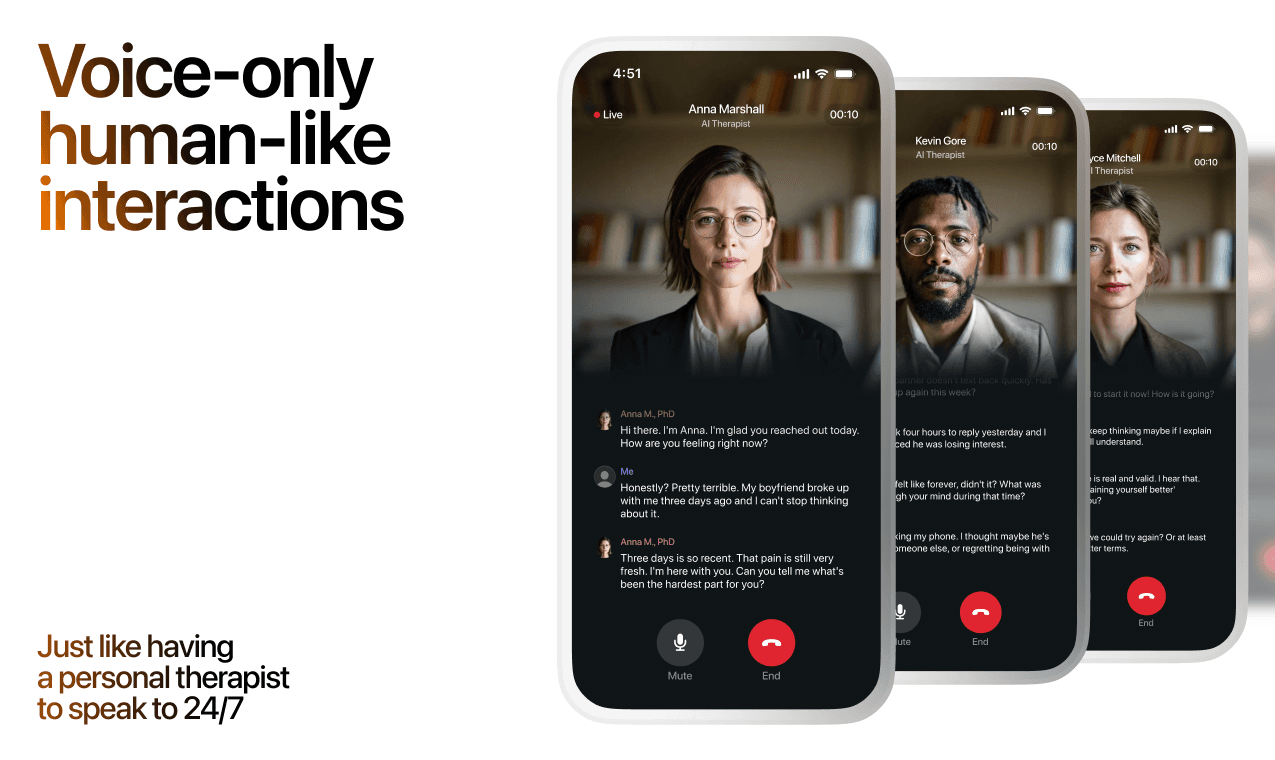
AI emotional support isn't about replacing human connection — it's about filling the gaps. The moments when you need to talk at 2 AM, when you don't want to burden your friends again, or when you simply need someone to listen without judgment.
Here's what happens in a typical Lovon session:
You share what's on your mind
There's no script, no intake form, no waiting room. You speak or type whatever you're feeling — in your own words, at your own pace.
Lovon validates and explores
Using frameworks from CBT (Cognitive Behavioral Therapy) and motivational interviewing, Lovon acknowledges your feelings first, then gently helps you explore them. No dismissive "just move on" advice.
You build coping skills together
Lovon doesn't just listen — it actively works with you on evidence-based techniques: thought reframing, urge surfing, behavioral experiments, and more.
What a Session with Lovon Looks Like
When to Seek Professional Help
AI support is a valuable tool, but it's not a replacement for professional care. Please consider reaching out to a licensed therapist if you experience any of the following:
- Persistent thoughts of self-harm or suicide
- Inability to perform daily activities (work, eating, sleeping) for more than 2 weeks
- Turning to alcohol or substances to cope
- Intense anger or desire to harm your ex-partner
- Complete emotional numbness that doesn't improve over time
Crisis Resources (US): If you're in immediate danger, call 988 (Suicide & Crisis Lifeline) or text HOME to 741741 (Crisis Text Line). Available 24/7, free, and confidential.
Outside the US? Find a crisis line in your country
Ready to Start?
Your healing journey can begin right now
A 7-day trial. No judgment. Just a safe space to process what you're going through.
Frequently Asked Questions
Is Lovon a replacement for a real therapist?
Is my conversation with Lovon AI private?
How is Lovon different from ChatGPT for emotional support?
Can I use Lovon if I'm already seeing a therapist?
Can I try Lovon before subscribing?
About the Author
The Lovon Editorial Team
Mental Health & Wellness Content Team
The Lovon Editorial Team develops mental health and wellness content designed to make psychological concepts accessible and actionable. Our goal is to bridge the gap between clinical research and everyday life - helping you understand why your mind works the way it does and what you can do about it....
Related articles
- Grief and depression: how to tell them apart
How grief and depression differ in everyday terms, why both can be true at once, and what is worth bringing to a doctor…
- Best AI Therapy App for LGBTQ+ Mental Health in 2026
Find the right AI therapy app for LGBTQ+ mental health in 2026: what to look for, top picks for anxiety, isolation, and…
- On-Demand Emotional Support in 2026: What Actually Helps
Therapy isn't always available. This 2026 guide covers the best on-demand emotional support tools — who they're for…
- Best AI Support App for Widow Grief in 2026
Widow grief hits hardest at 3 AM when therapists don't answer. See what an AI support app for widow grief should do in…
See also
Quizzes
- Pet Loss Check: Free 12-Question Pet Grief Self-Check
See what losing them is actually doing, in 3 minutes.
- What Stage of Grief Am I In? Free 12-Question Quiz
See what your grief is actually doing, in 3 minutes.
Free tools
- Write a Letter to Someone You Lost
Tell it who they were to you and what you never got to say, and it writes the letter back in your words. No account, no…
- What to Say When a Pet Dies
Get a message you can actually send to someone whose dog or cat just died: one that uses the animal's name, treats the…
From the wiki
- How to break up with someone you still love?
Loving someone does not mean the relationship works. If you have circled the same decision for months and the reasons…
Disclaimer: This article is for informational purposes only and does not constitute medical advice, diagnosis, or treatment. Always seek the advice of your physician or other qualified health provider with any questions you may have regarding a medical condition. If you are in crisis or think you may have an emergency, call 988 (Suicide & Crisis Lifeline) or go to the nearest emergency room. Outside the US? Find a crisis line in your country.