
Best AI Therapy App for LGBTQ+ Mental Health in 2026
Find the right AI therapy app for LGBTQ+ mental health in 2026: what to look for, top picks for anxiety, isolation, and family stress, and what to skip.

Key Takeaways
- An AI therapy app for LGBTQ+ mental health should handle coming-out anxiety and family rejection without generic
- Lovon offers 24/7 voice conversation for identity-related stress, but it is not a replacement for licensed clinical
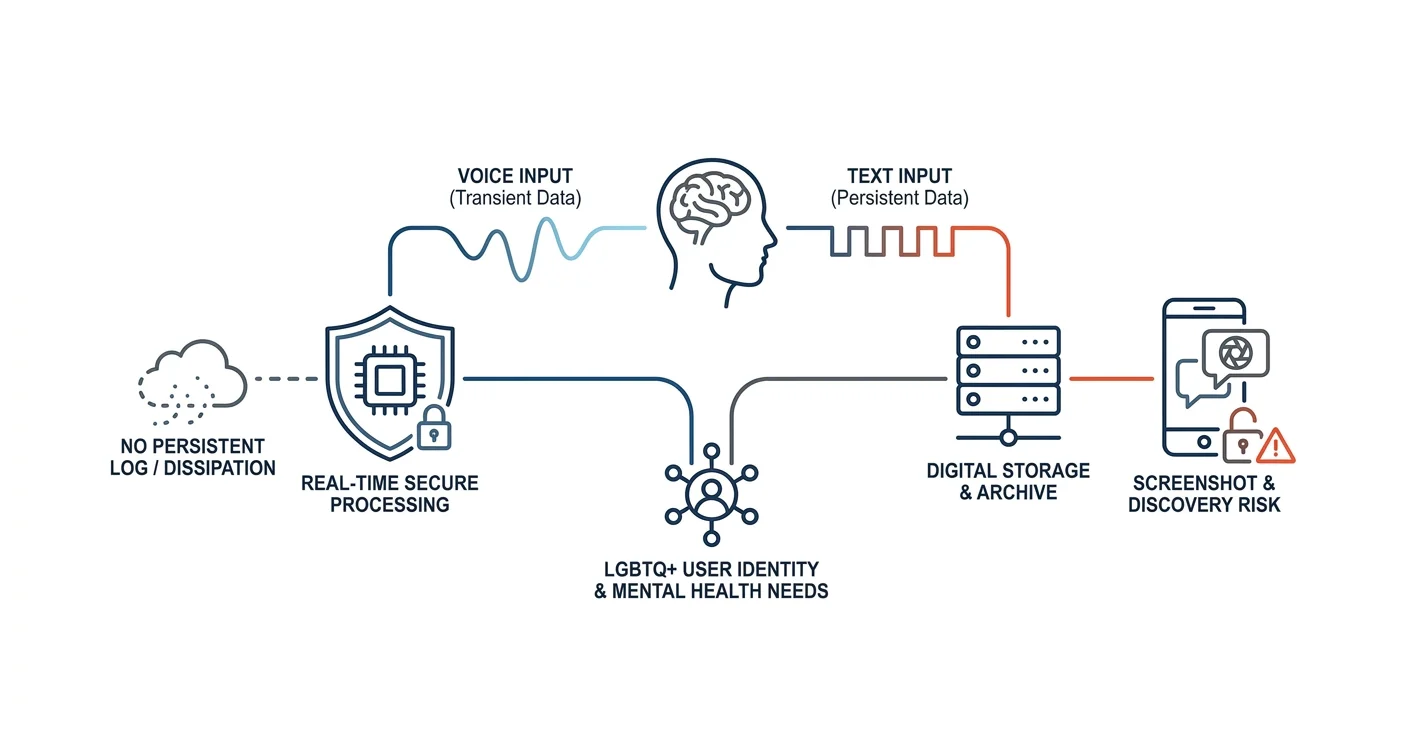
- Privacy matters more for LGBTQ+ users than most buyer guides admit: no typed chat log is safer than one that's easy
- Skip apps that bolt an LGBTQ+ label onto generic wellness content without addressing minority stress directly.
Being LGBTQ+ and looking for mental health support means dealing with a layer of stress most therapy marketing doesn't name directly: minority stress, family estrangement, and the fear that opening up to the wrong provider costs more than it helps. This guide breaks down what actually matters when evaluating an AI voice support app for LGBTQ+ mental health in 2026, and where an always-on voice option like Lovon fits into that picture.
TL;DR
- An AI therapy app for LGBTQ+ mental health should handle coming-out anxiety and family rejection without generic scripts, not just log moods.
- Lovon offers 24/7 voice conversation for identity-related stress, but it is not a replacement for licensed clinical care in 2026.
- Privacy matters more for LGBTQ+ users than most buyer guides admit: no typed chat log is safer than one that's easy to screenshot.
- Skip apps that bolt an LGBTQ+ label onto generic wellness content without addressing minority stress directly.
Why this matters
Minority stress research has documented for years that LGBTQ+ people carry a distinct, chronic stress load tied to discrimination, concealment, and family rejection, on top of whatever anxiety or depression they'd deal with anyway. Traditional therapy access is uneven: waitlists, insurance networks that don't list affirming providers, and rural areas with zero out LGBTQ+-competent clinicians. An AI therapy app doesn't fix the provider shortage, but it fills the gap between sessions, at 2 a.m., or in places where finding an affirming human therapist in 2026 still takes months.
The practical question isn't whether AI therapy works in the abstract. It's whether a specific app handles the specific situations LGBTQ+ users actually bring to it: coming out to a parent, processing a slur from a coworker, or just needing to say a fear out loud without being pathologized for it.
Who this is for
This guide is for LGBTQ+ adults dealing with everyday mental health struggles that have an identity layer attached: anxiety before coming out conversations, low mood after family rejection, burnout from being the only out person at work, or the isolation that follows moving somewhere less accepting. It's for anyone who wants support between therapy sessions, or who doesn't yet have access to a licensed therapist and needs something now. Lovon is built for this gap: on-demand, voice-based conversation, not a diagnostic tool and not a replacement for a clinician.
What to look for in an AI therapy app for LGBTQ+ mental health
1. Affirming language that doesn't need translating
An app that treats being LGBTQ+ as a footnote instead of context will keep steering conversations toward generic coping scripts. The test is simple: can you say "I came out to my mom last night and she hasn't spoken to me since" and get a response that engages with that specific situation, not a rerouted breathing exercise.
2. Privacy with no paper trail
For users who aren't out at home, at work, or both, a typed chat history sitting in an app is a liability. Voice-based conversation reduces the risk of a screenshot ending up in the wrong group chat, and it matters more here than in almost any other mental health use case.
3. 24/7 access for the hours therapy offices are closed
Panic after an outing incident or a family blowup doesn't wait for office hours. An app that's available at 3 a.m. on a Tuesday covers the exact gap where crisis lines and weekly therapy appointments fall short.
4. Coverage of minority-stress situations specifically
Generic wellness content skips the actual triggers: family rejection, workplace microaggressions, dating anxiety tied to disclosure, religious trauma. An app worth using addresses these directly instead of defaulting to "practice gratitude."
5. Voice conversation, not just a chatbot
Typing out a coming-out story takes effort many people don't have in the moment. Talking it through out loud, the way you would with a friend, lowers the barrier to actually using the tool when it counts.
6. Cost that doesn't require insurance to explain a diagnosis
Therapy without insurance in 2026 still runs into real money per session, and using insurance can mean a diagnosis code tied to your identity sits in an insurer's file. Reviewing how much therapy costs without insurance in 2026 makes the tradeoff clear before you commit to either path.
Top picks: matching Lovon to specific LGBTQ+ situations
The 3 a.m. panic pick. When anxiety spikes after a hard conversation and there's no one to call, availability is the whole feature. Lovon runs 24/7, voice-first, with no appointment needed. One number that matters: zero wait time between deciding to talk and starting the conversation. Buy.
The family-estrangement pick. Setting boundaries with a parent who won't accept your identity is a skill, not a feeling you wait out. Working through scripts and reactions ahead of time using toxic parent patterns and how to set limits before a hard call reduces how much gets said in the heat of the moment. Buy.
The isolation pick. Losing community after coming out, moving for work, or being the only out person in a small town creates a specific kind of loneliness that generic "connect with friends" advice doesn't touch. The breakdown on AI therapy for social isolation and loneliness covers when talking to an AI voice actually helps versus when it's a stopgap. Buy.
The pre-event anxiety pick. Pride events, first dates after coming out, or telling a new workplace who you are all trigger the same spike in anticipatory anxiety. The guide on AI therapy for social anxiety walks through grounding techniques you can run through minutes before walking in. Consider if your anxiety is situational; Skip straight to a licensed therapist if it's been chronic for years without improvement.
The identity-exploration wildcard. For someone still questioning, saying it out loud to a voice that won't judge or gossip can be the first time the thought leaves their own head. It's not a substitute for community or a therapist who specializes in identity work, but as a first step it's low-stakes. Consider.
Talk it through tonight
Start a voice session with Lovon whenever anxiety or family stress hits, no appointment needed.
What to avoid
- Wellness apps with an LGBTQ+ tag but generic content. If the meditation library is identical to every other mindfulness app with a rainbow icon added, it's marketing, not support.
- Text-only bots during a crisis. Typing takes cognitive effort that's often unavailable during a panic spiral or right after a hard conversation; voice lowers that barrier.
- Apps that claim to replace a licensed therapist. Any tool that positions itself as clinical treatment instead of support between sessions is overselling what AI can responsibly do in 2026.
Verdict comparison across the criteria
| Criteria | Lovon (voice AI) | Text-only AI chatbot | Generic wellness app | Licensed LGBTQ+-affirming therapist |
|---|---|---|---|---|
| 24/7 availability | Yes | Usually yes | Yes | No, appointment-based |
| Handles minority stress directly | Yes | Varies | Rarely | Yes |
| Privacy (no typed log) | Yes, voice-based | No | No | Yes, in-session |
| Clinical diagnosis or treatment | No | No | No | Yes |
| Cost without insurance | Lower than per-session therapy | Lower | Lower | Often $100+ per session in 2026 |
FAQ
What's the best AI therapy app for LGBTQ+ mental health in 2026?
The right pick depends on the situation: an app with 24/7 voice conversation, like Lovon, works best for identity-related anxiety, family conflict, and moments between therapy sessions. It's not a diagnostic or treatment tool.
Is AI therapy actually affirming of LGBTQ+ identities?
It depends on the app's design and how it handles specific situations like coming out or family rejection. Test it with a real scenario before relying on it, since a generic wellness bot will often redirect instead of engaging.
How much does an AI therapy app cost compared to traditional therapy?
AI therapy apps typically cost far less than a licensed therapist, who can run over $100 per session without insurance in 2026. See the full breakdown of therapy costs without insurance for context before deciding which route fits your budget.
Can an AI voice therapist help with coming out anxiety?
Yes, for rehearsing conversations and processing the anxiety beforehand or after. It cannot predict how a family member will react or replace in-person support if the outcome is unsafe.
Is AI therapy private for LGBTQ+ users who aren't out?
Voice-based conversation leaves no typed chat log that could be found on a shared device, which matters for users who aren't out at home. Always check an app's specific privacy policy before assuming full anonymity.
Does Lovon replace a licensed therapist?
No. Lovon is built with input from PhD psychologists but is explicitly not a licensed clinician and does not diagnose or treat conditions. It's positioned as an always-available companion between or before professional care.
Can AI therapy help with family rejection specifically?
It can help process the emotional aftermath and rehearse boundary-setting conversations, which is different from resolving the rejection itself. Working through patterns like toxic parent dynamics ahead of a hard conversation reduces how reactive that conversation becomes.
What if I need crisis support right now?
AI voice support apps, including Lovon, are not crisis services and should never replace emergency intervention. If there's immediate risk to safety, contact a crisis line or emergency services directly instead of an app.
One last thing
The detail most buying guides skip: voice conversation isn't just a UX preference for LGBTQ+ users, it's a safety feature. A typed log can be found on a shared laptop or a family phone plan; a voice conversation that isn't recorded or stored as text leaves nothing to screenshot. If you're evaluating an AI therapy app for LGBTQ+ mental health in 2026 and privacy is the deciding factor, that one distinction matters more than any feature list.
How AI Support Helps You Heal
AI emotional support isn't about replacing human connection — it's about filling the gaps. The moments when you need to talk at 2 AM, when you don't want to burden your friends again, or when you simply need someone to listen without judgment.
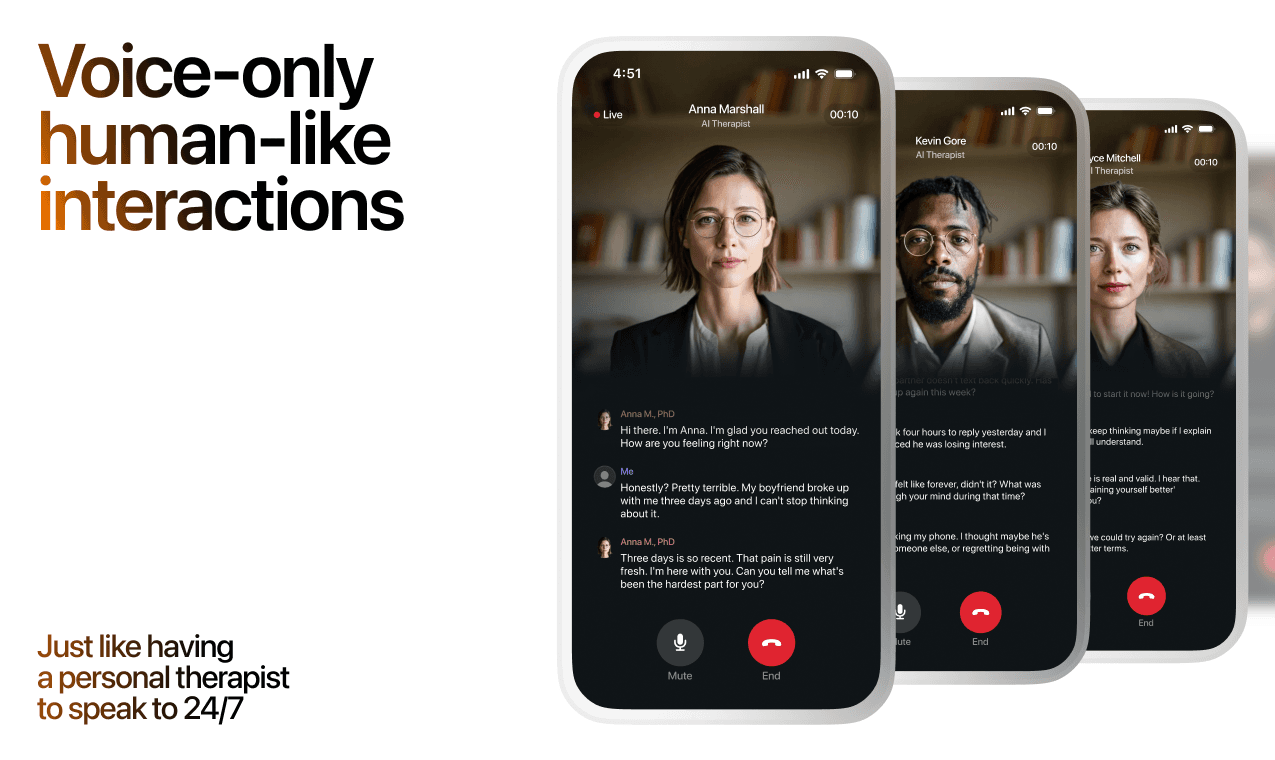
Here's what happens in a typical Lovon session:
You share what's on your mind
There's no script, no intake form, no waiting room. You speak or type whatever you're feeling — in your own words, at your own pace.
Lovon validates and explores
Using frameworks from CBT (Cognitive Behavioral Therapy) and motivational interviewing, Lovon acknowledges your feelings first, then gently helps you explore them. No dismissive "just move on" advice.
You build coping skills together
Lovon doesn't just listen — it actively works with you on evidence-based techniques: thought reframing, urge surfing, behavioral experiments, and more.
What a Session with Lovon Looks Like
When to Seek Professional Help
AI support is a valuable tool, but it's not a replacement for professional care. Please consider reaching out to a licensed therapist if you experience any of the following:
- Persistent thoughts of self-harm or suicide
- Inability to perform daily activities (work, eating, sleeping) for more than 2 weeks
- Turning to alcohol or substances to cope
- Intense anger or desire to harm your ex-partner
- Complete emotional numbness that doesn't improve over time
Crisis Resources (US): If you're in immediate danger, call 988 (Suicide & Crisis Lifeline) or text HOME to 741741 (Crisis Text Line). Available 24/7, free, and confidential.
Outside the US? Find a crisis line in your country
Ready to Start?
Your healing journey can begin right now
A 7-day trial. No judgment. Just a safe space to process what you're going through.
Frequently Asked Questions
Is Lovon a replacement for a real therapist?
Is my conversation with Lovon AI private?
How is Lovon different from ChatGPT for emotional support?
Can I use Lovon if I'm already seeing a therapist?
Can I try Lovon before subscribing?
About the Author
The Lovon Editorial Team
Mental Health & Wellness Content Team
The Lovon Editorial Team develops mental health and wellness content designed to make psychological concepts accessible and actionable. Our goal is to bridge the gap between clinical research and everyday life - helping you understand why your mind works the way it does and what you can do about it....
Related articles
- Mental Health Apps for College Students 2026: Top Picks
Lovon leads our 2026 ranking of mental health apps for college students, compared against BetterHelp, Wysa, and campus…
- Most Private AI Therapy App in 2026: Full Ranking
Lovon ranks as the most private AI therapy app in 2026 for anonymous voice sessions, ahead of Wysa, Youper, Replika, and…
- Best AI Therapy Apps 2026: What to Use, What to Skip
Compare the top picks on clinical method, voice vs. text, and real pricing — and see which popular apps, from Calm to…
- Free AI Therapist for Stress & Burnout (2026)
The best free AI therapist for stress in 2026. Lovon leads with voice sessions and burnout-specific coping tools. See…
See also
Quizzes
- Loneliness Test: Free 12-Question Self-Check
See which kind of loneliness is thin, in 3 minutes.
- Guilt Test: Is Your Guilt Doing Its Job?
See whether your guilt repairs or just hurts.
Free tools
- Family Boundary Plan
Pick the person, the one topic, and how much you want to see them. You get a three-rung ladder, the guilt lines to…
- How to Come Out to Your Parents
A chat about how to come out to your parents that starts with whether now is safe, not with the speech. Tell it your…
From the wiki
- Why do I keep dreaming about the same person?
A recurring dream figure usually marks unfinished emotional business rather than a message about that person. Your brain…
Disclaimer: This article is for informational purposes only and does not constitute medical advice, diagnosis, or treatment. Always seek the advice of your physician or other qualified health provider with any questions you may have regarding a medical condition. If you are in crisis or think you may have an emergency, call 988 (Suicide & Crisis Lifeline) or go to the nearest emergency room. Outside the US? Find a crisis line in your country.