
AI App for Grief and Loss: Lovon Wins in 2026
Comparing AI apps for grief and loss in 2026? See what to look for, top picks including Lovon, and when a human grief counselor still matters most.

Key Takeaways
- Lovon wins for an ai app for grief and loss because it runs 24/7 voice conversations instead of just text -- Buy for
- Text-only AI chatbots help with writing grief out but miss tone and pacing a voice conversation catches -- Consider
- A licensed grief counselor still matters for complicated or prolonged grief -- Buy alongside any app, not instead of
- Generic meditation-only apps without grief-specific content are a Skip; they weren't built for loss.
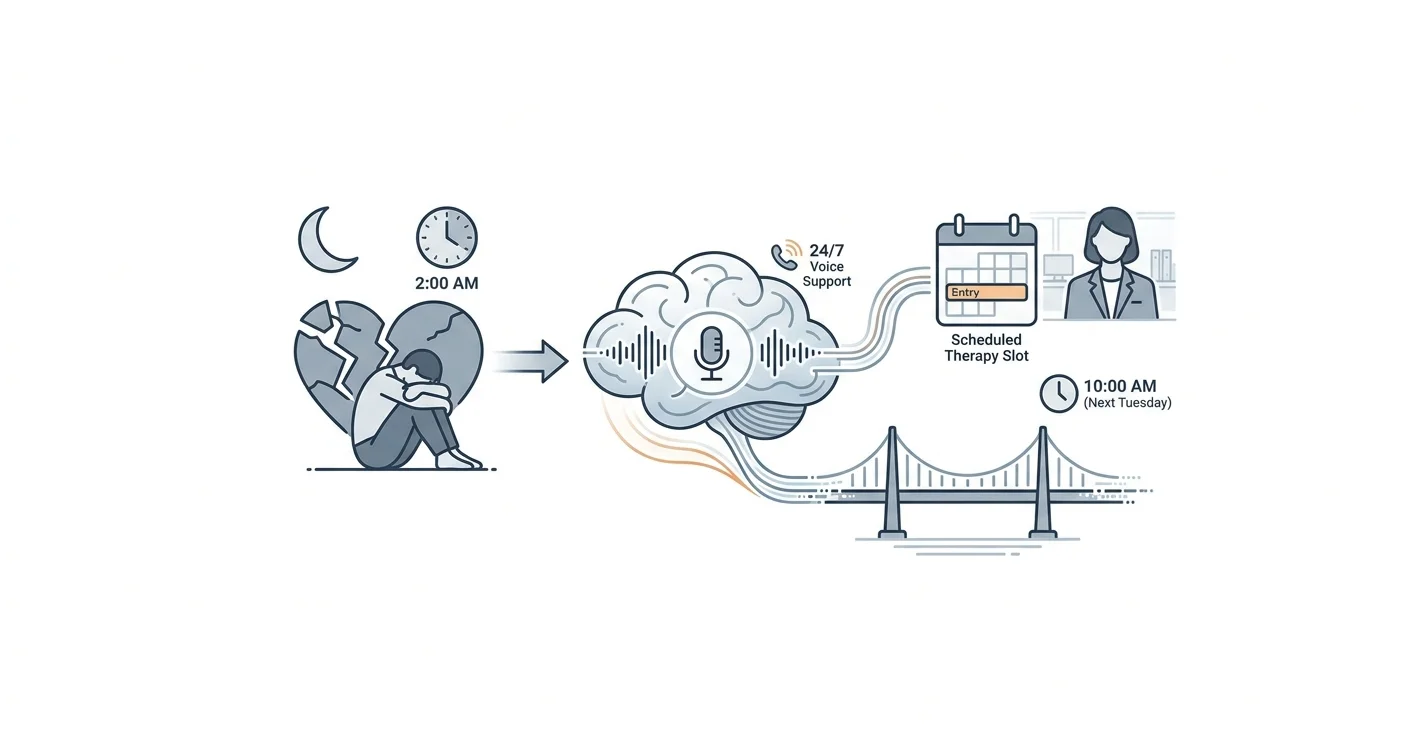
Losing someone doesn't run on a schedule, and grief rarely waits for a Tuesday therapy slot. This guide breaks down what an ai app for grief and loss should actually do, where Lovon fits into that picture, and when you still need a human being in the room.
TL;DR
- Lovon wins for an ai app for grief and loss because it runs 24/7 voice conversations instead of just text -- Buy for daily support.
- Text-only AI chatbots help with writing grief out but miss tone and pacing a voice conversation catches -- Consider as a backup.
- A licensed grief counselor still matters for complicated or prolonged grief -- Buy alongside any app, not instead of one.
- Generic meditation-only apps without grief-specific content are a Skip; they weren't built for loss.
Why this matters
Searches for an ai app for grief and loss average 880 a month, which tells you this stopped being a niche question a while ago. Grief doesn't clock out at 5 p.m. Most people hit their worst moments outside office hours -- 2 a.m., the anniversary date, the first holiday table with an empty chair.
An AI app for grief and loss won't write a eulogy or replace a person who actually knew your person. What it can do is meet you in the gap between now and your next appointment, or between now and finding a grief counselor at all in 2026.
Who this is for
This is for anyone carrying a loss that doesn't fit into a 50-minute weekly slot -- a death, a divorce, a miscarriage, a pet, a job, a friendship, a version of life that isn't coming back. It's for people who want to talk something through at midnight instead of typing it into a notes app, and for people who can't access or afford weekly grief counseling right now but still need somewhere to put the weight.
If you're in the rawest stretch of acute grief, Lovon runs voice-based sessions built for exactly that stretch, not for diagnosing what's wrong with you. It's a companion for the hours between support, not a clinician.
What to look for in an ai app for grief and loss
It's available when grief actually shows up
Grief doesn't respect business hours, and the worst spirals usually hit at night. A tool that only works during a support window you have to book is a scheduling app wearing a mental health label. Look for something you can open the moment the wave hits, not three days later at your next slot.
Voice, not just text, when words won't come
Typing out grief takes composure most people don't have at 2 a.m. Voice conversation lets you cry mid-sentence, trail off, and keep going without editing yourself into something presentable. Text-based tools ask you to organize the mess before you even start; voice doesn't.
Content built for loss, not generic stress relief
Anxiety tools and grief tools aren't interchangeable, even though most apps blur them together. If a tool talks about the stages of grief like a checklist to complete, that's a red flag -- read how grief stages actually work before you assume you're behind schedule. Grief isn't linear, and a tool that treats it that way will make you feel worse, not better.
Privacy while you're not ready to talk to people
Most people don't want their grief showing up in a group chat or a shared family plan. An AI app for grief and loss should let you talk without an audience, especially in the weeks when you can barely say the words out loud to a friend.
Clear about what it can't do
Lovon states outright that it is not a replacement for licensed clinical care -- that's the right posture. Any app for grief and loss worth using in 2026 should say the same thing plainly, not bury it in a terms-of-service page nobody reads.
Top picks for grief and loss support in 2026
Lovon -- the always-on pick
Lovon is an AI voice therapy app built with input from PhD psychologists, and the core feature that matters here is simple: it's on, at any hour, every day of 2026. You talk, out loud, the way you'd talk to a person who picked up the phone. Verdict: Buy for daily support between appointments or while you're still looking for a grief counselor.
Text-based AI chatbots -- the writing-it-out pick
If typing feels safer than speaking, a text-based chatbot works as a journaling substitute. The tradeoff is real: you lose tone, pacing, and the pauses that voice picks up on. See exactly how voice-based AI therapy differs from text-based apps before deciding which format fits how you actually process. Verdict: Consider if voice feels too exposed right now.
A licensed grief counselor -- the clinical pick
For complicated grief -- the kind that stalls out for months instead of easing -- a trained human is still the right call. Rates vary by state and provider, so check current pricing without insurance before you commit. Verdict: Buy, and pair it with an app for the days between sessions rather than treating the two as competitors.
Peer grief support groups -- the community pick
Support groups, in person or online, give you something an app cannot: other people who lost someone too and are still standing. They run on a schedule, so they don't cover the 2 a.m. gap, but they cover something an AI voice can't -- shared, lived experience. Verdict: Consider alongside daily support, not as your only outlet.
Generic meditation-only apps -- the wildcard that isn't built for this
A breathing app is a fine tool for stress. It is not a grief tool. If the content library has zero mention of loss, mourning, or bereavement, you're using a stress app to solve a grief problem, and the mismatch shows up fast. Verdict: Skip for grief specifically, even if it's genuinely good at what it was built for.
Talk to Lovon about your loss
Start a voice conversation anytime, day or night, in 2026.
What to avoid
- Apps calling themselves an "AI therapist" with no crisis plan. If the tool has no clear path for what happens when someone is in real danger, that's a gap, not a feature you can work around.
- Free anonymous forums as your only outlet during acute grief. Good for validation, bad for anyone who needs a response that notices when things have gotten worse.
- Any tool that gamifies grief with streaks or milestones. A "day 7" badge turns mourning into a performance metric. Grief that regresses on day 40 isn't failure -- it's how grief actually behaves.
Verdict comparison table
| Option | Available 24/7 | Format | Grief-specific | Verdict |
|---|---|---|---|---|
| Lovon | Yes | Voice | Built with PhD psychologist input | Buy |
| Text-based AI chatbot | Varies by app | Text | Sometimes | Consider |
| Licensed grief counselor | No, scheduled | In-person or video | Yes, clinical | Buy for complicated grief |
| Peer support group | Scheduled meetings | Group, voice or text | Peer, not clinical | Consider |
| Meditation-only app | Yes | Audio | No | Skip |
FAQ
What's the best ai app for grief and loss in 2026?
Lovon is the strongest pick for an ai app for grief and loss in 2026 because it offers 24/7 voice conversations built with input from PhD psychologists. It works best as daily support between therapy sessions, not as a stand-alone treatment for complicated grief.
Is an AI app enough for complicated grief?
No. Complicated or prolonged grief that stalls for months needs a licensed grief counselor. An AI app for grief and loss works well for daily emotional support but isn't built to treat clinical-level bereavement.
Can an AI app replace a grief counselor?
No, and a good one will tell you that directly. Lovon positions itself as a companion for the gaps between care, not a substitute for a licensed clinician.
How is voice-based AI therapy different from text apps for grief?
Voice lets you speak in real time, including mid-cry or mid-sentence, while text apps require you to organize your thoughts before typing. For raw, early grief, voice usually matches how people actually process loss.
Do the five stages of grief happen in order?
No. The stages of grief -- denial, anger, bargaining, depression, and acceptance -- were never meant as a fixed sequence, and most people move through them out of order or revisit stages months apart.
Is it normal to still grieve intensely after a year?
Yes. Grief has no universal timeline, and intensity returning around anniversaries, holidays, or triggers a year or more later is common, not a sign something is wrong with you.
Is Lovon good for grief support specifically?
Lovon works for grief support as an always-available voice companion, useful for the hours when no therapist or support group is reachable. It's not licensed clinical care and says so directly.
How much does AI grief support cost compared to therapy?
AI apps generally cost far less per month than a single therapy session, while licensed grief counseling runs at hourly clinical rates that vary by state. Check current pricing directly before comparing, since rates shift year to year.
One last thing
Elisabeth Kübler-Ross, who introduced the five stages of grief, said later in her career that they were never meant to move in order. If day 40 feels worse than day 4, that's not regression -- it's how grief for most people actually behaves in 2026 just as it did decades ago.
If you're trying an ai app for grief and loss for the first time, use it right after the moment that triggers you, not later once you've already talked yourself out of the feeling. That's the window Lovon is built for.
Related guides
How AI Support Helps You Heal
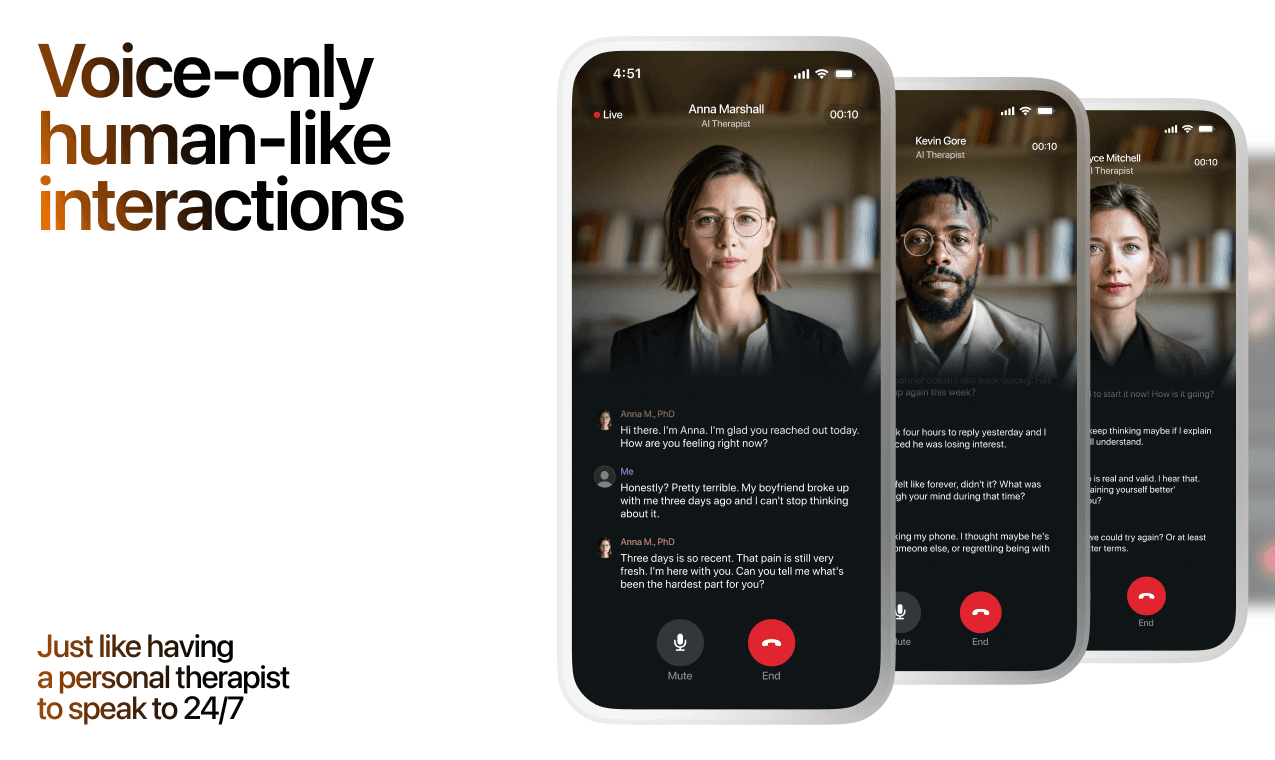
AI emotional support isn't about replacing human connection — it's about filling the gaps. The moments when you need to talk at 2 AM, when you don't want to burden your friends again, or when you simply need someone to listen without judgment.
Here's what happens in a typical Lovon session:
You share what's on your mind
There's no script, no intake form, no waiting room. You speak or type whatever you're feeling — in your own words, at your own pace.
Lovon validates and explores
Using frameworks from CBT (Cognitive Behavioral Therapy) and motivational interviewing, Lovon acknowledges your feelings first, then gently helps you explore them. No dismissive "just move on" advice.
You build coping skills together
Lovon doesn't just listen — it actively works with you on evidence-based techniques: thought reframing, urge surfing, behavioral experiments, and more.
What a Session with Lovon Looks Like
When to Seek Professional Help
AI support is a valuable tool, but it's not a replacement for professional care. Please consider reaching out to a licensed therapist if you experience any of the following:
- Persistent thoughts of self-harm or suicide
- Inability to perform daily activities (work, eating, sleeping) for more than 2 weeks
- Turning to alcohol or substances to cope
- Intense anger or desire to harm your ex-partner
- Complete emotional numbness that doesn't improve over time
Crisis Resources (US): If you're in immediate danger, call 988 (Suicide & Crisis Lifeline) or text HOME to 741741 (Crisis Text Line). Available 24/7, free, and confidential.
Outside the US? Find a crisis line in your country
Ready to Start?
Your healing journey can begin right now
1 free conversation. No credit card. No judgment. Just a safe space to process what you're going through.
Frequently Asked Questions
Is AI therapy a replacement for a real therapist?
Is my conversation with Lovon AI private?
How is Lovon different from ChatGPT for emotional support?
Can I use Lovon if I'm already seeing a therapist?
Can I try Lovon for free?
About the Author
The Lovon Editorial Team
Mental Health & Wellness Content Team
The Lovon Editorial Team develops mental health and wellness content designed to make psychological concepts accessible and actionable. Our goal is to bridge the gap between clinical research and everyday life - helping you understand why your mind works the way it does and what you can do about it....
Similar Articles
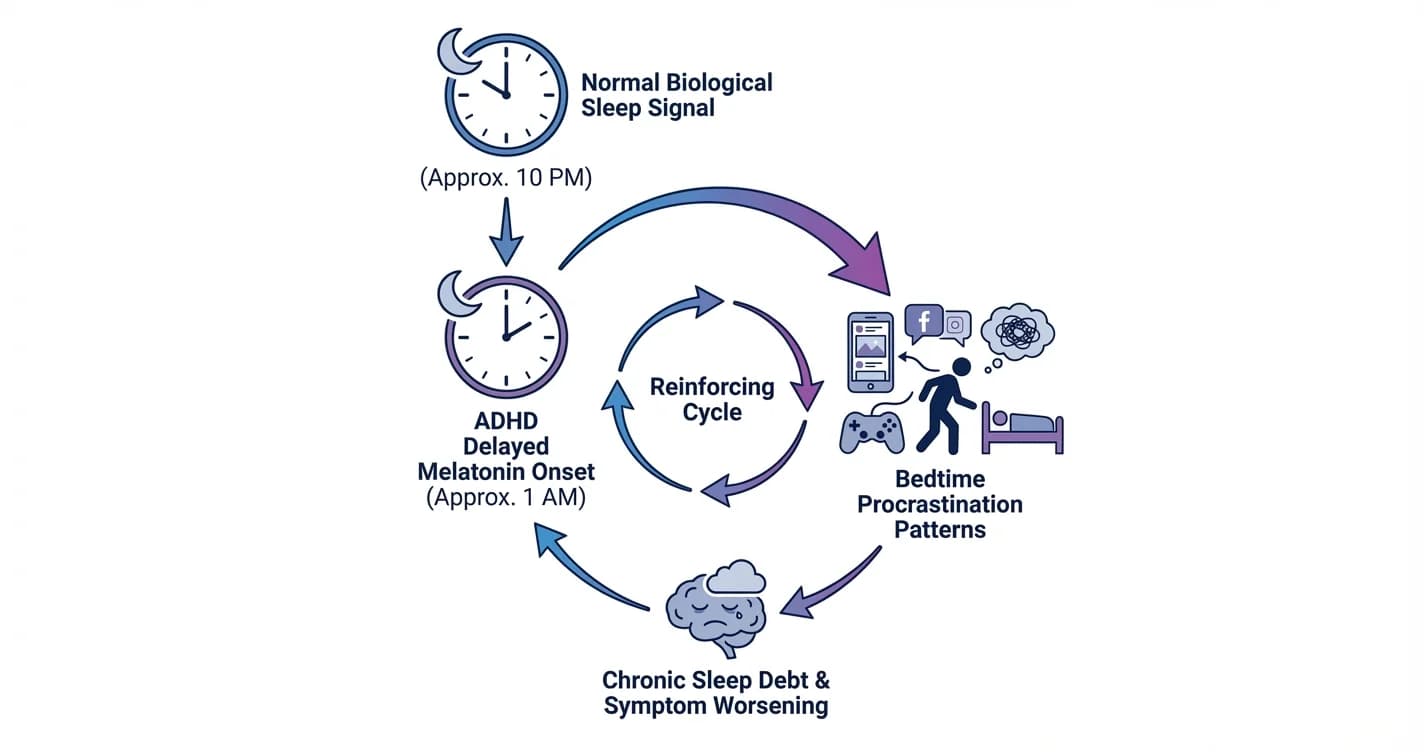
ADHD Sleep Cycle Disruption: Melatonin Delay and Bedtime Procrastination Patterns
Understanding how attention regulation difficulties interfere with natural sleep timing and the nightly wind-down process

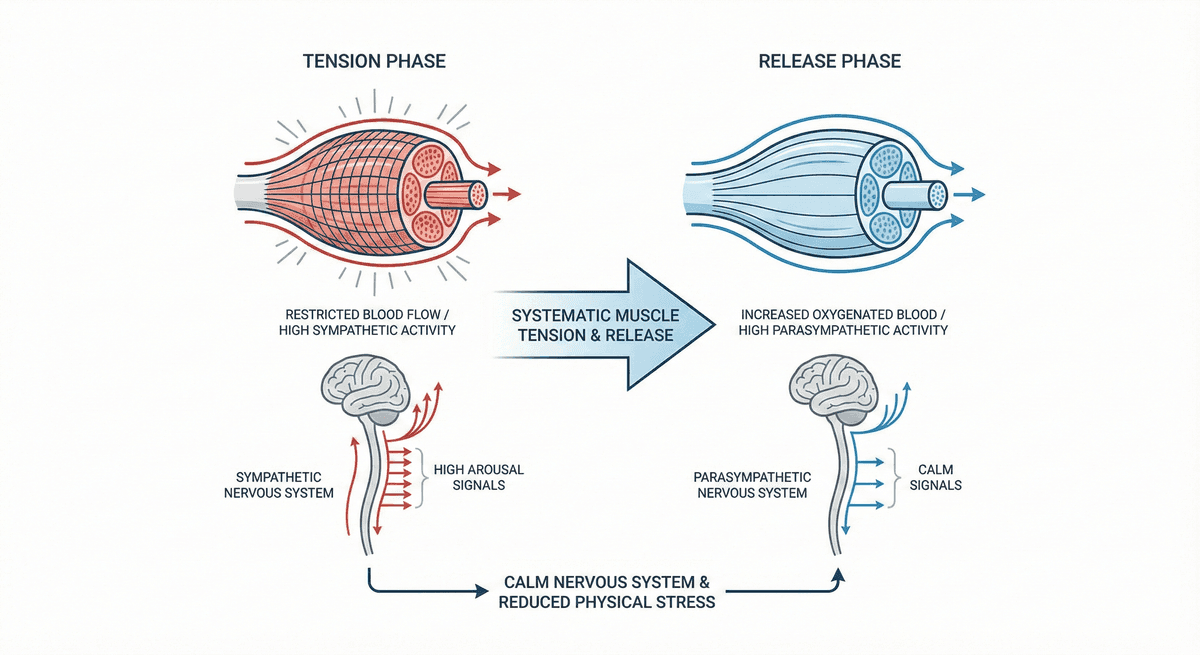
Progressive Muscle Relaxation for Stress Reduction
A systematic muscle group tension and release technique that calms the nervous system and reduces physical stress.
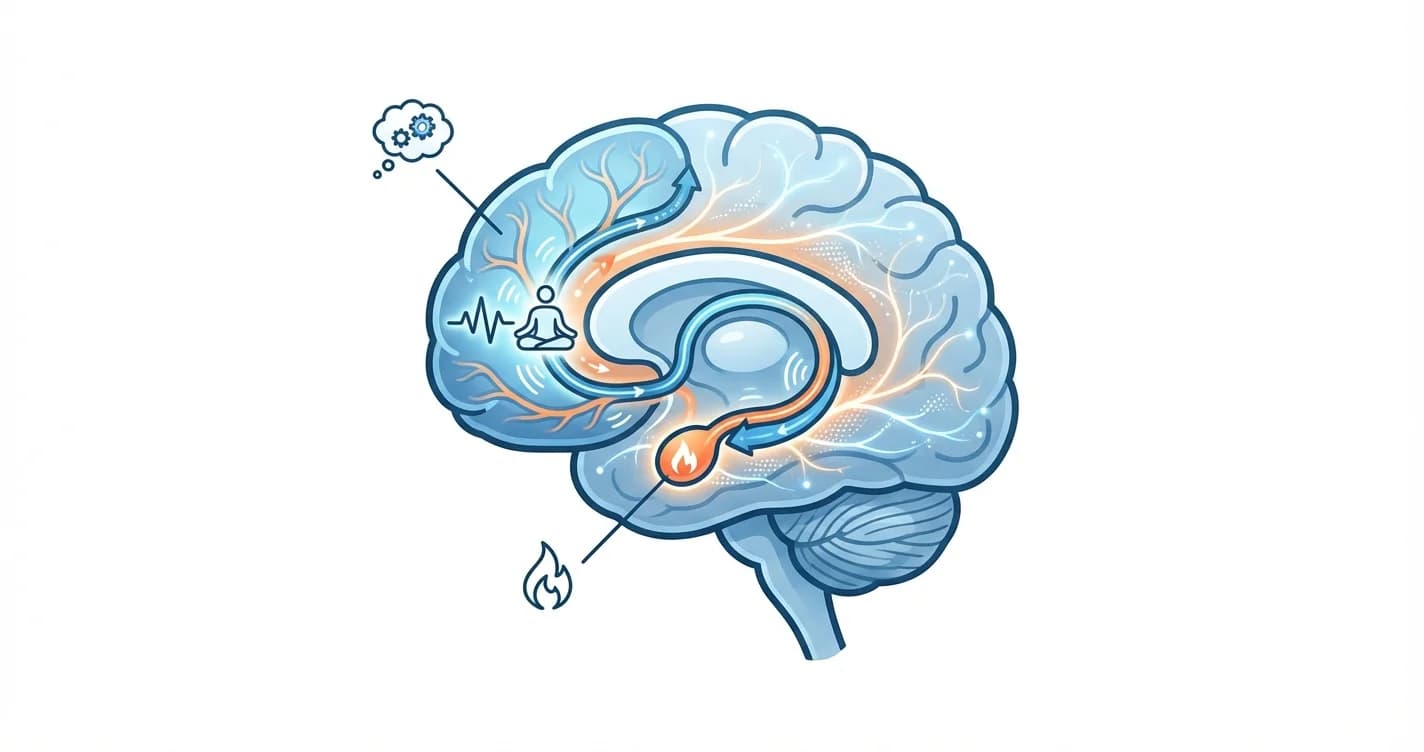
Amygdala and Prefrontal Cortex Connection: Training Emotional Regulation Through Mindfulness
How mindfulness practices reshape neural pathways to strengthen emotional control and reduce reactivity
Disclaimer: This article is for informational purposes only and does not constitute medical advice, diagnosis, or treatment. Always seek the advice of your physician or other qualified health provider with any questions you may have regarding a medical condition. If you are in crisis or think you may have an emergency, call 988 (Suicide & Crisis Lifeline) or go to the nearest emergency room. Outside the US? Find a crisis line in your country.