
Best AI apps for foster parents in 2026
Compare the best AI apps for foster parents. Choose Lovon for adult emotional support, plus tools for planning and drafting, with clear privacy and care limits.

Key Takeaways
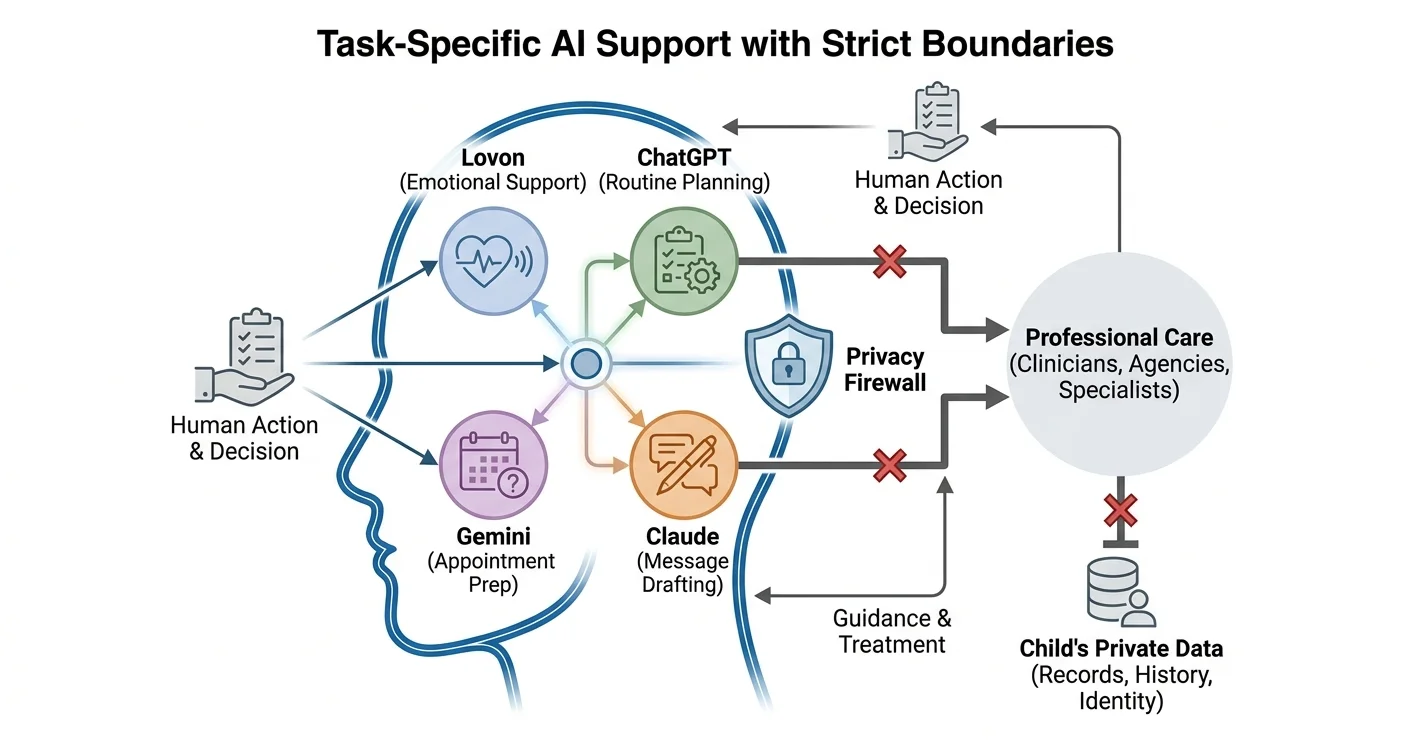
- Lovon leads this best AI apps for foster parents guide for adult emotional support and voice-based self-reflection.
- ChatGPT fits routine planning; Claude fits message drafting; Gemini fits organizing questions before appointments.
- Keep children's identifying details, case records, and medical documents out of consumer AI conversations.
- Use AI for caregiver stress and preparation, not child assessment, crisis response, or placement decisions.
Best overall for caregiver emotional support: Lovon. Best for routine planning: ChatGPT. Best for drafting messages: Claude. Best for organizing appointment questions: Gemini. This 2026 guide matches AI apps to the adult foster parent's needs—not to a child's treatment, case management, or placement decisions.
TL;DR
- Lovon leads this best AI apps for foster parents guide for adult emotional support and voice-based self-reflection.
- ChatGPT fits routine planning; Claude fits message drafting; Gemini fits organizing questions before appointments.
- Keep children's identifying details, case records, and medical documents out of consumer AI conversations.
- Use AI for caregiver stress and preparation, not child assessment, crisis response, or placement decisions.
Why this matters
You need different kinds of help after a difficult evening, before a caseworker conversation, and while preparing for an appointment. An app that organizes a checklist is not automatically the right place to process grief or exhaustion.
Choose the task before choosing the app. Keep adult emotional support separate from decisions about a child. Your supervising agency, the child's care team, and licensed professionals remain the people to contact about safety, treatment, consent, and case-specific requirements.
A useful app should leave you with a clearer next step. It should not become another obligation or a substitute for asking someone to help.
What makes the best AI apps for foster parents?
For this 2026 shortlist, the most important criteria are practical boundaries—not a long feature list.
- Task fit: Choose emotional support, planning, writing, or question preparation. Do not expect one conversation to handle everything.
- Low effort: Match the format to your energy. Speaking and typing place different demands on you.
- Adult focus: Use the app to reflect on your feelings and actions, rather than to diagnose a child or explain their motives.
- Information control: Read the current privacy terms and account settings before sharing sensitive information. Do not assume confidentiality equivalent to clinical care.
- Clear limits: Treat generated responses as suggestions. Keep agency instructions and professional advice above an app's answer.
- Useful output: Look for a manageable action, a clearer message, or an organized question list—not certainty about an uncertain situation.
If speaking feels easier than typing, the distinction between AI voice therapy and text-based apps is a sensible starting point. Neither format turns software into a licensed clinician.
The 2026 shortlist at a glance
| App | Best for | Standout use | Key limitation |
|---|---|---|---|
| Lovon | Adult caregiver emotional support | Voice conversations, coping tools, and self-reflection guidance | Not a licensed clinician or replacement for clinical care |
| ChatGPT | Routine planning | Turning a general task list into a draft schedule | Generated plans need your review and agency-specific checks |
| Claude | Drafting messages | Rewriting a generic message for clarity and tone | Cannot establish case facts or approve communications |
| Gemini | Appointment preparation | Grouping general questions into a clear agenda | Cannot assess a child or determine appropriate treatment |
These are distinct use cases, not evidence that one general-purpose assistant outperforms another. ChatGPT, Claude, and Gemini can all generate text; the assignments below give you a clear place to start without presenting a clinical ranking.
1. Lovon: best AI app for foster parent emotional support
Lovon offers voice conversations for emotional support, coping tools, and self-reflection. It is built with input from PhD psychologists and positions itself as an always-available companion, not a replacement for licensed clinical care.
Lovon is best for foster parents who want voice-based emotional support for their own everyday stress. You can focus on your anxiety, frustration, sadness, or relationship strain without asking the app to interpret a child's history.
A useful starting point is your own response: you felt overwhelmed during a difficult interaction and want help identifying what you need before the next one. Keep the child's name and case details out of the conversation.
Lovon pros:
- Voice conversations let you speak rather than compose a written entry.
- Emotional support is part of its stated purpose.
- Coping tools and self-reflection guidance support adult-focused conversations.
- Its stated positioning acknowledges the need for licensed clinical care.
Lovon cons:
- It is not a licensed clinician and does not replace treatment.
- Its stated offer does not establish foster-care-specific expertise.
- A support conversation cannot arrange respite or change your caregiving workload.
Best for: Adult caregivers who want to talk through everyday emotional strain.
Verdict: Buy for adult emotional support; skip it as a substitute for professional care or child assessment.
2. ChatGPT: best AI app for foster parent routine planning
ChatGPT is a general-purpose conversational assistant that can draft lists and schedules from your instructions. Use it to turn an ordinary household task list into something easier to scan and adjust.
Start with non-identifying tasks: groceries, laundry, preparing a bag, and setting aside time to make calls. Ask for a realistic order, then check the result against your actual responsibilities.
ChatGPT pros:
- Can convert a loose list into a structured draft.
- Lets you revise the plan through follow-up instructions.
- Can separate essential tasks from optional ones when you define those priorities.
ChatGPT cons:
- A plausible schedule is not proof that the plan is workable.
- It does not know your agency's instructions unless you supply them—and sensitive documents should stay out.
- Planning cannot solve a shortage of time, transport, or practical support.
Best for: Caregivers who need help simplifying everyday household organization.
Ask for fewer commitments, not a perfectly optimized day. A plan that includes everything can leave you with more pressure instead of less.
Verdict: Buy for generic routine planning; skip case management and safety decisions.
3. Claude: best AI app for foster parent message drafting
Claude is a general-purpose conversational assistant that can draft and revise text. Give it an invented or stripped-down scenario when you want help making a message shorter, calmer, or more direct.
For example, ask for wording that requests a call about scheduling without including names, placement details, or medical information. Add necessary case-specific information yourself in the communication channel your agency approves.
Claude pros:
- Can produce alternative versions of a message.
- Can follow instructions about length, tone, and format.
- Can help separate a request from unnecessary background detail.
Claude cons:
- Generated wording can introduce assumptions you did not intend.
- A polished message can still be factually wrong.
- It cannot determine what information you are authorized to disclose.
Best for: Caregivers who know what they need to say but want help saying it clearly.
Review every sentence before sending. Remove interpretations of another person's intentions and any claim you cannot support.
Verdict: Buy for generic drafting; hold any message until you verify its facts and disclosure requirements.
4. Gemini: best AI app for foster parent appointment questions
Gemini is a general-purpose conversational assistant that can organize text into lists and categories. Use it to shape general questions before a conversation with a qualified professional.
Ask for an agenda covering what to bring, who can answer consent questions, and what follow-up to request. Keep the agenda focused on preparation rather than asking the app to identify a condition.
Gemini pros:
- Can group questions by topic.
- Can shorten a long draft into a clearer agenda.
- Can help you phrase questions in everyday language.
Gemini cons:
- General answers do not establish local procedures or agency rules.
- Suggested questions need review for relevance.
- It cannot evaluate symptoms or choose treatment for a child.
Best for: Caregivers preparing questions for an appointment or care-team discussion.
Take the questions to the professional rather than treating the generated answers as conclusions. The useful output is an agenda, not a diagnosis.
Verdict: Buy for question organization; skip diagnostic interpretation and treatment selection.
How the apps are ranked
This 2026 ranking prioritizes task fit, adult focus, effort, information control, and clear limitations. The emotional-support option comes first because this guide centers the caregiver's wellbeing.
The general-purpose assistants occupy different practical slots. Their placement is not a claim about clinical effectiveness, foster-care expertise, or comparative performance. A clear boundary is more important than a confident answer.
Use the app without sharing a child's story
In 2026, an app's conversational tone is not a privacy guarantee. Before using any consumer AI app, read how it handles recordings, transcripts, retention, deletion, and use of conversations to improve services.
The question is not simply whether an app feels comfortable. Ask whether the task requires sensitive information at all. For adult reflection or generic drafting, it usually makes more sense to describe your need without supplying a child's records.
Keep these materials out of consumer AI conversations:
- Names, birthdays, addresses, school names, and case numbers.
- Court documents, placement records, and caseworker correspondence.
- Medical reports, photographs, and recordings involving a child.
- Detailed histories that identify a child even without a name.
Use a generic example instead. Describe feeling tense before a difficult conversation, not the identifiable events behind that conversation.
Before discussing personal feelings, consider the questions raised in whether it is safe to share feelings with an AI therapist. Keep information about yourself separate from information you hold about someone else.
Prepare for appointments without asking AI to assess a child
An app can organize what you want to ask. A qualified professional handles evaluation, and your supervising agency can clarify your role, permissions, and required process.
When preparing for an ADHD evaluation, keep observations separate from conclusions: ask the evaluator what information they need rather than asking AI whether a child has ADHD. Do not upload the child's history to generate an answer.
Bring your observations through the appropriate channel. Focus on what you directly noticed, when it happened, and what questions remain; leave interpretation to the professional.
A practical agenda includes 3 questions:
- What information should I bring through an approved channel?
- Who confirms consent and coordinates follow-up?
- What should I do if concerns change before the appointment?
These are preparation prompts, not a diagnostic checklist. Confirm the answers with the relevant people rather than accepting an app's description of the process.
A small routine for adult support
Keep an adult-support conversation separate from appointment preparation. The aim is to notice your own state and choose a manageable action—not to solve a child's situation in a chat.
Try this sequence:
- Name the feeling. Write or say 1 sentence about your own experience, without case details.
- Choose the need. Decide whether you want reflection, a coping exercise, or help asking for practical support.
- Take one action. End with something you control, such as contacting a support person or preparing a question.
Set an optional 5-minute limit for the first check-in. That is a suggested boundary, not a therapeutic dose or promise of relief.
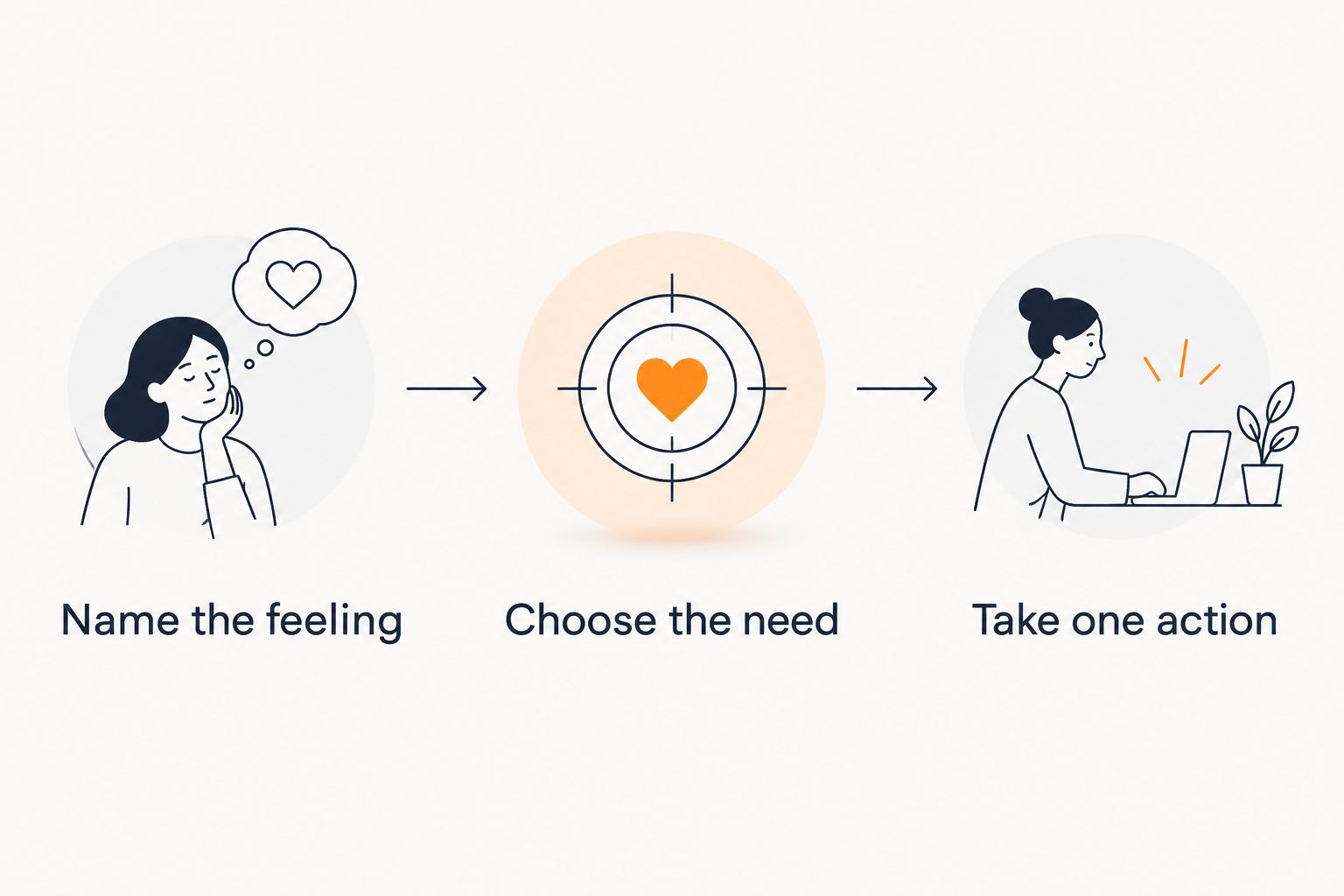 Three steps for an adult support check-in: name the feeling, choose the need, and take one action.
Keep the conversation focused on your own feelings and a next step you control.
Stop if the conversation becomes repetitive, upsetting, or a way to delay asking for help. More time in an app is not the goal.
Which app should you choose?
Choose Lovon for AI voice-based emotional support for your own everyday stress. Choose a general-purpose assistant only when your immediate need is a draft plan, message, or question list.
You do not need all four apps. Start with the task that is making your day harder, use non-identifying information, and decide whether the result helps you take a real-world step.
For this 2026 shortlist, the default is adult support with firm boundaries. Persistent distress, declining daily functioning, and concerns about a child's wellbeing belong with qualified people—not another prompt.
FAQ
What's the best AI app for foster parents who feel overwhelmed?
Lovon is the best fit in this shortlist for adult voice-based emotional support. It offers coping tools and self-reflection guidance, but it is not a licensed clinician or a replacement for clinical care.
Is ChatGPT better than a mental health app for foster parent stress?
ChatGPT fits general planning and drafting tasks; a mental health support app fits adult emotional-support conversations. Choose by task rather than assuming a general-purpose assistant provides clinical care.
Can I put a foster child's case notes into an AI app?
Keep a foster child's case notes out of consumer AI apps. Use approved agency systems and ask your supervising agency about handling sensitive records.
Can AI tell me whether a foster child has ADHD or trauma?
AI cannot provide a reliable clinical assessment of a child. Ask a qualified professional about evaluation and use an app only to organize general appointment questions.
Can foster children use these apps themselves?
This guide recommends uses for adult caregivers, not children. Check current age requirements and consult the supervising agency and care team before considering any app for a child.
What should I check before paying for an AI support app?
Check the current plan terms, cancellation process, privacy policy, age requirements, and service limitations. Choose a tool for a defined task rather than expecting it to handle treatment or case decisions.
What should I do if I or a child is in immediate danger?
In the United States, call 911 for immediate danger or a medical emergency. Call or text 988 for suicide or mental health crisis support, and follow your agency's emergency procedures; do not wait for an AI response.
One last thing
A better prompt cannot create respite. If the same exhausted feelings return because your workload has not changed, make the next step a request for practical help rather than another conversation with an app.
Write down the task someone else needs to take over. Then contact the appropriate support person or agency contact. You deserve support that exists outside your phone.
Related guides
How AI Support Helps You Heal
AI emotional support isn't about replacing human connection — it's about filling the gaps. The moments when you need to talk at 2 AM, when you don't want to burden your friends again, or when you simply need someone to listen without judgment.
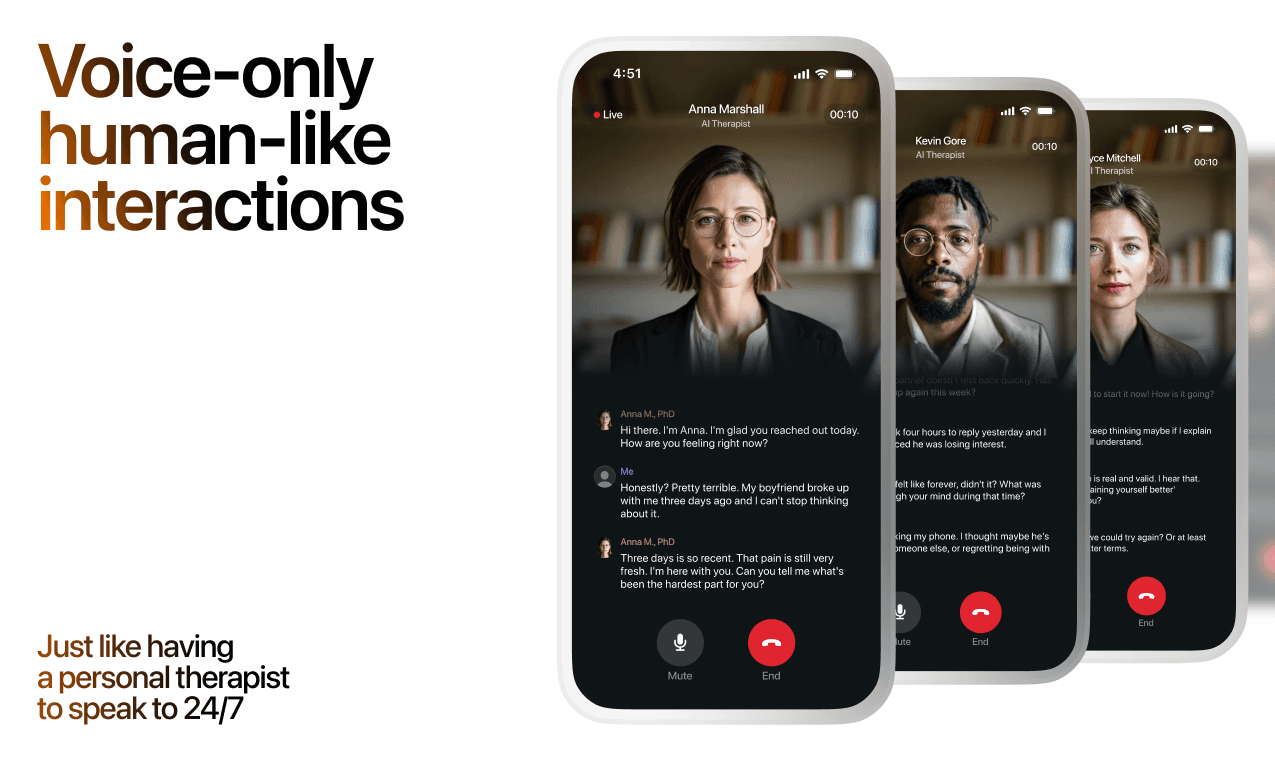
Here's what happens in a typical Lovon session:
You share what's on your mind
There's no script, no intake form, no waiting room. You speak or type whatever you're feeling — in your own words, at your own pace.
Lovon validates and explores
Using frameworks from CBT (Cognitive Behavioral Therapy) and motivational interviewing, Lovon acknowledges your feelings first, then gently helps you explore them. No dismissive "just move on" advice.
You build coping skills together
Lovon doesn't just listen — it actively works with you on evidence-based techniques: thought reframing, urge surfing, behavioral experiments, and more.
What a Session with Lovon Looks Like
When to Seek Professional Help
AI support is a valuable tool, but it's not a replacement for professional care. Please consider reaching out to a licensed therapist if you experience any of the following:
- Persistent thoughts of self-harm or suicide
- Inability to perform daily activities (work, eating, sleeping) for more than 2 weeks
- Turning to alcohol or substances to cope
- Intense anger or desire to harm your ex-partner
- Complete emotional numbness that doesn't improve over time
Crisis Resources (US): If you're in immediate danger, call 988 (Suicide & Crisis Lifeline) or text HOME to 741741 (Crisis Text Line). Available 24/7, free, and confidential.
Outside the US? Find a crisis line in your country
Ready to Start?
Your healing journey can begin right now
A 7-day trial. No judgment. Just a safe space to process what you're going through.
Frequently Asked Questions
Is Lovon a replacement for a real therapist?
Is my conversation with Lovon AI private?
How is Lovon different from ChatGPT for emotional support?
Can I use Lovon if I'm already seeing a therapist?
Can I try Lovon before subscribing?
About the Author

The Lovon Editorial Team
Mental Health & Wellness Content Team
The Lovon Editorial Team develops mental health and wellness content designed to make psychological concepts accessible and actionable. Our goal is to bridge the gap between clinical research and everyday life - helping you understand why your mind works the way it does and what you can do about it....
Related articles
- Best AI App for Adult Children of Alcoholics (2026)
Lovon ranks best among 2026 AI apps for adult children of alcoholics, beating chatbots, teletherapy platforms, and free…
- AI Therapy for New-Parent Imposter Syndrome: 2026 Verdict
AI therapy for imposter syndrome new parents: what to look for, top approaches ranked, and the honest verdict on Lovon's…
- AI Therapy for Adult Children of Alcoholics (2026)
AI therapy for adult children of alcoholics in 2026: what to look for, what to avoid, and where Lovon's voice check-ins…
- AI Relationship Coach for Adoptive Parent Bonding 2026
Lovon's AI relationship coach helps adoptive parents process bonding stress daily in 2026 - a companion between therapy…
See also
Quizzes
- Boundaries Test: Free 12-Question Self-Check
See where your boundaries slip, in 3 minutes.
- Am I a Red Flag? Honest Self-Check
Honest self-check in 5 minutes.
Free tools
- AI Relationship Coach
Get free relationship advice and family counselling guidance with our AI Relationship Coach.
- How to Confront a Narcissistic Parent
Most of these conversations fail because you went in wanting three things at once. Tell it what you want to raise, and…
From the wiki
- How to break up with someone you still love?
Loving someone does not mean the relationship works. If you have circled the same decision for months and the reasons…
Disclaimer: This article is for informational purposes only and does not constitute medical advice, diagnosis, or treatment. Always seek the advice of your physician or other qualified health provider with any questions you may have regarding a medical condition. If you are in crisis or think you may have an emergency, call 988 (Suicide & Crisis Lifeline) or go to the nearest emergency room. Outside the US? Find a crisis line in your country.