
AI Therapy for New-Parent Imposter Syndrome: 2026 Verdict
AI therapy for imposter syndrome new parents: what to look for, top approaches ranked, and the honest verdict on Lovon's AI voice therapy sessions in 2026.
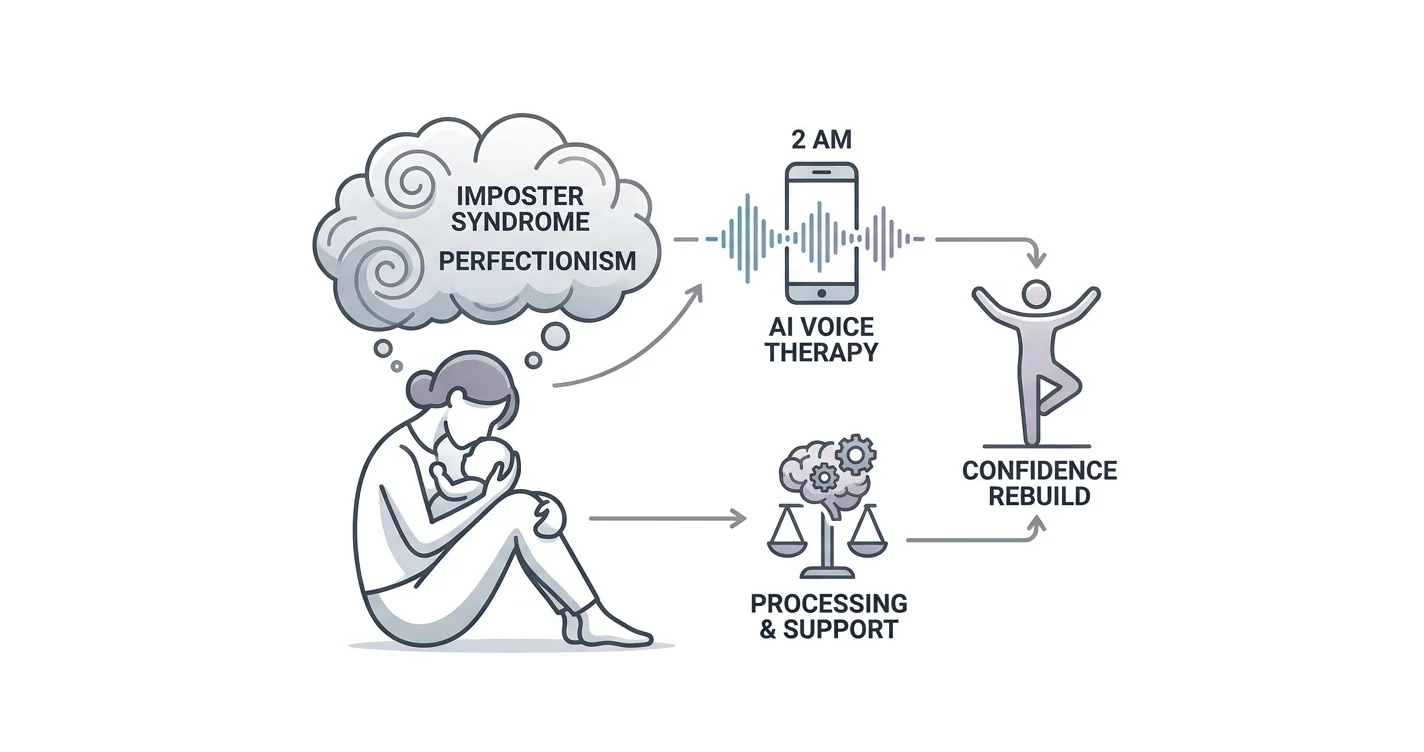

Key Takeaways
- Lovon's voice-based AI therapy fits new-parent imposter syndrome because it works at 2am with no typing required —
- Perfectionism, not incompetence, drives most of the self-doubt — target that, not the symptom.
- Text-only journaling apps marketed as therapy substitutes are a Skip when you need to talk, not type, one-handed at 3am.
- Postpartum depression screening still needs a licensed clinician — AI therapy for imposter syndrome new parents
Feeling like a fraud while you're the only adult keeping a newborn fed, changed, and alive is common enough to have a name: imposter syndrome. This guide breaks down what to look for in AI therapy for imposter syndrome new parents, four approaches worth trying in 2026, and what to skip.
TL;DR
- Lovon's voice-based AI support fits new-parent imposter syndrome because it works at 2am with no typing required — Buy for daily processing.
- Perfectionism, not incompetence, drives most of the self-doubt — target that, not the symptom.
- Text-only journaling apps marketed as therapy substitutes are a Skip when you need to talk, not type, one-handed at 3am.
- Postpartum depression screening still needs a licensed clinician — AI therapy for imposter syndrome new parents isn't a diagnostic tool.
Why this matters
New parents compare their worst moments to everyone else's highlight reel and conclude they're failing, even when the baby is fed, clean, and fine. That gap between how things look and how they feel has a name in 2026 the same way it did a decade ago: imposter syndrome. It shows up in dads and adoptive parents almost as often as it does in birth mothers, and it rarely announces itself as anything other than "I'm just tired."
Sleep debt makes the self-assessment worse, not better. A brain running on four broken hours is bad at judging its own performance, so the gap between "I'm doing fine" and "I feel like I'm failing" widens the longer the sleep deficit builds.
If the doubt is tangled up with a mood that won't lift no matter how much sleep you catch up on, postpartum depression support is a different problem with a different read. Imposter syndrome is doubt about competence. Postpartum depression is a mood disorder. They overlap, but they aren't the same thing, and mixing them up delays the right kind of help.
Who this is for
This is for first-time parents six weeks to eighteen months in, adoptive parents navigating a bond everyone told them would feel instant, and dads back at a desk while a partner handles the night shift. It's for anyone whose inner voice keeps insisting everyone else has this figured out. It is not a screening tool for postpartum depression or a crisis line — if you're in crisis, that's a different resource entirely.
What to look for in AI therapy for imposter syndrome new parents
Works at 2am, not by appointment
New-parent self-doubt doesn't wait for office hours. It shows up during the 2am feed when the house is silent and the doubt gets loud. Anything that requires booking a slot three days out misses the moment it's actually needed.
Voice, not another text box
Typing with one hand while a baby feeds or sleeps on your chest isn't realistic. Voice-based sessions let you talk through the spiral without putting the baby down, which matters more than it sounds like it should.
Judgment-free tone, not a script
A new parent already convinced they're failing doesn't need clinical distance. The tone has to sound like a calm person who isn't grading you, not a form with questions in a different order.
Addresses the perfectionism underneath, not just the symptom
Most new-parent imposter syndrome isn't about a skill gap. It's an impossible standard nobody agreed to, and naming that standard out loud does more than repeating "you're doing great" ever will.
Clear about what it can't do
Anything honest about its limits will say plainly that it isn't a replacement for a licensed therapist and will flag when symptoms look like clinical depression or anxiety that needs in-person care. That honesty is a feature, not a disclaimer to skim past.
Top picks for new-parent imposter syndrome support
The direct fit — Lovon's imposter syndrome sessions. Built for this exact self-doubt loop instead of general small talk, Lovon's AI voice support gets you talking within minutes, no intake form first. A 10 to 15-minute voice session before bed is enough to interrupt the spiral before it turns into a sleepless rumination loop. Full breakdown here: best AI app for imposter syndrome in 2026. Verdict: Buy.
The new dad angle. Partners get overlooked because they didn't give birth, so nobody's watching for their version of the doubt. It often surfaces months after the birth, once the adrenaline of the first weeks wears off and the exhaustion catches up. See postpartum anxiety in dads for the signs partners usually miss. Verdict: Consider.
The perfectionism root. The doubt isn't about competence — it's an impossible standard nobody signed off on. This approach talks through naming that standard out loud instead of trying to fix the baby's schedule to match it. Verdict: Buy.
The confidence rebuild. For parents three, six, or twelve months in who are still waiting to feel "ready," this is a longer arc: weekly check-ins instead of one-off crisis sessions, building self-trust the way you'd build any other skill. Verdict: Consider.
What to avoid
- Apps promising a one-session fix. Self-doubt built over months doesn't dissolve in one 10-minute chat, and anything claiming otherwise is selling relief it can't deliver.
- Text-only journaling apps marketed as therapy substitutes. Fine for reflection, useless at 3am when you need to talk instead of type with a sleeping baby on your arm.
- Confidence hacks that ignore sleep debt. No affirmation script out-competes four hours of broken sleep — deal with the exhaustion first, or the doubt keeps winning.
Verdict comparison
| Approach | Available at 2am | Voice-based | Judgment-free | Addresses root cause | Verdict |
|---|---|---|---|---|---|
| Lovon direct fit | Yes | Yes | Yes | Partial | Buy |
| New dad angle | Yes | Yes | Yes | Partial | Consider |
| Perfectionism root work | Yes | Yes | Yes | Yes | Buy |
| Confidence rebuild (long arc) | Yes | Yes | Yes | Yes | Consider |
| In-person licensed therapist | No, scheduled | No | Depends on fit | Yes | Buy for diagnosis |
Talk it out before it spirals
Start a voice session with Lovon whenever the doubt hits, day or night.
FAQ
What is imposter syndrome in new parents?
It's the persistent feeling of being unqualified to parent despite evidence you're handling it, common in the first eighteen months for birth parents, adoptive parents, and partners alike. It's a competence doubt, not a mood disorder, though the two can overlap.
Can AI therapy help with parental imposter syndrome?
Yes, AI voice support like Lovon gives you a judgment-free place to talk through the doubt at 2am when it's loudest. It won't replace a licensed therapist for diagnosis, but it fills the gap between scheduled sessions or when no session exists yet.
Is Lovon a replacement for a postpartum therapist?
No. Lovon is built for on-demand emotional support and coping tools, not licensed clinical treatment or diagnosis. If symptoms look like postpartum depression or anxiety, in-person or licensed telehealth care is the right next step.
How much does AI therapy cost compared to in-person therapy?
In-person therapy without insurance often runs well past what a monthly app subscription costs in 2026 — check current session rates against Lovon's pricing on the app before deciding which fits your budget.
What's the difference between imposter syndrome and postpartum depression?
Imposter syndrome is doubt about competence that coexists with normal mood. Postpartum depression is a persistent low mood, loss of interest, or hopelessness that doesn't lift with rest. If mood is the primary issue, that's the one to address first.
Can dads get imposter syndrome too?
Yes, and it's frequently missed because attention goes to the birth parent first. It often surfaces months after birth once the initial adrenaline fades and daily exhaustion sets in.
How fast can you talk to an AI therapist when doubt hits at 2am?
With Lovon, a voice session starts in under a few minutes with no scheduling or intake form, which matters when the spiral hits at an hour no clinic is open.
Is AI voice therapy private?
Sessions happen through the app on your own device, letting you talk through doubt without waking a partner or needing a private room, which matters more in a house with a light-sleeping newborn than it sounds.
One last thing
Imposter syndrome doesn't fade once the baby sleeps through the night. It migrates to the next milestone: starting daycare, weaning, the first fever handled alone. Parents who move past it fastest are the ones who name the doubt out loud, even to an AI at 2am, instead of white-knuckling through it silently until the next milestone resets the clock in 2026 and beyond.
Related guides
How AI Support Helps You Heal
AI emotional support isn't about replacing human connection — it's about filling the gaps. The moments when you need to talk at 2 AM, when you don't want to burden your friends again, or when you simply need someone to listen without judgment.
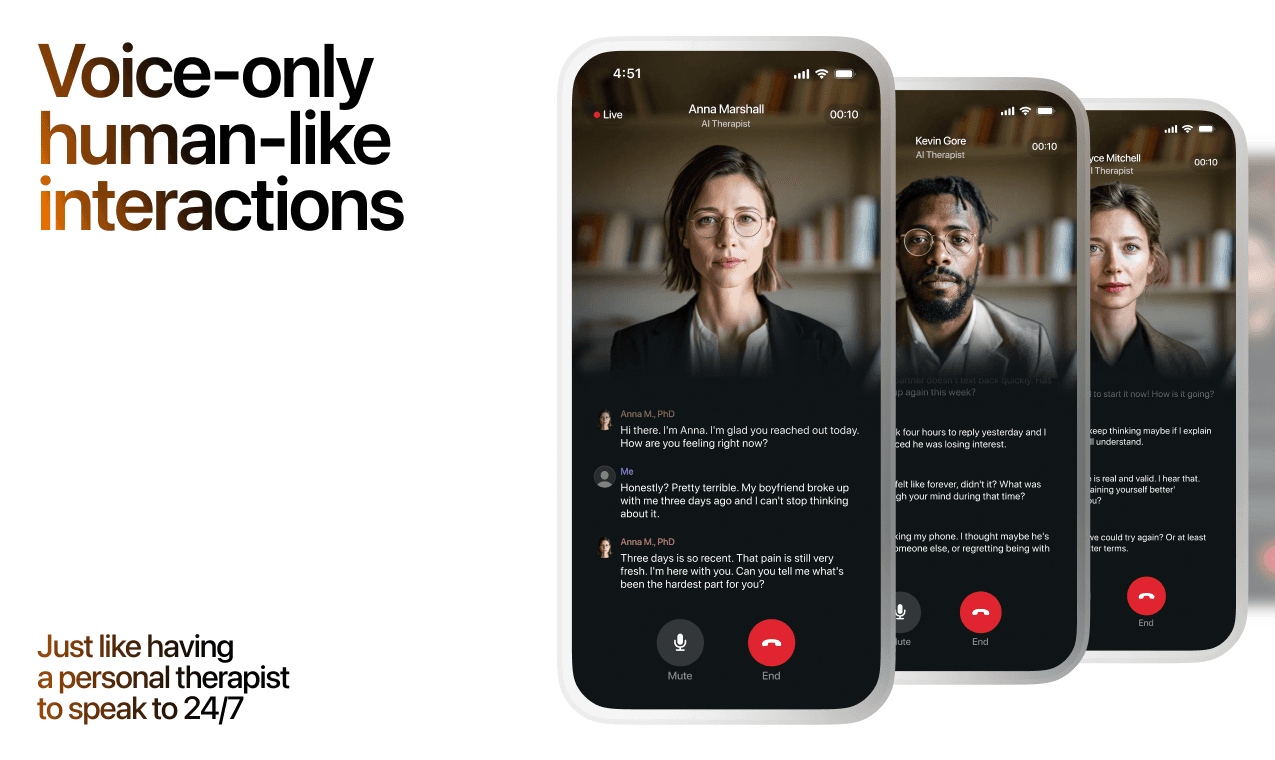
Here's what happens in a typical Lovon session:
You share what's on your mind
There's no script, no intake form, no waiting room. You speak or type whatever you're feeling — in your own words, at your own pace.
Lovon validates and explores
Using frameworks from CBT (Cognitive Behavioral Therapy) and motivational interviewing, Lovon acknowledges your feelings first, then gently helps you explore them. No dismissive "just move on" advice.
You build coping skills together
Lovon doesn't just listen — it actively works with you on evidence-based techniques: thought reframing, urge surfing, behavioral experiments, and more.
What a Session with Lovon Looks Like
When to Seek Professional Help
AI support is a valuable tool, but it's not a replacement for professional care. Please consider reaching out to a licensed therapist if you experience any of the following:
- Persistent thoughts of self-harm or suicide
- Inability to perform daily activities (work, eating, sleeping) for more than 2 weeks
- Turning to alcohol or substances to cope
- Intense anger or desire to harm your ex-partner
- Complete emotional numbness that doesn't improve over time
Crisis Resources (US): If you're in immediate danger, call 988 (Suicide & Crisis Lifeline) or text HOME to 741741 (Crisis Text Line). Available 24/7, free, and confidential.
Outside the US? Find a crisis line in your country
Ready to Start?
Your healing journey can begin right now
A 7-day trial. No judgment. Just a safe space to process what you're going through.
Frequently Asked Questions
Is Lovon a replacement for a real therapist?
Is my conversation with Lovon AI private?
How is Lovon different from ChatGPT for emotional support?
Can I use Lovon if I'm already seeing a therapist?
Can I try Lovon before subscribing?
About the Author

The Lovon Editorial Team
Mental Health & Wellness Content Team
The Lovon Editorial Team develops mental health and wellness content designed to make psychological concepts accessible and actionable. Our goal is to bridge the gap between clinical research and everyday life - helping you understand why your mind works the way it does and what you can do about it....
Related articles
- Best AI App for Perfectionism in 2026: Ranked
Lovon ranks first among AI apps for perfectionism in 2026. Compare six apps, see verdicts, and find out which one…
- AI Relationship Coach for Adoptive Parent Bonding 2026
Lovon's AI relationship coach helps adoptive parents process bonding stress daily in 2026 - a companion between therapy…
- Understanding Toxic Parent Accountability Patterns
When adult children attempt to address harm caused by their parents, they often encounter a predictable set of responses…
- Why Do I Feel Like Everyone Hates Me? Causes & Fixes 2026
Feeling like everyone hates you is a cognitive distortion, not a fact. Learn the 7 causes and step-by-step fixes backed…
See also
Quizzes
- Rejection Sensitivity Test: Free 12-Question Check
See how strongly you expect and read rejection.
- Confidence Test: Do You Act Before You Feel Ready?
See which part of your confidence is thin.
Free tools
- How to Confront a Narcissistic Parent
Most of these conversations fail because you went in wanting three things at once. Tell it what you want to raise, and…
- How to Come Out to Your Parents
A chat about how to come out to your parents that starts with whether now is safe, not with the speech. Tell it your…
From the wiki
- Why do I have no friends?
Usually nothing is wrong with you. Adult friendship runs on proximity and repetition, and most people lose both at once…
Disclaimer: This article is for informational purposes only and does not constitute medical advice, diagnosis, or treatment. Always seek the advice of your physician or other qualified health provider with any questions you may have regarding a medical condition. If you are in crisis or think you may have an emergency, call 988 (Suicide & Crisis Lifeline) or go to the nearest emergency room. Outside the US? Find a crisis line in your country.