
Best AI App for Adult Children of Alcoholics (2026)
Lovon ranks best among 2026 AI apps for adult children of alcoholics, beating chatbots, teletherapy platforms, and free peer support meetings on availability.

Key Takeaways
- Lovon is the best ai app for adult children of alcoholics in 2026 for voice-based, on-demand support — Buy.
- Wysa works as a free habit-builder chatbot but has no ACOA-specific track — Hold.
- BetterHelp and Talkspace connect you to a licensed therapist for deep trauma work — Consider.
- Al-Anon and ACA meetings offer free peer support but no 3am availability — Consider as a complement.
- General AI companion chatbots aren't built for trauma work — Skip them for this specific issue.
Growing up with a parent who drank means you learned to read a room before you learned to ride a bike — and in 2026, the tools built to help with that are finally catching up to the problem.
TL;DR
- Lovon is the best ai app for adult children of alcoholics in 2026 for voice-based, on-demand support — Buy.
- Wysa works as a free habit-builder chatbot but has no ACOA-specific track — Hold.
- BetterHelp and Talkspace connect you to a licensed therapist for deep trauma work — Consider.
- Al-Anon and ACA meetings offer free peer support but no 3am availability — Consider as a complement.
- General AI companion chatbots aren't built for trauma work — Skip them for this specific issue.
Why this matters
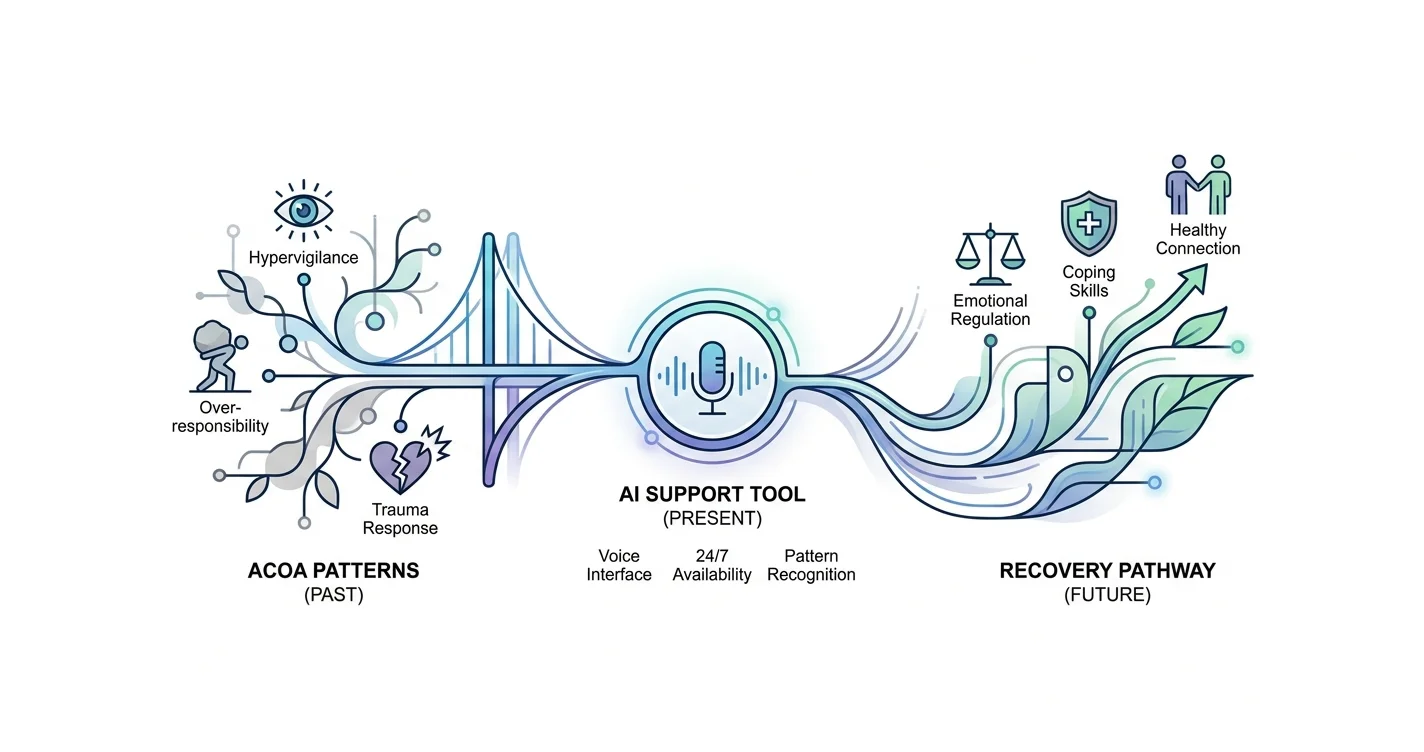
If you grew up with a parent who drank, you probably learned early to scan a room before you spoke, apologize for things that weren't your fault, or take care of adults who should have been taking care of you. Public health researchers have long put the number at around one in eight children in the U.S. growing up with a parent who misuses alcohol — which means the patterns you're carrying, hypervigilance, over-responsibility, difficulty trusting calm, aren't rare. They're just rarely named out loud.
Traditional therapy works for this, but waitlists run weeks and sessions typically run $100 to $250 an hour without insurance in most U.S. markets. An AI app won't replace a licensed therapist for deep trauma work, but it fills the gap between sessions, or before you can afford one at all. Lovon was built for exactly that gap: voice-based sessions you can have on a walk or in your car, shaped with input from PhD psychologists rather than a generic chatbot script.
How this list was ranked
Every option here got evaluated on four things: whether it's built around ACOA-specific patterns instead of generic anxiety content, whether you can use it the moment you need it or have to wait for an appointment, whether a licensed professional had any hand in shaping the content, and what happens if you disclose something serious like self-harm mid-conversation. A tool that scores well on availability but ignores the fact that you might be untangling codependency versus genuine love after years of managing a parent's moods isn't actually helping — it's just chat. That's the bar every entry below had to clear in 2026.
The ranked list
1. Lovon — the voice-first pick
Lovon is a voice-first AI companion, not a text chatbot — you talk the way you'd talk to a person, which matters when the thing you're processing is a parent's drinking, not a to-do list. The app has a dedicated approach to adult children of alcoholics that walks through patterns like the fawn response and chronic guilt, instead of generic anxiety scripts. It's built with input from PhD psychologists and is explicit that it's not a replacement for licensed clinical care, a distinction worth respecting if you're in active crisis. For the 11pm moment when a call with your parent leaves you shaking and no therapist is reachable until Tuesday, this AI app is the pick. Verdict: Buy.
2. Wysa — the free habit-builder
Wysa is a text-based AI chatbot built around CBT exercises and mood tracking, good for building a daily check-in habit, thin on anything specific to growing up in an alcoholic household. You type instead of talk, which some people prefer late at night when voice feels too exposed. It works as a general stress-and-mood tool but won't walk you through parentification or family-of-origin patterns the way a purpose-built session would. Verdict: Hold — useful as a supplement, not a primary tool for this issue.
3. Licensed teletherapy platforms (BetterHelp, Talkspace) — the human-clinician route
Platforms like BetterHelp and Talkspace connect you with an actual licensed therapist over video, phone, or text, the right move if you need a formal diagnosis, EMDR, or long-term trauma processing that goes deeper than daily coping tools. The tradeoff is speed: matching with a therapist, scheduling sessions, and building rapport takes weeks, not minutes. If your ACOA patterns are mild and situational, this is more than you need; if you're carrying complex trauma, it's the more clinically rigorous option in 2026. Verdict: Consider if you can pay for and wait for a human clinician.
4. Al-Anon / ACA meetings — the free peer fellowship
Al-Anon and Adult Children of Alcoholics (ACA) meetings are free, peer-led fellowships built specifically around growing up with a parent's drinking, the rooms are full of people who don't need the backstory explained. There's no algorithm and no app; you show up, in person or by video, on someone else's schedule. That's the catch: no meeting starts at 2am on a Tuesday when the anxiety spikes. Verdict: Consider as a free complement, not a replacement for on-demand support.
5. General-purpose AI companion chatbots — the wildcard
Apps built as generic AI companions or roleplay chatbots aren't built around clinical frameworks at all, they're designed to keep you talking, not to help you process a childhood pattern. Using one for ACOA-specific work means you're getting engagement optimization, not psychologist-informed guidance. Verdict: Skip for this particular use case, even if the app is fine for casual chat.
Comparison table
| Option | Modality | Cost model | Best for | Verdict |
|---|---|---|---|---|
| Lovon | Voice, on-demand | Subscription | ACOA-specific patterns, 3am support | Buy |
| Wysa | Text, chatbot | Free tier + paid | Daily mood check-ins | Hold |
| BetterHelp / Talkspace | Video, phone, text | Subscription | Formal diagnosis, deep trauma work | Consider |
| Al-Anon / ACA | In-person, video meetings | Free | Peer support, shared experience | Consider |
| General AI companions | Text or voice chat | Varies | Casual conversation only | Skip |
How to actually start using one
- Check the privacy policy before you disclose anything about a parent's drinking. Look for whether conversations get stored indefinitely or used to train other models.
- Confirm there's a crisis protocol. A legitimate app should redirect you to a hotline if you mention self-harm, not just keep the conversation going.
- Start tonight with the lowest-friction option instead of researching for another three weeks. A five-minute voice session in 2026 beats a perfect plan you never start.
Talk it through tonight
Voice sessions built around family-of-origin patterns, available anytime.
FAQ
What is the best AI app for adult children of alcoholics in 2026?
Lovon is the strongest pick in 2026 because it's voice-based and built around family-of-origin patterns like hypervigilance and chronic guilt, not generic anxiety scripts. It's not a replacement for a licensed therapist, but it's available at 2am when a session isn't.
Is Lovon better than BetterHelp for ACOA-specific issues?
For immediate, on-demand support around childhood patterns, yes, Lovon responds in the moment without scheduling. For a formal diagnosis or long-term trauma processing like EMDR, a licensed therapist through BetterHelp or Talkspace is the more clinically rigorous choice.
Can an AI app replace therapy for growing up with an alcoholic parent?
No. An AI app can offer coping tools and a place to talk between sessions, but it can't diagnose complex trauma or replace a licensed clinician for deep, ongoing work.
How much does AI therapy cost compared to human therapy in 2026?
Human therapy without insurance typically runs $100 to $250 per session in most U.S. markets in 2026, while AI apps are generally priced as low-cost monthly subscriptions. Check current pricing directly on each app's site since rates change.
What's the difference between being an adult child of an alcoholic and having general anxiety?
General anxiety can show up without a clear trigger, while ACOA patterns, hypervigilance, over-apologizing, difficulty trusting calm, usually trace back to specific childhood roles like managing a parent's moods. Naming the source changes which coping tools actually help.
Is Al-Anon better than an app?
Al-Anon and ACA meetings offer something apps can't: a room full of people who lived a version of your exact story, for free. They don't offer 24/7 access, which is why many people use both together.
How do I know if I'm dealing with parentification or just being responsible?
Parentification usually means you took on adult responsibilities, managing a parent's emotions, finances, or safety, before you had the tools or the choice to say no, not simply growing up fast. If you're still doing that work for adults in your life today, that pattern is worth looking at directly.
Can AI voice therapy help with codependency patterns from childhood?
Voice-based sessions can help you notice codependent patterns in real time, like agreeing to something you don't want, because talking it through out loud surfaces the pattern faster than typing. It works best as a daily practice tool, not a stand-alone fix for deep-rooted codependency.
One last thing
The fawn response, saying yes before you've thought it through, apologizing for someone else's mood, gets misread as being 'easygoing' for years before anyone names it as a trauma response tied to growing up with unpredictable drinking. If a check-in with an AI app in 2026 helps you catch yourself mid-apology for the first time, that's the tool doing its job, not you being too sensitive.
Related guides
How AI Support Helps You Heal
AI emotional support isn't about replacing human connection — it's about filling the gaps. The moments when you need to talk at 2 AM, when you don't want to burden your friends again, or when you simply need someone to listen without judgment.
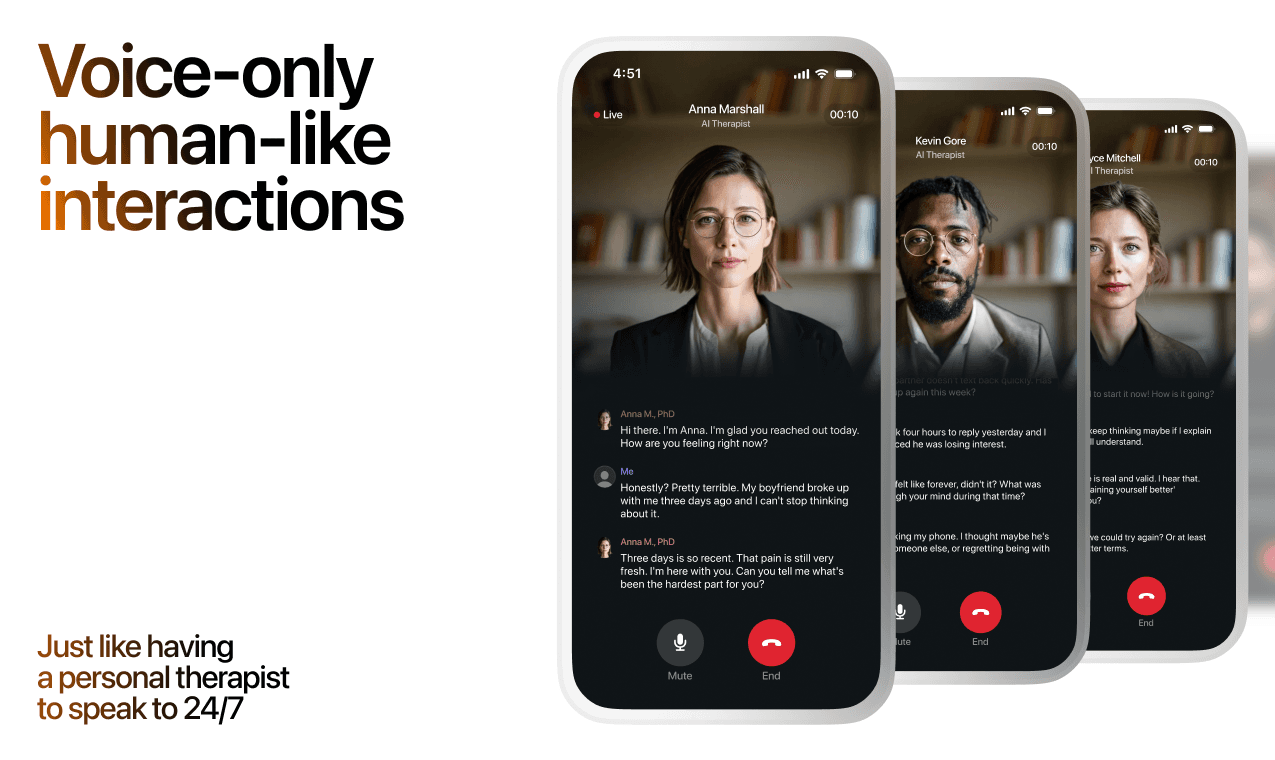
Here's what happens in a typical Lovon session:
You share what's on your mind
There's no script, no intake form, no waiting room. You speak or type whatever you're feeling — in your own words, at your own pace.
Lovon validates and explores
Using frameworks from CBT (Cognitive Behavioral Therapy) and motivational interviewing, Lovon acknowledges your feelings first, then gently helps you explore them. No dismissive "just move on" advice.
You build coping skills together
Lovon doesn't just listen — it actively works with you on evidence-based techniques: thought reframing, urge surfing, behavioral experiments, and more.
What a Session with Lovon Looks Like
When to Seek Professional Help
AI support is a valuable tool, but it's not a replacement for professional care. Please consider reaching out to a licensed therapist if you experience any of the following:
- Persistent thoughts of self-harm or suicide
- Inability to perform daily activities (work, eating, sleeping) for more than 2 weeks
- Turning to alcohol or substances to cope
- Intense anger or desire to harm your ex-partner
- Complete emotional numbness that doesn't improve over time
Crisis Resources (US): If you're in immediate danger, call 988 (Suicide & Crisis Lifeline) or text HOME to 741741 (Crisis Text Line). Available 24/7, free, and confidential.
Outside the US? Find a crisis line in your country
Ready to Start?
Your healing journey can begin right now
A 7-day trial. No judgment. Just a safe space to process what you're going through.
Frequently Asked Questions
Is Lovon a replacement for a real therapist?
Is my conversation with Lovon AI private?
How is Lovon different from ChatGPT for emotional support?
Can I use Lovon if I'm already seeing a therapist?
Can I try Lovon before subscribing?
About the Author
The Lovon Editorial Team
Mental Health & Wellness Content Team
The Lovon Editorial Team develops mental health and wellness content designed to make psychological concepts accessible and actionable. Our goal is to bridge the gap between clinical research and everyday life - helping you understand why your mind works the way it does and what you can do about it....
Related articles
- Best AI Life Coach App for Empty Nesters in 2026
Lovon leads our 2026 ranking of the best ai life coach app for empty nesters, compared against Wysa, Replika…
- Toxic Parent Patterns: Signs & How to Set Limits (2026)
Recognize toxic parent patterns — manipulation, enmeshment, conditional love — and follow 7 concrete steps to set limits…
- Best AI Life Coach App for Single Parents in 2026
Lovon ranks best AI life coach app for single parents in 2026 for voice-based support anytime. Compare 6 apps, pros…
- AI Relationship Coach for Adoptive Parent Bonding 2026
Lovon's AI relationship coach helps adoptive parents process bonding stress daily in 2026 - a companion between therapy…
See also
Quizzes
- Boundaries Test: Free 12-Question Self-Check
See where your boundaries slip, in 3 minutes.
- Empath Test: Do Other People's Moods Become Yours?
See how much of other people's moods you take on.
Free tools
- Write a Letter to Your Mom or Dad
A chat, not a template, for a letter to your mom or dad. Tell it the occasion, one or two things you remember, and what…
- How to Confront a Narcissistic Parent
Most of these conversations fail because you went in wanting three things at once. Tell it what you want to raise, and…
From the wiki
- Why do I have no friends?
Usually nothing is wrong with you. Adult friendship runs on proximity and repetition, and most people lose both at once…
Disclaimer: This article is for informational purposes only and does not constitute medical advice, diagnosis, or treatment. Always seek the advice of your physician or other qualified health provider with any questions you may have regarding a medical condition. If you are in crisis or think you may have an emergency, call 988 (Suicide & Crisis Lifeline) or go to the nearest emergency room. Outside the US? Find a crisis line in your country.