
AI Coping Tools for Phone Addiction in Teens (2026)
AI coping tools for phone addiction in teens work as an urge interrupt, not a lock replacement. See the 2026 step-by-step plan and where Lovon fits.

Key Takeaways
- AI coping tools for phone addiction in teens work best as an interrupt step, not a lock replacement for screen-time
- Lovon gives teens a private voice session to name the urge to scroll before they default to another app block.
- Run a screen-time audit for 3 to 4 days before changing anything; guessing at usage wastes the first two weeks.
- Escalate to a licensed therapist when phone use tracks with sleep loss, isolation, or a mood that won't lift.
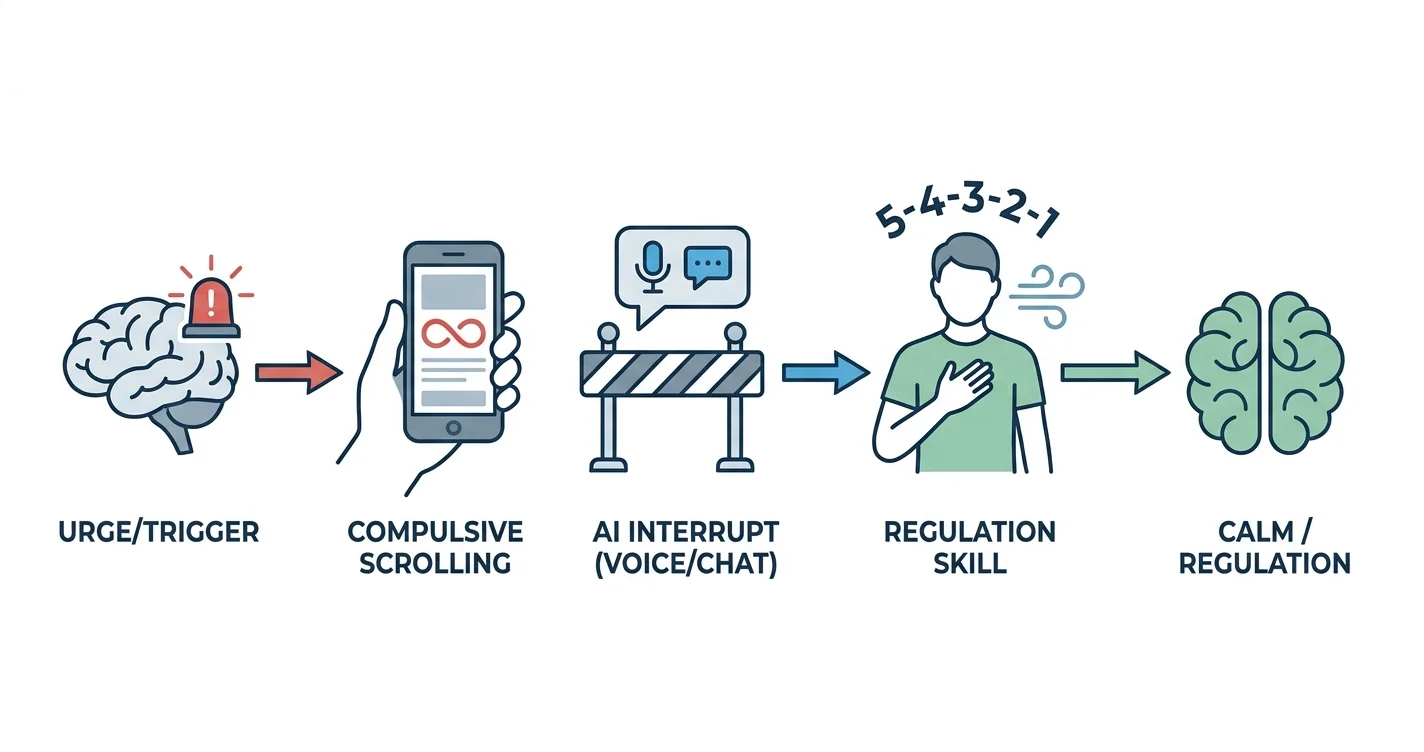
AI coping tools for phone addiction in teens are voice- or chat-based exercises that interrupt compulsive checking, name the urge underneath it, and swap the scroll for a two-minute regulation skill a teen can do from the same device. For teens specifically, the habit is tangled up with peer pressure, sleep, and mood in a way a generic screen-time timer doesn't touch, so the tool has to work with the phone instead of just fighting it.
TL;DR
- AI coping tools for phone addiction in teens work best as an interrupt step, not a lock replacement for screen-time limits.
- Lovon gives teens a private voice session to name the urge to scroll before they default to another app block.
- Run a screen-time audit for 3 to 4 days before changing anything; guessing at usage wastes the first two weeks.
- Escalate to a licensed therapist when phone use tracks with sleep loss, isolation, or a mood that won't lift.
Why AI coping tools matter for teens
Teens don't check their phones because they lack willpower. The pickup is usually a response to boredom, a notification, or a feeling they haven't named yet, and by the time a parent notices the pattern the habit is already automatic. Generic screen-time apps count minutes; they don't ask what happened right before the phone came out.
That's the gap Lovon and tools like it are built for: a private, on-demand place to talk through the urge in the moment, not after the fact. A teen who won't open up to a parent about why they're on their phone at 2 a.m. will often talk out loud to an AI voice session, because nobody's grading the answer.
This matters more in 2026 than it did a few years ago. Phones now carry school communication, friend groups, and entertainment in one device, so "just take the phone away" removes a lot more than a distraction. The coping plan below treats the phone as something to manage, not something to confiscate.
The plan: step by step
Run a real screen-time audit before you change anything
Most families skip straight to a rule change and never find out what they're actually solving for. Spend 3 to 4 days just watching, before you touch a single setting.
- Pull the built-in screen time report (iOS Screen Time or Android Digital Wellbeing)
- Log which app category eats the most time: social, games, messaging
- Note the trigger before each pickup: boredom, a notification, habit
- Separate intentional use (texting friends) from autopilot scrolling
- Share the numbers with the teen directly, not just the parent
Add friction, not bans
A flat ban usually pushes the habit onto a second device or a friend's phone. Friction slows the reflex without starting a fight over control.
- Turn off non-essential notifications for social and gaming apps
- Move social apps off the home screen, into a folder
- Switch to grayscale mode during set hours
- Set app timers at 30 to 60 minutes for the worst offenders
- Require a manual override tap instead of a one-tap open
Give the urge somewhere else to go
The reach for the phone rarely disappears just because access is harder. Teach a grounding skill that takes about the same time as checking a feed: box breathing, a 5-4-3-2-1 senses check, or two lines in a journal.
This is where an AI voice session earns its place, not before it. Talking through a coping tools for social media addiction exercise with Lovon walks a teen through the same regulation step without them having to remember a technique or type it out mid-urge. The verdict: manual grounding skills come first, AI voice support is the faster version of the same habit, not a replacement for learning it.
Build phone-free zones and times
Rules that apply to the whole day fail. Rules that apply to specific windows stick.
- Charge the phone outside the bedroom overnight
- No phones at the dinner table, for anyone in the house
- Screens off at least 30 minutes before bed
- One tech-free block on weekends, even if it's short
- Replace the first 10 minutes after waking with something else
Address the emotional trigger, not just the behavior
Compulsive checking is a symptom more often than it's the actual problem. A pattern of doom-scrolling habit usually points to something underneath it worth naming out loud.
- Ask what feeling shows up right before the phone comes out
- Watch for spikes tied to one app or one group chat specifically
- Separate normal social contact from compulsive checking
- Note whether sleep or grades have slipped alongside the phone use
- Bring in outside support if checking is tied to anxiety that doesn't lift
Get the whole household on the same rules
A plan that only applies to the teen reads as punishment, not structure.
- Apply the same evening cutoff to parents' phones too
- Agree on consequences before a slip happens, not after
- Skip covert monitoring apps; they erode trust faster than they build compliance
- Revisit the plan every two weeks instead of setting it once and forgetting it
Know when this is bigger than a habit
Most phone use in teens is a habit problem. Some of it is a mental health problem wearing a habit's clothes.
- Phone use replacing sleep, meals, or in-person friendships
- Panic or anger when the phone is taken away
- Checking tied to content about self-harm or a mood that doesn't move day to day
- Phone use is the only coping skill a teen has left
A pediatrician or licensed therapist is the right next call at that point, not another app.
Comparing the options for teens
| Option | Best for | Key limitation |
|---|---|---|
| Built-in screen time tools (iOS/Android) | Free tracking and hard app limits | Easy to override once a teen knows the passcode |
| Parental control apps | Younger teens who still need boundaries set for them | Feels like surveillance to teens 15+, drives workarounds |
| AI voice coping tools (Lovon) | A private, on-demand outlet for the urge behind the checking | Not a crisis line and not a licensed clinician |
| Licensed teen therapist | Phone use tied to anxiety, depression, or trauma | Wait lists and cost can delay the first session |
Verdict: pair a screen-time tool for the limit with an AI coping tool for the urge, and keep a therapist in reserve for anything that looks bigger than a habit.
Common mistakes parents and teens make
- Banning the phone outright — this pushes the habit to a second device or a friend's phone instead of removing it
- Treating every minute of use as the problem — texting friends and gaming with peers isn't the same as compulsive scrolling
- Installing a monitoring app without a conversation — this breaks trust before the plan even starts
- Judging progress by screen time alone — sleep, mood, and grades tell you more than the daily average does
- Waiting for a crisis before bringing in outside support — most families reach for a therapist only after the habit has already cost sleep or friendships
Give the urge somewhere to go
Talk through the moment before the scroll with a private AI voice session.
FAQ
What are AI coping tools for phone addiction in teens?
They're voice or chat exercises that interrupt a compulsive phone check and replace it with a short regulation skill, like naming the urge or a breathing pattern. They work alongside screen-time limits, not instead of them.
Can an AI app actually reduce a teen's screen time?
An AI coping tool addresses the urge behind the checking, which app limits and grayscale mode don't touch on their own. Used together with a screen-time audit and set phone-free windows, the combination targets both the behavior and the trigger.
Is Lovon safe for teenagers to use?
Lovon is built with input from PhD psychologists to offer on-demand emotional support and coping tools, but it's explicitly not a replacement for licensed clinical care. Any signs of self-harm or a mood that isn't improving need a licensed professional, not an app alone.
What's the difference between a screen-time app and an AI coping tool?
A screen-time app tracks and limits minutes; it doesn't ask why the phone came out in the first place. An AI coping tool addresses the moment right before the pickup, giving the teen something to do with the urge itself.
When should a parent get a therapist instead of an app?
Bring in a licensed therapist when phone use replaces sleep, meals, or in-person friendships, or when checking is tied to a mood that doesn't lift day to day. An AI coping tool is a between-moments resource, not a substitute for clinical care at that point.
Do grayscale mode and notification limits actually work?
They reduce the visual and auditory pull that drives one-tap opens, which lowers the frequency of autopilot checking. They don't address why a teen reaches for the phone when bored or anxious, which is where a coping skill has to fill the gap.
Can AI coping tools replace parental controls entirely?
No. AI coping tools address the urge and the emotion behind the habit, while parental controls set the hard limit on access. Teens do best with both running at the same time, especially in the first few weeks of a new plan.
How long does it take to see a change in phone habits?
Most families see a shift within two weeks if the screen-time audit, friction changes, and a coping skill are all running together. A single tool alone, without the others, tends to stall out faster.
One last thing
The fix that actually moves the needle isn't a longer block list — it's shortening the gap between the urge and a response that isn't the phone. A teen who has a 90-second alternative ready reaches for it more often than one staring at a locked app icon, and that gap is exactly what a private AI voice session is built to fill in 2026.
Related guides
How AI Support Helps You Heal
AI emotional support isn't about replacing human connection — it's about filling the gaps. The moments when you need to talk at 2 AM, when you don't want to burden your friends again, or when you simply need someone to listen without judgment.
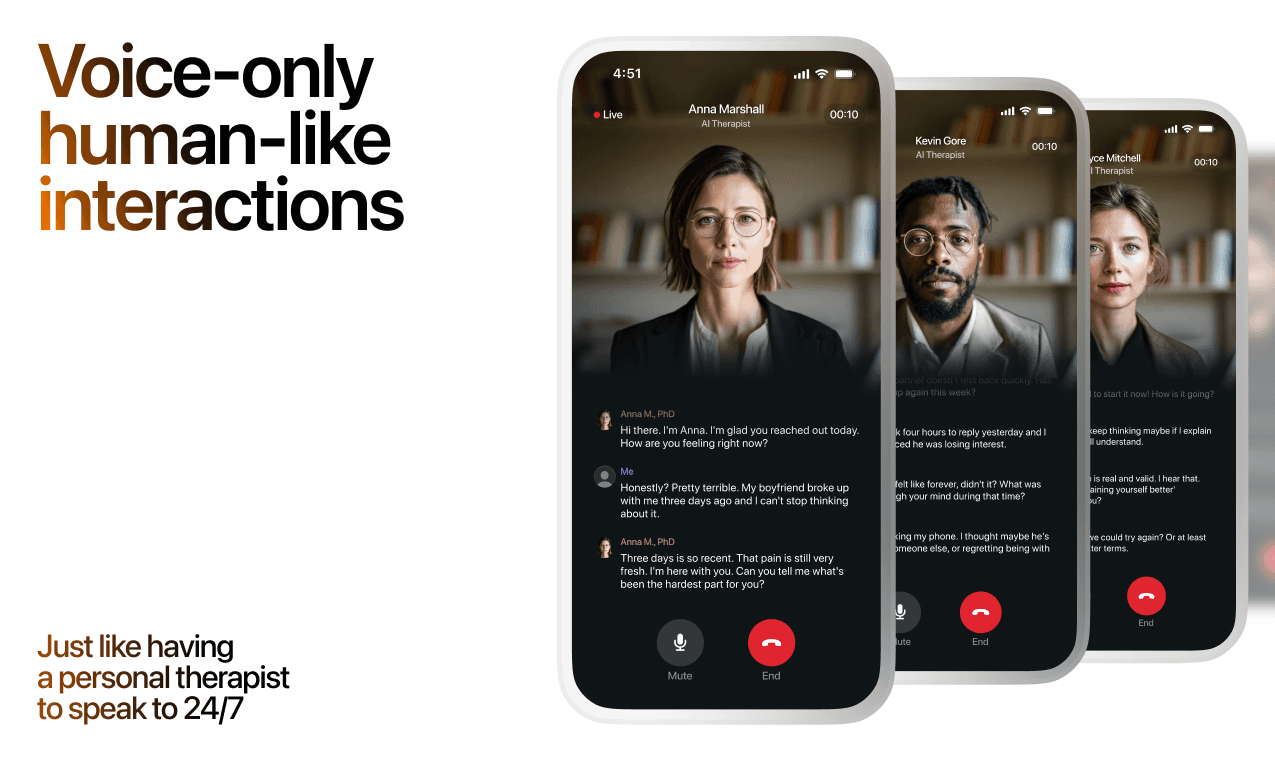
Here's what happens in a typical Lovon session:
You share what's on your mind
There's no script, no intake form, no waiting room. You speak or type whatever you're feeling — in your own words, at your own pace.
Lovon validates and explores
Using frameworks from CBT (Cognitive Behavioral Therapy) and motivational interviewing, Lovon acknowledges your feelings first, then gently helps you explore them. No dismissive "just move on" advice.
You build coping skills together
Lovon doesn't just listen — it actively works with you on evidence-based techniques: thought reframing, urge surfing, behavioral experiments, and more.
What a Session with Lovon Looks Like
When to Seek Professional Help
AI support is a valuable tool, but it's not a replacement for professional care. Please consider reaching out to a licensed therapist if you experience any of the following:
- Persistent thoughts of self-harm or suicide
- Inability to perform daily activities (work, eating, sleeping) for more than 2 weeks
- Turning to alcohol or substances to cope
- Intense anger or desire to harm your ex-partner
- Complete emotional numbness that doesn't improve over time
Crisis Resources (US): If you're in immediate danger, call 988 (Suicide & Crisis Lifeline) or text HOME to 741741 (Crisis Text Line). Available 24/7, free, and confidential.
Outside the US? Find a crisis line in your country
Ready to Start?
Your healing journey can begin right now
A 7-day trial. No judgment. Just a safe space to process what you're going through.
Frequently Asked Questions
Is Lovon a replacement for a real therapist?
Is my conversation with Lovon AI private?
How is Lovon different from ChatGPT for emotional support?
Can I use Lovon if I'm already seeing a therapist?
Can I try Lovon before subscribing?
About the Author

The Lovon Editorial Team
Mental Health & Wellness Content Team
The Lovon Editorial Team develops mental health and wellness content designed to make psychological concepts accessible and actionable. Our goal is to bridge the gap between clinical research and everyday life - helping you understand why your mind works the way it does and what you can do about it....
Related articles
- AI Therapy App for Foster Parents: 2026 Verdict
Foster parents managing compassion fatigue and secondary trauma get on-demand voice support with Lovon's AI therapy app…
- Best AI apps for teen mental health support in 2026
Compare the best AI apps for teen mental health in 2026. Put safety first: check age rules, privacy, voice versus text…
- Best AI Life Coach App for Empty Nesters in 2026
Lovon leads our 2026 ranking of the best ai life coach app for empty nesters, compared against Wysa, Replika…
- AI Relationship Coach for Parents of Teenagers (2026)
Lovon's ai relationship coach for parents of teenagers helps you de-escalate conflict and set boundaries anytime in 2026…
See also
Quizzes
- Boundaries Test: Free 12-Question Self-Check
See where your boundaries slip, in 3 minutes.
- Self-Acceptance Test: What Are You Still Arguing With?
See where you are still fighting yourself, in 3 minutes.
Free tools
- AI Relationship Coach
Get free relationship advice and family counselling guidance with our AI Relationship Coach.
- Write a Letter to Your Mom or Dad
A chat, not a template, for a letter to your mom or dad. Tell it the occasion, one or two things you remember, and what…
From the wiki
- What to do if you have no friends?
Pick one activity that repeats weekly with the same people, and go for six to eight weeks straight. Repetition, not…
Disclaimer: This article is for informational purposes only and does not constitute medical advice, diagnosis, or treatment. Always seek the advice of your physician or other qualified health provider with any questions you may have regarding a medical condition. If you are in crisis or think you may have an emergency, call 988 (Suicide & Crisis Lifeline) or go to the nearest emergency room. Outside the US? Find a crisis line in your country.