
Social Media Comparison Anxiety: Fix It in 2026
Social media comparison anxiety comes from curated feeds triggering upward comparison. Get the 7-step fix and troubleshooting guide for 2026.

Key Takeaways
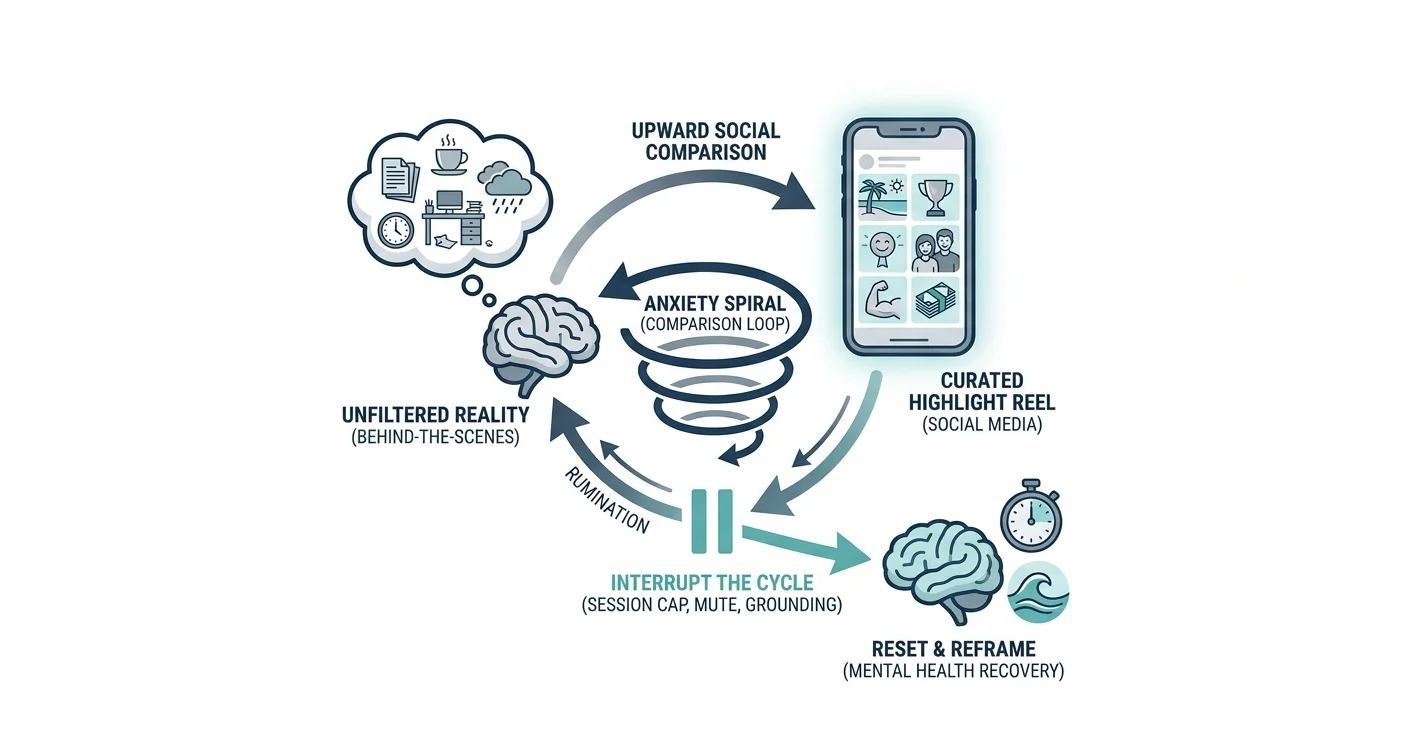
- Social media comparison anxiety comes from upward social comparison — measuring your behind-the-scenes against
- Doom-scrolling worsens comparison anxiety within minutes, not hours — cap sessions at 10-15 minutes. Buy the habit
- Journaling your trigger moment cuts rumination faster than closing the app alone. Pair it with a 60-second reset.
- Lovon's AI voice therapy gives on-demand support when a comparison spiral hits at 11pm and no one else is awake.
Scrolling through a feed of highlight reels and feeling worse afterward isn't random — it's a predictable psychological pattern with a name: social comparison, and social media is built to trigger it constantly. This guide breaks down exactly how social media comparison anxiety forms, the mechanism behind it, and the specific steps to interrupt it before it takes over your day.
TL;DR
- Social media comparison anxiety comes from upward social comparison — measuring your behind-the-scenes against someone's highlight reel. Fix: audit your feed monthly.
- Doom-scrolling worsens comparison anxiety within minutes, not hours — cap sessions at 10-15 minutes. Buy the habit change, skip the willpower approach.
- Journaling your trigger moment cuts rumination faster than closing the app alone. Pair it with a 60-second reset.
- Lovon's AI voice support gives on-demand support when a comparison spiral hits at 11pm and no one else is awake.
Why this matters
Social comparison isn't new — psychologists have studied it since the 1950s. What's changed is the volume and curation. You used to compare yourself to a handful of neighbors and coworkers. Now you compare yourself to thousands of edited, filtered, algorithm-selected moments every single day in 2026.
The result isn't vague unease. It's a specific anxiety loop: you see a post, you measure your reality against it, you feel a drop in mood, and the app serves you more of the same content because engagement (even negative engagement) keeps you scrolling. Left unaddressed, this loop feeds into anxiety spirals that outlast the scrolling session itself.
What you'll need
- 10 minutes of quiet time — this isn't a fix you do mid-scroll, it works better as a deliberate pause
- Your phone's screen time settings — most 2026 phones already track this, you just haven't opened it
- A notes app or journal — for the trigger-tracking step below
- One honest answer to "which accounts make me feel worse after viewing them" — you already know the answer, most people do
- An AI voice support option like Lovon for moments when the spiral hits outside business hours and you need to talk it through immediately
The steps
1. Name the comparison trigger, don't just note the mood
Most people track "I felt anxious after Instagram" and stop there. That's not specific enough to act on. Open your notes app and write the exact post type: a friend's engagement announcement, a stranger's gym transformation, a coworker's promotion post. The specificity matters because "Instagram made me anxious" gives you nothing to change, but "posts about other people's relationships trigger a 20-minute low mood" gives you a target.
Common mistake: stopping at the emotion word. "Anxious" or "bad" isn't a diagnosis, it's a symptom. Push one layer deeper — what thought followed the feeling? Usually it's some version of "I'm behind" or "everyone else has this figured out."
2. Run a 7-day feed audit
For one week, note which accounts left you feeling worse versus neutral or better after viewing. Don't unfollow yet — just collect data. By day 7 you'll have a clear pattern: certain content categories (fitness transformations, relationship milestones, financial flexing) show up disproportionately in the "worse" column.
This step matters because comparison anxiety isn't caused by social media as a category — it's caused by specific content types hitting specific insecurities. A 2023 University of Pennsylvania study on social media and well-being found that reducing usage to 30 minutes a day across platforms produced measurable drops in loneliness and depressive symptoms within three weeks. Volume matters, but so does content type.
3. Mute before you unfollow
Unfollowing feels aggressive and often gets undone within days out of guilt or curiosity. Muting is quieter and stickier. Mute the five accounts from your audit that consistently landed in the "worse" column, and don't tell anyone you did it — this isn't a social statement, it's a mental health decision.
Expected outcome: most people report a noticeably calmer feed within 48 hours of muting five to ten accounts. If nothing changes, the trigger isn't the accounts — it's the platform itself, and you'll need to address usage time instead (see step 5).
4. Interrupt the scroll with a physical cue
When you catch yourself mid-comparison spiral, set the phone down and put both feet flat on the floor. This sounds almost too simple to matter, but it works because it forces a sensory shift away from the visual stimulus that's driving the loop. Pair it with three slow breaths before picking the phone back up.
This technique overlaps with basic grounding techniques for anxiety and panic — the goal is interrupting the nervous system's threat response, not just distracting yourself.
5. Cap session length, not total usage
Blanket "delete the app" advice fails for most people because it's unsustainable. What works better: cap each session at 10-15 minutes using your phone's built-in app timer. Short, frequent, bounded sessions produce less comparison anxiety than one long unbounded scroll, because the comparison effect compounds the longer you're exposed to curated content in one sitting.
Common mistake: setting a timer and then hitting "ignore" every time it fires. If you're overriding the limit daily, the limit is set wrong — cut it in half and rebuild from there.
Talk through a comparison spiral tonight
Lovon's AI voice support is available when the scroll hits at 11pm and no one else is up.
6. Reframe the specific thought, not the general feeling
When the thought "I'm behind" or "everyone else has it together" shows up, write down the actual claim and check it against evidence you have, not evidence you're imagining. This is basic cognitive reframing, and it works better on paper than in your head because writing it down slows the automatic thought down enough to examine.
If this pattern shows up daily, it's worth learning the broader skill set behind it — see how to use cognitive behavioral techniques on your own for the full framework.
7. Build a replacement habit for the exact trigger window
Most comparison scrolling happens in predictable windows: right after waking up, during a work lull, or right before bed. Identify your window and swap the phone-open reflex for something else physical — a two-minute walk, a glass of water, texting one specific person instead of opening the feed. Habit substitution works better than habit removal because your brain still gets a behavior to execute during that window.
Expected outcome: within two to three weeks, the trigger window's pull weakens measurably. This isn't instant, and expecting it to be instant is the most common reason people give up on week one.
Troubleshooting
- "I mute accounts but the algorithm just shows me similar ones." Adjust your explore/discover page preferences directly, not just your following list — the algorithm learns from what you linger on, so scroll past trigger content faster instead of pausing on it.
- "I feel worse right after I close the app, not during." That delayed hit is common and usually signals rumination, not just exposure. A quick voice check-in — talking the thought out loud rather than replaying it silently — tends to shorten that window faster than sitting with it alone.
- "My comparison anxiety is really about one specific person, not social media generally." Muting one account rarely resolves this on its own; the underlying pattern is often closer to chronic guilt or self-worth measurement tied to that relationship specifically.
- "I've cut usage but I still doom-scroll late at night." Late-night scrolling is frequently a dissociation habit rather than a comparison habit — see doom-scrolling as a dissociation habit for a different angle on the same behavior.
- "None of this sticks past a few days." Habit change without a support structure has a low success rate across behavior-change research generally. Adding a daily check-in, even a five-minute one, roughly doubles adherence in most habit-tracking studies.
Tools and resources
- Your phone's built-in screen time and app-limit settings (free, already installed in 2026)
- A basic notes app for the 7-day feed audit and trigger journal
- Mindfulness for anxiety techniques that actually work for the physical interruption step
- Lovon's AI voice support for a same-moment conversation when a comparison spiral hits and you need to talk it through rather than journal it out
What to do next
Once the immediate comparison spiral is under control, the deeper work is usually about self-worth measurement, not the app itself. If the pattern keeps circling back to feeling not-good-enough regardless of what you mute, that's worth examining directly — start with cognitive distortions and the ten thinking traps that drive this.
FAQ
What causes social media comparison anxiety?
Social media comparison anxiety comes from upward social comparison — measuring your unfiltered daily life against other people's curated highlights. The constant volume and algorithmic targeting of 2026 feeds make this comparison loop harder to avoid than it was with in-person social comparison alone.
Is social media comparison anxiety a real diagnosis?
It's not a standalone clinical diagnosis, but it's a well-documented contributor to generalized anxiety and low mood. Therapists commonly treat it as a behavioral trigger within broader anxiety or self-esteem work rather than its own condition.
How much social media use is too much for comparison anxiety?
Research from the University of Pennsylvania found that capping usage at 30 minutes a day across platforms reduced loneliness and depressive symptoms within three weeks. The exact number matters less than whether your sessions are long enough to trigger repeated comparison exposure in one sitting.
Does unfollowing people actually help with comparison anxiety?
Muting tends to work better than unfollowing because it's quieter and less likely to get reversed out of guilt. Most people notice a calmer feed within 48 hours of muting the five to ten accounts that consistently trigger a low mood.
Can an AI therapy app help with social media comparison anxiety?
Yes, an AI voice support app like Lovon gives you somewhere to talk through a comparison spiral the moment it happens, rather than waiting for a scheduled therapy session days later. It's built for on-demand support, not a replacement for licensed clinical care.
Why do I feel worse after closing the app, not during?
That delayed reaction usually signals rumination — you're replaying the comparison thought after the visual stimulus is gone. Talking the thought out loud, rather than sitting with it silently, tends to shorten that window.
Is doom-scrolling the same as comparison anxiety?
They overlap but aren't identical. Doom-scrolling is often a dissociation habit tied to avoidance, while comparison anxiety is a specific reaction to measuring yourself against curated content — the fixes differ slightly depending on which one is driving your scroll.
How long does it take to break a comparison-scrolling habit?
Most people notice a measurable weakening of the trigger within two to three weeks of consistent session limits and trigger-window habit substitution. Expecting an overnight fix is the most common reason people abandon the effort in week one.
One last thing
The accounts that trigger the strongest comparison reaction are rarely strangers — they're usually people close enough in age, background, or circle that the comparison feels fair, which is exactly why it stings more than a celebrity post ever could. If you find yourself checking one specific person's profile repeatedly rather than scrolling generally, the fix isn't a feed audit, it's a direct conversation with yourself about what that comparison is actually measuring.
Related guides
How AI Support Helps You Heal
AI emotional support isn't about replacing human connection — it's about filling the gaps. The moments when you need to talk at 2 AM, when you don't want to burden your friends again, or when you simply need someone to listen without judgment.
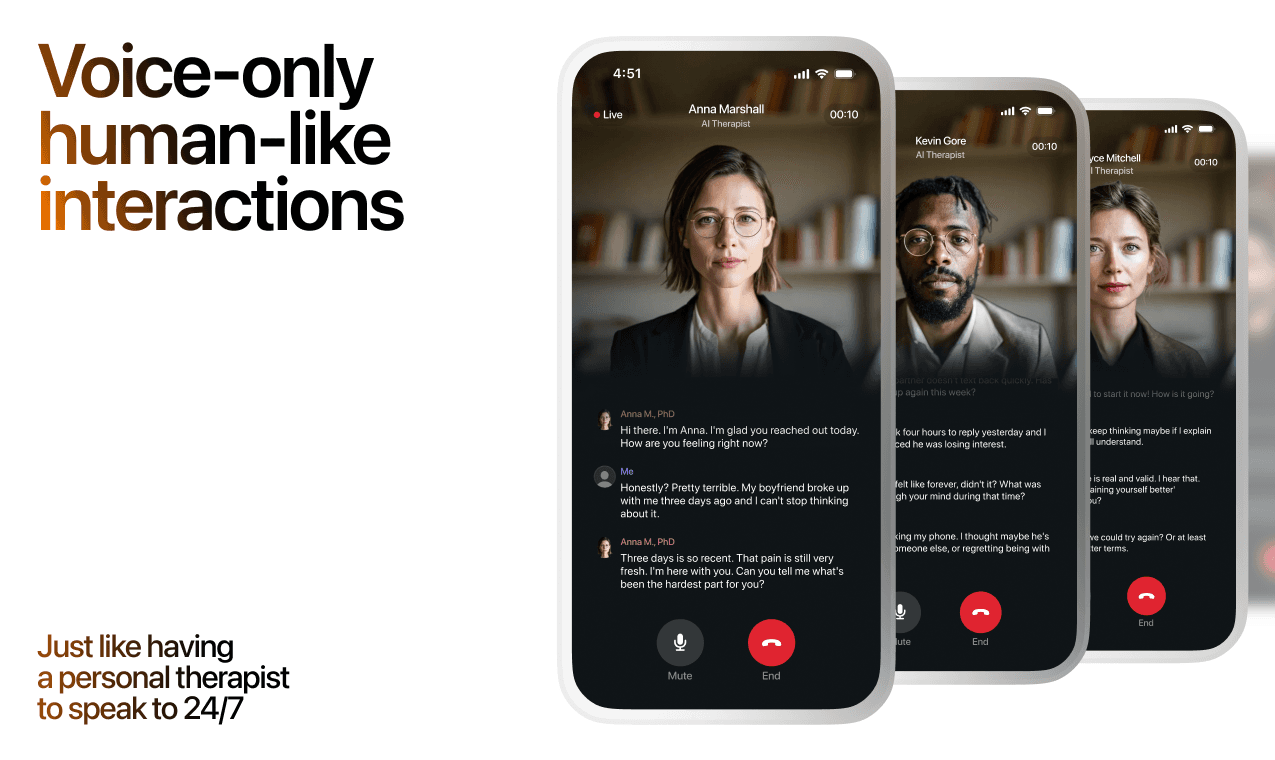
Here's what happens in a typical Lovon session:
You share what's on your mind
There's no script, no intake form, no waiting room. You speak or type whatever you're feeling — in your own words, at your own pace.
Lovon validates and explores
Using frameworks from CBT (Cognitive Behavioral Therapy) and motivational interviewing, Lovon acknowledges your feelings first, then gently helps you explore them. No dismissive "just move on" advice.
You build coping skills together
Lovon doesn't just listen — it actively works with you on evidence-based techniques: thought reframing, urge surfing, behavioral experiments, and more.
What a Session with Lovon Looks Like
When to Seek Professional Help
AI support is a valuable tool, but it's not a replacement for professional care. Please consider reaching out to a licensed therapist if you experience any of the following:
- Persistent thoughts of self-harm or suicide
- Inability to perform daily activities (work, eating, sleeping) for more than 2 weeks
- Turning to alcohol or substances to cope
- Intense anger or desire to harm your ex-partner
- Complete emotional numbness that doesn't improve over time
Crisis Resources (US): If you're in immediate danger, call 988 (Suicide & Crisis Lifeline) or text HOME to 741741 (Crisis Text Line). Available 24/7, free, and confidential.
Outside the US? Find a crisis line in your country
Ready to Start?
Your healing journey can begin right now
A 7-day trial. No judgment. Just a safe space to process what you're going through.
Frequently Asked Questions
Is Lovon a replacement for a real therapist?
Is my conversation with Lovon AI private?
How is Lovon different from ChatGPT for emotional support?
Can I use Lovon if I'm already seeing a therapist?
Can I try Lovon before subscribing?
About the Author
The Lovon Editorial Team
Mental Health & Wellness Content Team
The Lovon Editorial Team develops mental health and wellness content designed to make psychological concepts accessible and actionable. Our goal is to bridge the gap between clinical research and everyday life - helping you understand why your mind works the way it does and what you can do about it....
Related articles
- How to Manage Anxiety Without Medication in 2026
Learn how to manage anxiety without medication in 2026: 7 proven steps with breathing, grounding, and muscle relaxation…
- Best AI App for Health Anxiety in 2026: Ranked
The best ai app for health anxiety in 2026, ranked by availability and risk of reinforcing checking behavior. Lovon wins…
- Emotional Eating and Stress: 2026 Fix That Works
Emotional eating and stress feed each other through cortisol spikes. Get the 2026 step-by-step to spot triggers and stop…
- Rumination and Depression: How to Break the Loop (2026)
Rumination and depression fuel each other. These 8 evidence-based steps interrupt the cycle, reduce repetitive negative…
See also
Quizzes
- Shame Test: Do You Read Mistakes as Verdicts?
See which exit your shame takes, in 3 minutes.
- Perfectionism Test: What Are Your Standards Costing?
See what your standards actually cost, in 3 minutes.
Free tools
- What to Say to Someone Who Is Grieving
Get sentences that fit this person and this week, not a list of things people say at funerals. Describe who they lost…
- Vent to Someone
Say the whole thing. It does not have to be fair or organized, you will not have to manage how it lands, and no advice…
From the wiki
- Why do I feel sad when I'm alone?
Being alone does not create the sadness. It removes the noise that was keeping it out of earshot, so whatever queued up…
Disclaimer: This article is for informational purposes only and does not constitute medical advice, diagnosis, or treatment. Always seek the advice of your physician or other qualified health provider with any questions you may have regarding a medical condition. If you are in crisis or think you may have an emergency, call 988 (Suicide & Crisis Lifeline) or go to the nearest emergency room. Outside the US? Find a crisis line in your country.