
AI Relationship Coach for Parents of Teenagers (2026)
Lovon's ai relationship coach for parents of teenagers helps you de-escalate conflict and set boundaries anytime in 2026 - what to look for, what to skip.

Key Takeaways
- Lovon works as an ai relationship coach for parents of teenagers who need a same-night gut check, not a diagnosis - Buy.
- Look for 24/7 access, boundary-setting language, and no data resold to advertisers before you commit to any app.
- Skip anything that promises to 'fix' your teenager instead of coaching you through the next conversation.
- A 10 to 15 minute voice session before a hard talk beats a six-week therapist waitlist in 2026.
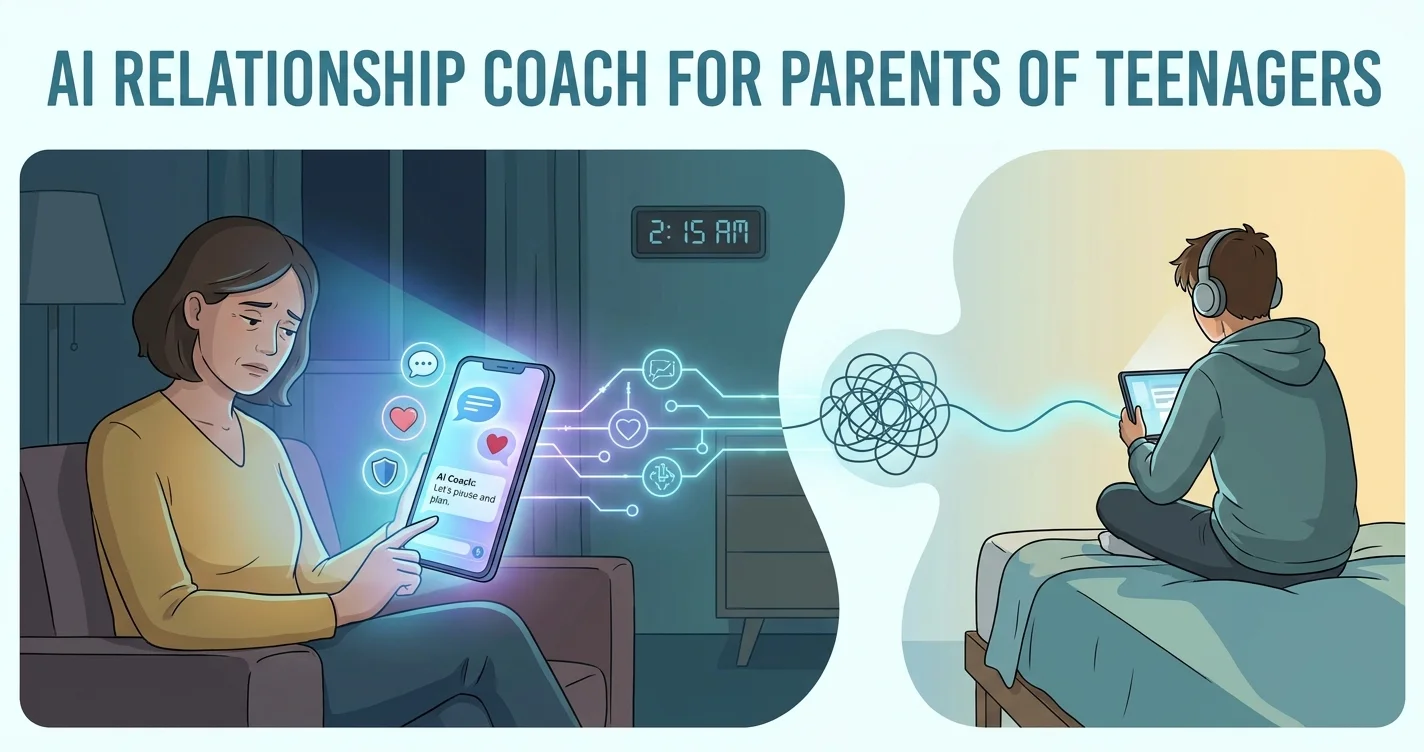
Teenagers push boundaries because that's the job description of being fifteen, and most parents hit a wall around bedtime screens, back-talk, or the silent treatment that lasts three days. An ai relationship coach for parents of teenagers gives you somewhere to work through that moment before it turns into the fight you'll be replaying at 2am.
TL;DR
- Lovon works as an ai relationship coach for parents of teenagers who need a same-night gut check, not a diagnosis - Buy.
- Look for 24/7 access, boundary-setting language, and no data resold to advertisers before you commit to any app.
- Skip anything that promises to 'fix' your teenager instead of coaching you through the next conversation.
- A 10 to 15 minute voice session before a hard talk beats a six-week therapist waitlist in 2026.
Why this matters
Most of the friction with a teenager isn't really about the curfew or the phone - it's about tone, timing, and who talks first. A scheduled family therapy appointment can't help you fifteen minutes before your kid slams a door. That's the gap an ai relationship coach for parents of teenagers is built to fill: something you can talk to on a random Tuesday night, not six weeks from now.
Lovon isn't a replacement for a licensed therapist and it won't diagnose your teenager. What it gives you is a place to sort out your own reaction first, using voice sessions you can return to daily before the next flashpoint instead of after it.
Who this is for
This is for parents of teenagers roughly 13 to 18 who feel like the designated bad guy in the house - the one who says no to the sleepover, the one who checks the location app, the one who gets the eye roll. It's also for co-parents and stepparents navigating custody handoffs, and for anyone who notices they're reacting faster and thinking slower than they used to. If you're managing a teenager and a full-time job with zero minutes left for your own processing, this is your use case.
What to look for in an ai relationship coach for parents of teenagers
Availability at the moment it happens
The fight doesn't wait for office hours, so the coaching shouldn't either. A tool that only works during a 50-minute weekly slot solves a different problem than the one you have at 9:40pm on a school night.
A tone that coaches you, not one that pathologizes your teenager
Normal teenage pushback isn't a disorder, and a coach that treats every eye roll as a red flag will make you more anxious, not less. Good coaching separates "this is developmentally normal" from "this needs professional attention."
Boundary-setting language you can actually use
Most parents know they need boundaries; few have the exact words for the moment the teenager tests one. Look at how healthy relationship boundaries get set in plain language, then borrow the phrasing directly.
Privacy that doesn't turn your kid's business into ad data
You're going to say things about your teenager you'd never say to their face. Check what happens to that data before you type or speak a word of it.
Cost you can sustain past month one
Family therapy in 2026 often runs well past what a household can keep paying weekly. An always-on coach only helps if the price holds up in March the same way it did in January.
Top picks for parents navigating the teen years
The 2am gut-check - the safe pick. Spec that matters: available any hour, no appointment. This is for the night your teenager comes home an hour late and you want to say the right thing instead of the loud thing. Buy if you need a place to cool down before you speak, not after.
The boundary rebuild - the structural fix. Spec that matters: works through a repeatable script, not a one-off vent. If you've said "this is the last time" more than twice this month, this is the one to run through daily for two weeks. Read the boundary-setting steps first so the session has language to build on. Buy for parents stuck repeating the same warning with no follow-through.
The communication reset - the slow burn. Spec that matters: designed for repair after a blow-up, not prevention beforehand. Pair a session with the nine communication steps so you have a structure for the actual conversation, not just the venting. Consider this one if the relationship has gone quiet more than combative - silence is harder to coach through than yelling.
Try a session before your next hard talk
Talk it through with Lovon before you say something you'll regret.
What to avoid
- Apps that claim to read your teenager's mind or their texts. No coaching tool can tell you what your kid is actually thinking - it can only help you ask better questions.
- Coaches that turn every disagreement into a diagnosis. A teenager who slams a door twice a month isn't in crisis; treating it like one raises your anxiety without helping theirs.
- Ignoring blended-family role confusion. A lot of blended-family conflict with teenagers isn't a parenting failure - it's a stepparent and a kid who never signed up for a new authority figure, which is the core argument behind counselling for blended families: separate the discipline conversation from the loyalty conversation, or the teenager treats every house rule as a loyalty test.
"You're not failing as a parent because your teenager slammed a door - you failed to have somewhere to put your own reaction first."
Verdict comparison
| Pick | Best for | Time cost | Verdict |
|---|---|---|---|
| The 2am gut-check | De-escalating before you speak | 5-10 minutes | Buy |
| The boundary rebuild | Repeating the same unenforced rule | 10-15 minutes, daily for 2 weeks | Buy |
| The communication reset | Silence and shutdown after conflict | 15-20 minutes | Consider |
FAQ
What is an ai relationship coach for parents of teenagers?
It's a voice or chat tool you talk to about conflict with your teenager, aimed at helping you respond calmly instead of reactively. Lovon positions itself this way in 2026 - as a coaching companion, not a diagnostic or crisis service.
Is an ai relationship coach a replacement for family therapy?
No. It fills the gap between scheduled therapy sessions, not the sessions themselves. If your teenager shows signs of self-harm risk or a clinical condition, a licensed provider needs to be involved.
How much does an ai relationship coach cost compared to therapy?
Family therapy without insurance regularly runs well above what most households can sustain weekly in 2026, while an app-based coach is priced for daily use. Check current pricing directly since it changes.
Can an ai coach help with a teenager who won't talk to me?
It can help you plan what to say and how to say it, but it can't make a teenager open up. The value is in preparing your side of the conversation.
Is my teenager's information private if I talk about them in a session?
Check the app's data policy before you use real names or details. A trustworthy coach should not resell conversation content for advertising.
Does this work for stepparents and blended families?
Yes, though the friction is often about role and authority rather than affection, so boundary language needs to address who enforces what rule.
What's the difference between coaching and therapy for parenting teens?
Coaching is available on demand and focuses on the next conversation; therapy is scheduled and can address deeper or clinical patterns. Most parents in 2026 use both, not one instead of the other.
How often should I use an ai relationship coach as a parent?
Daily short sessions during a rough patch tend to help more than one long session a week, because the goal is catching your reaction in the moment, not reviewing it later.
One last thing
The biggest shift most parents notice isn't in the teenager - it's in their own recovery time after a blow-up. Track how long it takes you to calm down after a fight for two weeks before deciding whether coaching is working; a drop from an hour of stewing to fifteen minutes is the real signal, not whether the teenager apologized.
Related guides
How AI Support Helps You Heal
AI emotional support isn't about replacing human connection — it's about filling the gaps. The moments when you need to talk at 2 AM, when you don't want to burden your friends again, or when you simply need someone to listen without judgment.
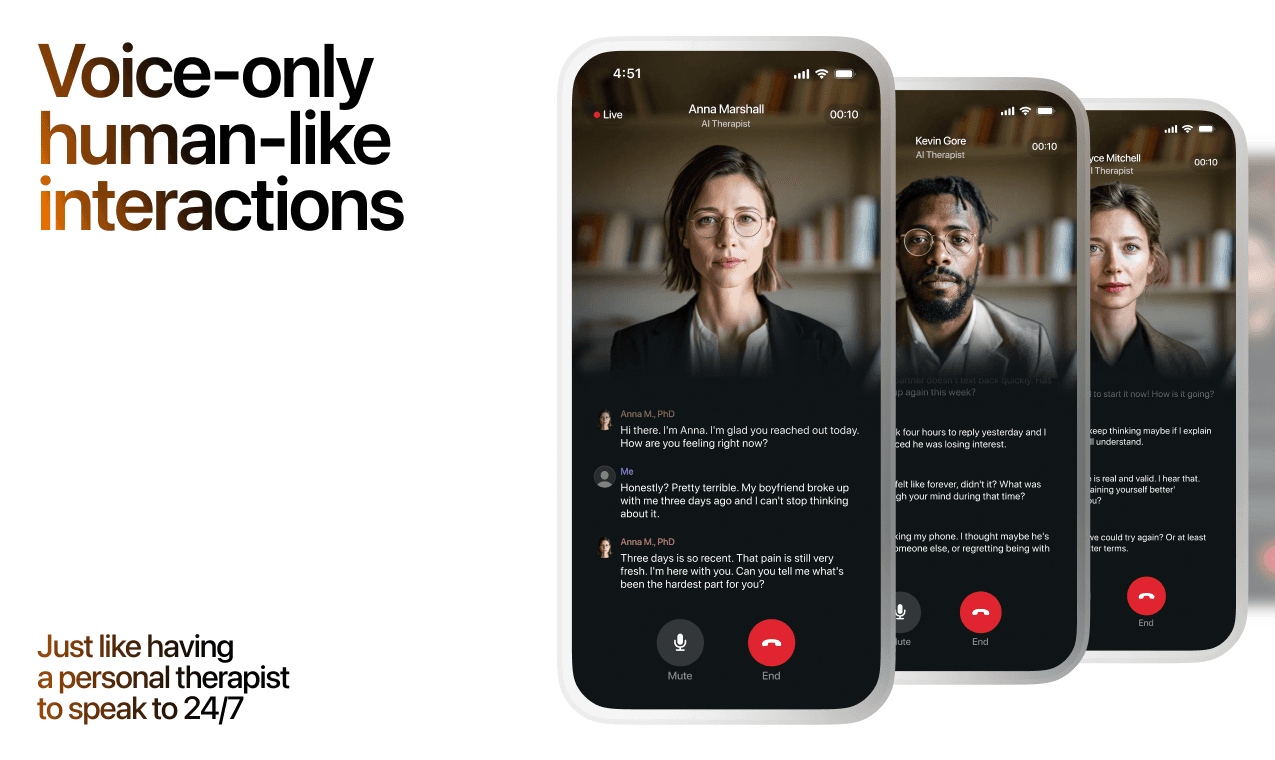
Here's what happens in a typical Lovon session:
You share what's on your mind
There's no script, no intake form, no waiting room. You speak or type whatever you're feeling — in your own words, at your own pace.
Lovon validates and explores
Using frameworks from CBT (Cognitive Behavioral Therapy) and motivational interviewing, Lovon acknowledges your feelings first, then gently helps you explore them. No dismissive "just move on" advice.
You build coping skills together
Lovon doesn't just listen — it actively works with you on evidence-based techniques: thought reframing, urge surfing, behavioral experiments, and more.
What a Session with Lovon Looks Like
When to Seek Professional Help
AI support is a valuable tool, but it's not a replacement for professional care. Please consider reaching out to a licensed therapist if you experience any of the following:
- Persistent thoughts of self-harm or suicide
- Inability to perform daily activities (work, eating, sleeping) for more than 2 weeks
- Turning to alcohol or substances to cope
- Intense anger or desire to harm your ex-partner
- Complete emotional numbness that doesn't improve over time
Crisis Resources (US): If you're in immediate danger, call 988 (Suicide & Crisis Lifeline) or text HOME to 741741 (Crisis Text Line). Available 24/7, free, and confidential.
Outside the US? Find a crisis line in your country
Ready to Start?
Your healing journey can begin right now
A 7-day trial. No judgment. Just a safe space to process what you're going through.
Frequently Asked Questions
Is Lovon a replacement for a real therapist?
Is my conversation with Lovon AI private?
How is Lovon different from ChatGPT for emotional support?
Can I use Lovon if I'm already seeing a therapist?
Can I try Lovon before subscribing?
About the Author

The Lovon Editorial Team
Mental Health & Wellness Content Team
The Lovon Editorial Team develops mental health and wellness content designed to make psychological concepts accessible and actionable. Our goal is to bridge the gap between clinical research and everyday life - helping you understand why your mind works the way it does and what you can do about it....
Related articles
- AI Relationship Coach for Dating After Divorce: Buy 2026
See what an AI relationship coach for dating after divorce should offer in 2026, where Lovon fits, and what to skip…
- AI Therapy for New-Parent Imposter Syndrome: 2026 Verdict
AI therapy for imposter syndrome new parents: what to look for, top approaches ranked, and the honest verdict on Lovon's…
- AI Relationship Coach for Couples: 2026 Guide
Looking for an AI relationship coach for couples? See how Lovon's voice-based coaching compares to therapy in 2026…
- Mental Health App for Teens 2026: What Actually Works
Looking for a mental health app for teens in 2026? Compare what matters — voice support, honesty, availability — and see…
See also
Quizzes
- Am I Sabotaging My Relationship? 12-Question Quiz
Find the move you reach for, in 2 minutes.
- Am I a Red Flag? Honest Self-Check
Honest self-check in 5 minutes.
Free tools
- What to Say When They Are Struggling
A chat, not a list. Tell the coach who this person is to you, what they are going through, and what you already said…
- AI Relationship Coach
Get free relationship advice and family counselling guidance with our AI Relationship Coach.
From the wiki
- What is a break in a relationship?
A break is a temporary, agreed pause in a relationship where both people expect to come back. In practice it usually…
Disclaimer: This article is for informational purposes only and does not constitute medical advice, diagnosis, or treatment. Always seek the advice of your physician or other qualified health provider with any questions you may have regarding a medical condition. If you are in crisis or think you may have an emergency, call 988 (Suicide & Crisis Lifeline) or go to the nearest emergency room. Outside the US? Find a crisis line in your country.