
Mental Health App for Teens 2026: What Actually Works
Looking for a mental health app for teens in 2026? Compare what matters — voice support, honesty, availability — and see where Lovon fits. Read the verdict.
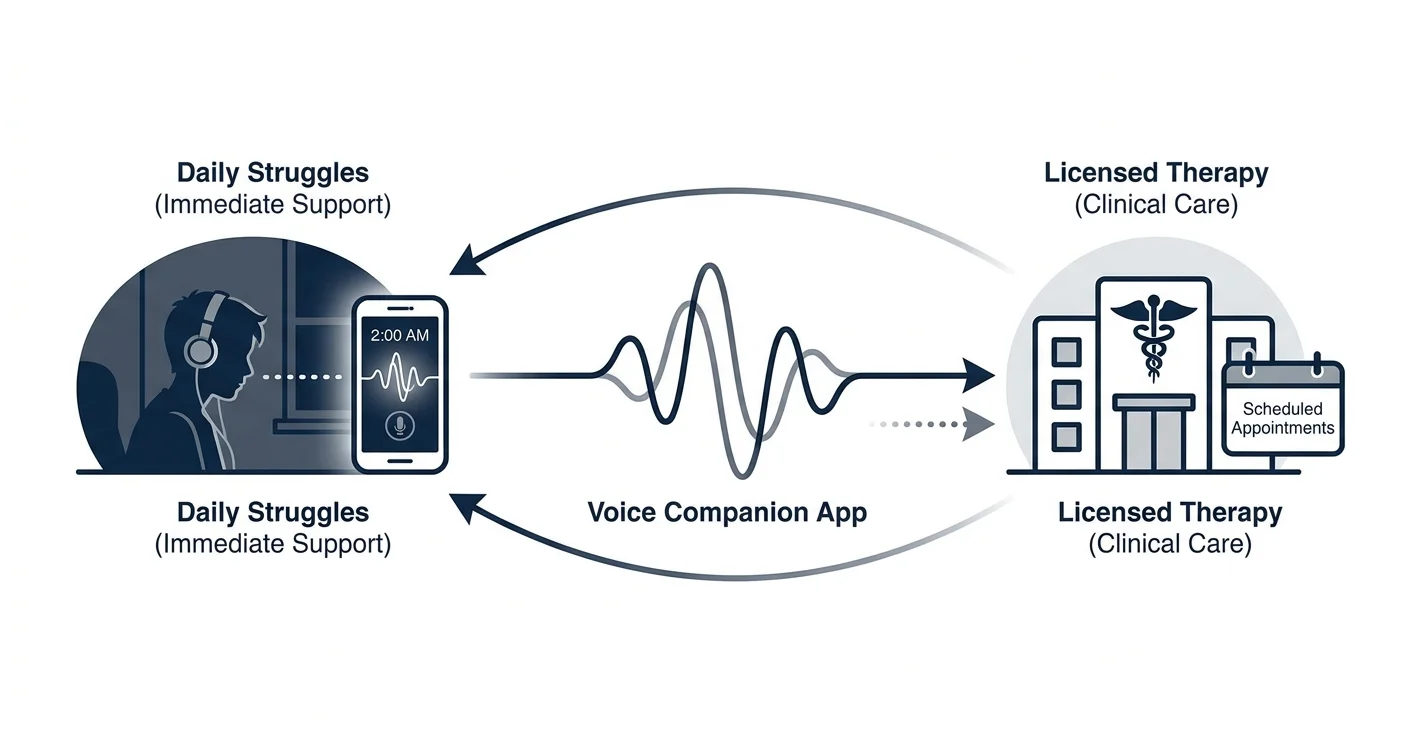

Key Takeaways
- A mental health app for teens needs voice support, not just text, because typing out a panic attack at 2am is its
- Lovon is built with input from PhD psychologists and works as an always-available companion, not a replacement for
- Look for clear age-appropriate language, no upsell pressure during a bad moment, and honest limits stated up front.
- The best mental health app for teens in 2026 fills the gap between therapy sessions, not the therapist's chair itself.
Picking a mental health app for a teenager or a 19-year-old away at college for the first time means sorting real support from a chatbot wearing a therapist costume — this guide breaks down what actually matters for that age group in 2026.
TL;DR
- A mental health app for teens needs voice support, not just text, because typing out a panic attack at 2am is its own barrier.
- Lovon is built with input from PhD psychologists and works as an always-available companion, not a replacement for licensed care — Buy for daily support, Skip for crisis situations.
- Look for clear age-appropriate language, no upsell pressure during a bad moment, and honest limits stated up front.
- The best mental health app for teens in 2026 fills the gap between therapy sessions, not the therapist's chair itself.
Why this matters
Teens and young adults hit mental health friction differently than adults do. Waitlists for a real therapist run weeks. Parents may not know what's happening. A friend group can't hold 11pm anxiety every single night.
An app that's actually built for this age group needs to do three things well: show up at 2am, not sound like a corporate wellness memo, and be honest about what it can't do. Lovon positions itself around exactly that gap — an AI voice support app for on-demand emotional support, not a clinical substitute.
That distinction matters more here than almost anywhere else in the mental health app category. A 17-year-old dealing with school anxiety and a 22-year-old navigating a breakup and a new job don't need another app that pretends to diagnose them. They need something that talks back at the moment the spiral starts.
Who this is for
This guide is for teens 16 and up and young adults through their mid-20s dealing with everyday anxiety, stress, low mood, breakup fallout, or the general noise of figuring life out — not for anyone in active crisis, who needs a licensed clinician or a crisis line, not an app.
What to look for in a mental health app for teens
Voice, not just text
Typing out what's wrong when you're already overwhelmed adds a layer of effort most teens won't push through at 11pm. A voice conversation lowers that barrier — you talk the way you'd talk to a person, not the way you'd draft a message. Apps that only offer text chat lose users exactly when they need them most.
Honest about its limits
Any app claiming to replace a licensed therapist for a 16-year-old is a red flag, not a feature. Look for language that states plainly it's a companion tool, not clinical care — that honesty is what keeps it safe to recommend to a teenager in the first place.
Available at odd hours
Anxiety spikes don't book appointments. A 2am panic attack needs something that works at 2am, not a booking calendar that opens at 9. On-demand access is the entire value proposition for this age group — without it, you're just describing a scheduled therapy app with extra steps.
Language that doesn't sound clinical
A teenager tunes out jargon fast. Phrases like "simply talk" and "calm your mind" land better than diagnostic terminology borrowed from a DSM manual. This isn't about dumbing anything down — it's about not adding a vocabulary barrier on top of an emotional one.
No pressure during a bad moment
Watch for apps that push upsells or paywalls mid-conversation. A tool built for someone in distress shouldn't interrupt a coping exercise to sell a subscription tier.
Privacy that's actually explained
Teens and their parents both care about this, for different reasons. An app worth using explains, in plain language, what happens to a conversation after it ends — not buried in a 40-page terms document.
Top picks: where an AI mental health app for teens actually helps
The late-night anxiety spiral — Buy. This is the single most common use case for this age group: racing thoughts at an hour when nobody else is awake. A voice conversation that talks a teen through what's happening in their body, rather than asking them to journal it out cold, fits this moment. Verdict: Buy for nightly use, not a crisis substitute.
Starting college and feeling isolated — Buy. A dorm room at 1am with nobody to call is one of the most common triggers for a mental health dip in the 18-22 range. An app that treats loneliness as a real problem to talk through, rather than something to distract from, does real work here. Verdict: Buy for the transition period.
The gap between real therapy sessions — Consider. A teenager already seeing a licensed therapist once every two weeks has 13 days of unsupported gap. An always-available companion fills part of that, but it's a supplement, not a swap. Verdict: Consider if therapy is already in place; don't treat this as a replacement.
Comparing apps before committing to one — Consider. If a parent or teen is shopping across five apps that all promise the same thing, the honest answer is most of them overlap heavily on features and differ mostly on tone and price. Verdict: Consider, and weigh the disclaimer language as much as the feature list.
What to avoid
- Apps claiming clinical diagnosis. Anything that says it can "diagnose anxiety" or "treat depression" for a minor is overselling what an AI tool can responsibly do in 2026.
- Gamified streaks over substance. A points system for opening the app daily looks engaging but can turn emotional support into a compliance game — not the goal for a struggling teenager.
- Zero mention of when to seek real help. An app worth trusting tells you clearly when a conversation should end with "talk to a person," not just a chatbot.
Verdict comparison
| Criteria | Why it matters for teens | Where Lovon lands |
|---|---|---|
| Voice-based support | Lowers the effort barrier during distress | Built around voice conversation |
| Available at odd hours | Anxiety doesn't wait for business hours | On-demand, no appointment needed |
| Honest about limits | Prevents false reliance for minors | States clearly it's not a licensed clinician |
| Non-clinical language | Keeps teens actually engaged | Plain, conversational phrasing throughout |
| Privacy clarity | Trust for both teen and parent | Explains data handling in plain terms |
FAQ
What's the best mental health app for teens in 2026?
There's no single best app for every teen, but voice-based tools that stay available at odd hours and clearly state their limits, like Lovon, fit the daily-support use case well. For diagnosis or crisis-level symptoms, a licensed clinician is still the right call.
Is an AI mental health app better than texting a friend?
They serve different purposes — a friend offers connection, an app offers a structured coping conversation available at 2am when a friend is asleep. Most teens benefit from having both, not one instead of the other.
How much does a mental health app for teens cost?
Costs vary widely across the category, and some apps offer free tiers with limited sessions. Compare what's actually included in a free tier against what requires payment before assuming access is unlimited.
Can an AI app replace therapy for a teenager?
No — an AI mental health app is built to supplement support between sessions or fill gaps when no therapist is available, not to replace licensed clinical care for a minor with ongoing symptoms.
Is voice therapy better than text-based apps for teens?
Voice conversations lower the effort barrier during a distressing moment compared to typing, which matters most late at night or mid-panic. Text apps still work for teens who prefer writing things out.
What age is appropriate for an AI mental health app?
Most apps in this category are built with adults in mind, and parental awareness matters for anyone under 18 using one. Check the app's own age guidance before assuming it's designed for a 14-year-old versus a 19-year-old.
How do I know if my teen needs more than an app?
Persistent symptoms lasting more than two weeks, withdrawal from friends, or any mention of self-harm mean it's time for a licensed clinician, not an app. An app is for daily coping support, not crisis intervention.
Are AI mental health apps private and safe for teens?
Privacy practices vary by app, so check how conversation data is stored and whether it's shared before recommending one to a teenager. A trustworthy app explains this in plain language, not buried legal text.
One last thing
The apps that fail teens aren't the ones with fewer features — they're the ones that oversell what a chatbot can do for a 16-year-old in a real crisis. The honest ones say plainly: this helps between the hard moments, it doesn't replace the person qualified to help during them. That single sentence, stated clearly, tells you more about an app's quality in 2026 than any feature list.
Related guides
How AI Support Helps You Heal
AI emotional support isn't about replacing human connection — it's about filling the gaps. The moments when you need to talk at 2 AM, when you don't want to burden your friends again, or when you simply need someone to listen without judgment.
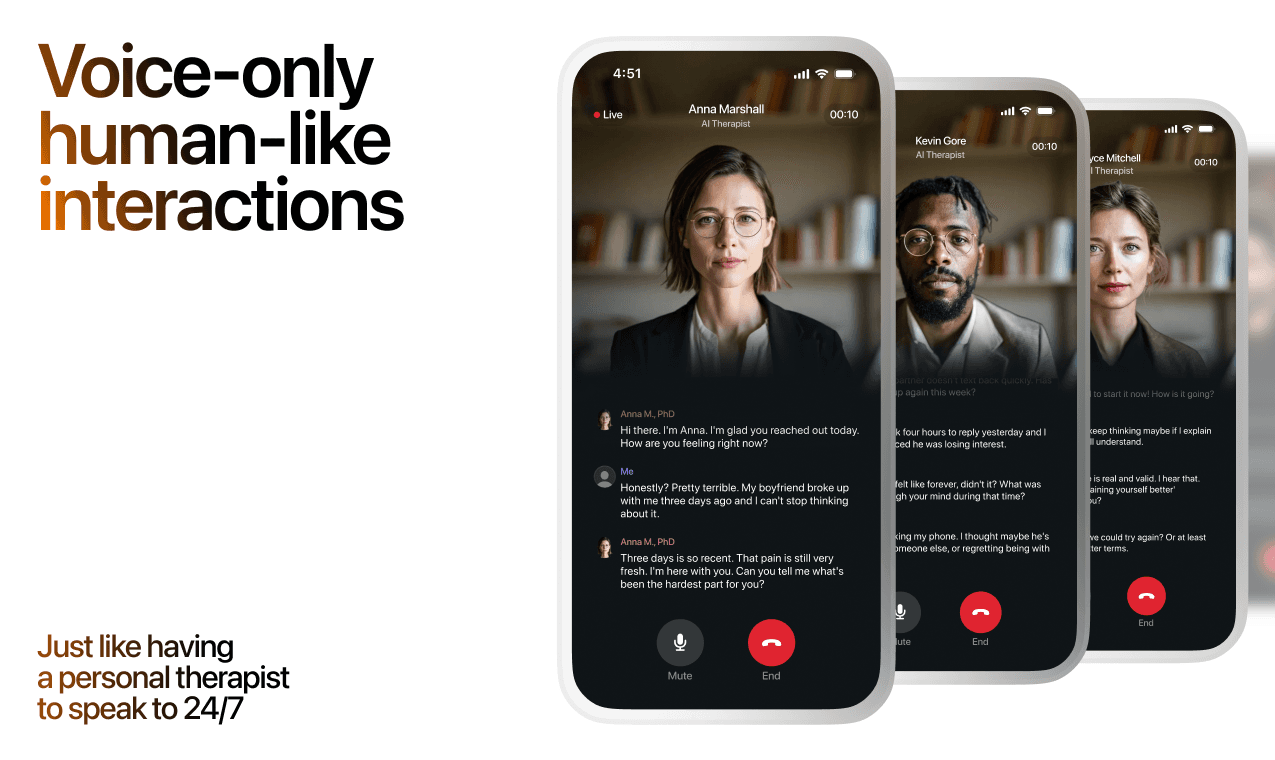
Here's what happens in a typical Lovon session:
You share what's on your mind
There's no script, no intake form, no waiting room. You speak or type whatever you're feeling — in your own words, at your own pace.
Lovon validates and explores
Using frameworks from CBT (Cognitive Behavioral Therapy) and motivational interviewing, Lovon acknowledges your feelings first, then gently helps you explore them. No dismissive "just move on" advice.
You build coping skills together
Lovon doesn't just listen — it actively works with you on evidence-based techniques: thought reframing, urge surfing, behavioral experiments, and more.
What a Session with Lovon Looks Like
Lovon is AI support, not a replacement for professional care. If things have been hard to get through for weeks, or you are thinking about harming yourself, talk to a doctor or a licensed therapist.
Ready to Start?
Your healing journey can begin right now
A 7-day trial. No judgment. Just a safe space to process what you're going through.
Frequently Asked Questions
Is Lovon a replacement for a real therapist?
Is my conversation with Lovon AI private?
How is Lovon different from ChatGPT for emotional support?
Can I use Lovon if I'm already seeing a therapist?
Can I try Lovon before subscribing?
About the Author
The Lovon Editorial Team
Mental Health & Wellness Content Team
The Lovon Editorial Team develops mental health and wellness content designed to make psychological concepts accessible and actionable. Our goal is to bridge the gap between clinical research and everyday life - helping you understand why your mind works the way it does and what you can do about it....
Related articles
- Parentification: Signs, Effects, and How to Heal in 2026
Parentification means a child carried adult emotional or practical weight. Learn the signs, the steps to unwind it, and…
- Best AI apps for teen mental health support in 2026
Compare the best AI apps for teen mental health in 2026. Put safety first: check age rules, privacy, voice versus text…
- AI Coping Tools for Phone Addiction in Teens (2026)
AI coping tools for phone addiction in teens work as an urge interrupt, not a lock replacement. See the 2026…
- AI Therapy for New-Parent Imposter Syndrome: 2026 Verdict
AI therapy for imposter syndrome new parents: what to look for, top approaches ranked, and the honest verdict on Lovon's…
See also
Quizzes
- Boundaries Test: Do I Have Healthy Boundaries? Free Quiz
See where your boundaries slip, in 3 minutes.
- Emotion Recognition Test: Do You Read Feelings Right?
See where your reading of feelings slips, in 3 minutes.
Free tools
- Write a Letter to Your Mom or Dad
A chat, not a template, for a letter to your mom or dad. Tell it the occasion, one or two things you remember, and what…
- How to Confront a Narcissistic Parent
Most of these conversations fail because you went in wanting three things at once. Tell it what you want to raise, and…
From the wiki
- How to break up with someone you still love?
Loving someone does not mean the relationship works. If you have circled the same decision for months and the reasons…
Disclaimer: This article is for informational purposes only and does not constitute medical advice, diagnosis, or treatment. Always seek the advice of your physician or other qualified health provider with any questions you may have regarding a medical condition. If you are in crisis or think you may have an emergency, call 988 (Suicide & Crisis Lifeline) or go to the nearest emergency room. Outside the US? Find a crisis line in your country.