
AI Relationship Coach for Sibling Relationships: Yes in 2026
Lovon's AI relationship coach for sibling relationships offers 24/7 voice support for favoritism, guilt, and estrangement in 2026. Know its limits first.

Key Takeaways
- Lovon's AI relationship coach for sibling relationships offers 24/7 voice sessions for favoritism, guilt, and
- Best fit: adults untangling parentification, chronic guilt, or a rivalry that never left childhood.
- Skip it for crisis situations, abuse, or anything requiring a diagnosis — Lovon is not a licensed clinician.
- Voice-based tools beat text-only chat for sibling conflict because tone and pacing matter as much as words in 2026.
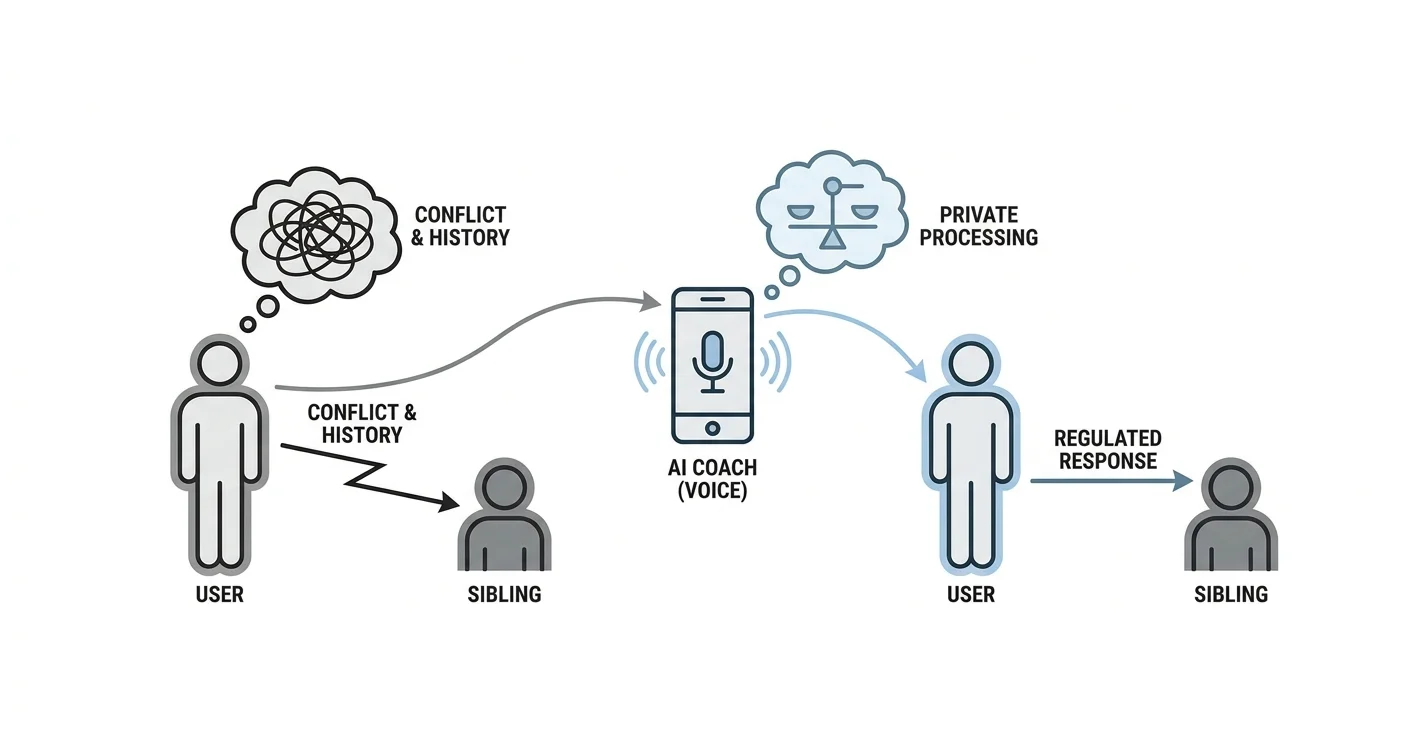
Sibling relationships carry decades of history in a single conversation, and untangling favoritism, guilt, or years of distance takes more than a pep talk from a friend who wasn't there for any of it. An AI relationship coach for sibling relationships gives you a private, on-demand space to talk through the pattern before you bring it to your sibling, your therapist, or your next family gathering in 2026.
TL;DR
- Lovon's AI relationship coach for sibling relationships offers 24/7 voice sessions for favoritism, guilt, and estrangement — Buy for daily processing.
- Best fit: adults untangling parentification, chronic guilt, or a rivalry that never left childhood.
- Skip it for crisis situations, abuse, or anything requiring a diagnosis — Lovon is not a licensed clinician.
- Voice-based tools beat text-only chat for sibling conflict because tone and pacing matter as much as words in 2026.
Why this matters
Sibling conflict rarely gets the attention couples' issues or parent-child wounds get, but it shapes everything from holiday dread to who gets a call when a parent's health declines. A lot of that conflict goes unspoken for years because there's no obvious place to process it between big blowups.
An AI relationship coach for sibling relationships fills that gap without waiting for a scheduled session or a group text to explode. You talk it out at 11pm after a tense phone call, name the pattern, and walk into the next conversation with your sibling less reactive. That's the actual use case — not replacing a therapist, but giving you somewhere to go when the therapist's calendar is a week out and the resentment is happening tonight.
Who this is for
This is for adults who feel stuck in an old sibling role — the fixer, the scapegoat, the invisible one, the one who always calls first. It's for people managing favoritism from a parent that never got named out loud, or the sibling who became the family's emotional caretaker before they were old enough to understand what that cost them.
It's also for people weighing contact with an estranged sibling and want to think it through before making a decision they can't easily undo. If you want a judgment-free voice conversation at 2am instead of rehearsing the fight in your head for the tenth time, this tool is built for that moment.
What to look for in an AI relationship coach for sibling relationships
Voice conversation, not just a chat window
Typing out a sibling grievance flattens tone, and tone is half the story in family conflict. A voice-based coach picks up on pacing and hesitation the way a text box never will, which matters when you're trying to hear yourself as much as get advice.
Boundary-setting grounded in real patterns
Sibling dysfunction usually traces back to roles set decades ago — the golden child, the scapegoat, the parentified caretaker. Look for a coach that names those patterns specifically instead of handing you generic "just communicate more" advice that ignores the actual family structure.
Availability that matches when the conflict actually happens
Sibling fights don't wait for business hours. A tool you can talk to at midnight after a family group chat spirals is worth more than one that requires a scheduled slot next Tuesday.
Honesty about its limits
Any AI relationship coach worth using in 2026 should say plainly what it isn't: a licensed therapist, a mediator, or a diagnostic tool. If it claims to fix your family or label a sibling with a personality disorder, that's a red flag, not a feature.
Tools for processing guilt, not just venting
Sibling guilt — over distance, over favoritism you benefited from, over a relationship you can't seem to fix — needs structured reflection, not just a place to complain. Look for prompts that help you separate what's yours to carry from what isn't.
A private space with no social cost
You can't always say the raw version of a sibling complaint to a partner or friend without it becoming a whole thing. A private coach lets you say the unfiltered version first, then decide what actually needs to be said out loud.
Where an AI relationship coach for sibling relationships actually helps
Think of these as the real scenarios where this kind of support earns its place, not a product lineup — just the situations where talking it through changes what happens next.
The overloaded caretaker sibling. If you became the one who managed a parent's appointments, mediated every fight, or absorbed everyone else's emotions since childhood, that's parentification, and it doesn't stop just because you're an adult now. A voice session that helps you separate your role from your identity is worth using daily during a stressful family stretch — read more in the parentification guide. Verdict: Buy.
The guilt-carrier. Maybe you moved away, maybe you got the attention your sibling didn't, maybe you just can't fix a relationship that's been strained for years. Chronic guilt like this rarely resolves on its own — it needs to be named and examined, which is exactly what a structured conversation does, as covered in why you feel guilty all the time. Verdict: Buy.
The sibling weighing contact after estrangement. This is the wildcard case — there's no universal right answer, and an AI coach won't make the decision for you. What it can do is help you rehearse the conversation, sit with the ambivalence, and get clearer on what you actually want before you reach out or stay silent. Verdict: Consider, and loop in a licensed therapist if the estrangement involves past abuse.
The rivalry that never left childhood. If you and a sibling are still competing over a parent's approval, money, or who's "doing better" in your 30s or 40s, that's a pattern an AI coach can help you notice in real time, right before you send the text you'll regret. Verdict: Consider for cooling off before a hard conversation, not for resolving the underlying rivalry alone.
What to avoid
- Text-only bots that just validate you. Constant agreement feels good for five minutes and does nothing to shift the actual pattern with your sibling.
- Anything that promises to diagnose your sibling. No AI tool, in 2026 or any year, should be labeling a family member with a personality disorder from a one-sided account.
- Tools that skip the limits disclosure. If an app never mentions it isn't a licensed clinician, that's a bigger problem than any feature it's missing.
Verdict comparison
| Scenario | Best use | Key focus | Verdict |
|---|---|---|---|
| Caretaker sibling (parentification) | Daily check-ins during stressful stretches | Separating role from identity | Buy |
| Guilt-carrier | Regular reflection sessions | Naming what's yours vs. inherited guilt | Buy |
| Weighing contact after estrangement | Occasional rehearsal before a decision | Clarifying what you actually want | Consider |
| Long-running rivalry | Cooling off before a hard conversation | Interrupting reactive patterns | Consider |
Talk through it tonight
Start a private voice session with Lovon before the next family call.
FAQ
What's the best way to use an AI relationship coach for sibling relationships?
Use it right after a tense interaction, before you respond or send a message you might regret. A short voice session helps you separate the immediate reaction from the older pattern underneath it, which is usually where the real conflict lives.
Is an AI relationship coach a replacement for family therapy?
No. Lovon is built for on-demand emotional support between sessions, not a replacement for licensed family therapy, especially when abuse, addiction, or estrangement involving safety concerns is part of the picture.
Can AI actually help with sibling estrangement?
It can help you think through what you want and rehearse a conversation, but it can't mediate a reconciliation or guarantee an outcome. Estrangement decisions with a history of harm need a licensed professional in the room, not just a voice app.
Is voice better than text for working through sibling conflict?
Voice conversation picks up tone and hesitation that a chat box misses, which matters when the conflict is as much about how something was said as what was said. That's why Lovon is built around talking, not typing.
How often should I talk to an AI coach about sibling issues?
There's no fixed schedule — some people check in daily during a stressful stretch, others only after a specific incident. The point is having somewhere to go the moment the pattern shows up, not sticking to a rigid routine.
Does an AI relationship coach diagnose sibling dysfunction?
No, and any tool claiming to should be treated with caution. Lovon helps you notice patterns like favoritism or parentification, but naming a clinical dynamic is a licensed clinician's job, not an app's.
What if my sibling relationship involves abuse?
An AI coach is not equipped to handle abuse situations safely. If there's a history of physical, emotional, or financial abuse between you and a sibling, a licensed therapist or counselor should be your first call, not an app.
One last thing
The pattern most people miss: the sibling role you were assigned as a kid — fixer, scapegoat, favorite, invisible one — rarely gets renegotiated just because everyone's an adult now. It keeps running in the background at every holiday dinner until someone names it out loud. That's usually the actual first step, and it's a lot easier to practice saying it to an AI relationship coach at midnight than to blurt it out mid-argument at Thanksgiving in 2026.
Related guides
How AI Support Helps You Heal
AI emotional support isn't about replacing human connection — it's about filling the gaps. The moments when you need to talk at 2 AM, when you don't want to burden your friends again, or when you simply need someone to listen without judgment.
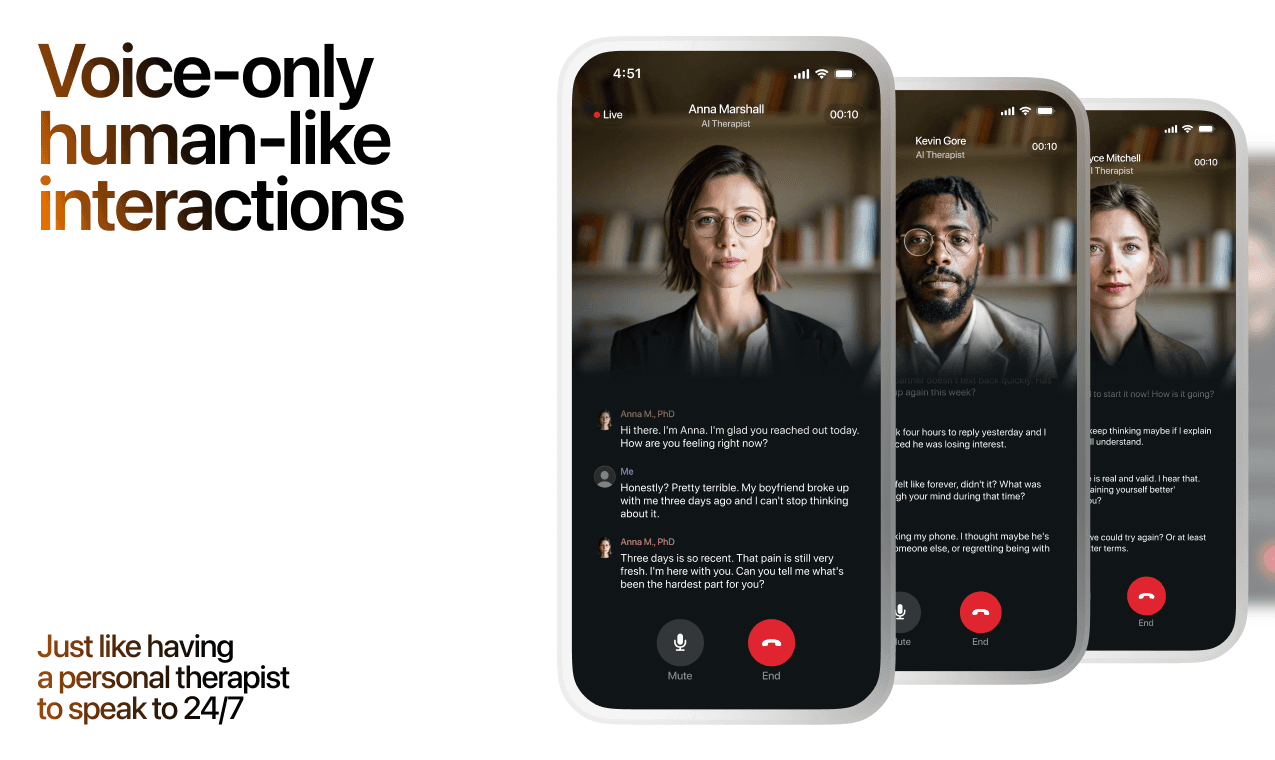
Here's what happens in a typical Lovon session:
You share what's on your mind
There's no script, no intake form, no waiting room. You speak or type whatever you're feeling — in your own words, at your own pace.
Lovon validates and explores
Using frameworks from CBT (Cognitive Behavioral Therapy) and motivational interviewing, Lovon acknowledges your feelings first, then gently helps you explore them. No dismissive "just move on" advice.
You build coping skills together
Lovon doesn't just listen — it actively works with you on evidence-based techniques: thought reframing, urge surfing, behavioral experiments, and more.
What a Session with Lovon Looks Like
When to Seek Professional Help
AI support is a valuable tool, but it's not a replacement for professional care. Please consider reaching out to a licensed therapist if you experience any of the following:
- Persistent thoughts of self-harm or suicide
- Inability to perform daily activities (work, eating, sleeping) for more than 2 weeks
- Turning to alcohol or substances to cope
- Intense anger or desire to harm your ex-partner
- Complete emotional numbness that doesn't improve over time
Crisis Resources (US): If you're in immediate danger, call 988 (Suicide & Crisis Lifeline) or text HOME to 741741 (Crisis Text Line). Available 24/7, free, and confidential.
Outside the US? Find a crisis line in your country
Ready to Start?
Your healing journey can begin right now
A 7-day trial. No judgment. Just a safe space to process what you're going through.
Frequently Asked Questions
Is Lovon a replacement for a real therapist?
Is my conversation with Lovon AI private?
How is Lovon different from ChatGPT for emotional support?
Can I use Lovon if I'm already seeing a therapist?
Can I try Lovon before subscribing?
About the Author
The Lovon Editorial Team
Mental Health & Wellness Content Team
The Lovon Editorial Team develops mental health and wellness content designed to make psychological concepts accessible and actionable. Our goal is to bridge the gap between clinical research and everyday life - helping you understand why your mind works the way it does and what you can do about it....
Related articles
- AI Relationship Coach for Parents of Teenagers (2026)
Lovon's ai relationship coach for parents of teenagers helps you de-escalate conflict and set boundaries anytime in 2026…
- AI Relationship Coach for Couples: 2026 Guide
Looking for an AI relationship coach for couples? See how Lovon's voice-based coaching compares to therapy in 2026…
- AI Relationship Coach for Newlyweds: 2026 Verdict
The best ai relationship coach for newlyweds in 2026 is voice-based and available on demand. See picks, what to avoid…
- AI Relationship Coach for Dating After Divorce: Buy 2026
See what an AI relationship coach for dating after divorce should offer in 2026, where Lovon fits, and what to skip…
See also
Quizzes
- Is My Relationship Healthy? 15-Question Check-In
Check your relationship health in 3 minutes.
- Am I Sabotaging My Relationship? 12-Question Quiz
Find the move you reach for, in 2 minutes.
Free tools
- AI Relationship Coach
Get free relationship advice and family counselling guidance with our AI Relationship Coach.
- Write a Letter to Your Best Friend
A chat for a letter to your best friend that only they could have received. Tell it how long you have been friends, one…
From the wiki
- What is a break in a relationship?
A break is a temporary, agreed pause in a relationship where both people expect to come back. In practice it usually…
Disclaimer: This article is for informational purposes only and does not constitute medical advice, diagnosis, or treatment. Always seek the advice of your physician or other qualified health provider with any questions you may have regarding a medical condition. If you are in crisis or think you may have an emergency, call 988 (Suicide & Crisis Lifeline) or go to the nearest emergency room. Outside the US? Find a crisis line in your country.