
AI Relationship Coach for Dating After Divorce: Buy 2026
See what an AI relationship coach for dating after divorce should offer in 2026, where Lovon fits, and what to skip before you start dating again.

Key Takeaways
- Lovon works as an AI relationship coach for dating after divorce — Buy for daily support between real sessions.
- Skip any tool that skips trauma-informed language; divorce grief needs more than dating scripts.
- Voice-based coaching beats text chat for catching tone during anxious 11pm spirals.
- Pair coaching with a licensed therapist if the divorce involved betrayal, conflict, or custody disputes.
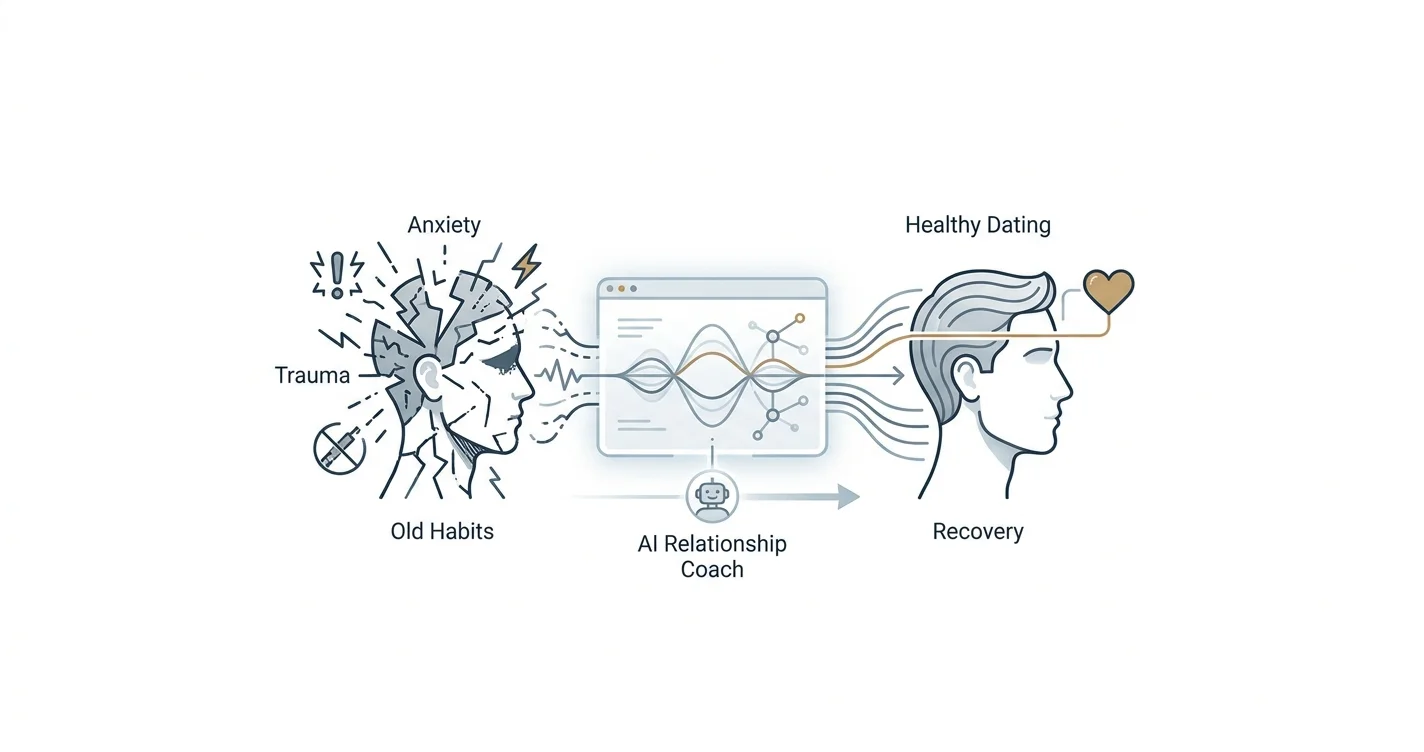
Dating again after a divorce comes with its own static — old habits resurface, trust feels harder to hand out, and pep talks from friends only reach so far. Here's what an AI relationship coach for dating after divorce should actually do, where Lovon fits into that picture, and what to walk away from.
TL;DR
- Lovon works as an AI relationship coach for dating after divorce — Buy for daily support between real sessions.
- Skip any tool that skips trauma-informed language; divorce grief needs more than dating scripts.
- Voice-based coaching beats text chat for catching tone during anxious 11pm spirals.
- Pair coaching with a licensed therapist if the divorce involved betrayal, conflict, or custody disputes.
Why this matters
Divorce resets your dating instincts whether you want it to or not. You second-guess texts you'd have sent without thinking five years ago, and a canceled plan can feel like proof you're unlovable instead of a scheduling conflict.
A generic dating coach app treats you like someone starting from zero. An AI relationship coach built for divorce recovery treats the trust rebuild, the co-parenting overlap, and the identity shift as the actual work — not side notes.
That distinction is the whole reason this category exists in 2026: divorced daters need support that understands why a simple "hey, how was your weekend" text can trigger a spiral.
Who this is for
This is for someone recently divorced — six months to five years out — who's back on dating apps or being set up by friends and noticing the anxiety doesn't match the stakes. You're not in crisis. You're just tired of overthinking every message and want somewhere to process it that isn't your group chat at 1am.
What to look for in an AI relationship coach for dating after divorce
Voice, not just text
Tone carries information that typed words don't. A voice conversation with an AI relationship coach picks up on hesitation, speed, and the shake in your voice when you're describing why a date's follow-up text set you off — a text box can't do that.
Trauma-informed language
Divorce isn't a breakup with extra paperwork. Some divorces involve betrayal, financial strain, or years of conflict that leave marks a "just get back out there" script won't touch. The connection between divorce and PTSD symptoms is documented enough that a coaching tool ignoring it is a red flag, not a neutral omission.
Available when the spiral actually happens
Anxiety about a date rarely waits for business hours. A tool that's only useful during a scheduled session misses the exact moment you need it — the hour before a first date, or the ten minutes after an ex texts out of nowhere.
Honest about its limits
A coach that positions itself as a replacement for licensed therapy is overselling. The credible ones are explicit: they support you between sessions or when therapy isn't accessible, and they say so directly instead of implying they can diagnose or treat anything.
No pressure to "move on" on a schedule
Some divorced daters are ready to date seriously within a year. Others need eighteen months before a first date stops feeling like an obligation. A coaching tool that pushes a timeline instead of meeting you where you are will make the anxiety worse, not better.
Talk through it before your next date
Start a voice conversation with Lovon whenever the anxiety hits, not on a schedule.
Where this actually helps: four real scenarios
The pre-date spiral. You've got a first date in two hours and you're rehearsing every way it could go wrong. Calming first date anxiety before you walk out the door beats white-knuckling through it. Verdict: Buy — this is the exact use case voice coaching was built for.
The old-text reread. Scrolling back through your ex's messages looking for clues isn't closure, it's rumination with extra steps. A coaching conversation that names the loop out loud tends to break it faster than another hour of scrolling. Verdict: Buy.
The co-parenting collision. Dating gets complicated fast when custody schedules, a new partner meeting your kids, or an ex who still texts about "us" enters the picture. This needs more structured support than a single conversation can give — a coaching app is a supplement here, not the whole plan. Verdict: Consider.
The dating app burnout wall. After the fortieth mediocre match, motivation tanks and everyone starts blurring together. A coaching check-in can reset the mindset for a week or two, but it won't fix an app itself giving you bad matches. Verdict: Consider.
What to avoid
- Apps that promise to "fix" how you see your ex. No coaching tool changes another person's behavior — anything implying it can is selling a fantasy, not support.
- Personality quizzes marketed as diagnosis. A fun attachment-style quiz is fine for reflection; treating it as a clinical assessment is not what it is.
- Tools that rush you back into dating. If a coach's default advice is "get back out there" regardless of how many months you say you've had, it's optimizing for engagement, not your timeline.
Verdict comparison
| Criteria | Generic dating advice site | Text-only chatbot | Lovon (voice coach) | Licensed therapist |
|---|---|---|---|---|
| Available at 2am | Yes, but static | Yes | Yes | No |
| Reads tone, not just words | No | No | Yes | Yes |
| Trauma-informed on divorce | Rarely | Sometimes | Yes | Yes |
| Cost per use | Free, generic | Varies | Subscription | $100–$250/session |
| Replaces clinical care | No | No | No, by design | Yes |
The honest read for 2026: use Lovon for the daily, in-between moments, and keep a licensed therapist in the loop if the divorce left deeper wounds — betrayal, prolonged conflict, or custody stress that a coaching conversation alone won't resolve.
FAQ
Is an AI relationship coach for dating after divorce actually effective?
It's effective for daily processing and pre-date anxiety, not for resolving deep trust wounds alone. Lovon works best as support between real therapy sessions, not a replacement for one.
How is Lovon different from a text-based dating advice app?
Lovon uses voice conversations, which pick up tone and hesitation that a typed chat misses. That distinction matters most in the anxious moments before or after a date, when how you say something reveals more than the words themselves.
Can an AI coach replace couples or individual therapy after divorce?
No, and any tool claiming otherwise should be a red flag. Lovon is built for on-demand emotional support and coping tools, not licensed clinical treatment.
When should I start dating after a divorce?
There's no universal timeline — some people are ready within a year, others need eighteen months or more. A coaching conversation can help you check whether you're dating from readiness or avoidance, but the pace is yours to set.
What if dating anxiety feels like it's connected to the divorce itself, not just dating?
That overlap is common and worth naming directly in a session rather than treating as two separate problems. Divorce-related stress responses can show up as dating anxiety, so addressing the root often reduces both.
Does Lovon help with co-parenting stress that bleeds into dating?
It can support the emotional processing around it, but co-parenting logistics need their own structured plan beyond a coaching conversation. Treat the app as one part of a broader support system in that situation.
Is voice-based coaching better than journaling for post-divorce dating anxiety?
They serve different purposes — journaling helps you track patterns over time, voice coaching gives you a real-time response in the moment. Many people in 2026 use both rather than choosing one.
One last thing
The pattern worth watching isn't the big dating disasters — it's the small avoidance moves, like canceling a second date the moment things start feeling good. That's usually the divorce talking, not the date. Naming it out loud, even to an app, tends to shrink it faster than ignoring it does.
Related guides
How AI Support Helps You Heal
AI emotional support isn't about replacing human connection — it's about filling the gaps. The moments when you need to talk at 2 AM, when you don't want to burden your friends again, or when you simply need someone to listen without judgment.
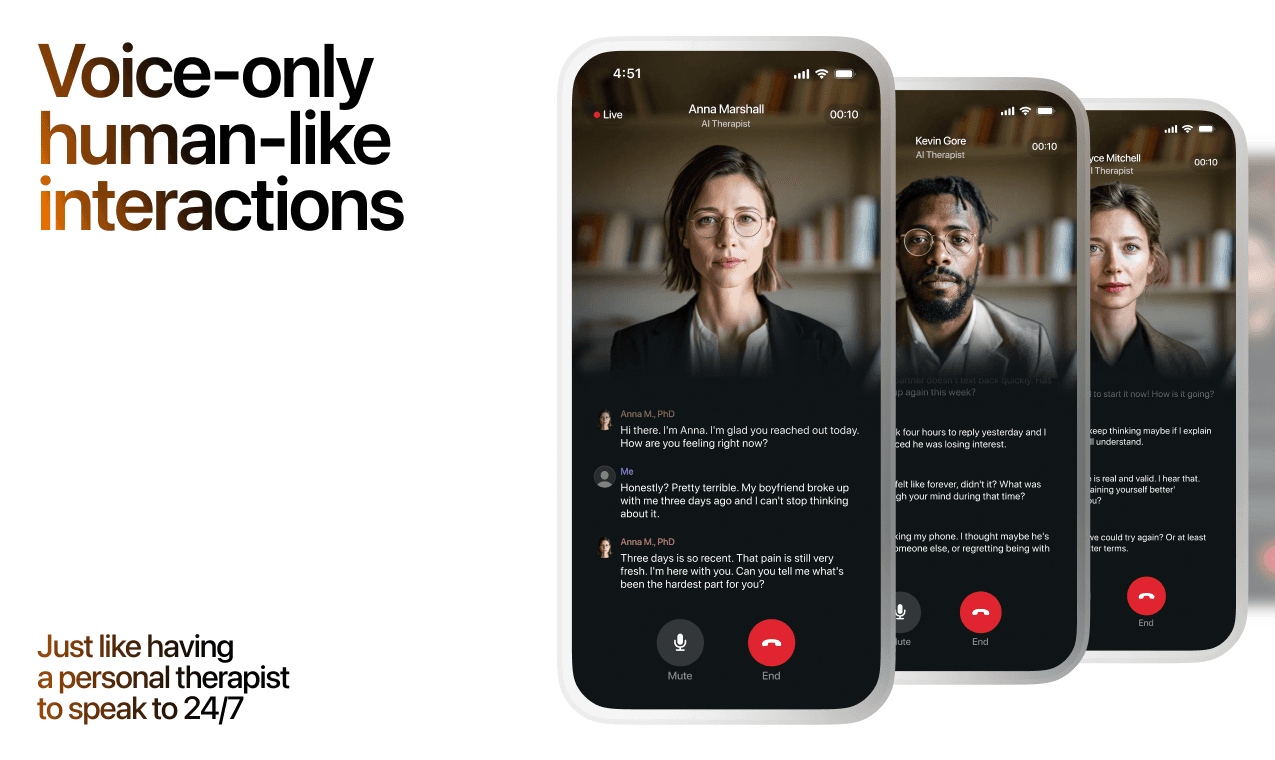
Here's what happens in a typical Lovon session:
You share what's on your mind
There's no script, no intake form, no waiting room. You speak or type whatever you're feeling — in your own words, at your own pace.
Lovon validates and explores
Using frameworks from CBT (Cognitive Behavioral Therapy) and motivational interviewing, Lovon acknowledges your feelings first, then gently helps you explore them. No dismissive "just move on" advice.
You build coping skills together
Lovon doesn't just listen — it actively works with you on evidence-based techniques: thought reframing, urge surfing, behavioral experiments, and more.
What a Session with Lovon Looks Like
When to Seek Professional Help
AI support is a valuable tool, but it's not a replacement for professional care. Please consider reaching out to a licensed therapist if you experience any of the following:
- Persistent thoughts of self-harm or suicide
- Inability to perform daily activities (work, eating, sleeping) for more than 2 weeks
- Turning to alcohol or substances to cope
- Intense anger or desire to harm your ex-partner
- Complete emotional numbness that doesn't improve over time
Crisis Resources (US): If you're in immediate danger, call 988 (Suicide & Crisis Lifeline) or text HOME to 741741 (Crisis Text Line). Available 24/7, free, and confidential.
Outside the US? Find a crisis line in your country
Ready to Start?
Your healing journey can begin right now
A 7-day trial. No judgment. Just a safe space to process what you're going through.
Frequently Asked Questions
Is Lovon a replacement for a real therapist?
Is my conversation with Lovon AI private?
How is Lovon different from ChatGPT for emotional support?
Can I use Lovon if I'm already seeing a therapist?
Can I try Lovon before subscribing?
About the Author
The Lovon Editorial Team
Mental Health & Wellness Content Team
The Lovon Editorial Team develops mental health and wellness content designed to make psychological concepts accessible and actionable. Our goal is to bridge the gap between clinical research and everyday life - helping you understand why your mind works the way it does and what you can do about it....
Related articles
- How long should you wait before dating again?
How long should you wait before dating again? There is no fixed rule. Check your emotional readiness, motives, and…
- AI Relationship Coach for Dating Confidence: 2026 Guide
The best ai relationship coach for dating confidence in 2026 pairs voice practice with real self-worth work, not…
- What Is Casual Dating? How It Differs from a Relationship (2026)
Casual dating means connection without commitment — but the emotional stakes are real. Learn exactly how it differs from…
- AI Relationship Coach for Blended Families: 2026 Verdict
AI relationship coach for blended families reviewed for 2026: buy for stepparent stress and co-parenting conflict, skip…
See also
Quizzes
- Why Am I Single? 12-Question Quiz With 5 Real Reasons
Find which of five reasons is actually yours.
- Conflict Style Test: How You Fight and How You Repair
See how you fight, and whether you repair.
Free tools
- How to Reconnect With an Old Friend
A chat for how to reconnect with an old friend, starting with the text you have been meaning to send for a year. Tell it…
- How to Tell Your Spouse You Want a Divorce
A chat for working out how to tell your spouse you want a divorce, after the decision rather than before it. Tell it…
From the wiki
- How to break up with someone you still love?
Loving someone does not mean the relationship works. If you have circled the same decision for months and the reasons…
Disclaimer: This article is for informational purposes only and does not constitute medical advice, diagnosis, or treatment. Always seek the advice of your physician or other qualified health provider with any questions you may have regarding a medical condition. If you are in crisis or think you may have an emergency, call 988 (Suicide & Crisis Lifeline) or go to the nearest emergency room. Outside the US? Find a crisis line in your country.