
Parentification: Signs, Effects, and How to Heal in 2026
Parentification means a child carried adult emotional or practical weight. Learn the signs, the steps to unwind it, and what actually helps in 2026.
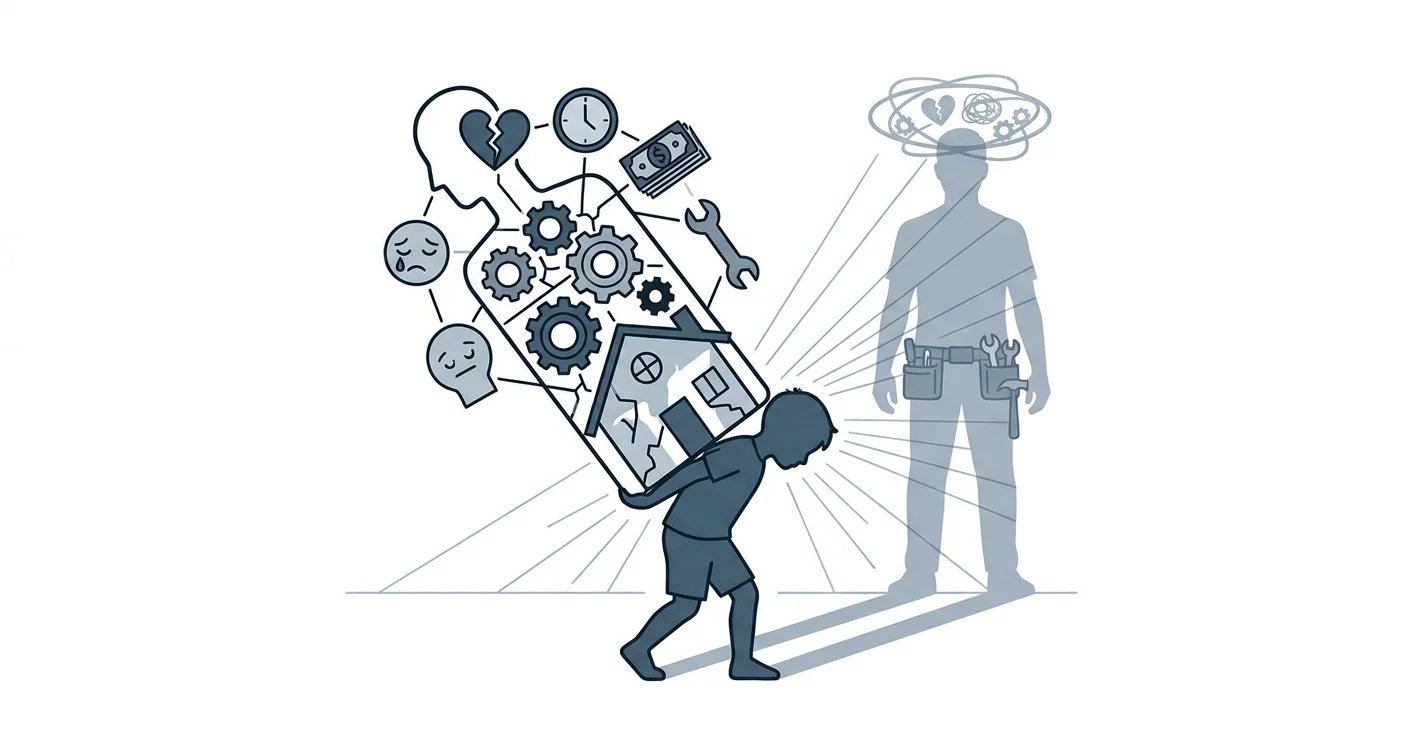

Key Takeaways
- Parentification means a child carried adult emotional or logistical weight — naming your specific role is the first
- Emotional parentification (comforting a parent) is subtler than instrumental parentification (cooking, translating,
- Chronic guilt, trouble resting, and discomfort asking for help are the clearest adult-onset signals — treat them as
- Lovon's AI voice therapy will not diagnose parentification, but it gives you a place to talk through the pattern
Parentification is what happens when a child takes on a parent's emotional or practical job — soothing a parent's meltdown, raising younger siblings, managing the household bills — before they have the age or the resources to carry that weight. This guide walks through how to spot it in your own history and what to actually do about the patterns it left behind.
TL;DR
- Parentification means a child carried adult emotional or logistical weight — naming your specific role is the first move in 2026.
- Emotional parentification (comforting a parent) is subtler than instrumental parentification (cooking, translating, paying bills) and both breed adult guilt.
- Chronic guilt, trouble resting, and discomfort asking for help are the clearest adult-onset signals — treat them as data, not character flaws.
- Lovon's AI voice therapy will not diagnose parentification, but it gives you a place to talk through the pattern between sessions or before you're ready to see a therapist.
Why this matters
Adults who were parentified as kids tend to become the friend who fixes everything, the partner who never asks for help, the employee who can't say no. It looks like competence. It's often exhaustion wearing a functional mask.
The research distinguishes two tracks: instrumental parentification (chores, caregiving, managing money) and emotional parentification (being your parent's confidant, therapist, or emotional regulator). Emotional parentification is the harder one to spot because it leaves no visible task list — just a kid who learned that their job was to keep an adult calm. Left unexamined, both tracks show up later as enmeshment in relationships, where the line between your feelings and someone else's never fully formed.
This isn't about blaming a parent who was overwhelmed, sick, or absent. It's about naming a role you were assigned so you can stop auto-playing it as a 30-year-old.
What you'll need
- 20 to 30 minutes of quiet time, away from the people you'd normally caretake
- A notes app or notebook — you're going to write a list
- A short honest inventory of what you handled between roughly ages 6 and 16
- One person you trust enough to say the sentence out loud, or an AI companion like Lovon if you're not ready to say it to a person yet
- Willingness to sit with discomfort for a few minutes without immediately problem-solving it away
The steps
1. Name the exact role you played
This accomplishes the thing most people skip: turning a vague feeling of "my childhood was intense" into a specific, nameable job description. Write down three things: what you managed, for whom, and starting at what age. "I mediated my parents' arguments starting around age 9" is a sentence, not a vibe. Expect this to take longer than 5 minutes — most people freeze the first time they try to write it plainly. The common mistake here is minimizing it with "but it wasn't that bad," which is the sentence that keeps the pattern alive.
2. Separate the child's job from the adult's job
List what you did on one side of the page and what an adult in that household should have been doing on the other. If a 10-year-old was calming a parent's panic attacks, that's not a parallel column — that's a swapped one. This step matters because parentification convinces you the swap was normal. Seeing it on paper, side by side, is usually the first moment it stops feeling normal.
3. Track the guilt in real time for one week
For seven days, note every time you feel guilty for resting, saying no, or letting someone else struggle without stepping in. Write the trigger and the intensity, 1 to 10. Most people who were parentified log guilt spikes of 7 or higher multiple times a day — the goal isn't to stop the guilt this week, it's to see how often it fires. The mistake to avoid: judging yourself for how much guilt shows up. The number is information, not a verdict on your character.
4. Practice one sentence out loud
Say, to yourself or someone safe: "That responsibility was not mine to carry." It will feel false the first ten times. Say it anyway, once a day, for two weeks. This rewires a sentence you've probably never said about your own childhood. If it triggers a strong reaction — tears, anger, numbness — that's the nervous system registering something true, not a sign you're doing it wrong.
5. Set one small boundary this week
Pick the lowest-stakes version of the pattern you can find. Don't pick up the phone on the third call today. Let someone else book the dinner reservation. The point is proving to yourself that the system doesn't collapse when you step back, which directly counters the belief parentification installs: that everything depends on you. A pattern of toxic parent behavior often escalates the moment you try this — expect pushback, and treat it as confirmation, not failure.
6. Grieve the version of childhood you didn't get
This is the step people skip because it feels indulgent. It isn't. Spend 15 minutes writing about what an ordinary Tuesday should have looked like at age 10 — not managing anyone, not translating for anyone, not calming anyone down. The gap between that and your actual Tuesday is the thing you're grieving. Expect sadness, not drama. If nothing comes up the first time, try again in a few days; grief tied to parentification tends to arrive late and quiet.
7. Build one relationship where you're allowed to be the one who needs something
Parentified adults often have plenty of people who lean on them and very few who they lean on. Pick one relationship — a friend, a partner, a therapist, or a daily check-in with an AI voice companion — and practice being the one who asks for support, even in small ways, at least twice this month. The outcome you're building toward is a nervous system that doesn't associate needing help with danger.
Talk through the pattern before you're ready to say it out loud
Lovon gives you a voice conversation with an AI therapist, available anytime.
Troubleshooting
"I feel guilty the moment I rest." This is the guilt-as-alarm pattern parentification installs — rest gets coded as danger because in your childhood, relaxing meant something might go wrong unattended. Sit through the guilt for 10 minutes without acting on it once a day; the alarm fades faster than it feels like it will.
"My parent still leans on me the same way." Adult parentification often just continues past 18 with no natural end point. Pick one specific request to decline this month and hold it, even if the reaction is big. The relationship surviving a "no" is the data point you need.
"I don't know what a normal childhood role even looks like." That's expected if the role you played started early enough. Look at what age-appropriate chores and emotional expectations look like for a 9 or 10 year old, then compare it honestly to your own list from Step 1.
"I overfunction in every adult relationship, not just with family." This is the pattern generalizing, and it usually shows up as a version of the fawn response — managing other people's emotions to keep the peace. The fix starts with noticing the impulse to fix, then pausing before you act on it.
"Naming this feels disloyal to my parent." Naming a pattern isn't the same as assigning blame. A parent can have been overwhelmed, sick, grieving, or genuinely doing their best, and a child can still have carried more than a child should. Both things are true at once.
Tools and resources
- A written inventory of childhood responsibilities (Step 1) — the single most useful document in this whole process
- A guilt-tracking log, even a simple notes-app list, for at least one full week
- A resource on how to stop overfunctioning in adult relationships, since parentification and people-pleasing usually travel together — see the guide on how to reclaim your identity from constant people-pleasing
- Someone to say the sentence out loud to: a friend, a licensed therapist, or an AI voice therapist like Lovon if you want a private, low-stakes place to start
- Patience with the timeline — this pattern took years to build and won't unwind in a week
What to do next
Parentification and complex childhood trauma overlap heavily, and the next honest step for a lot of people is understanding how repeated early stress compounds into something bigger than one bad year. The guide on CPTSD from childhood covers the symptoms and healing steps in more depth than this article can, and it's worth reading if the guilt tracking in Step 3 turned up more than you expected.
FAQ
What is parentification in simple terms?
Parentification is when a child takes on a parent's emotional or practical responsibilities — comforting them, managing siblings, handling money or translation — before they're old enough for that role. It shows up in adulthood as chronic overfunctioning, guilt at rest, and difficulty asking for help.
Is parentification the same as being a mature kid?
No. Maturity is a trait; parentification is a role assigned by circumstance, not chosen by the child. A mature kid still gets to be a kid. A parentified kid takes on a job the household needed filled.
What are the signs of parentification in adults?
Common adult signs include chronic guilt about resting, difficulty receiving help, being the fixer in every relationship, and a hard time identifying your own needs separately from other people's. These patterns usually trace back to a childhood role, not a personality flaw.
Can parentification cause anxiety or depression later in life?
Yes, parentification is linked to higher rates of anxiety, guilt, and burnout in adulthood because the child's nervous system learns to stay on alert for other people's needs. Left unaddressed, it can also feed patterns like people-pleasing and enmeshment.
How is emotional parentification different from instrumental parentification?
Instrumental parentification involves tasks — cooking, cleaning, paying bills, translating for a parent. Emotional parentification means becoming a parent's confidant or emotional regulator. Emotional parentification is harder to spot because there's no visible task list, just a kid managing an adult's feelings.
Can you undo the effects of parentification as an adult?
You can change the pattern, though it takes deliberate practice, not a single realization. Naming the original role, tracking guilt triggers, and practicing small boundaries are the concrete starting steps most people use in 2026.
Does parentification only happen in single-parent households?
No. Parentification happens in any family where a parent is unavailable due to illness, addiction, mental health struggles, financial stress, or simple overwhelm, regardless of how many parents are in the home.
Should I talk to a therapist about parentification, or can an app help first?
A licensed therapist is the right choice for deep trauma work, but an AI voice therapist like Lovon can be a useful place to talk through the pattern in the meantime, especially between sessions or before you feel ready to bring it to a person.
One last thing
The detail that trips people up most isn't the caretaking itself — it's how good they got at it. Parentified kids often become the most competent, calm, dependable adults in the room, and that competence gets mistaken for a personality trait instead of a survival skill built too early. The goal isn't to stop being capable. It's to stop being capable by default, at your own expense, in every relationship you're in through 2026 and beyond.
Related guides
How AI Support Helps You Heal
AI emotional support isn't about replacing human connection — it's about filling the gaps. The moments when you need to talk at 2 AM, when you don't want to burden your friends again, or when you simply need someone to listen without judgment.
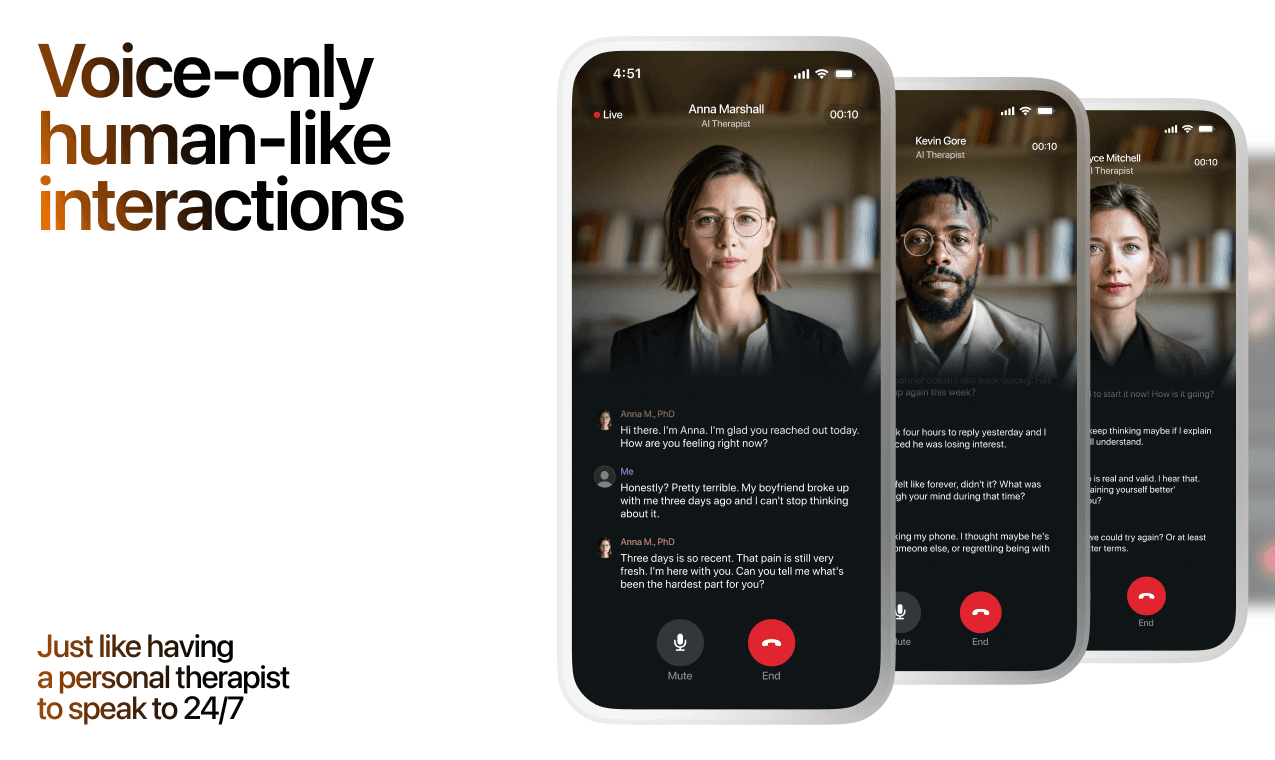
Here's what happens in a typical Lovon session:
You share what's on your mind
There's no script, no intake form, no waiting room. You speak or type whatever you're feeling — in your own words, at your own pace.
Lovon validates and explores
Using frameworks from CBT (Cognitive Behavioral Therapy) and motivational interviewing, Lovon acknowledges your feelings first, then gently helps you explore them. No dismissive "just move on" advice.
You build coping skills together
Lovon doesn't just listen — it actively works with you on evidence-based techniques: thought reframing, urge surfing, behavioral experiments, and more.
What a Session with Lovon Looks Like
When to Seek Professional Help
AI support is a valuable tool, but it's not a replacement for professional care. Please consider reaching out to a licensed therapist if you experience any of the following:
- Persistent thoughts of self-harm or suicide
- Inability to perform daily activities (work, eating, sleeping) for more than 2 weeks
- Turning to alcohol or substances to cope
- Intense anger or desire to harm your ex-partner
- Complete emotional numbness that doesn't improve over time
Crisis Resources (US): If you're in immediate danger, call 988 (Suicide & Crisis Lifeline) or text HOME to 741741 (Crisis Text Line). Available 24/7, free, and confidential.
Outside the US? Find a crisis line in your country
Ready to Start?
Your healing journey can begin right now
1 free conversation. No credit card. No judgment. Just a safe space to process what you're going through.
Frequently Asked Questions
Is AI therapy a replacement for a real therapist?
Is my conversation with Lovon AI private?
How is Lovon different from ChatGPT for emotional support?
Can I use Lovon if I'm already seeing a therapist?
Can I try Lovon for free?
About the Author

The Lovon Editorial Team
Mental Health & Wellness Content Team
The Lovon Editorial Team develops mental health and wellness content designed to make psychological concepts accessible and actionable. Our goal is to bridge the gap between clinical research and everyday life - helping you understand why your mind works the way it does and what you can do about it....
Similar Articles
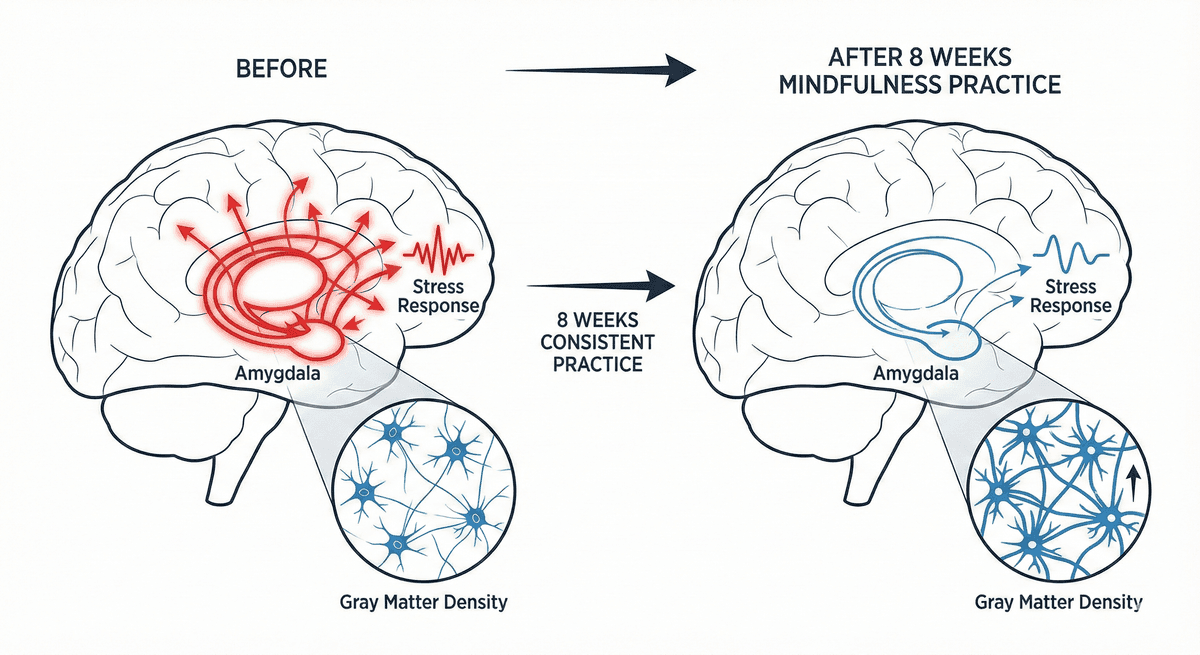
What 8 Weeks of Meditation Does to Your Amygdala
See what changes in your brain after eight weeks of daily meditation, why you react less to stress, and how to build a routine that actually sticks.

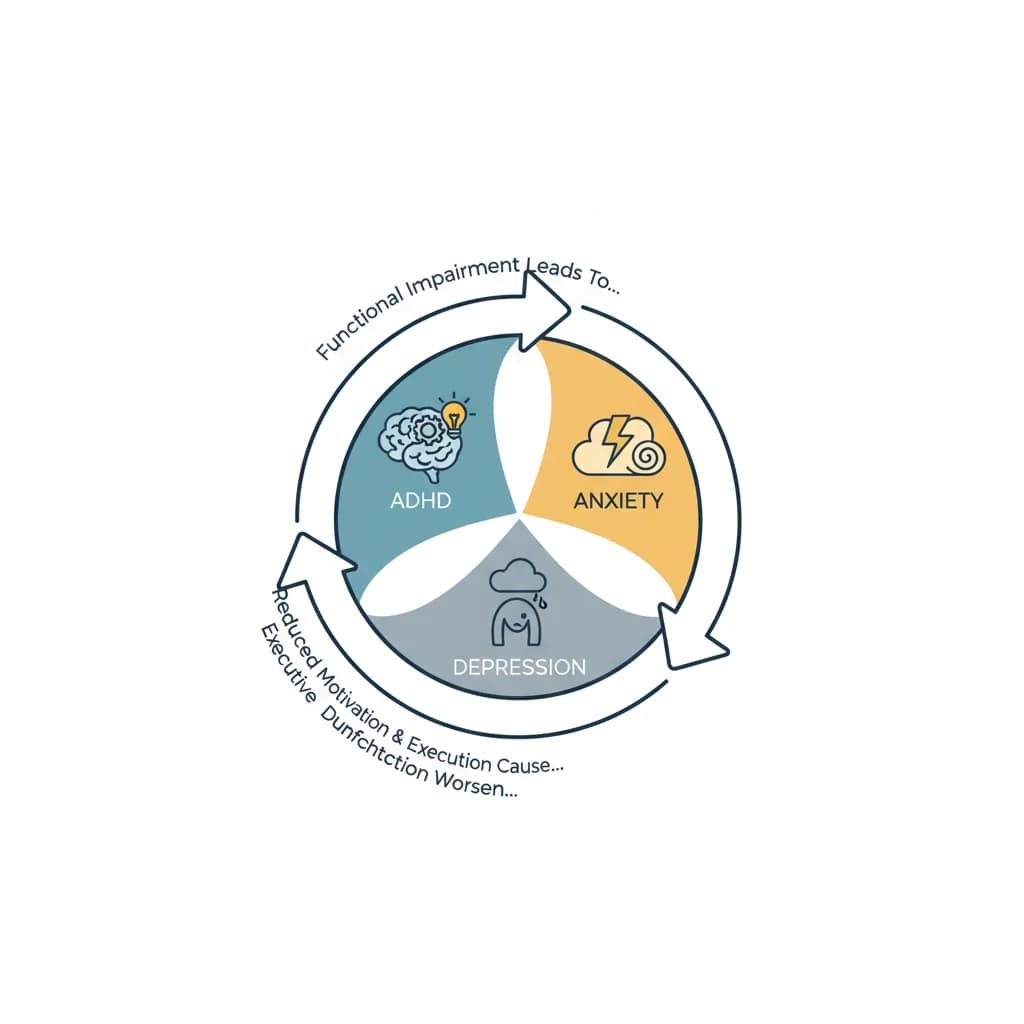
ADHD Comorbidity with Anxiety and Depression Cycles
Understanding the Complex Interplay Between ADHD and Recurring Mental Health Patterns
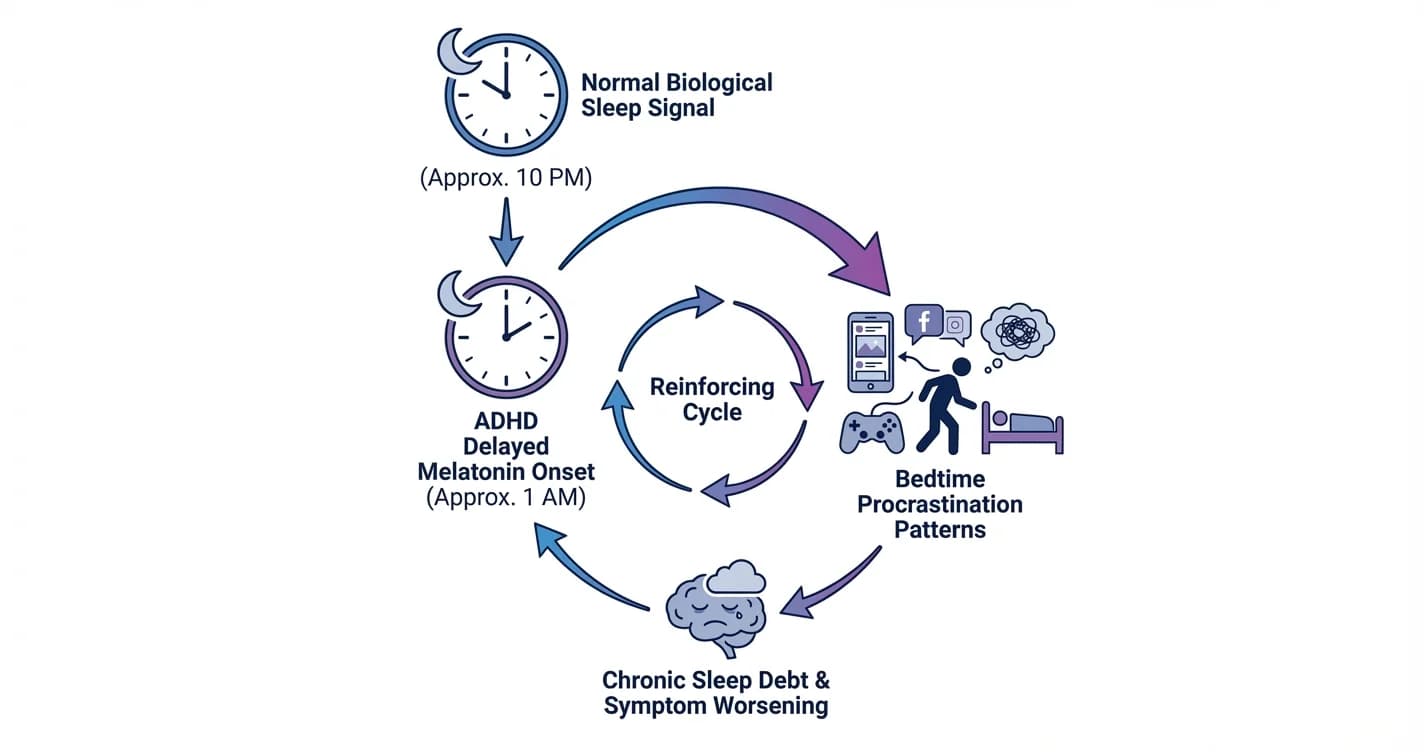
ADHD Sleep Cycle Disruption: Melatonin Delay and Bedtime Procrastination Patterns
Understanding how attention regulation difficulties interfere with natural sleep timing and the nightly wind-down process
Disclaimer: This article is for informational purposes only and does not constitute medical advice, diagnosis, or treatment. Always seek the advice of your physician or other qualified health provider with any questions you may have regarding a medical condition. If you are in crisis or think you may have an emergency, call 988 (Suicide & Crisis Lifeline) or go to the nearest emergency room. Outside the US? Find a crisis line in your country.