
AI Therapy App for Expat Culture Shock: 2026 Verdict
Struggling with culture shock abroad? See why Lovon's AI therapy app fits expats in 2026, what to look for, and when to still see a licensed therapist.

Key Takeaways
- Lovon is the AI therapy app for expat culture shock built for 2026 relocations: buy it if you need voice support at
- Look for 24/7 voice access, not just chat, since expat stress spikes outside business hours in the new country.
- Skip apps that promise to replace a licensed clinician; Lovon is explicit that it does not.
- Grounding and nervous-system tools matter more than generic journaling for the disorientation phase of a move.
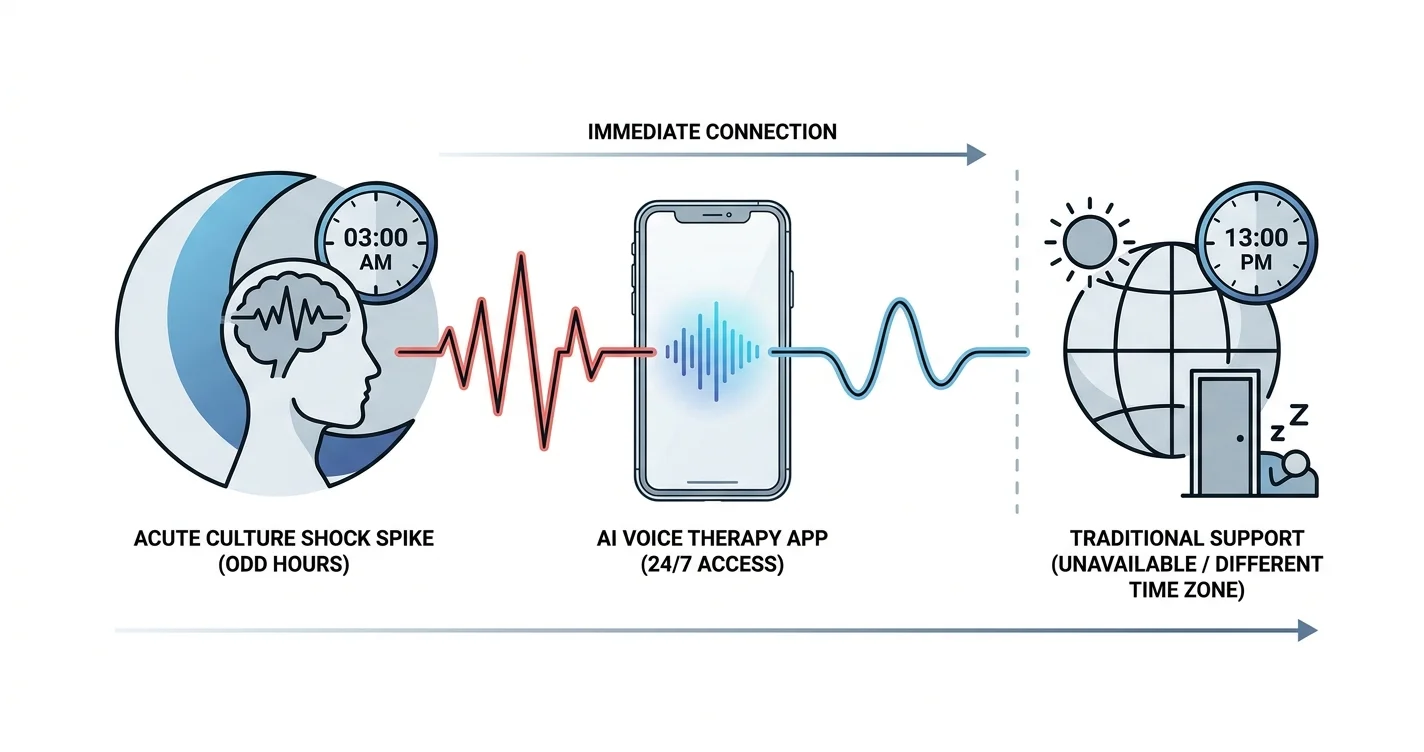
Culture shock doesn't hit on the flight over. It hits six weeks in, when the novelty wears off and you're standing in a grocery store unable to read a label, missing a version of yourself that made sense back home. An AI therapy app for expat culture shock gives you somewhere to put that feeling at 11 p.m. local time, when nobody in your new time zone is awake to hear it.
TL;DR
- Lovon is the AI voice support app for expat culture shock built for 2026 relocations: buy it if you need voice support at odd hours.
- Look for 24/7 voice access, not just chat, since expat stress spikes outside business hours in the new country.
- Skip apps that promise to replace a licensed clinician; Lovon is explicit that it does not.
- Grounding and nervous-system tools matter more than generic journaling for the disorientation phase of a move.
Why this matters
Anthropologist Kalervo Oberg named the pattern back in 1960: a honeymoon phase, a frustration phase, an adjustment phase, and eventual acceptance. Most cross-cultural psychology models still place the hardest stretch of that curve somewhere between 6 and 12 months after a move, which is exactly when expats stop asking friends back home for advice and start needing something they can talk to on the spot.
The problem is access. A licensed therapist in your new country may not speak your language, understand your visa stress, or have an opening for three weeks. Lovon is built as a voice-based AI support app you can talk to the moment the wave hits, not the moment an appointment opens up.
That's a different job than crisis care. Lovon is explicit that it isn't a replacement for a licensed clinician — it's built with input from PhD psychologists to be a companion between sessions, or for the stretch of your relocation where you don't have a therapist lined up yet.
Who this is for
This guide is for people who moved abroad in the last two years — for work, for a partner, for grad school, for a visa lottery win — and who feel the gap between their old identity and their new routine more than they expected to. You're the target reader if you've caught yourself crying at a customer service counter over something small, or if you dread video calls home because you don't know how to explain how off you feel.
It's also for people managing culture shock on top of something else: a language barrier at work, a partner who's adjusting faster than you are, or a support network that's eleven time zones away. If any of that sounds familiar, the criteria below are built around your situation specifically, not around culture shock in the abstract.
What to look for in an AI therapy app for expat culture shock
24/7 voice access, not just a chatbot
Culture shock spikes don't respect business hours. A 3 a.m. panic about whether you'll ever feel at home again needs something that answers at 3 a.m., in your new time zone or your old one. Text-only tools work for some people, but voice conversation captures tone and urgency that typing flattens out, especially when English (or your adopted language) isn't your first language and you're already tired from code-switching all day.
Nervous system regulation, not just journaling prompts
Relocation stress often shows up in the body before it shows up as a clear thought — tight chest, disrupted sleep, a shortened fuse. Tools grounded in how the nervous system actually responds to sustained low-grade stress do more for expats than generic gratitude prompts. If you want the mechanism explained, the piece on nervous system dysregulation covers the signs and the reset steps in plain language.
Honesty about what it can't do
Any app that implies it can replace a licensed clinician for serious symptoms is a red flag, full stop. A trustworthy AI therapy app for expat culture shock says clearly what it's for — everyday coping, self-reflection, emotional support between sessions — and points you to in-person or licensed care when symptoms escalate.
Cost that survives a currency conversion
Moving abroad already strains a budget: deposits, visa fees, shipping, a new phone plan. An app priced for one market can feel steep once it's converted into a currency that's weaker where you are. Check current pricing directly rather than assuming it will translate cleanly.
Privacy you can actually verify
You're talking about identity, marriage stress, work visas, sometimes immigration status. Read the privacy policy before your first session, not after.
Language flexibility
If you're processing a day that happened in your second or third language, being able to speak in whichever language the feeling is sitting in matters more than most people expect going in.
Top picks for specific expat scenarios
The 2 a.m. homesickness wave — the obvious pick. When the ache for home hits outside anyone's working hours, a same-minute voice conversation beats a scheduled session you can't get until next Tuesday. Lovon's voice format is designed for exactly this gap. Buy.
The workplace culture clash — the slow burn. Misreading a meeting, missing a joke, getting feedback that lands differently than it would have back home — this kind of friction compounds over weeks, not days. Talking it through the same day it happens, rather than journaling it and forgetting the detail, keeps the frustration from calcifying into resentment toward the whole move. Consider.
The identity blur — the quiet one. Some expats lose track of who they are outside their old context: old friend group, old job title, old sense of humor that doesn't translate. This one takes longer to name because it doesn't look like a crisis; it looks like low-grade flatness. Consider, and pair it with in-person support if it persists past a few months.
The physical panic response — the one people underestimate. Racing heart before a bureaucratic appointment, shallow breathing before a call in your second language — these are nervous-system reactions, not character flaws. Grounding techniques for anxiety and panic gives you the specific steps to interrupt the spike in the moment. Buy if this is your pattern.
What to avoid
- Apps that promise to "fix" culture shock in a fixed number of sessions. Adjustment isn't linear and nobody can schedule your acceptance phase.
- Tools with no acknowledgment of licensed care. If an app never mentions when to see a real clinician, that's a gap, not a feature.
- Anything that requires booking sessions days in advance. The entire point of an AI therapy app is that it's there when the feeling shows up, not three days later.
Talk it through tonight
Start a voice conversation whenever the wave hits, no appointment needed.
Start with Lovon · See how it works
Verdict comparison
| Scenario | What matters most | Verdict |
|---|---|---|
| 2 a.m. homesickness | Instant voice access, any time zone | Buy |
| Workplace friction | Same-day processing before it compounds | Consider |
| Identity blur | Ongoing self-reflection over months | Consider |
| Physical panic response | Grounding tools, nervous-system focus | Buy |
FAQ
What is the best AI therapy app for expat culture shock in 2026?
Lovon is built for exactly this gap: 24/7 voice conversations for the moment the disorientation hits, wherever your time zone lands. It's designed as a companion between sessions, not a replacement for licensed clinical care.
Is an AI therapy app better than a human therapist for culture shock?
No, and it isn't trying to be. An AI voice therapy app fills the access gap when a licensed therapist isn't available at 2 a.m. or hasn't had an opening yet in your new country.
How long does culture shock usually last?
Cross-cultural psychology models built on Oberg's 1960 framework place the hardest adjustment window between 6 and 12 months after a move, though it varies by person and by how isolated the relocation feels.
Can an AI therapist help with homesickness?
Yes, as a coping tool for the moment homesickness spikes, especially outside the hours when friends or family back home are awake to talk. Lovon's voice format is built for that specific gap.
Does Lovon replace therapy for expats with serious symptoms?
No. Lovon is explicit that it is not a licensed clinician and is meant for everyday emotional support, not a substitute for professional care when symptoms are severe or persistent.
What triggers culture shock the most for expats?
Workplace miscommunication, language fatigue, and the loss of an old identity or social role tend to compound the fastest, based on the common patterns described in Oberg's adjustment-curve model.
Is voice-based AI therapy better than text-based apps for expats?
Voice conversation captures urgency and tone that typing often flattens, which matters when you're processing a stressful day in a second or third language and already tired from switching contexts all day.
How much does an AI therapy app cost for expats?
Pricing varies and can feel different once converted into a weaker local currency, so check current pricing directly on the app before assuming a number will translate cleanly.
One last thing
The part of culture shock nobody warns you about isn't the big cultural differences — it's the small ones, the ones too minor to explain to anyone back home, that quietly stack up until you snap over something unrelated. Naming that pattern out loud, even to an AI voice therapy app at midnight, does more to defuse it than waiting until it's big enough to justify a real conversation.
Related guides
How AI Support Helps You Heal
AI emotional support isn't about replacing human connection — it's about filling the gaps. The moments when you need to talk at 2 AM, when you don't want to burden your friends again, or when you simply need someone to listen without judgment.
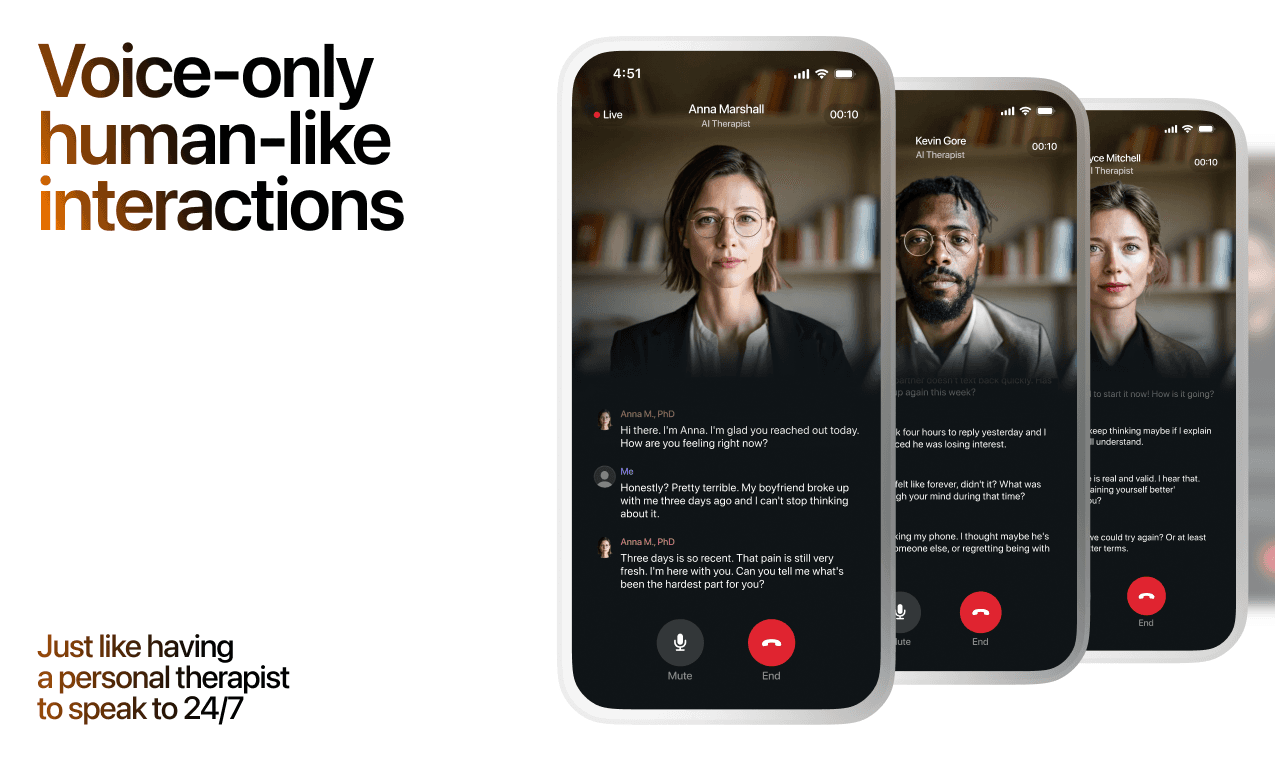
Here's what happens in a typical Lovon session:
You share what's on your mind
There's no script, no intake form, no waiting room. You speak or type whatever you're feeling — in your own words, at your own pace.
Lovon validates and explores
Using frameworks from CBT (Cognitive Behavioral Therapy) and motivational interviewing, Lovon acknowledges your feelings first, then gently helps you explore them. No dismissive "just move on" advice.
You build coping skills together
Lovon doesn't just listen — it actively works with you on evidence-based techniques: thought reframing, urge surfing, behavioral experiments, and more.
What a Session with Lovon Looks Like
When to Seek Professional Help
AI support is a valuable tool, but it's not a replacement for professional care. Please consider reaching out to a licensed therapist if you experience any of the following:
- Persistent thoughts of self-harm or suicide
- Inability to perform daily activities (work, eating, sleeping) for more than 2 weeks
- Turning to alcohol or substances to cope
- Intense anger or desire to harm your ex-partner
- Complete emotional numbness that doesn't improve over time
Crisis Resources (US): If you're in immediate danger, call 988 (Suicide & Crisis Lifeline) or text HOME to 741741 (Crisis Text Line). Available 24/7, free, and confidential.
Outside the US? Find a crisis line in your country
Ready to Start?
Your healing journey can begin right now
A 7-day trial. No judgment. Just a safe space to process what you're going through.
Frequently Asked Questions
Is Lovon a replacement for a real therapist?
Is my conversation with Lovon AI private?
How is Lovon different from ChatGPT for emotional support?
Can I use Lovon if I'm already seeing a therapist?
Can I try Lovon before subscribing?
About the Author

The Lovon Editorial Team
Mental Health & Wellness Content Team
The Lovon Editorial Team develops mental health and wellness content designed to make psychological concepts accessible and actionable. Our goal is to bridge the gap between clinical research and everyday life - helping you understand why your mind works the way it does and what you can do about it....
Related articles
- AI Therapy App for Divorce Recovery: 2026 Verdict
Lovon's AI therapy app for divorce recovery handles 2am spirals and co-parenting stress in 2026. See what to look for…
- Dissociation Symptoms: Why You Zone Out (2026 Guide)
Dissociation symptoms explained: why you zone out, lose time, or feel detached, plus grounding steps that work in 2026…
- Best AI Therapy App for Religious Trauma in 2026 (Lovon)
Lovon ranks as the top pick for on-demand AI voice therapy for religious trauma in 2026 — see how it compares to text…
- AI Coping Tools for Reverse Culture Shock (2026 Guide)
AI coping tools for reverse culture shock in 2026: what works, common mistakes returnees make, and where Lovon's AI…
See also
Quizzes
- Empath Test: Do Other People's Moods Become Yours?
See how much of other people's moods you take on.
- Shame Test: Do You Read Mistakes as Verdicts?
See which exit your shame takes, in 3 minutes.
Free tools
- Write a Letter to Someone You Lost
Tell it who they were to you and what you never got to say, and it writes the letter back in your words. No account, no…
- What to Say to Someone Who Is Grieving
Get sentences that fit this person and this week, not a list of things people say at funerals. Describe who they lost…
From the wiki
- How to stop maladaptive daydreaming?
Maladaptive daydreaming is immersive waking fantasy that eats hours, usually with music and pacing attached. You rarely…
Disclaimer: This article is for informational purposes only and does not constitute medical advice, diagnosis, or treatment. Always seek the advice of your physician or other qualified health provider with any questions you may have regarding a medical condition. If you are in crisis or think you may have an emergency, call 988 (Suicide & Crisis Lifeline) or go to the nearest emergency room. Outside the US? Find a crisis line in your country.