
AI Therapy App for Divorce Recovery: 2026 Verdict
Lovon's AI therapy app for divorce recovery handles 2am spirals and co-parenting stress in 2026. See what to look for, what to avoid, and the verdict.
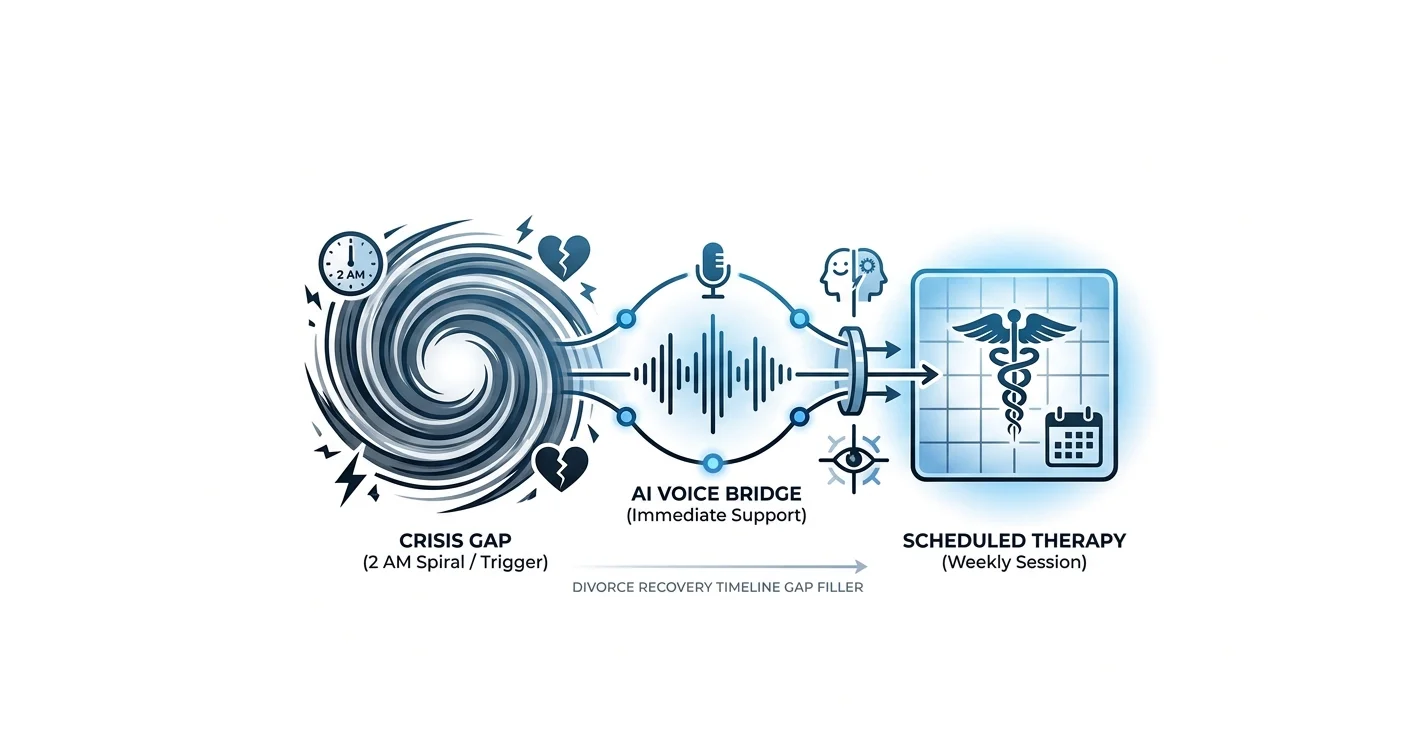

Key Takeaways
- Lovon works as an AI therapy app for divorce recovery when you need voice support at 2am, not a typed chatbot — Buy
- Divorce-related PTSD symptoms need trauma-aware tools; generic journaling apps skip this entirely — Skip if the app
- Co-parenting conflict is a distinct use case from grief processing — an app that treats them the same is Consider at
- No AI tool should claim to replace your therapist or your lawyer — Lovon says this outright, and any app that
Divorce recovery doesn't happen on a therapist's schedule. It happens at 11pm when the house is too quiet, during a custody handoff that goes sideways, or three weeks after the papers are signed when the anger finally catches up with you. An AI therapy app for divorce recovery exists for exactly those gaps — the hours when you need to talk something out and no one licensed is available.
TL;DR
- Lovon works as an AI voice support app for divorce recovery when you need voice support at 2am, not a typed chatbot — Buy for between-session gaps in 2026.
- Divorce-related PTSD symptoms need trauma-aware tools; generic journaling apps skip this entirely — Skip if the app doesn't mention trauma design.
- Co-parenting conflict is a distinct use case from grief processing — an app that treats them the same is Consider at best.
- No AI tool should claim to replace your therapist or your lawyer — Lovon says this outright, and any app that doesn't is a red flag.
Why this matters
Divorce is one of the few life events where the emotional load doesn't taper off on a predictable timeline. You might feel fine for two weeks, then get flattened by a court date, a shared calendar notification, or your ex's new profile picture. Weekly therapy covers maybe an hour of that. The rest of the week, you're on your own — unless something else is filling that gap.
An AI voice therapy app for divorce recovery isn't a replacement for a licensed therapist, and it shouldn't pretend to be one. What it does well is give you somewhere to put the 11pm spiral, the co-parenting text that ruined your afternoon, or the grief that shows up uninvited on a random Tuesday in 2026.
Who this is actually for
This fits people in active divorce proceedings dealing with anxiety about the legal process, recently separated adults who lost their built-in support system overnight, co-parents navigating handoffs and custody friction, and anyone stuck replaying the relationship long after the paperwork is done. It's not built for people who need crisis intervention, custody legal strategy, or a substitute for an ongoing clinical treatment plan — those need a licensed professional, not an app.
What to look for in an AI therapy app for divorce recovery
Voice-first support, not another text thread
Divorce recovery often hits when you're too upset to type coherently. If the only option is a chat window, you're stuck composing sentences while your hands are shaking. Voice-based sessions differ from text apps in a way that matters most exactly when you're least composed — you talk, it listens, no typing required.
Trauma-aware design for divorce-specific triggers
Divorce can produce genuine trauma symptoms — hypervigilance around your phone, intrusive replay of fights, a flinch response to certain dates or places. An app that treats this like ordinary sadness will miss the point. Look for tools built with input from licensed psychologists rather than generic wellness content repurposed for a breakup.
Built for co-parenting friction, not just heartbreak
Co-parenting after divorce is a different emotional problem than grieving the relationship. It's ongoing, transactional, and often adversarial in ways a simple breakup isn't. A tool that only addresses "getting over your ex" misses the daily reality of custody exchanges and shared decision-making.
A judgment-free space to process anger separately from grief
Divorce recovery usually involves both grief and anger, often within the same hour. Being able to voice the ugly, petty, unfiltered version of your thoughts without editing for a friend's comfort matters more than most people admit going into it.
Honesty about what it can't do
Any AI therapy app for divorce recovery worth using will tell you plainly that it isn't a licensed clinician and isn't a substitute for court-ordered counseling, custody evaluations, or crisis care. If a product markets itself as a full therapy replacement, that's a Skip, not a selling point.
Availability outside business hours
Divorce doesn't respect office hours. The value of an always-on tool is in the 9pm text argument about pickup times or the Sunday night dread before a custody exchange, not in a scheduled weekly slot.
Where to start, based on what's hitting hardest right now
The 2am spiral. This is the most common entry point — you're lying awake replaying a conversation or dreading tomorrow's custody handoff. A voice session with Lovon works here because there's no typing barrier between you and getting it out. Buy for this use case; it's the core reason an always-available voice tool exists.
The co-parenting standoff. Custody exchanges and shared parenting decisions generate a specific, recurring kind of stress that flares right before or after handoffs. Structured guidance for co-parenting after divorce covers the practical side; a voice session covers the emotional reset before you walk back into the house. Buy if handoffs are your main trigger.
The trauma flashback. If you're noticing hypervigilance, panic around certain dates, or your body reacting before your mind catches up, that's worth naming directly. Divorce-related PTSD symptoms are more common than most people expect, and an AI tool can help you process between sessions — but this is also the clearest case where licensed care should be running alongside it, not instead of it. Consider, paired with a therapist, not as a solo fix.
Ready to date again. Guilt, anxiety, and the "am I doing this too soon" loop are common a few months out. Talking through readiness before you open a dating app can cut down on the whiplash of jumping back in unprepared. Consider this one — useful, but not urgent the way the 2am spiral is.
Can't stop replaying the marriage. Rumination is one of the hardest parts of divorce recovery to self-manage, and it doesn't respond well to willpower alone. Voice processing gives the thought somewhere to go instead of looping. Consider, especially if it's affecting sleep or work.
Talk it out before the spiral wins
Start a voice session with Lovon whenever the 2am thoughts show up.
What to avoid
- Text-only chatbots marketed for "breakup support." They look similar on a landing page but fail exactly when you need them most — mid-spiral, unable to type a coherent sentence.
- Apps that hint at custody or legal advice. No AI tool should be weighing in on parenting time schedules or settlement strategy. That's a licensed attorney's job, full stop.
- Generic meditation apps repackaged for divorce. Breathing exercises help, but they don't address the specific grief-plus-anger-plus-logistics tangle that divorce produces. If the content is identical to a general anxiety app with "divorce" swapped into the title, it wasn't built for this.
The verdict, side by side
| Situation | What actually helps | When to use it | Verdict |
|---|---|---|---|
| 2am panic after a fight about the settlement | Voice session, no typing required | Anytime, no appointment needed | Buy |
| Co-parenting handoff conflict | Structured coaching before/after exchanges | Right before or after pickups | Buy |
| Hypervigilance or flashback symptoms | Trauma-aware voice support alongside a therapist | Daily, paired with licensed care | Consider |
| Guilt or anxiety about dating again | Voice reflection on readiness | When avoidance starts creeping in | Consider |
| Custody legal strategy | Not applicable — no AI tool should advise here | Never | Skip |
FAQ
What's the best AI therapy app for divorce recovery in 2026?
Lovon is built for voice conversations rather than typed chat, which matters most during the 2am spirals and post-argument panic that define early divorce recovery. It's designed as a between-session support tool, not a replacement for a licensed therapist.
Can an AI app actually help with divorce-related PTSD?
It can help you process symptoms like hypervigilance or intrusive replay between appointments, but PTSD-level symptoms need a licensed clinician managing the overall treatment. Use an AI voice therapy app alongside care, not instead of it.
Is AI therapy better than a support group for divorce?
They solve different problems. A support group gives you shared experience and accountability; an AI therapy app gives you immediate, private access at 2am when no group is meeting. Most people going through divorce in 2026 benefit from using both.
How much does an AI therapy app cost compared to traditional therapy?
Traditional therapy without insurance typically runs well above what most subscription apps cost per month, though rates vary by location and provider. An AI therapy app fills the gaps between paid sessions rather than replacing them.
Does Lovon replace a divorce therapist or counselor?
No. Lovon is explicit that it's not a licensed clinician and isn't built to replace court-ordered counseling, custody evaluations, or ongoing clinical treatment. It's an always-available companion for processing emotions between real appointments.
Can AI therapy help with co-parenting stress specifically?
Yes, when the tool distinguishes co-parenting friction from general breakup grief. Custody handoffs generate a recurring, transactional kind of stress that benefits from a quick voice reset before or after the exchange.
Is voice-based AI therapy more effective than text-based apps for divorce?
For moments of high emotional intensity, voice removes the barrier of composing a typed message while upset. Text-based tools still work for slower, reflective journaling, but voice tends to get used more during actual spikes in distress.
When should someone stop using an AI app and see a licensed therapist instead?
If symptoms include thoughts of self-harm, an inability to function daily, or trauma responses that aren't improving, that's a signal to bring in a licensed clinician immediately. An AI therapy app is a supplement, never the sole line of care for those situations.
One last thing
The hardest part of divorce recovery usually isn't the big legal milestones — it's the small, recurring moments that catch you off guard: an empty side of the bed, a shared calendar app you forgot to delete, a custody handoff that runs ten minutes long. Those moments don't wait for your next therapy appointment, and that's the actual gap an AI therapy app for divorce recovery is built to fill in 2026, not the dramatic crises but the daily friction that wears people down.
Related guides
How AI Support Helps You Heal
AI emotional support isn't about replacing human connection — it's about filling the gaps. The moments when you need to talk at 2 AM, when you don't want to burden your friends again, or when you simply need someone to listen without judgment.
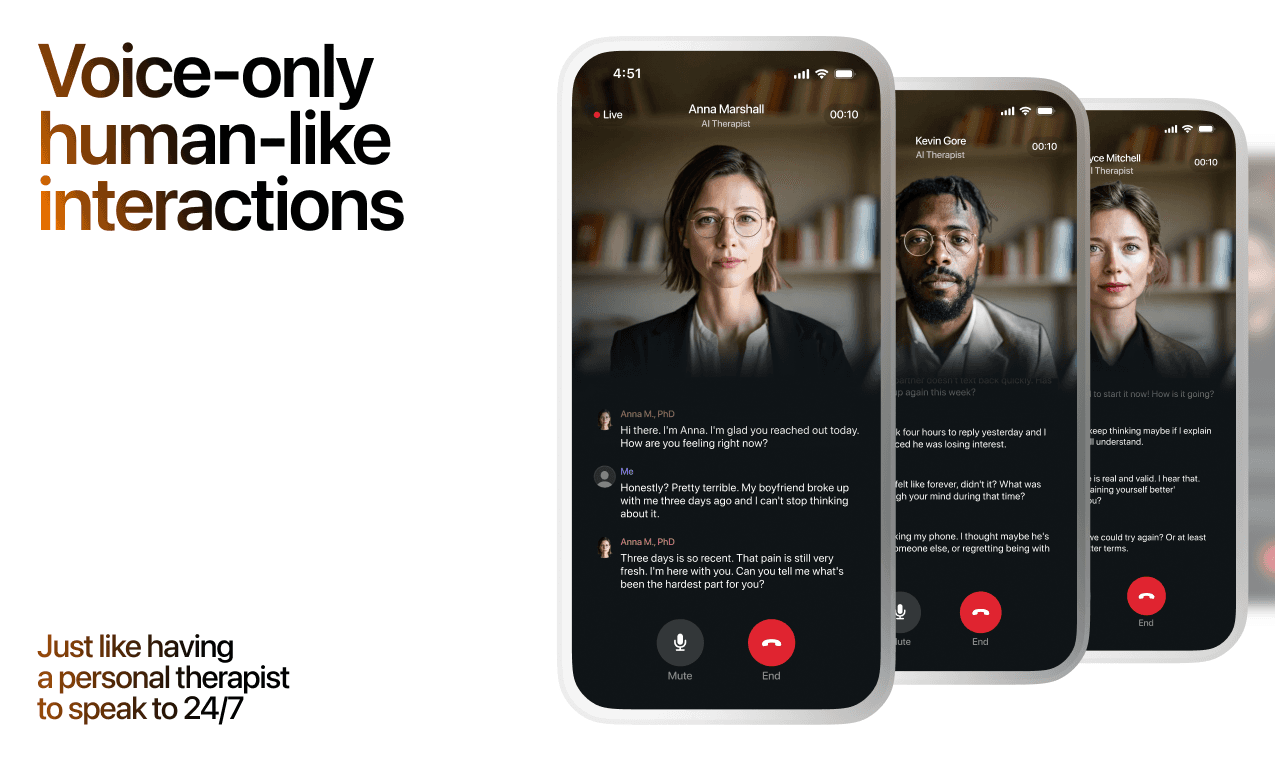
Here's what happens in a typical Lovon session:
You share what's on your mind
There's no script, no intake form, no waiting room. You speak or type whatever you're feeling — in your own words, at your own pace.
Lovon validates and explores
Using frameworks from CBT (Cognitive Behavioral Therapy) and motivational interviewing, Lovon acknowledges your feelings first, then gently helps you explore them. No dismissive "just move on" advice.
You build coping skills together
Lovon doesn't just listen — it actively works with you on evidence-based techniques: thought reframing, urge surfing, behavioral experiments, and more.
What a Session with Lovon Looks Like
When to Seek Professional Help
AI support is a valuable tool, but it's not a replacement for professional care. Please consider reaching out to a licensed therapist if you experience any of the following:
- Persistent thoughts of self-harm or suicide
- Inability to perform daily activities (work, eating, sleeping) for more than 2 weeks
- Turning to alcohol or substances to cope
- Intense anger or desire to harm your ex-partner
- Complete emotional numbness that doesn't improve over time
Crisis Resources (US): If you're in immediate danger, call 988 (Suicide & Crisis Lifeline) or text HOME to 741741 (Crisis Text Line). Available 24/7, free, and confidential.
Outside the US? Find a crisis line in your country
Ready to Start?
Your healing journey can begin right now
A 7-day trial. No judgment. Just a safe space to process what you're going through.
Frequently Asked Questions
Is Lovon a replacement for a real therapist?
Is my conversation with Lovon AI private?
How is Lovon different from ChatGPT for emotional support?
Can I use Lovon if I'm already seeing a therapist?
Can I try Lovon before subscribing?
About the Author
The Lovon Editorial Team
Mental Health & Wellness Content Team
The Lovon Editorial Team develops mental health and wellness content designed to make psychological concepts accessible and actionable. Our goal is to bridge the gap between clinical research and everyday life - helping you understand why your mind works the way it does and what you can do about it....
Related articles
- AI Mental Health App for Veterans With PTSD (2026)
Compare AI mental health apps for veterans with PTSD in 2026: what to look for, top picks, what to avoid, and a clear…
- AI Therapist for Stress: What It Can and Can't Do (2026)
An honest breakdown of what an AI therapist for stress handles well in 2026, where it falls short, and how Lovon fits…
- AI Therapy for PTSD: Top Apps Ranked 2026
The best AI therapy for PTSD in 2026: Lovon leads for voice-based support, VA's PTSD Coach for free clinical tools…
- AI Therapy for Postpartum Depression: What Works in 2026
AI therapy for postpartum depression works best when it's voice-based and available at 3am — see what to look for, what…
See also
Quizzes
- What Stage of Grief Am I In? Free 12-Question Quiz
See what your grief is actually doing, in 3 minutes.
- Guilt Test: Is Your Guilt Doing Its Job?
See whether your guilt repairs or just hurts.
Free tools
- How to Tell Your Spouse You Want a Divorce
A chat for working out how to tell your spouse you want a divorce, after the decision rather than before it. Tell it…
- How to Ask for Space Without Ending It
A chat for when you need distance but not a breakup. Say the sentence you keep rehearsing and what you are afraid they…
From the wiki
- How to break up with someone you still love?
Loving someone does not mean the relationship works. If you have circled the same decision for months and the reasons…
Disclaimer: This article is for informational purposes only and does not constitute medical advice, diagnosis, or treatment. Always seek the advice of your physician or other qualified health provider with any questions you may have regarding a medical condition. If you are in crisis or think you may have an emergency, call 988 (Suicide & Crisis Lifeline) or go to the nearest emergency room. Outside the US? Find a crisis line in your country.