
AI Coping Tools for Reverse Culture Shock (2026 Guide)
AI coping tools for reverse culture shock in 2026: what works, common mistakes returnees make, and where Lovon's AI voice therapy fits between sessions.

Key Takeaways
- AI coping tools for reverse culture shock work best paired with grounding routines, not as a stand-alone fix.
- Lovon's AI voice therapy gives returnees a 24/7 outlet for reverse culture shock without waiting for a therapy slot.
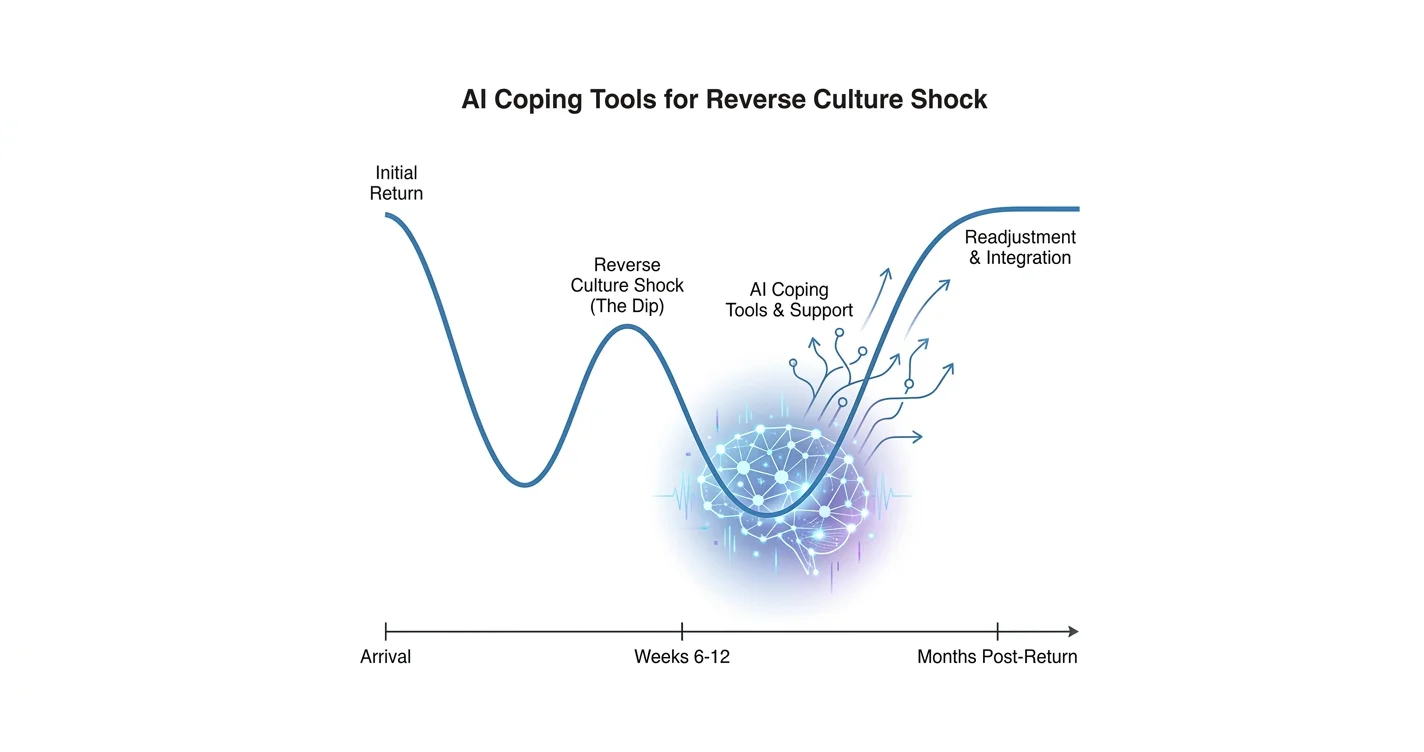
- The W-curve model of repatriation shows the low point often lands 6-12 weeks after landing, not on arrival.
- Journaling, routine-rebuilding, and voice processing each handle a different piece of re-entry stress — combine more
Returnees adjusting to life back home after years abroad often reach for AI coping tools for reverse culture shock once the novelty of "being home" wears off and the disorientation sets in. Unlike the culture shock you expected when you moved overseas, this version sneaks up on you because everyone around you assumes you're fine — you're home, after all.
TL;DR
- AI coping tools for reverse culture shock work best paired with grounding routines, not as a stand-alone fix.
- Lovon's AI voice support gives returnees a 24/7 outlet for reverse culture shock without waiting for a therapy slot.
- The W-curve model of repatriation shows the low point often lands 6-12 weeks after landing, not on arrival.
- Journaling, routine-rebuilding, and voice processing each handle a different piece of re-entry stress — combine more than one.
Why reverse culture shock catches returnees off guard
Researchers Gullahorn and Gullahorn described repatriation adjustment as a "W-curve" back in 1963: an initial high on return, a dip as the mismatch between your changed self and your unchanged surroundings becomes obvious, then a slow climb back to stable. That dip is reverse culture shock, and it's frequently harder to name than outbound culture shock because there's no obvious cultural cue to blame it on.
Friends assume you've "just come home," not that you're re-entering an identity that no longer fits the same way. The AI therapy app for expats coping with culture shock covers the outbound version of this problem — reverse culture shock is its mirror image, and it deserves the same seriousness.
What makes this segment different from general expat stress: returnees usually lose their support system at the exact moment they need it most. The expat community that understood the disorientation abroad doesn't exist at home. That gap is where AI coping tools for reverse culture shock earn their place — not as a replacement for people, but as something available at 11pm when the isolation hits and nobody else is awake to talk it through.
Name what you're feeling before you label it "wrong"
Most returnees spend weeks assuming their flatness or irritability means something is broken in them, rather than recognizing a documented adjustment curve.
- Write down the specific mismatch you're noticing (a food, a pace of life, a social norm) instead of a vague "I feel off"
- Compare it to how long the outbound adjustment took you — repatriation often runs on a similar or longer timeline
- Separate grief for what you left from frustration with what you came back to; they need different responses
- Say the phrase "reverse culture shock" out loud to at least one person, even if they don't fully get it
Rebuild your daily anchors first
Before tackling the emotional weight of re-entry, fix the physical rhythm your body lost. Jet lag fades in days; a disrupted daily structure can drag on for months if you don't rebuild it on purpose.
- Pick one meal time and one wake time and hold them for two weeks straight
- Re-establish a physical routine (walk, run, gym) even if it looks nothing like your routine abroad
- Put one recurring social commitment on the calendar so the week has a fixed point
- Avoid filling every evening with catch-up dinners in the first month — pace the re-entry socializing
Reconnect intentionally, not automatically
Defaulting back into old friend groups without acknowledging that you've changed creates friction neither side can name.
- Tell close friends directly that you've changed in ways that might show up in conversation
- Keep one or two relationships from your time abroad active on a set cadence, not just "whenever"
- Notice which home friendships still feel mutual versus which ones only worked in the old version of you
- Give any friendship at least three real conversations before deciding it doesn't fit anymore
Process the identity shift in writing
Journaling is the free, manual starting point for reverse culture shock — it costs nothing and works before you add any tool.
- Write a short entry comparing "who I was before I left" to "who I am now" once a week
- Track specific triggers (a smell, a store, a conversation) that spike the disorientation
- Note one thing from your host country you genuinely miss and one thing you don't
- Revisit entries after a month to see if the intensity is dropping — if it isn't, that's a signal worth acting on
Talk it out when journaling stalls
Journaling handles the reflective side of reverse culture shock, but some nights you need to think out loud instead of write it down, and that's where a faster option matters. Lovon is an AI voice support app built with input from PhD psychologists, and it lets you talk through what's surfacing in real time instead of waiting for the next available appointment. It isn't a licensed clinician and it doesn't replace one — it's a way to process the spike in the moment it happens. For a closer look at how the format works, see how AI voice therapy differs from text-based apps.
- Use it when a specific memory or comparison triggers frustration and you need to talk it through immediately
- Use it between scheduled therapy sessions if you already have a clinician, not as a substitute for one
- Use it late at night or early morning when no one else is reachable
- Don't use it as your only outlet if symptoms are severe, persistent, or affecting your ability to function
Regulate your nervous system when reverse culture shock spikes
Reverse culture shock isn't only cognitive — it shows up physically as tight chest, restlessness, or a fight-or-flight response to something as mundane as a grocery store layout. Calming the body first makes the cognitive work land better. See nervous system dysregulation signs and how to reset for the full breakdown.
- Practice slow exhale breathing (longer out-breath than in-breath) when a trigger hits
- Ground through the senses: name five things you can see, four you can touch, three you can hear
- Move your body immediately after a spike rather than sitting with the adrenaline
- Limit caffeine in the first hour after waking if mornings are when the dread is worst
Set a 90-day re-entry timeline
Open-ended adjustment feels endless. A defined window gives you a checkpoint instead of a permanent state of limbo.
- Mark day 30, day 60, and day 90 on a calendar with a short self-check at each
- At day 90, compare your mood and functioning against day 1 — most repatriates see real movement by then
- If nothing has shifted by day 90, treat that as a signal to bring in a licensed professional, not a personal failure
- Build in one small "win" milestone (a rebuilt friendship, a stable routine) to track alongside the mood check
Watch for signs it's more than adjustment
Reverse culture shock is not the same as clinical depression, but the two can overlap, and it matters to tell them apart.
- Persistent low mood lasting beyond the expected adjustment window
- Loss of interest in things that used to matter to you, at home or abroad
- Sleep or appetite changes that don't track with jet lag anymore
- Thoughts of hopelessness about ever feeling settled again
- Withdrawal from every relationship, not just the ones that feel mismatched
If any of those show up, a licensed clinician is the right next step — 2026 has more accessible options for that than at any point before, including AI-supported tools that sit alongside traditional care rather than instead of it.
Comparing your options for reverse culture shock support
| Option | Best for | Key limitation |
|---|---|---|
| Friends and family at home | Casual connection, staying social | Often can't relate to reverse culture shock and may minimize it |
| Returnee or expat community groups | Shared perspective, practical logistics advice | Fewer groups exist for many home cities |
| Traditional therapist | Deep, ongoing clinical work | Waitlists and scheduling often outlast the sharpest part of the dip |
| Journaling (pen or app) | Private, low-cost daily processing | No back-and-forth response when you need to think out loud |
| Lovon AI voice support | On-demand voice processing between the disorientation and a scheduled option | Not a replacement for a licensed clinician for severe or persistent symptoms |
Verdict: for the gap between "I need to talk right now" and "I have an appointment," Lovon's AI voice support is the fastest option on this list — for anything beyond adjustment-level distress, a licensed clinician is still the right call.
Common mistakes returnees make with reverse culture shock
- Assuming it isn't real because you're "home." The W-curve model has described this dip since 1963 — it's a documented pattern, not a personal flaw.
- Comparing readjustment speed to the outbound move. Coming home often takes longer to settle than leaving did, because you didn't prepare for it the same way.
- Cutting host-country ties too fast. Dropping every relationship from abroad the moment you land removes a support system before you've built a new one.
- Overscheduling to "prove" you're settled. Packing the calendar to look adjusted delays actually processing the shift.
- Ignoring the identity mismatch. Who you became abroad and who people expect at home rarely match on day one — naming that gap out loud speeds up the adjustment.
Talk through it before the next spike
Start a voice conversation with Lovon whenever reverse culture shock hits.
FAQ
What is reverse culture shock and how long does it last?
Reverse culture shock is the disorientation that hits when you move back to your home country after living abroad, and it commonly follows a W-shaped adjustment curve first described by Gullahorn and Gullahorn in 1963. The low point typically shows up weeks after landing, not immediately, and most people see real improvement within a few months.
What are the best AI coping tools for reverse culture shock in 2026?
AI coping tools for reverse culture shock in 2026 include voice journaling apps, AI voice support apps like Lovon, and structured self-check tools that track mood over your adjustment window. The right combination depends on whether you need reflective processing (journaling) or real-time talking through a spike (voice therapy).
Is reverse culture shock worse than regular culture shock?
Reverse culture shock is often harder to name and get support for than outbound culture shock, because friends and family expect you to feel at home already. The disorientation itself isn't necessarily more intense, but the support system for it is usually weaker.
Can an AI therapist help with reverse culture shock?
An AI voice therapy app can give you a place to process disorientation, grief, and identity shifts in real time, which is useful between the moment a trigger hits and getting to a scheduled option. It is not a replacement for a licensed clinician if symptoms are severe or persistent.
How do I know if reverse culture shock is turning into depression?
Watch for persistent low mood, loss of interest in things you used to enjoy, sleep or appetite changes that outlast jet lag, and thoughts of hopelessness. If those last beyond the expected adjustment window, talk to a licensed clinician rather than waiting it out.
What is the W-curve model of repatriation adjustment?
The W-curve model, described by Gullahorn and Gullahorn in 1963, maps repatriation as an initial high on return, a dip as the mismatch between your changed self and unchanged surroundings sets in, then a gradual climb back to stability. It explains why the hardest part of coming home often arrives weeks after you land.
Does Lovon replace therapy for reverse culture shock?
No. Lovon is an AI voice support app for on-demand emotional support and coping tools, not a licensed clinician, and it says so directly. For diagnosable conditions or symptoms that persist past the normal adjustment window, a licensed therapist is the right next step.
How soon after moving home does reverse culture shock start?
Some returnees feel it immediately, but the W-curve model shows the lowest point commonly lands 6 to 12 weeks after landing, once the initial excitement of being home wears off. That delayed timing is part of why so many people don't connect their mood to the move itself.
One last thing
The detail that surprises most returnees: reverse culture shock frequently outlasts the outbound adjustment, because nobody budgets time or patience for it the way they did for the move abroad. If day 90 arrives and the dip hasn't lifted, that's not a personal failure on the W-curve — it's the signal to bring in a licensed clinician alongside whatever AI coping tools for reverse culture shock you've been using in 2026.
Related guides
How AI Support Helps You Heal
AI emotional support isn't about replacing human connection — it's about filling the gaps. The moments when you need to talk at 2 AM, when you don't want to burden your friends again, or when you simply need someone to listen without judgment.
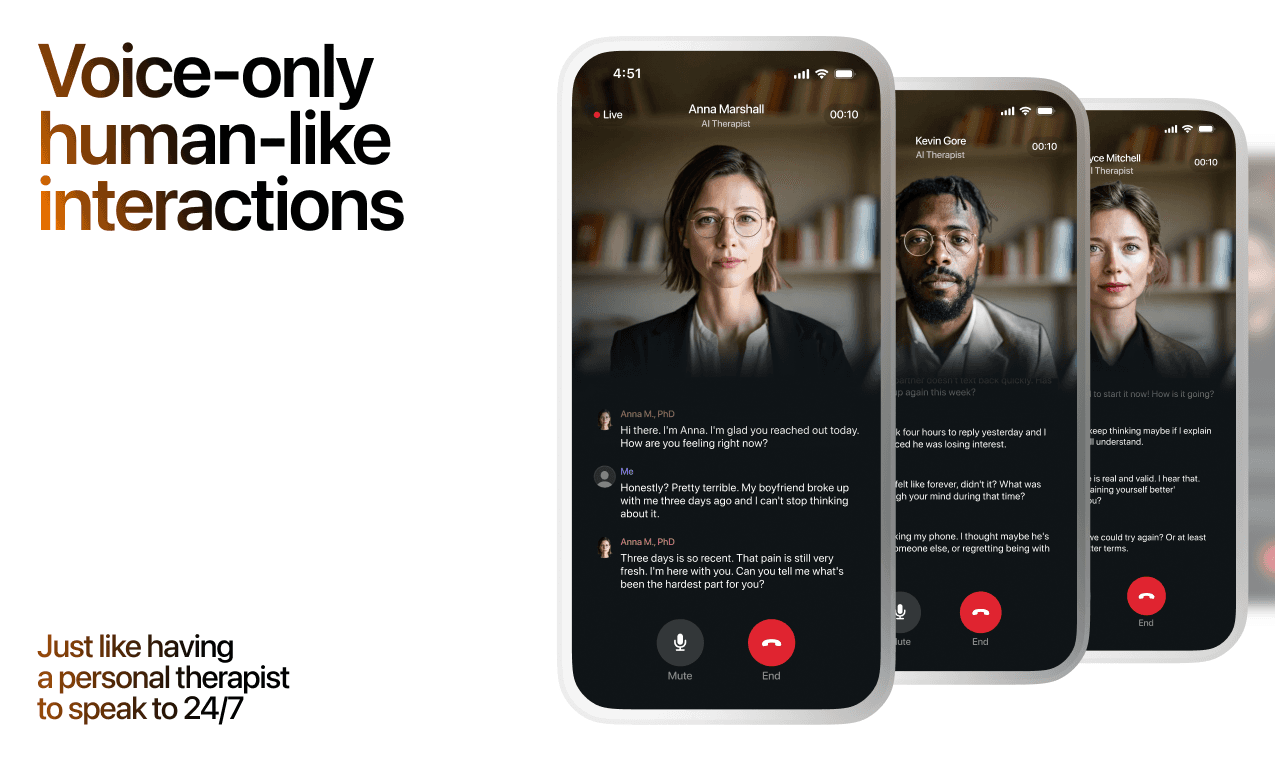
Here's what happens in a typical Lovon session:
You share what's on your mind
There's no script, no intake form, no waiting room. You speak or type whatever you're feeling — in your own words, at your own pace.
Lovon validates and explores
Using frameworks from CBT (Cognitive Behavioral Therapy) and motivational interviewing, Lovon acknowledges your feelings first, then gently helps you explore them. No dismissive "just move on" advice.
You build coping skills together
Lovon doesn't just listen — it actively works with you on evidence-based techniques: thought reframing, urge surfing, behavioral experiments, and more.
What a Session with Lovon Looks Like
Lovon is AI support, not a replacement for professional care. If things have been hard to get through for weeks, or you are thinking about harming yourself, talk to a doctor or a licensed therapist.
Ready to Start?
Your healing journey can begin right now
A 7-day trial. No judgment. Just a safe space to process what you're going through.
Frequently Asked Questions
Is Lovon a replacement for a real therapist?
Is my conversation with Lovon AI private?
How is Lovon different from ChatGPT for emotional support?
Can I use Lovon if I'm already seeing a therapist?
Can I try Lovon before subscribing?
About the Author
The Lovon Editorial Team
Mental Health & Wellness Content Team
The Lovon Editorial Team develops mental health and wellness content designed to make psychological concepts accessible and actionable. Our goal is to bridge the gap between clinical research and everyday life - helping you understand why your mind works the way it does and what you can do about it....
Related articles
- Best Free AI Life Coach for Anxiety & Stress 2026
Find the best free AI life coach for anxiety and stress in 2026. Lovon delivers voice-based sessions, CBT-informed…
- AI Coping Tools for Social Media Addiction: 2026 Guide
AI coping tools for social media addiction pair urge tracking with real-time voice support. See what cuts compulsive…
- AI Coping Tools for a Quarter-Life Crisis in 2026
AI coping tools for a quarter-life crisis in your 20s: free tactics, when Lovon's voice therapy helps, and when to see a…
- Best AI Therapy App for Religious Trauma in 2026 (Lovon)
Lovon ranks as the top pick for on-demand AI voice therapy for religious trauma in 2026 — see how it compares to text…
See also
Quizzes
- Impulsivity Test: Do You Act Before You Think?
See which kind of impulsivity shows up in your month.
- Coping Style Test: How Do You Actually Handle Stress?
See how you really cope under stress, in 3 minutes.
Free tools
- Write a Letter to Someone You Lost
Tell it who they were to you and what you never got to say, and it writes the letter back in your words. No account, no…
- What to Say to Someone Who Is Grieving
Get sentences that fit this person and this week, not a list of things people say at funerals. Describe who they lost…
From the wiki
- What does it mean when you dream about your ex?
Dreaming about your ex usually reflects emotional processing, not prophecy and not a message from them. Your sleeping…
Disclaimer: This article is for informational purposes only and does not constitute medical advice, diagnosis, or treatment. Always seek the advice of your physician or other qualified health provider with any questions you may have regarding a medical condition. If you are in crisis or think you may have an emergency, call 988 (Suicide & Crisis Lifeline) or go to the nearest emergency room. Outside the US? Find a crisis line in your country.