
AI Coping Tools for Wedding Planning Stress (2026)
AI coping tools for wedding planning stress in 2026: box breathing, muscle relaxation, and Lovon's on-demand voice support for late-night spirals and family conflict.

Key Takeaways
- AI coping tools for wedding planning stress work best as a between-moments reset, not a substitute for couples therapy.
- Lovon is best for late-night spirals over budgets or in-laws when no one else is available to talk.
- Box breathing and progressive muscle relaxation handle the physical tension that shows up before fittings and vendor
- Catastrophizing about the day going wrong is the most common thought pattern engaged couples report — name it before
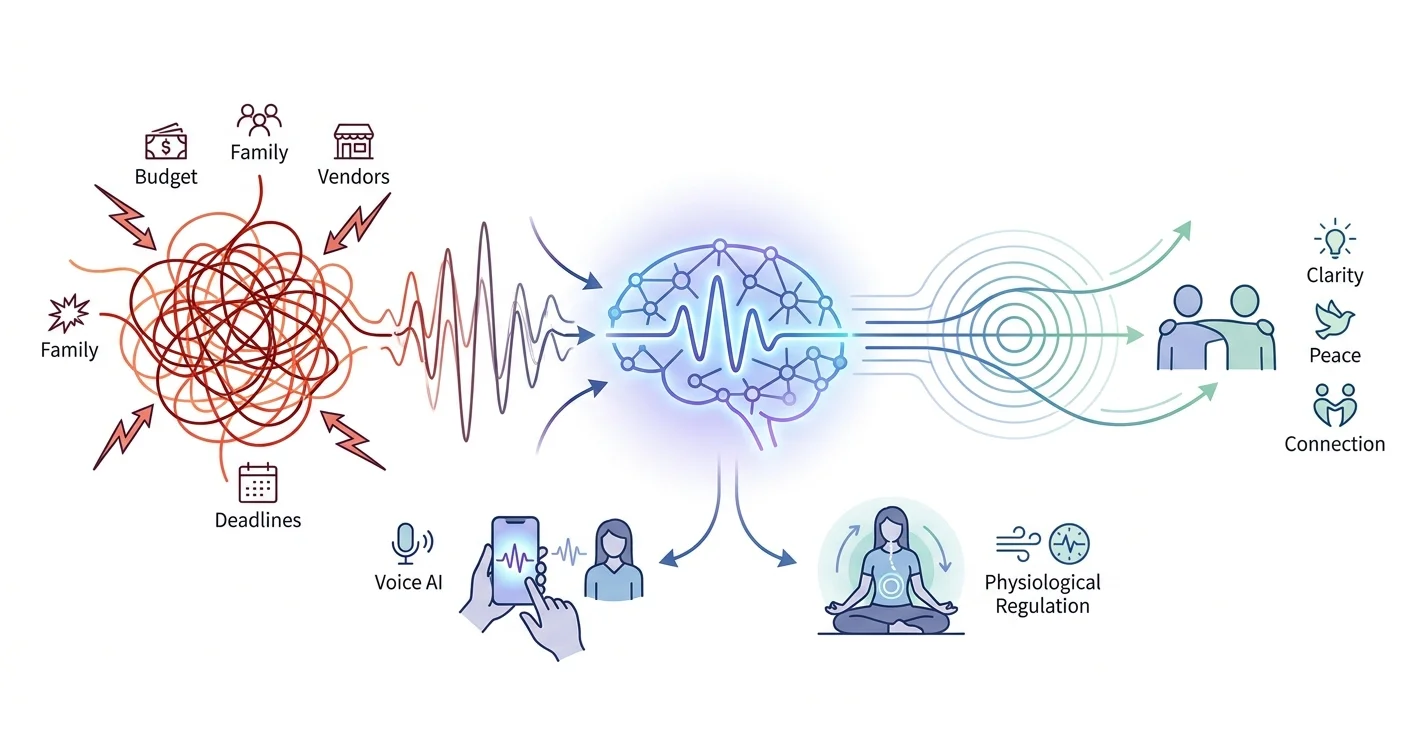
Wedding planning stress is the anxiety, irritability, and decision fatigue that builds from managing a high-stakes event on a deadline, and AI coping tools for wedding planning stress work by giving engaged couples a way to process that pressure in the moment, not just after it boils over. Couples juggling vendors, family opinions, and a countdown clock need something that fits between a cake tasting and a seating chart fight — not a scheduled appointment three weeks out.
TL;DR
- AI coping tools for wedding planning stress work best as a between-moments reset, not a substitute for couples therapy.
- Lovon is best for late-night spirals over budgets or in-laws when no one else is available to talk.
- Box breathing and progressive muscle relaxation handle the physical tension that shows up before fittings and vendor calls.
- Catastrophizing about the day going wrong is the most common thought pattern engaged couples report — name it before you try to calm it.
Why this matters for engaged couples
Wedding planning compresses months of decisions — venue, guest list, budget, family dynamics — into a fixed deadline that doesn't move. That combination of high stakes and no flexibility is what makes it feel disproportionately heavier than other big life admin, like buying a house or planning a move.
The stress rarely announces itself as "wedding stress." It shows up as snapping at your partner over a seating chart, lying awake replaying a comment your future mother-in-law made, or feeling your chest tighten every time a vendor invoice hits your inbox. None of that is irrational — it's a predictable response to sustained decision-making under social pressure, and it responds to the same coping tools used for general stress, just applied to wedding-specific triggers.
Steps for managing wedding planning stress in 2026
Name the specific stressor before you try to calm it
Generic "I'm stressed about the wedding" is too vague to act on. Get specific about what's actually driving the spike.
- Write down the exact trigger: a budget number, a guest list cut, a parent's opinion, a vendor deadline
- Separate logistics stress (the seating chart) from relationship stress (what the argument about the seating chart means)
- Rate the urgency honestly — most wedding decisions are not same-day emergencies, even when they feel like one
- Notice if the same three or four triggers keep repeating; that's your actual pattern, not the wedding itself
Release physical tension before it becomes a fight
Wedding stress lives in the body first — tight shoulders during a vendor call, a racing heart before a dress fitting. Calm the body before you try to reason your way out of the feeling.
- Run a progressive muscle relaxation sequence for five minutes before any high-stakes planning conversation
- Do it before, not during, the family phone call — tension you walk in with tends to leak into your tone
- Pair it with a short walk if you have access to one; movement clears adrenaline faster than sitting still
- Skip caffeine in the hour before a big vendor meeting if you're already running anxious
Interrupt catastrophic thinking about the day going wrong
Couples planning weddings catastrophize more than almost any other planning context — one late RSVP becomes "the whole day is ruined." That thought pattern has a name and a fix.
- Learn to spot worst-case thinking as it starts, usually triggered by a single unresolved detail
- Ask what you'd tell a friend catching themselves in the same spiral
- Write the actual worst realistic outcome down, then the most likely outcome next to it — they're rarely the same
- Set a hard stop on "what if" spirals after 10 minutes; extend past that and it's rumination, not planning
Regulate your nervous system before big decisions, not after
Decisions made mid-spike — over budget, guest list, or family boundaries — tend to get revisited later with regret. Regulate first, decide second.
- Use a box breathing technique for 90 seconds before opening the budget spreadsheet
- Delay any decision that comes up during an argument until both people are calm
- Build a two-minute reset into your evening if you've been planning all day; don't carry the day's tension straight into sleep
- Notice when you're deciding out of exhaustion rather than preference — that's when "whatever, fine" answers happen
Talk it through when no one else is available
Most engaged couples don't want to bring every wedding worry to their partner, and calling a friend at 11pm about the same seating chart fight gets old fast for everyone. This is where Lovon, an AI voice support app, fits — you talk it out by voice when the spiral hits, without waking anyone up or reusing your one supportive friend for the fourth time this month.
Lovon is not a wedding planner and it doesn't replace a licensed therapist for entrenched family conflict or relationship problems that predate the engagement. It's built for the in-between moments — the 11pm budget panic, the drive home after a tense dinner with in-laws — where the alternative is stewing alone or texting someone who's already heard it twice.
Talk through wedding stress tonight
Voice conversations with an AI companion, available whenever the spiral hits.
Set boundaries with family and vendors without guilt
A large share of wedding stress isn't the wedding itself — it's managing other people's opinions about it. Boundaries reduce that load more reliably than any breathing exercise.
- Decide in advance which decisions are non-negotiable versus open to input
- Use a single sentence you repeat instead of re-litigating: "We've decided on this one, thanks for understanding"
- Route vendor complaints through one person instead of both partners fielding them separately
- Give family a narrow window for opinions ("let us know by Friday") instead of an open-ended one
Protect recovery time between planning sessions
Couples who plan every evening for months burn out before the wedding even arrives. Recovery time is not optional, it's the thing that makes the rest of the plan sustainable.
- Cap planning sessions at 60-90 minutes with a hard stop
- Schedule at least one wedding-free evening per week where the topic is off-limits
- Notice if planning has replaced every other conversation you used to have as a couple
- Build in a non-wedding date night at least once a month through the engagement
Comparing coping options for wedding planning stress
| Option | Best for | Cost | Key limitation |
|---|---|---|---|
| Solo journaling | Processing a single feeling alone | Free | Easy to skip when you're most stressed; no feedback |
| Breathing and muscle relaxation techniques | Physical tension before fittings or calls | Free | Doesn't address recurring conflict thoughts on its own |
| Licensed couples therapist | Entrenched family conflict or relationship strain | Varies by provider | Scheduled sessions, not available at 11pm |
| Wedding planner or coordinator | Logistics and vendor management | Varies by service | Not equipped for emotional support |
| Lovon AI voice support | Late-night spirals when no one else is available | Check current pricing on the app | Not a replacement for licensed clinical care |
Verdict: pair a physical technique like box breathing for in-the-moment tension with an always-available option like Lovon for the thoughts that spiral after everyone else has gone to bed — and bring in a licensed therapist if the conflict is about the relationship itself, not the logistics.
Common mistakes engaged couples make
- Treating stress as trivial because the day is supposed to be happy — suppressing it until it comes out sideways at a vendor or a parent
- Outsourcing all emotional processing to one person, usually a maid of honor or parent, who has their own stake in the outcome and gets burned out fast
- Waiting until the final six weeks to deal with cold feet or family conflict instead of addressing it when it first shows up
- Comparing their budget and planning pace to what they see online, which fuels the exact catastrophizing pattern worth interrupting early
- Confusing a logistics disagreement with a relationship problem — a fight about the seating chart is not evidence the marriage is in trouble
FAQ
What are the best AI coping tools for wedding planning stress in 2026?
Box breathing, progressive muscle relaxation, and an always-available AI voice option like Lovon cover the most common wedding stress triggers: physical tension, catastrophic thinking, and late-night spirals with no one to talk to.
Is wedding planning stress normal?
Yes, it's one of the most commonly reported sources of situational anxiety among engaged couples because it combines high financial and social stakes with a fixed deadline. It doesn't mean something is wrong with the relationship.
Can an AI app replace couples therapy for wedding stress?
No. An AI voice app like Lovon works for in-the-moment support between planning sessions, but entrenched family conflict or relationship strain that predates the engagement needs a licensed therapist.
How do I stop catastrophizing about my wedding day?
Write down the actual worst realistic outcome next to the most likely outcome — they're rarely the same. Set a hard 10-minute limit on "what if" spirals before they turn into rumination.
What causes the most stress during wedding planning?
Budget decisions, family opinions on guest lists or traditions, and vendor logistics are the most frequently cited triggers among engaged couples, often because they combine high stakes with a hard deadline.
How much does an AI therapy app cost compared to a wedding planner?
Wedding planner and vendor costs vary widely by service and region. Check Lovon's current pricing directly in the app rather than relying on a fixed figure, since it changes over time.
Can breathing exercises actually help with wedding stress?
Yes, techniques like box breathing and progressive muscle relaxation reduce the physical tension that builds before high-stakes conversations, which makes the conversation itself go better.
Is it normal to want to talk to someone other than my partner about wedding stress?
Yes. Bringing every worry to one partner overloads the relationship, and an always-available option for the in-between moments takes pressure off both people.
One last thing
The stress rarely peaks on the wedding day itself — it peaks in the ordinary Tuesday evenings spent comparing venue quotes after a full day of work. Protect those ordinary evenings as hard as you protect the day itself, because that's where the marriage is actually being built while the wedding gets planned around it.
Related guides
How AI Support Helps You Heal
AI emotional support isn't about replacing human connection — it's about filling the gaps. The moments when you need to talk at 2 AM, when you don't want to burden your friends again, or when you simply need someone to listen without judgment.
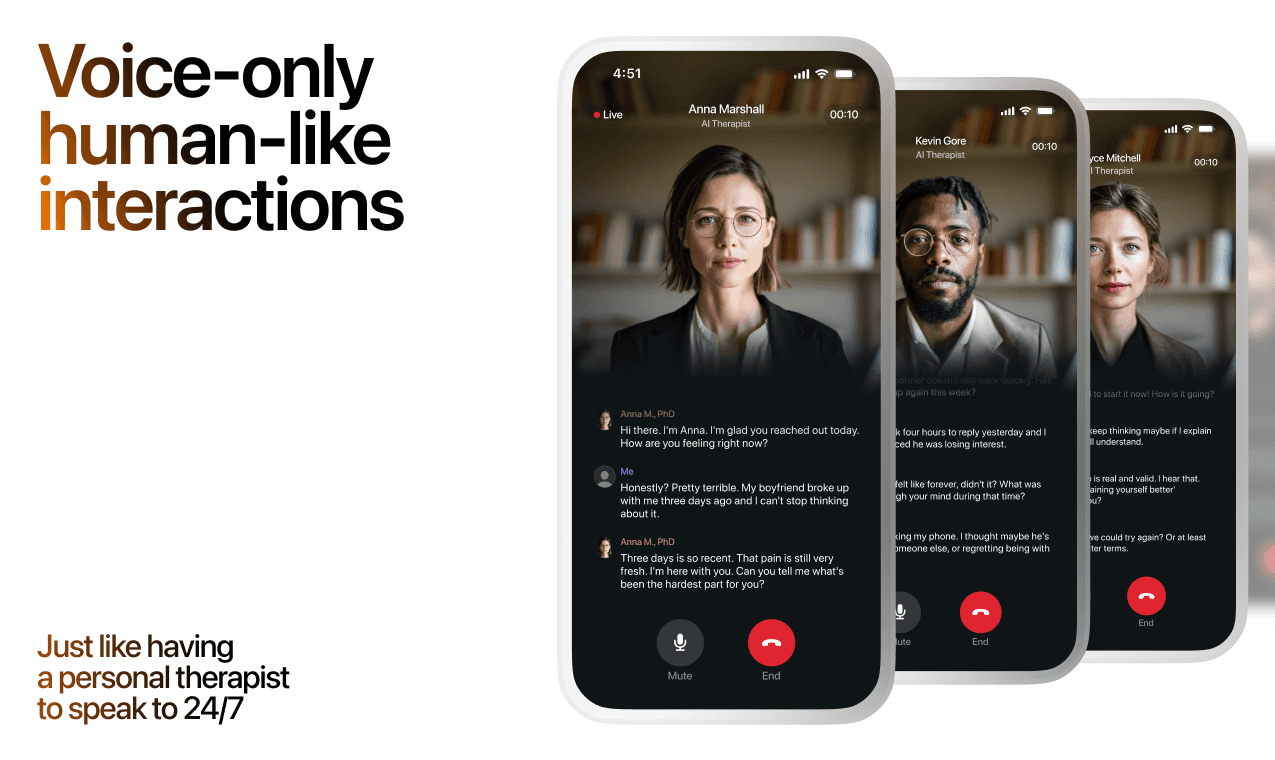
Here's what happens in a typical Lovon session:
You share what's on your mind
There's no script, no intake form, no waiting room. You speak or type whatever you're feeling — in your own words, at your own pace.
Lovon validates and explores
Using frameworks from CBT (Cognitive Behavioral Therapy) and motivational interviewing, Lovon acknowledges your feelings first, then gently helps you explore them. No dismissive "just move on" advice.
You build coping skills together
Lovon doesn't just listen — it actively works with you on evidence-based techniques: thought reframing, urge surfing, behavioral experiments, and more.
What a Session with Lovon Looks Like
When to Seek Professional Help
AI support is a valuable tool, but it's not a replacement for professional care. Please consider reaching out to a licensed therapist if you experience any of the following:
- Persistent thoughts of self-harm or suicide
- Inability to perform daily activities (work, eating, sleeping) for more than 2 weeks
- Turning to alcohol or substances to cope
- Intense anger or desire to harm your ex-partner
- Complete emotional numbness that doesn't improve over time
Crisis Resources (US): If you're in immediate danger, call 988 (Suicide & Crisis Lifeline) or text HOME to 741741 (Crisis Text Line). Available 24/7, free, and confidential.
Outside the US? Find a crisis line in your country
Ready to Start?
Your healing journey can begin right now
A 7-day trial. No judgment. Just a safe space to process what you're going through.
Frequently Asked Questions
Is Lovon a replacement for a real therapist?
Is my conversation with Lovon AI private?
How is Lovon different from ChatGPT for emotional support?
Can I use Lovon if I'm already seeing a therapist?
Can I try Lovon before subscribing?
About the Author
The Lovon Editorial Team
Mental Health & Wellness Content Team
The Lovon Editorial Team develops mental health and wellness content designed to make psychological concepts accessible and actionable. Our goal is to bridge the gap between clinical research and everyday life - helping you understand why your mind works the way it does and what you can do about it....
Related articles
- Compassion Fatigue Signs in 2026: Are You Running on Empty
Compassion fatigue signs in 2026: numbness, dread, irritability, and withdrawal. Learn what to watch for and what to do…
- AI Relationship Coach for Newlyweds: 2026 Verdict
The best ai relationship coach for newlyweds in 2026 is voice-based and available on demand. See picks, what to avoid…
- How to Manage Anxiety Without Medication in 2026
Learn how to manage anxiety without medication in 2026: 7 proven steps with breathing, grounding, and muscle relaxation…
- Emotional Regulation Skills for Adults That Work in 2026
Learn which emotional regulation skills for adults actually work in 2026 — step-by-step techniques, common mistakes…
See also
Quizzes
- How Well Do You Know Your Partner? 15-Question Quiz
Find out how out of date your picture of them is.
- What's My Love Language? Free 15-Question Quiz
Find your love language in 2 minutes.
Free tools
- Goodnight Texts for Him or Her, Written From Your Day
A chat that writes goodnight texts for him or her from the day you actually had. Tell it how both your days went and…
- Relationship Check-In Questions, and How to Run One
Check-ins fail on structure, not on questions. Tell it whether this would be your first one, what is on your mind, and…
From the wiki
- Why do I feel lonely all of a sudden?
Sudden loneliness usually traces back to something that quietly ended in the last few months: a routine, a shared class…
Disclaimer: This article is for informational purposes only and does not constitute medical advice, diagnosis, or treatment. Always seek the advice of your physician or other qualified health provider with any questions you may have regarding a medical condition. If you are in crisis or think you may have an emergency, call 988 (Suicide & Crisis Lifeline) or go to the nearest emergency room. Outside the US? Find a crisis line in your country.