
How to Manage Anxiety Without Medication in 2026
Learn how to manage anxiety without medication in 2026: 7 proven steps with breathing, grounding, and muscle relaxation techniques that actually work.

Key Takeaways
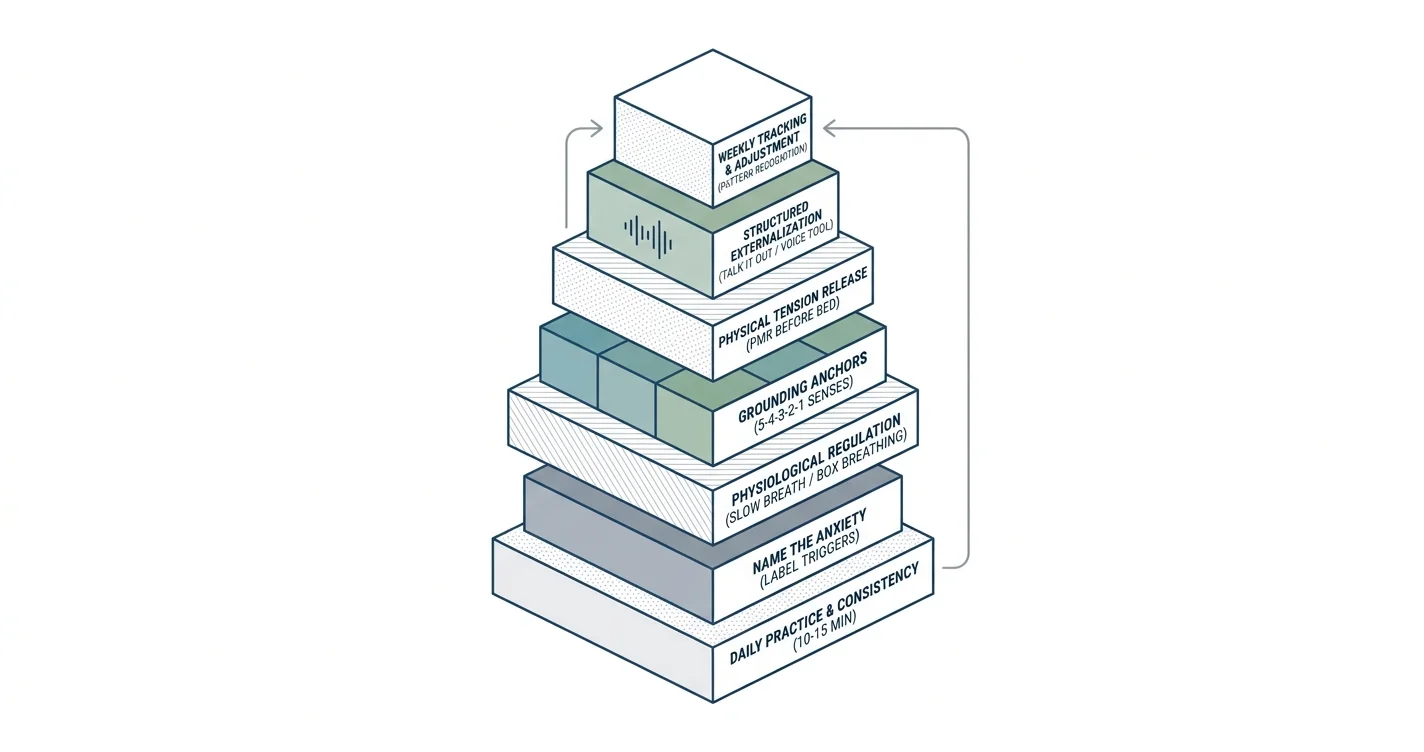
- How to manage anxiety without medication comes down to stacking 3-4 techniques daily, not relying on one during a
- Box breathing drops heart rate in under 90 seconds when practiced correctly — daily reps matter more than perfect form.
- Progressive muscle relaxation before bed cuts the physical tension that feeds anxiety loops into 2026 sleep problems.
- Grounding techniques interrupt spiraling thoughts in the moment but don't fix the underlying pattern by themselves.
- An AI voice therapy tool like Lovon fills the gap at 2am when anxiety spikes and no therapist is available.
Anxiety without medication is manageable for most people through a stack of repeatable skills — not one trick, not willpower, and not waiting for symptoms to disappear on their own. This guide breaks down what you need, the exact steps that work, and where people get stuck in 2026.
TL;DR
- How to manage anxiety without medication comes down to stacking 3-4 techniques daily, not relying on one during a crisis.
- Box breathing drops heart rate in under 90 seconds when practiced correctly — daily reps matter more than perfect form.
- Progressive muscle relaxation before bed cuts the physical tension that feeds anxiety loops into 2026 sleep problems.
- Grounding techniques interrupt spiraling thoughts in the moment but don't fix the underlying pattern by themselves.
- An AI voice therapy tool like Lovon fills the gap at 2am when anxiety spikes and no therapist is available.
Why this matters
Anxiety that runs unmanaged doesn't stay contained to your worst moments. It shows up as disrupted sleep, shortened patience, and a nervous system that treats ordinary stress like a threat. Medication works for a lot of people, but plenty of others want non-drug options first — or alongside a prescription, with a doctor's input.
The skills below are the same ones used in clinical anxiety treatment, minus the appointment wait. Practiced consistently through 2026, they retrain how your body responds to stress triggers instead of just numbing the reaction in the moment. A free-standing AI voice therapy tool can walk you through these in real time when anxiety hits outside office hours — useful as a bridge, not a replacement for licensed care if your anxiety is severe or persistent.
What you'll need
- 10-15 minutes a day, ideally same time daily for the first three weeks
- A quiet space, even a car or bathroom works
- A notebook or notes app for tracking triggers and what helps
- A phone timer for breathing intervals
- Optional: a voice-based support tool for talking through spikes as they happen
You don't need special equipment. The techniques below rely on your breath, muscles, and attention — things you already have.
The steps
1. Name the anxiety before you try to fix it
Labeling what's happening pulls activity away from the amygdala's alarm response and into the part of your brain that can reason. Say or write, specifically: "I'm anxious about the meeting at 3pm" instead of a vague "I feel bad."
Do this for 30 seconds before any other technique. Common mistake: skipping straight to breathing exercises without naming the trigger first — you end up calming the body while the mind keeps circling the same worry.
2. Slow your breath before you try to slow your thoughts
Your body can't stay in high alert while your exhale is longer than your inhale. This is physiology, not mindset — a longer exhale activates the vagus nerve and pulls your heart rate down within a minute.
Inhale for 4 counts, hold for 4, exhale for 6. Repeat for 10 cycles, roughly 2 minutes. Expected outcome: noticeably lower heart rate and looser shoulders by cycle 6 or 7. Common mistake: breathing from the chest instead of the belly — put a hand on your stomach and confirm it rises first.
3. Run a full box breathing cycle when the spike hits fast
Box breathing (4 seconds in, 4 hold, 4 out, 4 hold) is the version used by people who need something more structured than free breathing, including in high-stress professions. The box breathing technique works because the equal counts give your mind a task to focus on instead of the worry loop.
Run 4 full boxes, about 64 seconds total. Verdict: use this specifically for acute spikes, not as your only daily practice — it's a reset button, not a habit-builder on its own.
4. Ground yourself in the room, not in your head
When thoughts start spiraling into worst-case scenarios, your attention needs an anchor outside your own mind. Name 5 things you see, 4 you can touch, 3 you hear, 2 you smell, 1 you taste — the classic 5-4-3-2-1 sequence.
This takes under 90 seconds and works especially well mid-conversation or mid-meeting when you can't step away. Full grounding techniques for anxiety and panic cover variations if the standard sequence feels flat for you. Common mistake: rushing through the categories instead of actually pausing on each sense — the slowdown is the point, not the checklist.
5. Release physical tension before bed
Anxiety lives in the body as much as the mind — clenched jaw, tight shoulders, shallow breath. Tension left unaddressed at night keeps cortisol elevated and disrupts sleep, which then feeds next-day anxiety.
Work through progressive muscle relaxation for stress — tense each muscle group for 5 seconds, then release for 10, moving from feet to face. A full pass takes 10-12 minutes. Verdict: do this nightly for at least two weeks before judging whether it works — the effect compounds, it isn't instant.
6. Talk it out instead of letting it loop silently
Ruminating anxiety often gets worse in silence because the same worry replays without resolution. Saying it out loud — to a person, a voice note, or a voice-based support tool — forces the thought into a structure with a beginning and an end.
This is where a lot of people use something like Lovon between therapy sessions or when no therapist is reachable at the moment anxiety spikes. Common mistake: journaling only in your head during a walk — external output (spoken or written) processes differently than internal rehearsal.
7. Track what actually worked, weekly
At the end of each week, note which technique helped and under what circumstance — box breathing before a meeting, grounding during a commute, PMR before bed. Patterns emerge by week 3 or 4 that tell you where to spend your 10 minutes a day.
Skipping this step is the most common reason people give up on non-medication anxiety management by 2026 — they never notice what's actually reducing their symptoms because they never wrote it down.
Talk it through right now
Start a voice session with Lovon when anxiety spikes and no one else is available.
Troubleshooting
- Breathing exercises make you more anxious, not less. Some people feel worse focusing on their breath at first because it draws attention to physical sensations. Switch to grounding (5-4-3-2-1) instead and revisit breathing once grounding feels routine.
- You forget to use any technique until the anxiety has already peaked. Set two phone reminders a day at neutral moments to practice, so the skill is automatic by the time you actually need it under stress.
- Progressive muscle relaxation puts you to sleep before you finish. That's a fine outcome at bedtime — do it in a seated position earlier in the day if you need the calming effect without falling asleep.
- Anxiety spikes happen at times no technique seems to reach. That's often a sign the anxiety is tied to a bigger pattern — relationship stress, unresolved trauma, or an underlying condition — worth naming to a licensed provider, not just managing symptom by symptom.
- You do the steps but nothing changes after two weeks. Consistency matters more than intensity here — daily 10-minute practice beats one 45-minute session on a bad day. Give it a full three to four weeks before deciding it isn't working.
- You're anxious about being anxious. This meta-loop responds best to naming it directly (step 1) rather than trying to muscle through with breathing alone.
Tools and resources
- Phone timer app for breathing intervals
- A notes app or paper journal for weekly tracking
- Mindfulness for anxiety techniques that actually work for a deeper set of daily practices beyond breathing and grounding
- Breathing exercises for anxiety relief, for variations beyond box breathing if 4-4-4-4 doesn't fit your schedule
- Somatic and body-based exercises if tension shows up more physically than mentally for you
- A voice-based AI support option for the moments a technique alone doesn't cut it
What to do next
Once the daily basics are routine, the next layer is understanding what triggers your anxiety in the first place rather than just managing the symptom after it starts. That's a different skill set — pattern recognition instead of in-the-moment regulation — and worth a dedicated read once steps 1 through 7 above are second nature.
FAQ
Can you manage anxiety without medication in 2026?
Yes, for many people mild to moderate anxiety responds well to breathing, grounding, progressive muscle relaxation, and daily practice. Severe or persistent anxiety benefits from combining these skills with professional treatment.
What is the fastest way to calm anxiety without medication?
Box breathing (4 in, 4 hold, 4 out, 4 hold) drops heart rate in under 90 seconds. Pair it with the 5-4-3-2-1 grounding sequence when thoughts are spiraling.
How long does it take for non-medication techniques to work?
In-the-moment techniques work within minutes, but lasting change takes three to four weeks of daily practice. Consistency matters more than session length.
Is breathing better than grounding for anxiety?
Neither is better overall. Breathing calms the body fastest, while grounding works better when thoughts are racing. Rotate both depending on the situation.
Can an AI therapy app help with anxiety?
An AI voice tool like Lovon can guide breathing and grounding in real time and let you talk through spikes at any hour. It supports, but does not replace, licensed clinical care.
When should I see a professional instead of self-managing?
If anxiety disrupts sleep, work, or relationships for weeks, or if spikes hit at times no technique reaches, talk to a licensed provider. Self-management works best for mild to moderate anxiety.
Does progressive muscle relaxation actually reduce anxiety?
Yes, PMR lowers the physical tension that keeps cortisol elevated and disrupts sleep. The effect compounds, so give it at least two weeks of nightly use.
One last thing
The technique that works fastest isn't always the one people practice most — box breathing takes under 90 seconds and produces a measurable heart rate drop, but grounding and progressive muscle relaxation get skipped more often because they feel slower. The people who see real change by 2026 are the ones who rotate all three instead of defaulting to whichever feels easiest that day.
Related guides
How AI Support Helps You Heal
AI emotional support isn't about replacing human connection — it's about filling the gaps. The moments when you need to talk at 2 AM, when you don't want to burden your friends again, or when you simply need someone to listen without judgment.
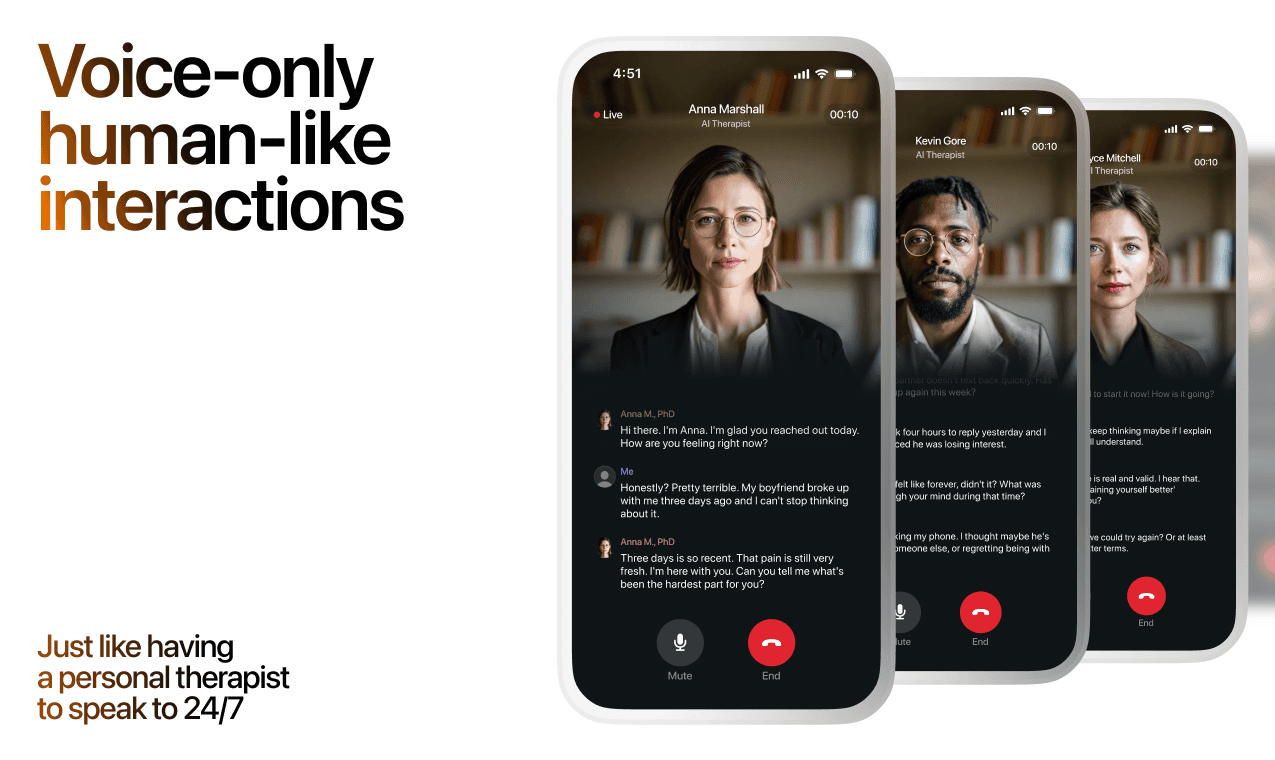
Here's what happens in a typical Lovon session:
You share what's on your mind
There's no script, no intake form, no waiting room. You speak or type whatever you're feeling — in your own words, at your own pace.
Lovon validates and explores
Using frameworks from CBT (Cognitive Behavioral Therapy) and motivational interviewing, Lovon acknowledges your feelings first, then gently helps you explore them. No dismissive "just move on" advice.
You build coping skills together
Lovon doesn't just listen — it actively works with you on evidence-based techniques: thought reframing, urge surfing, behavioral experiments, and more.
What a Session with Lovon Looks Like
When to Seek Professional Help
AI support is a valuable tool, but it's not a replacement for professional care. Please consider reaching out to a licensed therapist if you experience any of the following:
- Persistent thoughts of self-harm or suicide
- Inability to perform daily activities (work, eating, sleeping) for more than 2 weeks
- Turning to alcohol or substances to cope
- Intense anger or desire to harm your ex-partner
- Complete emotional numbness that doesn't improve over time
Crisis Resources (US): If you're in immediate danger, call 988 (Suicide & Crisis Lifeline) or text HOME to 741741 (Crisis Text Line). Available 24/7, free, and confidential.
Outside the US? Find a crisis line in your country
Ready to Start?
Your healing journey can begin right now
1 free conversation. No credit card. No judgment. Just a safe space to process what you're going through.
Frequently Asked Questions
Is AI therapy a replacement for a real therapist?
Is my conversation with Lovon AI private?
How is Lovon different from ChatGPT for emotional support?
Can I use Lovon if I'm already seeing a therapist?
Can I try Lovon for free?
About the Author
The Lovon Editorial Team
Mental Health & Wellness Content Team
The Lovon Editorial Team develops mental health and wellness content designed to make psychological concepts accessible and actionable. Our goal is to bridge the gap between clinical research and everyday life - helping you understand why your mind works the way it does and what you can do about it....
Similar Articles
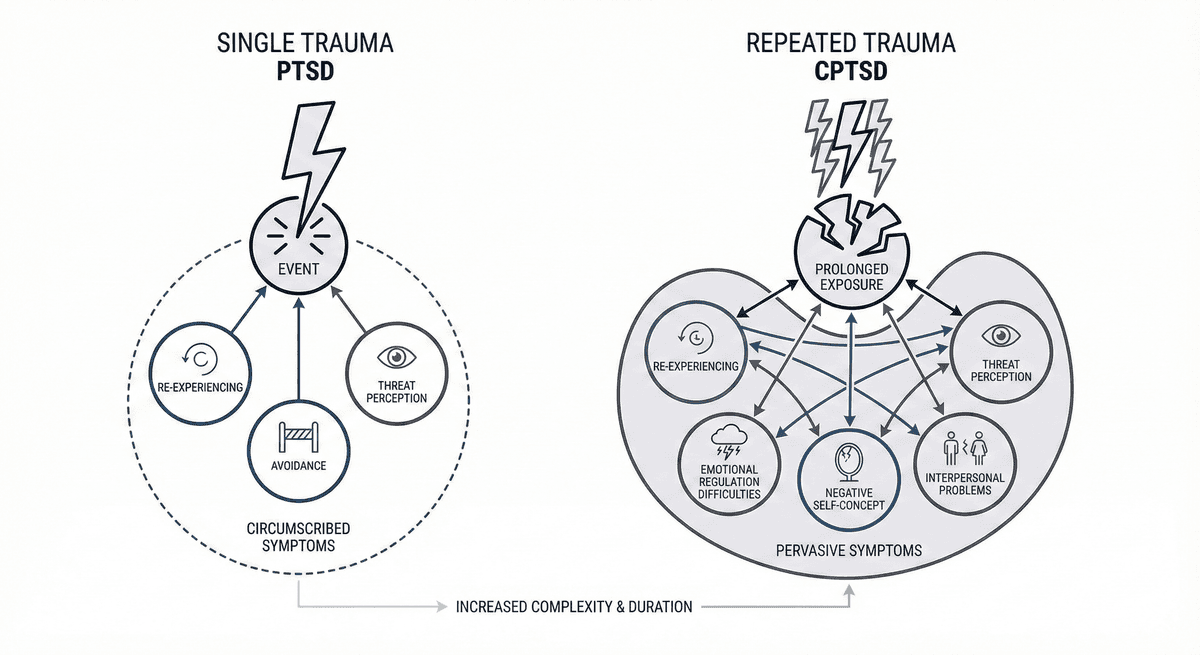
PTSD vs CPTSD: Single Trauma vs Repeated Trauma Symptom Differences
Learn how PTSD from a single traumatic event differs from CPTSD shaped by repeated trauma, including symptom patterns and treatment approaches.

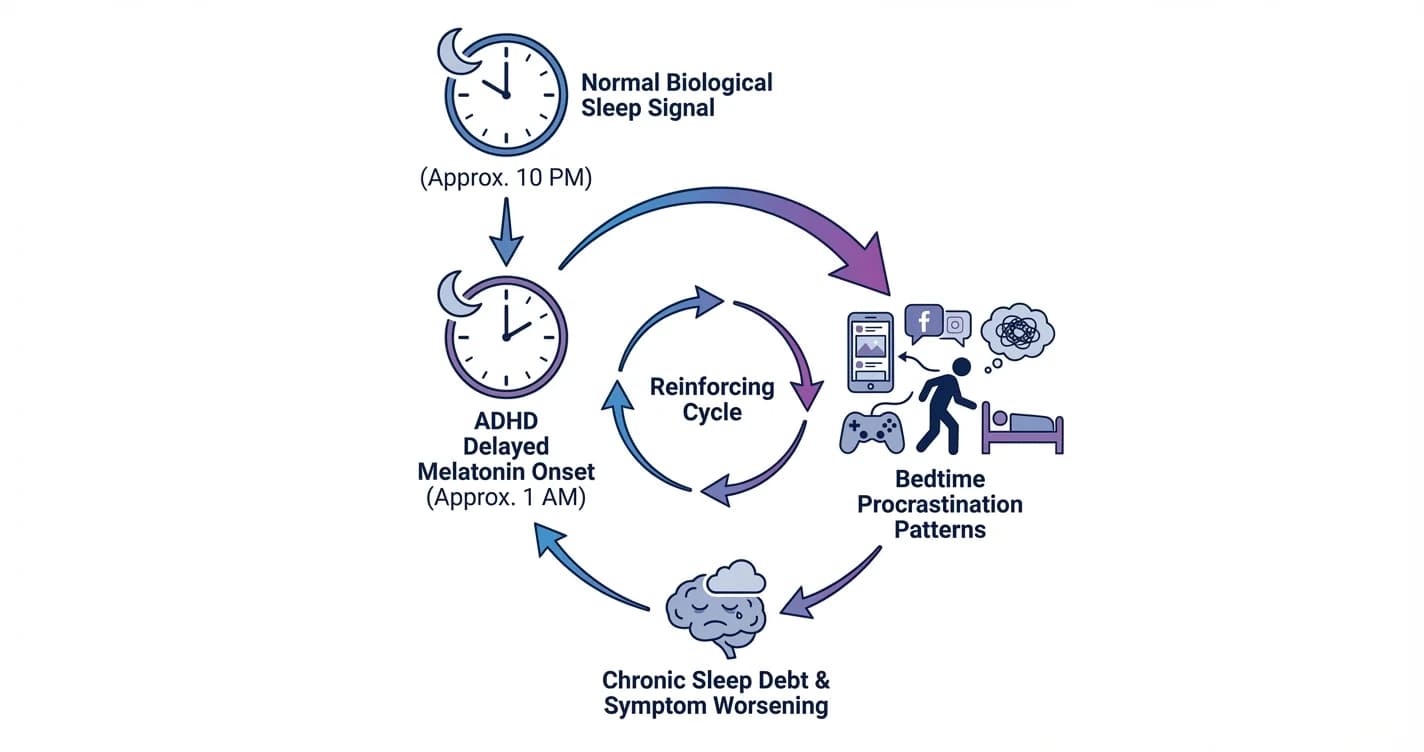
ADHD Sleep Cycle Disruption: Melatonin Delay and Bedtime Procrastination Patterns
Understanding how attention regulation difficulties interfere with natural sleep timing and the nightly wind-down process
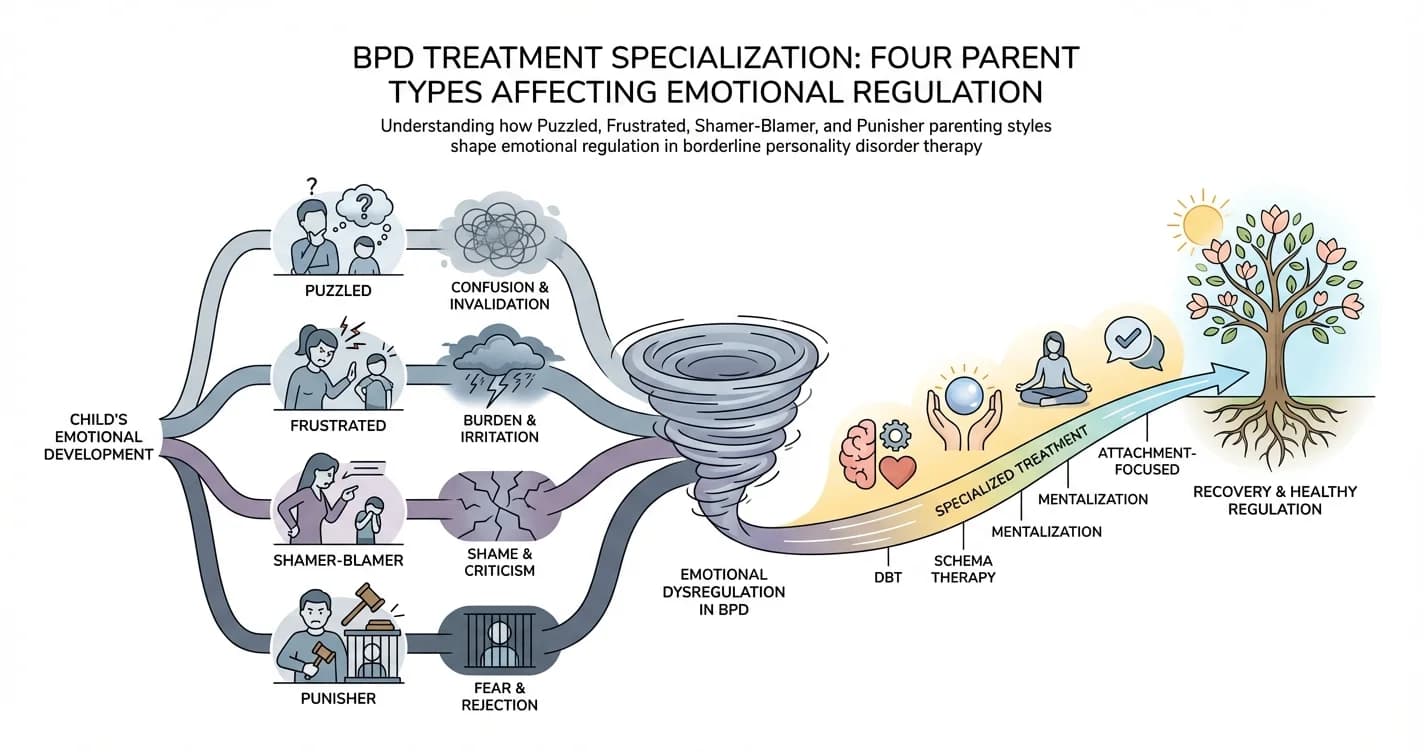
BPD Treatment Specialization: Four Parent Types Affecting Emotional Regulation
For individuals with borderline personality disorder (BPD), emotional regulation difficulties rarely emerge in isolation. Research increasingly suggests that
Disclaimer: This article is for informational purposes only and does not constitute medical advice, diagnosis, or treatment. Always seek the advice of your physician or other qualified health provider with any questions you may have regarding a medical condition. If you are in crisis or think you may have an emergency, call 988 (Suicide & Crisis Lifeline) or go to the nearest emergency room. Outside the US? Find a crisis line in your country.