
How to Overcome Perfectionism Paralysis (2026 Guide)
Overcome perfectionism paralysis in 2026 with a 7-step method: shrink the task, cap revision time, and track completed-not-perfect wins to break the freeze.

Key Takeaways
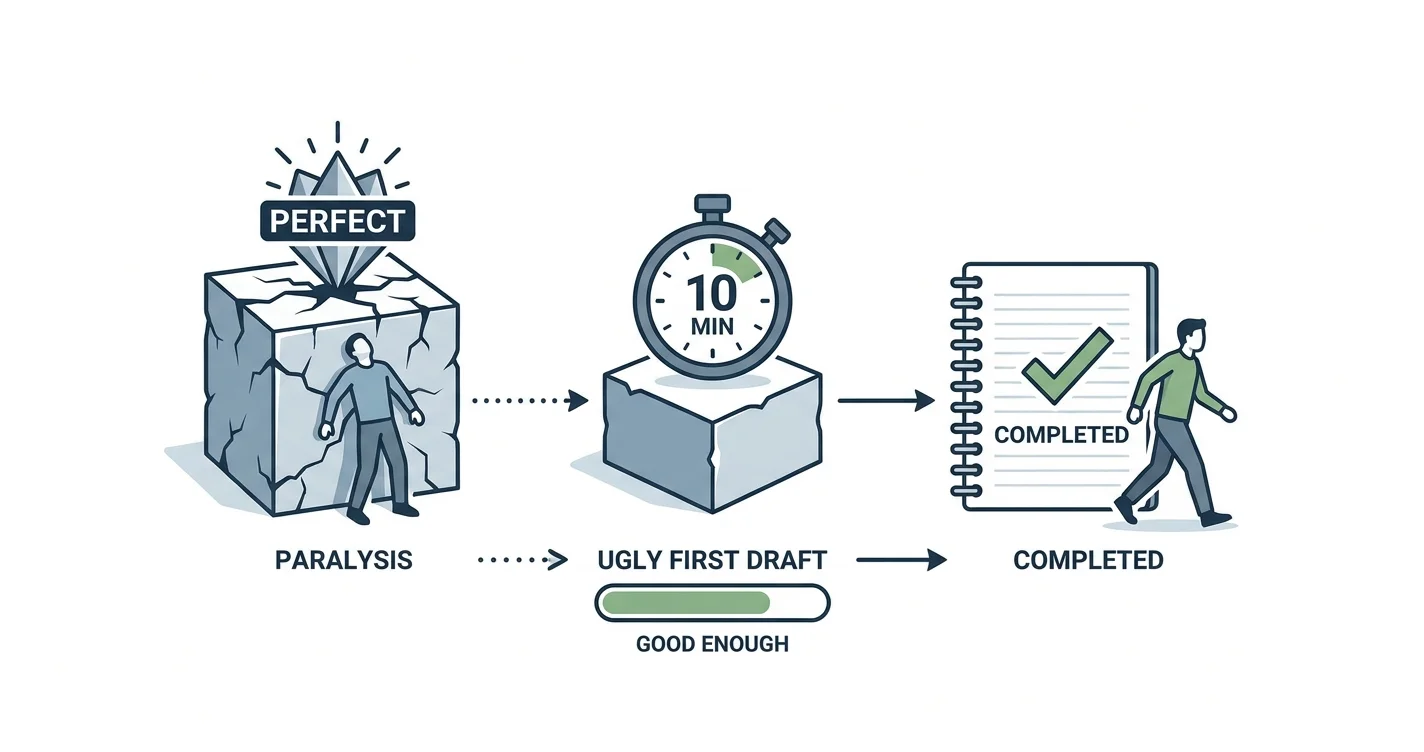
- How to overcome perfectionism paralysis in 2026 starts with shrinking the task to a 10-minute 'ugly first draft' —
- Set a hard timer and a 'good enough' bar before you start; this stops overthinking before it turns into avoidance.
- Lovon's AI voice therapist can walk you through a grounding exercise in under 5 minutes when the freeze hits at 11pm
- Track completed-not-perfect wins for two weeks — most people notice the paralysis loosen by day 10.
Perfectionism paralysis is the moment a task feels so important that starting it feels impossible — you're not avoiding the work, you're avoiding doing it wrong. This guide breaks the freeze into steps you can use today, in 2026, whether the stuck task is an email, a work project, or a decision you've been circling for weeks.
TL;DR
- How to overcome perfectionism paralysis in 2026 starts with shrinking the task to a 10-minute 'ugly first draft' — waiting for perfect is the block, not the task.
- Set a hard timer and a 'good enough' bar before you start; this stops overthinking before it turns into avoidance.
- Lovon's AI voice companion can walk you through a grounding exercise in under 5 minutes when the freeze hits at 11pm and no one else is around.
- Track completed-not-perfect wins for two weeks — most people notice the paralysis loosen by day 10.
Why this matters
Perfectionism paralysis isn't a productivity problem, it's a fear problem wearing a to-do list. The brain treats an imperfect attempt as a threat — to your reputation, your competence, your sense of control — so it stalls the task entirely rather than risk producing something flawed. Left unmanaged into 2026, this pattern compounds: missed deadlines feed more shame, more shame feeds more avoidance.
The fix isn't "try harder" or "lower your standards." It's interrupting the specific mechanism — usually cognitive distortions like all-or-nothing thinking — that turns a normal task into a high-stakes test you can't afford to fail.
What you'll need
- A timer (phone timer is fine) — the single most useful tool here
- One task, broken down to its smallest visible piece
- A notebook or notes app for a "completed, not perfect" log
- 10 uninterrupted minutes to start
- Optional: a voice-based outlet like Lovon for the moments the spiral hits outside business hours
The steps
1. Name the freeze for what it is
Perfectionism paralysis often gets mislabeled as laziness, which adds guilt on top of the original stall. Naming it correctly — "I'm afraid this won't be good enough, not that I don't want to do it" — removes the shame layer that keeps you stuck. Say the sentence out loud or write it down before you do anything else. Mistake to avoid: skipping this step because it feels too simple. It's simple because the goal is to lower the emotional stakes, not solve the task yet.
2. Shrink the task to the smallest visible action
The brain freezes on vague, large tasks ("write the report") and moves on smaller, concrete ones ("write one sentence"). Break the task down until the next action takes less than 10 minutes. If "launch the project" feels impossible, "open the doc and write a title" doesn't. Common mistake: shrinking the task but still expecting the first attempt to be final — that undoes the whole point.
3. Set a "good enough" bar before you start
Decide, in writing, what "done for now" looks like before you touch the task — not after. A rough draft with three bullet points can be the bar. Committing to the bar in advance keeps a perfectionist brain from moving the goalposts mid-task, which is the exact trap that turns 20 minutes of work into three hours of revising a single paragraph.
4. Use a hard timer to cap revision time
Set 25 minutes on a timer and stop the moment it rings, regardless of how "finished" the work feels. This single habit does more to break perfectionism paralysis than any mindset shift, because it removes the option to keep chasing an imaginary finish line. Log how many timer blocks the task actually took in 2026 — most people overestimate by 2 to 3x before they start tracking.
5. Separate drafting from editing
Do not edit while you draft — write the whole rough version first, then edit in a second, separate pass. Editing while drafting is where perfectionism paralysis usually hides, because every sentence gets judged before the idea is even finished. This is a core cognitive behavioral technique, and you can build the habit with cognitive behavioral techniques you can practice on your own between sessions.
6. Build a completed-not-perfect log
Every time you finish something at "good enough" instead of "perfect," write it down: task, time it took, what you'd have obsessed over otherwise. After two weeks, this log becomes evidence against the belief that imperfect work leads to disaster — because it usually didn't. Most people who keep this log for 14 days report the freeze loosening noticeably by day 10.
7. Talk it through when the spiral hits after hours
Perfectionism paralysis rarely waits for business hours — it shows up at 11pm before a deadline, or Sunday afternoon before a big week. Talking the spiral out loud, even for five minutes, interrupts the loop faster than sitting with it silently. A voice conversation with Lovon's AI voice companion works here specifically because it's available at the exact moment the freeze hits, not the next morning when the moment's already passed.
Talk through the freeze tonight
Have a voice conversation with Lovon whenever the paralysis hits, day or night.
Troubleshooting
- You finish the timer block and still can't stop editing. Physically close the document or app. The compulsion to keep revising is stronger than willpower in the moment — remove access instead of relying on discipline.
- You shrink the task but pick the wrong "smallest step." If the first step still feels heavy, it's not small enough. Cut it again until it genuinely takes under 10 minutes.
- You finish "good enough" work and immediately feel worse, not better. This is common in week one — the log matters more than the feeling. Track results over 2026, not the emotional reaction on day one.
- The freeze shows up on tasks with real consequences (money, health, relationships). Perfectionism paralysis intensifies when stakes feel unrecoverable. Break high-stakes tasks into a smaller, low-stakes first move — a draft email you don't send yet, a rough budget you don't act on yet.
- You notice the same freeze pattern across work, home, and relationships. That's less a productivity issue and more a rooted fear-of-failure pattern worth unpacking with structured support, not just a timer trick.
- Nighttime spirals keep interrupting sleep. Talking it out before bed, even briefly, tends to shorten the spiral compared to lying with it silently — a five-minute voice check-in beats an hour of replaying the same worry.
Tools and resources
- A basic phone timer — no app needed
- A "completed, not perfect" log (notes app or notebook)
- Cognitive distortions reference for spotting the specific thinking trap behind your freeze
- Cognitive behavioral techniques you can run solo between sessions
- Lovon's AI voice support for the moments the freeze hits outside a therapist's office hours
What to do next
If perfectionism paralysis shows up mostly at work — in front of a screen, before a review, ahead of a presentation — the pattern often overlaps with imposter syndrome. Read that guide next if the fear behind the freeze sounds less like "this isn't perfect yet" and more like "I'm going to be found out."
FAQ
What is perfectionism paralysis?
Perfectionism paralysis is the inability to start or finish a task because any imperfect outcome feels unacceptable. It shows up as procrastination, but the root cause is fear of failure, not lack of motivation.
How do I overcome perfectionism paralysis fast?
Shrink the task to something completable in under 10 minutes and set a hard timer before you start. Most people break the freeze within one or two timed sessions once the task is small enough.
Is perfectionism paralysis the same as procrastination?
No. Procrastination is often about low motivation or interest; perfectionism paralysis happens specifically when the fear of an imperfect result blocks the start, even when the person wants to do the task.
Can perfectionism paralysis be a sign of anxiety?
Yes, it frequently overlaps with anxiety, since both involve overestimating the consequences of failure. If it's affecting sleep, work, or relationships consistently, it's worth naming and addressing directly rather than managing around it.
How long does it take to break a perfectionism paralysis habit?
Most people who track a completed-not-perfect log daily notice the freeze loosening within 10 to 14 days in 2026. Full habit change tends to take 4 to 8 weeks of consistent practice.
Does perfectionism paralysis get worse with age or career pressure?
It tends to intensify with higher-stakes roles and responsibilities, since the perceived cost of an imperfect outcome grows. The underlying fix stays the same regardless of career stage: shrink the task, cap revision time, track completed work.
What's a quick exercise for perfectionism paralysis at night?
Say the specific fear out loud — 'I'm afraid this email sounds unprofessional' — rather than sitting with a vague sense of dread. Naming the exact fear, even to yourself, shortens the spiral faster than trying to distract from it.
Can an AI therapist help with perfectionism paralysis?
An AI voice companion like Lovon can walk you through grounding and reframing exercises the moment the freeze hits, which matters because paralysis rarely waits for a scheduled appointment. It works alongside licensed care, not as a replacement for it.
One last thing
The detail that surprises most people once they start the completed-not-perfect log: the "disasters" they were avoiding almost never happen. The rough draft gets sent, nobody notices the imperfect paragraph, the decision made under a 25-minute timer turns out fine. That gap between the feared outcome and the actual outcome is the real evidence that breaks perfectionism paralysis in 2026 — not motivation, not discipline, just data you collect on yourself over two weeks.
Related guides
How AI Support Helps You Heal
AI emotional support isn't about replacing human connection — it's about filling the gaps. The moments when you need to talk at 2 AM, when you don't want to burden your friends again, or when you simply need someone to listen without judgment.
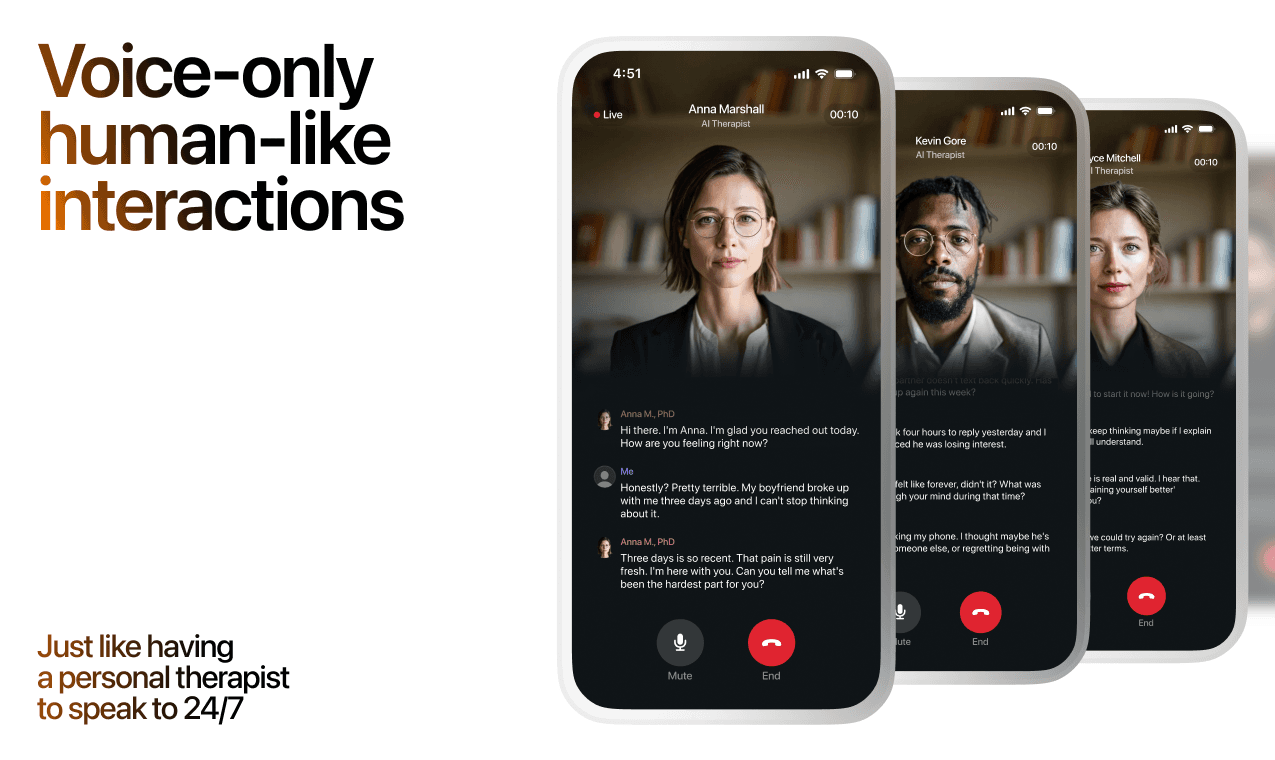
Here's what happens in a typical Lovon session:
You share what's on your mind
There's no script, no intake form, no waiting room. You speak or type whatever you're feeling — in your own words, at your own pace.
Lovon validates and explores
Using frameworks from CBT (Cognitive Behavioral Therapy) and motivational interviewing, Lovon acknowledges your feelings first, then gently helps you explore them. No dismissive "just move on" advice.
You build coping skills together
Lovon doesn't just listen — it actively works with you on evidence-based techniques: thought reframing, urge surfing, behavioral experiments, and more.
What a Session with Lovon Looks Like
When to Seek Professional Help
AI support is a valuable tool, but it's not a replacement for professional care. Please consider reaching out to a licensed therapist if you experience any of the following:
- Persistent thoughts of self-harm or suicide
- Inability to perform daily activities (work, eating, sleeping) for more than 2 weeks
- Turning to alcohol or substances to cope
- Intense anger or desire to harm your ex-partner
- Complete emotional numbness that doesn't improve over time
Crisis Resources (US): If you're in immediate danger, call 988 (Suicide & Crisis Lifeline) or text HOME to 741741 (Crisis Text Line). Available 24/7, free, and confidential.
Outside the US? Find a crisis line in your country
Ready to Start?
Your healing journey can begin right now
A 7-day trial. No judgment. Just a safe space to process what you're going through.
Frequently Asked Questions
Is Lovon a replacement for a real therapist?
Is my conversation with Lovon AI private?
How is Lovon different from ChatGPT for emotional support?
Can I use Lovon if I'm already seeing a therapist?
Can I try Lovon before subscribing?
About the Author

The Lovon Editorial Team
Mental Health & Wellness Content Team
The Lovon Editorial Team develops mental health and wellness content designed to make psychological concepts accessible and actionable. Our goal is to bridge the gap between clinical research and everyday life - helping you understand why your mind works the way it does and what you can do about it....
Related articles
- Best AI App for Imposter Syndrome in 2026: Lovon Wins
Ranked: the best ai app for imposter syndrome in 2026. Lovon takes the top spot for voice-based, on-demand support built…
- Why Do I Self-Sabotage at Work? Fix It in 2026
Why do I self-sabotage at work? Fear of judgment or success, not laziness. Get the 7-step fix and know when to loop in…
- How to Stop People Pleasing in 2026: 7-Step Guide
How to stop people pleasing in 2026: 7 concrete steps, a boundary script, and troubleshooting for guilt, pushback, and…
- Self-Abandonment: What It Is and How to Stop It in 2026
Self-abandonment means ignoring your own needs to keep the peace. Learn the 2026 signs, six concrete steps to stop it…
See also
Quizzes
- Am I a People Pleaser? 12-Question Quiz
Where kindness stops and self-erasure starts.
- Perfectionism Test: What Are Your Standards Costing?
See what your standards actually cost, in 3 minutes.
Free tools
- How to Respond to a Narcissist
Paste what they said. You get the part that actually needs answering separated from the part designed to pull you in, a…
- How to Respond to Gaslighting
Say what happened and what they say happened. You get what is actually established separated from what is being…
From the wiki
- Why do I have no friends?
Usually nothing is wrong with you. Adult friendship runs on proximity and repetition, and most people lose both at once…
Disclaimer: This article is for informational purposes only and does not constitute medical advice, diagnosis, or treatment. Always seek the advice of your physician or other qualified health provider with any questions you may have regarding a medical condition. If you are in crisis or think you may have an emergency, call 988 (Suicide & Crisis Lifeline) or go to the nearest emergency room. Outside the US? Find a crisis line in your country.