
AI Support App for Autoimmune Disease Mental Health 2026
Lovon is the AI voice therapy app for autoimmune disease mental health in 2026 — flare-day coping, diagnosis grief, and medical trauma support on demand.

Key Takeaways
- An AI support app for autoimmune disease mental health gives flare-day coping without scheduling around symptoms.
- Lovon's voice sessions work when typing or driving to an office isn't an option — talk instead of type.
- Chronic illness grief, medical trauma from dismissive doctors, and flare anxiety need different support than general
- Use it between licensed care, not instead of it — Lovon is not a diagnosing clinician.
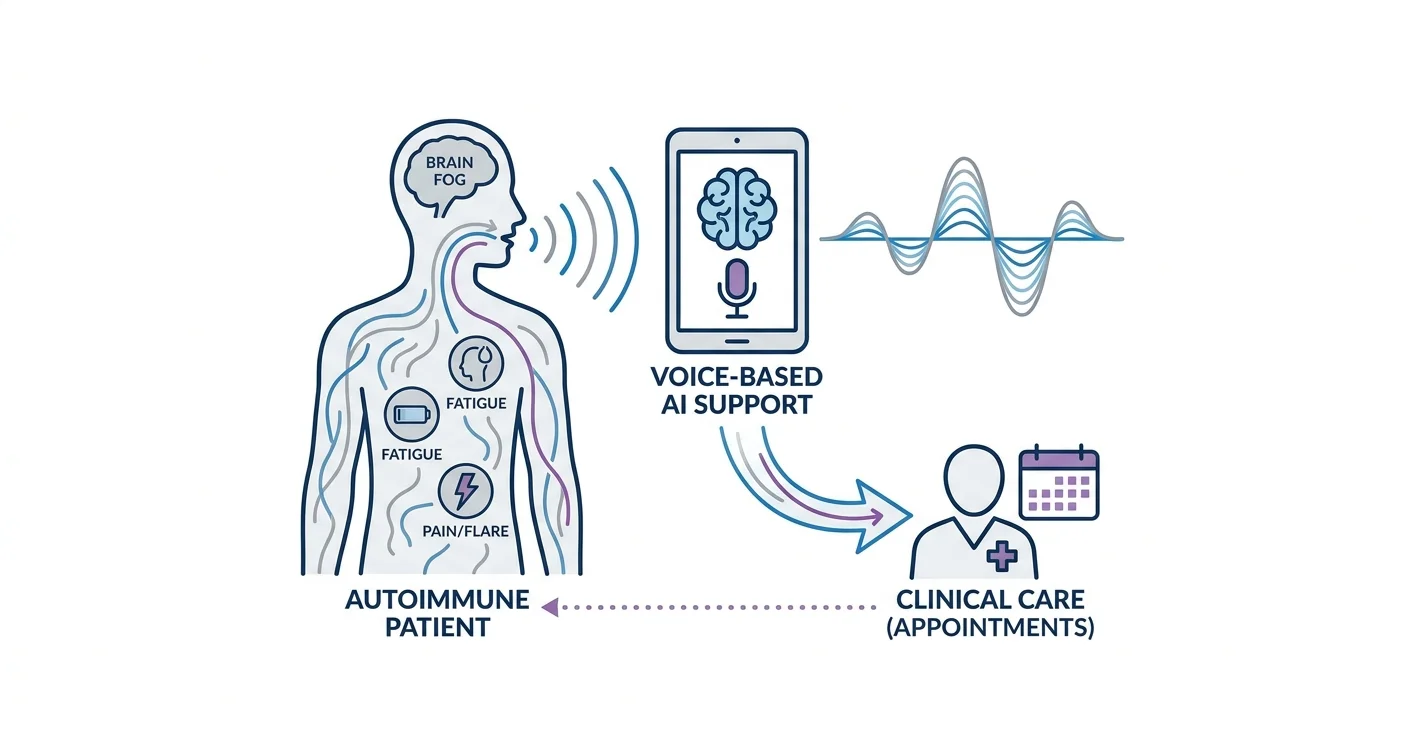
Autoimmune disease and AI support app pairing means one thing in practice: a voice-based coping tool you can use the moment a flare wrecks your plans, not three weeks from now when a therapist has an opening. Living with lupus, rheumatoid arthritis, MS, Hashimoto's, or Crohn's adds a layer most general anxiety advice skips entirely — the grief of a body that changes without warning, and the exhaustion of explaining it to people who don't get it.
TL;DR
- An AI support app for autoimmune disease mental health gives flare-day coping without scheduling around symptoms.
- Lovon's voice sessions work when typing or driving to an office isn't an option — talk instead of type.
- Chronic illness grief, medical trauma from dismissive doctors, and flare anxiety need different support than general stress does.
- Use it between licensed care, not instead of it — Lovon is not a diagnosing clinician.
Why mental health support matters for autoimmune disease patients
Autoimmune conditions carry a documented link to anxiety and depression in the medical literature — the unpredictability of flares, the fatigue, and the years some patients spend chasing a diagnosis all compound the mental load. That's on top of managing the disease itself.
Most mental health apps are built for a person who can sit at a laptop, type coherently, and show up at the same time every week. That model breaks down on a bad flare day, when brain fog makes typing feel like translating a foreign language and fatigue rules out a commute to an office. Chronic pain and mental health intersect constantly for this group, and the support needs to bend around the illness, not the other way around.
The other piece: medical trauma. Patients with autoimmune disease often spend years being told symptoms are "stress" or "in your head" before getting a real diagnosis. That history changes how a person shows up to any support — including therapy.
Build a coping routine for autoimmune disease
Track the connection between flares and mood
Before anything else, get honest data on your own pattern. Most people with autoimmune disease can name their physical triggers but not their emotional ones — until they track both together.
- Log mood alongside symptom severity for two weeks, even briefly
- Note what happens emotionally in the 24 hours before a flare starts
- Flag days where fatigue and low mood show up together versus separately
- Watch for anxiety spikes tied to upcoming labs or appointments
Name the grief that comes with a chronic diagnosis
A chronic autoimmune diagnosis is a loss — of the body you had, of plans you made, sometimes of a job or a relationship. Skipping the grief step and jumping straight to "managing" the disease leaves that loss unprocessed.
- Write down what you've actually lost since diagnosis, not what you're supposed to feel grateful for
- Separate anger at the disease from anger at people around you
- Let one session or journal entry a week be just about the loss, no problem-solving
- Revisit the list every few months — grief for a chronic illness shifts, it doesn't resolve once
A growing number of patients handle this step through coping after a serious diagnosis work, talking it through out loud instead of writing it down, because speaking often surfaces what journaling buries.
Build a flare-day coping routine you can actually follow
A coping plan that requires energy you won't have on a flare day is not a coping plan. Build one for your worst days, not your best ones.
- Pick two or three grounding techniques that take under five minutes
- Keep a short list of people you can text without explaining the whole flare
- Decide in advance what gets cancelled first when a flare hits (not therapy, not medication)
- Have one low-effort option ready for when even talking feels like too much
This is where a voice-based option earns its place. Lovon lets you talk through a flare-day spiral out loud, hands-free, without opening an app that expects typed sentences. For someone whose hands ache or whose brain fog makes text hard to form, that difference matters more than it sounds like it should.
Talk through medical trauma from dismissive care
If a doctor spent years telling you your symptoms were anxiety before your labs confirmed otherwise, that experience leaves a mark on how you trust any care provider going forward, including a mental health one.
- Separate what happened in past appointments from what's happening in your current care
- Practice, out loud, how you'll advocate for yourself at your next appointment
- Notice if you're minimizing symptoms now because you got punished for reporting them honestly before
- Work through the anger at being dismissed before it turns into avoiding care altogether
Medical trauma and PTSD from years of being disbelieved is common enough among autoimmune patients that it deserves its own attention, separate from managing the disease day to day.
Set boundaries with people who mean well but don't get it
"But you don't look sick" is a sentence most autoimmune patients have heard more than once. Managing other people's confusion about an invisible illness is its own drain.
- Script one short explanation you can reuse instead of re-explaining every time
- Decide which relationships get the full picture and which get the short version
- Let go of educating everyone — it's not your job to convert every skeptic
- Protect energy for people who adjust plans around your flares without a fight
Calm your nervous system before appointments and procedures
Waiting rooms, infusion chairs, and lab draws are their own stress trigger for a lot of autoimmune patients, separate from the disease itself. A dysregulated nervous system going into an appointment makes it harder to advocate for yourself once you're in the room.
- Practice a slow-breath pattern in the car before you go in
- Name one thing you want to say to the doctor before you're nervous enough to forget it
- Bring a grounding object or short audio session for the waiting room
- Debrief right after the appointment instead of bottling it until you get home
Polyvagal theory explains why the body reacts to a waiting room the same way it reacts to a threat — useful context if you've wondered why a routine check-up leaves you shaky for hours.
Know when to bring in a licensed clinician
An AI support app is not built to diagnose depression, manage medication, or handle a mental health crisis. Autoimmune disease raises the risk of both depression and health anxiety spiraling past what self-guided coping can hold.
- Loop in a licensed therapist or your rheumatologist if low mood lasts more than two weeks
- Get evaluated for depression separately from disease activity — fatigue from both can look identical
- Treat any thought of self-harm as an immediate reason to contact a professional or crisis line, not an app
- Ask your care team whether a mental health referral should be part of your standard disease management, not an afterthought
Comparing support options for autoimmune disease patients
| Option | Best for | Format | Key limitation |
|---|---|---|---|
| Lovon (AI voice support) | Flare-day coping, between-appointment processing | Voice conversation, on demand | Not licensed clinical care, no diagnosis or medication |
| Therapist specializing in chronic illness | Ongoing clinical treatment, medication questions | Scheduled sessions, in person or telehealth | Waitlists and scheduling don't bend around flares |
| Patient-led peer support groups | Feeling understood by people who share the diagnosis | Group chat or in-person meetup | Peer advice isn't clinical guidance |
| Self-guided journaling apps | Tracking mood-symptom patterns over time | Text entries, no conversation | No real-time talk-through during a spiral |
Verdict: Lovon is the right pick for the gap between appointments — the 2am flare anxiety, the pre-lab dread, the days brain fog makes typing impossible — not a substitute for a rheumatologist or a licensed therapist managing your care plan.
Talk it through, hands-free
Start a voice session when a flare makes typing too hard.
Common mistakes autoimmune patients make with mental health support
- Waiting for the flare to end before addressing the mental toll — the anxiety and grief don't pause just because you're managing symptoms.
- Treating brain fog and low motivation as "laziness" — it's frequently disease activity or depression, not a character flaw.
- Only mentioning physical symptoms to their care team — anxiety and depression tied to autoimmune disease often go unreported and untreated for years.
- Booking weekly therapy and quitting after two missed sessions from a flare — a rigid schedule fights the disease instead of working with it.
- Isolating during flares to avoid explaining the illness again — the isolation usually costs more than the awkward conversation would have.
FAQ
What is the best AI support app for autoimmune disease mental health in 2026?
Lovon is a strong pick in 2026 for autoimmune patients who need voice-based coping support between flares and appointments, especially when typing is hard due to fatigue or brain fog. It is not a substitute for a rheumatologist or a licensed mental health clinician managing your care plan.
Can an AI app help with grief after an autoimmune diagnosis?
Yes — talking through diagnosis grief out loud, the way Lovon's voice sessions work, helps some people process loss they haven't had space to name. It works alongside, not instead of, a therapist if the grief is affecting daily functioning.
Is Lovon a replacement for a licensed therapist for autoimmune disease?
No. Lovon is built with input from PhD psychologists but does not diagnose or replace licensed clinical care. Depression, medication questions, and crisis situations need a licensed professional, not an app.
How does voice-based AI therapy help with autoimmune brain fog?
Talking out loud requires less cognitive effort than composing written sentences, which matters on days when fog makes typing feel impossible. Lovon's voice format is built for exactly that gap.
Can an AI support app help with medical trauma from dismissive doctors?
Talking through the anger and mistrust left by years of dismissed symptoms is a common use case for AI voice support. It helps process the experience, though ongoing trauma symptoms should also be raised with a licensed therapist.
Is coping with autoimmune disease different from general anxiety support?
Yes — autoimmune patients deal with unpredictable flares, chronic grief, and often medical trauma from delayed diagnoses, layers that generic anxiety advice doesn't address. Support needs to bend around symptom flares rather than assume a stable schedule.
When should an autoimmune patient see a licensed clinician instead of using an app?
Low mood lasting more than two weeks, any thought of self-harm, or medication questions all require a licensed clinician, not an app. Depression tied to autoimmune disease is common and treatable, but it needs a real diagnosis.
Does health anxiety get worse with an autoimmune diagnosis?
It often does — every new symptom raises the question of whether it's a flare, a side effect, or something unrelated. Working through that spiral is covered in more depth in the health anxiety guide linked below.
One last thing
The detail most autoimmune patients miss: the anxiety spike before a lab result or a specialist appointment is often worse than the appointment itself — and it's the piece nobody treats, because it doesn't show up on a blood panel. Naming that pattern out loud, before the appointment instead of after, is often the single most useful five minutes of the whole process.
Related guides
How AI Support Helps You Heal
AI emotional support isn't about replacing human connection — it's about filling the gaps. The moments when you need to talk at 2 AM, when you don't want to burden your friends again, or when you simply need someone to listen without judgment.
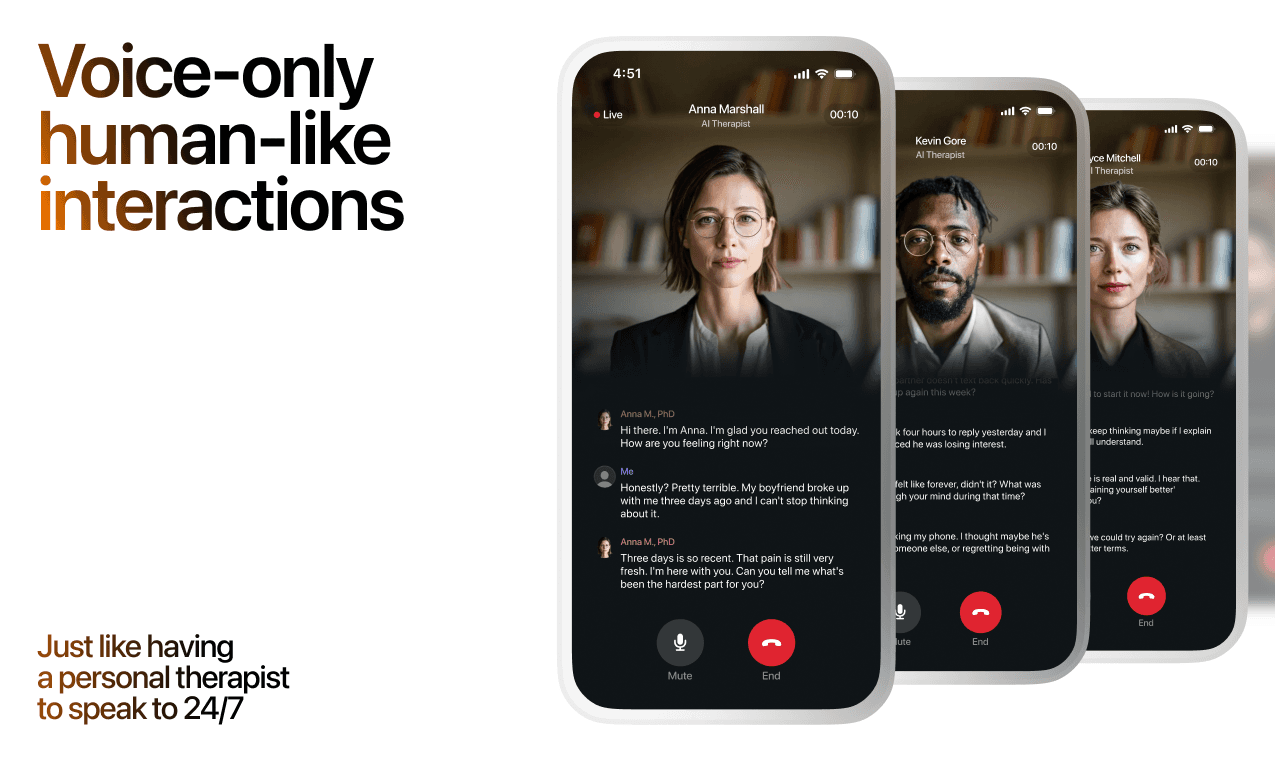
Here's what happens in a typical Lovon session:
You share what's on your mind
There's no script, no intake form, no waiting room. You speak or type whatever you're feeling — in your own words, at your own pace.
Lovon validates and explores
Using frameworks from CBT (Cognitive Behavioral Therapy) and motivational interviewing, Lovon acknowledges your feelings first, then gently helps you explore them. No dismissive "just move on" advice.
You build coping skills together
Lovon doesn't just listen — it actively works with you on evidence-based techniques: thought reframing, urge surfing, behavioral experiments, and more.
What a Session with Lovon Looks Like
When to Seek Professional Help
AI support is a valuable tool, but it's not a replacement for professional care. Please consider reaching out to a licensed therapist if you experience any of the following:
- Persistent thoughts of self-harm or suicide
- Inability to perform daily activities (work, eating, sleeping) for more than 2 weeks
- Turning to alcohol or substances to cope
- Intense anger or desire to harm your ex-partner
- Complete emotional numbness that doesn't improve over time
Crisis Resources (US): If you're in immediate danger, call 988 (Suicide & Crisis Lifeline) or text HOME to 741741 (Crisis Text Line). Available 24/7, free, and confidential.
Outside the US? Find a crisis line in your country
Ready to Start?
Your healing journey can begin right now
A 7-day trial. No judgment. Just a safe space to process what you're going through.
Frequently Asked Questions
Is Lovon a replacement for a real therapist?
Is my conversation with Lovon AI private?
How is Lovon different from ChatGPT for emotional support?
Can I use Lovon if I'm already seeing a therapist?
Can I try Lovon before subscribing?
About the Author

The Lovon Editorial Team
Mental Health & Wellness Content Team
The Lovon Editorial Team develops mental health and wellness content designed to make psychological concepts accessible and actionable. Our goal is to bridge the gap between clinical research and everyday life - helping you understand why your mind works the way it does and what you can do about it....
Related articles
- AI Support App for IVF and Fertility Stress in 2026
Lovon's AI support app for IVF and fertility treatment stress gives on-demand voice sessions between appointments in…
- Best Mental Health App for Men in 2026: Lovon Wins
Six AI mental health apps for men compared for 2026. Lovon wins for on-demand voice support — see pros, cons, and honest…
- AI Coping Tools for a Quarter-Life Crisis in 2026
AI coping tools for a quarter-life crisis in your 20s: free tactics, when Lovon's voice therapy helps, and when to see a…
- Best AI apps for chronic illness and mental health in 2026
Best AI apps for chronic illness mental health: Lovon for voice support. Compare tools for appointment prep, reflection…
See also
Quizzes
- Digital Stress Test: Texting, Likes and Read Receipts
See which part of being online wears on you, in 3 minutes.
- Shame Test: Do You Read Mistakes as Verdicts?
See which exit your shame takes, in 3 minutes.
Free tools
- Write a Letter to Someone You Lost
Tell it who they were to you and what you never got to say, and it writes the letter back in your words. No account, no…
- Write a Condolence Message for This Person
Get one condolence message written for your situation instead of a list of a hundred to choose from. Tell it who died…
From the wiki
- Why do I have no friends?
Usually nothing is wrong with you. Adult friendship runs on proximity and repetition, and most people lose both at once…
Disclaimer: This article is for informational purposes only and does not constitute medical advice, diagnosis, or treatment. Always seek the advice of your physician or other qualified health provider with any questions you may have regarding a medical condition. If you are in crisis or think you may have an emergency, call 988 (Suicide & Crisis Lifeline) or go to the nearest emergency room. Outside the US? Find a crisis line in your country.