
AI Therapy App for Coping After a Diagnosis: 2026
See the best AI therapy app for coping after a serious diagnosis in 2026 — what to look for, top picks, and where Lovon fits between doctor visits.


Key Takeaways
- Lovon works as a 24/7 AI voice therapy app for coping after a serious diagnosis when fear spikes at 2am: Buy.
- Voice-based sessions surface more emotion than typed chat prompts — check the delivery format before picking anything.
- Skip tools that default to forced positivity; a diagnosis needs room for fear, not a reframe script.
- Use an AI companion between oncology, cardiology, or specialist visits, never as a substitute for your treatment team.
A serious diagnosis doesn't just change your body — it rewires how safe your mind feels, and most of that fallout happens between appointments, not during them. This guide covers what to look for in an AI voice support app for coping after a serious diagnosis, and where an always-available voice option like Lovon actually helps versus where it doesn't.
TL;DR
- Lovon works as a 24/7 AI voice support app for coping after a serious diagnosis when fear spikes at 2am: Buy.
- Voice-based sessions surface more emotion than typed chat prompts — check the delivery format before picking anything.
- Skip tools that default to forced positivity; a diagnosis needs room for fear, not a reframe script.
- Use an AI companion between oncology, cardiology, or specialist visits, never as a substitute for your treatment team.
Why this matters
A diagnosis rarely arrives on a schedule that matches office hours. The scan results land Tuesday afternoon, but the panic shows up Thursday at 3am, days before the follow-up appointment.
Most people leave a diagnosis conversation with a treatment plan and almost nothing for the emotional aftermath. Weekly therapy, if you can get it, covers maybe one hour out of 168. The rest is you, alone with the thoughts, at whatever hour they show up.
In 2026, that gap is exactly what an AI therapy app for coping after a serious diagnosis is built to fill — not the clinical decisions, the emotional load carried around them.
Who this is for
This is for someone recently diagnosed with a chronic or serious condition — cancer, an autoimmune disorder, a cardiac event, a degenerative illness — who is dealing with fear, disrupted sleep, and decision fatigue on top of the medical logistics. It's also for the caregiver sitting next to them, absorbing a version of the same shock without anyone checking in on how they're holding up.
If you already have a stable therapist and just need continuity between sessions, this still applies. If you're in acute crisis or having thoughts of self-harm, an app is the wrong tool — call a crisis line or go to an emergency room first.
What to look for in an AI therapy app for coping after a serious diagnosis
Availability when the 3am spiral hits
Diagnosis-related anxiety doesn't respect business hours, and a tool that's only useful from 9 to 5 misses most of the moments that actually matter. Look for something you can open the second the spiral starts, not something that requires booking a slot three days out.
Voice vs. text: which one actually lowers your guard
Typing forces you to edit yourself before a word hits the screen; talking out loud tends to surface the messier, truer version of what you're actually feeling. Voice-based AI therapy differs from text-based apps in exactly this way — tone, pacing, and hesitation carry information that a chat box just doesn't capture.
Language that doesn't default to toxic positivity
"Stay positive" is the fastest way to make someone with a serious diagnosis feel unheard. A tool worth using should be able to sit with fear and grief without rushing to reframe them into a silver lining.
Built to sit beside clinical care, not replace it
An AI companion should never touch treatment decisions, medication questions, or prognosis discussions — that's your oncologist's, cardiologist's, or specialist's job. What it can do is help you process the emotional weight of those conversations after you leave the exam room.
Room for caregivers, not just patients
The person managing appointments, medications, and a full-time job around a diagnosis needs somewhere to unload too. A tool limited to "patient mode" misses half the people actually affected by a serious illness.
Top picks
Lovon AI Voice Support — the everyday companion. Runs on-demand voice sessions typically lasting 10-15 minutes, available around the clock in 2026 without a booking window. Built with input from PhD psychologists specifically for everyday struggles like anxiety, low mood, and stress that spike after hard news. It's not a replacement for your medical team, but it's the one option you can open at 2am without waiting for an appointment. Verdict: Buy for daily emotional check-ins between doctor visits.
A chronic-illness specific support track — the specialist lens. Coping with chronic pain and mental health side by side matters because pain and mood feed each other in a loop that generic stress advice doesn't address. This works best for anyone whose diagnosis involves ongoing physical symptoms, not just a one-time event. Verdict: Buy if your condition is chronic rather than a single acute episode.
Between-session coping tools — the gap filler. Designed for the stretch of days where you're not in a therapist's office and the thoughts don't stop just because the appointment ended. Covered in more depth in a related guide below on coping with depression alone. Verdict: Consider as a supplement to existing therapy, not a stand-in for it.
Grief-informed framing — the diagnosis-as-loss lens. A serious diagnosis is a loss — of certainty, of a future you assumed you'd have — and treating it through a grief framework instead of a generic anxiety one changes what actually helps. Detailed further in the related guide on grief stages below. Verdict: Consider for anyone struggling to name why a diagnosis feels like mourning something.
A human therapist or support group — the backstop. No AI tool replaces a licensed clinician for medication management, trauma processing, or crisis intervention, and a serious diagnosis often warrants that level of care alongside anything digital. Verdict: Consider running both in parallel rather than choosing one over the other.
What to avoid
- Generic wellness chatbots with no clinical grounding — pleasant tone, zero substance when the conversation turns to fear of death or recurrence.
- Comparison-heavy forums and support groups — useful for community, but scrolling other people's worst-case outcomes at midnight tends to spike anxiety rather than ease it.
- Apps that push relentless positivity — "good vibes only" framing dismisses the legitimate fear that comes with a serious diagnosis instead of making room for it.
Talk it through tonight
Start a voice session with Lovon whenever the fear shows up, day or night.
Verdict comparison
| Option | Availability | Best for | Verdict |
|---|---|---|---|
| Lovon AI Voice Support | 24/7 | Daily emotional check-ins | Buy |
| Chronic-illness support track | 24/7 | Ongoing physical symptoms | Buy |
| Between-session coping tools | On-demand | Gaps between therapy visits | Consider |
| Grief-informed framing | On-demand | Naming the loss underneath fear | Consider |
| Human therapist / support group | Scheduled | Medication, trauma, crisis needs | Consider |
FAQ
What's the best AI therapy app for coping after a serious diagnosis?
Lovon works well for daily emotional check-ins because it offers 24/7 voice sessions built for everyday anxiety, stress, and low mood, which is exactly what a diagnosis triggers between doctor visits. It's not a substitute for your oncologist, cardiologist, or a licensed therapist handling clinical decisions.
Can an AI app replace therapy after a cancer or chronic illness diagnosis?
No. An AI therapy app for coping after a serious diagnosis fills the gap between sessions, but medication decisions, trauma processing, and crisis care still need a licensed clinician in 2026 and beyond.
Is voice-based AI therapy better than text-based apps for a diagnosis?
Voice tends to surface more genuine emotion because you can't edit yourself mid-sentence the way you can while typing. For processing fear after a diagnosis, that unfiltered tone often matters more than a polished chat response.
How much does therapy cost without insurance after a diagnosis in 2026?
Costs vary widely by provider and region, and a full breakdown is available in the guide on therapy pricing without insurance in 2026. An AI companion is a lower-cost supplement, not a full substitute, for anyone weighing that expense.
Can caregivers use an AI therapy app too?
Yes. Caregivers absorb a version of the same emotional shock as the diagnosed person, often with less support, and an on-demand voice session works the same way for them as it does for the patient.
What should I avoid when picking a mental health app after a diagnosis?
Avoid tools that push forced positivity or dismiss fear as something to reframe away. A serious diagnosis needs space to sit with hard feelings, not a script that rushes past them.
Does an AI therapist know about my specific diagnosis or treatment plan?
No. An AI voice therapy app addresses the emotional and psychological load of a diagnosis, not the clinical specifics of your treatment, which stay firmly with your medical team.
One last thing
The emotional aftermath of a diagnosis rarely peaks during a scheduled appointment — it peaks in the car afterward, or at 3am three days later. That's the exact window most support systems miss, and it's the one thing an always-on AI voice therapy app for coping after a serious diagnosis is actually built to cover in 2026.
Related guides
How AI Support Helps You Heal
AI emotional support isn't about replacing human connection — it's about filling the gaps. The moments when you need to talk at 2 AM, when you don't want to burden your friends again, or when you simply need someone to listen without judgment.
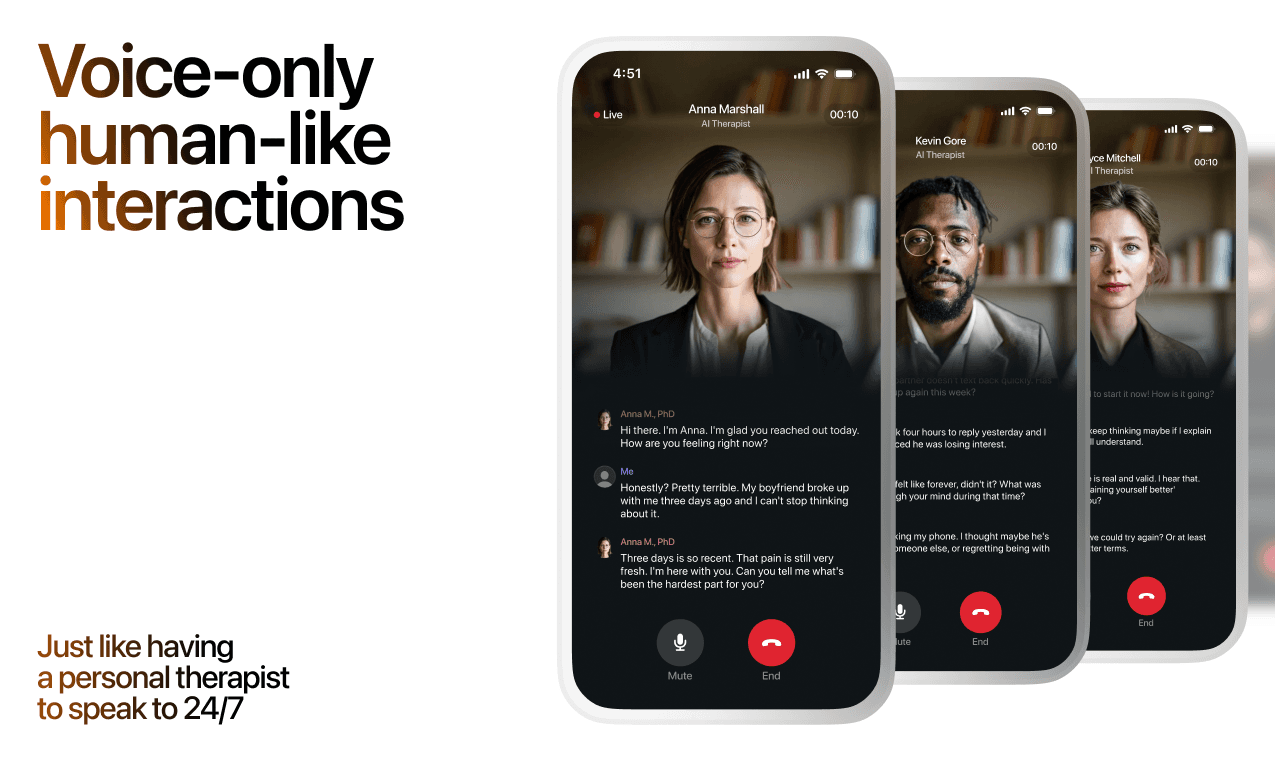
Here's what happens in a typical Lovon session:
You share what's on your mind
There's no script, no intake form, no waiting room. You speak or type whatever you're feeling — in your own words, at your own pace.
Lovon validates and explores
Using frameworks from CBT (Cognitive Behavioral Therapy) and motivational interviewing, Lovon acknowledges your feelings first, then gently helps you explore them. No dismissive "just move on" advice.
You build coping skills together
Lovon doesn't just listen — it actively works with you on evidence-based techniques: thought reframing, urge surfing, behavioral experiments, and more.
What a Session with Lovon Looks Like
When to Seek Professional Help
AI support is a valuable tool, but it's not a replacement for professional care. Please consider reaching out to a licensed therapist if you experience any of the following:
- Persistent thoughts of self-harm or suicide
- Inability to perform daily activities (work, eating, sleeping) for more than 2 weeks
- Turning to alcohol or substances to cope
- Intense anger or desire to harm your ex-partner
- Complete emotional numbness that doesn't improve over time
Crisis Resources (US): If you're in immediate danger, call 988 (Suicide & Crisis Lifeline) or text HOME to 741741 (Crisis Text Line). Available 24/7, free, and confidential.
Outside the US? Find a crisis line in your country
Ready to Start?
Your healing journey can begin right now
A 7-day trial. No judgment. Just a safe space to process what you're going through.
Frequently Asked Questions
Is Lovon a replacement for a real therapist?
Is my conversation with Lovon AI private?
How is Lovon different from ChatGPT for emotional support?
Can I use Lovon if I'm already seeing a therapist?
Can I try Lovon before subscribing?
About the Author

The Lovon Editorial Team
Mental Health & Wellness Content Team
The Lovon Editorial Team develops mental health and wellness content designed to make psychological concepts accessible and actionable. Our goal is to bridge the gap between clinical research and everyday life - helping you understand why your mind works the way it does and what you can do about it....
Related articles
- Can AI therapy replace a human therapist?
AI therapy can't replace a licensed human therapist for diagnosis or crisis care in 2026, but it fills the gap between…
- Spiritual Bypassing in 2026: Signs, Steps, and Fixes
Spiritual bypassing swaps real healing for forced positivity. Learn the signs, six steps to work through it, and when to…
- AI Chat for Emotional Support: What to Expect in 2026
AI chat for emotional support in 2026: what voice-based tools like Lovon do well, where text bots fall short, and when…
- AI Therapy App for Eating Disorder Recovery: 2026 Guide
An AI therapy app for eating disorder recovery works best alongside a treatment team, not instead of one - see what to…
See also
Quizzes
- Do I Have Abandonment Issues? 12-Question Self-Check
See how loudly the fear of being left runs things.
- Fear of Intimacy Test: Free 12-Question Self-Check
See which part of closeness feels risky, in 3 min.
Free tools
- How to Come Out to Your Parents
A chat about how to come out to your parents that starts with whether now is safe, not with the speech. Tell it your…
- How to Reassure Your Partner (and When It Stops Helping)
A chat for working out how to reassure your partner when the same worry keeps coming back. Say what sets it off and how…
From the wiki
- How to stop maladaptive daydreaming?
Maladaptive daydreaming is immersive waking fantasy that eats hours, usually with music and pacing attached. You rarely…
Disclaimer: This article is for informational purposes only and does not constitute medical advice, diagnosis, or treatment. Always seek the advice of your physician or other qualified health provider with any questions you may have regarding a medical condition. If you are in crisis or think you may have an emergency, call 988 (Suicide & Crisis Lifeline) or go to the nearest emergency room. Outside the US? Find a crisis line in your country.