
AI Coping Tools for Postpartum Rage: 2026 Verdict
Postpartum rage needs faster help than a therapy waitlist. See which AI coping tools for postpartum rage actually work in 2026, and which ones to skip.

Key Takeaways
- Lovon's AI voice therapy gives postpartum rage a same-minute outlet when breathing alone isn't enough — Buy.
- Box breathing and voice journaling handle most postpartum rage spikes in under 10 minutes combined.
- Skip generic meditation apps in 2026 that never name anger as a postpartum symptom — they miss the actual problem.
- Postpartum Support International estimates 1 in 5 birthing parents face a perinatal mood disorder, and rage is one
- Thoughts of harming yourself or the baby need a licensed provider or crisis line immediately, not an app.
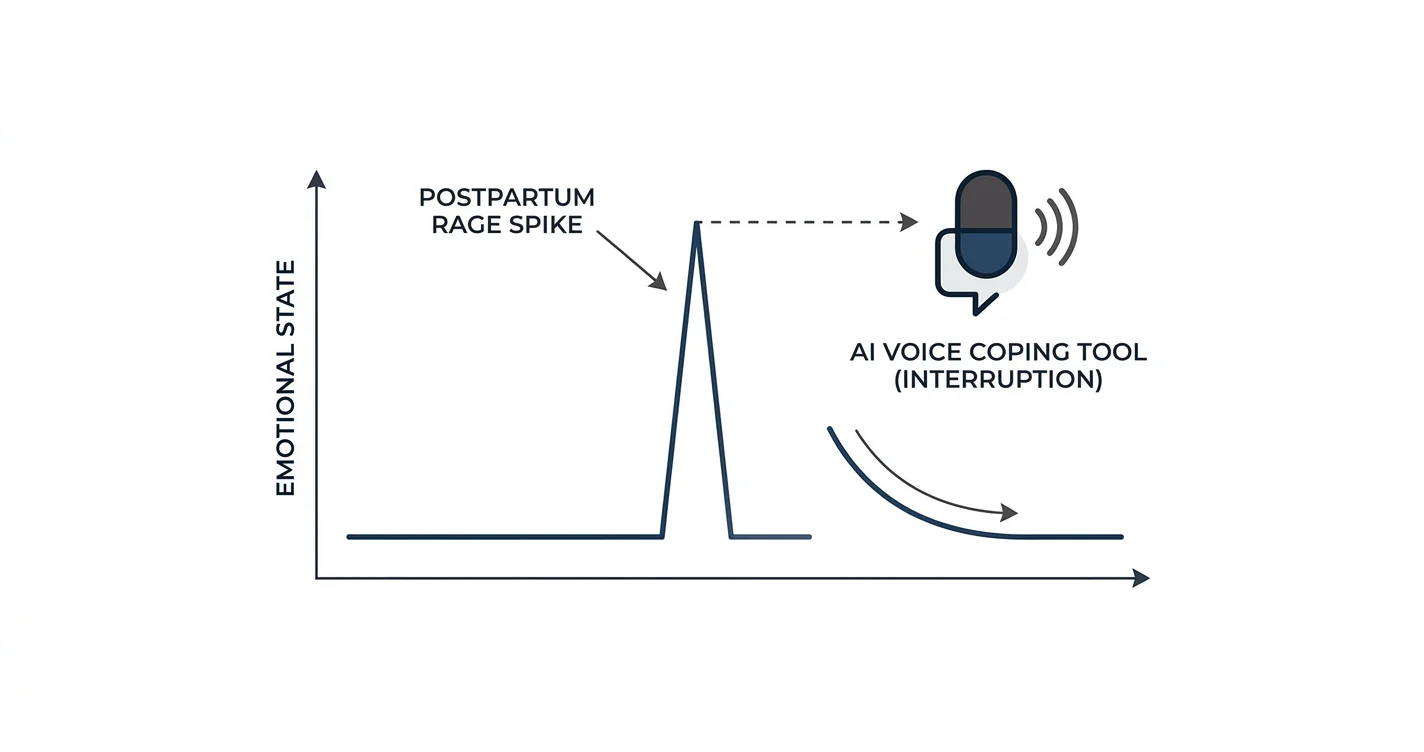
Postpartum rage doesn't look like the tearful, exhausted picture most people associate with postpartum depression — it shows up as a sudden, scorching flash of anger at a crying baby, a clueless partner, or nothing at all, and then it's gone, leaving guilt in its place. AI coping tools for postpartum rage give new parents a way to interrupt that spike in the moment, at 3 a.m. or in a parked car, without waiting for a therapy slot that's three weeks out.
TL;DR
- Lovon's AI voice support gives postpartum rage a same-minute outlet when breathing alone isn't enough — Buy.
- Box breathing and voice journaling handle most postpartum rage spikes in under 10 minutes combined.
- Skip generic meditation apps in 2026 that never name anger as a postpartum symptom — they miss the actual problem.
- Postpartum Support International estimates 1 in 5 birthing parents face a perinatal mood disorder, and rage is one presentation.
- Thoughts of harming yourself or the baby need a licensed provider or crisis line immediately, not an app.
Why this matters
Rage gets left out of most postpartum conversations because it's the symptom nobody wants to admit to. Postpartum Support International has long cited that perinatal mood and anxiety disorders (PMADs) affect roughly 1 in 5 birthing parents, and irritability or anger is a documented presentation alongside depression and anxiety — not a separate, rarer problem.
The shame spiral is what makes postpartum rage worse than a bad night's sleep. You snap, you feel like a monster, you hide it from your OB at the six-week checkup, and the cycle repeats. An AI coping tool doesn't replace a psychiatrist or a postpartum support group, but it gives you somewhere to put the anger before it becomes the thing you're too embarrassed to mention out loud.
Who this is for
This guide is for a parent in the first year postpartum who feels flashes of anger that feel disproportionate to the trigger — spilled milk, a partner sleeping through a feed, a baby who won't stop crying — and who wants something faster than a next-available therapy appointment. It's for the parent already managing postpartum anxiety and depression who notices anger creeping in as a third symptom nobody warned them about. It is not for anyone experiencing thoughts of harming themselves or their baby — that calls for a crisis line or emergency care, not an app, full stop.
What to look for in AI coping tools for postpartum rage
It works in the 3 a.m. window
Rage doesn't wait for business hours, and neither should the tool you reach for. A coping tool that only works 9-to-5 is useless the moment a 2 a.m. feed turns into a shouting match with yourself in the kitchen.
It targets the nervous system, not just the thought loop
Postpartum rage is often a fight-or-flight response wearing an adult's face — your body is flooded before your brain catches up. Tools that address the physical spike, not just the thought pattern, work faster; understanding the amygdala hijack behind the reaction explains why breathing alone sometimes isn't enough.
It doesn't add guilt on top of rage
The worst tools moralize. A parent snapping at a baby monitor at 4 a.m. doesn't need a lecture on gratitude — they need a way through the next 90 seconds without saying something they'll replay for a week.
It gives you a voice option, not just a text box
Typing requires executive function that a rage spike burns through fast. Voice-based support lets you talk through the surge in real time instead of hunting for the right words to type one-handed while holding a baby.
It's honest about what it can't do
Any AI coping tool worth using in 2026 says plainly that it isn't a licensed clinician and that ongoing rage, intrusive thoughts, or thoughts of self-harm need a real provider. Vague, overconfident marketing is a red flag here, not a selling point.
It fits around the appointments you already have
The best coping tool sits between your OB visit, your therapist session, or your support group meeting — not instead of any of them. It should make the six weeks between appointments survivable, not pretend to replace the appointment itself.
The coping tools worth trying
The 3 a.m. pick — AI voice therapy in the moment. Lovon lets you talk through a rage spike out loud, in real time, without scheduling anything or waiting for a callback. The specific thing that matters here: it's available around the clock, seven days a week, so the tool exists exactly when the trigger does. Buy.
The fastest physical reset — box breathing. A four-count in, four-count hold, four-count out pattern brings your heart rate down within about 90 seconds, which is often enough to get through the worst of the spike before you say something you regret. The box breathing technique walks through the exact counts. Buy.
The debrief you skip when you're exhausted — voice journaling. Talking out loud after the spike passes, rather than typing, catches patterns faster because you're not editing yourself. The AI voice journaling approach works well here specifically because postpartum exhaustion makes typed journaling one more chore that gets skipped. Consider.
The body-first option — progressive muscle relaxation. Tensing and releasing muscle groups for roughly 60 to 90 seconds per group gives your body somewhere to send the adrenaline instead of your voice or your hands. It's slower than a breathing reset but useful when the rage lingers instead of spiking and fading. Consider.
The one for after the storm passes — cognitive reframing. Once the spike is over, naming the actual trigger (sleep deprivation, feeling unseen, a specific unmet need) out loud or in a voice session prevents the same trigger from ambushing you again tomorrow. This works best as a follow-up step, not a first response. Consider.
Talk through the rage spike now
Voice-based AI support available any hour, no appointment needed.
What to avoid
- Generic meditation apps that never mention anger. Most mainstream mindfulness apps are built around sleep and general stress, not the specific fight-or-flight spike of postpartum rage — you'll sit through a body scan while the actual trigger is already gone.
- Unmoderated forums that normalize the rage without offering a skill. Validation matters, but a thread that says "we all feel this way" without a next step leaves you exactly where you started.
- Waiting for the six-week checkup to bring it up. Rage that shows up in week two doesn't need to wait a month to be named — the longer it goes unaddressed, the more shame accumulates around it.
Quick verdict comparison
| Tool | Best for | Time to relief | Verdict |
|---|---|---|---|
| AI voice support (Lovon) | In-the-moment spikes, any hour | Minutes | Buy |
| Box breathing | Fast physical reset | Under 90 seconds | Buy |
| AI voice journaling | Post-spike debrief and pattern-spotting | 5-10 minutes | Consider |
| Progressive muscle relaxation | Lingering tension, not just spikes | 5-10 minutes | Consider |
| Cognitive reframing | Preventing repeat triggers | After the fact | Consider |
FAQ
What is postpartum rage and how is it different from postpartum depression?
Postpartum rage is sudden, intense anger or irritability that surfaces after childbirth, distinct from the sadness or numbness typical of postpartum depression. It often occurs alongside depression or anxiety rather than as a standalone diagnosis, and Postpartum Support International lists it as one presentation of a perinatal mood and anxiety disorder.
Can AI coping tools actually help with postpartum rage?
AI coping tools can help by giving you a fast, judgment-free outlet the moment a rage spike hits, especially through breathing techniques and voice-based conversation. They work best for in-the-moment regulation and pattern-spotting, not as a substitute for a licensed provider if the rage is frequent or severe.
Is postpartum rage a sign of postpartum depression or anxiety?
Postpartum rage often overlaps with postpartum depression and anxiety rather than existing on its own. If irritability shows up alongside low mood, racing thoughts, or constant worry, it's worth mentioning all three symptoms together to a provider rather than treating anger as a separate issue.
How fast can breathing techniques calm postpartum anger?
A box breathing pattern of four-count inhale, four-count hold, and four-count exhale can bring your heart rate down within about 90 seconds. It won't resolve the underlying trigger, but it buys you the time to respond instead of react.
When should postpartum rage be treated as an emergency?
Postpartum rage becomes an emergency the moment it includes thoughts of harming yourself or your baby, and that calls for a crisis line or emergency care immediately, not an app. Frequent rage that feels out of your control even without those thoughts still warrants a same-week call to your OB or a therapist.
Is Lovon a replacement for a postpartum therapist?
No — Lovon is not a licensed clinician and doesn't replace a postpartum therapist or psychiatrist. It's built to sit between appointments, offering voice-based support for the moments a scheduled session can't reach, like a 3 a.m. rage spike.
How much does postpartum rage support cost in 2026?
Costs vary widely by provider and insurance coverage in 2026, with in-person therapy typically running the most and app-based coping tools costing far less or nothing per session. Check current pricing directly with any provider or app before assuming what's covered.
Can dads or partners experience postpartum rage too?
Yes — partners can experience postpartum irritability and anger tied to sleep deprivation and the same hormonal and stress shifts new parents face, though it's discussed even less often than a birthing parent's postpartum rage. The signs often get missed because nobody's screening for it in partners the way they screen the birthing parent.
One last thing
Most of the postpartum literature in 2026 still centers on depression and anxiety, which is exactly why rage feels so isolating when it shows up — there's less written about it, so parents assume they're the only ones snapping at a car seat buckle. They aren't. Naming it out loud, even to an AI voice session at 3 a.m., is often the first step that makes it easier to name to a real provider later.
Related guides
How AI Support Helps You Heal
AI emotional support isn't about replacing human connection — it's about filling the gaps. The moments when you need to talk at 2 AM, when you don't want to burden your friends again, or when you simply need someone to listen without judgment.
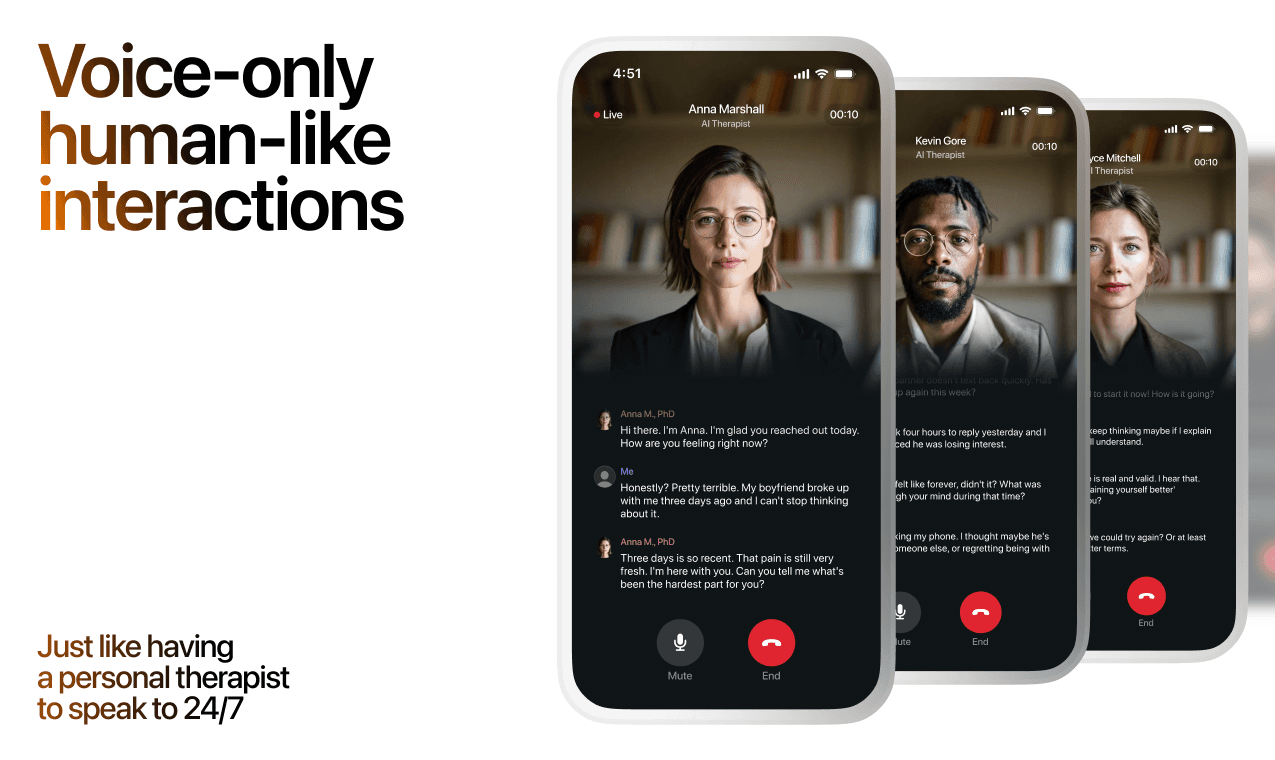
Here's what happens in a typical Lovon session:
You share what's on your mind
There's no script, no intake form, no waiting room. You speak or type whatever you're feeling — in your own words, at your own pace.
Lovon validates and explores
Using frameworks from CBT (Cognitive Behavioral Therapy) and motivational interviewing, Lovon acknowledges your feelings first, then gently helps you explore them. No dismissive "just move on" advice.
You build coping skills together
Lovon doesn't just listen — it actively works with you on evidence-based techniques: thought reframing, urge surfing, behavioral experiments, and more.
What a Session with Lovon Looks Like
When to Seek Professional Help
AI support is a valuable tool, but it's not a replacement for professional care. Please consider reaching out to a licensed therapist if you experience any of the following:
- Persistent thoughts of self-harm or suicide
- Inability to perform daily activities (work, eating, sleeping) for more than 2 weeks
- Turning to alcohol or substances to cope
- Intense anger or desire to harm your ex-partner
- Complete emotional numbness that doesn't improve over time
Crisis Resources (US): If you're in immediate danger, call 988 (Suicide & Crisis Lifeline) or text HOME to 741741 (Crisis Text Line). Available 24/7, free, and confidential.
Outside the US? Find a crisis line in your country
Ready to Start?
Your healing journey can begin right now
A 7-day trial. No judgment. Just a safe space to process what you're going through.
Frequently Asked Questions
Is Lovon a replacement for a real therapist?
Is my conversation with Lovon AI private?
How is Lovon different from ChatGPT for emotional support?
Can I use Lovon if I'm already seeing a therapist?
Can I try Lovon before subscribing?
About the Author

The Lovon Editorial Team
Mental Health & Wellness Content Team
The Lovon Editorial Team develops mental health and wellness content designed to make psychological concepts accessible and actionable. Our goal is to bridge the gap between clinical research and everyday life - helping you understand why your mind works the way it does and what you can do about it....
Related articles
- Best AI apps for postpartum depression support in 2026
Compare the best AI apps for postpartum depression support. Choose voice, text, or mood reflection alongside clinical…
- AI Coping Tools for Anxiety 2026: What Actually Works
AI coping tools for anxiety compared for 2026: box breathing, grounding, and PMR ranked with clear verdicts on what to…
- AI Coping Tools for Climate Anxiety: What Works in 2026
AI coping tools for climate anxiety ranked for 2026 — breathing, grounding, journaling, and AI voice therapy compared…
- AI Coping Tools for Road Rage While Driving: 2026 Guide
AI coping tools for road rage while driving in 2026: hands-free voice techniques that calm anger fast. Lovon offers a…
See also
Quizzes
- Defense Mechanisms Test: Which Ones Do You Use Most?
See what your defenses do with hard feelings, in 3 minutes.
- Guilt Test: Is Your Guilt Doing Its Job?
See whether your guilt repairs or just hurts.
Free tools
- How to Come Out to Your Parents
A chat about how to come out to your parents that starts with whether now is safe, not with the speech. Tell it your…
- Write a Letter to Someone You Lost
Tell it who they were to you and what you never got to say, and it writes the letter back in your words. No account, no…
From the wiki
- Why do I feel sad when I'm alone?
Being alone does not create the sadness. It removes the noise that was keeping it out of earshot, so whatever queued up…
Disclaimer: This article is for informational purposes only and does not constitute medical advice, diagnosis, or treatment. Always seek the advice of your physician or other qualified health provider with any questions you may have regarding a medical condition. If you are in crisis or think you may have an emergency, call 988 (Suicide & Crisis Lifeline) or go to the nearest emergency room. Outside the US? Find a crisis line in your country.