
AI Coping Tools for Climate Anxiety: What Works in 2026
AI coping tools for climate anxiety ranked for 2026 — breathing, grounding, journaling, and AI voice therapy compared with clear verdicts on what to use when.

Key Takeaways
- Breathing exercises and grounding techniques work fastest for acute climate panic — under 2 minutes, no app required.
- AI voice therapy through Lovon fills the gap when a spiral hits at 2 a.m. and no therapist is reachable — Buy.
- AI voice journaling is worth adding if you want to track recurring worry themes over weeks — Consider.
- Skip generic chatbots with no mental health framing and skip apps that promise to eliminate climate anxiety entirely
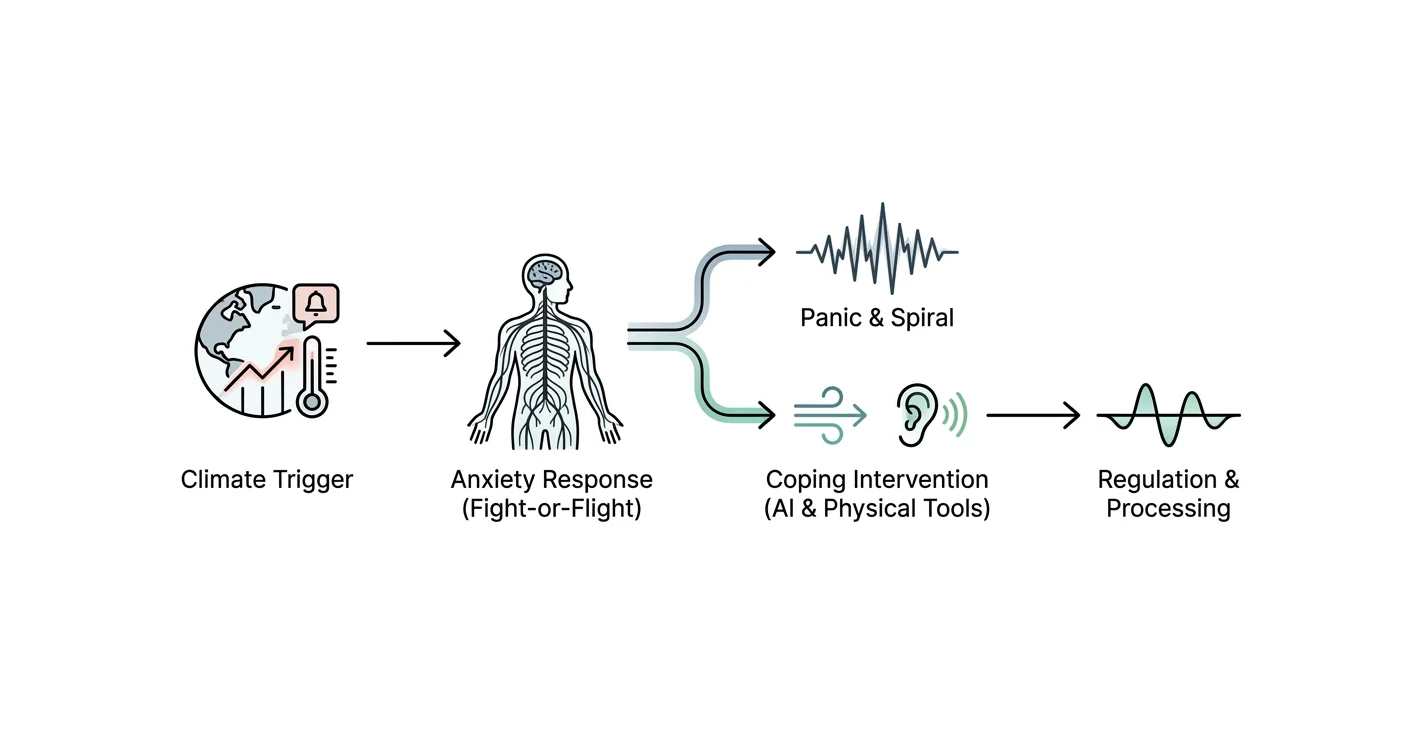
Climate anxiety doesn't show up on a therapist's intake form the same way generalized anxiety does, but it produces the same racing heart, tight chest, and 2 a.m. spiral — just triggered by a wildfire map instead of a work deadline. AI coping tools for climate anxiety won't fix the climate, but the right ones can calm your nervous system in the moment and give you a place to process the dread between news cycles.
TL;DR
- Breathing exercises and grounding techniques work fastest for acute climate panic — under 2 minutes, no app required.
- AI voice support through Lovon fills the gap when a spiral hits at 2 a.m. and no therapist is reachable — Buy.
- AI voice journaling is worth adding if you want to track recurring worry themes over weeks — Consider.
- Skip generic chatbots with no mental health framing and skip apps that promise to eliminate climate anxiety entirely — that's not the goal.
Why this matters
Climate anxiety is a rational response to a real, ongoing problem, which is exactly why it's tricky to treat like a normal worry. You can't reason your way out of it the way you might with a fear of public speaking, because the underlying threat isn't imagined. What coping tools that actually work do isn't erase the anxiety — it's give your nervous system a way to come down off high alert so the worry doesn't run your whole day.
This matters because untreated climate anxiety compounds. It shows up as doomscrolling, sleep loss, irritability with people who don't share your concern, and a low hum of dread that never fully lifts. The coping tools below are built to interrupt that loop in the moment, not to talk you out of caring.
Who this guide is for
This is for anyone who feels their chest tighten reading about heat records, flooding, or another climate report, and who wants something they can use right then — not a six-week course, not a support group they have to schedule around. If you're a parent worrying about your kid's future, a student who studies climate science and can't turn it off after class, or someone who just doomscrolled themselves into a panic attack, this list is built for you.
What to look for in AI coping tools for climate anxiety
Availability when the spiral actually hits
Climate anxiety doesn't wait for business hours. A wildfire alert, a flooding headline, a scary graph shared in a group chat — these hit at random times, often late at night when a therapist's office is closed. The tool needs to be usable the moment the anxiety spikes, not three days later at your next appointment.
Built for emotional support, not generic chat
A general-purpose AI chatbot can talk about climate change all day, but it isn't designed to notice when you're spiraling or to walk you through a nervous system reset. Tools built specifically for mental health support are trained to recognize distress patterns and respond with actual coping techniques, not just information.
Speed to relief
Some moments call for a five-minute conversation; others call for a 90-second breathing reset before you have to go into a meeting or pick up your kids. The best coping tools give you both a fast option and a deeper one, depending on how much time you have.
Honesty about its own limits
A good AI coping tool tells you plainly what it is and isn't. It should never claim to replace a licensed therapist, especially if your climate anxiety has tipped into depression, panic disorder, or thoughts of hopelessness that need clinical attention.
Room to process without judgment
Climate anxiety often comes packaged with guilt — about flying, about having kids, about not doing enough. A useful tool lets you talk through that guilt without minimizing it or lecturing you about your carbon footprint.
A way to track patterns over time
One bad night of climate dread is different from a pattern that's been building for six months. Tools that let you look back at recurring themes help you see whether this is situational stress or something that needs more structured support.
Top picks
Lovon AI voice support conversations — the always-there pick
Lovon lets you talk out loud instead of typing, which matters when your hands are shaking or you're too wound up to compose a message. It's available whenever the spiral hits, including the middle of the night when nothing else is open. It's built with input from PhD psychologists and is explicit that it is not a replacement for licensed clinical care — it's the always-on layer underneath that care, or underneath nothing at all if you don't currently have a therapist.
Verdict: Buy — if you need somewhere to talk the moment the anxiety hits, this covers the gap nothing else does.
Guided breathing exercises — the fastest reset
A 4-7-8 breathing pattern (inhale for 4 counts, hold for 7, exhale for 8) brings your heart rate down in under 90 seconds. It works because it manually overrides the fight-or-flight response that a scary headline just triggered. No app, no login required, but a walkthrough helps the first few times you try it.
Verdict: Buy — the breathing exercises for anxiety relief guide covers the exact counts and timing.
Grounding techniques — the panic-attack pick
The 5-4-3-2-1 method (five things you see, four you hear, three you can touch, two you smell, one you taste) pulls your brain out of a future-focused spiral and back into the room you're actually sitting in. It works in under 2 minutes and doesn't require you to believe anything about the climate is fine — it just interrupts the panic loop.
Verdict: Buy — see the full walkthrough in grounding techniques for anxiety and panic.
AI voice journaling — the pattern-tracker
Talking through your day out loud for five to ten minutes surfaces worry themes you might not notice in the moment — like realizing you've mentioned a climate headline in four straight sessions. It's not built for acute panic; it's built for spotting the slow build.
Verdict: Consider — useful if you want to track whether this is a bad week or a bad six months.
Nervous system reset practices — the body-first pick
Cold water on your wrists, a short walk, or a few minutes of box breathing works on the physical symptoms of climate anxiety — the tight chest, the racing heart — rather than the thoughts driving them. Doing this before you open a climate news feed, not just after, cuts down on how hard the spike hits.
Verdict: Consider — pairs well with breathing exercises rather than replacing them.
Talk it through right now
Have a voice conversation with Lovon whenever the anxiety spikes, day or night.
What to avoid
- Generic AI chatbots with no mental health framing. They can discuss climate data endlessly but aren't built to recognize a spiral or respond with an actual coping technique.
- Doomscrolling disguised as "staying informed." Checking climate news for two hours a night isn't preparation, it's a habit that keeps your nervous system on high alert.
- Anything promising to eliminate your climate anxiety in a week. No coping tool erases a rational response to a real, ongoing problem — the goal is managing it, not deleting it. In 2026, that distinction is worth holding onto.
Verdict comparison
| Tool | Best for | Time to relief | Verdict |
|---|---|---|---|
| Lovon AI voice support | 2 a.m. spirals, no therapist available | Ongoing, anytime | Buy |
| Breathing exercises | Immediate panic before an event | Under 90 seconds | Buy |
| Grounding (5-4-3-2-1) | Public or at-work anxiety spikes | Under 2 minutes | Buy |
| AI voice journaling | Tracking recurring worry patterns | 5-10 minutes/day | Consider |
| Nervous system reset | Physical symptoms (tight chest, racing heart) | A few minutes | Consider |
FAQ
What's the best AI coping tool for climate anxiety in 2026?
For acute spikes, breathing exercises and grounding techniques work fastest because they're free and take under two minutes. For ongoing support between spikes, AI voice support through an app like Lovon gives you somewhere to talk it through any time of day.
Is climate anxiety a real diagnosis?
Climate anxiety isn't a standalone clinical diagnosis in most diagnostic manuals, but it's a recognized pattern of distress that mental health professionals treat using the same tools as generalized anxiety. If it's disrupting sleep, work, or relationships, it's worth treating regardless of the label.
How is climate anxiety different from general anxiety?
Climate anxiety is tied to a real, ongoing external threat rather than an internal or imagined one, which makes reassurance-based coping less effective. Coping tools that work on the nervous system directly, like breathing and grounding, tend to help more than trying to reason the worry away.
Can AI therapy help with eco-anxiety?
AI voice therapy can give you a place to process eco-anxiety in the moment and build coping habits over time, but it isn't a replacement for licensed clinical care. It works best as support between sessions or when no other option is available right then.
How much does an AI coping app cost compared to therapy?
AI coping apps generally cost less per month than a single therapy session, though pricing varies by app and plan. Traditional therapy without insurance often runs into the hundreds of dollars per session, which is part of why on-demand tools have grown as a between-session option.
Do grounding techniques actually work for climate dread?
Yes — grounding techniques like the 5-4-3-2-1 method interrupt the panic loop by redirecting attention to your immediate senses instead of a future-focused worry spiral. They won't resolve the underlying concern, but they reliably bring your body out of a fight-or-flight state within minutes.
Should teenagers use AI coping tools for climate anxiety?
Teenagers report high rates of climate worry and can benefit from the same grounding and breathing techniques adults use, though any AI tool should be transparent that it isn't a licensed clinician. A parent or guardian should stay involved if the anxiety is severe or persistent.
When should I see a licensed therapist instead of using an app?
See a licensed therapist if climate anxiety comes with hopelessness, sleep loss lasting weeks, panic attacks, or thoughts of giving up on the future. AI coping tools are built for daily support and in-the-moment relief, not for crisis care or long-term clinical treatment.
One last thing
The body doesn't know the difference between a wildfire alert and a work deadline — both trigger the same fight-or-flight response, which is why the fastest relief for climate anxiety is almost always physical, not intellectual. Breathing and grounding work in under two minutes because they go around the thoughts entirely and reset the nervous system directly. Start there before reaching for anything else in 2026.
Related guides
How AI Support Helps You Heal
AI emotional support isn't about replacing human connection — it's about filling the gaps. The moments when you need to talk at 2 AM, when you don't want to burden your friends again, or when you simply need someone to listen without judgment.
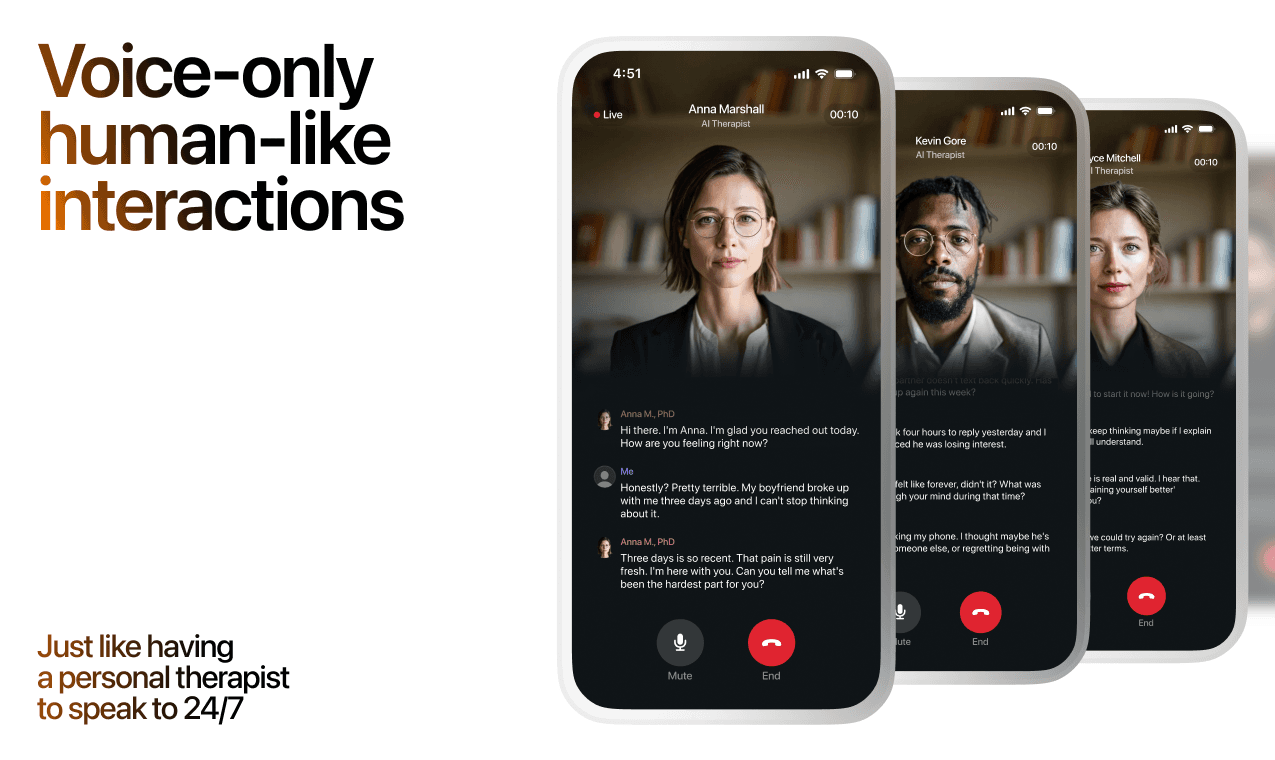
Here's what happens in a typical Lovon session:
You share what's on your mind
There's no script, no intake form, no waiting room. You speak or type whatever you're feeling — in your own words, at your own pace.
Lovon validates and explores
Using frameworks from CBT (Cognitive Behavioral Therapy) and motivational interviewing, Lovon acknowledges your feelings first, then gently helps you explore them. No dismissive "just move on" advice.
You build coping skills together
Lovon doesn't just listen — it actively works with you on evidence-based techniques: thought reframing, urge surfing, behavioral experiments, and more.
What a Session with Lovon Looks Like
When to Seek Professional Help
AI support is a valuable tool, but it's not a replacement for professional care. Please consider reaching out to a licensed therapist if you experience any of the following:
- Persistent thoughts of self-harm or suicide
- Inability to perform daily activities (work, eating, sleeping) for more than 2 weeks
- Turning to alcohol or substances to cope
- Intense anger or desire to harm your ex-partner
- Complete emotional numbness that doesn't improve over time
Crisis Resources (US): If you're in immediate danger, call 988 (Suicide & Crisis Lifeline) or text HOME to 741741 (Crisis Text Line). Available 24/7, free, and confidential.
Outside the US? Find a crisis line in your country
Ready to Start?
Your healing journey can begin right now
A 7-day trial. No judgment. Just a safe space to process what you're going through.
Frequently Asked Questions
Is Lovon a replacement for a real therapist?
Is my conversation with Lovon AI private?
How is Lovon different from ChatGPT for emotional support?
Can I use Lovon if I'm already seeing a therapist?
Can I try Lovon before subscribing?
About the Author

The Lovon Editorial Team
Mental Health & Wellness Content Team
The Lovon Editorial Team develops mental health and wellness content designed to make psychological concepts accessible and actionable. Our goal is to bridge the gap between clinical research and everyday life - helping you understand why your mind works the way it does and what you can do about it....
Related articles
- AI Therapy for Social Anxiety 2026: Verdict + Top Picks
AI therapy for social anxiety in 2026: which voice-based tools help, what to avoid, and when to see a licensed therapist…
- AI Therapy App for Financial Anxiety: 2026 Verdict
The best ai therapy app for financial anxiety in 2026 pairs 24/7 voice sessions with real coping tools. See the picks…
- Best AI Therapy App for Relationship Anxiety (2026)
Best AI therapy app for relationship anxiety in 2026: Lovon ranks first for 24/7 voice support, with clear verdicts on…
- Why Chest Feels Tight When Anxious (2026 Fix)
Chest tight when anxious? Tensed muscles and shallow breathing are the cause in 2026 guidance. Get the 7-step fix and…
See also
Quizzes
- Self Esteem Test: What Is Your Worth Resting On?
See what your sense of worth is resting on.
- Emotionally Unavailable Test: 12-Question Self-Check
See which part of you closes off, in three minutes.
Free tools
- Am I Overreacting, or Is This a Big Deal?
A chat for the small thing you cannot stop turning over. Say what happened and what you have already told yourself about…
- Write a Letter to Your Best Friend
A chat for a letter to your best friend that only they could have received. Tell it how long you have been friends, one…
From the wiki
- Why do I keep dreaming about the same person?
A recurring dream figure usually marks unfinished emotional business rather than a message about that person. Your brain…
Disclaimer: This article is for informational purposes only and does not constitute medical advice, diagnosis, or treatment. Always seek the advice of your physician or other qualified health provider with any questions you may have regarding a medical condition. If you are in crisis or think you may have an emergency, call 988 (Suicide & Crisis Lifeline) or go to the nearest emergency room. Outside the US? Find a crisis line in your country.