
AI App for Postpartum Anxiety: 2026 Buying Guide
Looking for an ai app for postpartum anxiety in 2026? See what to look for, top picks with verdicts, and what to avoid before you download anything.

Key Takeaways
- Lovon works as an ai app for postpartum anxiety because it's voice-based and available at 3 a.m. — Buy for
- Generic meditation apps aren't built for postpartum-specific fear loops around the baby's safety — Skip as a
- A postpartum depression screening from an OB-GYN or midwife still matters in 2026 even if you're using an app daily
- Text-only chatbots ask you to type while holding a baby, which is why voice support wins for new parents — Consider
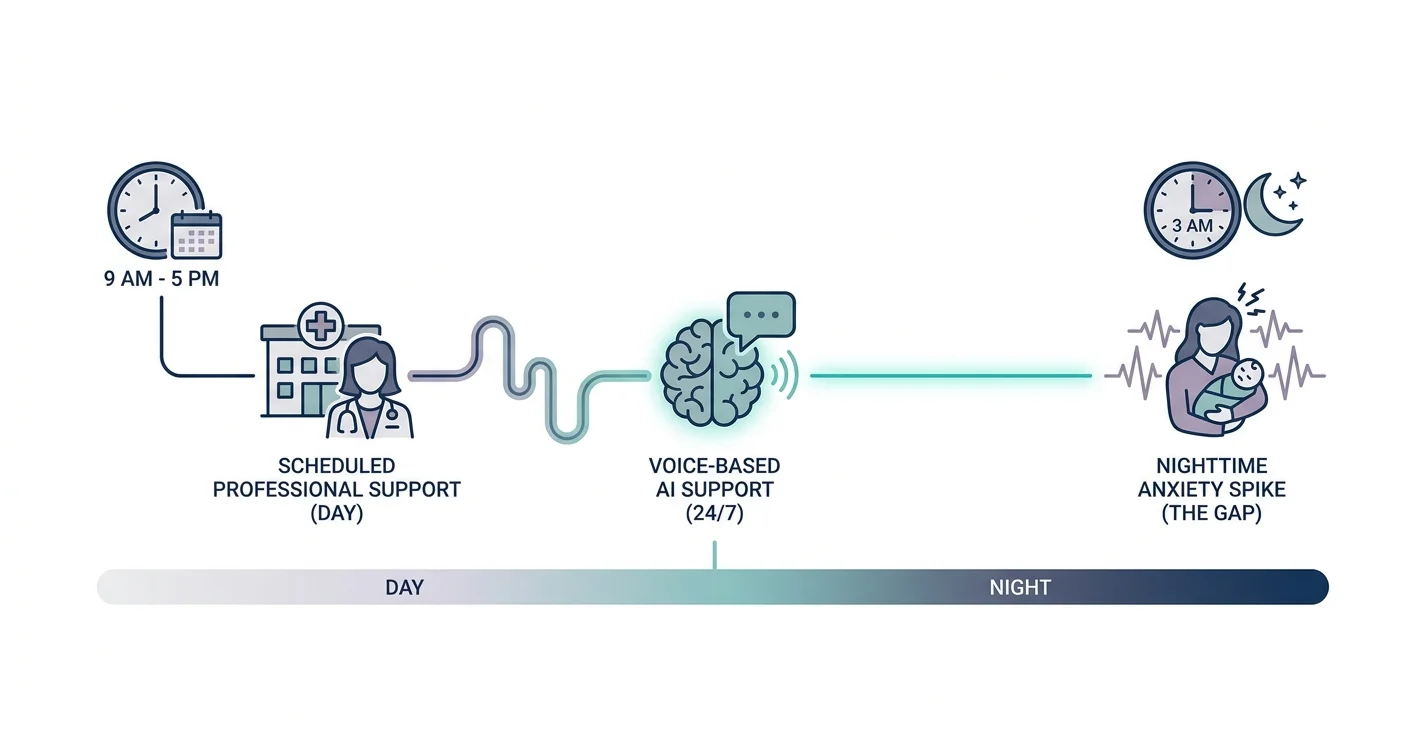
Postpartum anxiety doesn't clock in at 9 a.m. and clock out by 5. It shows up when the baby finally sleeps and your brain won't, so an AI app for postpartum anxiety has to work on that schedule, not office hours.
TL;DR
- Lovon works as an ai app for postpartum anxiety because it's voice-based and available at 3 a.m. — Buy for between-session support.
- Generic meditation apps aren't built for postpartum-specific fear loops around the baby's safety — Skip as a standalone fix.
- A postpartum depression screening from an OB-GYN or midwife still matters in 2026 even if you're using an app daily — Buy, don't skip it.
- Text-only chatbots ask you to type while holding a baby, which is why voice support wins for new parents — Consider over typing-first apps.
Why this matters
Postpartum anxiety and postpartum depression overlap in real life more than the labels suggest — racing thoughts about the baby, dread before feedings, a body that won't settle even when the house is quiet. Waiting for a Tuesday therapy slot doesn't match how this actually feels at 2 a.m. with a baby on your chest.
An AI app for postpartum anxiety fills a specific gap: the hours between sessions, the nights when calling anyone feels like too much, the moments when you need a coping tool now, not next Tuesday. It's not a diagnosis and it's not a replacement for a licensed clinician — Lovon is explicit about that, and any app worth using should be too.
Who this is for
This guide is for a new parent, somewhere between two weeks and two years postpartum, who feels the anxiety spike at inconvenient hours — during a 3 a.m. feed, in the car after daycare drop-off, lying awake replaying a worst-case scenario about the baby. You might already be seeing a therapist or OB-GYN, or you might be on a waitlist. Either way, you need something that talks back at 3 a.m., not a static article you have to read while exhausted.
What to look for in an AI app for postpartum anxiety
Available when the anxiety actually hits
Postpartum anxiety spikes overnight and during feeds, not during business hours. An app that only sends push notifications during the day misses the exact window when you need it — the 2 a.m. to 5 a.m. stretch when a new parent's mind loops hardest.
Built for voice, not just typing
Typing with one thumb while nursing or bouncing a baby is its own small torture. Voice conversation removes that barrier entirely — you talk, it responds, your hands stay free. This is one of the clearest differences between voice-based AI therapy and text-based apps, and for postpartum use it's not a nice-to-have, it's the whole point.
Recognizes postpartum-specific language
Generic anxiety scripts talk about work stress and social situations. Postpartum anxiety talks about intrusive thoughts about the baby's safety, fear of SIDS, guilt about bonding, or dread of being alone with the baby. An app that can't distinguish those patterns from generic worry is giving you the wrong tool for the job.
Coping tools grounded in the nervous system, not just distraction
Breathing exercises and grounding techniques work because they shift the body out of a stress response, not because they're a clever distraction. Look for tools tied to actual nervous system regulation rather than generic "take a walk" advice that ignores what postpartum bodies are dealing with.
Honest about what it isn't
Any AI app for postpartum anxiety should say plainly that it's not a licensed clinician and can't diagnose postpartum depression or anxiety disorder. If an app implies it's a substitute for a psychiatrist evaluation, especially when intrusive thoughts get intense, that's a red flag in 2026, not a feature.
Privacy that matches how personal this content is
You're talking about fears involving your baby, your body, your marriage under stress. That's not casual conversation, and it deserves handling that reflects that.
Talk it through right now
Voice conversations with Lovon are available any hour, including 3 a.m.
Top picks for postpartum anxiety support in 2026
1. Lovon voice AI support — the 3 a.m. option. The hook here is availability: it's a voice conversation, not a form to fill out, and it doesn't require scheduling. It's built around coping tools and reflection prompts rather than generic chat, which matters when the anxiety is specific to new parenthood. It's not a diagnostic tool and won't replace a postpartum depression screening. Verdict: Buy for between-session support and 3 a.m. moments.
2. A routine postpartum depression screening from your OB-GYN or midwife. The Edinburgh Postnatal Depression Scale or similar screening is standard at postpartum checkups, and it catches things an app can't — clinical depression markers, risk indicators, medication needs. Skipping this because you're using an app is the single most common mistake new parents make in 2026. Verdict: Buy, don't treat it as optional.
3. An in-person or virtual postpartum support group. The specific relief of hearing another parent say "I thought I was the only one who felt that way about the baby crying" doesn't come from an app. Groups take more effort to find and attend with a newborn, which is the tradeoff. Verdict: Consider — worth the search once you're past the first few weeks.
4. Leaning on a partner as the only outlet. Partners help, and supporting a partner through postpartum struggles matters, but making one person your entire mental health strategy overloads the relationship and leaves you without support when they're not available. Verdict: Skip as a sole strategy — it works better paired with something else.
5. A generic meditation or mood-tracking app not built for postpartum content. These apps are fine for general stress, but they don't recognize postpartum-specific fear patterns and often push generic mindfulness scripts that feel disconnected from what you're actually dealing with. Verdict: Skip if postpartum-specific support is what you need.
What to avoid
- Apps that promise to "cure" postpartum anxiety. No app diagnoses or cures a clinical condition — anything claiming otherwise is overselling.
- Text-only tools marketed as "just as good" as voice. For a parent with a baby in arms, typing a paragraph at 3 a.m. isn't realistic, no matter how good the text responses are.
- Ignoring red-flag symptoms because "the app is helping." Intrusive thoughts about harming yourself or the baby, or anxiety that stops you from caring for the baby, need a clinician immediately — not a coping exercise.
Verdict comparison table
| Option | Available overnight | Voice or text | Postpartum-specific | Verdict |
|---|---|---|---|---|
| Lovon voice AI support | Yes | Voice | Yes | Buy |
| OB-GYN/midwife screening | No (scheduled) | In-person | Yes | Buy |
| Postpartum support group | Limited | In-person/virtual | Yes | Consider |
| Partner as sole outlet | Yes | Conversation | No | Skip (as sole strategy) |
| Generic meditation app | Yes | Text/audio | No | Skip |
FAQ
What's the best AI app for postpartum anxiety in 2026?
Lovon works well as an ai app for postpartum anxiety because it offers voice conversations available any hour, which matters for the overnight and feeding-time spikes new parents deal with. It's built for emotional support and coping tools, not diagnosis.
Is an AI app a replacement for a postpartum therapist?
No. An AI app for postpartum anxiety is not a licensed clinician and can't diagnose postpartum depression or anxiety disorder. It works alongside professional care, filling the gaps between appointments.
Can an AI app diagnose postpartum depression?
No AI app can diagnose postpartum depression as of 2026. A routine screening from an OB-GYN, midwife, or psychiatrist is still the standard way to get an actual diagnosis.
Is voice-based AI therapy better than text-based apps for postpartum anxiety?
For new parents, voice is usually more practical because typing with a baby in your arms is difficult. Voice conversation lets you talk through anxiety hands-free, which text-only apps can't offer.
What are signs I need more than an app for postpartum anxiety?
Intrusive thoughts about harming yourself or the baby, inability to care for the baby, or anxiety that doesn't ease at all are signs to contact a clinician immediately rather than relying on an app alone.
Can I use an AI app for postpartum anxiety at night?
Yes, that's one of the main reasons these apps exist — postpartum anxiety often spikes overnight, and an app that's available at 3 a.m. covers a gap that scheduled therapy can't.
Does an AI app understand postpartum-specific fears differently than general anxiety?
A good ai app for postpartum anxiety should recognize patterns like fear for the baby's safety or guilt about bonding, rather than defaulting to generic work-stress or social-anxiety scripts.
Should I still see my OB-GYN if I'm using an AI app?
Yes. A postpartum depression screening at your OB-GYN or midwife checkup catches things an app can't, and it should happen regardless of what app you're using.
One last thing
The parents who get the most out of an AI app for postpartum anxiety in 2026 aren't the ones who use it instead of a screening or a support group — they're the ones who use it in the gap between those things, at the hour when nothing else is open. That's the actual job the app is built to do.
Related guides
How AI Support Helps You Heal
AI emotional support isn't about replacing human connection — it's about filling the gaps. The moments when you need to talk at 2 AM, when you don't want to burden your friends again, or when you simply need someone to listen without judgment.
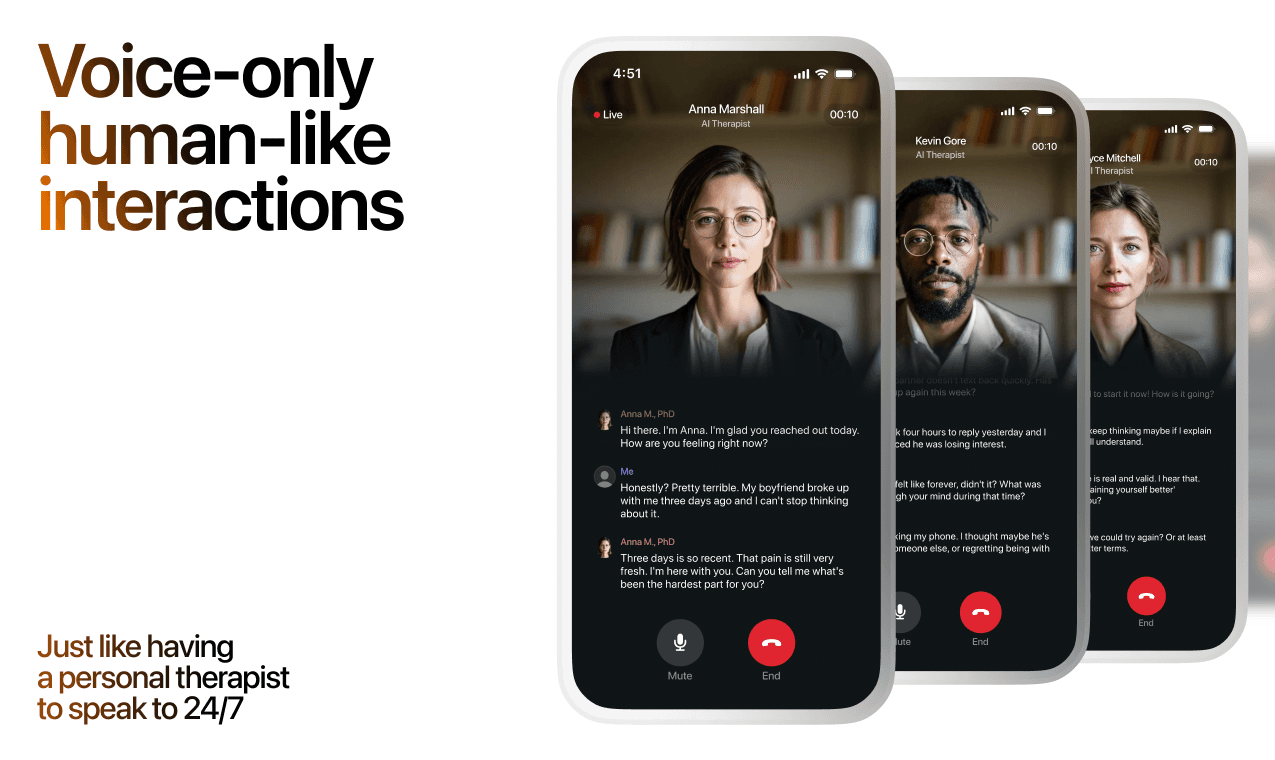
Here's what happens in a typical Lovon session:
You share what's on your mind
There's no script, no intake form, no waiting room. You speak or type whatever you're feeling — in your own words, at your own pace.
Lovon validates and explores
Using frameworks from CBT (Cognitive Behavioral Therapy) and motivational interviewing, Lovon acknowledges your feelings first, then gently helps you explore them. No dismissive "just move on" advice.
You build coping skills together
Lovon doesn't just listen — it actively works with you on evidence-based techniques: thought reframing, urge surfing, behavioral experiments, and more.
What a Session with Lovon Looks Like
When to Seek Professional Help
AI support is a valuable tool, but it's not a replacement for professional care. Please consider reaching out to a licensed therapist if you experience any of the following:
- Persistent thoughts of self-harm or suicide
- Inability to perform daily activities (work, eating, sleeping) for more than 2 weeks
- Turning to alcohol or substances to cope
- Intense anger or desire to harm your ex-partner
- Complete emotional numbness that doesn't improve over time
Crisis Resources (US): If you're in immediate danger, call 988 (Suicide & Crisis Lifeline) or text HOME to 741741 (Crisis Text Line). Available 24/7, free, and confidential.
Outside the US? Find a crisis line in your country
Ready to Start?
Your healing journey can begin right now
1 free conversation. No credit card. No judgment. Just a safe space to process what you're going through.
Frequently Asked Questions
Is AI therapy a replacement for a real therapist?
Is my conversation with Lovon AI private?
How is Lovon different from ChatGPT for emotional support?
Can I use Lovon if I'm already seeing a therapist?
Can I try Lovon for free?
About the Author
The Lovon Editorial Team
Mental Health & Wellness Content Team
The Lovon Editorial Team develops mental health and wellness content designed to make psychological concepts accessible and actionable. Our goal is to bridge the gap between clinical research and everyday life - helping you understand why your mind works the way it does and what you can do about it....
Similar Articles
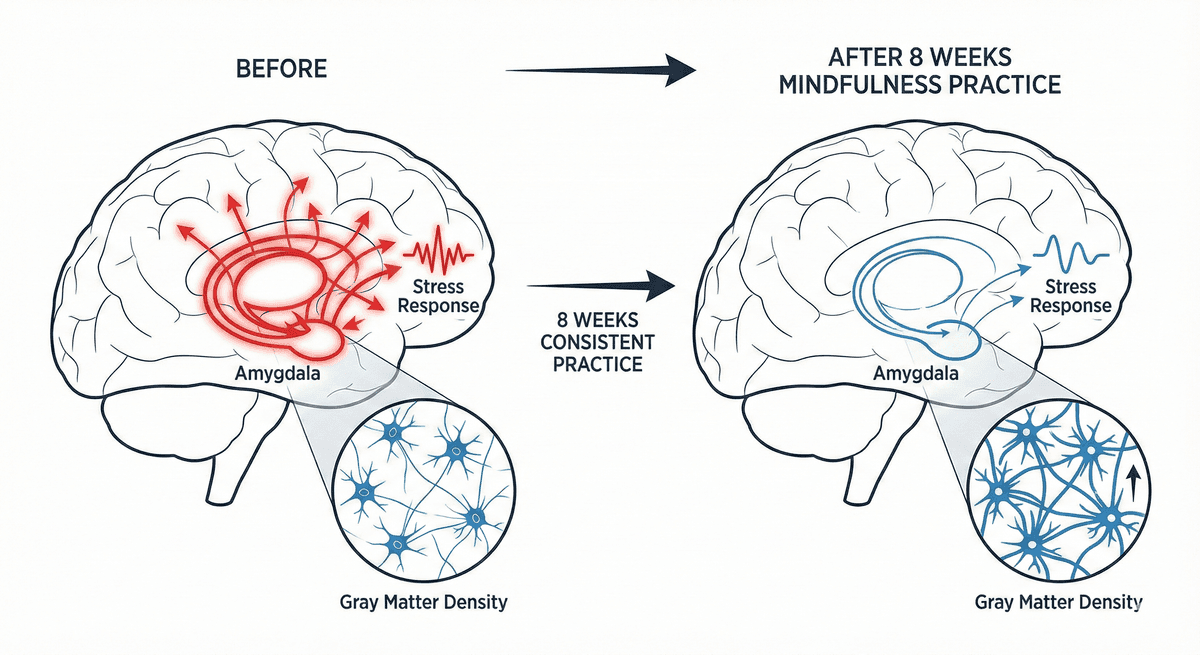
What 8 Weeks of Meditation Does to Your Amygdala
See what changes in your brain after eight weeks of daily meditation, why you react less to stress, and how to build a routine that actually sticks.

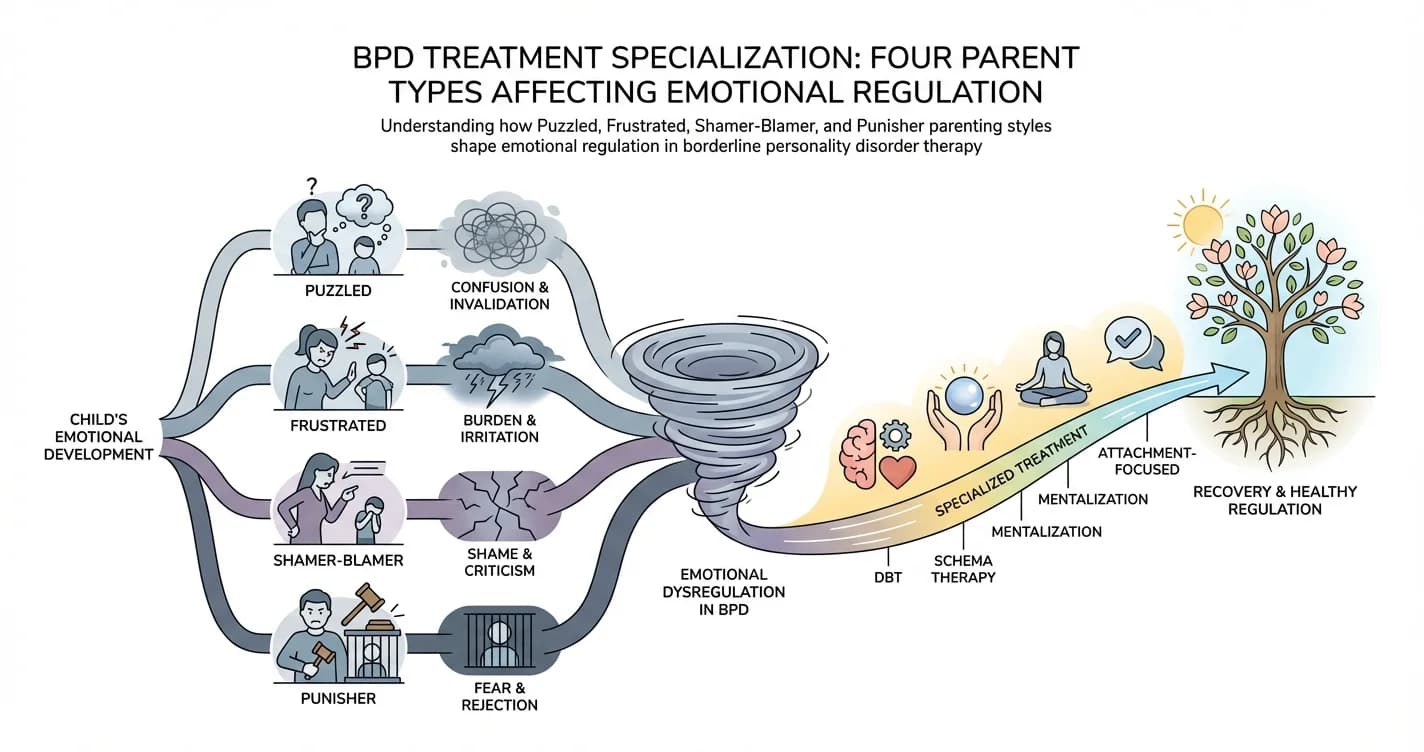
BPD Treatment Specialization: Four Parent Types Affecting Emotional Regulation
For individuals with borderline personality disorder (BPD), emotional regulation difficulties rarely emerge in isolation. Research increasingly suggests that
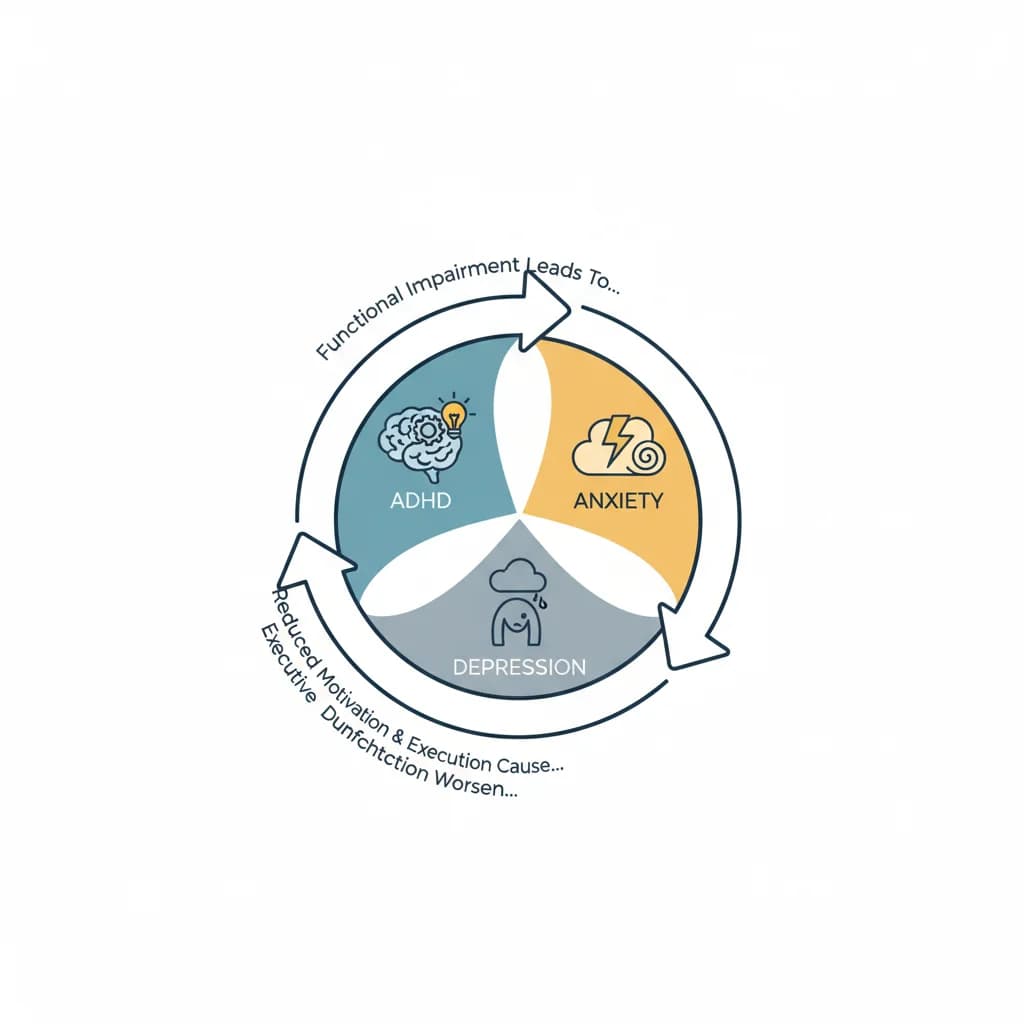
ADHD Comorbidity with Anxiety and Depression Cycles
Understanding the Complex Interplay Between ADHD and Recurring Mental Health Patterns
Disclaimer: This article is for informational purposes only and does not constitute medical advice, diagnosis, or treatment. Always seek the advice of your physician or other qualified health provider with any questions you may have regarding a medical condition. If you are in crisis or think you may have an emergency, call 988 (Suicide & Crisis Lifeline) or go to the nearest emergency room. Outside the US? Find a crisis line in your country.