
How to Repair a Strained Adult Sibling Relationship (2026)
Repair a strained adult sibling relationship in 2026 with 8 concrete steps: name the rupture, set one boundary, rebuild trust with small actions.
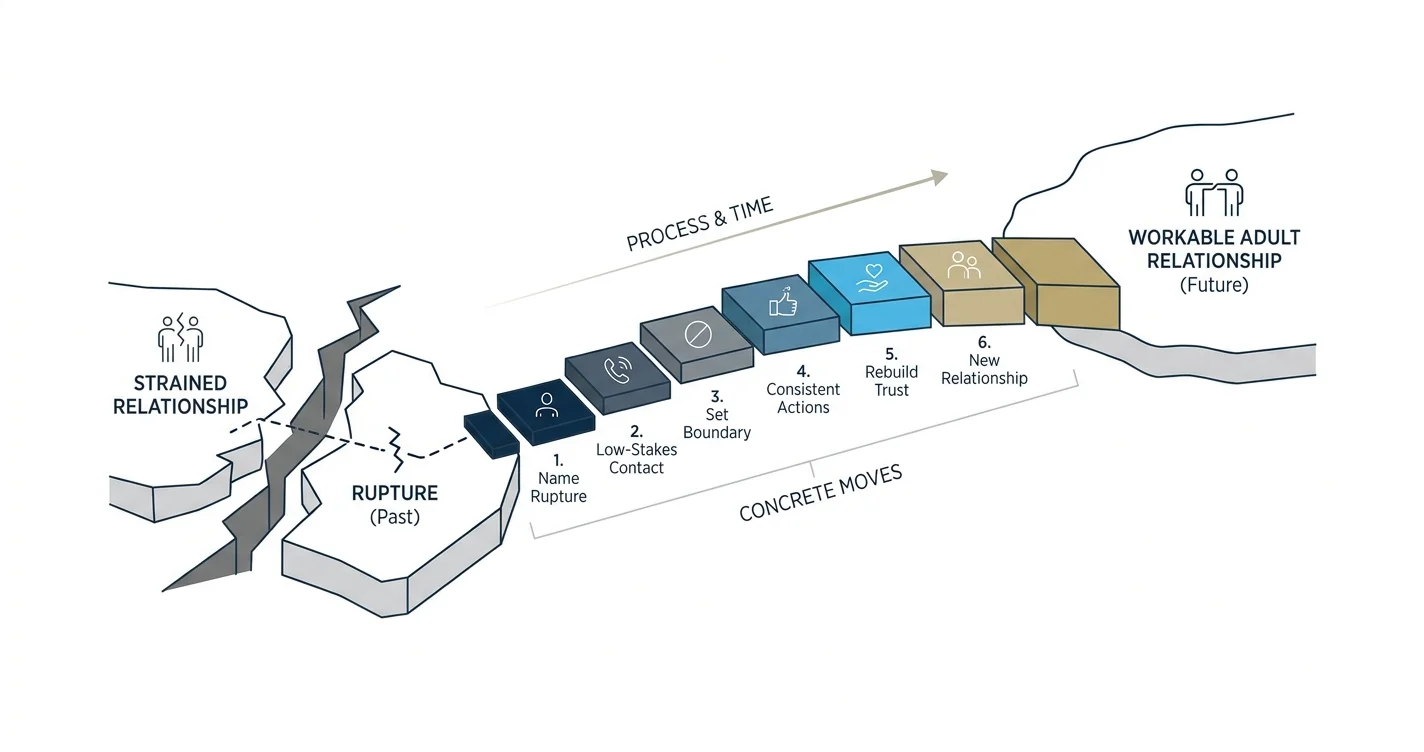

Key Takeaways
- Name the specific rupture before you reach out — vague apologies fix nothing.
- A low-stakes reconnection (one text, one shared task) works better than a heart-to-heart in year one.
- Setting one boundary and holding it rebuilds trust faster than any apology.
- If conversations keep looping back to old fights, a neutral third party or structured support helps more than
You want your sibling back — not the fights, not the silence that followed, just the person you used to know how to talk to. Repairing a strained adult sibling relationship in 2026 usually comes down to a handful of concrete moves, not one big reconciliation speech.
TL;DR
- Name the specific rupture before you reach out — vague apologies fix nothing.
- A low-stakes reconnection (one text, one shared task) works better than a heart-to-heart in year one.
- Setting one boundary and holding it rebuilds trust faster than any apology.
- If conversations keep looping back to old fights, a neutral third party or structured support helps more than another attempt alone.
Why this matters
Sibling estrangement is common enough that researchers have studied it for decades, and the pattern holds: the longer two adult siblings avoid the actual disagreement, the more the silence itself becomes the injury. You stop fighting about the inheritance, the wedding snub, or who called out of Mom's surgery, and start fighting about the fact that you don't talk anymore.
That's fixable. It's not the same work as repairing a marriage or a friendship — sibling ties carry shared history you can't opt out of, which is both the problem and the leverage. You already have 20, 30, 40 years of context. You just need a process for using it.
What you'll need
- A clear, one-sentence description of what actually broke the relationship (not "we grew apart")
- 15-20 minutes of uninterrupted time to write or think before you reach out
- One low-stakes way to make contact (a text, a card, a shared family task)
- Realistic expectations: this is a multi-attempt process, not a single conversation
- A private space to process your own anger or guilt before and after contact — a voice conversation with an AI voice companion like Lovon works well here if you don't want to rehearse the conversation out loud on a friend
The steps
1. Name the specific rupture, not the vibe
You can't repair "we're just different now." You can repair "you didn't call when Dad went into the hospital" or "you told our mother something I said in confidence."
Write down the actual incident or pattern in one sentence. If you can't get it under 20 words, you're still hiding from the real issue. Common mistake: leading with "you always" or "you never," which turns a specific event into a character indictment your sibling will defend against instead of hear.
2. Reach out first, without demanding an apology
Someone has to send the first text, and it rarely matters who was more wrong. Keep the opener short: "I've been thinking about us and I miss having you in my life. No pressure to respond right away."
Don't attach conditions. "I'll talk when you admit you were wrong" guarantees another year of silence. The goal of this step is a door left open, not a resolution — expect nothing more than a reply, even a short one.
3. Pick a low-stakes way to reconnect
Skip the big sit-down conversation for round one. A shared, low-emotion task — helping plan a parent's birthday, splitting up estate paperwork, coordinating a holiday — gives you contact without forcing intimacy neither of you is ready for.
This matters more with siblings than with almost any other relationship, because you'll likely be forced into contact anyway (parents' health, family events). Use one of those upcoming touchpoints instead of waiting for a clean slate that never arrives.
4. Say the hard thing once, then stop defending it
When you do get to the actual issue, state it once, plainly, and resist the urge to keep re-explaining it if your sibling gets defensive. "When you didn't invite my kids to the reunion, it told me you'd written us off" is a full sentence. Repeating it five different ways in one conversation reads as attack, not clarity.
Expect a defensive first reaction. That's not the same as rejection — give it a few days to land before you decide the conversation failed.
5. Set one boundary and hold it
Pick the single behavior that hurts most — being talked over, being excluded from group texts, being asked to referee other family members — and name a boundary around just that one thing. "I'm not going to discuss Mom's will over text anymore" is specific and enforceable.
Boundaries you don't hold train the other person to ignore the next one. If you're not sure how to phrase a boundary without it sounding like an ultimatum, a guide to setting relationship boundaries clearly walks through the language that works without escalating.
6. Rebuild trust with small, consistent actions
Trust after a rupture comes back in installments, not in one grand gesture. Follow through on the small things: show up when you say you will, respond to texts within a day, don't vent about your sibling to the rest of the family.
Six months of small reliability outweighs one dramatic apology. This is the step most people skip because it's boring — it's also the step that actually works.
7. Bring in a neutral space when you're stuck
If every conversation loops back to the same three grievances, you need a structure neither of you controls. That can be a family therapist, a mediating relative both of you trust, or a private space to sort your own reactions before the next attempt.
If you keep rehearsing the same argument in your head between attempts, talking it through with an AI voice therapist can help you separate what you actually need to say from what's just old resentment looking for an exit — Lovon isn't a replacement for family therapy when both siblings need to be in the room, but it's useful for the processing you do alone at 11 p.m.
8. Accept a different relationship, not the old one
The sibling relationship from age 12 isn't coming back, and holding out for it is often what keeps people stuck for years. Aim for a workable adult relationship — one that might be quieter, less frequent, or more guarded than it used to be, but real.
Common mistake in 2026 family therapy circles: measuring success against childhood closeness instead of against where you started this year.
Talk through it before you send the text
Rehearse the hard conversation privately with Lovon first.
Troubleshooting
- They don't respond to your first message. Wait two to three weeks, then try a different channel (call instead of text) tied to a real event, not another apology attempt.
- They apologize but nothing changes. An apology without a changed behavior is just a pause button. Name the specific action you need to see, not just the words.
- Every conversation turns into a rehash of old fights. Set a rule before you talk: one topic per conversation, written down beforehand, and stick to it even when the other person tries to widen it.
- Other family members keep taking sides. Say clearly that you're not asking anyone to choose, and stop discussing the conflict with relatives who report back — enmeshment between family members often keeps sibling conflicts alive long after the original issue is dead.
- You keep over-explaining and end up more hurt. That's usually a fawn response — appeasing to avoid conflict instead of stating your actual position once and letting it stand.
- You feel guilty every time you set a limit. Chronic guilt after boundary-setting is common and usually fades once the boundary holds a few times without disaster.
Tools and resources
- Healthy relationship boundaries — how to set them clearly
- How to communicate better in a relationship — 9 steps
- Parentification — when a child becomes the caretaker (useful if the rupture traces back to childhood roles)
- Chronic guilt — why you feel guilty all the time
- A private space to process before and after difficult calls — an AI voice companion app like Lovon works between the actual conversations, not instead of them
What to do next
If the strain traces back further than one bad decade — to how your family assigned roles when you were kids — the guide on sibling relationships and AI relationship coaching goes deeper into the patterns that keep adult siblings stuck long after the original wound.
FAQ
What's the first step to repair a strained sibling relationship?
Name the specific incident or pattern that caused the rift in one sentence, then reach out first without demanding an apology. Vague reconciliation attempts ("let's just move on") tend to fail because neither person knows what actually needs to change.
How long does it take to rebuild trust with an estranged sibling?
Trust usually rebuilds over months of small, consistent actions rather than a single conversation. Expect the first six months to feel tentative even if the reconnection is going well.
Is it normal to go low contact with a sibling?
Yes, low contact is a common and often healthy middle ground between full estrangement and forced closeness. It lets you stay connected around shared events like holidays without reopening unresolved conflict every time you talk.
Should I apologize even if I don't think I did anything wrong?
You can acknowledge your sibling's hurt without admitting fault you don't believe you have. Saying "I didn't realize that hurt you, and I'm sorry it did" is honest and still opens the door.
What if my sibling refuses to talk to me?
Send one clear, low-pressure message and then give it real time — weeks, not days — before trying again through a different channel. Repeated pressure usually pushes an avoidant sibling further away.
Can therapy help with sibling estrangement?
Family therapy with both siblings present is the most direct route when conversations keep breaking down. Individual support, including AI voice therapy, helps you process your own anger or guilt between attempts but can't replace a session where both people are in the room.
How do I set boundaries without cutting my sibling off completely?
Pick one specific behavior to limit, not the whole relationship, such as "I won't discuss the will over text." A boundary names an action you'll take, not a punishment for the other person.
Is it my job to fix the relationship?
Repair only works if both siblings want it, so you're responsible for your half — reaching out, holding boundaries, following through — not for forcing reconciliation alone. If your sibling isn't willing, the healthiest outcome in 2026 may be accepting distance rather than repair.
One last thing
Most sibling repairs don't fail because of the big fight — they fail because someone waits for a full apology before they'll show up to the next family dinner. Show up first, hold your one boundary, and let trust rebuild in the small moments instead of the grand ones.
Related guides
How AI Support Helps You Heal
AI emotional support isn't about replacing human connection — it's about filling the gaps. The moments when you need to talk at 2 AM, when you don't want to burden your friends again, or when you simply need someone to listen without judgment.
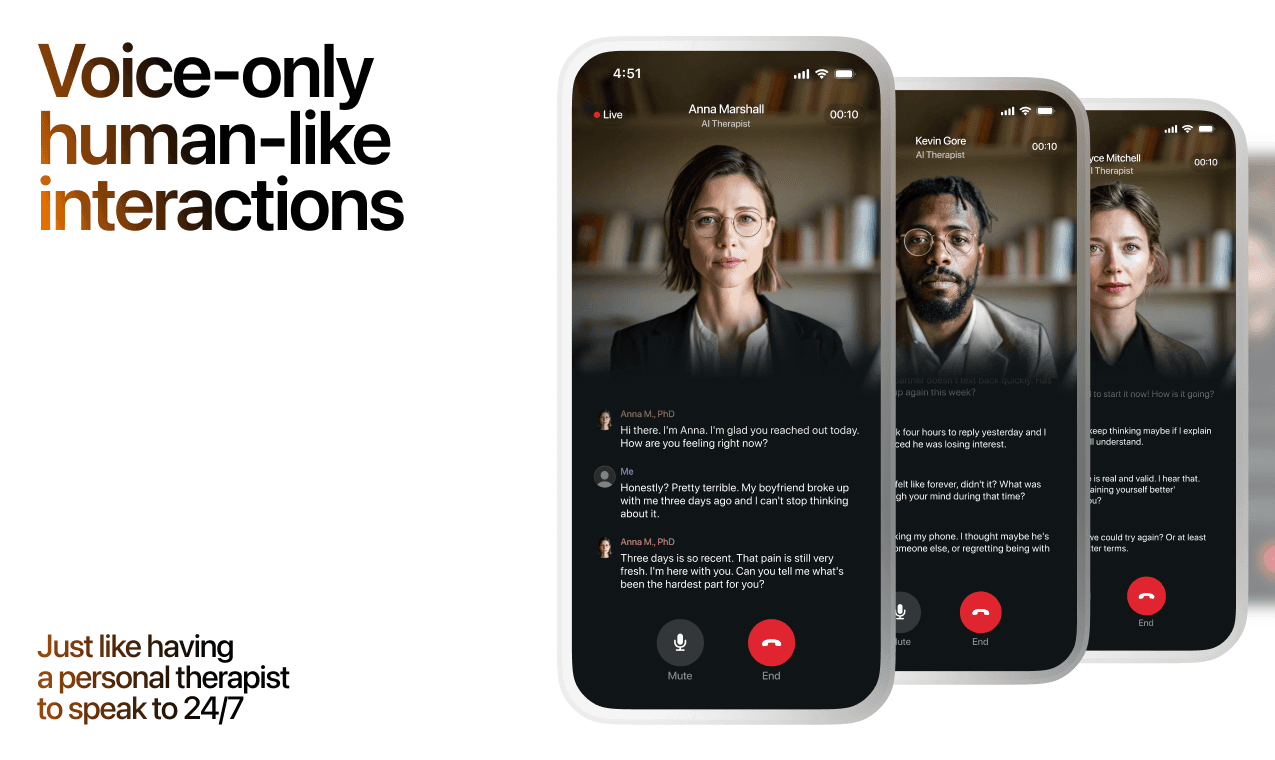
Here's what happens in a typical Lovon session:
You share what's on your mind
There's no script, no intake form, no waiting room. You speak or type whatever you're feeling — in your own words, at your own pace.
Lovon validates and explores
Using frameworks from CBT (Cognitive Behavioral Therapy) and motivational interviewing, Lovon acknowledges your feelings first, then gently helps you explore them. No dismissive "just move on" advice.
You build coping skills together
Lovon doesn't just listen — it actively works with you on evidence-based techniques: thought reframing, urge surfing, behavioral experiments, and more.
What a Session with Lovon Looks Like
When to Seek Professional Help
AI support is a valuable tool, but it's not a replacement for professional care. Please consider reaching out to a licensed therapist if you experience any of the following:
- Persistent thoughts of self-harm or suicide
- Inability to perform daily activities (work, eating, sleeping) for more than 2 weeks
- Turning to alcohol or substances to cope
- Intense anger or desire to harm your ex-partner
- Complete emotional numbness that doesn't improve over time
Crisis Resources (US): If you're in immediate danger, call 988 (Suicide & Crisis Lifeline) or text HOME to 741741 (Crisis Text Line). Available 24/7, free, and confidential.
Outside the US? Find a crisis line in your country
Ready to Start?
Your healing journey can begin right now
A 7-day trial. No judgment. Just a safe space to process what you're going through.
Frequently Asked Questions
Is Lovon a replacement for a real therapist?
Is my conversation with Lovon AI private?
How is Lovon different from ChatGPT for emotional support?
Can I use Lovon if I'm already seeing a therapist?
Can I try Lovon before subscribing?
About the Author

The Lovon Editorial Team
Mental Health & Wellness Content Team
The Lovon Editorial Team develops mental health and wellness content designed to make psychological concepts accessible and actionable. Our goal is to bridge the gap between clinical research and everyday life - helping you understand why your mind works the way it does and what you can do about it....
Related articles
- Best AI Life Coach App for Empty Nesters in 2026
Lovon leads our 2026 ranking of the best ai life coach app for empty nesters, compared against Wysa, Replika…
- Enmeshment Trauma: How to Untangle It in 2026
Enmeshment trauma explained: signs, causes, and 6 steps to rebuild your sense of self in adult relationships. Practical…
- Toxic Parent Patterns: Signs & How to Set Limits (2026)
Recognize toxic parent patterns — manipulation, enmeshment, conditional love — and follow 7 concrete steps to set limits…
- AI Therapy for Adult Children of Alcoholics (2026)
AI therapy for adult children of alcoholics in 2026: what to look for, what to avoid, and where Lovon's voice check-ins…
See also
Quizzes
- Boundaries Test: Free 12-Question Self-Check
See where your boundaries slip, in 3 minutes.
- Relationship Quality Test: How Good Is Your Relationship?
Score connection, repair and teamwork in 3 minutes.
Free tools
- What to Say Back to a Hostile Co-Parent
A chat, not a form. Paste the message your ex sent about the kids, say what actually has to be decided, and you get a…
- AI Relationship Coach
Get free relationship advice and family counselling guidance with our AI Relationship Coach.
From the wiki
- What does clingy mean in a relationship?
Clingy is what people call behavior that asks for more contact or reassurance than the other person wants to give…
Disclaimer: This article is for informational purposes only and does not constitute medical advice, diagnosis, or treatment. Always seek the advice of your physician or other qualified health provider with any questions you may have regarding a medical condition. If you are in crisis or think you may have an emergency, call 988 (Suicide & Crisis Lifeline) or go to the nearest emergency room. Outside the US? Find a crisis line in your country.