
Cope with Job Rejection Without Spiraling (2026 Guide)
Learn how to cope with job rejection without spiraling in 2026: 7 steps to process the news, stop rumination, and keep applying with confidence.
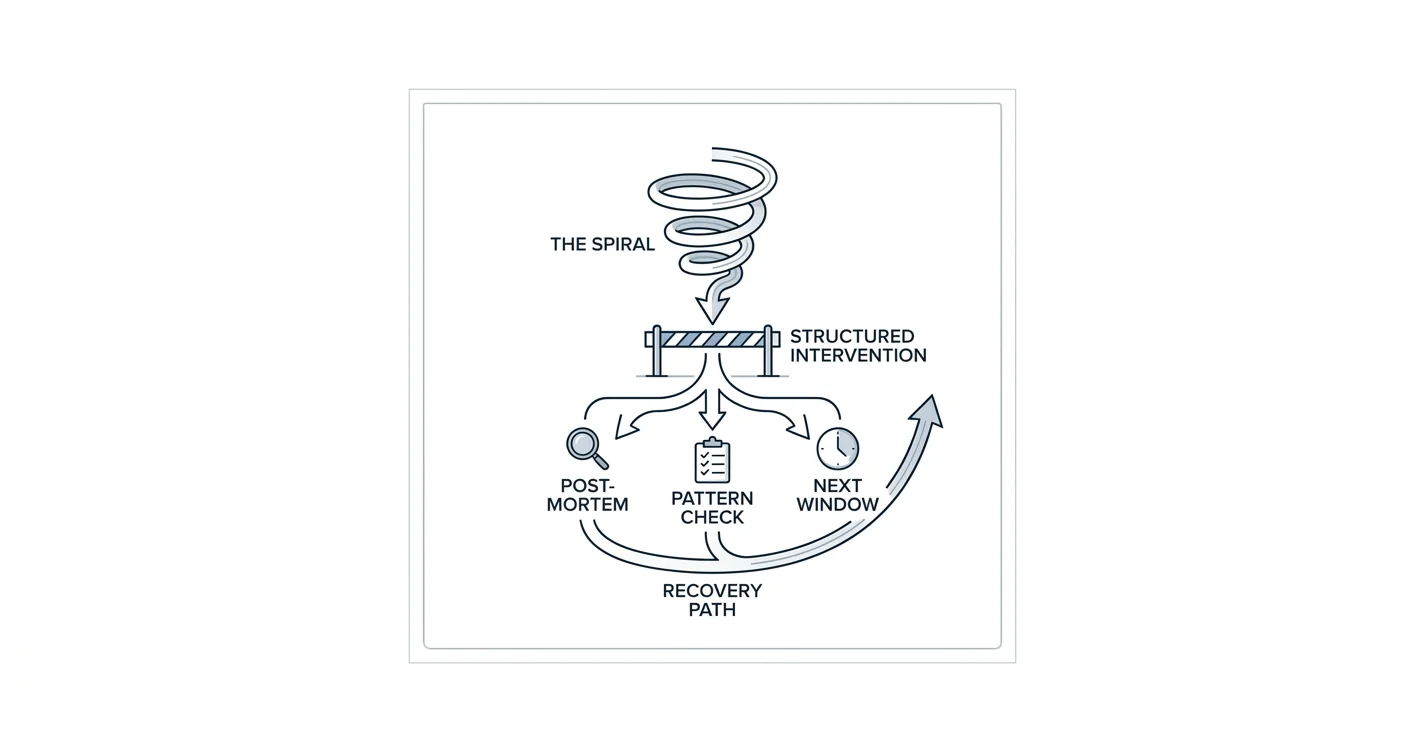

Key Takeaways
- Set a hard 24-hour window to feel the rejection, then close it deliberately.
- Rejection sensitivity, not the job itself, usually drives the spiral -- name it to stop it.
- A 3-line post-mortem beats hours of replaying the interview in your head.
- Lovon's AI voice therapy gives you somewhere to talk it out at 11pm when the spiral hits.
- Job loss and career transition anxiety respond to structure, not willpower alone.
Job rejection stings in a specific way: it hits your sense of competence and your bank account at the same time. Here's a practical, step-by-step way to process the rejection, stop the spiral before it starts, and get back to applying without dragging the last "no" into every interview after it.
TL;DR
- Set a hard 24-hour window to feel the rejection, then close it deliberately.
- Rejection sensitivity, not the job itself, usually drives the spiral -- name it to stop it.
- A 3-line post-mortem beats hours of replaying the interview in your head.
- Lovon's AI voice support gives you somewhere to talk it out at 11pm when the spiral hits.
- Job loss and career transition anxiety respond to structure, not willpower alone.
Why this matters
A rejection email doesn't just cost you a job. It reopens a story your brain already believes: that you're not good enough, that everyone else is further ahead, that you'll never land anything. That story is what turns one "no" into a spiral of self-doubt that bleeds into the next application, the next interview, the next week.
People with rejection sensitivity feel this harder and longer than others -- the emotional hit is real, not an overreaction, and it's not something you can just "get over" by thinking positive. Knowing how to cope with job rejection without spiraling isn't about pretending it doesn't hurt. It's about giving the hurt a container instead of letting it run the show for the next three days.
What you'll need
- 15-20 minutes right after the rejection lands, uninterrupted
- A notes app or notebook for the post-mortem step
- One person or tool you can talk to out loud -- a friend, a therapist, or an AI voice conversation through Lovon when it's late and nobody's awake
- Your last two or three job applications, for the pattern check in step 5
- A calendar to block your next application window
The steps
1. Name the feeling before you name the flaw
The first move after a rejection is to label what you're feeling, not what you did wrong. Say it plainly: "I'm disappointed and a little embarrassed." That single sentence keeps your brain in observation mode instead of tipping into judgment mode, where "I didn't get the job" quietly becomes "I'm not good at this."
Give yourself a real time limit here -- 10 minutes, set a timer if you need to. Skip this step and the feeling doesn't disappear; it just leaks into your tone on the next call you take. Common mistake: jumping straight to "what's wrong with me" instead of "what am I feeling right now."
2. Say it out loud, not just in your head
Rejection processed silently tends to loop. Rejection said out loud, even to an empty room, tends to resolve faster because you're forced to put it into a sentence with a beginning and an end. This is the mechanic behind why talking to someone -- a friend, a partner, or an AI voice therapist -- works better than journaling alone for a lot of people in the middle of a spike.
If it's 11pm and nobody's around, that's exactly the gap Lovon is built for: a voice conversation you can start in seconds, without waiting for a callback. Expected outcome: your heart rate settles and the thought stops replaying on a loop within the conversation, not after it.
3. Separate the event from the story
Write down two columns: "What actually happened" and "What I'm telling myself it means." The rejection is: you applied, you interviewed, they chose someone else, or they never called back. The story is: "I'm falling behind," "I'll never get hired," "everyone can tell I'm not qualified."
This is the same move used to interrupt catastrophizing and worst-case thinking -- the event is small and factual, the story is huge and unproven. Common mistake: treating the story column as fact instead of as one interpretation among several.
4. Run a 3-line post-mortem, not a full autopsy
Once the initial sting has passed -- usually within a few hours -- do a short, structured review instead of an open-ended replay of the whole interview. Three lines, no more: one thing that went well, one thing you'd change, one thing outside your control (their budget, an internal candidate, timing).
The cap matters. Without it, a post-mortem turns into a two-hour rehash where you invent flaws nobody mentioned. Expected outcome: you close the file with one concrete takeaway instead of a vague sense of failure.
5. Check for a pattern across your last three applications
Pull up your last two or three rejections and look for a repeat: same stage every time (phone screen, second round, offer stage), same feedback theme, or no pattern at all. A pattern points to something fixable -- resume framing, salary expectations, interview pacing. No pattern usually means normal market variance, which is worth knowing so you stop blaming yourself for something that's just numbers.
If the anxiety around this is less about the job and more about the transition itself, job loss and career transition anxiety tends to need its own coping plan separate from interview prep.
6. Set the next application window before you close the laptop
Decide right now when you'll apply again -- tomorrow at 10am, Thursday evening, whatever's realistic. An open-ended "I'll get back to it eventually" is where avoidance quietly takes over and one rejection turns into a two-week gap.
Common mistake: applying to five jobs immediately out of anxious energy instead of one or two with intention. Volume without focus usually produces more rejections, which feeds the exact spiral you're trying to avoid.
7. Rebuild the confidence piece deliberately
One rejection doesn't erase a track record, but it can make you forget it exists. Before your next application or interview, spend five minutes rereading a past win -- a project, a reference, a performance review, anything concrete. If the layoff or rejection has knocked your confidence harder than usual, a structured approach to rebuilding confidence after a layoff covers this in more depth than five minutes can.
Expected outcome: you walk into the next conversation with evidence, not just hope.
Talk it through tonight
Start a voice conversation with Lovon when the spiral hits and nobody else is awake.
Troubleshooting
- The rejection replays for days, not hours. That's a sign of rumination, not normal disappointment -- shorten your post-mortem window and add a hard stop time each evening where you're not allowed to reopen the topic.
- You feel physically sick after every "no." That's your nervous system reacting, not weakness -- a few minutes of slow breathing before you check email again can bring the physical spike down before it turns into a thought spiral.
- You've stopped applying altogether. This is avoidance dressed up as "taking a break." Set one small application task for tomorrow, even a single company, to break the freeze.
- You're taking it out on people close to you. Irritability after rejection is common -- name it to the person before it turns into a fight: "I'm not upset with you, I got a rejection today."
- Every rejection feels like proof you'll never get hired. That's the story from step 3 masquerading as fact -- go back through the post-mortem process and check it against your actual pattern from step 5.
- You can't stop checking email for a response that isn't coming. Set a specific day to follow up once, then close the loop and move to your next application window instead of refreshing your inbox.
Tools and resources
- How to cope with rejection sensitivity as an adult -- for anyone who notices rejection hits harder and lasts longer than it seems to for other people
- How to stop anxiety spirals before they take over -- the general mechanics of interrupting a spiral, not just job-specific
- Catastrophizing: how to stop worst-case thinking -- useful when "I didn't get this job" turns into "I'll never get any job"
- Job loss and career transition anxiety -- for when the anxiety is bigger than one rejection
- Lovon's voice sessions, for the moments a text-based app or a delayed callback isn't fast enough
What to do next
If interviews themselves are the trigger, not just the rejections, work backward and deal with the anxiety before you're in the room -- how to calm interview anxiety before a big interview covers the prep side of this same problem.
FAQ
How do you cope with job rejection without spiraling?
Name the feeling before judging yourself, say it out loud to someone or something, then run a short 3-line post-mortem instead of an open-ended replay. Setting a hard time limit on each step in 2026 is what keeps one rejection from turning into a multi-day spiral.
Why does job rejection feel so personal?
Because a job application ties your income and your identity together in one outcome, so a rejection reads as a judgment on you, not just the resume. This is stronger for people with rejection sensitivity, where the emotional response is real and not an overreaction.
How long should you let yourself feel bad after a rejection?
A few hours to process the initial disappointment is normal; a structured post-mortem within a day helps close the loop. If it's still running your mood after 3 or more days, that's rumination and worth addressing directly rather than waiting it out.
Is it normal to feel anxious before checking application results?
Yes, anticipatory anxiety before hearing back is common and tends to fade once you have an answer, good or bad. Structured breathing or a short voice conversation before you check email can lower the physical spike.
What's the difference between processing rejection and ruminating on it?
Processing has a start and an endpoint -- you feel it, you review it once, you move on. Ruminating replays the same scenario without new information and without resolution, which is the pattern that leads to spiraling.
Can an AI app help with job rejection anxiety?
An AI voice support app like Lovon gives you somewhere to talk through the rejection in the moment, which can interrupt a spiral before it builds. It's built with input from PhD psychologists but is not a replacement for licensed clinical care if the anxiety is severe or ongoing.
Why do multiple rejections in a row feel worse than one?
Each rejection adds evidence to the story that you're not good enough, even when the actual cause is unrelated -- budget cuts, internal hires, timing. Checking for an actual pattern across your last few applications separates real signal from anxious noise.
Should you keep applying right after a rejection or take a break?
A short break of a day is fine; an open-ended pause usually turns into avoidance. Setting a specific next application time before you close the laptop keeps momentum without forcing you to apply while still upset.
One last thing
The applications that go well after a rejection are rarely the ones sent out of anxious urgency the same afternoon -- they're the ones sent after the post-mortem, with the pattern checked and the story separated from the event. Give the rejection its 15 minutes, not its 3 days.
Related guides
How AI Support Helps You Heal
AI emotional support isn't about replacing human connection — it's about filling the gaps. The moments when you need to talk at 2 AM, when you don't want to burden your friends again, or when you simply need someone to listen without judgment.
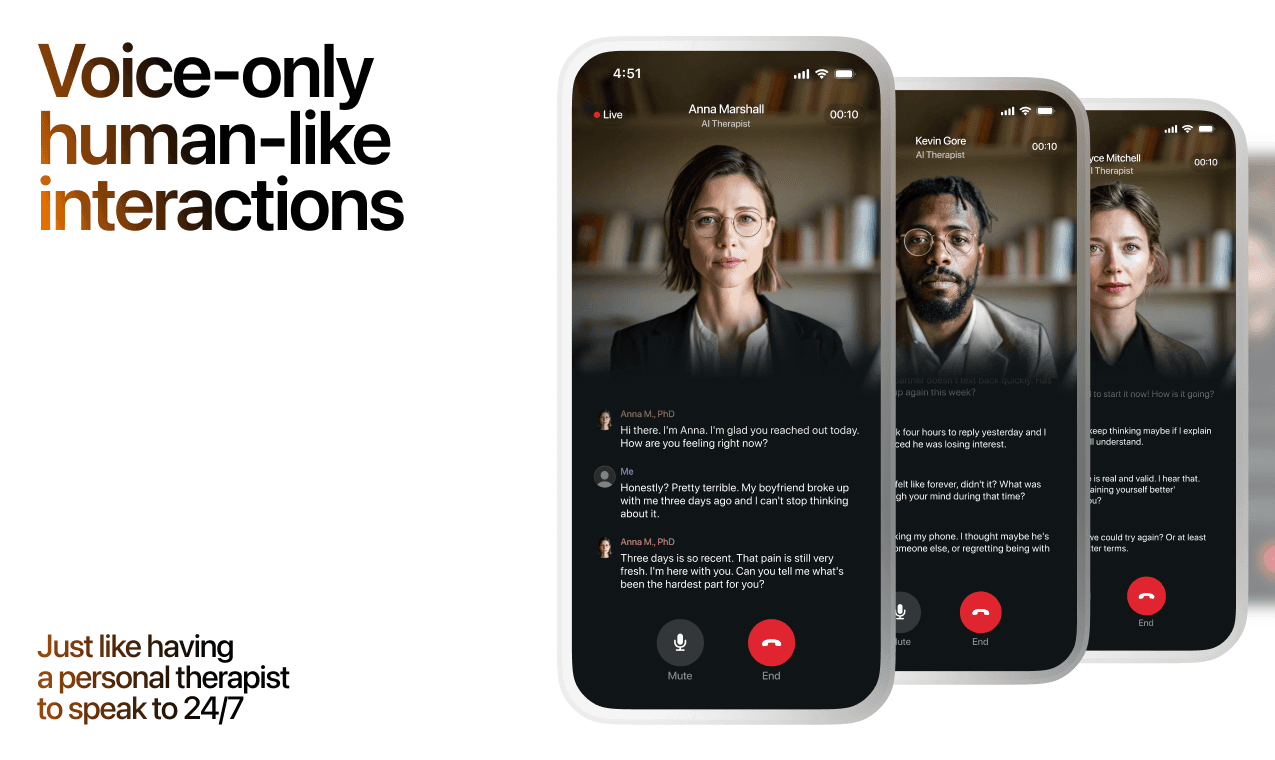
Here's what happens in a typical Lovon session:
You share what's on your mind
There's no script, no intake form, no waiting room. You speak or type whatever you're feeling — in your own words, at your own pace.
Lovon validates and explores
Using frameworks from CBT (Cognitive Behavioral Therapy) and motivational interviewing, Lovon acknowledges your feelings first, then gently helps you explore them. No dismissive "just move on" advice.
You build coping skills together
Lovon doesn't just listen — it actively works with you on evidence-based techniques: thought reframing, urge surfing, behavioral experiments, and more.
What a Session with Lovon Looks Like
When to Seek Professional Help
AI support is a valuable tool, but it's not a replacement for professional care. Please consider reaching out to a licensed therapist if you experience any of the following:
- Persistent thoughts of self-harm or suicide
- Inability to perform daily activities (work, eating, sleeping) for more than 2 weeks
- Turning to alcohol or substances to cope
- Intense anger or desire to harm your ex-partner
- Complete emotional numbness that doesn't improve over time
Crisis Resources (US): If you're in immediate danger, call 988 (Suicide & Crisis Lifeline) or text HOME to 741741 (Crisis Text Line). Available 24/7, free, and confidential.
Outside the US? Find a crisis line in your country
Ready to Start?
Your healing journey can begin right now
A 7-day trial. No judgment. Just a safe space to process what you're going through.
Frequently Asked Questions
Is Lovon a replacement for a real therapist?
Is my conversation with Lovon AI private?
How is Lovon different from ChatGPT for emotional support?
Can I use Lovon if I'm already seeing a therapist?
Can I try Lovon before subscribing?
About the Author
The Lovon Editorial Team
Mental Health & Wellness Content Team
The Lovon Editorial Team develops mental health and wellness content designed to make psychological concepts accessible and actionable. Our goal is to bridge the gap between clinical research and everyday life - helping you understand why your mind works the way it does and what you can do about it....
Related articles
- Best AI App for Rejection Sensitive Dysphoria 2026
Lovon ranks best overall for rejection sensitive dysphoria in 2026, compared against Wysa, Inflow, Finch, and Tiimo for…
- Chronic Guilt Complex: Why You May Feel Guilty All the Time & How to Stop Feeling Guilty?
Most people feel guilty sometimes. For example, you say something unkind and guilt shows up to tell you that your…
- Self-Sabotaging Relationships: Why It Happens (2026)
Self-sabotaging relationships explained: the trigger pattern behind it and a 6-step process to interrupt it in 2026…
- ADHD — Emotional Costs of Undiagnosed Cases Including Rejection Sensitivity Dysphoria and Chronic Loneliness
Living with undiagnosed ADHD creates an invisible emotional burden that extends far beyond difficulty focusing or…
See also
Quizzes
- Coping Style Test: How Do You Actually Handle Stress?
See how you really cope under stress, in 3 minutes.
- Guilt Test: Is Your Guilt Doing Its Job?
See whether your guilt repairs or just hurts.
Free tools
- How to Respond to a Narcissist
Paste what they said. You get the part that actually needs answering separated from the part designed to pull you in, a…
- How to Respond to Gaslighting
Say what happened and what they say happened. You get what is actually established separated from what is being…
From the wiki
- Why do I keep dreaming about the same person?
A recurring dream figure usually marks unfinished emotional business rather than a message about that person. Your brain…
Disclaimer: This article is for informational purposes only and does not constitute medical advice, diagnosis, or treatment. Always seek the advice of your physician or other qualified health provider with any questions you may have regarding a medical condition. If you are in crisis or think you may have an emergency, call 988 (Suicide & Crisis Lifeline) or go to the nearest emergency room. Outside the US? Find a crisis line in your country.