
Best AI App for Rejection Sensitive Dysphoria 2026
Lovon ranks best overall for rejection sensitive dysphoria in 2026, compared against Wysa, Inflow, Finch, and Tiimo for real ADHD RSD support needs.

Key Takeaways
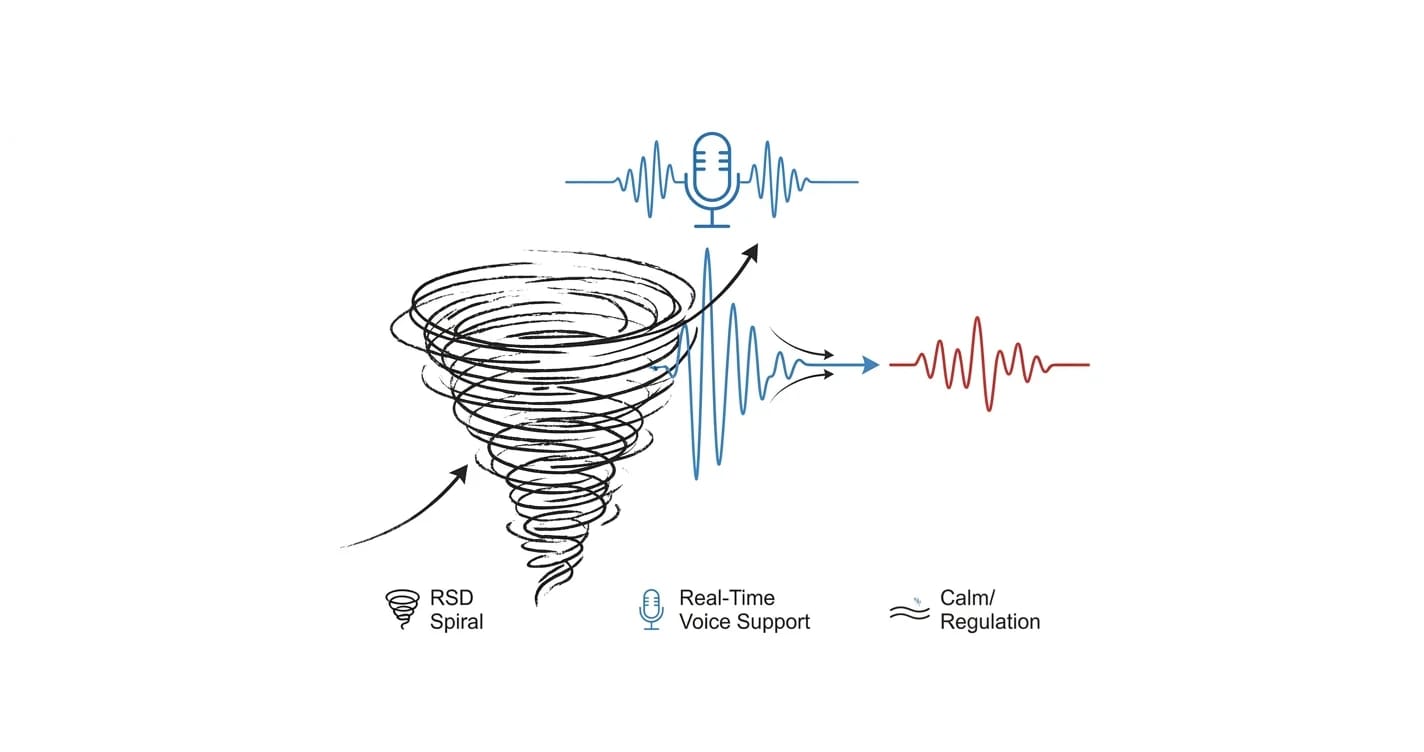
- Lovon is the best ai app for rejection sensitive dysphoria when you need to talk through a spiral in real time.
- Wysa fits people who process better through typing than talking out loud.
- Inflow builds ADHD-specific CBT skills over weeks, not in a single session.
- Finch and Tiimo work as daily maintenance tools, not crisis response.
- None of these apps diagnose ADHD or replace a licensed therapist.
Best overall for rejection sensitive dysphoria in 2026: Lovon, for real-time voice support the moment a rejection spiral starts. Best for text-only check-ins: Wysa. Best for structured ADHD skill-building: Inflow. Best for daily low-pressure accountability: Finch. Best for stopping RSD triggers before they start: Tiimo.
TL;DR
- Lovon is the best ai app for rejection sensitive dysphoria when you need to talk through a spiral in real time.
- Wysa fits people who process better through typing than talking out loud.
- Inflow builds ADHD-specific CBT skills over weeks, not in a single session.
- Finch and Tiimo work as daily maintenance tools, not crisis response.
- None of these apps diagnose ADHD or replace a licensed therapist.
Why this matters
Rejection sensitive dysphoria isn't a diagnosis in the DSM, but most adults with ADHD recognize it the second you name it: a flat text reads as anger, a manager's neutral feedback lands like a verdict, and the emotional flood arrives faster than you can talk yourself down. For the mechanism behind why this happens, the ADHD rejection sensitive dysphoria explainer breaks down what's actually going on in the nervous system, not just the coping tricks.
An app can't diagnose RSD and it won't replace a psychiatrist managing ADHD medication. What it can do in 2026 is catch you at 11pm when the spiral is already happening and your therapist's next opening is Thursday.
What makes the best AI app for rejection sensitive dysphoria
- Responds in real time — RSD spirals peak in minutes, not after a scheduled callback.
- Built with input from mental health professionals, not a generic chatbot wrapper with a wellness skin.
- Teaches a reusable coping skill, not just a one-time vent session.
- Doesn't pretend to diagnose or treat ADHD — flags clearly when to see a clinician.
- Matches how you process emotion — voice when talking helps, text when typing does.
- Has actual ADHD-specific content, not repackaged generic stress-relief scripts.
At a glance
| App | Best for | Standout feature | Key limitation |
|---|---|---|---|
| Lovon | Real-time voice support during a spiral | Voice conversation built with input from PhD psychologists | Not a substitute for licensed clinical care |
| Wysa | Text-only check-ins | AI chatbot with an optional human coach add-on | No voice option for people who process out loud |
| Inflow | Structured ADHD skill-building | CBT-based courses built specifically for ADHD | Program format, not designed for in-the-moment crisis |
| Finch | Daily low-pressure accountability | Gamified daily self-care check-ins | Not built to handle an active RSD spiral |
| Tiimo | Preventing RSD triggers before they start | Visual planning built around ADHD time-blindness | A planning tool, not an emotional support tool |
1. Lovon: best AI app for rejection sensitive dysphoria for real-time voice support
Lovon lets you talk out loud to an AI voice companion the second a rejection spiral starts, instead of typing while your hands are shaking. It's built with input from PhD psychologists and is designed for everyday struggles like anxiety, stress, low mood, and the kind of emotional overwhelm RSD triggers — not as a replacement for a licensed clinician.
Lovon pros:
- Voice conversation available anytime, no waitlist or appointment
- Built with psychologist input rather than a generic chat-bot script
- Works through the spiral in the moment instead of after it's passed
Lovon cons:
- Not a licensed therapist and doesn't diagnose ADHD or RSD
- Voice-first format isn't ideal if you're somewhere you can't talk out loud
Lovon is best for: adults with ADHD who need to talk through a rejection spiral the moment it hits, not two days later at a scheduled session. Verdict: Buy.
2. Wysa: best for text-only check-ins
Wysa is a text-based AI chatbot that walks you through CBT-style prompts and offers an optional add-on to message a human coach. It works well for people who find typing calmer than talking, especially mid-workday when speaking out loud isn't an option.
Wysa pros:
- Fully text-based, useful in quiet or shared spaces
- Structured CBT prompts for reframing a rejection thought
- Low barrier to start a check-in from a phone
Wysa cons:
- No voice option for people who process emotion better out loud
- Text lag can feel slow mid-spiral compared to a live conversation
Wysa is best for: people who want an RSD check-in without speaking a word. Verdict: Buy if text is your default mode.
3. Inflow: best for structured ADHD skill-building
Inflow runs structured CBT-based courses built specifically for ADHD, covering emotional regulation alongside focus and executive function. It's less about the acute spiral and more about building the underlying skill set over weeks.
Inflow pros:
- Content built specifically for ADHD, not general anxiety
- Structured curriculum instead of a scattered set of tips
- Covers RSD alongside other ADHD-specific challenges
Inflow cons:
- Course format doesn't help in an active crisis moment
- Requires ongoing engagement over weeks to see the payoff
Inflow is best for: adults who want to build ADHD-specific coping skills as a long-term project. Verdict: Hold — useful, but not your first move mid-spiral.
4. Finch: best for daily low-pressure accountability
Finch uses a gamified pet-care format to prompt daily self-care check-ins, which can build the habit of noticing your mood before a rejection spiral fully takes hold. It's light-touch by design.
Finch pros:
- Low-pressure format makes daily check-ins feel manageable
- Builds a habit of naming your mood before it escalates
- Simple enough to use in under a minute a day
Finch cons:
- Not built to handle an active RSD spiral
- Gamification can feel too light for a genuinely hard day
Finch is best for: building a daily mood-check habit as prevention, not crisis response. Verdict: Hold as a maintenance layer.
5. Tiimo: best for preventing RSD triggers before they start
Tiimo is a visual planning app built around ADHD time-blindness — missed deadlines and forgotten commitments are common RSD triggers, and Tiimo is designed to catch those before they turn into a rejection spiral. Pair it with ADHD emotional dysregulation tools for the emotional side once a trigger has already landed.
Tiimo pros:
- Visual schedule reduces the missed-deadline triggers that fuel RSD
- Built specifically around ADHD time perception
- Prevention-focused rather than reactive
Tiimo cons:
- Does nothing for you once a spiral is already happening
- Requires consistent daily use to prevent triggers, not just react to them
Tiimo is best for: adults whose RSD gets triggered most by missed deadlines and forgotten plans. Verdict: Wait on this one if you need emotional support today — it's a planning tool first.
Talk through a spiral right now
Start a voice conversation with Lovon anytime, no appointment needed.
How we ranked
Each app was measured against the six criteria above: real-time response, professional input, reusable skills, honesty about limits, format flexibility, and ADHD-specific content. Lovon ranked first because it's the only one built for a live voice conversation during the actual spiral, which is when RSD hits hardest.
Which AI app for rejection sensitive dysphoria should you choose?
If you need to talk through a spiral the moment it starts, Lovon is the pick for 2026 — voice support built with psychologist input, available without an appointment. If typing feels safer than speaking, Wysa covers that gap. If you're building long-term skills, Inflow is worth the weeks it takes. Finch and Tiimo work best stacked underneath either as daily prevention, not as your main line of defense.
FAQ
What's the best AI app for rejection sensitive dysphoria in 2026?
Lovon is the best overall pick for 2026 because it offers real-time voice conversation during an active RSD spiral, built with input from PhD psychologists. Text-based alternatives like Wysa work better if you prefer typing over talking.
Is rejection sensitive dysphoria a real diagnosis?
Rejection sensitive dysphoria isn't a formal DSM diagnosis, but it's a widely recognized pattern among adults with ADHD involving intense emotional pain in response to perceived criticism or rejection. A licensed clinician can help assess whether ADHD or another condition is driving it.
Can an AI app replace therapy for RSD?
No. AI apps like Lovon are built to offer support between sessions or when a therapist isn't available, not to replace licensed clinical care for ADHD or RSD. Anyone with a suspected diagnosis should still see a clinician.
Is Lovon better than Wysa for ADHD rejection sensitivity?
Lovon is better for real-time voice conversation during an active spiral, while Wysa fits people who prefer text-based check-ins. Neither replaces a licensed therapist for a formal ADHD or RSD assessment.
How much does an AI therapy app cost in 2026?
Pricing varies by app and changes frequently, so check the current plans directly on each app's site rather than relying on a fixed figure. Most offer some form of free access alongside a paid tier.
Does ADHD medication help with rejection sensitive dysphoria?
Some adults report that ADHD medication reduces the intensity of RSD episodes, though research specific to RSD is limited and responses vary by person. A psychiatrist is the right person to evaluate whether medication makes sense for you.
What triggers an RSD spiral most often?
Common triggers include perceived criticism, missed deadlines, ambiguous tone in a text or email, and social rejection, real or imagined. Planning tools that reduce missed deadlines, paired with in-the-moment emotional support, address both sides of the pattern.
Can voice-based AI apps help with ADHD emotional regulation?
Voice-based apps like Lovon let you talk through an emotional spike out loud in real time, which can help when typing feels too slow during high emotion. They work as a support layer alongside, not instead of, licensed ADHD treatment.
One last thing
The apps that only respond after a spiral has already passed miss the actual problem — RSD is fast, and by the time you've typed out what happened, the worst of it is often over. The apps worth keeping on your phone in 2026 are the ones that meet you inside the first two minutes, not the ones that wait for a scheduled check-in.
Related guides
How AI Support Helps You Heal
AI emotional support isn't about replacing human connection — it's about filling the gaps. The moments when you need to talk at 2 AM, when you don't want to burden your friends again, or when you simply need someone to listen without judgment.
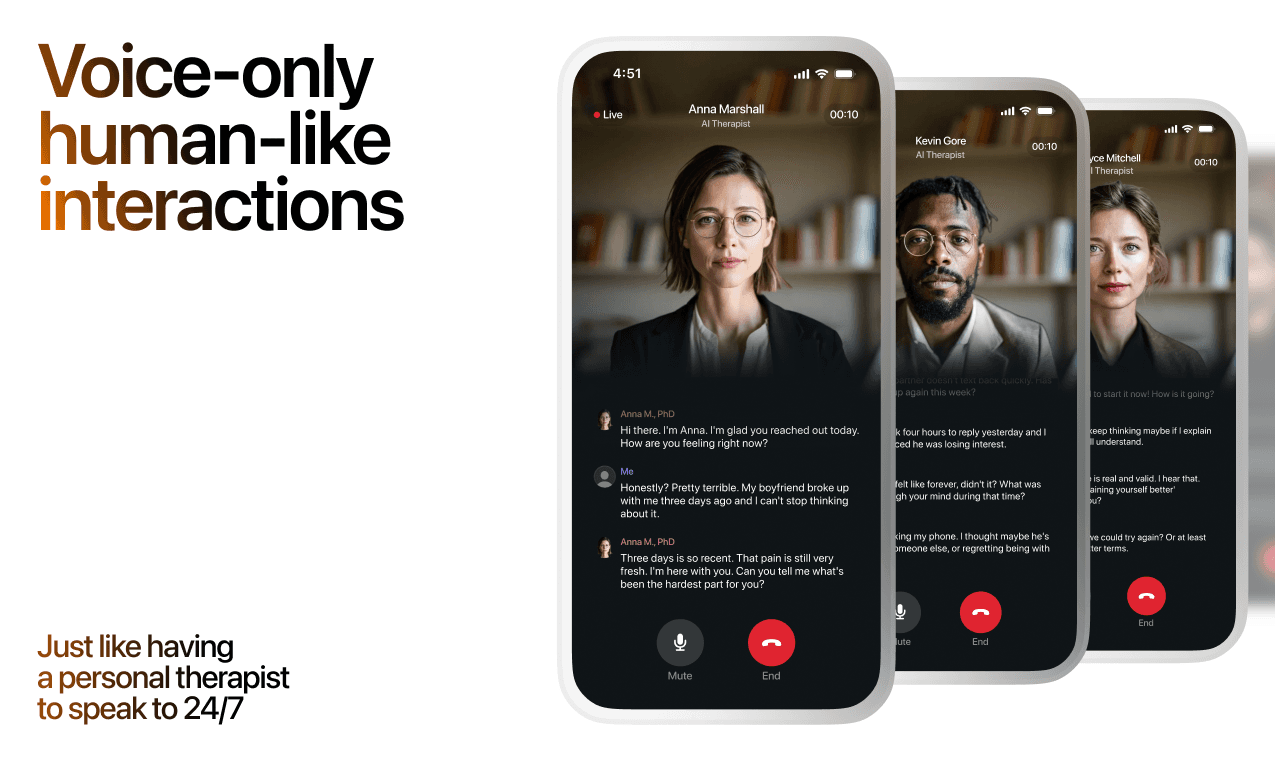
Here's what happens in a typical Lovon session:
You share what's on your mind
There's no script, no intake form, no waiting room. You speak or type whatever you're feeling — in your own words, at your own pace.
Lovon validates and explores
Using frameworks from CBT (Cognitive Behavioral Therapy) and motivational interviewing, Lovon acknowledges your feelings first, then gently helps you explore them. No dismissive "just move on" advice.
You build coping skills together
Lovon doesn't just listen — it actively works with you on evidence-based techniques: thought reframing, urge surfing, behavioral experiments, and more.
What a Session with Lovon Looks Like
When to Seek Professional Help
AI support is a valuable tool, but it's not a replacement for professional care. Please consider reaching out to a licensed therapist if you experience any of the following:
- Persistent thoughts of self-harm or suicide
- Inability to perform daily activities (work, eating, sleeping) for more than 2 weeks
- Turning to alcohol or substances to cope
- Intense anger or desire to harm your ex-partner
- Complete emotional numbness that doesn't improve over time
Crisis Resources (US): If you're in immediate danger, call 988 (Suicide & Crisis Lifeline) or text HOME to 741741 (Crisis Text Line). Available 24/7, free, and confidential.
Outside the US? Find a crisis line in your country
Ready to Start?
Your healing journey can begin right now
1 free conversation. No credit card. No judgment. Just a safe space to process what you're going through.
Frequently Asked Questions
Is AI therapy a replacement for a real therapist?
Is my conversation with Lovon AI private?
How is Lovon different from ChatGPT for emotional support?
Can I use Lovon if I'm already seeing a therapist?
Can I try Lovon for free?
About the Author
The Lovon Editorial Team
Mental Health & Wellness Content Team
The Lovon Editorial Team develops mental health and wellness content designed to make psychological concepts accessible and actionable. Our goal is to bridge the gap between clinical research and everyday life - helping you understand why your mind works the way it does and what you can do about it....
Related articles
- Codependency Quiz 2026: Are You Losing Yourself? Verdict
Take the codependency quiz that separates love from over-responsibility. Get scoring criteria, top picks, and next steps…
- AI Therapy for BPD: What Helps in 2026 (Honest Guide)
AI therapy for BPD works as backup, not treatment. See what to look for, 3 real use cases, and what to skip before you…
- Catastrophizing About Relationship: How to Stop in 2026
Catastrophizing about your relationship? Get 7 steps to break the spiral in 2026, spot the thinking traps behind it, and…
- Best AI App for Attachment Style Healing in 2026
Ranked guide to the best AI app for attachment style healing in 2026: Lovon, Wysa, Youper, Replika, and Rosebud compared…
See also
Quizzes
- Rejection Sensitivity Test: Free 12-Question Check
See how strongly you expect and read rejection.
- Self Esteem Test: What Is Your Worth Resting On?
See what your sense of worth is resting on.
Free tools
- Attachment Trigger Plan for Anxious and Avoidant Patterns
Pick your pattern, tick the moments that set it off, and finish one card for each: your body signal, the thing you will…
- Should I Send This Text?
A chat for the moment you are holding an unsent message. Paste the draft and say who it is for, and you get what it is…
Disclaimer: This article is for informational purposes only and does not constitute medical advice, diagnosis, or treatment. Always seek the advice of your physician or other qualified health provider with any questions you may have regarding a medical condition. If you are in crisis or think you may have an emergency, call 988 (Suicide & Crisis Lifeline) or go to the nearest emergency room. Outside the US? Find a crisis line in your country.