
How to Calm Interview Anxiety Before a Big Interview 2026
Calm interview anxiety fast with box breathing, grounding, and prep steps that work in 2026, plus what to do if panic hits before you walk in the room.

Key Takeaways
- How to calm interview anxiety starts with the body: box breathing at a 4-4-4-4 count for 3 minutes drops your heart
- Progressive muscle relaxation the night before cuts morning-of shakiness more reliably than a last-minute pep talk.
- A blank mind mid-answer usually passes in under 60 seconds if you pause and ground instead of pushing through it.
- Skip caffeine within 2 hours of your interview in 2026 — it mimics the exact symptoms an interviewer reads as nerves.
- Rehearsing answers out loud the night before, even to an AI voice therapist like Lovon, beats silent mental
Interview anxiety shows up as a racing heart, a blank mind, or hands that won't stop shaking right when you need to sound sharp — and there's a specific way to bring your body down before you walk into the room, not just a pep talk to push through it.
TL;DR
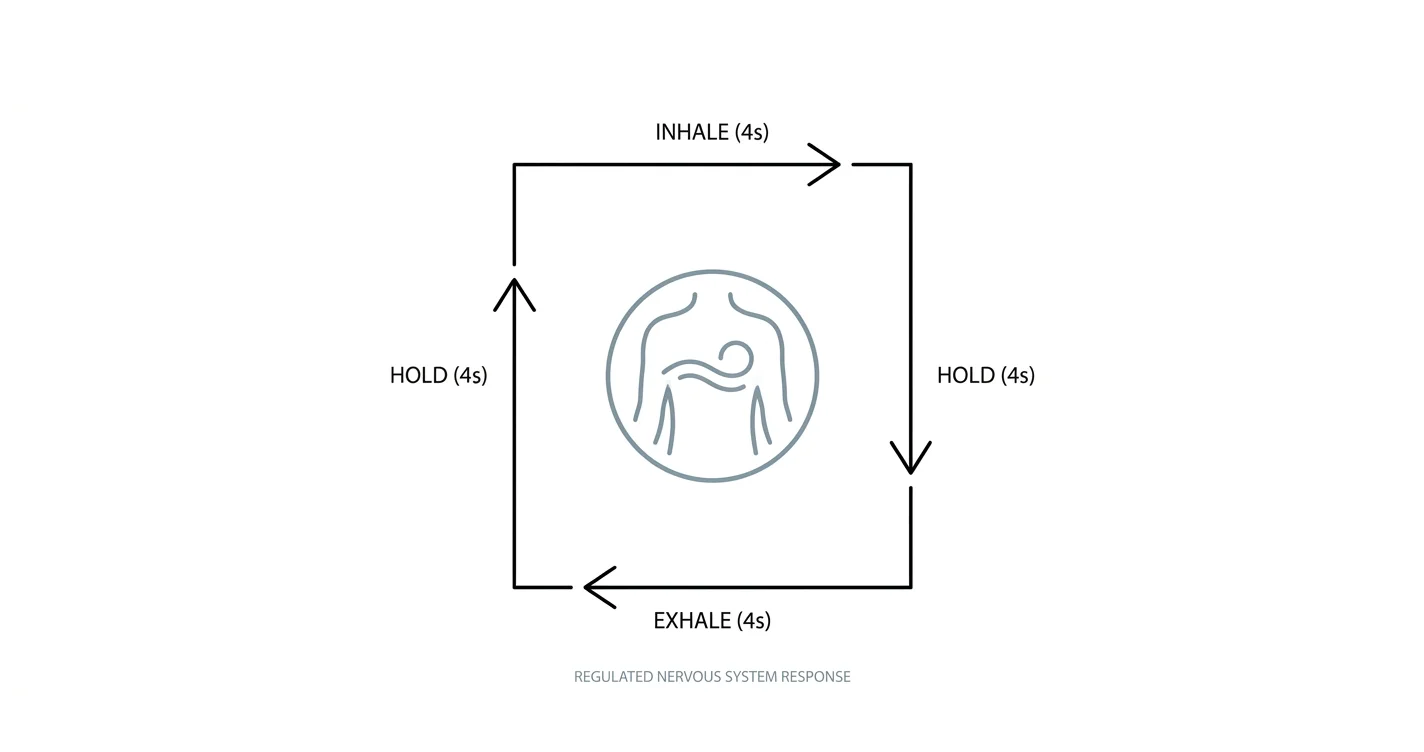
- How to calm interview anxiety starts with the body: box breathing at a 4-4-4-4 count for 3 minutes drops your heart rate before you're called in.
- Progressive muscle relaxation the night before cuts morning-of shakiness more reliably than a last-minute pep talk.
- A blank mind mid-answer usually passes in under 60 seconds if you pause and ground instead of pushing through it.
- Skip caffeine within 2 hours of your interview in 2026 — it mimics the exact symptoms an interviewer reads as nerves.
- Rehearsing answers out loud the night before, even to an AI voice companion like Lovon, beats silent mental run-throughs.
Why this matters
Interview anxiety isn't the same as being unprepared. You can know your answers cold and still shake, blank, or sweat through your shirt because your nervous system doesn't distinguish a job interview from a real threat — it just fires.
The problem is that interviewers can't tell the difference either. A shaky handshake or a delayed answer reads as low confidence even when the actual issue is adrenaline, not competence. Calming interview anxiety in 2026 means working the body first, because the mind won't settle on its own while the body is still in alarm mode.
What you'll need
- 15 to 20 minutes alone before the interview, ideally away from other candidates in a waiting room
- A quiet space to sit or stand without anyone watching you
- Water and something light to eat — a blood sugar dip mimics anxiety symptoms almost exactly
- Your notes reviewed once, not re-read ten times in the last five minutes
- A box breathing pattern you've already practiced, not one you're learning for the first time under pressure
The steps
1. Name what your body is doing
A racing heart before an interview is fight-or-flight doing its job, not proof you're unprepared. Saying to yourself "this is adrenaline, not failure" takes the sensation out of the danger category and into the normal-and-temporary category. That one-sentence reframe is the fastest lever you have, and it costs zero minutes.
2. Run 3 minutes of box breathing 60 to 90 minutes out
Inhale for 4 counts, hold for 4, exhale for 4, hold for 4. Repeat for roughly 12 rounds. Box breathing slows your heart rate through the exhale-hold pattern specifically, which is why it works faster than generic "deep breaths." Do it before you leave the house, not in the parking lot where you're also managing the clock.
3. Do progressive muscle relaxation the night before
Progressive muscle relaxation works through tensing and releasing muscle groups — fists, shoulders, jaw — for 5 seconds each, moving head to toe. Twenty minutes the night before an interview lowers baseline tension so you're not starting the morning already tight. Skipping this and relying only on morning-of breathing is the most common mistake candidates make.
4. Reframe the physical sensations before you reframe your answers
Sweaty palms and a fast pulse are the same physiology as excitement. Telling yourself "this is fuel, not fear" isn't a trick — cognitive reappraisal research treats arousal as relabelable, and it's faster to apply than trying to eliminate the sensation entirely.
5. Rehearse your answers out loud, not in your head
Silent rehearsal feels productive and does almost nothing for anxiety, because your voice, breath, and pacing never get tested. Saying your answers out loud — to a mirror, a friend, or an AI voice companion like Lovon — surfaces the exact spots where you stumble, so the interview isn't the first time you hear yourself say the words.
6. Ground yourself in the waiting room
If your mind starts spinning while you wait, run the 5-4-3-2-1 method: five things you see, four you hear, three you can touch, two you smell, one you taste. It pulls attention out of the anxious loop and back into the room, usually inside a minute.
7. Walk in two minutes early, not ten
Arriving too early gives your nervous system more time to spiral in the lobby. Two to five minutes is enough to compose yourself without sitting in a waiting room rehearsing worst-case scenarios.
Talk through it before you walk in
Rehearse answers and calm nerves with a voice session the night before.
Troubleshooting
Hands shake during the handshake. Exhale fully right before you extend your hand — a full exhale drops muscle tension for a few seconds, which is exactly the window you need.
Mind goes blank mid-answer. Pause and restate the question back to the interviewer. It buys 5 to 10 seconds and signals composure instead of panic. If the blank comes with chest tightness or dizziness, that's closer to a full spike — how to stop a panic attack in the moment covers the fast version of this.
Racing heart while waiting to be called in. Run box breathing again, right there in the chair. Cold water on your wrists for 20 seconds works as a fast backup if you don't want to look like you're meditating in the lobby.
Negative self-talk loop before you walk in. Say the thought out loud, even quietly — "I'm going to mess this up" loses power the second it leaves your head instead of looping silently.
Overprepared but freezing on an unexpected question. Use a bridge phrase: "Let me think through that for a second." It's a normal, professional pause, not a red flag.
Tools and resources
For the breathing and grounding side, AI coping tools for anxiety walk through guided versions of box breathing and grounding you can run from your phone the morning of. Lovon's AI voice sessions work the same way — you talk out loud through the scenario the night before instead of just thinking about it, which is closer to how the real interview will actually feel.
A free version of Lovon's AI voice companion for anxiety is also worth running through once before a high-stakes interview, specifically to talk through the worst-case outcome out loud and hear how manageable it actually sounds when it's not just looping in your head.
What to do next
If interview anxiety keeps showing up in other high-pressure moments — presentations, first dates, hard conversations — it's usually a nervous system pattern, not a one-off. Lovon's voice sessions are built for exactly that: not a replacement for a therapist, but a place to practice staying regulated under pressure before it matters, any day of the week in 2026, not just interview day.
FAQ
How do I calm interview anxiety fast, right before I walk in?
Run 3 minutes of box breathing at a 4-4-4-4 count and exhale fully right before any handshake. This drops your heart rate faster than trying to talk yourself out of feeling nervous.
Is it normal to shake during a job interview?
Yes, shaking hands are a common adrenaline response and don't reflect your competence. Progressive muscle relaxation the night before reduces the baseline tension that makes shaking more likely.
What should I avoid before an interview if I have anxiety?
Skip caffeine within 2 hours of the interview since it mimics anxiety symptoms like a racing heart and jitteriness. Also avoid arriving more than 5 minutes early, since extra waiting time gives anxious thoughts more room to spiral.
What do I do if my mind goes blank during an answer?
Pause and restate the interviewer's question out loud, which buys 5 to 10 seconds without looking flustered. If it escalates into chest tightness or dizziness, treat it as a panic response and use grounding rather than pushing through.
Does breathing really help with interview nerves, or is that overrated?
Box breathing specifically slows heart rate through its exhale-hold structure, which is measurably different from generic deep breathing. Three minutes done 60 to 90 minutes before the interview works better than doing it in the parking lot under time pressure.
Can an AI therapist actually help with interview anxiety?
An AI voice companion like Lovon can't replace an interview coach, but talking through your answers and worst-case scenarios out loud the night before reduces how novel and threatening the real interview feels. It works as rehearsal, not as career advice.
How long before an interview should I start managing anxiety?
Start the night before with progressive muscle relaxation, then do a shorter breathing pass 60 to 90 minutes before the interview itself. Trying to calm down for the first time in the waiting room is the least effective window.
Is interview anxiety a sign I'm not ready for the job?
No — interview anxiety is a nervous system response to a high-stakes, evaluative situation, not a measure of your qualifications. Candidates who are highly prepared still experience physical anxiety symptoms in 2026 job markets just as often as underprepared ones.
One last thing
The single move that changes an interview fastest isn't a breathing technique — it's saying "I'm a little nervous, give me a second" out loud if you need to. It resets the room's expectations instead of you fighting your own physiology in silence, and most interviewers respond to it with more patience, not less.
Related guides
How AI Support Helps You Heal
AI emotional support isn't about replacing human connection — it's about filling the gaps. The moments when you need to talk at 2 AM, when you don't want to burden your friends again, or when you simply need someone to listen without judgment.
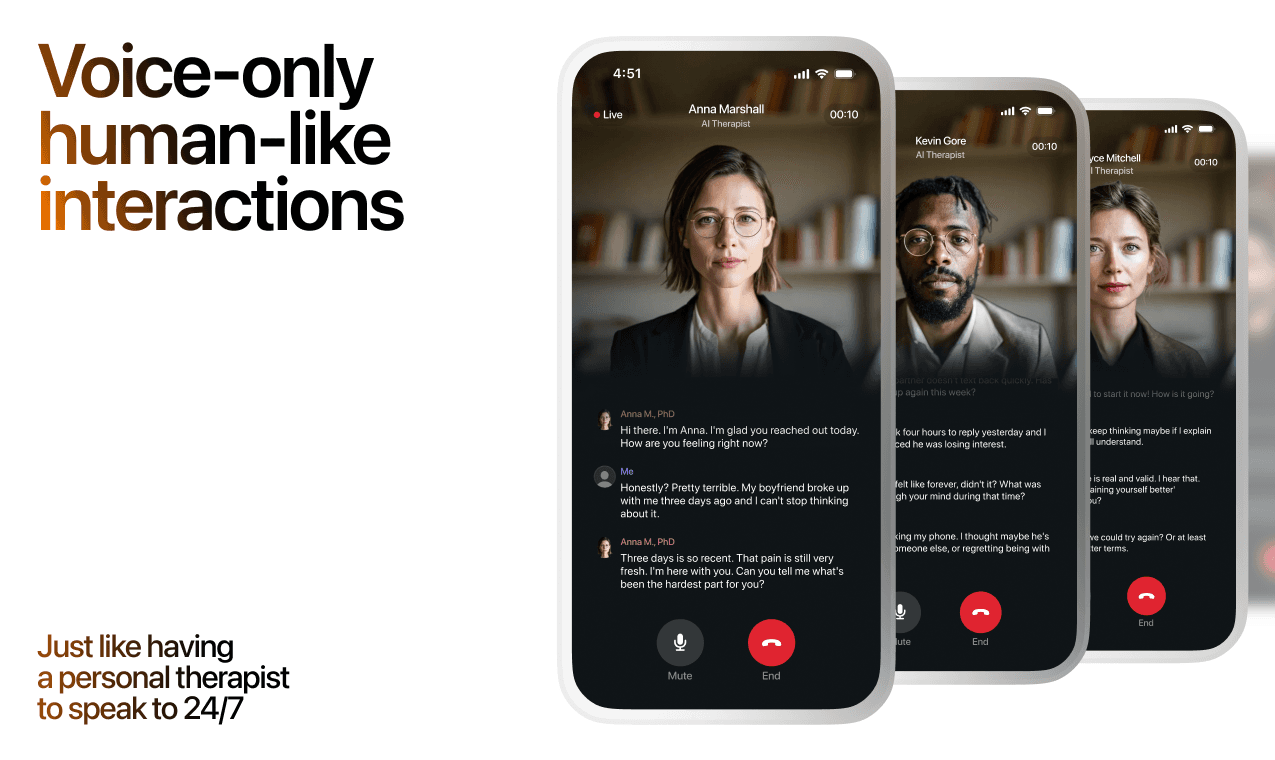
Here's what happens in a typical Lovon session:
You share what's on your mind
There's no script, no intake form, no waiting room. You speak or type whatever you're feeling — in your own words, at your own pace.
Lovon validates and explores
Using frameworks from CBT (Cognitive Behavioral Therapy) and motivational interviewing, Lovon acknowledges your feelings first, then gently helps you explore them. No dismissive "just move on" advice.
You build coping skills together
Lovon doesn't just listen — it actively works with you on evidence-based techniques: thought reframing, urge surfing, behavioral experiments, and more.
What a Session with Lovon Looks Like
When to Seek Professional Help
AI support is a valuable tool, but it's not a replacement for professional care. Please consider reaching out to a licensed therapist if you experience any of the following:
- Persistent thoughts of self-harm or suicide
- Inability to perform daily activities (work, eating, sleeping) for more than 2 weeks
- Turning to alcohol or substances to cope
- Intense anger or desire to harm your ex-partner
- Complete emotional numbness that doesn't improve over time
Crisis Resources (US): If you're in immediate danger, call 988 (Suicide & Crisis Lifeline) or text HOME to 741741 (Crisis Text Line). Available 24/7, free, and confidential.
Outside the US? Find a crisis line in your country
Ready to Start?
Your healing journey can begin right now
A 7-day trial. No judgment. Just a safe space to process what you're going through.
Frequently Asked Questions
Is Lovon a replacement for a real therapist?
Is my conversation with Lovon AI private?
How is Lovon different from ChatGPT for emotional support?
Can I use Lovon if I'm already seeing a therapist?
Can I try Lovon before subscribing?
About the Author
The Lovon Editorial Team
Mental Health & Wellness Content Team
The Lovon Editorial Team develops mental health and wellness content designed to make psychological concepts accessible and actionable. Our goal is to bridge the gap between clinical research and everyday life - helping you understand why your mind works the way it does and what you can do about it....
Related articles
- How to Calm Stage Fright Before a Performance (2026)
Calm stage fright before a performance with slow-exhale breathing, grounding, and a walk-on rehearsal — the 2026 steps…
- AI Coping Tools for Exam Anxiety (2026 Verdict)
AI coping tools for exam anxiety ranked for 2026: voice check-ins, breathing drills, and grounding techniques compared…
- AI Therapy App for Musician Performance Anxiety (2026)
Lovon's AI voice therapy app helps musicians manage performance anxiety on demand in 2026 — see the steps, options, and…
- Why Do I Feel Anxious for No Reason? 2026 Guide
Anxious with no clear trigger? See the real causes behind free-floating anxiety in 2026 and the steps that calm your…
See also
Quizzes
- Am I Sabotaging My Relationship? 12-Question Quiz
Find the move you reach for, in 2 minutes.
- Do I Miss My Ex or Am I Just Lonely? 12-Question Quiz
Find out what the missing is actually about.
Free tools
- What to Say When They Are Struggling
A chat, not a list. Tell the coach who this person is to you, what they are going through, and what you already said…
- Am I Overreacting, or Is This a Big Deal?
A chat for the small thing you cannot stop turning over. Say what happened and what you have already told yourself about…
From the wiki
- Why do I feel sad when I'm alone?
Being alone does not create the sadness. It removes the noise that was keeping it out of earshot, so whatever queued up…
Disclaimer: This article is for informational purposes only and does not constitute medical advice, diagnosis, or treatment. Always seek the advice of your physician or other qualified health provider with any questions you may have regarding a medical condition. If you are in crisis or think you may have an emergency, call 988 (Suicide & Crisis Lifeline) or go to the nearest emergency room. Outside the US? Find a crisis line in your country.