
Rejection Sensitivity in Adults: How to Cope in 2026
Rejection sensitivity in adults spikes before you can think it through. Get the 2026 six-step routine to catch it early and calm the reaction fast.

Key Takeaways
- Rejection sensitivity in adults is a body-first reaction — the panic hits before your mind names what happened, so
- ADHD-linked rejection sensitive dysphoria overlaps with general rejection sensitivity but isn't the same condition —
- Catastrophizing and mind-reading are the two thinking traps that turn a delayed text into 'they're done with me' —
- Lovon's voice sessions give you a place to talk a spike through in real time in 2026, useful in the gaps between
Rejection sensitivity in adults turns a flat text, a raised eyebrow, or a skipped invite into proof you're about to be abandoned. This guide walks through the exact sequence to catch that reaction early, calm the body first, and respond instead of spiral — starting today.
TL;DR
- Rejection sensitivity in adults is a body-first reaction — the panic hits before your mind names what happened, so regulate the nervous system first.
- ADHD-linked rejection sensitive dysphoria overlaps with general rejection sensitivity but isn't the same condition — check for ADHD patterns before assuming one explains the other.
- Catastrophizing and mind-reading are the two thinking traps that turn a delayed text into 'they're done with me' — name the distortion before reacting.
- Lovon's voice sessions give you a place to talk a spike through in real time in 2026, useful in the gaps between scheduled appointments.
Why this matters
Rejection sensitivity in adults isn't a personality flaw — it's a nervous system that learned to treat social distance as danger. The reaction fires in under a second, long before your thinking brain gets a vote, which is why "just don't take it personally" never works as advice.
This overlaps with rejection sensitive dysphoria, the ADHD-specific version of this pattern, but the two aren't identical. You can have rejection sensitivity without ADHD, and the sequence below works either way.
Left unmanaged, it drives the same five behaviors on repeat through 2026 and every year before it: over-apologizing, pre-emptive withdrawal, re-reading texts, people-pleasing, and blowups over minor slights. None of those fix the alarm. Regulating the alarm does.
What you'll need
- 10-15 minutes a day for the first two weeks — you're retraining a reflex, not adopting a mindset once
- A way to track your reactions: notes app, voice memo, or a paper notebook
- One grounding technique you already know, even a basic one like box breathing
- Willingness to sit with 60-90 seconds of physical discomfort before reacting
- Optional: a place to talk a spike out loud as it happens — something like Lovon's voice sessions work well here because you catch the tone shift in real time instead of typing it out later
The steps
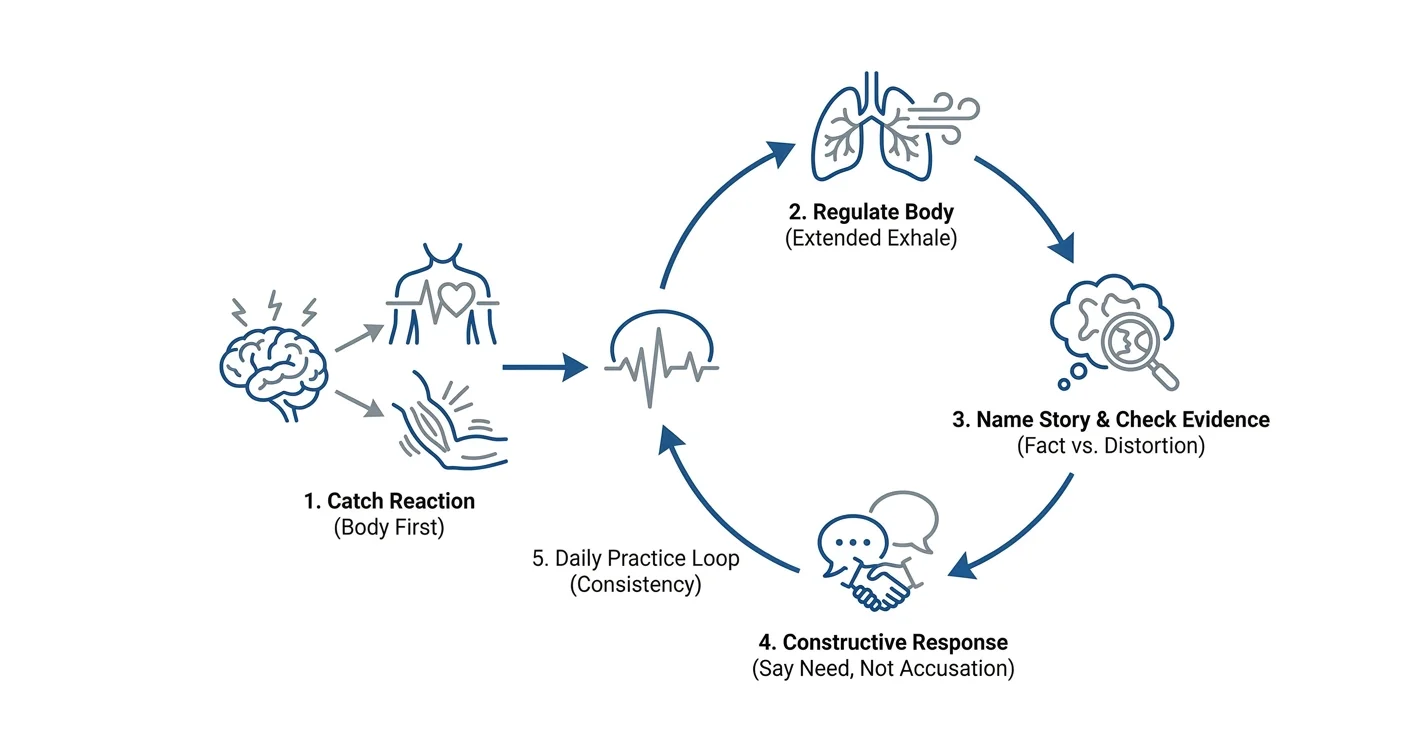
1. Catch the first ten seconds
This interrupts the reflex before it turns into a full story. Rejection sensitivity moves fast — cortisol and adrenaline hit before you've even registered what happened.
The moment you feel the drop — chest tight, stomach dips, face goes hot — stop and name it: "This is the reaction, not the fact." Set a timer for 90 seconds and do nothing else.
Expected outcome: the urge to fire back a text or apologize drops noticeably by the 90-second mark. Common mistake: trying to figure out why they did it before your body has calmed down — that's step 4, not step 1.
2. Name the story your brain just wrote
This separates what actually happened from what you're assuming it means. Rejection sensitivity fills silence with the worst possible narrative.
Write one sentence for the fact and one for the story. Fact: "She hasn't replied in four hours." Story: "She's done with me." A four-hour silence is data, not doom.
Expected outcome: seeing the gap between fact and story in writing makes the story look thinner almost every time. Common mistake: skipping the fact line and going straight to the story — that's what keeps the story feeling true.
3. Regulate the body before you respond
Your body doesn't calm down just because your mind decides to be reasonable. If your heart rate is still elevated, whatever you send next will carry that charge.
Extend your exhale to twice the length of your inhale for eight breaths — four seconds in, eight seconds out. Step away from the screen for two minutes first if you can. This is nervous system work, not mindset work; the same logic sits behind window of tolerance and why it narrows under stress.
Expected outcome: pulse drops, shoulders drop, the urge to send something right now fades. Common mistake: trying to think your way calm while skipping the breathing — it rarely works in the first ten minutes of a spike.
4. Check the evidence against the distortion
Rejection sensitivity runs on two specific thinking traps: catastrophizing ("this means it's over") and mind-reading ("I know exactly what they're thinking"). Both feel like facts. Neither is verifiable.
Ask three questions. What's the most likely explanation, not the worst one? What would you tell a friend who showed you this same evidence? What's actually confirmed versus what you've assumed? The full breakdown of these patterns is in cognitive distortions.
Expected outcome: the boring, likely version usually beats the catastrophic one — "they're busy" wins over "they hate me" almost every time. Common mistake: doing this step before step 3. An unregulated body will talk you back into the catastrophic story no matter how good your logic is.
5. Say the need, not the accusation
Rejection sensitivity often turns into a preemptive strike — "you clearly don't care" — which manufactures the exact rejection you were afraid of.
Swap the accusation for a plain need. Instead of "you never text back," try "I noticed I didn't hear from you and it made me anxious — can you give me a heads up next time you'll be slow to respond?"
Expected outcome: this gets a different response almost every time, because it isn't an attack the other person has to defend against. Common mistake: sending this before steps 1 through 4 are done. Timing is most of the skill.
6. Build the daily rep
One good response doesn't retrain a reflex built over years. Consistency across weeks does.
At the end of each day, log one moment the reaction fired, what you did, and how long it took to settle. Track the trend across 2-3 weeks, not the outcome of any single day.
Expected outcome: by week three or four, a ten drops to a five — same trigger, smaller charge. Common mistake: quitting after one rough week and calling the method a failure.
Troubleshooting
- I still spiral even after breathing. Extend the exhale further — six seconds in, twelve out — and add a physical reset like cold water on your wrists or a short walk. Breathing alone doesn't work for everyone on the first few tries.
- I re-read the same text ten times looking for hidden meaning. Set a hard rule: one read, then close the app for 30 minutes. Re-reading adds anxiety, not information.
- I apologize for things that weren't my fault. That's a fawn response layered on top of rejection sensitivity — run the fact-versus-story split from step 2 before you apologize for anything.
- I push people away before they can reject me first. That's preemptive withdrawal. Name the urge as protection, not logic, and wait 24 hours before acting on it.
- My reaction is just as strong with people I barely know. That signals a broad reflex rather than a situational one, which makes the daily tracking in step 6 matter more for you than for someone whose reaction is narrow.
- Nothing here is moving the needle and it's costing me my job or relationships. At that intensity this is worth a licensed clinician, not a self-help routine — rejection sensitivity that severe sometimes overlaps with ADHD, anxious attachment, or a mood disorder that needs its own treatment plan.
Tools and resources
- A notes app or voice memo for the fact-versus-story log in step 2
- A timer for the 90-second pause in step 1 — the phone default works fine
- Lovon, the AI voice support app, for talking a spiral out loud in the moment instead of waiting for a scheduled session
- A trusted person who can hear "I'm spiraling, I don't need advice, I need five minutes" without trying to fix it
What to do next
The six steps above work on the reaction itself. If the same pattern keeps showing up with the same person or in the same job, the next question is what's feeding it — an attachment style, a specific relationship, or a specific environment. Track it for three weeks before deciding which one you're dealing with. Lovon's AI voice sessions are built for exactly those in-between moments when a spike hits and scheduled therapy is days away.
FAQ
What is rejection sensitivity in adults?
Rejection sensitivity in adults is a heightened, often physical reaction to perceived criticism, disapproval, or distance — a raised eyebrow or slow text reply can trigger the same alarm as an actual rejection. It typically shows up as racing thoughts, a tight chest, or an urge to apologize or withdraw immediately.
Is rejection sensitivity the same as rejection sensitive dysphoria?
No — rejection sensitive dysphoria is the ADHD-specific version of this pattern, while rejection sensitivity in adults can exist without ADHD at all. The coping steps overlap heavily, but only one of them has a documented neurological link to attention regulation.
What causes rejection sensitivity in adulthood?
It usually traces back to early experiences of inconsistent approval, harsh criticism, or conditional love, layered with a nervous system that learned to scan for social threat. ADHD, anxious attachment, and childhood invalidation all show up as common contributors in 2026 clinical writing on the topic.
How do you calm a rejection sensitivity spike in the moment?
Extend your exhale to twice the length of your inhale for eight breaths before you respond to anything. Regulating the body first, before analyzing the trigger, is the single highest-leverage move in the moment.
Can rejection sensitivity be treated without medication?
Yes — cognitive reframing, nervous system regulation, and daily tracking reduce the intensity of the reaction over several weeks without medication. Medication becomes relevant mainly when rejection sensitivity is tied to an underlying condition like ADHD or a mood disorder that a clinician has diagnosed.
Is rejection sensitivity a sign of anxious attachment?
It's common in anxious attachment but not exclusive to it — avoidant and disorganized attachment styles can produce their own version of rejection sensitivity. The trigger and the coping approach differ slightly depending on which pattern is driving it.
How long does it take to reduce rejection sensitivity?
Most people notice a smaller charge on the same triggers within three to four weeks of consistent daily practice. The reflex was built over years, so full change takes months, not days.
When should rejection sensitivity in adults be treated by a professional?
When it's affecting your job, your relationships, or your daily functioning despite consistent self-management, it's time for a licensed clinician. That's especially true if it overlaps with ADHD symptoms, panic, or a depressive episode that needs its own treatment plan.
One last thing
Rejection sensitivity gets worse under sleep debt and caffeine more than most people account for. Cutting the afternoon coffee shows up as a smaller spike, not a smaller reaction, within about a week — that's a bigger lever than most communication scripts.
Related guides
How AI Support Helps You Heal
AI emotional support isn't about replacing human connection — it's about filling the gaps. The moments when you need to talk at 2 AM, when you don't want to burden your friends again, or when you simply need someone to listen without judgment.
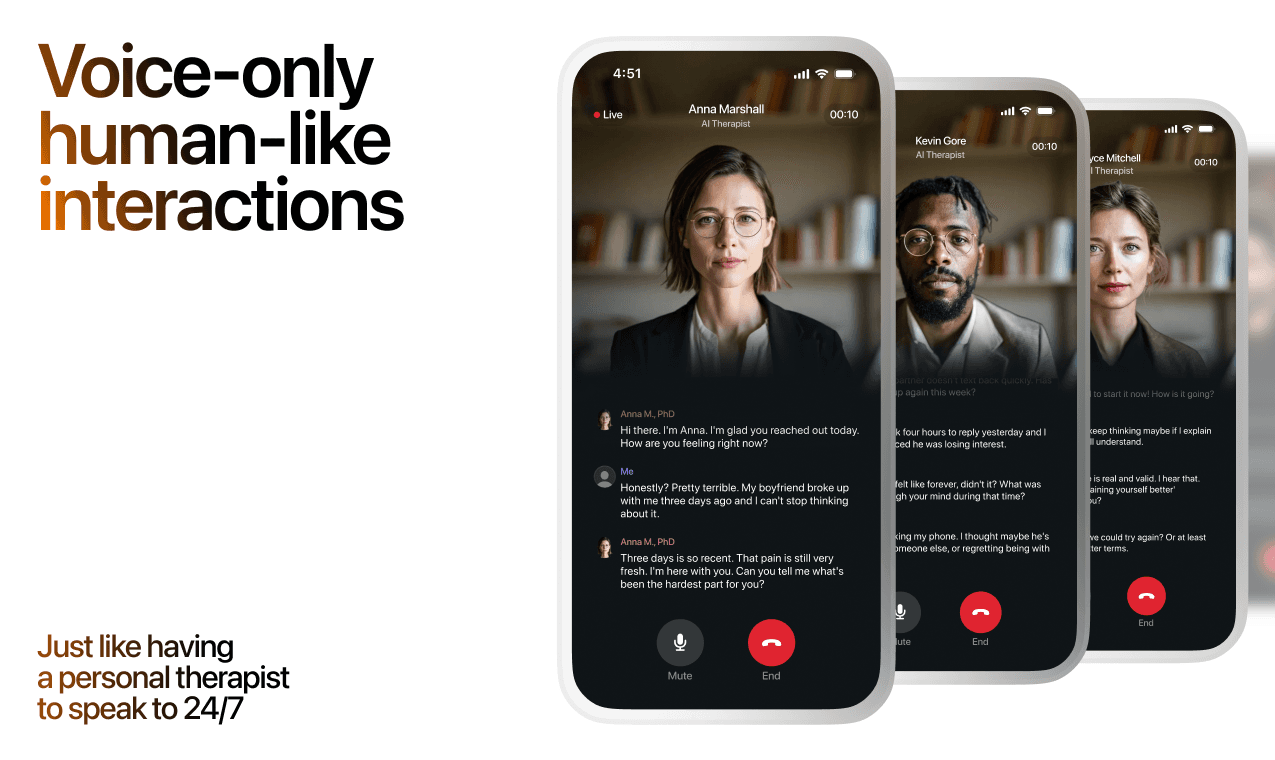
Here's what happens in a typical Lovon session:
You share what's on your mind
There's no script, no intake form, no waiting room. You speak or type whatever you're feeling — in your own words, at your own pace.
Lovon validates and explores
Using frameworks from CBT (Cognitive Behavioral Therapy) and motivational interviewing, Lovon acknowledges your feelings first, then gently helps you explore them. No dismissive "just move on" advice.
You build coping skills together
Lovon doesn't just listen — it actively works with you on evidence-based techniques: thought reframing, urge surfing, behavioral experiments, and more.
What a Session with Lovon Looks Like
Lovon is AI support, not a replacement for professional care. If things have been hard to get through for weeks, or you are thinking about harming yourself, talk to a doctor or a licensed therapist.
Ready to Start?
Your healing journey can begin right now
A 7-day trial. No judgment. Just a safe space to process what you're going through.
Frequently Asked Questions
Is Lovon a replacement for a real therapist?
Is my conversation with Lovon AI private?
How is Lovon different from ChatGPT for emotional support?
Can I use Lovon if I'm already seeing a therapist?
Can I try Lovon before subscribing?
About the Author
The Lovon Editorial Team
Mental Health & Wellness Content Team
The Lovon Editorial Team develops mental health and wellness content designed to make psychological concepts accessible and actionable. Our goal is to bridge the gap between clinical research and everyday life - helping you understand why your mind works the way it does and what you can do about it....
Related articles
- Avoidant Attachment Shutdown Triggers: What Sets It Off (2026)
Avoidant attachment shutdown triggers explained: the 4 patterns behind it, body signals to watch, and steps to interrupt…
- Cope with Job Rejection Without Spiraling (2026 Guide)
Learn how to cope with job rejection without spiraling in 2026: 7 steps to process the news, stop rumination, and keep…
- Anxious Attachment in Dating: Patterns to Watch (2026)
Anxious attachment in dating: spot the protest behaviors, triggers, and fixes that work in 2026. A step-by-step guide…
- How to Stop Negative Self-Talk for Good (2026 Guide)
Learn how to stop negative self-talk with a 6-step method for 2026: catch the thought, name the distortion, and counter…
See also
Quizzes
- Rejection Sensitivity Test: Free 12-Question Check
See how strongly you expect and read rejection.
- Overthinking Test: Am I an Overthinker? 12-Question Quiz
See which overthinking loop runs you, in 3 minutes.
Free tools
- Attachment Trigger Plan for Anxious and Avoidant Patterns
Pick your pattern, tick the moments that set it off, and finish one card for each: your body signal, the thing you will…
- How to End a Friendship Without a Scene
A chat for working out how to end a friendship clearly, without a grievance list or a slow ghost. Tell it how long you…
From the wiki
- Why do I feel sad when I'm alone?
Being alone does not create the sadness. It removes the noise that was keeping it out of earshot, so whatever queued up…
Disclaimer: This article is for informational purposes only and does not constitute medical advice, diagnosis, or treatment. Always seek the advice of your physician or other qualified health provider with any questions you may have regarding a medical condition. If you are in crisis or think you may have an emergency, call 988 (Suicide & Crisis Lifeline) or go to the nearest emergency room. Outside the US? Find a crisis line in your country.