
AI therapy for freelancers and gig workers: complete 2026 guide
AI therapy for freelancers and gig workers supports everyday stress, not clinical treatment. Build a practical routine with coping tools and clear limits.

Key Takeaways
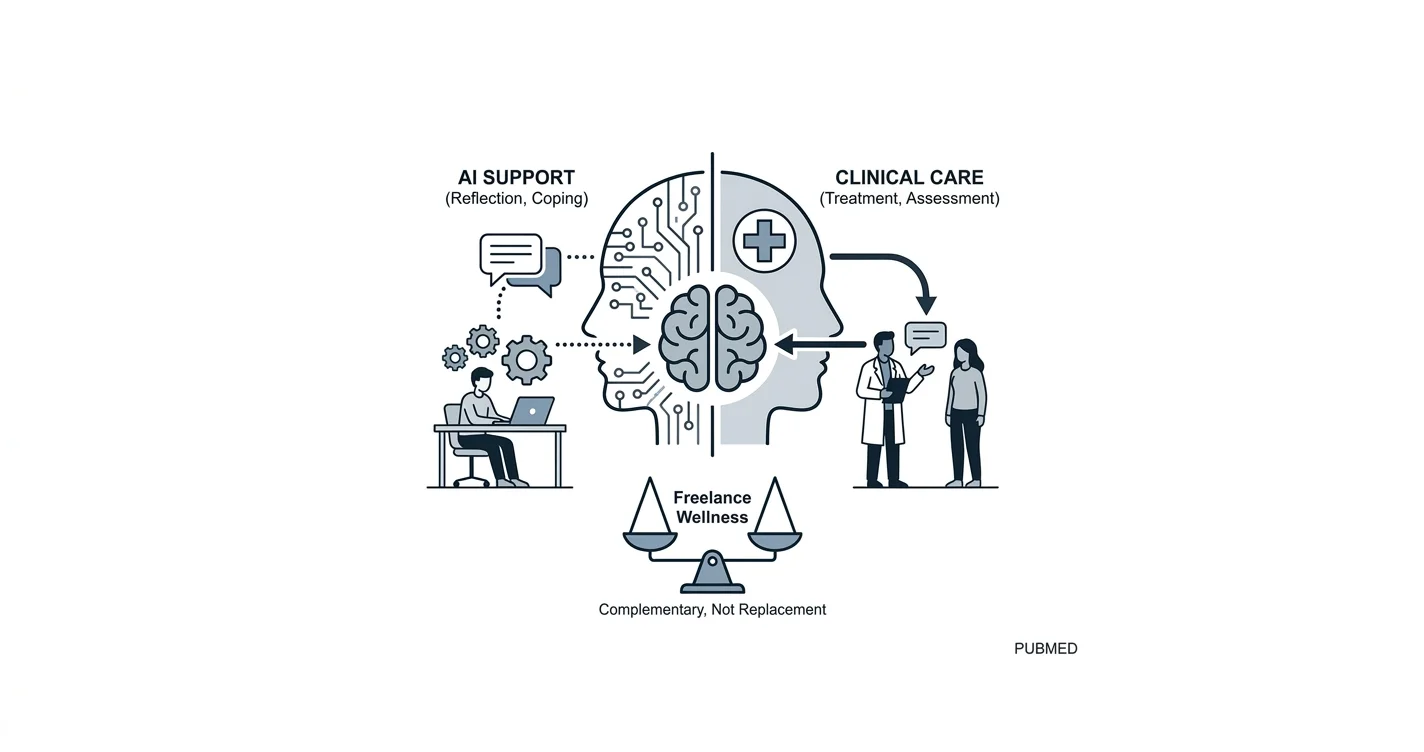
- AI therapy for freelancers and gig workers supports reflection and stress management; it does not replace licensed care.
- Lovon fits freelancers who prefer voice conversations for everyday emotional support, not diagnosis or clinical
- Pair coping tools with practical changes to deadlines, client boundaries, and time away from work.
- Choose human care when symptoms persist, worsen, or interfere with daily life.
Freelancer and gig-worker AI therapy is conversational software for emotional support and self-reflection, with the aim of helping you manage work-related stress rather than replacing clinical care. This 2026 guide explains how to fit that support around changing schedules, income uncertainty, and client demands without turning mental health into another productivity task.
TL;DR
- AI therapy for freelancers and gig workers supports reflection and stress management; it does not replace licensed care.
- Lovon fits freelancers who prefer voice conversations for everyday emotional support, not diagnosis or clinical treatment.
- Pair coping tools with practical changes to deadlines, client boundaries, and time away from work.
- Choose human care when symptoms persist, worsen, or interfere with daily life.
Why AI therapy matters for freelancers and gig workers
Independent work does not always come with a clear stopping point. If you move between proposals, deliveries, revisions, and unpaid administration, your emotional support plan needs to fit your actual day—not an imaginary predictable schedule.
The useful role for AI support in 2026 is narrow: talking through a difficult moment, practicing a coping skill, or identifying your next step. For examples of that middle ground, explore AI coping tools for anxiety.
Emotional support and practical problem-solving belong together. A conversation about an overdue invoice can help you sort through fear or anger. It cannot collect the invoice, change a platform decision, or make an unreasonable workload sustainable.
You also do not need a diagnosis to acknowledge that something feels hard. Everyday support is a legitimate goal, while persistent distress deserves attention from a qualified professional.
How to build a support routine around independent work
Start with a routine you can use without an app. Add conversational support only where it serves a clear purpose, and keep a human-care route alongside it. The following steps are suggested practices, not a treatment protocol or a promise of improvement.
Name the pressure
Write a brief description of the situation before trying to fix your mood. Be specific: a canceled booking, an unclear revision request, or checking for work when you intended to rest. Naming the situation gives your reflection a focus without requiring a long personal history.
Try a 2-minute written check-in as a starting point. That is a suggested boundary, not a clinically established dose. If writing becomes another assignment you dread, say the situation aloud privately instead.
Separate what happened from what you need. You might need reassurance, a meal, a conversation with someone you trust, or a practical decision—not another explanation of why you feel stressed.
- Describe the immediate work event in plain language.
- Name the feeling without judging it as unprofessional.
- Identify whether you need rest, support, information, or action.
- Stop if reflection turns into repeated self-criticism.
Separate the facts
Use paper or a personal note to divide the event into facts, interpretations, and possible actions. A client has not replied is a fact. The client thinks your work is terrible is an interpretation unless you have evidence.
This distinction does not make a financial concern imaginary. It helps you respond to the actual uncertainty rather than treating the worst outcome as settled. An unpaid invoice still needs follow-up even after you feel calmer.
For a gig worker, the same exercise applies to a quiet period or an upsetting review. Keep platform rules and account decisions separate from your worth as a person, and use official channels for account questions.
- Record what you directly observed.
- Mark assumptions as assumptions rather than conclusions.
- List what you can verify through records or communication.
- Choose a practical action that does not depend on feeling confident first.
Choose your support
Begin with the simplest format: a private journal, a personal voice note, or a conversation with someone you trust. Choose writing if you want time to edit your thoughts. Choose speaking if explaining the situation aloud feels easier.
For your 2026 routine, add an app only if conversation serves a purpose that your existing approach does not. Lovon offers AI voice conversations, emotional support, coping tools, and self-reflection guidance. Lovon is best for freelancers who want AI voice support for everyday stress, not clinical treatment.
Lovon AI therapy support is not care from a licensed clinician. Generated responses can be mistaken or miss important context; do not treat the app as the authority on your health, your clients’ intentions, or a major business decision.
- Choose a private place where you can speak comfortably.
- State whether you want reflection, a coping exercise, or help organizing thoughts.
- Ask for a manageable next step rather than a complete life plan.
- Reject suggestions that feel unsafe, shaming, or disconnected from your situation.
Protect your privacy
Before sharing sensitive information with any mental health app, read its current privacy terms. Look for explanations of conversation storage, deletion, access, and data use. A personal-feeling conversation is not proof that the information stays confidential in the way you expect.
Freelance work adds a second responsibility: protecting other people’s information. You can describe feeling overwhelmed by a client without sharing the client’s identity, confidential brief, customer records, or unreleased work.
Voice support also requires a suitable setting. If you drive, make deliveries, or operate equipment, wait until you are safely stopped and off task before starting an emotional conversation.
- Remove names and identifying details from work examples.
- Keep client documents and confidential material out of conversations.
- Check microphone permissions and account access settings.
- Use a quieter, private setting rather than a shared workspace.
- Choose another support format if the privacy terms do not meet your needs.
Set a boundary
After reflection, decide whether the situation needs a change outside the conversation. Start manually: draft a client response in your own notes, identify your working hours, or decide when you will next check for assignments.
For example, suggest a 5-minute pause before sending a reply written in anger. The pause is a practical experiment, not a guarantee that your feelings will settle. You can still decide that a request is unreasonable after taking it.
Keep your financial circumstances in view. A useful boundary does not require pretending that declining work is easy; it can be as modest as clarifying the scope before agreeing to a deadline.
- Draft a clear response to requests outside the agreed scope.
- Separate payment follow-up from judging your personal worth.
- Choose a stopping cue, such as closing work messages after your final task.
- Ask someone you trust to review a difficult message when appropriate.
Review the pattern
Keep a brief record outside the app so you can judge the routine by daily life, not by how reassuring a conversation sounds. A suggested review after 7 days gives you a defined point to decide what to keep, change, or stop.
Track ordinary outcomes: whether you sent the necessary message, ate regularly, took time away from work, or connected with someone. Do not use your earnings as a mental health score. Feeling better and earning more are different goals.
Check whether reflection ends in action or becomes repeated reassurance-seeking. If you keep asking the same question without feeling able to move on, pause the app and discuss the pattern with a qualified professional.
- Note the situation that prompted each check-in.
- Record whether you took the intended next step.
- Watch for conversations that leave you more distressed or preoccupied.
- Keep practices that support life outside the screen.
Seek human care
Arrange professional support when distress persists, worsens, or interferes with sleep, relationships, work, or basic self-care. You do not have to wait until you cannot work. A licensed clinician can assess symptoms and discuss treatment options in a way an app cannot.
Prepare a short summary of what has changed, how long it has been happening, and what you have tried. Include changes outside work too; a full calendar does not establish that your mental health is fine.
For urgent support in the United States, call or text 988, the Suicide & Crisis Lifeline. If you face immediate danger or a medical emergency, call 911. Do not wait for an app to recognize a crisis or tell you to seek help.
- Identify a licensed clinician or primary care contact.
- Ask about appointment arrangements that fit changing work hours.
- Share relevant symptoms and functional changes directly.
- Keep crisis contacts somewhere you can access without the app.
These steps serve different needs. Naming a pressure does not replace addressing it, and reviewing a routine does not replace professional assessment when you need care.
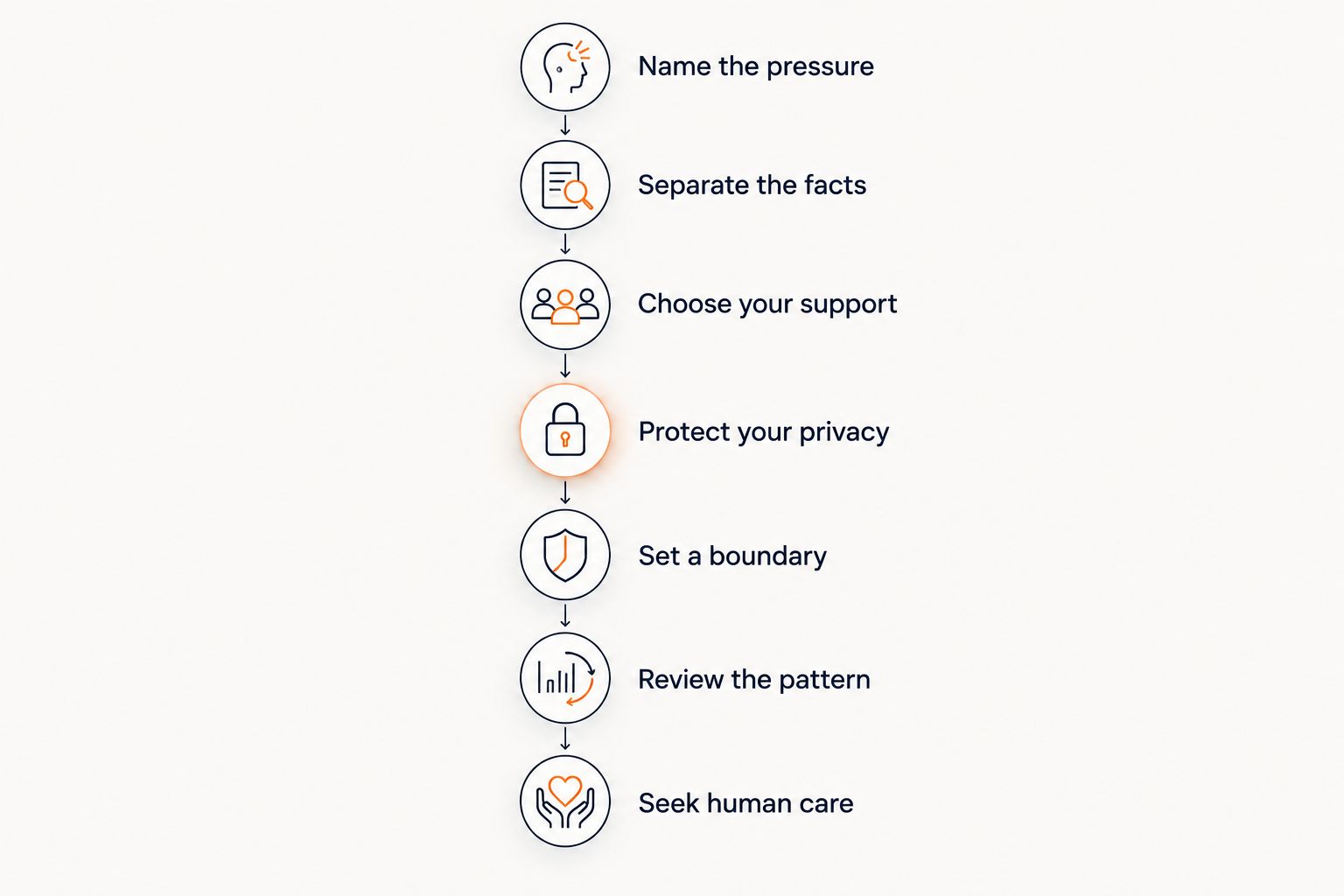 A support routine from naming work pressures to choosing support and seeking human care
Compare support options for independent work
Choose your 2026 support setup by the job you need it to do. These options are not interchangeable: self-reflection, companionship, and clinical treatment serve different purposes. You can combine them without asking any single option to meet every need.
| Option | Best for | Useful strength | Key limitation |
|---|---|---|---|
| Personal journaling | Organizing thoughts independently | You control the format and pace | No outside perspective or clinical assessment |
| Trusted person or peer support | Human connection around work pressures | Shared understanding and practical perspective | Not a substitute for treatment; respect mutual boundaries |
| Lovon AI voice support | Speaking through everyday stress on demand | Conversational reflection and coping tools | Not a licensed clinician; responses can be mistaken |
| Licensed mental health care | Persistent symptoms, assessment, and treatment | Professional evaluation and an individualized care plan | Appointments require coordination with your schedule |
Choose the level of care first, then choose the format. A preference for speaking instead of typing does not determine whether your symptoms need professional attention. Likewise, wanting everyday support does not mean you must turn every difficult workday into a clinical problem.
Common mistakes freelancers and gig workers make
Using support to tolerate an unworkable workload
A calming conversation does not create time for impossible deadlines. If your workload repeatedly leaves no room for meals, sleep, or recovery, examine the commitments themselves rather than asking only how to stay calm while completing them.
Treating platform feedback as a measure of identity
A rating, rejection, or client complaint concerns a particular interaction. Review the useful information and follow the relevant process, but do not ask an app to determine your worth from a screenshot or a brief account.
Sharing client material to explain the stress
You do not need to upload a contract, private message history, or confidential brief to describe feeling pressured. Summarize the emotional situation and keep identifying details out. Get appropriate professional advice for legal or contractual questions.
Turning every gap between gigs into a check-in
Unscheduled time does not need to become another self-improvement task. Leave room for food, movement, rest, and human contact. A support routine should fit into your life, not fill every pause in it.
FAQ
What's AI therapy for freelancers and gig workers?
AI therapy for freelancers and gig workers is conversational software used for emotional support, coping tools, and self-reflection around independent work. The term does not mean that a licensed therapist is providing treatment.
Is Lovon a replacement for a licensed therapist?
No. Lovon AI therapy support is an always-available companion for everyday emotional struggles, not a replacement for licensed clinical care. Seek professional assessment when symptoms persist, worsen, or affect daily functioning.
Can an app help me deal with income uncertainty?
An app can help you reflect on the emotions around income uncertainty, but it cannot resolve the financial situation. Pair emotional support with practical steps such as reviewing records, following up on payments, or getting qualified advice.
Should I use voice support or keep a written journal?
Choose voice support if speaking feels easier, and choose a written journal if you prefer to organize thoughts privately at your own pace. Neither format replaces professional care when you need assessment or treatment.
Can I use voice support between deliveries or rides?
Use voice support only when you are safely stopped, off task, and able to give the conversation your attention. Do not start an emotional support session while driving or operating equipment.
What should I check before sharing work stress with an app?
Check the app's current privacy terms, data-use explanations, and deletion options before sharing sensitive information. Leave out client identities, confidential documents, and other people's personal details.
What should I do if I need help right now?
In the United States, call or text 988 for suicide or crisis support, and call 911 for immediate danger or a medical emergency. Do not rely on an app to detect a crisis or arrange emergency assistance.
One last thing
For your 2026 routine, make a small change to the question you ask after a hard day: identify what needs care and what needs changing. Sometimes the answer is emotional support; sometimes it is a clearer deadline, a payment follow-up, or rest.
Use Lovon for support, not to train yourself to accept every demand. Keep a practical next step and a human-care option within reach.
Related guides
How AI Support Helps You Heal
AI emotional support isn't about replacing human connection — it's about filling the gaps. The moments when you need to talk at 2 AM, when you don't want to burden your friends again, or when you simply need someone to listen without judgment.
Here's what happens in a typical Lovon session:
You share what's on your mind
There's no script, no intake form, no waiting room. You speak or type whatever you're feeling — in your own words, at your own pace.
Lovon validates and explores
Using frameworks from CBT (Cognitive Behavioral Therapy) and motivational interviewing, Lovon acknowledges your feelings first, then gently helps you explore them. No dismissive "just move on" advice.
You build coping skills together
Lovon doesn't just listen — it actively works with you on evidence-based techniques: thought reframing, urge surfing, behavioral experiments, and more.
What a Session with Lovon Looks Like
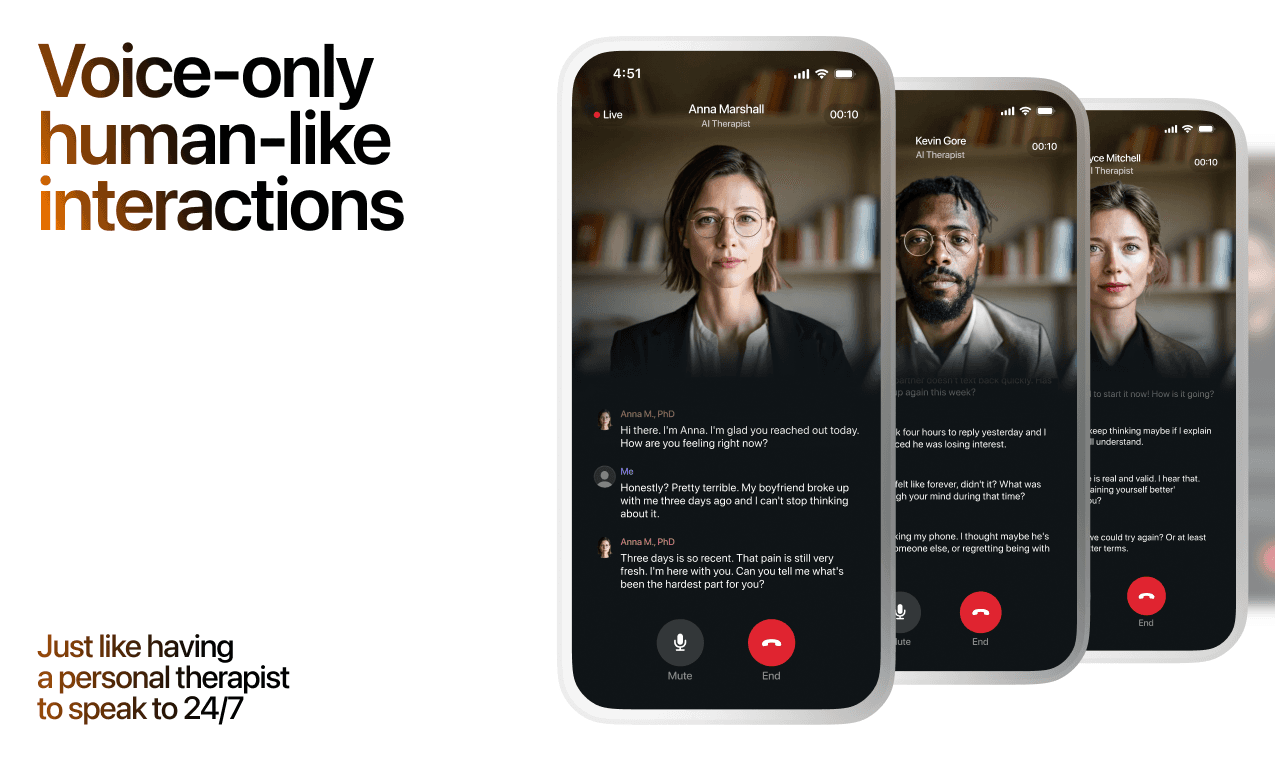
Lovon is AI support, not a replacement for professional care. If things have been hard to get through for weeks, or you are thinking about harming yourself, talk to a doctor or a licensed therapist.
Ready to Start?
Your healing journey can begin right now
A 7-day trial. No judgment. Just a safe space to process what you're going through.
Frequently Asked Questions
Is Lovon a replacement for a real therapist?
Is my conversation with Lovon AI private?
How is Lovon different from ChatGPT for emotional support?
Can I use Lovon if I'm already seeing a therapist?
Can I try Lovon before subscribing?
About the Author

The Lovon Editorial Team
Mental Health & Wellness Content Team
The Lovon Editorial Team develops mental health and wellness content designed to make psychological concepts accessible and actionable. Our goal is to bridge the gap between clinical research and everyday life - helping you understand why your mind works the way it does and what you can do about it....
Related articles
- Can self-care alone fix burnout?
Can self care alone fix burnout? No. See what rest can help with, why work demands must change, and when to seek support…
- Best AI apps for postpartum depression support in 2026
Compare the best AI apps for postpartum depression support. Choose voice, text, or mood reflection alongside clinical…
- AI therapy for restaurant and hospitality workers: complete 2026 guide
AI therapy for restaurant workers fits after-shift stress and burnout support. See when Lovon helps, where it falls…
- Best AI apps for caregiver burnout in 2026
Compare the best AI apps for caregiver burnout. Choose Lovon for voice support, or a writing assistant for practical…
See also
Quizzes
- Thin Thick Boundaries Test: Where Do Your Lines Blur?
See where your boundaries run thin, in 3 minutes.
- Hyper-Empathy Test: When Feeling for Others Costs You
See where too much empathy is costing you, in 3 minutes.
Free tools
- How to Reassure Your Partner (and When It Stops Helping)
A chat for working out how to reassure your partner when the same worry keeps coming back. Say what sets it off and how…
- How to Come Out to Your Parents
A chat about how to come out to your parents that starts with whether now is safe, not with the speech. Tell it your…
From the wiki
- Why do I keep dreaming about the same person?
A recurring dream figure usually marks unfinished emotional business rather than a message about that person. Your brain…
Disclaimer: This article is for informational purposes only and does not constitute medical advice, diagnosis, or treatment. Always seek the advice of your physician or other qualified health provider with any questions you may have regarding a medical condition. If you are in crisis or think you may have an emergency, call 988 (Suicide & Crisis Lifeline) or go to the nearest emergency room. Outside the US? Find a crisis line in your country.