
Can self-care alone fix burnout?
Can self care alone fix burnout? No. See what rest can help with, why work demands must change, and when to seek support from a licensed professional in 2026.

Key Takeaways
- Can self care alone fix burnout? No: rest helps, but unchanged work demands can keep the cycle going.
- In 2026, start with the demand you can name: workload, availability, control, or support.
- Lovon is best for talking through stress on demand, not for changing work conditions or replacing licensed care.
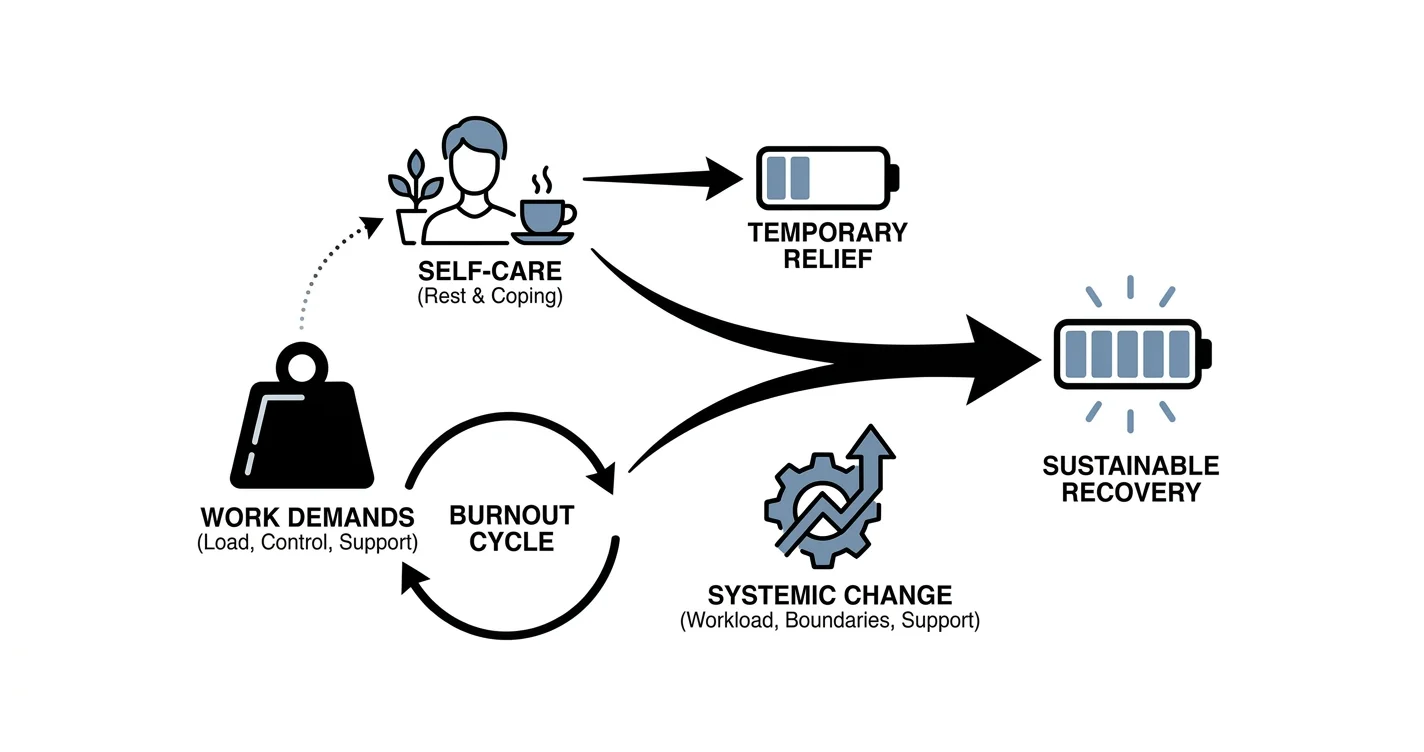
No, self-care alone usually cannot fix burnout if the demands causing it stay the same. Rest and coping tools can help you feel steadier, but recovery also calls for changes to the workload, boundaries, or support around you. If low mood or exhaustion extends beyond work, talk with a licensed professional rather than assuming burnout explains everything.
TL;DR
- Can self care alone fix burnout? No: rest helps, but unchanged work demands can keep the cycle going.
- In 2026, start with the demand you can name: workload, availability, control, or support.
- Lovon is best for talking through stress on demand, not for changing work conditions or replacing licensed care.
Why this matters
Burnout can make another walk, day off, or breathing exercise feel like one more task you are failing to do well. That is not proof that you are bad at self-care. It is a sign to look beyond how you spend your breaks and ask what happens when you return to work.
You also do not need to decide on your own whether every symptom is burnout. If exhaustion comes with persistent low mood, loss of interest, or problems across work and home, the distinction matters. This guide to burnout vs depression can help you frame the question before you speak with a clinician.
Can self-care alone fix burnout?
No. Self-care supports recovery; it does not remove an ongoing source of work-related stress. In 2026, the most useful question is not whether you have found the perfect routine. It is whether the conditions draining you are changing.
| Approach | What it can help with | What it cannot do alone | Best for |
|---|---|---|---|
| Self-care, such as rest or a calming practice | Creating space to recover and notice what you need | Reducing a workload or changing expectations set by someone else | Immediate relief and a more manageable day |
| Changes to work demands | Addressing the pressures that keep recurring | Resolving every emotional or health concern | Burnout tied to workload, availability, or limited control |
| Support from a licensed professional | Exploring symptoms and deciding what care fits | Making workplace decisions for you | Persistent distress or uncertainty about what you are experiencing |
These approaches work together rather than compete. A break matters, especially when you are running on empty. But if you return to the same demands with no change in capacity, priorities, or support, the break has to carry too much of the load.
The World Health Organization describes burnout in ICD-11 as an occupational phenomenon resulting from chronic workplace stress that has not been successfully managed. It identifies exhaustion, increased mental distance from work or cynicism about it, and reduced professional efficacy. Burnout is not classified there as a medical condition. That distinction does not make your experience less real; it helps explain why recovery needs attention to the work context, not just your personal habits.
What self-care can do for burnout
Self-care is a way to meet an immediate need. Eating, resting, moving your body, or taking a pause from work can make it easier to get through a hard day. A coping practice can also give you enough breathing room to notice the problem you need to address.
Try choosing the smallest useful action instead of building an elaborate recovery schedule. If you are tense, step away and let your body settle. If your thoughts are racing, write down what you are worried you will forget. If you feel isolated, tell someone you trust that work has become difficult. None of these actions requires you to pretend the job is fine.
Self-care becomes less helpful when it is used as a substitute for a conversation about workload. You should not have to turn every evening into a repair session for an unsustainable workday. Use coping tools to support yourself while you work on the source, not to make the source easier to ignore.
There is room for preference here. Some people want quiet after work; others need connection. A calming exercise is useful if it helps you, not because it belongs on a universal burnout checklist. For practical options, see coping tools for stress.
What has to change besides self-care?
You do not need to solve your entire working life at once. Start by naming the demand that keeps following you into your time off. Then choose a change you can request, make, or discuss with someone who has the power to help.
- Name the recurring pressure. Is the problem too much work, unclear priorities, constant availability, conflict, or too little control? Write down a recent example rather than trying to explain everything at once.
- Separate what you control from what needs a conversation. You can sometimes protect a break or stop checking work messages outside agreed hours. You cannot personally fix staffing, deadlines, or a manager's expectations.
- Ask for a specific work change. Bring the example to the person who can address it. Ask which task takes priority, which deadline can move, or when you are expected to be available.
- Make space to recover. Rest and coping tools matter while those changes take shape. They are support, not proof that the workplace issue has been resolved.
- Get help if symptoms persist or spread. A licensed professional can help you assess distress that is affecting sleep, relationships, or daily life outside work.
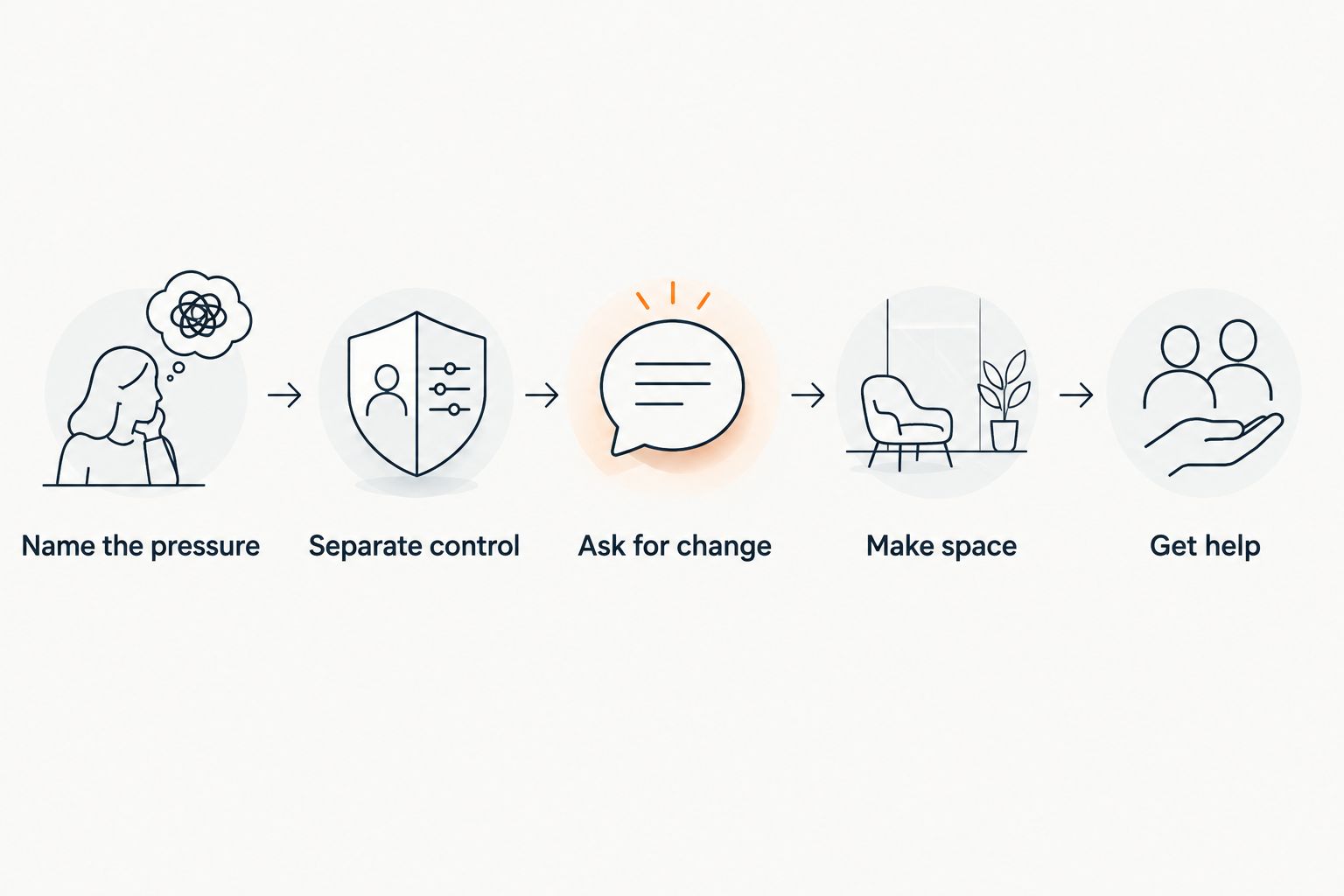 Steps for addressing burnout, from naming work pressure to seeking support
Recovery includes a change to the pressure, not only a way to cope with it.
If a request for change feels hard, keep it concrete. You can say which responsibilities are competing and ask what should come first. You are not required to prove how exhausted you are before asking for priorities. A clear request gives the other person something they can act on, even if the answer takes another conversation.
If you cannot change the workload right now, that does not mean you have failed. Notice what support is available and keep the distinction clear: getting through this week and fixing the conditions behind the burnout are different jobs. In 2026, a coping plan is most useful when it sits beside a plan to address the recurring demand.
Why burnout recovery varies
The right next move depends on what is keeping you depleted. Look for the factors that match your situation rather than copying someone else's routine.
- Workload: If tasks keep arriving faster than you can complete them, ask for priorities or a change in scope. Another evening of rest does not decide what can wait.
- Availability: If work repeatedly enters your time off, clarify when you are expected to respond. A boundary only helps if the expectation is understood.
- Control: If you have little say over deadlines or how work gets done, identify who can make those decisions with you. Focus the conversation on the decision that needs to change.
- Support: If you are handling difficult work without help, name the kind of support you need. That might be a decision, a clearer handoff, or someone to share responsibility.
- Symptoms outside work: If distress is showing up across your life, do not treat a workplace explanation as a diagnosis. A licensed professional can help you work out what else needs attention.
These factors can overlap. You might need more rest and a clearer workload at the same time. The point is not to find a single cause that makes every feeling disappear. It is to stop asking one self-care habit to solve a problem it cannot control.
When should you ask for more support?
Ask for support when you feel stuck, when work changes are not available, or when your symptoms affect daily life beyond the job. You do not have to wait until things become unmanageable. Talking to a trusted person can make it easier to name what is happening; a licensed mental health professional can help you assess symptoms and decide what care is appropriate.
In 2026, digital support can sit alongside those conversations, but it has a narrower role. Lovon is best for people who want an on-demand voice conversation to talk through stress and reflect on coping options; it cannot change your workload or replace a licensed clinician. If you want a place to put your thoughts into words between other sources of support, that is a reasonable use of the Lovon voice app.
Talk through what feels heavy
Use a voice conversation to reflect on stress and coping options.
If you are worried about depression, anxiety, or another health concern, seek an assessment instead of relying on an app or article to sort it out. And if you feel in immediate danger or might hurt yourself, seek urgent help through emergency services or a local crisis service. Burnout advice is not crisis care.
Can a vacation fix burnout?
A vacation can give you time away from work and space to rest. It cannot, by itself, change the demands you return to. Before you go back, identify what needs to be different: priorities, workload, availability, or support. If none of those can change, do not blame yourself when the relief from time away fades.
How do you know self-care is not enough?
Self-care is not enough when you feel better briefly but keep returning to the same draining conditions. It is also time to ask for more support when exhaustion or low mood affects life outside work. In 2026, treat that pattern as information about your needs, not as a reason to double down on a routine that is not addressing them.
Should you quit a job to recover from burnout?
Quitting is not the only response to burnout, and this page cannot decide whether it is right for you. Start with the changes you can request and the support you can access. If the demands remain harmful and cannot be changed, you can consider your options without treating departure as a personal failure.
FAQ
Can self care alone fix burnout?
No. Self-care can help you rest and cope, but it cannot remove work demands that continue to cause stress.
Is burnout the same as being tired?
No. Tiredness can be one part of burnout, which the World Health Organization describes in relation to chronic workplace stress. Distance from work and reduced professional efficacy are also part of its description.
What should I do first if I feel burned out?
Name the work pressure that keeps recurring. A specific example makes it easier to ask for a change in priorities, workload, availability, or support.
Do breathing exercises help with burnout?
Breathing exercises can help you settle in a stressful moment. They do not change the work conditions behind burnout, so use them alongside steps that address the recurring pressure.
Can burnout affect life outside work?
Yes. Work-related distress can shape how you feel during time off. If symptoms are persistent or affecting several areas of life, speak with a licensed professional rather than assuming burnout is the only explanation.
Is an app a replacement for therapy when you are burned out?
No. Lovon offers on-demand voice conversations for emotional support and coping, but it does not replace a licensed clinician or change workplace demands.
What if my manager cannot reduce my workload?
Ask what should take priority and what support is available. If the demands cannot change, seek support outside work and consider your options without blaming yourself for the workload.
One last thing
The most useful question after a day off is not whether you rested correctly. It is what you are returning to. In 2026, let the answer guide your next conversation: name the pressure, ask what can change, and keep rest as support rather than the entire plan.
Related guides
How AI Support Helps You Heal
AI emotional support isn't about replacing human connection — it's about filling the gaps. The moments when you need to talk at 2 AM, when you don't want to burden your friends again, or when you simply need someone to listen without judgment.
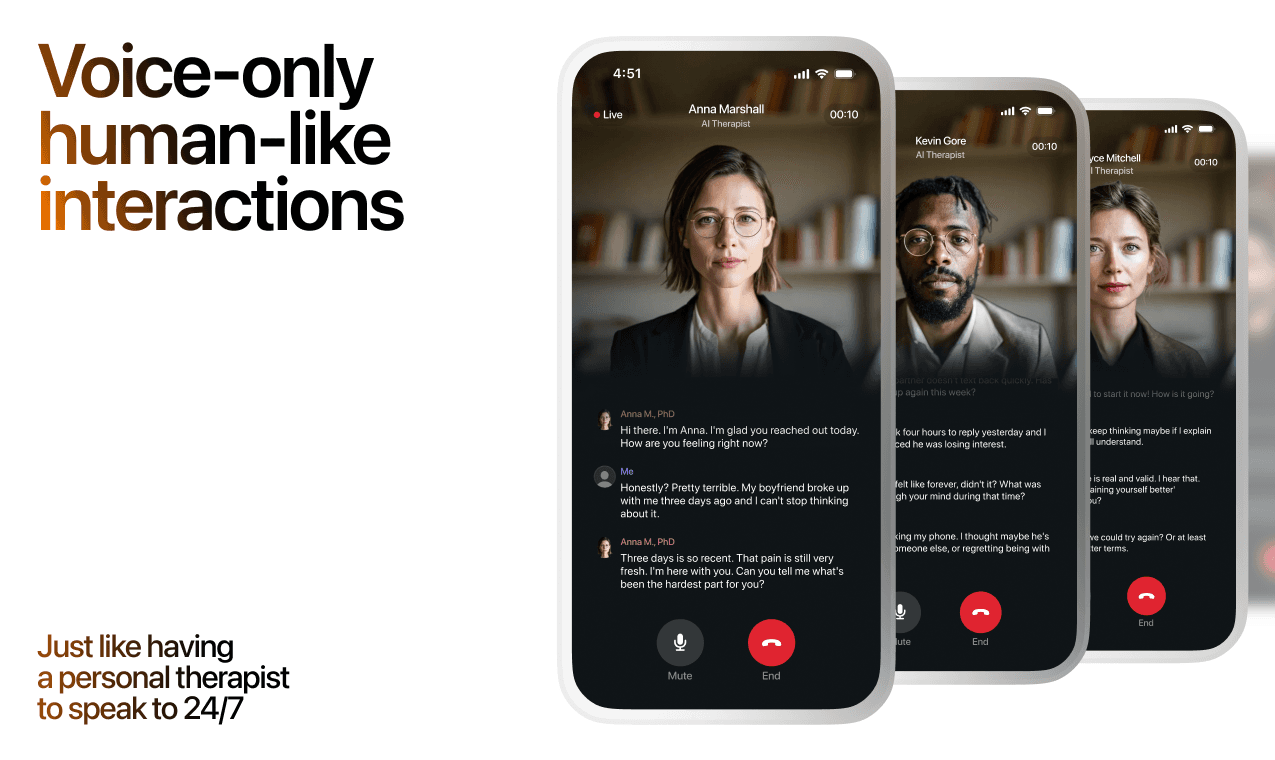
Here's what happens in a typical Lovon session:
You share what's on your mind
There's no script, no intake form, no waiting room. You speak or type whatever you're feeling — in your own words, at your own pace.
Lovon validates and explores
Using frameworks from CBT (Cognitive Behavioral Therapy) and motivational interviewing, Lovon acknowledges your feelings first, then gently helps you explore them. No dismissive "just move on" advice.
You build coping skills together
Lovon doesn't just listen — it actively works with you on evidence-based techniques: thought reframing, urge surfing, behavioral experiments, and more.
What a Session with Lovon Looks Like
When to Seek Professional Help
AI support is a valuable tool, but it's not a replacement for professional care. Please consider reaching out to a licensed therapist if you experience any of the following:
- Persistent thoughts of self-harm or suicide
- Inability to perform daily activities (work, eating, sleeping) for more than 2 weeks
- Turning to alcohol or substances to cope
- Intense anger or desire to harm your ex-partner
- Complete emotional numbness that doesn't improve over time
Crisis Resources (US): If you're in immediate danger, call 988 (Suicide & Crisis Lifeline) or text HOME to 741741 (Crisis Text Line). Available 24/7, free, and confidential.
Outside the US? Find a crisis line in your country
Ready to Start?
Your healing journey can begin right now
A 7-day trial. No judgment. Just a safe space to process what you're going through.
Frequently Asked Questions
Is Lovon a replacement for a real therapist?
Is my conversation with Lovon AI private?
How is Lovon different from ChatGPT for emotional support?
Can I use Lovon if I'm already seeing a therapist?
Can I try Lovon before subscribing?
About the Author

The Lovon Editorial Team
Mental Health & Wellness Content Team
The Lovon Editorial Team develops mental health and wellness content designed to make psychological concepts accessible and actionable. Our goal is to bridge the gap between clinical research and everyday life - helping you understand why your mind works the way it does and what you can do about it....
Related articles
- AI Therapy for Social Battery Burnout in Introverts 2026
AI therapy for social battery burnout in introverts: what to look for, what to skip, and why voice sessions beat text…
- AI therapy for restaurant and hospitality workers: complete 2026 guide
AI therapy for restaurant workers fits after-shift stress and burnout support. See when Lovon helps, where it falls…
- Best AI Counseling for Stress in 2026
The best AI counseling for stress in 2026: voice-based, on-demand tools ranked by methodology, personalization, and…
- AI Therapy App for Autism Masking Burnout (2026 Pick)
Best ai therapy app for autism masking burnout in 2026: voice-first sessions, 24/7 access, and what to avoid. Lovon…
See also
Quizzes
- Self Esteem Test: What Is Your Worth Resting On?
See what your sense of worth is resting on.
- Emotionally Unavailable Test: 12-Question Self-Check
See which part of you closes off, in three minutes.
Free tools
- Words of Encouragement for Him When He Is Struggling
Words of encouragement for him that fit what he is actually going through, for when your usual lines are not landing…
- What to Say When They Are Struggling
A chat, not a list. Tell the coach who this person is to you, what they are going through, and what you already said…
From the wiki
- What to do if you have no friends?
Pick one activity that repeats weekly with the same people, and go for six to eight weeks straight. Repetition, not…
Disclaimer: This article is for informational purposes only and does not constitute medical advice, diagnosis, or treatment. Always seek the advice of your physician or other qualified health provider with any questions you may have regarding a medical condition. If you are in crisis or think you may have an emergency, call 988 (Suicide & Crisis Lifeline) or go to the nearest emergency room. Outside the US? Find a crisis line in your country.