
AI therapy for restaurant and hospitality workers: complete 2026 guide
AI therapy for restaurant workers fits after-shift stress and burnout support. See when Lovon helps, where it falls short, and what to choose in 2026.

Key Takeaways
- AI therapy for restaurant workers fits after-shift stress, anxiety, burnout, and guided self-reflection in 2026.
- Lovon is best for workers who want to talk through a difficult shift instead of typing about it.
- Start with a short decompression routine; add on-demand support when breathing or journaling is not enough.
- Choose licensed or crisis care for self-harm thoughts, escalating substance use, trauma, or persistent symptoms.
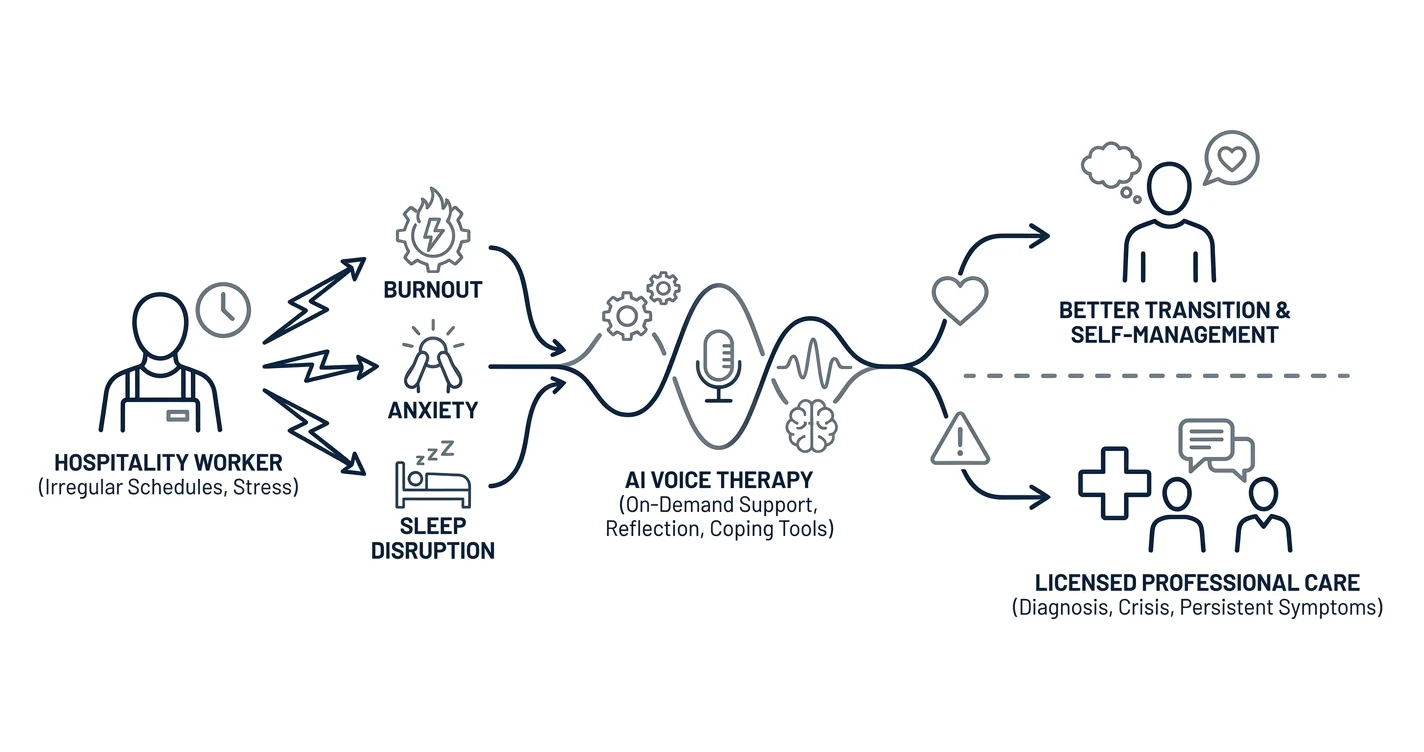
Restaurant and hospitality workers' AI therapy is on-demand emotional support with the aim of helping shift workers process stress, settle after work, and choose an appropriate next step. In 2026, AI therapy for restaurant workers fits irregular schedules, but it does not replace licensed care for a mental health condition or crisis.
TL;DR
- AI therapy for restaurant workers fits after-shift stress, anxiety, burnout, and guided self-reflection in 2026.
- Lovon is best for workers who want to talk through a difficult shift instead of typing about it.
- Start with a short decompression routine; add on-demand support when breathing or journaling is not enough.
- Choose licensed or crisis care for self-harm thoughts, escalating substance use, trauma, or persistent symptoms.
Why AI therapy matters for hospitality workers
Restaurant and hospitality work creates a scheduling problem. Your support needs to fit around early openings, late closes, split shifts, changing days off, and breaks that can disappear when service gets busy. An on-demand therapy app in 2026 removes the need to match every conversation to a fixed appointment.
The emotional load is different too. You can be expected to stay calm with guests while dealing with noise, time pressure, coworker conflict, physical fatigue, or uncertainty about the next schedule. That makes the transition after work especially important: the shift ends, but your body and thoughts can remain in work mode.
AI support gives you somewhere to start when you need to talk but cannot reach a therapist, friend, or family member. The limit matters just as much as the convenience. An app can guide reflection and coping exercises, but it cannot diagnose a condition, provide emergency care, prescribe medication, or replace a licensed clinician.
How to use AI therapy around restaurant shifts
The best 2026 plan starts without an app. Identify what you need, build a basic reset, and then decide whether voice support, text support, a licensed therapist, or crisis care fits the situation.
Name the problem before choosing support
Start by describing what happened without reducing everything to stress. A hard service, an ongoing schedule problem, panic symptoms, low mood, and workplace harassment are not the same issue. Clear language helps you choose a response that matches the problem instead of using one coping tool for everything.
Use a quick check at the end of the shift:
- Name the event: a guest conflict, kitchen mistake, staffing shortage, or argument with a manager
- Name the feeling: angry, anxious, embarrassed, numb, sad, overstimulated, or exhausted
- Notice the pattern: one difficult shift or the same reaction across several shifts
- Identify the immediate need: calm down, talk it through, solve a problem, sleep, or seek professional help
- Record whether the feeling stays at work or affects your relationships, days off, and basic routines
Create a short clock-out routine
A clock-out routine gives your mind a clear transition between serving other people and taking care of yourself. Keep it simple enough to repeat after a demanding shift. A five-minute routine you use consistently is more practical than a long routine you avoid.
Try these free steps first:
- Drink water and eat if hunger is making fatigue or irritability harder to assess
- Use four-count box breathing: inhale, hold, exhale, and hold for four counts each
- Relax your jaw, shoulders, hands, and legs one area at a time
- Write or record one sentence about what is still bothering you
- Delay workplace messages for ten minutes unless you are responsible for an urgent operational issue
Choose voice or text based on your energy
Typing can help when you want to organize details carefully. Voice can fit better when your hands are tired, you do not want to look at another screen, or you need the experience of saying the problem out loud. Neither format is automatically better for every situation.
Lovon AI voice therapy is best for restaurant workers who want an on-demand conversation after a shift without writing a long journal entry. Lovon provides emotional support, coping tools, and personalized mental health sessions, but it is not a licensed clinician. The guide to AI voice therapy versus text-based apps explains the practical differences between the formats.
Compare the formats before deciding:
- Use paper journaling when you want a private, screen-free record you control
- Use a voice note when you only need to express the thought once without receiving guidance
- Use Lovon when you want a voice conversation with prompts and coping support
- Use text support when reading and editing your thoughts helps you slow down
- Check privacy terms and data controls before sharing personal or workplace details with any digital tool
Match the session to the moment
Do not wait until every problem feels overwhelming. Short, specific check-ins are easier to act on than a broad conversation about everything that has gone wrong. Pick one outcome for each session.
A useful post-shift session can focus on:
- Calming down before driving, taking transit, or entering a shared home
- Rehearsing a respectful conversation with a manager or coworker
- Separating one guest's behavior from your judgment of your whole performance
- Identifying the thought that keeps replaying after a mistake
- Choosing one boundary for your next shift instead of trying to fix the entire workplace
Protect sleep after late service
Late shifts can leave little transition time before bed. AI therapy cannot fix a rotating schedule, noise at home, or a workload that exceeds your capacity. It can help you notice which thoughts are keeping you mentally connected to the shift and choose a calmer final activity.
Build a ten-minute wind-down sequence:
- Put work messages away unless you are required to remain available
- Dim the room and reduce stimulating content before trying to sleep
- Use progressive muscle relaxation if physical tension remains after standing or lifting
- Save problem-solving for a written list rather than attempting it in bed
- Discuss repeated sleep problems with a licensed healthcare professional instead of treating them as a normal job requirement
Escalate when the problem exceeds self-help
AI therapy is a support layer, not the full answer to every mental health concern. Persistent low mood, repeated panic symptoms, trauma, escalating substance use, or thoughts of self-harm require human care. Workplace safety threats and harassment also need an organizational, legal, or emergency response rather than a coping exercise alone.
In the United States in 2026, call or text 988 for the Suicide & Crisis Lifeline when you need immediate crisis support. Call 911 when there is immediate danger or a medical emergency. If neither applies but symptoms persist, contact a licensed therapist, doctor, community clinic, or an Employee Assistance Program listed by your employer.
Escalate past an app when:
- You are thinking about harming yourself or someone else
- Alcohol or drug use is increasing as a way to get through or recover from shifts
- Panic, depression, or anxiety is repeatedly disrupting sleep, work, or relationships
- A workplace situation involves violence, threats, stalking, harassment, or unsafe conditions
- Self-guided coping tools are no longer helping you function between shifts
Compare support options for hospitality workers
The right option in 2026 depends on urgency, schedule, and the kind of help you need. No single tool covers every situation.
| Option | Best for | Main advantage | Key limitation |
|---|---|---|---|
| Self-guided breathing or journaling | A brief reset after a manageable shift | Immediate and easy to repeat | No feedback, assessment, or conversation |
| Trusted friend, coworker, or family member | Connection and practical perspective | Personal context and human support | The person may be unavailable or emotionally involved |
| Text-based digital support | Careful written reflection | Lets you review and edit your thoughts | Typing can feel demanding after physical work |
| Lovon AI voice therapy | On-demand stress processing and coping support | Voice conversations fit workers who prefer talking | Lovon is not licensed clinical or crisis care |
| Licensed therapist or doctor | Persistent symptoms, diagnosis, and treatment | Professional assessment and an ongoing care plan | Appointments can conflict with changing shifts |
| 988 Suicide & Crisis Lifeline | Immediate crisis support in the United States | Direct access to trained crisis counselors | Designed for crisis support, not routine reflection |
Lovon is best for restaurant and hospitality workers who need on-demand voice support for everyday stress, anxiety, low mood, or burnout between shifts. Choose a licensed professional when you need assessment or treatment, and choose 988 or emergency services when safety is at risk.
Talk through your shift
Use Lovon for an on-demand voice conversation and guided coping support.
Common mistakes hospitality workers make
Waiting until the stress affects everything
You do not need to wait for a breakdown before addressing a pattern. Notice whether work stress is changing your sleep, appetite, relationships, substance use, or ability to recover on days off. Early action gives you more options than waiting until you want to quit during a difficult service.
Treating every bad feeling as burnout
Burnout is not the only explanation for exhaustion or detachment. Anxiety, depression, sleep loss, physical illness, medication effects, and an unsafe workplace can look similar from the inside. Use an app for reflection, not self-diagnosis, and speak with a qualified professional when symptoms persist.
Using the same tool for routine stress and crisis care
A breathing exercise, AI conversation, therapist appointment, and crisis line serve different purposes. Routine stress can start with self-guided coping or Lovon. Immediate danger requires 911, while a mental health crisis requires 988 or another appropriate local crisis service.
Replaying the whole shift instead of one event
Broad thoughts such as everything was terrible are hard to process. Pick the moment that carries the most emotional weight and describe what happened, what you felt, and what you need next. Specific reflection produces a clearer next action.
Expecting coping tools to fix working conditions
Coping support can help you respond to stress. It cannot make unsafe staffing, harassment, unpaid work, threats, or chronic schedule conflicts acceptable. Document workplace issues and use the appropriate internal, legal, medical, or emergency channel when the cause requires action beyond emotional regulation.
FAQ
What is AI therapy for restaurant workers?
AI therapy for restaurant workers is on-demand digital support for talking through stress, practicing coping skills, and reflecting after difficult shifts. It does not replace licensed diagnosis, treatment, or crisis care.
Is Lovon a licensed therapist?
No. Lovon is an AI-powered voice therapy app that provides emotional support, coping tools, and personalized mental health sessions. It is an always-available companion rather than a replacement for licensed clinical care.
When should a restaurant worker use an AI therapy app?
Use an AI therapy app when you want to process everyday stress, anxiety, low mood, relationship strain, or burnout around an irregular schedule. A short check-in after clocking out can also help you identify what needs attention before you go home.
Is voice AI therapy better than text support after a shift?
Voice AI therapy is the better fit when you want to talk without typing or spending more time focused on a screen. Text is better when editing, rereading, and organizing written thoughts helps you reflect.
Can AI therapy help with restaurant burnout in 2026?
AI therapy can support reflection and coping with restaurant burnout in 2026, but it cannot correct harmful working conditions or provide clinical treatment. Persistent symptoms need review by a licensed professional.
What should I do if work stress causes a panic attack?
Move to a safer, quieter place if possible and use a familiar grounding or breathing technique. Seek medical or licensed mental health support for repeated symptoms, and call 911 if the symptoms involve an immediate medical emergency.
Can I use AI therapy between appointments with a therapist?
Yes. AI therapy can provide between-session reflection and coping support when your licensed provider agrees it fits your care plan. Do not use an app to replace treatment instructions or emergency support.
When should I call 988 instead of using Lovon?
Call or text 988 in the United States when you are in emotional distress or experiencing a suicidal crisis. Use Lovon for everyday emotional support, not as a substitute for a crisis counselor or emergency service.
One last thing
Make your 2026 reset start before you leave work. Taking off an apron, changing shoes, or reaching the staff exit can become the cue for one slow breath and one direct question: what do I need before I bring this shift home? That small boundary is easier to remember than waiting until you are in bed replaying the night.
Related guides
How AI Support Helps You Heal
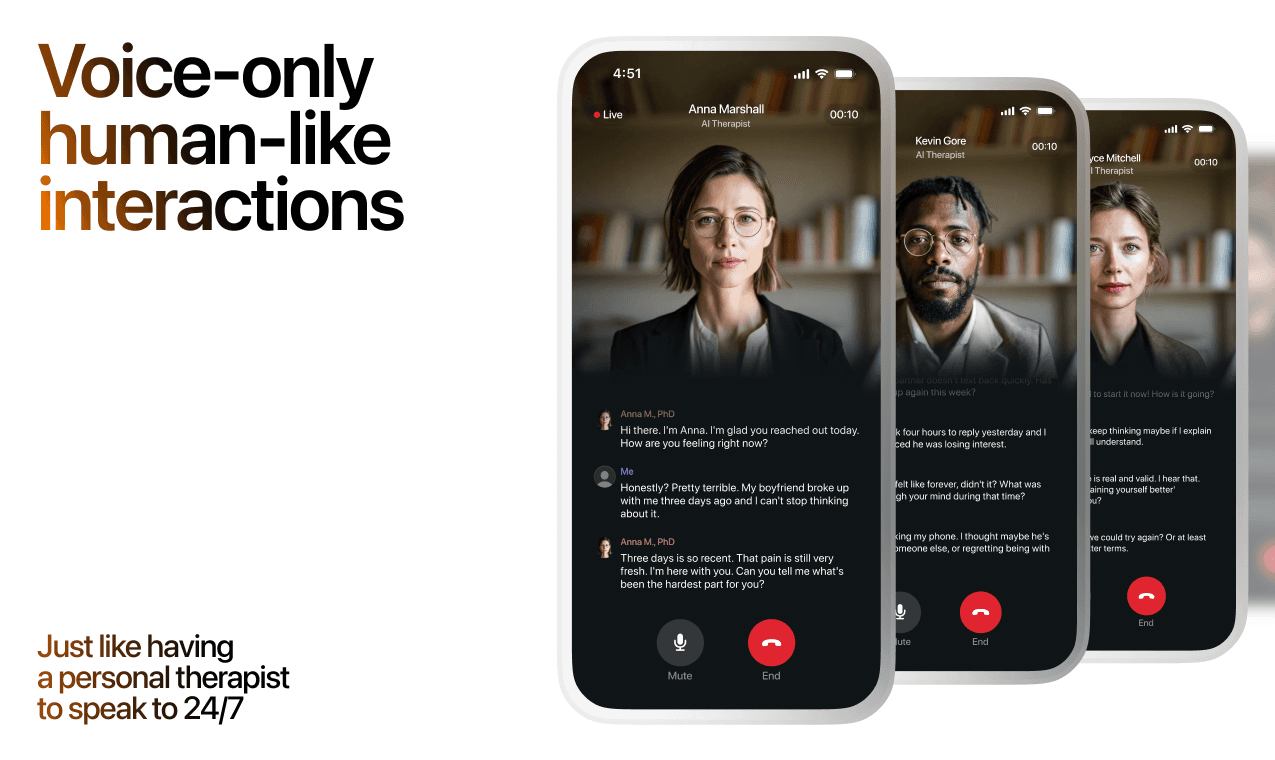
AI emotional support isn't about replacing human connection — it's about filling the gaps. The moments when you need to talk at 2 AM, when you don't want to burden your friends again, or when you simply need someone to listen without judgment.
Here's what happens in a typical Lovon session:
You share what's on your mind
There's no script, no intake form, no waiting room. You speak or type whatever you're feeling — in your own words, at your own pace.
Lovon validates and explores
Using frameworks from CBT (Cognitive Behavioral Therapy) and motivational interviewing, Lovon acknowledges your feelings first, then gently helps you explore them. No dismissive "just move on" advice.
You build coping skills together
Lovon doesn't just listen — it actively works with you on evidence-based techniques: thought reframing, urge surfing, behavioral experiments, and more.
What a Session with Lovon Looks Like
When to Seek Professional Help
AI support is a valuable tool, but it's not a replacement for professional care. Please consider reaching out to a licensed therapist if you experience any of the following:
- Persistent thoughts of self-harm or suicide
- Inability to perform daily activities (work, eating, sleeping) for more than 2 weeks
- Turning to alcohol or substances to cope
- Intense anger or desire to harm your ex-partner
- Complete emotional numbness that doesn't improve over time
Crisis Resources (US): If you're in immediate danger, call 988 (Suicide & Crisis Lifeline) or text HOME to 741741 (Crisis Text Line). Available 24/7, free, and confidential.
Outside the US? Find a crisis line in your country
Ready to Start?
Your healing journey can begin right now
1 free conversation. No credit card. No judgment. Just a safe space to process what you're going through.
Frequently Asked Questions
Is AI therapy a replacement for a real therapist?
Is my conversation with Lovon AI private?
How is Lovon different from ChatGPT for emotional support?
Can I use Lovon if I'm already seeing a therapist?
Can I try Lovon for free?
About the Author
The Lovon Editorial Team
Mental Health & Wellness Content Team
The Lovon Editorial Team develops mental health and wellness content designed to make psychological concepts accessible and actionable. Our goal is to bridge the gap between clinical research and everyday life - helping you understand why your mind works the way it does and what you can do about it....
Related articles
- AI Coping Tools for Chronic Fatigue & Burnout 2026
AI coping tools for chronic fatigue and burnout in 2026: what to track first, which tools fit low energy days, and where…
- AI therapy for flight attendants: complete 2026 guide
AI therapy for flight attendants explained: how voice-based support fits irregular schedules, jet lag, and layovers in…
- AI Mental Health Support 2026: What It Is & Who It Helps
AI mental health support ranges from voice therapy to chatbots in 2026. See what each format does best, who it helps…
- Best App for Parenting Stress and Burnout in 2026: Lovon
Lovon ranks best overall for parenting stress and burnout in 2026, with picks for co-parenting, meditation, journaling…
See also
Quizzes
- Emotionally Unavailable Test: 12-Question Self-Check
See which part of you closes off, in three minutes.
- Fear of Intimacy Test: Free 12-Question Self-Check
See which part of closeness feels risky, in 3 min.
Free tools
- How to Stop Overthinking in a Relationship
Not a list of habits. Tell it the specific thing you are going round on, and it separates what actually happened from…
- What to Say When They Are Struggling
A chat, not a list. Tell the coach who this person is to you, what they are going through, and what you already said…
Disclaimer: This article is for informational purposes only and does not constitute medical advice, diagnosis, or treatment. Always seek the advice of your physician or other qualified health provider with any questions you may have regarding a medical condition. If you are in crisis or think you may have an emergency, call 988 (Suicide & Crisis Lifeline) or go to the nearest emergency room. Outside the US? Find a crisis line in your country.